

몸은 녹초인데 눕기만 하면 머리가 맑아집니다. 시계를 볼 때마다 "오늘도 못 자면 내일은 어떡하지" 하는 걱정이 커지고, 겨우 잠들어도 새벽에 눈이 떠집니다. 잠이 싸움이 되어 버린 상태, 바로 불면증입니다.
불면증 한눈에 보기
- 잠들기 어렵거나, 자다가 자주 깨거나, 너무 일찍 깨는 일이 반복되어 낮 생활까지 힘들어지는 상태입니다.
- 성인 5명 중 1명이 겪을 만큼 흔하고 여성에게 더 많으며, 불면증이 있으면 우울증 위험이 2배 이상 높아집니다.
- 밤에도 몸과 뇌가 꺼지지 않는 "과각성"이 핵심이라, 수면제로 재우는 것보다 각성을 낮추고 잠드는 힘을 되살리는 치료가 필요합니다.
- 치료후기 36건
- 의료진 칼럼 1편
- 건강정보 2편
- 온라인 상담 4건
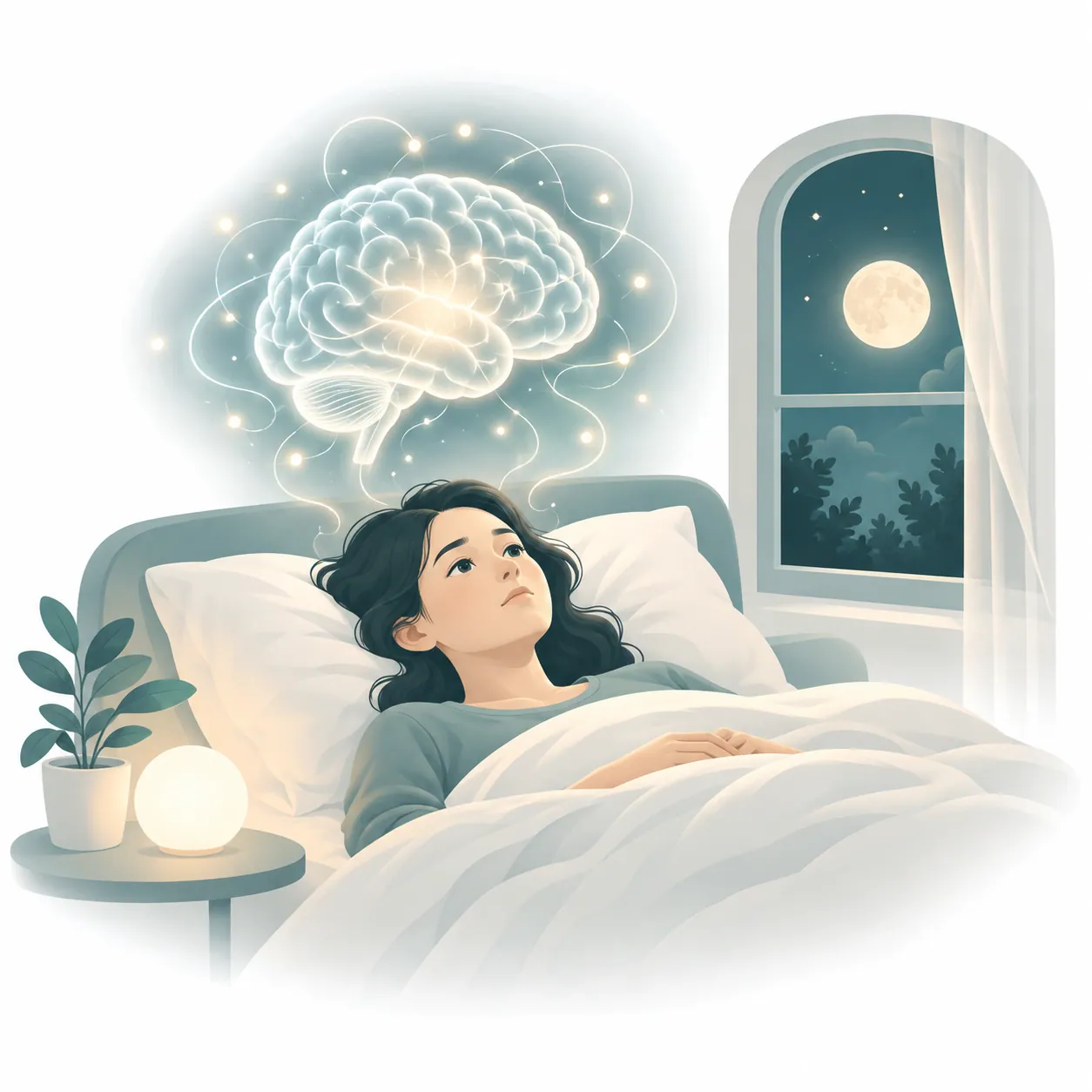
이런 증상이 있나요?
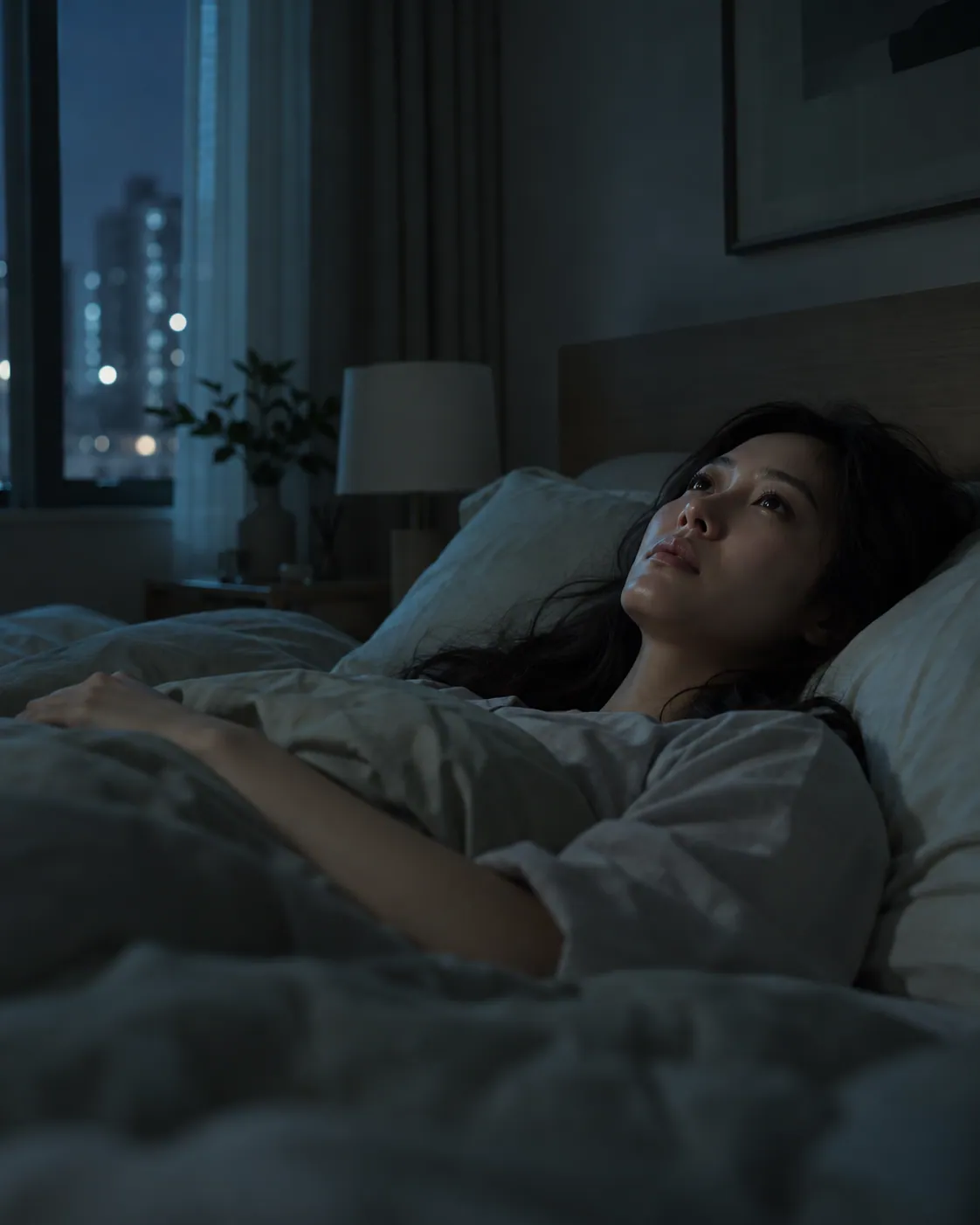
- 잠자리에 누워 30분이 지나도 잠들지 못하는 날이 많다
- 밤중에 두세 번 이상 깨고, 깨면 다시 잠들기 어렵다
- 원래 일어나려던 시간보다 한두 시간 일찍 눈이 떠진다
- 몸은 피곤한데 누우면 생각이 많아지고 정신이 또렷해진다
- "오늘 밤도 못 자면 어쩌지" 하는 걱정에 잠자리가 두렵다
- 낮에 피곤하고 집중이 안 되며, 사소한 일에도 예민해진다
불면증은 수면 습관과 병력을 자세히 듣는 면담, 수면 설문과 수면일기로 진단합니다.
불면증은 왜 생기나요?
불면증의 핵심은 "과각성"입니다. 불면증이 있는 사람은 밤뿐 아니라 낮에도 심장 박동, 스트레스 호르몬, 뇌파가 각성된 쪽으로 기울어 있습니다. 타고난 예민함 위에 스트레스가 겹치고, 잠에 대한 걱정과 잘못된 수면 습관이 더해지면서 불면이 굳어집니다[5]. 자율신경으로 보면 몸을 쉬게 하는 부교감신경이 밤이 되어도 제대로 켜지지 않는 상태입니다.
- 스트레스와 걱정, 생각이 많은 성격
- 불안·우울: 국내 불면증 고위험군에서 불안은 9.8배, 우울은 19.7배 더 흔했습니다[2]
- 불규칙한 수면 시간, 늦은 밤 스마트폰, 카페인·술
- 갱년기 같은 호르몬 변화, 통증, 잦은 소변 같은 몸의 불편
- 코골이·수면무호흡, 다리가 불편해 잠들기 어려운 하지불안
불면증은 마음 건강과 서로 꼬리를 뭅니다. 34개 코호트 연구, 17만여 명을 분석한 결과 불면증이 있는 사람은 이후 우울증이 생길 위험이 2.27배 높았습니다[6]. 잠을 되찾는 것이 마음 건강을 지키는 일이기도 합니다.
불면증의 표준 치료
국제 진료지침은 만성 불면증의 첫 치료로 수면제보다 인지행동치료를 권하고, 수면제는 대부분 4주 이내로 짧게 쓰도록 합니다[4,7]. 잠자리에 머무는 시간을 줄이고 잠자리를 잠과만 연결하는 것처럼 수면 습관을 바로잡는 방법이 특히 효과적이었습니다[8]. 수면제로 억지로 재우기보다 스스로 잠드는 힘을 되살리는 것이 오래가는 치료라는 뜻입니다.
하지만 습관을 바꿔도 밤이 되면 심장이 뛰고 생각이 멈추지 않는 과각성이 그대로라면 잠은 쉽게 돌아오지 않습니다. 각성을 낮추는 일은 마음만의 문제가 아니라 몸의 문제이기도 합니다. 한의학은 밤이 되면 몸이 스스로 쉴 수 있는 바탕을 만듭니다.
이렇게 몸의 바탕을 다스리면서 수면 습관 교정을 더하면 수면제에 덜 기대고도 잠드는 힘을 되찾을 수 있습니다.
해움한의원은 이렇게 치료합니다
해움한의원은 밤에도 꺼지지 않는 각성을 낮추고, 무너진 수면 리듬을 바로잡는 데 치료의 중심을 둡니다.
1단계. 잠을 방해하는 원인을 찾습니다
잠드는 시간과 깨는 양상, 수면일기를 함께 살피고, 심박변이도와 뇌파로 밤에도 꺼지지 않는 긴장 상태를 확인합니다. 코골이나 수면무호흡, 하지불안처럼 따로 치료가 필요한 수면장애가 의심되면 수면다원검사를 안내해 드립니다.
2단계. 각성을 낮추고 잠드는 힘을 되살립니다
원인과 체질에 맞춰 한약을 짓습니다. 억지로 재우는 약이 아니라 밤에 몸이 스스로 쉴 수 있게 돕는 치료입니다. 목·어깨 긴장이 심하면 약침과 추나를 더합니다.
3단계. 수면 습관을 함께 바로잡습니다
일정한 기상 시간, 잠자리에서 보내는 시간 조절, 잠이 오지 않을 때 잠자리를 벗어나는 방법처럼 인지행동치료의 원리를 생활에 맞게 안내합니다. 잠에 대한 걱정이 크면 상담을 함께 진행하고, 수면제를 복용 중이라면 처방한 의사와 상의하며 천천히 줄여 갈 수 있도록 돕습니다.
4만 건의 처방 사례가 말해주는, 한방 맞춤 치료의 힘




불면증 치료후기 총 36건
환자분들이 남긴 치료후기입니다. 본문은 로그인 후 보실 수 있습니다.
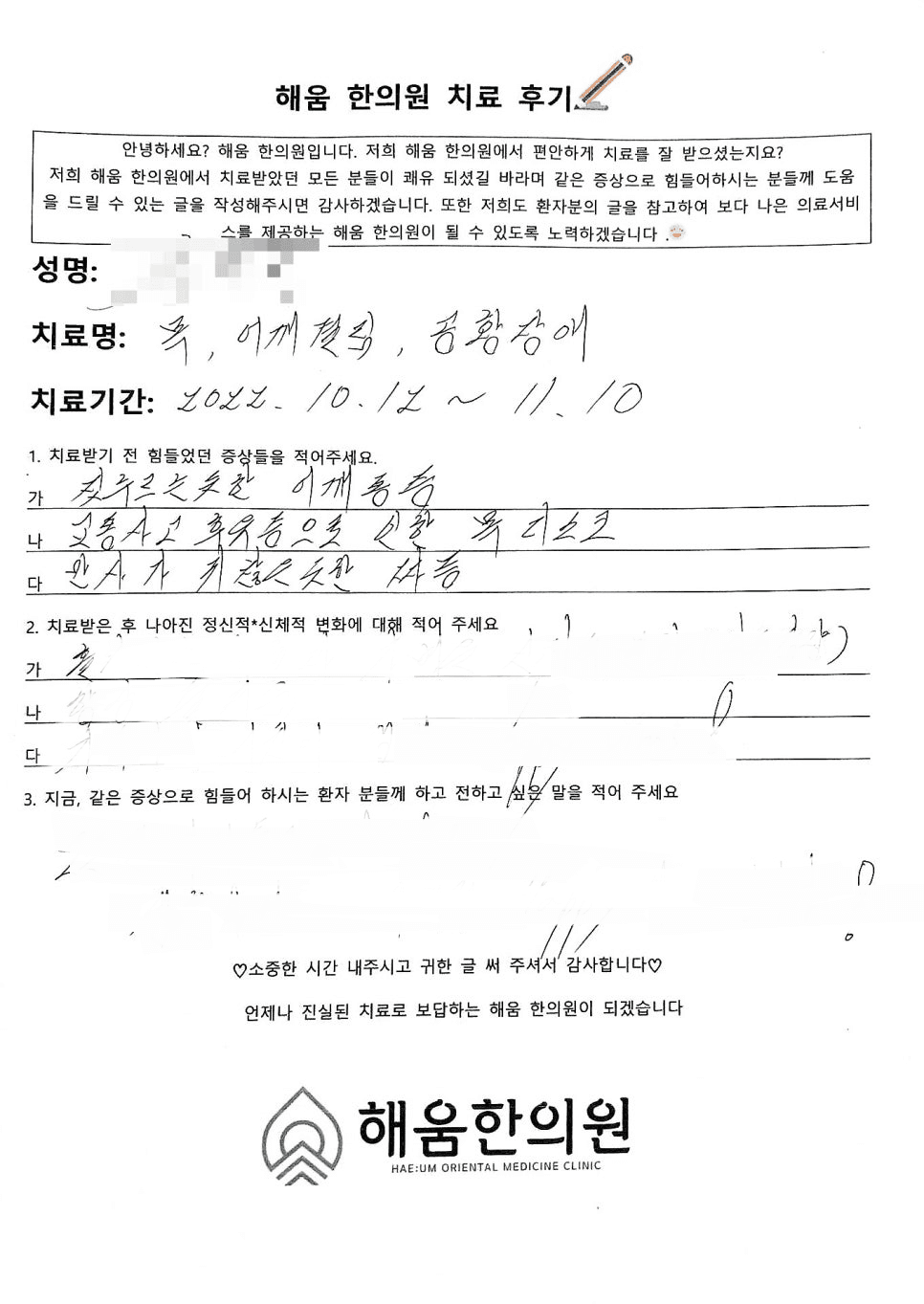
공황장애 가슴통증 가슴답답 두근거림, 목디스크, 어깨결림 증상, 불면증 1개월
2024. 12. 13.

스트레스로 인한 자율신경 문제가 불러온 화병, 불면증
2024. 06. 28.
코로나 후유증 가슴두근거림, 불면
2024. 06. 27.

불면증두통, 호흡곤란, 다이어트와 함께
2024. 05. 24.
심한 변비 배아픔에 직빵, 소화불량 불안 불면 3개월
2024. 05. 02.
과민성대장증후군 불면증치료법 중에 한약이 최고?!
2023. 01. 14.
치료후기 10건 더 보기접기
얼굴이 화끈거리고 어지럽고 불면증을 동반한 이석증
2022. 08. 19.
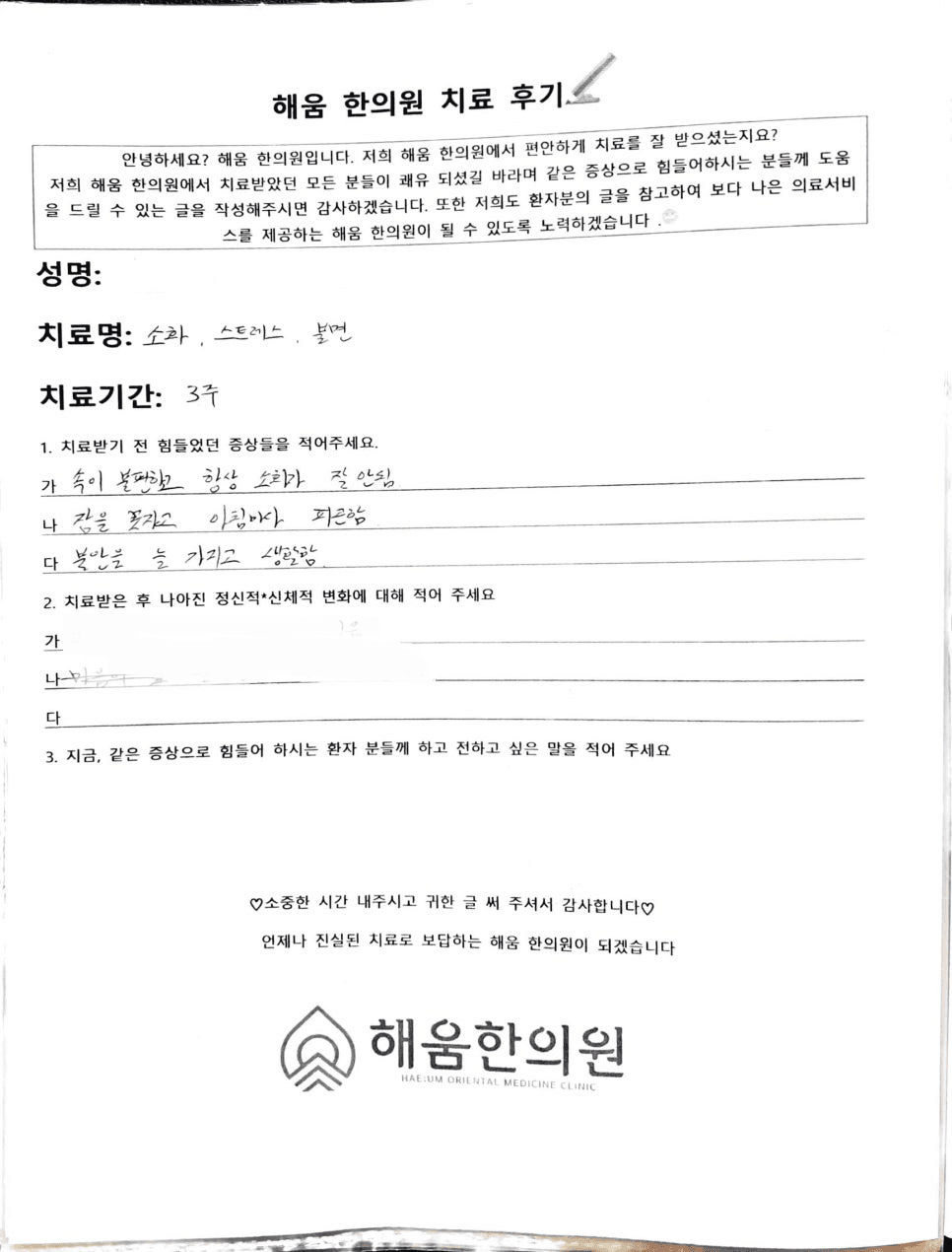
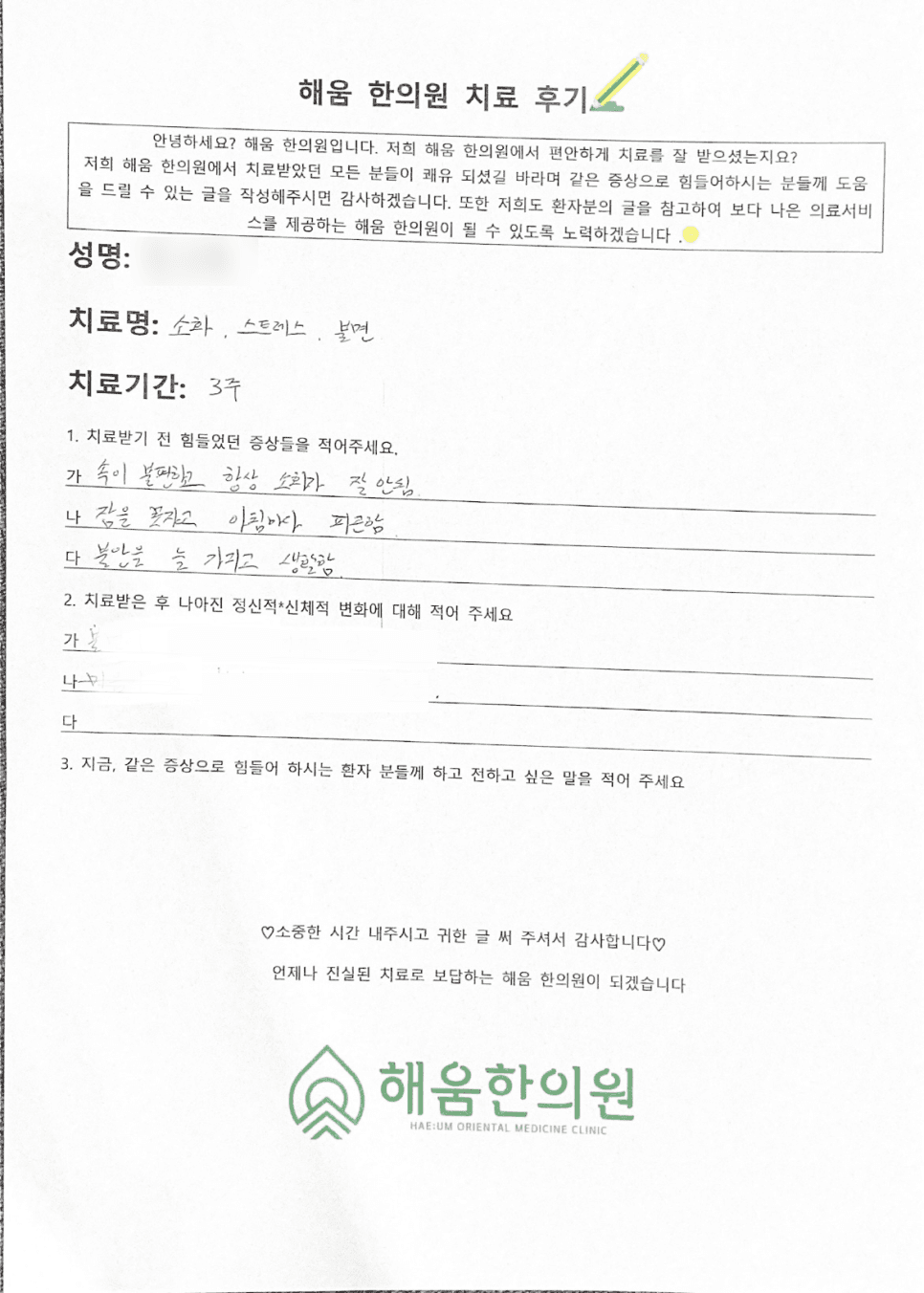
3주만에 좋아졌어요 스트레스로 인한 소화불량, 불면증
2022. 05. 19.
일요일밤만 되면 잠이 안 와요 내일 출근해야되는데..
2022. 04. 22.
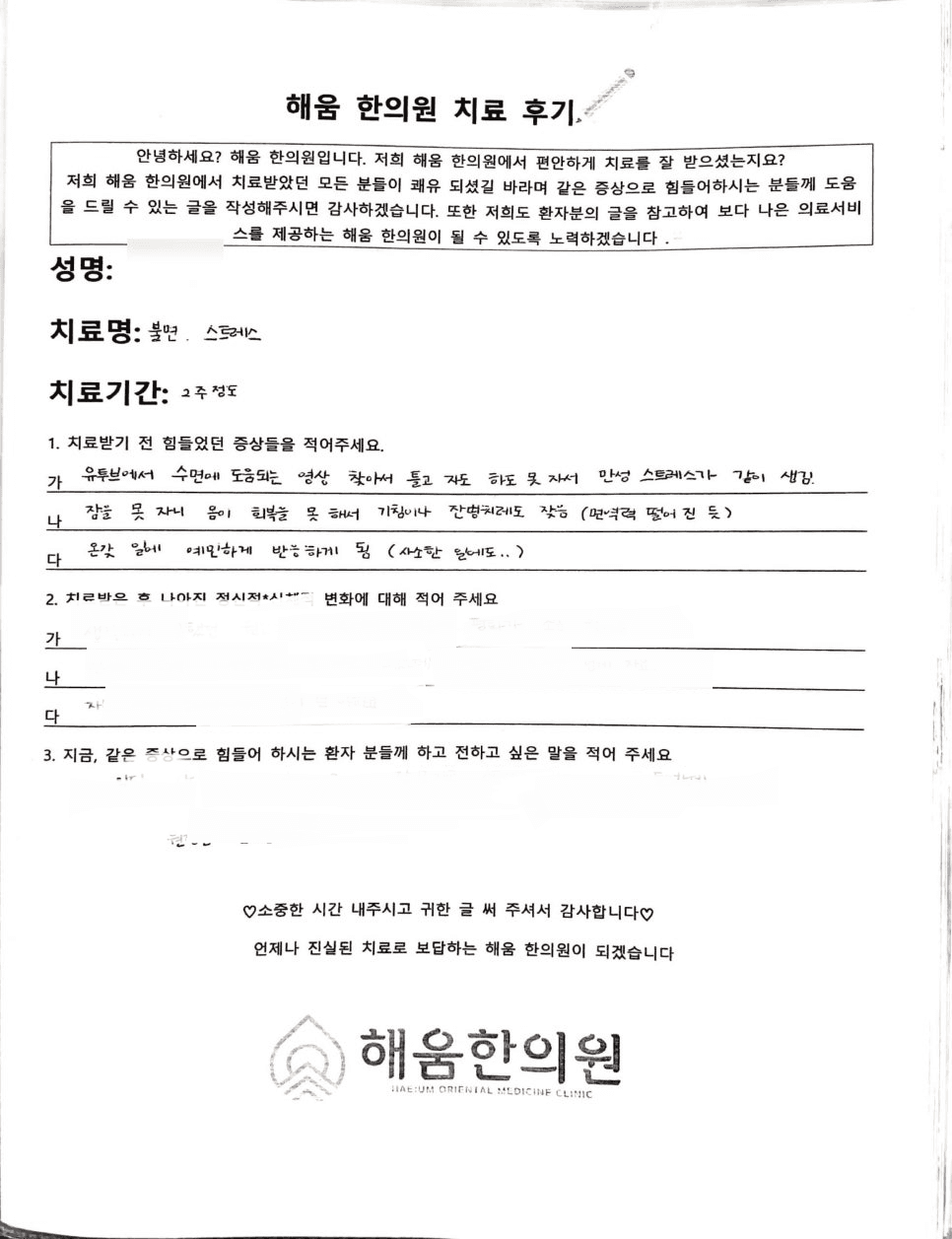
유튜브 불면증 asmr 영상으로도 해결 안 되었던 불면증, 한약으로 고친 사례
2022. 04. 09.
불면증 한약으로도 치료되나요? 말똥말똥 잠이 안 와서 다음날이 걱정되던 환자
2022. 04. 02.
만성피로,소화불량,불면.. 사는게 피곤하셨던 환자분 보약 먹고 기운 차리신 얘기
2022. 03. 09.
응급실 다녀온 후 생긴 식사불가,호흡곤란,불면 으로 직장을 그만둘뻔했던 분 완치 사례
2021. 10. 29.
정신과약부작용으로 생긴 불안장애, 두근거림, 불면증 1달만에 거의 사라진
2021. 10. 11.
변비로 항상 더부룩했던 환자, 변비 좋아지면서 불면, 우울증도 같이 좋아진 사례
2021. 09. 04.
코로나 백신 후유증으로 생긴 불면, 불안, 소화불량, 이명
2021. 01. 14.
다른 증상으로 내원하신 분들의 후기 중 ‘불면증’이 증상으로 함께 언급된 기록
- 입대 전 갑자기 발생한 과민성대장증후군, 한의원에서 치료가 될까요?2026. 06. 01.
- 검사는 이상 없는데 복통이 심해요..제가 예민한 걸까요?2026. 01. 09.
- 검사에선 이상 없다는데, 명치가 왜 계속 아플까요? 소화불량 명치통증 내시경 원인 치료2025. 12. 16.
- 명치끝 통증, 알고보니 자궁내막암 후유증이었다고?2025. 07. 08.
- 갑상샘항진증 아급성갑상선염 치료 환자, 피로감 소화불량 고지혈증 완화 한약 2달간2025. 01. 25.
- 갱년기 증후군, 급성 폐경2024. 07. 18.
- 만성 위염, 장상피화생, 소화불량2024. 06. 27.
- 이유모를 공황장애 한약으로 치료한 후기2024. 06. 07.
- 아내와 사별후 찾아온 갑자기 가슴두근거림 손발저림 어지러움증2023. 12. 22.
- 이노시톨부작용 여드름으로 고생하던 다낭성증후군 PCOS 환자, 한약 치료로 3개월만에 해결2023. 12. 12.
나머지 10건 더 보기접기
- 스트레스인지 코로나후유증인지.. 왼쪽가슴통증손저림 만성피로 염증 한 방에!2023. 01. 18.
- 코로나 후유증으로 구토 미식거림 두통 어지러움 연하장애로 고생하신 노인 환자분2023. 01. 03.
- 스트레스성 공황장애 초기증상 한약 치료사례: 공황발작과 공황장애의 차이2022. 12. 27.
- 호흡곤란 연하곤란으로 10kg 빠진 케이스 치료 (feat.해움한의원 한약 심리상담 불안증)2022. 11. 29.
- 이유 모르게 토하고 배가 부글거리고 구토 증상2022. 07. 30.
- 가슴두근거림,무기력,우울증,체력저하 한약 치료기2022. 06. 27.
- 두근두근 공황장애로 잠을 못 자고 불안했던 환자2022. 03. 19.
- 잔병치레를 달고 살던 환자분, 한약으로 소화불량 위경련 예민함 치료를 통해 좋아진 사례2022. 03. 07.
- 이게 담적인가요? 위내시경 후유증으로 명치 가슴이 답답하고 딱딱하게 만져지는 환자분 한약 1달 치료기2021. 11. 24.
- 코로나후유증으로 조금만 움직여도 숨차고 기침이 심했던 사례2021. 08. 28.
불면증, 누가 진료하나요?
담당 의료진
대표원장 박재은

“병이 아니라 그 뒤의 사람을 봅니다”
경희대학교 한의과대학에서 석사·박사 과정을 마쳤습니다. 심리상담사 1급 자격과 4만 건 이상의 한약 처방 경험을 바탕으로 진료합니다.
의료진 소개 더보기불면증, 자주 묻는 질문
수면제를 먹고 있는데 한방치료를 같이 받아도 되나요?
한약을 먹으면 수면제처럼 졸린가요?
코골이가 심한데 불면증 치료만 받아도 되나요?
치료 기간은 얼마나 걸리나요?
잠을 잘 자려면 생활에서 무엇을 지켜야 하나요?
한의원 진료 기록이 남으면 불이익이 있나요?
해움한의원에서 불면증을 진료하나요?
불면증으로 내원하려면 어떻게 하나요?
불면증이 심할 때는 어떻게 해야 하나요?
불면증에 관해 알아두면 좋은 정보
2건불면증과 관련해 정리한 건강정보입니다.
피곤한데잠이안와요불면증, 몸은 지쳤는데 왜 잠은 오지 않을까요?
몸은 너무 피곤한데 잠은 오지 않는다면, 단순한 피로가 아닐 수 있습니다"오늘은 정말 피곤해서 금방 잠들겠지."하지만 막상 침대에 누우면 눈은 말똥말똥하고, 아무리 뒤척여도 잠이 오지 않는 경험을 해보신 적 있으신가

불면증테스트로 확인했다면? 수면제보다 중요한 것은 원인 치료입니다
잠은 자는데도 개운하지 않으신가요?누워 있어도 쉽게 잠이 들지 않고, 겨우 잠들어도 새벽에 여러 번 깨는 일이 반복된다면 단순한 피곤함으로 넘기기 어렵습니다."오늘만 그렇겠지.""스트레스 때문이겠지."이렇게 생각하며

불면증, 질문 있어요
4건환자분들이 남긴 온라인 상담 질문과 의료진 답변입니다.
이런 경우에는 미루지 말고 진료를 받으세요
아래 상황은 불면증만의 문제가 아닐 수 있습니다. 해당한다면 지체하지 말고 전문 진료를 먼저 받으세요.
- 죽고 싶다는 생각이나 자해 생각이 든다: 자살예방 상담전화 109(24시간) 또는 가까운 응급실
- 자다가 숨이 멈춘다는 말을 듣거나, 낮에 운전 중 졸음을 참기 어렵다
- 며칠째 거의 한숨도 자지 못했는데 기분이 들뜨고 말과 행동이 많아졌다
- 잠을 못 자면서 체중이 크게 줄거나, 밤에 땀이 흠뻑 날 정도로 난다
참고문헌 8편
[1]Zeng LN, Zong QQ, Yang Y, Zhang L, Xiang YF, Ng CH, et al. Gender Difference in the Prevalence of Insomnia: A Meta-Analysis of Observational Studies. Front Psychiatry. 2020;11:577429. doi:10.3389/fpsyt.2020.577429. PMID: 33329116.
초록 (Abstract)
Objective: Insomnia is a major health challenge in the general population, but the results of the gender differences in the epidemiology of insomnia have been mixed. This is a meta-analysis to examine the gender difference in the prevalence of insomnia among the general population.
Methods: Two reviewers independently searched relevant publications in PubMed, EMBASE, PsycINFO, Web of Science from their inception to 16 April 2019. Studies that reported the gender-based prevalence of insomnia according to the international diagnostic criteria were included for analyses using the random-effects model.
Results: Eventually 13 articles were included in the meta-analysis. The pooled prevalence of insomnia in the general population was 22.0% [n = 22,980, 95% confidence interval (CI): 17.0–28.0%], and females had a significantly higher prevalence of insomnia compared with males (OR = 1.58, 95% CI: 1.35, 1.85, Z = 5.63, p < 0.0001). Subgroup analyses showed that greater gender difference was associated with the use of case-control study design and consecutive sampling method. Meta-regression analyses also revealed that higher proportion of females and better study quality were significantly associated with greater gender difference.
Conclusions: This meta-analysis found that the prevalence of insomnia in females was significantly higher than males in the included studies. Due to the negative effects of insomnia on health, regular screening, and effective interventions should be implemented in the general population particularly for females.
결과 (Results)
Characteristics of Included Studies and Quality Assessment: Initially, a total of 4,152 articles were identified. After screening titles or/and abstract, 323 articles were further reviewed and eventually 13 articles were included for analysis. The procedure of the literature search is presented in Figure 1. The 13 studies covered 326,908 participants in total (139,349 females and 187,559 males; Table 1). The studies were published between 1994 and 2017, and the sample size ranged from 290 to 299,188, with the response rate ranging from 33.4 to 97.5%.
The mean score of the study quality assessment was 4.54, ranging from 3 to 5. In all studies, insomnia was defined by validated instruments. The population sample of one study was not defined clearly; the samples of 6 studies were not recruited by random or consecutive sampling methods; the response rates of 10 studies were <70%; and the samples of 2 studies were not representative.
The Overall Prevalence of Insomnia and Gender Difference: The pooled overall prevalence of insomnia using the random-effect model was 22.0% [n = 22,980, 95% confidence interval (CI): 17.0–28.0%, I2 = 99.7%], as shown in Figure 2.
Prevalence of insomnia was compared between female and male populations (Figure 3), and the result showed that females had significantly higher prevalence of insomnia than males (OR = 1.58, 95% CI: 1.35, 1.85, Z = 5.63, p < 0.0001).
Subgroup Analyses and Meta-Regression: Subgroup analyses (Table 2) revealed that greater gender difference was significantly associated with the use of case-control study design and consecutive sampling method. In contrast, the gender difference was not associated with year of survey, type of interview, age, or continent (all p-values > 0.05).
In the meta-regression analyses, higher proportion of females (B = 0.02, Q = 31.59, p < 0.001) and better study quality (B = 0.27, Q = 18.46, p < 0.001) were significantly associated with greater gender difference.
Publication Bias and Sensitivity Analysis: The visual Funnel plot (Supplementary Figure 1) and Egger's-test (t = 1.06, P = 0.31) did not reveal any publication bias. Sensitivity analyses did not find any individual study that changed the significance of the primary results when each study was sequentially excluded (Supplementary Figure 2).
원문 발췌 · Zeng LN, Zong QQ, Yang Y, Zhang L, Xiang YF, Ng CH, Chen LG, Xiang YT, Front Psychiatry 2020 · CC BY 4.0 라이선스에 따라 수정 없이 인용했습니다(본문 속 인용 번호는 생략).
[2]Oh CM, Kim HY, Na HK, Cho KH, Chu MK. The Effect of Anxiety and Depression on Sleep Quality of Individuals With High Risk for Insomnia: A Population-Based Study. Front Neurol. 2019;10:849. doi:10.3389/fneur.2019.00849. PMID: 31456736.
초록 (Abstract)
Introduction: One of the most common sleep disorders, insomnia is a significant public health concern. Several psychiatric disorders, such as anxiety disorders and depression, have shown strong relationships with insomnia. However, the clinical impact of the combination of these two conditions on insomnia severity and sleep quality remains unknown. We investigated the relationship between sleep disturbance and psychiatric comorbidities in subjects with high risk for insomnia.
Methods: We analyzed data from a nation-wide cross-sectional survey of Korean adults aged 19 ~ 69 years conducted from November 2011 to January 2012. The survey was performed via face-to-face interviews using a structured questionnaire. We used the insomnia severity index (ISI) to evaluate insomnia and defined respondents with ISI scores of ≥10 were considered to be at high risk for insomnia. To diagnose anxiety and depression, we used the Goldberg anxiety scale (GAS) and Patient Health Questionnaire-9 (PHQ-9), respectively.
Results: Of the 2,762 respondents, 290 (10.5%) were classified as subjects with high risk for insomnia; anxiety [odds ratio (OR), 9.8; 95% confidence interval (CI), 7.3–13.1] and depression (OR, 19.7; 95% CI, 13.1–29.6) were more common in this population than in participants without insomnia. Of the participants with insomnia, 152 (52.4%) had neither anxiety nor depression, 63 (21.7%) only had anxiety, 21 (7.2%) only had depression, and 54 (18.6%) had both anxiety and depression. The group with both anxiety and depression was associated with worse scores on sleep-related scales than the other groups [high ISI, Pittsburgh Sleep Quality Index (PSQI), and Epworth Sleepiness Scale]. The relationship between outcome measures (ISI and PSQI) and psychiatric problems was significant only when anxiety and depression were present. The PSQI has a significant mediation effect on the relationship between psychiatric comorbidities and insomnia severity.
Conclusion: Among the respondents with insomnia, psychiatric comorbidities may have a negative impact on daytime alertness, general sleep quality, and insomnia severity, especially when the two conditions are present at the same time. Clinicians should, therefore, consider psychiatric comorbidities when treating insomnia.
결과 (Results)
Demographic Data of the Subjects: Of the total 7,430 interviewees, 3,114 completed the survey (acceptance rate of 41.9%), and 352 subjects suspended the interview. The final sample that completed the survey and the interview included 2,762 individuals. The enrollment flow chart of this study is presented in Figure 1. The prevalence of insomnia, anxiety, and depression according to sex, age distribution, size of the residential area, and education level is depicted in Table 1. Insomnia, depression, and anxiety were significantly more prevalent among women. Participants with the lowest educational levels were associated with a higher prevalence of insomnia and anxiety than were those who had completed high school, college, or graduate school.
Prevalence of Insomnia, Anxiety, and Depression and Mean Scores on Sleep-Related Scales: Of the 2,762 participants, 290 (10.5%) were classified as having a high risk for insomnia. The frequencies of insomnia, anxiety, and depression are presented in Table 1 according to sex, age group, size of the residential area, and education level. The mean ISI, ESS, and PSQI scores of individuals with high risk for insomnia were 14.37 ± 4.39, 7.73 ± 4.87, and 7.42 ± 2.59, respectively. Of the 290 subjects with high risk for insomnia, 152 (52.4%) had neither anxiety nor depression (Group 1), 63 (21.7 %) had anxiety only (Group 2), 21 (7.2%) had depression only (Group 3), and 54 (18.6%) had both anxiety and depression (Group 4). Anxiety was more common among individuals who had a high risk for insomnia than among those who did not [40.3% vs. 6.1%; OR, 10.1; 95% confidence interval (CI), 7.6–13.4]; this finding remained consistent after adjustment for demographic variables (OR, 9.8; 95% CI, 7.3–13.1). Depression was also more common among individuals who had a high risk for insomnia than those who did not (25.9% vs. 1.7%; OR, 20.1; 95% CI, 13.4–30.2); this finding also remained consistent after adjustment for demographic variables (OR, 19.7l 95% CI, 13.1–29.6) (Table 2).
Difference in Sleep-Related Scales Among the Four Groups: Participants at high risk for insomnia with both anxiety and depression were associated with significantly higher ESS and PSQI scores relative to the anxiety-only group (Figure 2). Meanwhile, individuals with no psychiatric comorbidities were associated with lower PSQI scores relative to the three other groups. ISI scores were significantly higher among participants with both anxiety and depression than those with any psychiatric comorbidities. When stratified by the presence of anxiety and depression, severe ISI tended to increase from Groups 1–4 (Figure 3).
Insomnia Characteristics According to the Presence of Anxiety or Depression: No statistical differences were observed among the 4 groups in average sleep time during workdays, weekends, and overall sleep. The three insomnia-related symptom scales of each group are presented in Figure 3. Regarding the difficulty in initiating sleep and feelings of impaired quality of life, only Groups 1 and 4 featured a statistically significant difference. Group 4 was more likely to have difficulties in maintaining sleep than were Groups 1 and 2. The groups did not differ in their scores on the frequent awakening scale.
Mediation Model Analysis: When insomnia was comorbid with both anxiety and depression, PSQI and ISI were significantly correlated with each other (Tables 3, 4). The relationship between anxiety and ISI (beta = 4.21) was attenuated when PSQI was used as a mediator (Figure 4). The Sobel test revealed the significance of the indirect effect of PSQI in mediating both anxiety and depression and ISI (Table 5).
원문 발췌 · Oh CM, Kim HY, Na HK, Cho KH, Chu MK, Front Neurol 2019 · CC BY 4.0 라이선스에 따라 수정 없이 인용했습니다(본문 속 인용 번호는 생략).
[3]Sweetman A, Lack L, Bastien C. Co-Morbid Insomnia and Sleep Apnea (COMISA): Prevalence, Consequences, Methodological Considerations, and Recent Randomized Controlled Trials. Brain Sci. 2019;9(12):E371. doi:10.3390/brainsci9120371. PMID: 31842520.
초록 (Abstract)
Co-morbid insomnia and sleep apnea (COMISA) is a highly prevalent and debilitating disorder, which results in additive impairments to patients’ sleep, daytime functioning, and quality of life, and complex diagnostic and treatment decisions for clinicians. Although the presence of COMISA was first recognized by Christian Guilleminault and colleagues in 1973, it received very little research attention for almost three decades, until the publication of two articles in 1999 and 2001 which collectively reported a 30%–50% co-morbid prevalence rate, and re-ignited research interest in the field. Since 1999, there has been an exponential increase in research documenting the high prevalence, common characteristics, treatment complexities, and bi-directional relationships of COMISA. Recent trials indicate that co-morbid insomnia symptoms may be treated with cognitive and behavioral therapy for insomnia, to increase acceptance and use of continuous positive airway pressure therapy. Hence, the treatment of COMISA appears to require nuanced diagnostic considerations, and multi-faceted treatment approaches provided by multi-disciplinary teams of psychologists and physicians. In this narrative review, we present a brief overview of the history of COMISA research, describe the importance of measuring and managing insomnia symptoms in the presence of sleep apnea, discuss important methodological and diagnostic considerations for COMISA, and review several recent randomized controlled trials investigating the combination of CBTi and CPAP therapy. We aim to provide clinicians with pragmatic suggestions and tools to identify, and manage this prevalent COMISA disorder in clinical settings, and discuss future avenues of research to progress the field.
원문 발췌 · Sweetman A, Lack L, Bastien C, Brain Sci 2019 · CC BY 4.0 라이선스에 따라 수정 없이 인용했습니다(본문 속 인용 번호는 생략).
[4]Riemann D, Espie CA, Altena E, Arnardottir ES, Baglioni C, Bassetti CLA, et al. The European Insomnia Guideline: An update on the diagnosis and treatment of insomnia 2023. J Sleep Res. 2023;32(6):e14035. doi:10.1111/jsr.14035. PMID: 38016484.
요약 유럽수면학회의 불면증 진료지침 개정판입니다. 진단은 수면·병력 면담, 수면 설문과 수면일기로 하고, 수면무호흡 같은 다른 수면장애가 의심되거나 치료에 반응하지 않을 때 수면다원검사를 권합니다. 모든 연령의 만성 불면증 1차 치료로 인지행동치료(CBT-I)를 권하며, 효과가 충분하지 않을 때 약물을 쓰되 수면제 대부분은 4주 이내의 단기 사용을 원칙으로 합니다.원문은 출판사 저작권 자료로, 위 링크에서 확인하실 수 있습니다.
[5]Riemann D, Spiegelhalder K, Feige B, Voderholzer U, Berger M, Perlis M, et al. The hyperarousal model of insomnia: a review of the concept and its evidence. Sleep Med Rev. 2010;14(1):19-31. doi:10.1016/j.smrv.2009.04.002. PMID: 19481481.
요약 불면증의 "과각성(hyperarousal)" 모델을 정리한 리뷰입니다. 자율신경·내분비·면역·뇌파·뇌영상 연구에서 불면증 환자는 밤뿐 아니라 낮에도 각성 수준이 높았습니다. 연구진은 불면증을 깨우는 뇌 활동과 재우는 뇌 활동의 불균형에 대한 타고난 취약성, 심리·신체 스트레스, 그리고 잠에 대한 걱정과 잘못된 수면 습관이 겹쳐 생기는 결과로 설명합니다.원문은 출판사 저작권 자료로, 위 링크에서 확인하실 수 있습니다.
[6]Li L, Wu C, Gan Y, Qu X, Lu Z. Insomnia and the risk of depression: a meta-analysis of prospective cohort studies. BMC Psychiatry. 2016;16(1):375. doi:10.1186/s12888-016-1075-3. PMID: 27816065.
초록 (Abstract)
Background: Observational studies suggest that insomnia might be associated with an increased risk of depression with inconsistent results. This study aimed at conducting a meta-analysis of prospective cohort studies to evaluate the association between insomnia and the risk of depression.
Methods: Relevant cohort studies were comprehensively searched from the PubMed, Embase, Web of Science, and China National Knowledge Infrastructure databases (up to October 2014) and from the reference lists of retrieved articles. A random-effects model was used to calculate the pooled risk estimates and 95 % confidence intervals (CIs). The I 2 statistic was used to assess the heterogeneity and potential sources of heterogeneity were assessed with meta-regression. The potential publication bias was explored by using funnel plots, Egger’s test, and Duval and Tweedie trim-and-fill methods.
Results: Thirty-four cohort studies involving 172,077 participants were included in this meta-analysis with an average follow-up period of 60.4 months (ranging from 3.5 to 408). Statistical analysis suggested a positive relationship between insomnia and depression, the pooled RR was 2.27 (95 % CI: 1.89–2.71), and a high heterogeneity was observed (I 2 = 92.6 %, P < 0.001). Visual inspection of the funnel plot revealed some asymmetry. The Egger’s test identified evidence of substantial publication bias (P <0.05), but correction for this bias using trim-and-fill method did not alter the combined risk estimates.
Conclusions: This meta-analysis indicates that insomnia is significantly associated with an increased risk of depression, which has implications for the prevention of depression in non-depressed individuals with insomnia symptoms.
결과 (Results)
Literature search: Figure 1 presents the process of this study selection. The search strategy identified 4,802 articles, in which 4,185 articles from the PubMed, 355 articles from the Embase, 226 from the Web of Science, and 36 from the CNKI were retrieved. Of these, based on abstracts or titles, the majorities were excluded after the first screening because they were reviews, case reports, or not relevant to our analysis. After full-text review of the remaining 89 studies, 55 studies were excluded for the reasons shown in Fig. 1. Of note, all of the 21 studies included in the previous review were eligible according to the criteria in our research except two duplicated studies used the same samples as the other two studies, and articles with longest follow-up and more detailed information were retained. Thus, 34 eligible cohort studies were finally included in this meta-analysis.Fig. 1Flow chart of study selection of insomnia in relation to depression
Characteristics of studies: The included 34 studies were published between 1989 and 2014, and characteristics of them are shown in Table 1. The sample sizes of the cohorts ranged from 147 to 44,270 with a total of 172,077. The length of follow-up duration ranged from 3.5 to 408 months in this study, with an average of 60.4 months. Fourteen studies were conducted in the United States and in Europe respectively, two studies in Australia, and four studies in Asia. Three studies reported results for males only, and three studies reported results for females only, 27 studies reported results for both males and females,and one study reported results for males and females separately. In the present study, 11 studies diagnosed insomnia on the basis of all DSM- IV criteria : sleep difficulties, duration and daytime consequence (sd, dur and day), 10 studies based the diagnosis only on sleep difficulties and duration criteria (sd and dur), and 13 studies took into consideration only the sleep difficulties criterion (sd). Ten studies assessed insomnia repeatedly during the course of the follow-up, and the rest of the studies assessed insomnia at baseline. Interobserver agreement (κ) between two investigators was 0.98. The results of quality assessment are shown in Table 2. The average score for the quality assessment of included cohort studies was 6.6 (of a possible 9 points), which indicated that the quality for all studies was moderate-high in a whole.Table 1Characteristics of included studies in the meta-analysisStudy sourceStudy nameSexInsomnia measurementDSM-IV-TR insomnia criteria satisfiedDepression measurementFollow-up time (months)Number of follow-up assessmentsBaseline age (years)No of participantsCovariatesFord and Kamerow, 1989, USA National Institute of Mental Health Epidemiologic Catchment Area (ECA) studyM/FDiagnostic Interview Schedulesd§, dur† and dayDiagnostic Interview Schedule121Range 18+;mean 45.797,954Age, sex, socioeconomic status, race, and marital statusBrabbins et al., 1993, UK NoneM/FGeriatric Mental Statesd and durGeriatric Mental State361Range 65+; mean 69.76701No covariate adjustmentBreslau et al., 1996, USA NoneM/FNIHM Diagnostic Interview Schedulesd and durNIHM Diagnostic Interview Schedule421Range 21–30; mean 26.14979Sex, hypersomnia, and number of other depressive symptomsChang et al. 1997 USA Johns Hopkins Precursors StudyMHabit Survey QuestionnairesdChecklists medical reports and self-reports4087Range NA; mean 26.3941Age at graduation, class year, parental history of clinical depression, coffee consumption, and measures of temperamentWeissman et al. 1997 USA National Institute of Mental Health Epidemiologic Catchment Area Study (ECA)M/FQuestionnairessd and durDiagnostic Interview Schedule (DIS)121Range 18+; mean 48.237,113Age, sex, and siteFoley et al. 1999 USA NoneM/FInterviewsdCES-D363Range 65+; mean 80.096,899No covariate adjustmentJohnson et al. 2000 USA NoneM/F1 item from the CBCLsd and durCBCL and TRF601Range NA; mean 6717Sex, birth weight, and mother’s history of MDD using generalized estimation equationsMallon et al. 2000 Sweden County of Dalarna registryM/FUppsala Sleep InventorysdHADS1441Range 45–65; mean 551,244Smoking, depression, and insomniaRoberts et al. 2000 USA Alameda Country studyM/F2 Items from the DSM-12Dsd12 Items from the DSM-12D121Range 50+; mean 64.92,370Age, sex, marital status, social isolation, education, financial problems, problems with daily activities, and heave drinkingRoberts et al. 2002 USA NoneM/FQuestionnairessd, dur and dayDiagnostic Interview Schedule for Children121Range 11–17; mean 153,136Age, values of the functioning measures at baseline, sex, parental education, and insomnia levelHein et al. 2003 Germany NoneM/FComposite International Diagnostic InterviewsdComposite International Diagnostic Interview601Range 55+; mean 60664No covariate adjustmentPerlis et al. 2006 USA NoneM/FHAMD (sleep items)sdSCID and HAMD121Range 60+; mean 72147No covariate adjustmentMorphy et al. 2007 UK NoneM/FJenkins Sleep ScalesdHADS121Range 18+; mean 501,589Age, sex, social class, anxiety (except when anxiety is the problem of interest), depression (except when depression is the problem of interest), and pain areas (except when widespread pain is the problem of interest)Buysse et al. 2008 Switzerland The Zurich StudyM/FSPIKE and visual analogue scalessd, dur and daySPIKE2406Range NA; mean 19.5278Concurrent MDE at the time of insomnia diagnosisCho et al. 2008 USA Depression SubstudyM/FPSQIsd, dur and daySCID and BDI243Range 60+; mean 69329Group status, depression symptoms, medical disease, age, sex, marital status, and educationJansson-Fröjmark and Lindblom.2008 Sweden NoneM/FBasic Nordic Sleep Questionnaires and Uppsala Sleep Inventorysd, dur and dayHADS121Range 20–60; mean 41.31,489Age, sexRoane and Taylor. 2008 USA National Longitudinal Study of Adolescent Health (Add Health)M/FIn-home interviewsd and durIn-home interview781Range 12–18; mean 163,582SexKim et al. 2009 Korea Kwangju community studyM/FInterviewsd, dur and dayGeriatric Mental State241Range 65+; mean 72.2792Age, sex, education, housing, past occupation, current employment, living area, life events, social deficit, physical activity, GMS organicity, GMS anxiety, and daily drinking.Szklo-Coxe et al. 2010 USA Wisconsin Sleep Cohort StudyM/FPSG + interview and self-reported symptomssdZung Self-Rating Depression Scale441Range 33–71; mean 53.6555Age, sex, chronic health conditions, alcohol consumption, cigarette smoking, caffeine consumption, use of hypnotic agents, and BMIYokoyama et al. 2010 Japan Nihon University Japanese Longitudinal Study of Aging: (NUJLSOA)M/FQuestionnaire11-item short form of the CES-D361Range 69+; mean 73.13,065Age, sex, educational history, place of residence, sleep duration, excessive daytime sleepiness, discomfort feeling in the legs, subjective sleep sufficiency, psychological stress, self-rated health, and activities of daily livingJaussent et al. 2011 France French Three-City StudyM/FQuestionnaire and clinical interviewsdCES-D482Range 65+; mean ≥ 603,824Age, center, CES-D baseline, sex, education, living alone, coffee consumption, alcohol consumption, smoking, chronic disease, past major depression, disability, prescribed sleep medication intake, and homeopathic and non-prescription treatments for sleepAlmeida et al. 2011 Australia Health In Men Study (HIMS)MQuestionnairesdMedical records (based on ICD-10)721Range 70+; mean ≥ 605,127Age, education group, migrant status, living alone, low social support group, smoking group, BMI, diabetes, hypertension, arthritis, chronic respiratory diseases, coronary artery disease, stroke, and cancerMarques et al. 2011 Portugal NoneFInterviewsd, dur and dayDSM-IV51Range 18–44; mean 29.8382Negative affect, positive affect, and lifetime depressionThomée et al. 2011 Sweden NoneM/FA single item adapted from the Karolinska Sleep Questionnairesd and durTwo items from the Primary Care Evaluation of Mental Disorders (Prime-MD)121Range 20–24; mean < 601,455Relationship status, educational level, and occupationOkajima et al. 2012 Japan NoneM/FPSQIsd, dur and dayCES-D241Range 20+; mean 57.41,577Age, sex, disease currently treated, habitual alcohol ingestion, smoking habit, and living aloneSalo et al. 2012 Finland Finnish Public Sector StudyM/FThe 4-item Jenkins Sleep Problem ScalesdHealth register and medical records421Range 19–70; mean 43.940,791Age, sex, socioeconomic position, night/shift work, health behaviors, baseline physical health, use of pain killers, psychological distress, and anxietySkapinakis et al. 2013 UK UK National Psychiatric Morbidity surveyM/FThe Revised Clinical Interview Schedule (CIS-R)sd and durThe Revised Clinical Interview Schedule (CIS-R)181Range 16–74; mean 44.752,406Age, sex, marital status, educational qualifications,occupational class, employment status, and other psychological symptomsGehrman et al. 2013 USA Millennium Cohort Study (MCS)M/F2 items from PHQ and PCL-C, and questionnairessd and durPHQ-9842Range NA; mean 33.18,902Sleep duration, birth year, sex, race/ethnicity, educational level, and marital statusSuh et al. 2013 Korea Korean Genome and Epidemiology Study (KoGES)M/FQuestionnairesd and durBDI723Range 43–73; mean 52.31,089Age, sex, education level, employment status, marital status, physical health, smoking status, heavy drinking, and time interactions with each covariatePaudel et al. 2013 USA Prospective Osteoporotic Fractures in Men (MrOS) StudyMPSQIsd, dur and dayGeriatric Depression Scale (GDS)40.81Range 67+; mean 75.92,352Age, clinic site, baseline GDS score, health status, education, use of benzodiazepines, alcohol consumption, cognitive function, walks for exercise, impairments in activities of daily living and certain medical conditionsCampbell et al. 2013 UK North Staffordshire Osteoarthritis Project (NorStOP)M/FJenkins Sleep Questionnairesd and durHADS722Range 50+; mean ≥ 602,373Age, sex, marital status, employment status, alcohol intake, smoking status, and BMIJackson et al. 2014 Australia Australian Longitudinal Study on Women’s Health, (ALSWH)FQuestionnaireNone (sleeping difficulties in the last 12 months)Questionnaire1083Range 22–27; mean < 605,702Education level, body weight dissatisfaction, history of abuse, and binge drinking in 2000Sivertsen et al. 2014 Norway Nord-Trøndelag health study HUNT Study (HUNT2 and HUNT3)M/FQuestionnairesd, dur and dayHADS1321Range 19–67; mean 45.3 (HUNT2) Range 20–89; mean 56.1 (HUNT3)44,270Age, sex, education, angina, arthrosis, asthma, ankylosing spondylitis, cancer, diabetes, fibromyalgia, headache, hypertension, myocardial infarction, obesity, osteoporosis, rheumatoid arthritis, stroke and whiplash at baseline.Dørheim et al. 2014 Norway Akershus Birth CohortFBISsd, dur and dayEPDS3.52Range 17.4–47.5; mean 31.52,088No covariate adjustment Abbreviations: NA not available, F female, M male, NIHM National Institute of Mental Health, CES-D Centre for Epidemiologic Studies Depression, CBCL Child Behavior Checklist, EPDS Edinburgh Postnatal Depression Scale, GMS Geriatric Mental State diagnostic schedule, TRF Teacher Report Form, HADS Hospital Anxiety and Depression Scale, DSM-12D 12-item scale for DSM depression, HAMD Hamilton Rating Scale for Depression, SCID Structured Clinical Interview for DSM Disorders, SPIKE Structured Psychopathological Interview and Rating of Social Consequences of Psychic Disturbances for Epidemiology, PSQI Pittsburgh Sleep Quality Index, BDI Beck Depression Inventory, BIS The Bergen Insomnia Scale, PSG polysomnographic assessment, day daytime consequences criterion §sd, sleep difficulties criterion †dur, duration criterion Table 2Quality assessment of studiesa Study sourceSelectionComparabilityExposureTotal scoreRepresentativeness of the exposed cohortSelection of the non- exposed cohortAscertainment of exposureDemonstration that outcome of interest was not present at start of studyComparability of cohorts on the basis of the design or analysisAssessment of outcomeWas follow-up long enough for outcomes to occur (> = 5 years)Adequacy of follow up of cohorts (>80 %)Ford and Kamerow 111111006Brabbins et al. 111101005Breslau et al. 111111017Chang et al. 111121119Weissman et al. 111111006Foley et al. 111101005Johnson et al. 110111117Mallon et al. 110111106Roberts et al. 110101015Roberts et al. 110121006Hein et al. 011101116Perlis et al. 011101004Morphy et al. 111121007Buysse et al. 111111107Cho et al. 111121018Jansson-Fröjmark and Lindblom 111111017Roane and Taylor 111101105Kim et al. 111121007Szklo-Coxe et al. 111111006Yokoyama et al. 111121007Jaussent et al. 111121007Almeida et al. 111121108Marques et al. 010111004Skapinakis et al. 111121007Salo et al. 111121018Suh et al. 111121119Paudel et al. 111121007Campbell et al. 111121119Jackson et al. 111111118Sivertsen et al. 111121119Okajima et al. 111111006Thomée et al. 011111005Gehrman et al. 011121107Dørheim et al. 011001003 aThe study quality was assessed according to the Newcastle Ottawa Quality assessment scale for cohort studies. This scale awards a maximum of 9 points to each study: 4 for selection, 2 for comparability, and 3 for assessment of outcomes (for cohort study). 1 = “Yes”, 0 = “No”, “Unable to determine” or “Not available”
Quantitative synthesis: The results from the random-effects model combining the RRs for depression in relation to insomnia are shown in Fig. 2. Twenty-six studies suggested a significant positive relationship between insomnia and depression, while the other studies did not. The pooled RR of depression was 2.27 (95 % CI: 1.89–2.71) among populations with insomnia, and a high heterogeneity was observed among studies (I 2 = 92.6 %, P < 0.001).Fig. 2Forest plot of the association between insomnia and risk of depression
Subgroup analysis: Subgroup analysis was conducted by mean age at baseline, sex, study location, insomnia definition, type of depression measurement, follow-up duration, sample size, study quality, publication year (before 2010 vs. after 2010), and whether age, socioeconomic status, smoking status, alcohol intake, body mass index (BMI) were controlled or not in models. Insomnia was significantly associated with an increased risk of depression in all subgroups, with the exception of populations from Australia (RR = 1.79, 95 % CI = 0.90–3.54, I 2 = 95.9 %, P < 0.001). However, moderate to high heterogeneities were observed. No interactions between insomnia and stratification variables in relation to depression risk were observed (all P values for interactions > 0.05; Table 3).Table 3Subgroup analysis of relative risks for the association between insomnia and depressionNo of studiesRR (95 % CI) I 2 (%) P value for heterogeneity P value between groupsMean age at baseline, y <60222.50 (1.96, 3.20)94.70<0.0010.31 ≥60121.87 (1.47, 2.37)80.70<0.001Sex Male31.46 (1.13, 1.88)26.700.2560.48 Female31.96 (1.05, 3.66)73.50<0.001 Mixed282.41 (1.97,.95)92.80<0.001Study location USA143.13 (2.03, 4.85)89.80<0.0010.17 Europe141.73 (1.43, 2.09)88.50<0.001 Asia42.27 (1.22, 4.21)90.40<0.001 Australia21.79 (0.90, 3.54)95.90<0.001Source of participants* General population252.34 (1.85, 2.96)94.00<0.0010.75 Non-general population92.05 (1.53, 2.74)78.70<0.001Insomnia definition Sd, dur and day112.90 (1.78, 4.74)92.70<0.0010.37 Sd and dur102.21 (1.50, 3.25)90.30<0.001 Sd131.87 (1.53, 2.29)87.70<0.001Type of depression measure Self-reported scales172.20 (1.70, 2.86)94.10<0.0010.63 Physician diagnosis152.27 (1.67, 3.09)91.80<0.001 Combined23.89 (1.73, 8.74)0.000.438Follow-up duration, y <5222.34 (1.84, 2.97)93.60<0.0010.77 5–1082.37 (1.73, 3.25)82.30<0.001 >1041.88 (1.52, 2.32)54.600.086Sample size <5000262.01 (1.66, 2.44)86.50<0.0010.10 ≥500083.12 (2.11, 4.62)96.40<0.001Study quality Score >782.06 (1.60, 2.63)88.60<0.0010.70 Score ≤ 7262.36 (1.83, 3.03)93.00<0.001Publication year Before 2010192.63 (1.95, 3.55)88.20<0.0010.21 2010–2014151.94 (1.53, 2.45)94.62<0.001Statistical model Unadjusted51.78 (1.29, 2.47)56.000.0780.75 Adjusted292.31 (1.90, 2.81)93.40<0.001Controlling age in models Yes212.64 (2.04, 3.42)92.30<0.0010.09 No131.75 (1.33, 2.31)92.50<0.001Controlling SES in models Yes172.34 (1.81, 3.03)95.60<0.0010.78 No172.15 (1.74, 2.65)71.60<0.001Controlling smoking status in models Yes72.10 (1.45, 3.06)89.80<0.0010.75 No272.32 (1.88, 2.87)93.30<0.001Controlling alcohol intake in models Yes92.47 (1.75, 3.48)90.90<0.0010.69 No252.19 (1.78, 2.69)92.00<0.001Controlling BMI in models Yes52.19 (1.57, 3.06)85.30<0.0010.94 No292.28 (1.87, 2.78)92.30<0.001 Abbreviations: BMI body mass index, dur duration criterion, day daytime consequences criterion, F female, M male, NA not available, SES socioeconomic status, Sd sleep difficulties criterion *Study population truly or somewhat representative of a community or population-based study defined as general population, and study population was sampled from a special population (such as population from a company, register patients, data from the health insurance company or health examination organization or pregnant), which defined as non-general populations
Sensitivity analysis: Sensitivity analyses were used to identify the potential sources of heterogeneity in association between insomnia and the risk of depression. This helped to examine the influence of various exclusions on the combined RR and test the stability of the quantitative synthesis results. In the leave-one-out analysis by omitting one study in turn, the overall combined RR did not change substantially, with a range from 2.07 (95 % CI: 1.77–2.42) to 2.33 (95 % CI: 1.95–2.78), and I 2 varied from 89.6 to 89.9 %. This indicated that none of the individual studies significantly influenced the overall result. It was worth noting that, six studies defined insomnia as DIS and/or DMS or NRS, and the rest of studies defined insomnia as DIS and/or DMS. There is controversy as to whether individuals with NRS complaint share similar pathophysiologic mechanisms with the other nocturnal symptoms, such as DIS and DMS. Restricting the analysis to the 28 studies defined insomnia as DIS and/or DMS yielded a pooled RR of 2.30 (95 % CI, 1.84 to 2.87) after exclusion of 6 studies. Thus, our main results would not change even if these six studies were excluded.
Publication bias: The visual inspection of the funnel plot identified substantial asymmetry (Fig. 3). The Egger’s test identified evidence of substantial publication bias (P < 0.05). A sensitivity analysis using the trim-and-fill method was performed with 16 imputed studies, which produced a symmetrical funnel plot (Fig. 4). Using the trim-and-fill method, the RR was 1.40 (95 % CI, 1.16–1.69; P < 0.001). Correction for potential publication bias thus did not alter the significant association.Fig. 3Funnel plot with pseudo 95 % confidence limits of insomnia and depression. The horizontal line represents the summary effect estimates, and the dotted lines are pseudo 95 % CIs Fig. 4Filled funnel plot of RR from studies that investigated the association between insomnia and the risk of depression. The circles alone are real studies and the circles enclosed in boxes are ‘filled’ studies. The horizontal line represents the summary effect estimates, and the diagonal lines represent pseudo-95 % CI limits
원문 발췌 · Li L, Wu C, Gan Y, Qu X, Lu Z, BMC Psychiatry 2016 · CC BY 4.0 라이선스에 따라 수정 없이 인용했습니다(본문 속 인용 번호는 생략).
[7]Qaseem A, Kansagara D, Forciea MA, Cooke M, Denberg TD, Clinical Guidelines Committee of the American College of Physicians. Management of Chronic Insomnia Disorder in Adults: A Clinical Practice Guideline From the American College of Physicians. Ann Intern Med. 2016;165(2):125-133. doi:10.7326/M15-2175. PMID: 27136449.
요약 미국내과학회의 만성 불면증 진료지침입니다. 모든 성인 만성 불면증 환자에게 인지행동치료(CBT-I)를 첫 치료로 강하게 권고합니다. 인지행동치료만으로 충분하지 않을 때 약물을 더할지는 단기 복용의 이득과 위험, 비용을 환자와 충분히 상의해 함께 정하도록 권합니다.원문은 출판사 저작권 자료로, 위 링크에서 확인하실 수 있습니다.
[8]Furukawa Y, Sakata M, Yamamoto R, Nakajima S, Kikuchi S, Inoue M, et al. Components and Delivery Formats of Cognitive Behavioral Therapy for Chronic Insomnia in Adults: A Systematic Review and Component Network Meta-Analysis. JAMA Psychiatry. 2024;81(4):357-365. doi:10.1001/jamapsychiatry.2023.5060. PMID: 38231522.
초록 (Abstract)
Question: What is the association of each component and delivery format of cognitive behavioral therapy for chronic insomnia with outcomes?
Findings: This systematic review and component network meta-analysis including 241 trials found that cognitive restructuring, third-wave components, sleep restriction, stimulus control, and in-person format may be beneficial. Cognitive restructuring, third-wave components and in-person delivery were mainly associated with improved subjective sleep quality, while sleep restriction and stimulus control were associated both with improved sleep quality and self-reported sleep continuity.
Meaning: The findings suggest that beneficial cognitive behavioral therapy for insomnia may include cognitive restructuring, third-wave components, sleep restriction, stimulus control, and in-person format.
결과 (Results)
Studies and Participants: We identified 9878 records, assessed 1872 full texts, and included 241 trials with a total of 31 452 randomized participants (PRISMA flow diagram in eFigure 1 in Supplement 1). The interrater reliability of judgments for full-text screening was substantial, with κ of 0.70 (95% CI, 0.66-0.74) and percentage agreement of 85.1%. eMethods 2 in Supplement 1 lists the included and excluded trials.
Typical participants were middle-aged women with psychological or physical comorbidities and moderate insomnia symptoms (mean [SD] age, 45.4 [16.6] years, based on 236 trials; 21 048 of 31 452 [67%] female, reported in 232 trials; 180 of 241 trials [75%] included insomnia with comorbidities; mean [SD] baseline Insomnia Severity Index score, 16.8 [4.8], reported in 176 trials) (Table 2).
Operationalized formal diagnostic criteria were used in 146 trials. The 241 included trials had 528 arms (Figure 1). Most commonly included components in CBT arms were sleep hygiene education (198 of 210 [94%]), sleep diary (192 of 210 [91%]), cognitive restructuring (199 of 210 [95%]), sleep restriction (198 of 210 [94%]). and stimulus control (194 of 210 [92%]) (eTable 1 in Supplement 1).
Treatment duration ranged from 1 to 16 weeks (median, 6). Hypnotics were used in 4259 of 20 704 participants (21%). Publication years ranged from 1980 to 2023. eTable 2 in Supplement 1 tabulates characteristics of included trials. Interrater reliability of judgments for components ranged from moderate to almost perfect, with κ ranging from 0.43 to 0.85 and percentage agreement from 73.1% to 98.8% (eTable 3 in Supplement 1). Interrater reliability of extracted primary outcomes was almost perfect, with an intraclass correlation of 0.98 (95% CI, 0.98-0.98). Validity of the remission imputation method was confirmed, with an intraclass correlation of 0.96 (95% CI, 0.95-0.97) (eMethods 3 in Supplement 1).
The overall risk of bias according to the Cochrane revised risk of bias tool was low in 21 of 241 trials (9%), some concerns in 135 (56%), and high in 85 (35%). The interrater reliability for the overall risk of bias was fair, with a weighted κ of 0.33 (95% CI, 0.20-0.45) and percentage agreement of 53.4% (eMethods 4 in Supplement 1).
Assessment of transitivity (eFigure 2 in Supplement 1) showed that potential effect modifiers were evenly distributed across comparisons, except for the proportion of insomnia without comorbidities. We explored its impact in a sensitivity analysis.
Treatment-Level Network Meta-Analysis: The network for the primary outcome at the treatment level was well connected (Figure 1). The global test did not show evidence of inconsistency. The back-calculation method identified 2 possibly inconsistent comparisons of 20, a proportion that would be empirically expected (eMethods 5 in Supplement 1).
Figure 2 shows the results of the treatment-level NMA, with treatments ranked according to their P scores. CBT was associated with the most increased likelihood of remission, followed by behavioral therapy and cognitive therapy, suggesting the benefits of both cognitive and behavioral skills. eTable 4 in Supplement 1 provides the league table.
Heterogeneity of the primary outcome was within the empirically expected range (τ2, 0.23; τ, 0.48; I2, 43% [95% CI, 34-52]). Prediction intervals did not change the overall interpretation of results (eFigure 3 in Supplement 1).
The contour-enhanced funnel plots suggested no publication or reporting biases. However, we found some evidence of possible small study effects, such as smaller studies showing consistently different results than bigger ones (eFigure 4 in Supplement 1). We explored the impact of this in a sensitivity analysis. Moderate certainty of evidence suggested the superiority of CBT, behavioral therapy and cognitive therapy over psychoeducation, and CBT over cognitive therapy, and low certainty of evidence CBT over behavioral therapy. Other comparisons were mainly of moderate to low certainty, except when no direct comparison was available and the certainty was considered very low (eTable 5 in Supplement 1).
Component Network Meta-Analysis: The component-level network was well connected and densely populated (eFigure 5, eTable 3 in Supplement 1). Figure 3 shows estimated incremental odds ratios and mean differences for all components and outcomes. Heterogeneity for the primary outcome was within the empirically expected range (τ2, 0.33; τ, 0.58; I2, 50% [95% CI, 42-57]).
The cNMA revealed that for the primary outcome, cognitive restructuring, third-wave components, sleep restriction, and stimulus control may be beneficial but relaxation might be detrimental. In-person contact with therapists may also be helpful. We found that the waiting component was associated with a decrease in remission rate, and thus, when used as the control, may inflate the perceived efficacy of the active arm. Including third-wave components may be associated with increased dropout.
In terms of self-reported sleep continuity, sleep restriction was associated with improved sleep efficiency and wake after sleep onset, and stimulus control with improved sleep efficiency and sleep latency. We did not find evidence of an association of cognitive restructuring, third-wave component, or in-person delivery with self-reported sleep continuity. Cognitive restructuring and in-person delivery may be beneficial for long-term remission (Figure 3).
Results of all sensitivity analyses largely agreed with our primary analyses (eFigure 7 in Supplement 1). cNMA using risk differences were in line with cNMA using odds ratios, albeit with greater heterogeneity. We found weak evidence of some 2-way interactions among the components; however, including interactions into the model did not materially change the overall conclusions. Subgroup analyses found no evidence that age, sex, hypnotic use, comorbidities, and baseline severity had an impact on the relative treatment effect (eFigure 8 in Supplement 1).
The first quartile, median, and third quartile of the remission rates among psychoeducation arms were 0.06, 0.14 and 0.26, respectively. A CBT-I package with the 4 beneficial treatment components in the in-person delivery format compared with in-person psychoeducation led to an odds ratio of 5.34 (95% CI, 3.56-8.01) and was associated with an increase in the remission rate by a risk difference of 0.19 (95% CI, 0.12-0.27) and number needed to treat of 5.3 (95% CI, 3.7-8.3), assuming a control event rate of 0.06; by a risk difference of 0.33 (95% CI, 0.23-0.43) and number needed to treat of 3.0 (95% CI, 2.3-4.3), assuming a control event rate of 0.14; and by a risk difference of 0.38 (95% CI, 0.28-0.47) and number needed to treat of 2.6 (95% CI, 2.1-3.6), assuming a control event rate of 0.26.
원문 발췌 · Furukawa Y, Sakata M, Yamamoto R, Nakajima S, Kikuchi S, Inoue M, Ito M, Noma H, Takashina HN, Funada S, Ostinelli EG, Furukawa TA, Efthimiou O, Perlis M, JAMA Psychiatry 2024 · CC BY 4.0 라이선스에 따라 수정 없이 인용했습니다(본문 속 인용 번호는 생략).