

별일 아니라는 걸 알면서도 걱정이 멈추지 않습니다. 가슴은 늘 조이듯 두근거리고, 어깨는 돌처럼 굳어 있고, 밤에는 내일 일어날지도 모를 일들이 머릿속을 맴돕니다. 걱정이 내 하루를 끌고 다니기 시작했다면 불안장애를 살펴볼 때입니다.
불안장애 한눈에 보기
- 위험하지 않은 상황에서도 지나친 걱정과 긴장이 오래 이어지고, 두근거림·소화불량·불면 같은 몸의 증상이 함께 나타나는 상태입니다.
- 가장 흔한 정신건강 문제 가운데 하나로 여성과 젊은 층에 많고, 코로나 유행 뒤 전 세계적으로 25.6% 늘었습니다.
- 불안장애가 있으면 몸을 쉬게 하는 부교감신경 기능이 떨어져 있어, 생각만이 아니라 몸의 긴장을 함께 풀어야 회복이 빠릅니다.
- 치료후기 57건
- 의료진 칼럼 2편
- 건강정보 21편
- 온라인 상담 4건
불안장애란?

불안은 위험에 대비하게 해 주는 자연스러운 감정입니다. 그런데 걱정할 일이 없는데도 불안이 계속되거나, 실제 위험보다 훨씬 크게 느껴지고, 그 때문에 일상생활이 흔들린다면 불안장애로 봅니다. 여러 일을 끝없이 걱정하는 범불안장애, 갑작스러운 공포 발작이 반복되는 공황장애, 사람들 앞에서 극도로 긴장하는 사회불안장애 등이 모두 여기에 속합니다.
불안장애는 매우 흔합니다. 48편의 리뷰를 모은 연구에서 불안장애 유병률은 조사에 따라 3.8~25%였고, 특히 여성과 젊은 성인, 만성 질환이 있는 사람에게서 높았습니다[1]. 코로나 유행이 겹친 2020년에는 전 세계 불안장애가 7,620만 건(25.6%) 늘었고, 여성과 젊은 층이 더 크게 영향을 받았습니다[2].
이런 증상이 있나요?

- 사소한 일까지 걱정이 꼬리를 물고, 그만하려 해도 멈추지 않는다
- 늘 최악의 상황을 먼저 떠올린다
- 어깨와 목이 굳어 있고, 이를 악물거나 몸에 힘이 들어가 있다
- 가슴이 두근거리거나 답답하고, 숨이 얕다
- 긴장하면 속이 울렁거리거나 배가 아프고 설사를 한다
- 잠들기 어렵고, 자다가도 자주 깬다
- 쉽게 피곤하고 예민해지며 집중이 잘 안 된다
이런 걱정과 몸의 긴장이 대부분의 날에 반년 넘게 이어지고, 일이나 관계, 잠에 지장을 준다면 불안장애일 가능성이 높습니다. 불안은 혼자 오지 않는 경우가 많아, 우울증이 함께 있는지도 살펴야 합니다. 171개 연구를 종합하면 기분장애와 불안장애는 서로 함께 나타날 가능성이 6배가량 높았습니다[3].
불안장애는 왜 생기나요?
- 오래 이어진 스트레스, 큰 변화나 상실
- 걱정이 많고 책임감이 강하거나 완벽을 추구하는 성격
- 수면 부족, 과로, 카페인·술
- 출산, 갱년기 같은 호르몬 변화
- 만성 질환이나 큰 병을 앓은 뒤
불안은 마음에서 시작되지만 몸에 흔적을 남깁니다. 36개 연구를 분석한 결과 불안장애가 있는 사람은 심박변이도가 낮아, 몸을 쉬게 하는 부교감신경 기능이 떨어져 있었습니다[4]. 몸이 늘 경보 상태에 있으니 작은 자극에도 심장이 뛰고 속이 불편해지고, 그 몸의 신호가 다시 불안을 키우는 고리가 생깁니다.
불안장애의 표준 치료
불안장애의 표준 치료는 인지행동치료와 약물로, 세로토닌 계열 항우울제를 중심으로 여러 약이 쓰입니다[5]. 다만, 신경안정제(벤조디아제핀)는 의존 위험 때문에 짧게 쓰는 것이 원칙입니다. 그래서 몸을 움직이는 운동치료를 대안으로 많이 권합니다. 유산소 운동 프로그램은 불안을 뚜렷하게 줄였고, 숨이 찰 정도의 운동이 가벼운 운동보다 효과가 컸습니다[6].
운동이 불안을 줄이는 것은 몸의 긴장이 풀리면 마음도 따라 풀리기 때문입니다. 반대로 몸이 경보 상태에 머물러 있으면 생각을 바꾸려 해도 걱정은 쉽게 돌아옵니다. 한의학 치료는 바로 이 몸의 경보 상태, 곧 무너진 자율신경의 균형과 지친 회복력을 바로잡아 걱정이 덜 자라는 몸을 만드는 데 초점을 둡니다.
해움한의원은 이렇게 치료합니다

해움한의원은 걱정을 누르는 데서 그치지 않고, 불안을 키우는 몸의 긴장을 함께 풀어 줍니다.
1단계. 불안이 몸에 남긴 흔적을 확인합니다
걱정이 시작된 계기와 생활, 수면과 소화 상태를 자세히 살펴보고, 심박변이도와 뇌파로 자율신경의 균형과 긴장 정도를 확인합니다. 갑상선 질환처럼 불안과 비슷한 증상을 일으키는 몸의 원인이 의심되면 필요한 검사를 안내합니다.
2단계. 몸의 경보를 끄고 기운을 채웁니다
체질과 상태에 맞춰 한약을 짓습니다. 굳은 목·어깨·가슴에는 약침과 추나를 더해 몸이 긴장을 놓을 수 있게 돕습니다.
3단계. 걱정과 함께 사는 법을 익힙니다
심리상담사 1급 자격을 갖춘 원장이 걱정이 커지는 생각의 습관을 함께 살피고, 천천히 내쉬는 호흡과 몸을 움직이는 생활 습관을 안내합니다. 정신건강의학과 약을 복용 중이라면 처방한 의사와 상의하며 병행할 수 있도록 돕습니다.
4만 건의 처방 사례가 말해주는, 한방 맞춤 치료의 힘




불안장애 치료후기 총 57건
환자분들이 남긴 치료후기입니다. 본문은 로그인 후 보실 수 있습니다.
심한 변비 배아픔에 직빵, 소화불량 불안 불면 3개월
2024. 05. 02.
PTSD 외상후스트레스장애 증상으로 찾아온 초등학생, 한약 치료로 두근거림,호흡곤란,불안장애,소화불량이 좋아졌어요
2024. 05. 01.
호흡곤란 연하곤란으로 10kg 빠진 케이스 치료 (feat.해움한의원 한약 심리상담 불안증)
2022. 11. 29.
토끼 같이 깜짝깜짝 잘 놀라는 친구의 불안장애 한약치료사
2022. 04. 18.
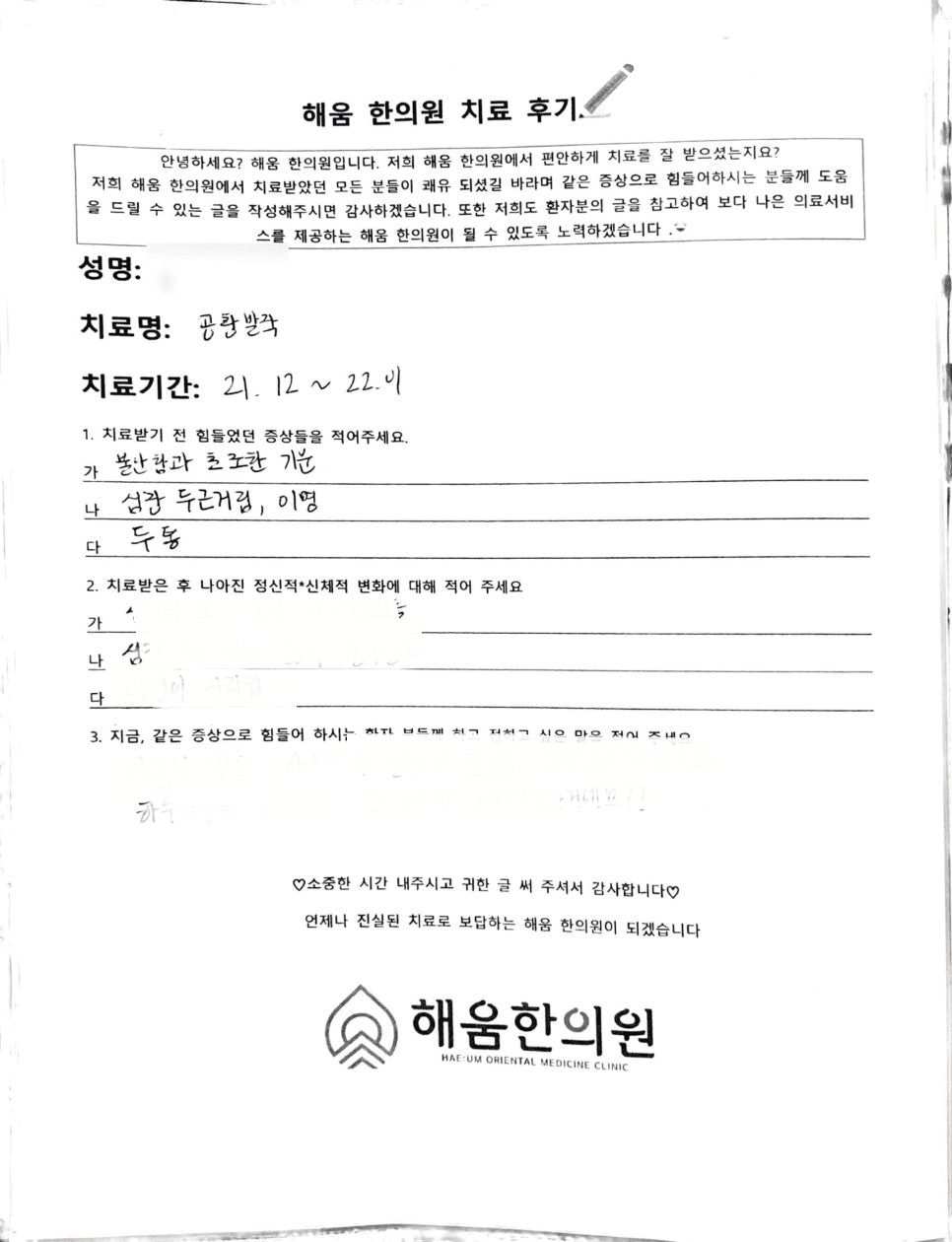
공황장애와 공황발작의 차이? 두근거림,이명,두통,불안감 한의원 1달
2022. 03. 21.
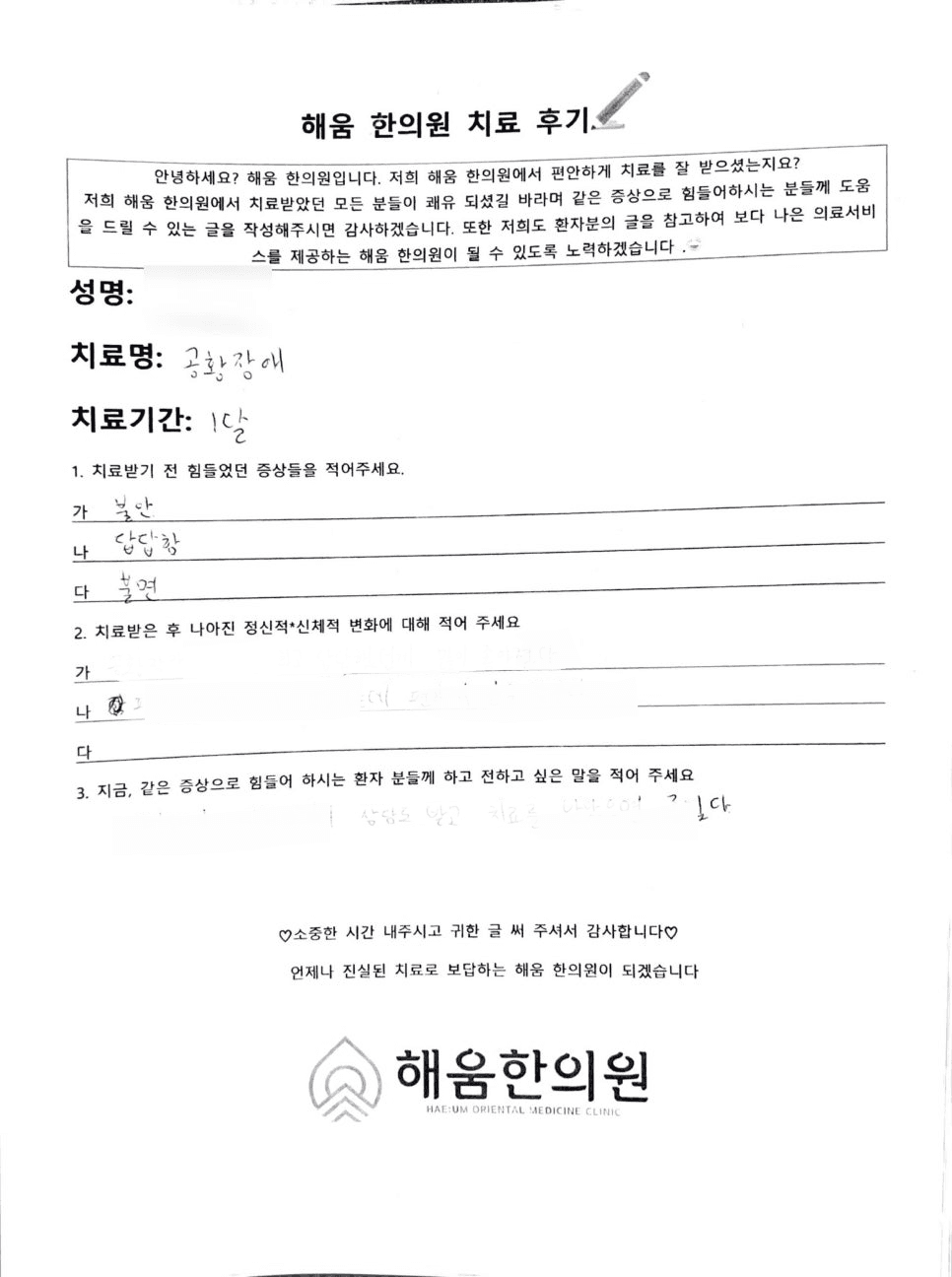
두근두근 공황장애로 잠을 못 자고 불안했던 환자
2022. 03. 19.
치료후기 3건 더 보기접기
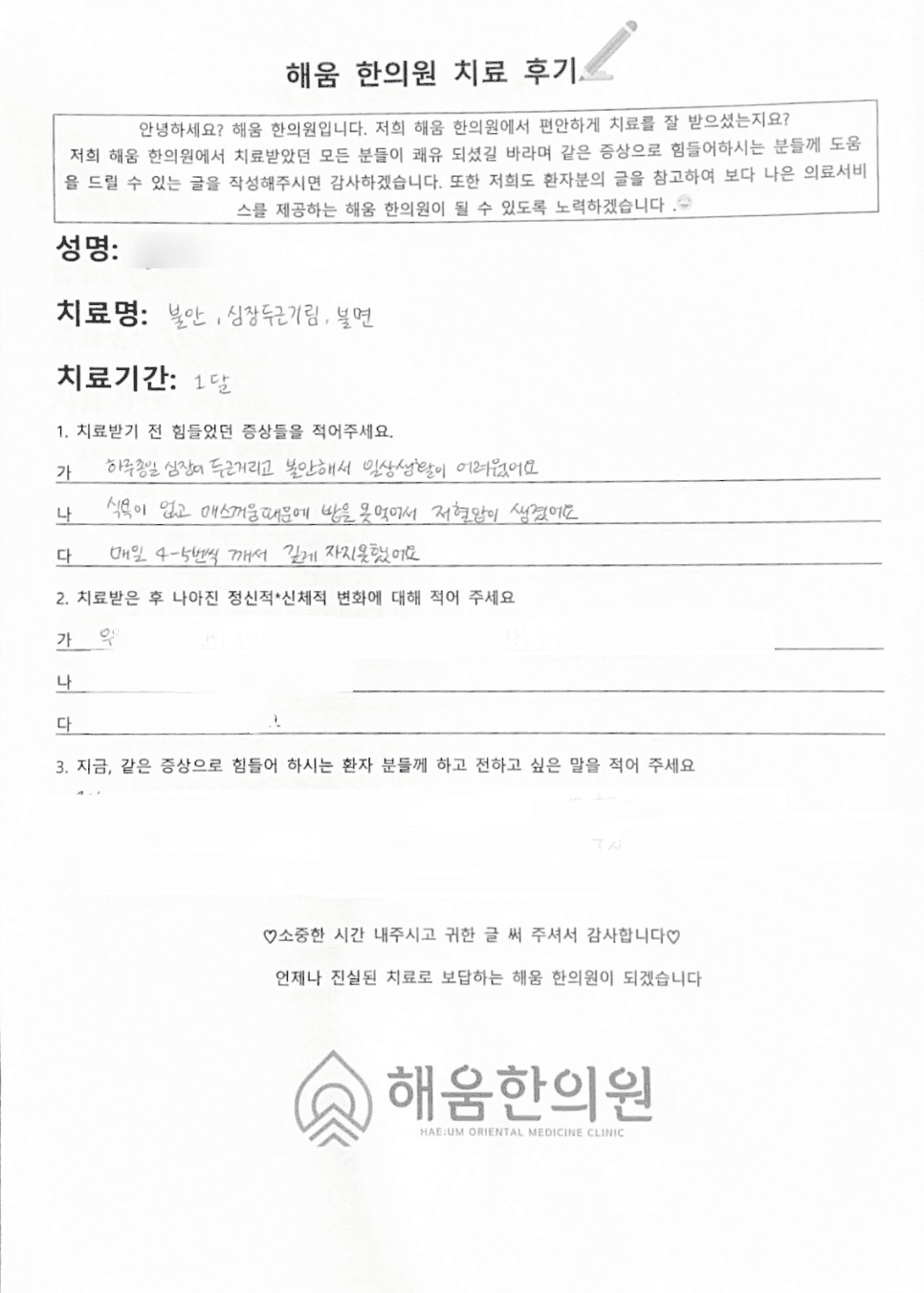
다른 증상으로 내원하신 분들의 후기 중 ‘불안장애’가 증상으로 함께 언급된 기록
- 입대 전 갑자기 발생한 과민성대장증후군, 한의원에서 치료가 될까요?2026. 06. 01.
- 갑자기 화장실을 못참겠다면? 과민성대장증후군가스잦은설사 한약으로 치료가 될까요? 과민성대장증후군병원2026. 05. 27.
- 코로나 백신 맞고 기억이 안날 때는? 머리가 멍해요. 코로나 브레인포그 후유증 브레인포그 극복 혈관성 치매 한의원 후기2026. 05. 04.
- 갑자기어지럽고식은땀이 흐른다구요?2026. 04. 25.
- 재수생에게 갑자기 찾아온 스트레스심장두근거림과 급체이유는 뭘까요?2026. 04. 14.
- 두통 속울렁거림 식은땀, 단순 소화불량이 아니라고요?2026. 04. 09.
- 공황장애 유전되나요? 공황장애2026. 02. 12.
- 목칼칼기침 독감후잔기침,숨참 으로 찾아오신 환자분2026. 02. 02.
- 명치답답 소화불량, 담적 증상 같은데 원인이 없대요. 정신과 문제인 걸까요?2026. 01. 31.
- 갱년기인 줄 알았는데 화병이었습니다 발후끈거림 홧병2026. 01. 30.
나머지 38건 더 보기접기
- 건선치료제로 효과 없는 피부건선, 한약 6개월2026. 01. 28.
- 시험만 보려고 하면 배가 아프고 설사하고 심장이 두근거려요2026. 01. 19.
- 심장이 철렁하고 가슴이 아파요..심장뻐근함도 한약으로 치료가 되나요?2026. 01. 12.
- 검사는 이상 없는데 복통이 심해요..제가 예민한 걸까요?2026. 01. 09.
- 소화불량두통, 체할까 봐 항상 조심스러웠던 마음이 이제는 편해졌어요2026. 01. 05.
- 극심한 생리통, 알고보니 자궁물혹이래요.. 아랫배 빵빵 생리통 심해짐, 한약으로 생리통 없어짐 가능할까요?2025. 12. 27.
- 명치끝 통증, 알고보니 자궁내막암 후유증이었다고?2025. 07. 08.
- 목넘김이물감 매핵기증상 호흡곤란2024. 12. 28.
- 가슴답답 호흡곤란 공황장애 우울증 심장빨리뜀 우측 아랫배 통증 한의원 4개월2024. 12. 18.
- 코로나 백신 후유증으로 인한 공황장애 발작2024. 06. 28.
- 스트레스로 인한 자율신경 문제가 불러온 화병, 불면증2024. 06. 28.
- 만성 위염, 장상피화생, 소화불량2024. 06. 27.
- 이유모를 공황장애 한약으로 치료한 후기2024. 06. 07.
- 치료 안 돼서 고생하던 과민대장증후군2024. 06. 06.
- 저혈압과 함께 어지러움이 심한 학생2024. 05. 22.
- 안하던 생리를 3일만에 시작했어요! 생리통 생리불규칙 무월경 몸이 가뿐해졌다는 환자 사례2023. 12. 23.
- 아내와 사별후 찾아온 갑자기 가슴두근거림 손발저림 어지러움증2023. 12. 22.
- 이노시톨부작용 여드름으로 고생하던 다낭성증후군 PCOS 환자, 한약 치료로 3개월만에 해결2023. 12. 12.
- 복통 설사가 너무 심해서 출근도 못하는 과민성대장 환자2023. 12. 10.
- 건선치료제로 효과 없는 피부건선, 한약 6개월 치료 사례.. 자율신경이 면역과 건선 혈액순환에 미치는 영향2023. 01. 17.
- 성인아토피? 아기아토피? 한약 치료 후 어릴때부터 있던 아토피 흉터 깔끔하게 사라진 사례2023. 01. 15.
- 과민성대장증후군 불면증치료법 중에 한약이 최고?!2023. 01. 14.
- 3개월간 고생한 옆구리통증 명치통증 호흡곤란 소화불량 1달만에2022. 12. 29.
- 스트레스성 공황장애 초기증상 한약 치료사례: 공황발작과 공황장애의 차이2022. 12. 27.
- 가슴두근거림,무기력,우울증,체력저하 한약 치료기2022. 06. 27.
- 잠을 못 잘 정도의 피부 알러지 아토피2022. 06. 23.
- 심박수가 120까지.. 코로나 확진 후 두근거림 숨이차고 소화가 안 되었는데 한약치료로 좋아졌어요2022. 06. 02.
- 3주만에 좋아졌어요 스트레스로 인한 소화불량, 불면증2022. 05. 19.
- 스트레스 받으면 화장실로 뛰쳐나가게 하는 복통설사2022. 05. 11.
- 일요일밤만 되면 잠이 안 와요 내일 출근해야되는데..2022. 04. 22.
- 불면증 한약으로도 치료되나요? 말똥말똥 잠이 안 와서 다음날이 걱정되던 환자2022. 04. 02.
- 선생님 점쟁이세요...? 숨쉴때 답답하고 가슴 통증에 두근거림까지 있던 환자2021. 12. 21.
- 이게 담적인가요? 위내시경 후유증으로 명치 가슴이 답답하고 딱딱하게 만져지는 환자분 한약 1달 치료기2021. 11. 24.
- 응급실 다녀온 후 생긴 식사불가,호흡곤란,불면 으로 직장을 그만둘뻔했던 분 완치 사례2021. 10. 29.
- 화이자 백신 맞고 호흡곤란, 가슴통증으로 고생하신 분 3주만에 완쾌 사례2021. 10. 28.
- 변비로 항상 더부룩했던 환자, 변비 좋아지면서 불면, 우울증도 같이 좋아진 사례2021. 09. 04.
- 코로나후유증으로 조금만 움직여도 숨차고 기침이 심했던 사례2021. 08. 28.
- 코로나 확진 이후 냄새를 못 맡는 환자, 한약으로 한달만에2021. 08. 27.
불안장애, 누가 진료하나요?
담당 의료진
대표원장 박재은

“병이 아니라 그 뒤의 사람을 봅니다”
경희대학교 한의과대학에서 석사·박사 과정을 마쳤습니다. 심리상담사 1급 자격과 4만 건 이상의 한약 처방 경험을 바탕으로 진료합니다.
의료진 소개 더보기불안장애, 자주 묻는 질문
불안장애와 공황장애는 어떻게 다른가요?
신경안정제를 먹고 있는데 한방치료를 같이 받아도 되나요?
불안할 때 바로 해 볼 수 있는 방법이 있나요?
치료 기간은 얼마나 걸리나요?
생활에서 불안을 줄이려면 무엇을 해야 하나요?
한의원 진료 기록이 남으면 불이익이 있나요?
해움한의원에서 불안장애를 진료하나요?
불안장애로 내원하려면 어떻게 하나요?
불안장애가 심할 때는 어떻게 해야 하나요?
불안장애에 관해 알아두면 좋은 정보
21건불안장애과 관련해 정리한 건강정보입니다.
감기귀먹먹함, 왜 나만 오래 갈까요? 숨겨진 원인까지 풀어드립니다
“귀가 막힌 느낌, 시간이 지나면 괜찮아질까요?”감기를 앓고 난 뒤, 어느 순간부터 귀 안이 꽉 막힌 것처럼 답답해지는 경험 있으신가요?소리가 둔하게 들리고, 물속에 들어간 것처럼 먹먹한 느낌이 지속되면 불안감이 커

왼쪽옆머리두통, 검사해도 이상 없다면 ‘이것’ 문제일 수 있습니다
“왼쪽 옆머리가 계속 욱신거려요… 왜 반복될까요?”어느 날부터인지왼쪽 옆머리가 욱신거리거나 찌릿하게 아프기 시작합니다.가끔 지나가는 통증이면 괜찮지만,비슷한 위치에서 반복되면 점점 불안해집니다.“검사했는데 이상 없다

돌발성난청 스테로이드 치료 후에도 남는 증상, 왜일까요?
“갑자기 귀가 안 들리고, 다시 반복될까 불안해요”갑자기 한쪽 귀가 먹먹해지면서소리가 멀어진 것처럼 들릴 때, 정말 당황스럽습니다.조금 지나면 괜찮아질 줄 알았는데이명까지 들리고, 어지러움까지 동반되면불안감은 더 커

뒷골땡김 머리까지 아프다면, 단순 피로가 아닐 수 있습니다
“뒷골이 당기고 어지럽고, 머리까지 아프다면 불안해질 수밖에 없죠”갑자기 뒷목이 뻣뻣해지면서 뒤통수가 당기고, 동시에 어지럽기까지 하다면 누구나 한 번쯤 이런 생각이 듭니다.“혹시 뇌에 문제가 있는 건 아닐까?”특히

가슴가운데답답함과 두근거림, 원인을 못 찾았다면 치료 방향이 달라져야 합니다
“가슴이 막히는 느낌에 두근거림까지 오면, 겁부터 나는 게 당연합니다”가만히 있는데도 가슴 한가운데가 꽉 막힌 것처럼 답답하고, 심장이 유난히 크게 뛰는 느낌이 들면 누구라도 불안해집니다.어떤 날은 숨을 깊게 쉬고

췌장암 등통증 위치가 걱정된다면? 검사에서 이상이 없을 때 확인해야 할 원인
등이 계속 아프면 혹시 췌장암일까 걱정되시나요?"등 한가운데가 묵직하게 아파요.""인터넷을 찾아보니 췌장암 등통증 위치와 비슷하다고 해서 너무 불안합니다.""CT와 초음파 검사는 정상이라는데 계속 등이 아픕니다."등

오른쪽가슴이아파요, 검사해도 원인을 못 찾았다면 봐야 할 것
심장은 괜찮다는데 왜 계속 아플까요?오른쪽 가슴이 콕콕 찌르듯 아프거나, 답답하게 눌리는 느낌이 반복되면 누구나 불안해집니다.낮에는 일에 집중하기 어렵고, 밤에는 “혹시 큰 병은 아닐까?” 하는 생각 때문에 잠을 설
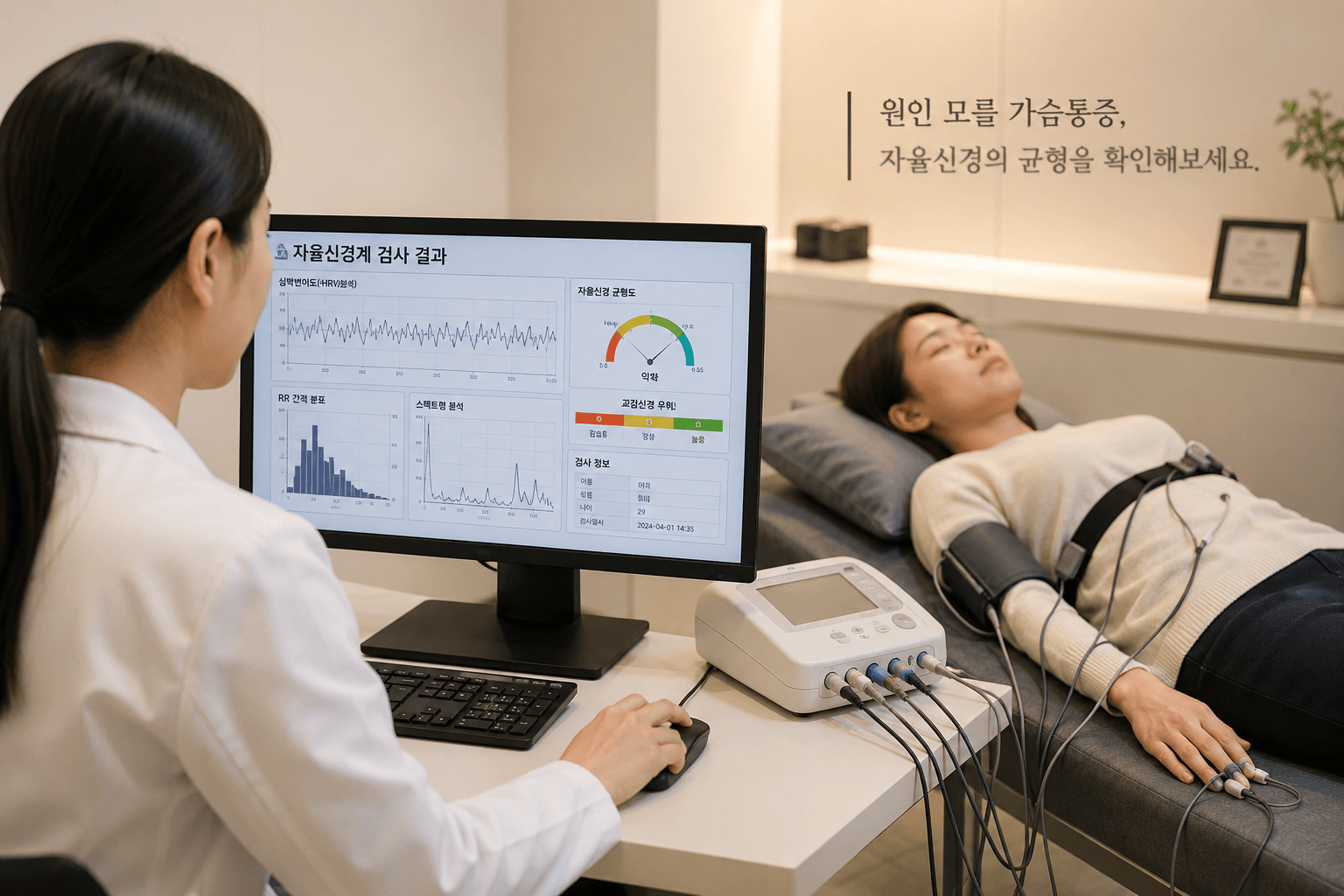
병원 검사에서는 정상인데 힘들다면? 자율신경실조증검사후기로 알아보는 원인
병원을 다녀도 이유를 모르겠다면최근 들어 이유를 알 수 없는 다양한 증상으로 의료기관을 찾는 분들이 크게 늘고 있습니다.머리가 아프고 어지럽습니다.가슴은 이유 없이 두근거립니다.식은땀이 흐르고 손발이 저립니다.입이
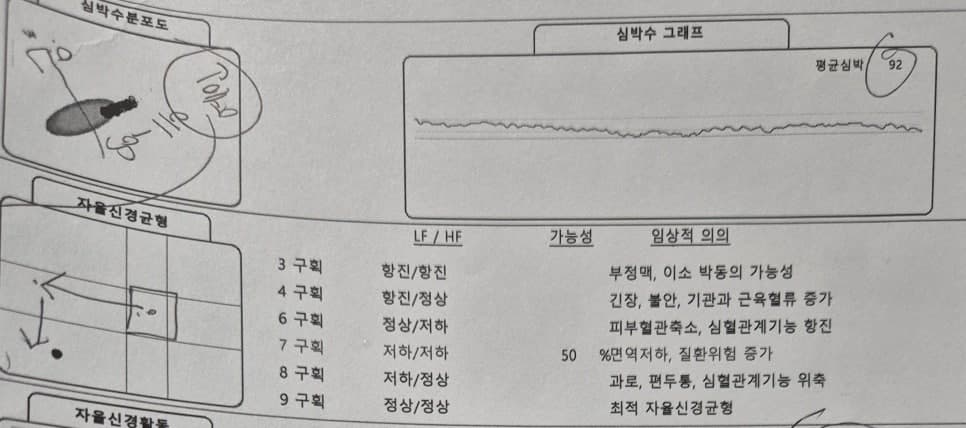
왼쪽뒷골땡김 원인과 증상, 머리·목·신경 문제까지 살펴보세요
갑자기 뒷목이 딱딱하게 굳는 느낌이 들 때일을 하다가, 운동을 하다가, 혹은 스트레스를 심하게 받은 날 갑자기 왼쪽 뒤통수와 목 사이가 뻐근하게 당길 때가 있습니다.처음에는 “잠을 잘못 잤나?” 하고 넘기지만, 왼쪽

두통속울렁거림식은땀 원인, 단순 컨디션 문제가 아닐 수도 있습니다
이유 없이 찾아오는 불안과 신체 증상갑자기 머리가 아프고 속이 울렁거립니다.식은땀이 흐르고 심장이 두근거립니다.숨도 답답하고 이유 없이 불안해집니다.병원 검사를 받아보지만 특별한 이상은 없다고 합니다.그런데 증상은

pms증후군 약 계속 먹어야 할까요? 치료해도 재발하는 원인
“PMS 약을 먹는데도 매달 너무 힘들어요”생리가 시작되기 일주일 전부터 몸이 무겁고 가슴이 아프거나 아랫배가 더부룩해집니다.평소라면 별일 아니라고 넘길 수 있는 일에도 예민해지고, 이유 없이 우울하거나 불안한 감정

갑자기 식은땀과 어지러움이 함께 나타난다면 공황장애를 의심해야 할까요?
갑자기 식은땀이 나고 어지럽다면 단순한 컨디션 문제만은 아닐 수 있습니다갑자기 식은땀이 흐르고 숨이 가빠지면서 어지러움이 몰려온 적 있으신가요?심장이 빠르게 뛰고, 금방이라도 쓰러질 것 같은 불안감까지 함께 찾아온다

불안장애심장 두근거림, 정말 심장병 때문일까요?
① 심장이 빨리 뛰면 모두 심장병이다?가슴이 갑자기 두근거리기 시작하면 많은 분들이 가장 먼저 심장질환을 떠올립니다.실제로 협심증이나 부정맥 같은 심장질환에서도 두근거림이 나타날 수 있기 때문에 심장 검사는 반드시
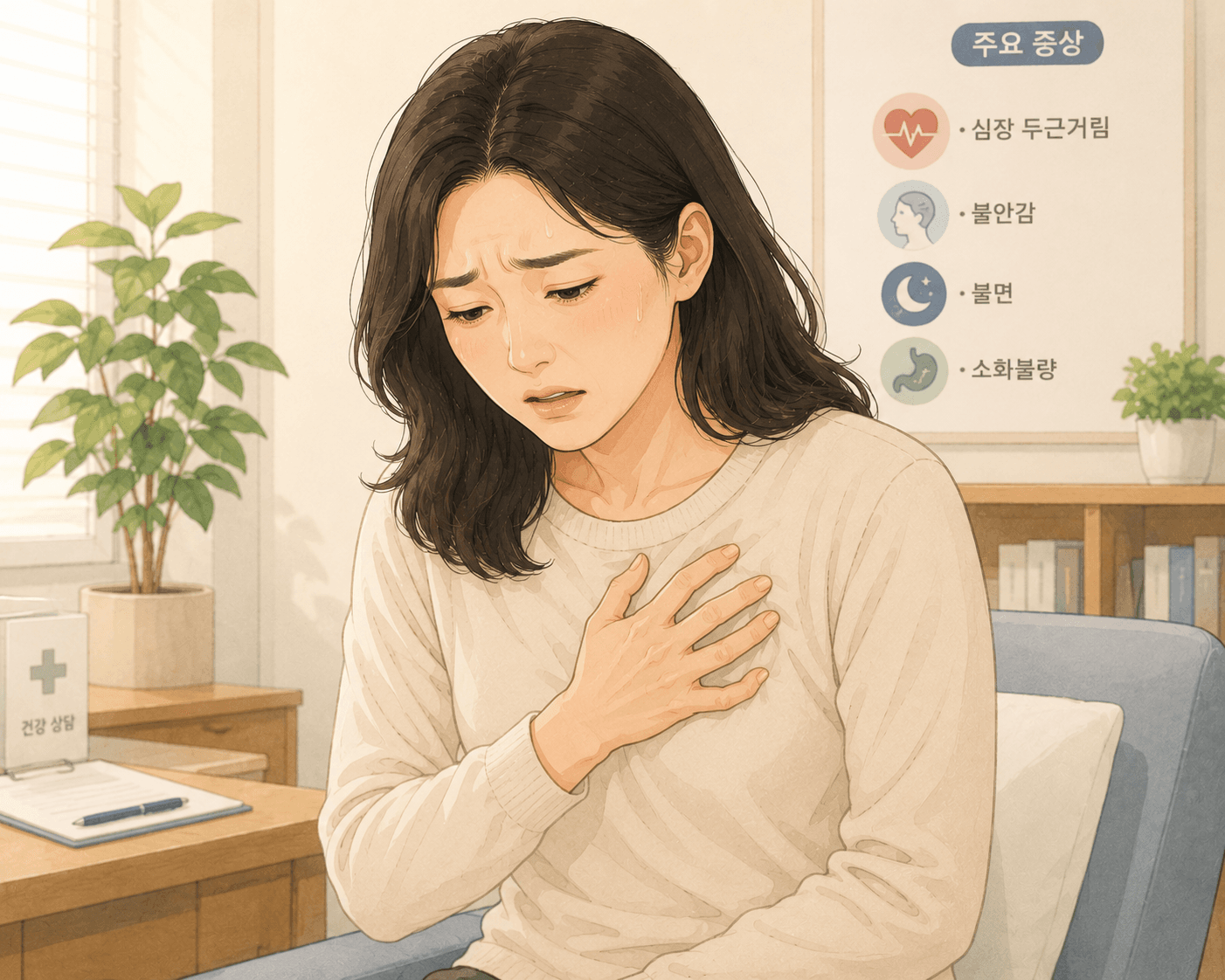
동성서맥 동성빈맥 원인과 증상, 스트레스가 심장 박동까지 바꿉니다
가슴이 이유 없이 두근거리거나 너무 느리게 뛴다면가만히 앉아 있는데도 심장이 빠르게 뛰는 느낌이 들거나, 반대로 몸이 축 처지고 맥박이 지나치게 느리게 느껴질 때가 있습니다.처음에는 단순 피로라고 생각하고 넘기지만

생리늦어질때혈자리 관원혈·조해혈, 지압보다 중요한 근본 원인
“이번 달 생리가 왜 안 하지?” 불안해지는 순간이 있습니다여성이라면 한 달에 한 번 찾아오는 생리 주기에민감해질 수밖에 없습니다.평소에는 비슷한 날짜에 생리를 하다가도갑자기 며칠씩 늦어지면 걱정이 먼저 듭니다.“혹

한달내내 생리할 때 치료방법, 자궁근종 때문일까요?
한달내내 생리하는 이유, 출혈이 멈추지 않는다면 확인하세요생리가 시작된 지 일주일이 지났는데도 출혈이 멈추지 않아 걱정하는 분들이 있습니다.처음에는 평소보다 생리가 조금 길어지는 것이라고 생각했지만, 2주가 지나고

왼쪽뒷머리찌릿 한 원인, 목과 후두신경을 함께 봐야 합니다
왼쪽 뒷머리가 찌릿할 때, 왜 불안할까요?왼쪽 정수리부터 뒷목, 목덜미까지서늘하고 찌릿한 감각이 느껴질 때가 있습니다.단순히 머리가 지끈거리는 두통과는 조금 다릅니다.마치 전기가 스치는 듯하거나,바늘로 콕 찌르는 듯

여자 서혜부멍울과 통증, 원인을 찾아야 치료가 시작됩니다
사타구니에 멍울이 만져지면 누구나 불안합니다어느 날 갑자기 사타구니 쪽에동그랗게 멍울이 만져지거나,서혜부가 붓고 아프다면누구나 당황할 수밖에 없습니다.특히 여성분들은 이 부위가 민감하고쉽게 드러내기 어려운 위치라병원

오른쪽뒷머리찌릿, 뇌혈관 문제만 의심하면 놓칠 수 있습니다
갑자기 오른쪽 뒷머리가 찌릿하면 누구나 불안합니다어느 날 갑자기 오른쪽 뒷머리 찌릿한 감각이 느껴지면가장 먼저 이런 걱정이 듭니다.“혹시 뇌혈관에 문제가 생긴 건 아닐까?”“이러다 큰 병으로 이어지는 건 아닐까?”특

여자왼쪽사타구니통증, 여성질환 신호일 가능성 확인해야 합니다
“왼쪽 사타구니가 계속 아픈데… 그냥 넘겨도 될까요?”처음에는 가볍게 느껴집니다.잠깐 불편한 정도라면 “근육이 땡겼나?” 하고 넘기기 쉽습니다.하지만 시간이 지나도 계속 신경 쓰이고,앉거나 움직일 때마다 찌릿하거나

명치위쪽통증, 심장부터 위장까지 다양한 원인이 있습니다
“명치 위가 찌르듯 아픈데… 왜 계속될까요?”갑자기 명치 위쪽이 쿡쿡 찌르는 느낌,혹은 타는 듯한 통증이 올라오면 누구나 불안해집니다.특히 이런 경험 있으셨을 거예요.∙ 식사 후 갑자기 속이 쓰리면서 통증이 올라올

불안장애, 질문 있어요
4건환자분들이 남긴 온라인 상담 질문과 의료진 답변입니다.
이런 경우에는 바로 진료를 받으세요
아래 상황은 불안장애만의 문제가 아닐 수 있습니다. 해당한다면 지체하지 말고 응급실이나 전문 진료를 먼저 찾으세요.
- 죽고 싶다는 생각이나 자해 생각이 든다: 자살예방 상담전화 109(24시간) 또는 가까운 응급실
- 처음 겪는 가슴 통증이 20분 넘게 이어지거나 식은땀·팔이나 턱으로 뻗치는 통증이 함께 온다: 119
- 손떨림·두근거림과 함께 체중이 이유 없이 빠지고 더위를 못 참는다(갑상선 질환 확인)
- 불안을 달래려고 술이나 신경안정제를 점점 더 많이 찾게 된다
참고문헌 6편
[1]Remes O, Brayne C, van der Linde R, Lafortune L. A systematic review of reviews on the prevalence of anxiety disorders in adult populations. Brain Behav. 2016;6(7):e00497. doi:10.1002/brb3.497. PMID: 27458547.
초록 (Abstract)
Background: A fragmented research field exists on the prevalence of anxiety disorders. Here, we present the results of a systematic review of reviews on this topic. We included the highest quality studies to inform practice and policy on this issue.
Method: Using PRISMA methodology, extensive electronic and manual citation searches were performed to identify relevant reviews. Screening, data extraction, and quality assessment were undertaken by two reviewers. Inclusion criteria consisted of systematic reviews or meta‐analyses on the prevalence of anxiety disorders that fulfilled at least half of the AMSTAR quality criteria.
Results: We identified a total of 48 reviews and described the prevalence of anxiety across population subgroups and settings, as reported by these studies. Despite the high heterogeneity of prevalence estimates across primary studies, there was emerging and compelling evidence of substantial prevalence of anxiety disorders generally (3.8–25%), and particularly in women (5.2–8.7%); young adults (2.5–9.1%); people with chronic diseases (1.4–70%); and individuals from Euro/Anglo cultures (3.8–10.4%) versus individuals from Indo/Asian (2.8%), African (4.4%), Central/Eastern European (3.2%), North African/Middle Eastern (4.9%), and Ibero/Latin cultures (6.2%).
Conclusions: The prevalence of anxiety disorders is high in population subgroups across the globe. Recent research has expanded its focus to Asian countries, an increasingly greater number of physical and psychiatric conditions, and traumatic events associated with anxiety. Further research on illness trajectories and anxiety levels pre‐ and post‐treatment is needed. Few studies have been conducted in developing and under‐developed parts of the world and have little representation in the global literature.
결과 (Results)
The search identified 1232 reviews on anxiety. After 338 duplicates were removed, titles and abstracts were screened, and the full text of 198 articles was retrieved. In total, 46 systematic reviews met the inclusion criteria (Fig. 1). Reference searches identified two additional reviews as relevant, yielding a total of 48 reviews in this systematic review (Appendix 3).
Of the 48 reviews, seven focused on the descriptive epidemiology of anxiety disorders, while five reviewed anxiety in relation to addiction. Four focused on mental and neurological disorders. A total of 19 reviews assessed anxiety in the context of chronic physical diseases: most of these focused on CVD (n = 6) and cancer (n = 7), followed by respiratory disease (n = 3) and diabetes (n = 3); the rest examined end‐stage physical disease (n = 4), and conditions that have been less commonly studied in the anxiety field (n = 4). Three reviews examined anxiety in the context of trauma, and ten focused on vulnerable population subgroups. Most of the reviews included international studies.
The global distribution of anxiety disorders: Seven reviews focused on the descriptive epidemiology of anxiety disorders, presenting age‐, sex‐, and time trends. In one international review (Somers et al. ), the pooled one‐year and lifetime prevalence of total anxiety disorders was estimated to be 10.6% (95% CI: 7.5%, 14.3%) and 16.6% (95% CI: 12.7%, 21.1%), respectively. Given the health care policy and service planning implications of high estimates, a high‐quality meta‐analysis (Baxter et al. ) investigated whether the age‐standardized point prevalence of anxiety increased over the last decade. Studies on cultures across the globe were reviewed and findings showed that the prevalence in 1990 (3.8% [95% CI: 3.6%, 4.1%] was very similar to that in 2005 and 2010 (4.0% [95% CI: 3.7%, 4.2%]). A sharp rise in younger people over time was noted, but changing age and population structures were hypothesized to be the drivers of this. Prevalence was found to be lowest in East Asia (2.8% [95% CI: 2.2%, 3.4%]) and highest in North America (7.7% [95% CI: 6.8%, 8.8%]) and the North African/Middle Eastern region (7.7% [95% CI: 6.0%, 10%]) (Baxter et al. ). A less rigorous review (Somers et al. ) estimated the highest lifetime prevalence of anxiety disorders in Swiss and US populations (23–28.7%), and the lowest in studies on Korea (9.2%). In Pakistan (Mirza and Jenkins ), the prevalence of total anxiety ranged from 1.76% to 25%, while a meta‐analysis on Germany (Vehling et al. ) reported it to be 13.5% (95% CI: 7.1%, 24.3%).
Women are almost twice as likely to be affected as men (female:male ratio of 1.9:1), with sex differences persisting over time and across high and low resource settings (Somers et al.; Baxter et al.; Steel et al. ). Irrespective of culture, individuals under the age of 35 years are disproportionately affected by anxiety disorders (Baxter et al. ) with the exception of Pakistan, where midlife represents a period of high burden (Mirza and Jenkins ).
Globally, specific phobia (4.9% [95% CI: 3.4%, 6.8%] and GAD (6.2% (95% CI: 4.0%, 9.2%) appear to have the highest lifetime prevalence, and panic disorder the lowest (1.2% [95% CI: 95% CI: 0.7%, 1.9%]) (Somers et al. ). In Germany, however, specific phobia (5.2%, [95%CI: 3.3%, 8.2%]) and GAD (3.7%, [95% CI: 2.3%, 6.0%]) are reported to be the most prevalent anxiety disorders (Vehling et al. ). In addition to geographical variation, caseness criteria are an important consideration when comparing estimates. One review reported an almost twofold higher prevalence of subthreshold GAD when the duration criterion was relaxed from 3 to 1 month (3.6% vs. 6.1%). In this review, older age groups showed the lowest estimates of past‐year subthreshold GAD (3%) (Haller et al. ).
Addiction: Five reviews focused on anxiety experienced in relation to addictive behaviors, including substance misuse, pathological gambling, and compulsive internet use. A global review on nonmedical prescription opioid use (NMPOU) reported the overall lifetime anxiety prevalence in patients at admissions or in treatment for substance abuse problems to range from 2% to 67% (Fatseas et al. ). While the prevalence of anxiety diagnoses is reportedly high at 29% (95% CI: 14%, 44%), that of subthreshold anxiety is higher still, with half of NMPOU populations enrolled in substance abuse treatment in North America reporting symptoms (50% [95% CI: 16%, 84%]) (Goldner et al. ). In contrast, general population samples of NMPOU in North America show a substantially lower prevalence of anxiety (16% [95% CI: 1%, 30%]) (Fischer et al. ). No significant age or sex‐effects were found in NMPOU groups enrolled in substance use treatment (Goldner et al. ).
Two other risk behaviors that have received attention in the addiction field include problem and pathological gambling, and more recently, internet addiction. When a global meta‐analysis assessed 11 community samples of pathological gamblers, the prevalence of anxiety disorders was reported to be 37.4% (Lorains et al. ). The prevalence of anxiety in the context of internet addiction is lower and comes mostly from studies conducted in Asian countries. A meta‐analysis found the prevalence of anxiety to be over two times higher in community samples of people with Internet addiction compared to control subjects (23.3% [95% CI: 14.8, 34.8%] vs 10.3% [95% CI: 5.0, 19.9%]), with those under the age of 39 being most affected (Ho et al. ).
Other mental and neurological disorders: In Europe, approximately 13–28% of people with bipolar disorder recruited from clinical and community settings have comorbid anxiety, with GAD and panic disorder being frequently experienced by this population (Fajutrao et al. ). In the US and Italian samples with bipolar disorder (Amerio et al. ), OCD is also common. The prevalence of this anxiety disorder in those who are bipolar has been shown to range from 11.1% to 21% in population‐based studies, and 1.8% to 35.1% in clinical samples.
OCD is also highly comorbid with schizophrenia. A global review (Swets et al. ) estimated the prevalence of this disorder in people diagnosed with schizophrenia to be 12.3% (95% CI: 9.7%, 15.4%). The prevalence of obsessive compulsive symptoms (OCS) not meeting full caseness criteria was over twice that of OCD (30.7% [95% CI: 23%, 39.6%]). Lower anxiety prevalence was linked to sub‐Saharan African origin. Age and sex did not influence OCD or OCS rates (Swets et al. ). These estimates were mainly based on groups from clinical settings.
One of the highest prevalence figures of psychopathology was found by a review on multiple sclerosis (MS) (Marrie et al. ), which reported that almost 32% of people with MS have an anxiety disorder and over half experience symptoms. Some of the primary studies included in this review were based on participants recruited from the general population, suggesting that men and women with MS are at high risk for psychopathology. Health anxiety may be an important issue in this population subgroup, given that 26.4% of those with MS are affected. Study methodology made a significant contribution to the figures reported. Estimates of anxiety prevalence were substantially higher if they were derived through self‐reported questionnaires (25.5% [95% CI: 16.7%, 34.3%]) compared to administrative databases or medical records (15.4%, [95% CI: 0%, 39.0%]) (Marrie et al. ).
Chronic physical diseases / Cardiovascular disease: Six reviews reported the prevalence of anxiety in the context of cardiovascular disease (CVD). Approximately a tenth of patients with cardiovascular disease and living in Western countries are affected by GAD (10.94% [95% CI: 7.8%, 14.0%] (Tully and Cosh ), with women showing higher anxiety levels than men (Clarke and Currie ). Anxiety symptom prevalence among patients with congestive heart failure is 2–49% (Janssen et al. ), and in end‐stage patients suffering from heart disease, it is 49% (Solano et al. ). Further, panic disorder is a common diagnosis in patients with coronary artery disease, with the prevalence ranging from 10% to 50% in this subgroup (Clarke and Currie ).
Individuals with noncardiac or nonspecific chest pain presenting to emergency departments, particularly women and those who are younger, appear to be disproportionately affected by anxiety. Compared to those with a determined cause of chest pain, anxiety prevalence was found to be higher in those with unknown etiology (21–53.5% of noncardiac chest pain patients have probable anxiety) (Webster et al. ).
A high‐quality, global meta‐analysis of population‐, hospital‐, and rehabilitation‐based studies found the prevalence of anxiety disorders in stroke patients to vary between 18% (95% CI: 8%, 29%) and 25% (95% CI: 21%, 28%) when measured by clinical interview and rating scales, respectively (Campbell Burton et al. ). Age and sex did not influence the probability of having anxiety after stroke in most of the included studies. GAD and phobic disorders were the commonest anxiety disorders post‐stroke.
Cancer: Seven reviews assessed anxiety among individuals diagnosed with or receiving treatment for cancer and in spouses of cancer patients. The prevalence of anxiety among cancer patients varies between 15% and 23%, with symptoms rising to 69–79% in the later stages of disease. There was no reported evidence with respect to age and sex (Solano et al.; Clarke and Currie ).
A meta‐analysis (Yang et al. ) on working‐age and older adults living in Mainland China showed that the overall prevalence of anxiety in individuals with a cancer diagnosis was higher than that in noncancer controls (49.7% [95%CI: 20.0%, 89.1%] and 17.5%, respectively). Among German patients with breast cancer, the prevalence of anxiety was comparatively lower than in Chinese patients, ranging from 28.0% to 33.0% (Vehling et al. ).
Randomized controlled trials (RCT) and non‐RCT studies conducted across the globe showed that approximately a fourth to over half of individuals undergoing or who had undergone breast cancer treatment experienced anxiety (Lim et al. ). Lower levels of anxiety were observed in patients undergoing radiotherapy rather than chemotherapy. During chemotherapy, young age and high trait anxiety measured before infusions were correlated with the intensity of anxiety experienced (Lim et al. ). Among ovarian cancer patients, younger age groups were also disproportionately affected by anxiety. Following treatment for ovarian cancer, psychopathology tended to persist, with almost half (47%) of individuals experiencing anxiety symptoms at three months post‐treatment (Arden‐Close et al. ).
Long‐term cancer survivors and their spouses also experience elevated levels of anxiety. In a global meta‐analysis of outpatient clinic, hospital, and population‐based samples (Mitchell et al. ), the prevalence of anxiety in individuals who had been diagnosed with cancer at least 2 years previously was found to be much higher than in healthy controls (17.9% [95% CI: 12.8%, 23.6%] and 13.9% [95% CI: 9.8%, 18.5%], respectively). Further, almost half (40.1% [95% CI: 25.4%, 55.9%]) of spouses of long‐term cancer survivors developed anxiety. No age or sex effects were reported.
Respiratory disease: Three reviews focusing on anxiety in the context of respiratory disease indicated that the prevalence of anxiety was high among adults with COPD (32–57%) (Janssen et al. ), and higher still among those with far‐advanced, end‐stage respiratory disease (51–75%) (Solano et al. ). Among acute lung injury/acute respiratory distress syndrome (ALI/ARDS) survivors discharged from intensive care units in the United States and Germany, anxiety levels ranged from 23% to 48% (Davydow et al. ). No age or sex effects were reported.
Diabetes: Three systematic reviews assessed anxiety in adults with diabetes. One high‐quality global review of mostly North American and European studies (Smith et al. ) showed that the prevalence is significantly elevated in those with diabetes compared to other groups, but is also dependant on caseness criteria. Approximately 15% to 73% of people with diabetes have anxiety symptoms not meeting threshold criteria (vs. 19.9% to 43.1% of nondiabetic individuals), while 1.4% to 15.6% of people with diabetes meet threshold criteria for an anxiety disorder (vs. 1.6% to 8.8% of nondiabetic individuals). In another review capturing studies predominantly conducted in primary care or clinical settings, women with diabetes were found to have an almost two‐fold higher prevalence of anxiety than men with diabetes (55.3% and 32.9%) (Grigsby et al. ). Age effects were not reported. The anxiety disorders that are most common in the context of diabetes are anxiety not otherwise specified, specific phobia, GAD, and social phobia (Grigsby et al.; Clarke and Currie ).
Other chronic physical diseases: Four reviews assessed anxiety in population subgroups with polycystic ovary syndrome (PCOS), benign joint hypermobility syndrome, musculoskeletal pain, and age‐related macular degeneration. Clinical, mostly Western samples of women with polycystic ovary syndrome (PCOS) had a much higher prevalence of generalized anxiety symptoms than control groups (20.4% and 3.9%, respectively) (Dokras et al. ). There is some evidence that social phobia and OCD are comorbid with PCOS. Differences in anxiety levels according to age were not found (Dokras et al. ).
Widely varying anxiety prevalence figures have been reported for Mediterranean populations with benign joint hypermobility syndrome (BJHS) (5–68%) (Smith et al. ), as well as for Western populations with musculoskeletal pain (0–20.9%) (Andersen et al. ). In relation to the latter group, the link between fibromyalgia and anxiety appears to be particularly strong. In people with BJHS, commonly occurring comorbidities are agoraphobia and panic disorder (Smith et al. ). The only chronic condition that has failed to show a link with anxiety is age‐related macular degeneration; while this review recruited patients from clinics, it was largely based on US studies (Dawson et al. ).
Other chronic physical diseases in end‐stage: Four reviews assessed anxiety in end‐stage conditions. A global meta‐analysis of mostly Western studies (Mitchell et al. ) estimated the pooled prevalence of anxiety disorders in palliative cancer patients to be 9.8% (95% CI: 6.8%, 13.2%). Estimates appear to vary widely by condition. Among patients with chronic renal failure, the prevalence of anxiety symptoms was found to be 25% in the terminal stage (Janssen et al. ), whereas another review found a prevalence of 38% in patients with end‐stage renal disease (Murtagh et al. ). Although patients suffering from end‐stage AIDS showed a high symptom prevalence of 8–34%, the highest estimates were found for end‐stage COPD (51–75%) and cancer patients (13–79%) (Solano et al. ). No associations between age or sex and anxiety were found in palliative‐care settings (Mitchell et al. ).
Trauma: Three reviews tackled the issue of anxiety in the context of trauma. The first was primarily based on findings from UK and US studies and focused on traumatic limb amputees, and included veterans that had served in Vietnam, Iraq and Afghanistan (Mckechnie and John ). Very high prevalence figures were found, with anxiety affecting a fourth of traumatic limb amputees in some studies to over half in others. The second review was global in scope and assessed the frequency of lifetime anxiety among individuals with a history of sexual abuse (Chen et al. ). Widely varying anxiety estimates were reported by this review, ranging from 2% to 82%. Finally, a third review focused on GAD in refugees resident in high‐income Western countries; over half of the refugees were from southeast Asia. This meta‐analysis estimated that 4% of refugees experience GAD (Fazel et al. ). No age or sex effects in relation to anxiety disorders were reported.
Vulnerable population subgroups / Older people and their caregivers: Five reviews assessed anxiety in older people and their caregivers. The prevalence of anxiety disorders in old age varies widely in community (1.2–14%) and clinical (1–28%) studies conducted mostly in European and North American settings. Estimates are even higher when anxiety symptoms are accounted for. GAD is the commonest anxiety disorder in old age, with the prevalence ranging from 1.3% to 4.7% (Bryant et al. ). A random‐effects model (Volkert et al. ) showed that specific phobia also occurs frequently in older samples living in the community, while agoraphobia is the rarest anxiety disorder (Bryant et al. ). Women are at higher risk for psychopathology than men (Bryant et al. ).
Older population subgroups with cognitive dysfunction and their caregivers are disproportionately affected by anxiety (Monastero et al. ). In older people with mild cognitive impairment (MCI), the prevalence of anxiety symptoms varies from 11% to 75% (Monastero et al.; Yates et al. ). Caregivers of older people with cognitive impairment are also affected by anxiety (prevalence estimates of 3.7–76.5%), with women and younger caregivers showing elevated levels (Cooper et al.; Bryant et al. ).
Pregnant women: Three reviews focused on pregnant women. A meta‐analysis of international studies (Russell et al. ) reported higher OCD prevalence in pregnant (2.07%, [95% CI: 1.26%, 3.37%]) and postpartum (up to 12 months) (2.43%, [95% CI: 1.46%, 4.00%]) women compared to the general population (1.08%, [95%: 0.80%, 1.46%]). Asia and Europe had the lowest prevalence of OCD across conditions, while the Middle East and Africa had the highest. In Ethiopian and Nigerian samples recruited from health clinics and the community (Sawyer et al. ), the prevalence of anxiety was found to be high during both the pre‐ and post‐natal periods (14.8% [95% CI: 12.3%, 17.4%] and 14.0% [95% CI: 12.9%, 15.2%], respectively), with younger women showing elevated anxiety compared to older women (Sawyer et al. ). There is also some evidence from UK and US studies that a high BMI may contribute to anxiety symptoms during pregnancy (Molyneaux et al. ).
Individuals identifying as lesbian, gay or bisexual, and self‐harm patients: Two reviews focused on (1) predominantly Western individuals living in the community and identifying as lesbian, gay or bisexual (LGB), and (2) self‐harm patients presenting to general hospitals in countries across the globe. In LBG men, anxiety prevalence was estimated to be 3–20%, while LGB women showed somewhat higher estimates, at 3–39% (King et al. ). In a global meta‐analysis of self‐harm patients presenting to hospitals, the prevalence of anxiety disorders was found to be 35% (95% CI: 21.9%, 48.6%). Age‐ and sex‐based differences were small, while rates of anxiety were highest in young and old age groups of self‐harm adults (Hawton et al. ). All non‐Western studies of self‐harm patients were based in Asia, while most of the Western studies were conducted in the United Kingdom.
원문 발췌 · Remes O, Brayne C, van der Linde R, Lafortune L, Brain Behav 2016 · CC BY 4.0 라이선스에 따라 수정 없이 인용했습니다(본문 속 인용 번호는 생략).
[2]COVID-19 Mental Disorders Collaborators. Global prevalence and burden of depressive and anxiety disorders in 204 countries and territories in 2020 due to the COVID-19 pandemic. Lancet. 2021;398(10312):1700-1712. doi:10.1016/s0140-6736(21)02143-7. PMID: 34634250.
초록 (Abstract)
Background: Before 2020, mental disorders were leading causes of the global health-related burden, with depressive and anxiety disorders being leading contributors to this burden. The emergence of the COVID-19 pandemic has created an environment where many determinants of poor mental health are exacerbated. The need for up-to-date information on the mental health impacts of COVID-19 in a way that informs health system responses is imperative. In this study, we aimed to quantify the impact of the COVID-19 pandemic on the prevalence and burden of major depressive disorder and anxiety disorders globally in 2020.
Methods: We conducted a systematic review of data reporting the prevalence of major depressive disorder and anxiety disorders during the COVID-19 pandemic and published between Jan 1, 2020, and Jan 29, 2021. We searched PubMed, Google Scholar, preprint servers, grey literature sources, and consulted experts. Eligible studies reported prevalence of depressive or anxiety disorders that were representative of the general population during the COVID-19 pandemic and had a pre-pandemic baseline. We used the assembled data in a meta-regression to estimate change in the prevalence of major depressive disorder and anxiety disorders between pre-pandemic and mid-pandemic (using periods as defined by each study) via COVID-19 impact indicators (human mobility, daily SARS-CoV-2 infection rate, and daily excess mortality rate). We then used this model to estimate the change from pre-pandemic prevalence (estimated using Disease Modelling Meta-Regression version 2.1 [known as DisMod-MR 2.1]) by age, sex, and location. We used final prevalence estimates and disability weights to estimate years lived with disability and disability-adjusted life-years (DALYs) for major depressive disorder and anxiety disorders.
Findings: We identified 5683 unique data sources, of which 48 met inclusion criteria (46 studies met criteria for major depressive disorder and 27 for anxiety disorders). Two COVID-19 impact indicators, specifically daily SARS-CoV-2 infection rates and reductions in human mobility, were associated with increased prevalence of major depressive disorder (regression coefficient [B] 0·9 [95% uncertainty interval 0·1 to 1·8; p=0·029] for human mobility, 18·1 [7·9 to 28·3; p=0·0005] for daily SARS-CoV-2 infection) and anxiety disorders (0·9 [0·1 to 1·7; p=0·022] and 13·8 [10·7 to 17·0; p<0·0001]. Females were affected more by the pandemic than males (B 0·1 [0·1 to 0·2; p=0·0001] for major depressive disorder, 0·1 [0·1 to 0·2; p=0·0001] for anxiety disorders) and younger age groups were more affected than older age groups (−0·007 [–0·009 to −0·006; p=0·0001] for major depressive disorder, −0·003 [–0·005 to −0·002; p=0·0001] for anxiety disorders). We estimated that the locations hit hardest by the pandemic in 2020, as measured with decreased human mobility and daily SARS-CoV-2 infection rate, had the greatest increases in prevalence of major depressive disorder and anxiety disorders. We estimated an additional 53·2 million (44·8 to 62·9) cases of major depressive disorder globally (an increase of 27·6% [25·1 to 30·3]) due to the COVID-19 pandemic, such that the total prevalence was 3152·9 cases (2722·5 to 3654·5) per 100 000 population. We also estimated an additional 76·2 million (64·3 to 90·6) cases of anxiety disorders globally (an increase of 25·6% [23·2 to 28·0]), such that the total prevalence was 4802·4 cases (4108·2 to 5588·6) per 100 000 population. Altogether, major depressive disorder caused 49·4 million (33·6 to 68·7) DALYs and anxiety disorders caused 44·5 million (30·2 to 62·5) DALYs globally in 2020.
Interpretation: This pandemic has created an increased urgency to strengthen mental health systems in most countries. Mitigation strategies could incorporate ways to promote mental wellbeing and target determinants of poor mental health and interventions to treat those with a mental disorder. Taking no action to address the burden of major depressive disorder and anxiety disorders should not be an option.
Funding: Queensland Health, National Health and Medical Research Council, and the Bill and Melinda Gates Foundation.
결과 (Results)
Of the 5683 unique data sources obtained from the systematic review, 1674 remained following title and abstract screening. In total, 46 studies met inclusion criteria for major depressive disorder and 27 for anxiety disorders (48 in total, one of which reported data across two regions; appendix p 19). A supplemental search for pre-pandemic baseline measures provided an additional 11 studies for major depressive disorder and seven studies for anxiety disorders. Study characteristics of included studies are in the appendix (pp 33–34). Most studies were from western Europe (n=22) and high-income North America (n=14), and the remaining studies were from Australasia (n=5), high-income Asia Pacific (n=5), east Asia (n=2), and central Europe (n=1; appendix p 20).
Human mobility and daily SARS-CoV-2 infection rate were significantly associated with the change in major depressive disorder and anxiety disorder prevalence (table 1). After controlling for human mobility and daily SARS-CoV-2 infection rate, daily excess mortality rate was not associated with the change in prevalence for either major depressive disorder or anxiety disorders. This was likely due to high collinearity between the daily excess mortality rate and the other two COVID-19 impact variables (r = 0·8 with daily SARS-CoV-2 infection rate and r = 0·8 with human mobility), which was less of an issue shared between the daily SARS-CoV-2 infection rate and human mobility (r = 0·5).Table 1Meta-regression coefficients from the indicator model on the change in major depressive disorder and anxiety disorders logit prevalences over the course of the COVID-19 pandemic in 2020Major depressive disorderAnxiety disordersB (95% UI)p valueB (95% UI)p valueDecreasing human mobility0·9 (0·1 to 1·8)0·0290·9 (0·1 to 1·7)0·022Daily SARS-CoV-2 infection rate*18·1 (7·9 to 28·3)0·000513·8 (10·7 to 17·0)<0·0001Daily excess mortality rate*†0·0 (−122·6 to 122·6)>0·99990·0 (−112·5 to 112·5)>0·9999All indicators included in the model simultaneously and therefore control for each other. UI=uncertainty interval.*Square-root transformed before analysis to correct for positive skew (appendix pp 6–7).†Bayesian directional prior specified due to strong collinearity with other indicators.
Increases in the COVID-19 impact index (informed by the significant indicators of human mobility and daily SARS-CoV-2 infection rate) were associated with an increase in prevalence of major depressive disorder (0·4 [95% UI 0·1–0·6]) and anxiety disorders (0·4 [0·3–0·5]; table 2). For both disorders, females were affected more than males, and younger age groups were affected more than older age groups. Bias covariates for cross-sectional comparisons informed by random samples and longitudinal comparisons informed by market research and quota samples were not significant for either disorder (appendix p 67) and subsequently were dropped from the final models (table 2). Estimates representing combined depressive and anxiety disorder symptoms significantly overestimated the increase in prevalence for anxiety disorders 0·3 (0·1–0·4) but not for major depressive disorder (appendix p 67) and were not included in the major depressive disorder model. Cross-sectional market research and quota samples significantly overestimated the increase in prevalence for both major depressive disorder (0·9 [0·6–1·2]) and anxiety disorders (0·6 [0·2–1·0]; table 2). Results of our leave-one-country-out cross-validation analysis are in the appendix (p 11).Table 2Meta-regression coefficients on the change in major depressive disorder and anxiety disorders logit prevalences over the course of the COVID-19 pandemic in 2020Major depressive disorderAnxiety disordersB (95% UI)p valueB (95% UI)p valueCOVID-19 impact index0·4 (0·1 to 0·6)0·00440·4 (0·3 to 0·5)<0·0001Decreasing human mobility*0·3 (0·03 to 0·8)..0·4 (0·1 to 0·8)..Daily SARS-CoV-2 infection rate*†6·6 (1·6 to 13·0)..6·0 (4·3 to 8·1)..Mean or midpoint age−0·007 (−0·0009 to −0·0006)0·0001−0·003 (−0·005 to −0·0002)0·0001Proportion female0·1 (0·1 to 0·2)0·00010·1 (0·1 to 0·2)0·0001Combined depressive and anxiety disorder symptoms....0·3 (0·1 to 0·4)0·0080Cross-sectional market research and quota sample0·9 (0·6 to 1·2)<0·00010·6 (0·2 to 1·0)0·0022Longitudinal market research and quota sample was not significant, and so not included in the final model.*Coefficients are estimated using the B of the COVID-19 impact index multiplied by the B of the COVID-19 impact indicators from the signal model and 95% UIs estimated via multiplying 1000 samples of the posterior distribution of these impact indicator covariates from the indicator model with 1000 samples of the posterior distribution of the indicator coefficient.†Square-root transformed before analysis to correct for positive skew of the COVID-19 impact index coefficient (appendix pp 6–7). UI=uncertainty interval.
Before adjustment for the COVID-19 pandemic, the estimated global prevalence of major depressive disorder in 2020 was 2470·5 cases (95% UI 2143·5–2870·7) per 100 000 population, equivalent to 193 million (167–224) people (appendix pp 35–50). After adjustment for the COVID-19 pandemic, the estimated prevalence of major depressive disorder was 3152·9 cases (2722·5–3654·5) per 100 000 population, equivalent to 246 million (212–285) people. We estimated an additional 53·2 million (44·8–62·9) cases of major depressive disorder globally in 2020 due to the effects of COVID-19 (682·4 [574·1–807·2] new cases per 100 000 population, an increase of 27·6% [25·1–30·3]; table 3). Females had a greater increase in prevalence of major depressive disorder than males did, with 35·5 million (30·0–41·8) additional cases among females (equivalent to 912·5 [772·1–1075·2] per 100 000 females; a 29·8% [27·3–32·5] increase) compared with 17·7 million (14·7–21·3) additional cases in males (equivalent to 453·6 [376·3–545·0] per 100 000 males; a 24·0% [21·5–26·7] increase; data by sex by super-region and region are available on the Global Health Data Exchange). Global patterns of prevalence before and after adjustment for (ie, during) the COVID-19 pandemic, by age and sex, are presented in figure 1, and estimates of the change in prevalence of major depressive disorder are shown in figure 2 and in the appendix (p 21).Table 3Prevalence of major depressive disorder and anxiety disorders, by super-region, 2020Major depressive disorder, per 100 000 populationAnxiety disorders, per 100 000 populationBaseline (95% UI)Additional (95% UI)Final (95% UI)Percentage change (95% UI)Baseline (95% UI)Additional (95% UI)Final (95% UI)Percentage change (95% UI)Global2470·5 (2143·5–2870·7)682·4 (574·1–807·2)3152·9 (2722·5–3654·5)27·6 (25·1–30·3)3824·9 (3283·3–4468·1)977·5 (824·8–1161·6)4802·4 (4108·2–5588·6)25·6 (23·2–28·0)Central Europe, eastern Europe, and central Asia2519·7 (2185·0–2911·5)741·6 (579·1–941·3)3261·3 (2798·6–3804·8)29·4 (23·9–35·8)3274·3 (2801·2–3821·9)981·0 (774·1–1214·4)4255·3 (3593·1–4970·8)30·0 (24·9–35·0)High-income3103·3 (2735·6–3526·4)840·1 (671·7–1030·4)3943·3 (3466·9–4516·1)27·1 (22·6–31·5)5356·8 (4609·1–6233·3)1349·0 (1044·1–1678·8)6705·7 (5773·4–7829·4)25·2 (20·3–30·7)Latin America and Caribbean2626·8 (2291·4–3034·4)914·2 (737·4–1127·5)3541·0 (3063·3–4097·7)34·8 (29·5–40·7)5705·9 (4865·4–6732·9)1804·1 (1425·8–2225·1)7510·0 (6397·9–8786·6)31·7 (25·8–37·7)North Africa and Middle East3321·4 (2752·3–4013·2)1235·2 (896·1–1642·5)4556·6 (3729·1–5578·3)37·2 (29·5–46·0)5148·9 (4210·4–6289·4)1664·8 (1178·0–2251·6)6813·6 (5557·9–8391·8)32·4 (24·9–41·1)South Asia2664·2 (2313·9–3099·5)962·6 (761·6–1187·1)3626·8 (3122·5–4232·7)36·1 (29·7–42·8)3019·7 (2590·4–3531·6)1058·3 (813·0–1318·7)4077·9 (3459·3–4786·7)35·1 (28·2–42·0)Southeast Asia, east Asia, and Oceania1707·8 (1492·4–1958·7)195·8 (121·8–281·4)1903·6 (1656·1–2194·3)11·5 (7·2–16·0)3367·2 (2903·3–3891·5)466·0 (307·2–632·0)3833·2 (3281·8–4478·2)13·8 (9·3–18·3)Sub-Saharan Africa2429·0 (2048·0–2910·2)559·0 (423·3–722·8)2988·0 (2513·5–3583·4)23·0 (18·3–27·9)3001·9 (2465·1–3671·3)644·0 (479·0–829·9)3645·9 (2985·7–4475·5)21·5 (17·1–25·7)UI=uncertainty interval.Figure 1Global prevalence of major depressive disorder (A) and anxiety disorders (B) before and after adjustment for (ie, during) the COVID-19 pandemic, 2020, by age and sexFigure 2Change in the prevalence of major depressive disorder after adjustment for (ie, during) the COVID−19 pandemic, 2020
Before adjustment for the COVID-19 pandemic, the estimated global prevalence of anxiety disorders in 2020 was 3824·9 (95% UI 3283·3–4468·1) per 100 000 population, which is equivalent to 298 million (256–348) people (appendix pp 51–66). After adjustment for the COVID-19 pandemic, the global prevalence of anxiety disorders in 2020 was 4802·4 (4108·2–5588·6), equivalent to 374 million (320–436) people. We estimated an additional 76·2 million (64·3–90·6) cases of anxiety disorders in 2020 due to the COVID-19 pandemic (977·5 [824·8–1161·6] new cases per 100 000 population; an increase of 25·6% (23·2–28·0) globally (table 3). Females had a greater increase in prevalence than males did, with 51·8 million (43·8–61·1) additional cases among females (equivalent to 1332·1 [1126·1–1573·2] per 100 000 females; a 27·9% [25·6–30·4] increase) compared with 24·4 million (20·3–29·5) additional cases among males (equivalent to 625·0 [518·3–755·3] per 100 000 males; a 21·7% [19·3–24·1] increase; data by sex by super-region and region will be available on the Global Health Data Exchange after full release of GBD 2020). Global patterns of prevalence before and after adjustment for (ie, during) the COVID-19 pandemic, by age and sex, are presented in figure 1, and estimates of the change in prevalence of anxiety disorders are shown in figure 3 and in the appendix (p 22).Figure 3Change in the prevalence of anxiety disorders after adjustment for (ie, during) the COVID−19 pandemic, 2020
Before adjustment for the COVID-19 pandemic, major depressive disorder was responsible for 38·7 million (95% UI 26·4–53·9) DALYs globally, equivalent to 497·0 DALYs (338·3–691·1) per 100 000 population. After adjustment for the COVID-19 pandemic, major depressive disorder was responsible for 49·4 million (33·6–68·7) DALYs, equivalent to 634·1 DALYs (431·3–881·0) per 100 000 population (appendix pp 35–50). We estimated that the COVID-19 pandemic led to an additional 10·7 million (7·21–14·9) DALYs for major depressive disorder globally, of which 7·07 million (4·80–9·80) were among females and 3·62 million (2·40–5·09) were among males. The global major depressive disorder additional DALY rate due to the COVID-19 pandemic was 137·1 DALYs (92·5–190·6) per 100 000 population, 182·0 (123·5–252·2) per 100 000 females, and 92·5 (61·5–130·3) per 100 000 males (DALY rates by sex by region will be available on the Global Health Data Exchange after full release of GBD 2020). The burden of DALYS due to major depressive disorder by age and sex is presented in figure 4.Figure 4Global burden of major depressive disorder and anxiety disorders by age and sex, 2020Baseline refers to pre-pandemic DALYs and additional refers to additional burden due to the COVID−19 pandemic. DALYs=disability-adjusted life-years.
Before adjustment for the COVID-19 pandemic, anxiety disorders were responsible for 35·5 million (95% UI 23·9–50·1) DALYs globally, equivalent to 454·8 DALYs (307·0–642·5) per 100 000 population (appendix pp 51–66). After adjustment for the COVID-19 pandemic, anxiety disorders were responsible for 44·5 million (30·2–62·5) DALYs globally, equivalent to 570·9 (387·3–802·2) per 100 000 population. Anxiety disorders were responsible for an additional 9·05 million (6·18–12·8) DALYs due to the pandemic, of which 6·11 million (4·21–8·56) DALYs were among females and 2·94 million (1·97–4·19) among males. The global anxiety disorder additional DALY rate due to the COVID-19 pandemic was 116·1 (79·3–163·8) per 100 000 population, 157·2 (108·3–220·3) per 100 000 females, and 75·3 (50·3–107·1) per 100 000 males. The burden of DALYS due to anxiety disorders by age and sex is presented in figure 4.
원문 발췌 · COVID-19 Mental Disorders Collaborators, Lancet 2021 · CC BY 4.0 라이선스에 따라 수정 없이 인용했습니다(본문 속 인용 번호는 생략).
[3]Saha S, Lim CCW, Cannon DL, Burton L, Bremner M, Cosgrove P, et al. Co-morbidity between mood and anxiety disorders: A systematic review and meta-analysis. Depress Anxiety. 2021;38(3):286-306. doi:10.1002/da.23113. PMID: 33225514.
초록 (Abstract)
There is consistent evidence that mood disorders often co‐occur with anxiety disorders, however, the strength of the association of these two broad groups of disorders has been challenging to summarize across different studies. The aim was to conduct a meta‐analysis of publications reporting on the pairwise comorbidity between mood and anxiety disorders after sorting into comparable study types. We searched MEDLINE, Embase, CINAHL, Web of Science, and the grey literature for publications between 1980 and 2017 regardless of geographical locations and languages. We meta‐analyzed estimates from original articles after sorting by: (a) broad or narrow diagnostic criteria, (b) study time‐frame, and (c) estimates with or without covariate adjustments. Over 43 000 unique studies were identified through electronic searches, of which 391 were selected for full‐text review. Finally, 171 studies were eligible for inclusion, including 53 articles from additional snowball searching. In general, regardless of variations in diagnosis type, study time‐frame, temporal order, or use of adjustments, there was substantial comorbidity between mood and anxiety disorders. Based on the entire 90 separate meta‐analyses, the median OR was 6.1 (range 1.5–18.7). Of these estimates, all 90 were above 1, and 87 were significantly greater than 1 (i.e., the 95% confidence intervals did not include 1). Fourteen of the 90 pooled estimates had ORs that were greater than 10. This systematic review found robust and consistent evidence of comorbidity between broadly defined mood and anxiety disorders. Clinicians should be vigilant for the prompt identification and treatment of this common type of comorbidity.
결과 (Results)
The results of the detailed search strategy are shown in Supporting Information eMethods 1‐2 and Figure 1. We identified 43 419 studies from four electronic databases, of which 390 were screened for full‐text reviews including nine LOTE papers. More than half (n = 272) were excluded for various reasons (Figure 1). We also found 53 papers from citation search of “included” papers and grey literature. Consequently, 171 studies were included in our quantitative synthesis drawn from 37 countries (efigure 1). Using 56 pairs of mood and anxiety disorders, 90 estimates were investigated in the meta‐analysis including 76 unidirectional lifetime and period prevalence risk estimates and 14 temporally ordered bidirectional estimates.
Study characteristics of the 171 studies are presented in Table 1 and etable 1. Table 1 includes 147 studies (eReference 1) that presented lifetime and period prevalence estimates whereas eTable 1 includes 36 studies (eReference 2) that presented temporally ordered estimates.
Pairwise association between mood and anxiety disorders: Estimates from the pairwise associations of mood and anxiety disorders are presented in Tables 2, 3, 4, 5. Forest plots and associated funnel plots are presented in efigures 2–90 (includes 14 funnel plots). Of these, we presented three forest plots in the main text (Figures 2, 3, 4). Overall, there was substantial comorbidity between various mood and anxiety disorders with a median OR of 6.1 (range 1.5–18.7). For example, those with MOOD had 19 times elevated risk of GAD (Figure 2); while those with DEP had 13.8 times elevated risk of GAD after pooling all the unadjusted estimates (Figure 3), and 11.7 times elevated risk of GAD after pooling all the adjusted estimates (Figure 4).
MOOD and anxiety disorder: Lifetime comorbidity: We identified nine studies (eReference 3) for lifetime comorbidity between MOOD and different anxiety disorders (Table 2). The pooled OR (95% CI) ranged between 2.4 (1.1, 5.2) for MOOD and specific phobia based on three studies, and 7.7 (3.3, 17.7) for MOOD and ANX based on five studies.
MOOD and anxiety disorder: Period prevalence comorbidity: We identified 20 studies (eReference 4) for period prevalence comorbidity between MOOD and anxiety disorders (Table 2). The crude OR (95% CI) ranged between 9.1 (3.9, 21.3) for MOOD and ANX based on 10 studies, and 18.4 (13.3, 27.2) for MOOD and social phobia based on three studies. The aOR (95% CI) ranged between 5.2 (2.9, 10.0) for MOOD and social phobia based on three studies, and 18.7 (16.2, 21.6) for MOOD and GAD based on five studies.
DEP and anxiety disorder: Lifetime comorbidity: We identified 48 studies (eReference 5) for lifetime comorbidity between DEP and anxiety disorders (Table 3). The crude OR (95% CI) ranged between 3.3 (2.7, 4.0) for DEP and specific phobia based on 14 studies, and 9.0 (5.6, 14.5) for DEP and GAD based on 11 studies. The aOR (95% CI) ranged between 2.4 (1.6, 3.5) for DEP and specific phobia based on seven studies, and 7.4 (4.4, 12.4) for DEP and panic disorder based on 11 studies.
DEP and anxiety disorder: Period prevalence comorbidity: We identified 68 studies (eReference 6) for period prevalence comorbidity between DEP and anxiety disorders (Table 3). The crude OR (95% CI) ranged between 3.7 (2.7, 5.0) for DEP and specific phobia based on eight studies, and 13.8 (9.9, 19.3) for DEP and GAD based on 22 studies. The aOR (95% CI) ranged between 2.9 (2.3, 3.7) for DEP and specific phobia based on three studies, and 11.7 (5.2, 26.3) for DEP and GAD based on 12 studies.
DYS and anxiety disorder: Lifetime comorbidity: We identified 16 studies (eReference 7) for lifetime comorbidity between DYS and anxiety disorders (Table 4). The crude OR (95% CI) ranged between 6.6 (3.8, 11.3) for DYS and OCD based on four studies, and 13.8 (12.3, 15.4) for DYS and GAD based on five studies. The only aOR (95% CI) was between DYS and social phobia: 4.1 (2.1, 8.2) based on five studies.
DYS and anxiety disorder: Period prevalence comorbidity: We identified 17 studies (eReference 8) for period prevalence comorbidity between any DYS and anxiety disorders (Table 4). The crude OR (95% CI) ranged between 6.9 (1.6, 29.3) for DYS and specific phobia based on four studies, and 17.2 (10.4, 28.4) for DYS and PTSD based on three studies. The aOR (95% CI) ranged between 2.3 (0.7, 7.8) for DYS and PTSD based on three studies, and 12.3 (9.8, 15.5) for DYS and GAD based on five studies.
BIPOLAR and anxiety disorder: Lifetime comorbidity: We identified 28 studies (eReference 9) for lifetime comorbidity between BIPOLAR and anxiety disorders (Table 5). The crude OR (95% CI) ranged between 4.4 (2.2, 9.0) for BIPOLAR and social phobia based on six studies, and 7.8 (6.5, 9.4) for BIPOLAR and ANX based on eight studies. The aOR (95% CI) ranged between 3.5 (1.9, 6.6) for BIPOLAR and specific phobia based on four studies, and 8.9 (5.2, 15.3) for BIPOLAR and GAD based on four studies.
BIPOLAR and anxiety disorder: Period prevalence comorbidity: We identified 14 studies (eReference 10) for period prevalence comorbidity between BIPOLAR and different anxiety disorders (Table 5). The crude OR (95% CI) ranged between 4.9 (for BIPOLAR and both ANX (2.0, 12.2) and also specific phobia (4.1, 5.8) based on three studies), and 11.6 (8.9, 15.0) for BIPOLAR and panic disorder based on three studies. The aOR (95% CI) ranged between 3.7 (2.1, 6.5) for BIPOLAR and social phobia based on four studies, and 7.4 (1.6, 34.0) for BIPOLAR and GAD based on three studies.
Temporally ordered associations between mood‐ and anxiety‐related disorders: Although the majority of these estimates could not be pooled because of low number of studies, there was an elevated risk of comorbidity between different MOOD (as a prior disorder) and different anxiety disorders (as a later disorder), and vice‐versa (etables 2 and 3). For example, those with DEP had 2‐3 times elevated risk of later ANX (aOR = 2.1: 95% CI 1.5, 2.8), those with ANX as a prior disorder had similar risk of developing DEP (aOR = 2.1: 95% CI 1.8, 2.5) (etable 3). The highest risk was observed between DEP as a prior disorder and social phobia as a later disorder (OR = 7.3: 95% CI 6.2, 8.7), while the corresponding risk was about one‐third for those with social phobia as a prior disorder and DEP as a later disorder (OR = 2.5: 95% CI 2.1, 3.1).
Overall findings, heterogeneity, quality scores and funnel plots: Most of the pooled estimates showed heterogeneity (the Q‐statistic and I 2 are presented with each forest plot). However, it is important to note that this heterogeneity does not detract from the main findings (i.e., there is strong comorbidity between the two disorders). The pooled estimates for all meta‐analyses were above one, and only one of the 76 uni‐directional meta‐analyses and two of the 14 bidirectional meta‐analyses had 95% confidence intervals that included 1 (Table 4: between DYS and PTSD; and etable 3: between OCD and DEP, and specific phobia and DEP respectively). The Eggers z (test) linked to respective funnel plots ranged between 0.04 (p =.97) for DEP and GAD (efigure 16), and 1.82 (p =.07) for DEP and panic disorder (efigure 21), thus not providing evidence of substantial publication bias for the various pooled estimates. The 14 funnel plots (with studies > 10) are presented in efigures. The quality score between studies ranged between 8 and 16 (Table 1) with the majority having quality scores in the upper range of the scale (median = 13, interquartile range: 12–15). As most of the meta‐analyses were based on small numbers of contributing studies, and because of the relative lack of variation in the quality scores, additional investigation of the impact of this score on the findings was not undertaken.
원문 발췌 · Saha S, Lim CCW, Cannon DL, Burton L, Bremner M, Cosgrove P, Huo Y, J McGrath J, Depress Anxiety 2021 · CC BY 4.0 라이선스에 따라 수정 없이 인용했습니다(본문 속 인용 번호는 생략).
[4]Chalmers JA, Quintana DS, Abbott MJ, Kemp AH. Anxiety Disorders are Associated with Reduced Heart Rate Variability: A Meta-Analysis. Front Psychiatry. 2014;5:80. doi:10.3389/fpsyt.2014.00080. PMID: 25071612.
초록 (Abstract)
Background: Anxiety disorders increase risk of future cardiovascular disease (CVD) and mortality, even after controlling for confounds including smoking, lifestyle, and socioeconomic status, and irrespective of a history of medical disorders. While impaired vagal function, indicated by reductions in heart rate variability (HRV), may be one mechanism linking anxiety disorders to CVD, prior studies have reported inconsistent findings highlighting the need for meta-analysis.
Method: Studies comparing resting-state HRV recordings in patients with an anxiety disorder as a primary diagnosis and healthy controls were considered for meta-analysis.
Results: Meta-analyses were based on 36 articles, including 2086 patients with an anxiety disorder and 2294 controls. Overall, anxiety disorders were characterized by lower HRV [high frequency (HF): Hedges’ g = −0.29. 95% CI: −0.41 to −0.17, p < 0.001; time domain: Hedges’ g = −0.45, 95% CI: −0.57 to −0.33, p < 0.001] than controls. Panic disorder (n = 447), post-traumatic stress disorder (n = 192), generalized anxiety disorder (n = 68), and social anxiety disorder (n = 90), but not obsessive–compulsive disorder (n = 40), displayed reductions in HF HRV relative to controls (all ps < 0.001).
Conclusion: Anxiety disorders are associated with reduced HRV, findings associated with a small-to-moderate effect size. Findings have important implications for future physical health and well-being of patients, highlighting a need for comprehensive cardiovascular risk reduction.
결과 (Results)
Included studies: The search of electronic databases for HRV research in anxiety revealed 4149 studies as at October 2013; these were reduced to 194 after examining study abstracts and then to 36 after reviewing the study methods (Figure 1).
Impact of anxiety disorders on HRV: High frequency HRV was reduced in participants with any anxiety disorder, regardless of specific diagnosis, relative to healthy controls [Hedges’ g = −0.29 (−0.41 to −0.17); SE = 0.06; p < 0.001], a finding associated with a small effect size. Egger’s regression test (p = 0.43) indicated no evidence of publication bias. The Q statistic was significant (Q = 51.39, p = 0.002) indicating study heterogeneity (I2 statistic = 35.8%). To examine findings in further detail, we examined effect sizes in specific anxiety disorders (see Table 2, which displays the summary effect sizes for each disorder; and Supplementary Material, which displays the relevant forest plots for each analysis.). HF HRV was significantly reduced in patients with GAD and SAD, findings associated with a moderate effect size, as well as in those with PD and PTSD, findings associated with a small effect size. Findings for OCD, specific phobia, and those studies in which anxiety disorders were grouped were all non-significant.
Moderator analysis revealed no significant differences across anxiety disorder diagnoses (Q = 6.83; p = 0.34). There was no evidence of heterogeneity between studies using different diagnostic criteria including DSM-III, DSM-IV, or ICD-10 (Q = 0.85, p = 0.65), nor was there heterogeneity for use of medication (Q = 0.1, p = 0.75), co-morbid psychiatric diagnoses (Q = 0.29, p = 0.59), or co-morbid medical disorders (Q = 0.004, p = 0.95). No evidence of heterogeneity between studies using short-term versus long-term recordings was obtained either (Q = 2.92, p = 0.09).
Low frequency HRV did not differ between participants with any anxiety disorder and controls [Hedges’ g = −0.08 (−0.31–0.15); SE = 0.09; p = 0.49]. Egger’s regression test (p = 0.001) indicated evidence of publication bias and the Q statistic was significant (Q = 85.02, p < 0.001) (I2 statistic = 75.3%). However, LF HRV did not differ for any anxiety disorder relative to healthy controls (Table 2). Moderator analyses revealed that LF HRV did not differ across anxiety disorders (Q = 3.73, p = 0.59); nor was there any evidence of heterogeneity from other factors.
Time domain HRV was reduced in participants with any anxiety disorder relative to controls [Hedges’ g = −0.7 (−1.45– 0.05); SE = 0.38; p = 0.07], a finding associated with a moderate effect size. While this finding was at trend levels, the overall Q statistic was significant (Q = 1027.39, p < 0.001) and the I2 statistic was 98.2% indicating high variance between studies, highlighting a need to further inspect these data. Egger’s regression test (p < 0.001) also indicated evidence of publication bias. After the exclusion of a clear outlier (see Supplementary Material), HRV was significantly reduced in those with anxiety disorders relative to healthy controls [Hedges’ g = −0.45 (−0.57 to −0.33); SE = 0.06; p < 0.001], and there was no longer evidence of heterogeneity between studies (Q = 18.46, p = 0.43, I2 statistic = 2.5%). Egger’s regression test still revealed evidence of publication bias (p = 0.01). TD HRV was significantly reduced in patients with PTSD and GAD, findings associated with a moderate effect size, as well as in PD, SAD, and Specific Phobias, findings associated with a small effect size (see Table 2). Follow-up moderator analyses revealed no difference in summary effect sizes between disorders (Q = 2.8, p = 0.73). No evidence of heterogeneity from other factors was observed.
원문 발췌 · Chalmers JA, Quintana DS, Abbott MJ, Kemp AH, Front Psychiatry 2014 · CC BY 3.0 라이선스에 따라 수정 없이 인용했습니다(본문 속 인용 번호는 생략).
[5]Garakani A, Murrough JW, Freire RC, Thom RP, Larkin K, Buono FD, et al. Pharmacotherapy of Anxiety Disorders: Current and Emerging Treatment Options. Front Psychiatry. 2020;11:595584. doi:10.3389/fpsyt.2020.595584. PMID: 33424664.
초록 (Abstract)
Anxiety disorders are the most prevalent psychiatric disorders and a leading cause of disability. While there continues to be expansive research in posttraumatic stress disorder (PTSD), depression and schizophrenia, there is a relative dearth of novel medications under investigation for anxiety disorders. This review's first aim is to summarize current pharmacological treatments (both approved and off-label) for panic disorder (PD), generalized anxiety disorder (GAD), social anxiety disorder (SAD), and specific phobias (SP), including selective serotonin reuptake inhibitors (SSRIs), serotonin norepinephrine reuptake inhibitors (SNRIs), azapirones (e.g., buspirone), mixed antidepressants (e.g., mirtazapine), antipsychotics, antihistamines (e.g., hydroxyzine), alpha- and beta-adrenergic medications (e.g., propranolol, clonidine), and GABAergic medications (benzodiazepines, pregabalin, and gabapentin). Posttraumatic stress disorder and obsessive-compulsive disorder are excluded from this review. Second, we will review novel pharmacotherapeutic agents under investigation for the treatment of anxiety disorders in adults. The pathways and neurotransmitters reviewed include serotonergic agents, glutamate modulators, GABAergic medications, neuropeptides, neurosteroids, alpha- and beta-adrenergic agents, cannabinoids, and natural remedies. The outcome of the review reveals a lack of randomized double-blind placebo- controlled trials for anxiety disorders and few studies comparing novel treatments to existing anxiolytic agents. Although there are some recent randomized controlled trials for novel agents including neuropeptides, glutamatergic agents (such as ketamine and d-cycloserine), and cannabinoids (including cannabidiol) primarily in GAD or SAD, these trials have largely been negative, with only some promise for kava and PH94B (an inhaled neurosteroid). Overall, the progression of current and future psychopharmacology research in anxiety disorders suggests that there needs to be further expansion in research of these novel pathways and larger-scale studies of promising agents with positive results from smaller trials.
원문 발췌 · Garakani A, Murrough JW, Freire RC, Thom RP, Larkin K, Buono FD, Iosifescu DV, Front Psychiatry 2020 · CC BY 4.0 라이선스에 따라 수정 없이 인용했습니다(본문 속 인용 번호는 생략).
[6]Aylett E, Small N, Bower P. Exercise in the treatment of clinical anxiety in general practice - a systematic review and meta-analysis. BMC Health Serv Res. 2018;18(1):559. doi:10.1186/s12913-018-3313-5. PMID: 30012142.
초록 (Abstract)
Background: Anxiety disorders are common, yet treatment options in general practice are often limited to medication or CBT. There is a lack of evidence for the effectiveness of exercise in the treatment of anxiety in patients who present to general practice and also about the intensity of exercise required to lead to improvement. The aim of this systematic review was to assess the use of exercise versus waiting list control groups in the treatment of anxiety and also to assess the benefit of high intensity exercise vs low intensity exercise. Long term follow up scores were also analysed. We included patients who met diagnostic criteria for anxiety disorders or had clinically raised anxiety levels on a validated rating scale and performed a subgroup analysis of the outcomes between the two groups. The intervention was any aerobic exercise programme carried out for at least two weeks, or exercise carried out at high intensity for at least two weeks. The comparison groups were either a waiting list control group or low intensity exercise.
Method: Systematic review of randomised controlled trials. Three databases were searched; CENTRAL, Medline and Embase. Outcome assessment was based on validated anxiety rating scales. The quality of the studies was appraised according to the Cochrane Risk of Bias tool. Effect sizes were calculated using the standardised mean difference.
Results: Fifteen studies were identified with a total of 675 patients. Nine trials had participants with diagnosed anxiety disorders and six trials had participants with raised anxiety on a validated rating scale. Aerobic exercise was effective in the treatment of raised anxiety compared to waiting list control groups (effect size − 0.41, 95% CI = − 0.70 to − 0.12). High intensity exercise programmes showed greater effects than low intensity programmes. There was no significant difference in outcomes between groups of patients with diagnosed anxiety disorders and patients who had raised anxiety on a rating scale. Conclusions were limited by the small number of studies and wide variation in the delivery of exercise interventions.
Conclusion: Exercise programmes are a viable treatment option for the treatment of anxiety. High intensity exercise regimens were found to be more effective than low intensity regimens. The results have implications for the use of exercise schemes in General Practice.
Electronic supplementary material: The online version of this article (10.1186/s12913-018-3313-5) contains supplementary material, which is available to authorized users.
결과 (Results)
Figure 1 presents the PRISMA flow chart for study selection. Screening of abstracts left twenty one studies for review of the full text. After analysis of these articles, seven studies were excluded because they did not meet the criteria for inclusion. A table of these excluded studies can be found in Additional file 2.Fig. 1PRISMA flow chart outlining the process of study selection
Characteristics of studies comparing exercise vs waiting list control groups: There were ten randomised controlled trials that compared exercise groups with non-exercise control groups with a total of 422 patients (Table 1).Table 1Characteristics of Studies; Exercise Group vs Waiting list Control GroupAuthorStudy SizeDiagnostic criteriaInterventionControl GroupWere groups matched for time spent with the trainer?Long Term Follow upOutcome measureHerring 2012 (a)n = 20Patients meeting DSM IV criteria for Generalised Anxiety Disorder.Supervised aerobic exercise, twice per week for 8 weeks.Untreated waiting list group..NoNoPenn State Worry Questionnaire (PSWQ) Herring 2012(b) n = 20Patients meeting DSM IV criteria for Generalised Anxiety DisorderResistance Exercise.Untreated Waiting list control groupNoNoPenn State Worry Questionnaire (PSWQ)Jazaieri et al.. 2012n = 54Patients with DSM IV social anxiety disorder as measured on the ADIS-IV-L scale3 sessions of aerobic exercise per week over two months. 2 individual and 1 group. Intensity and Heart rate not measured. Duration 10 weeksUntreated SAD groupNoNoLiebowitz Social anxiety self-report scale (LSAS-SR), Social Interaction Anxiety Scale (SIAS-S)Smits et al.. 2008 n = 35Elevated Anxiety Sensitivity > 25 on the Anxiety Sensitivity IndexSix 20 min aerobic exercise sessions over two weeks on a treadmill.Untreated waiting list control group.NoFollow up at 3 weeksAnxiety Sensitivity Index (ASI) Beck Anxiety Inventory (BAI)Merom et al.. 2007 n = 74Patients meeting DSM IV criteria for Generalised Anxiety Disorder, Panic Disorder or Social Phobia8 week programme of 30 min walking sessions, measured with pedometer, increasing to 5 sessions per week. Intensity not measured. Also had CBT and educationCBT and educationYes, sessions with the exercise trainer were matched with CBT educational sessions in control group.The Depression Anxiety Stress Scale (DASS 21)Mailey et al..........., 2010 n = 51Students with clinically raised anxiety levelsInternet delivered programme, over a 10 week time period. Activity measured with an accelerometer. Counselling.CounsellingNoNoState trait anxiety Inventory (STAI trait)Broman-Fulks, 2008 n = 24Score higher than non-clinical mean on Anxiety sensitivity scoreAerobic exercise 6 twenty min. Sessions over a 2 week time period. Subjects fitted with polaris monitor. HR 60–90% maximumwaiting list controlNo, controls attended to fill in the ASR-I only.NoAnxiety Sensitivy Index (ASI)Wedekind 2010 n = 37DSM IV criteria for panic disorder with or without agoraphobia.Exercise for 45 mins 3 times per week, initially walking increasing to running. Duration was 10 weeks.Relaxation plus placeboNoNoClnical Global Impression Scale (CGI)Brooks et al 1998 n = 31Patients meeting the DSM III criteria for panic disorder and AgoraphobiaA four mile route to be walked, progressing to running 3 times per week for 10 weeks. Also one training session per week.Placebo groupNoNoHADS, Panic and Agorsphobia scale (P&A)Villaverde et al 2012 n = 36Menopausal women with clinically raised anxiety according to the HRSA scaleSix month programme of 6o min sessions 3 times per weeks including aerobic and resistance exercise performed to 60–80% HR max.Waiting list control groupNoNoHospital Anxiety and Depression Scale (HADS)Medina et al 2015 n = 60Elevated Anxiety Sensitivity > 25 on the Anxiety Sensitivity IndexSix 20-min moderate intensity aerobic exercise sessions over two weeks (three sessions per week),Untreated waiting list control group.NoNoAnxiety Sensitivity Index (ASI) Beck Anxiety Inventory (BAI)
The numbers of participants ranged from twenty four in the smallest to seventy four in the largest study. Five trials were included in the meta-analysis and five were eligible but the data presentation did not allow them to be included in the meta-analysis. Of the ten studies, five trials included patients with formally diagnosed anxiety disorders and five included patients with clinically raised anxiety, or anxiety sensitivity, on a recognised rating scale.
Exercise interventions included running, walking, treadmill training and supervised aerobic training sessions. Intensity of the exercise was not recorded in all of these trials as some of the programmes included exercise undertaken outside of the lab. In these cases the exercise was recorded with pedometers and accelerometers worn by the participants. In those trials were intensity was recorded, the high intensity level ranged from 60 to 90% of HR max.
The duration of the programmes were as follows; four trials were ten weeks long, two were of eight weeks duration, three programmes were of two weeks duration and one lasted for six months. Frequency of exercise sessions varied from five times per week in one study, four times a week one study, three times per week in six studies, twice a week in one study and one study did not have a defined number of sessions.
There was a non-active waiting list control group in six studies, two studies used psychological therapy in both exercise and control groups, and two studies used a non-active control group with placebo pills. The intervention and control groups were only matched for time spent with a therapist in one of the trials.
A range of outcome measures were used in the trials and are given in Table 1. The broad range of rating scales used to measure anxiety outcomes in the trials reflect the spectrum of anxiety disorders represented in the review including conditions such as panic disorder, General Anxiety Disorder, raised anxiety sensitivity and also more generally raised anxiety levels.
Characteristics of studies of high intensity vs low intensity exercise: There were five studies with a combined number of 253 participants which compared high intensity exercise to low intensity exercise, (Table 2).Table 2Characteristics of Studies comparing High Intensity to Low Intensity ExerciseAuthorStudy SizeDiagnostic criteriaInterventionControl groupWere groups matched for time spent with the trainer?Long term follow upOutcome measureBroman-Fulks, 2004 n = 54Students with a score of 25 or more (0.75 SD over the mean) on the Anxiety Sensitivity IndexSix 20 min treadmill sessions at high intensity for 2 weeks. Polaris heart monitor to assess HR. 60–90% HR max.Six 20 min walking at low intensity over two weeks.YesMeasurements repeated one week laterAnxiety Sensitivity Index (ASI), and State Trait Anxiety Inventory (STAI trait)Sexton et al 1989 n = 40Non-psychotic Inpatients with anxiety disordersJogging, 30 mins 3 or 4 times per week for 8 weeks at 70% HR maxWalking for 3 or 4 times per week over 8 weeks at a comfortable speed.YesYes, 6 months laterState Trait Anxiety Inventory (STAI trait)Steptoe et al 1989 n = 33Volunteers with anxiety levels in the “borderline” or “definite” range on HADS scale and/or raised score on the Profile of Moods States.10 weeks of one supervise and three unsupervised sessions. 20 mins of continuous walking at 60–65% HR max.10 weeks of one supervise and three unsupervised sessions. Strength, mobility and flexibility not above 50% HR max.YesYes at 3 monthsState Trait Anxiety Inventory (STAI trait)Gaudlitz et al.. 2015 n = 47Participants had Panic Disorder according to DSMIV criteria30 mins on treadmill 3 times per week for 8 weeks to 70% VO2 max.Low intensity stretching exercises for 30 mins 3 times per week for 8 weeksYesYes at 7 monthsHamilton Anxiety Scale (Ham-A), BAIMartinsen et al, 1989 n = 79Patients meeting DSM III criteria for panic disorder with or without agoraphobia, Generalised anxiety disorder or social phobia.Brisk walking or jogging to 70% VO2 max, Trained 3 times per week for 8 weeks.Anaerobic training - strength, flexibility and relaxation - low intensity.YesNoComprehensive Psychopathological Rating Scale (CPRS), Phobic Avoidance Rating Scale (PARS)
One study identified by the search was eligible for the review but could not be included in the meta-analysis due to the data presentation. Three studies included patients with formally diagnosed anxiety disorders and two studies included patients with general anxiety scores above the clinical mean.
High intensity intervention groups undertook aerobic exercise such as jogging, treadmill exercise or walking which was performed to a minimum of 60% HR max or 70% VO2 max. Low intensity control groups undertook less strenuous aerobic exercise such as comfortable walking or stretching and flexibility exercises.
The longest programme was of ten weeks duration, three programmes were eight weeks long and one trial was just two weeks long. All of the studies comparing high and low intensity exercise were matched for time spent with the therapist. No trials utilised psychological therapies such as CBT in intervention or control groups.
Risk of Bias in studies: The overall risk of bias for all the different studies included in the review is demonstrated in Fig. 2.Fig. 2Risk of bias summary: Overall risks of bias items for included studies
The main source of bias in the studies was that of the lack of blinding of participants and personnel. This was true of the majority of trials and is a common problem where participants engage in an active intervention. Only three studies addressed this problem; in the study by Gaudlitz et al., participants in exercise groups of differing intensity were blinded as to the group they were in and so were the personnel assessing outcome. This study was judged overall to be the best quality for minimising the risk of bias in all categories. Control participants in the study by Brookes et al were given placebo medication and outcome assessors were also blinded. Participants in the trial by Broman-Fulks et al were unaware of the intervention used in the other group. Attention bias, where the groups were not matched for the time spent with a supervisor, was also a difficulty in some trials. In these instances, the improvement could potentially be due to the time spent with the trainer, rather than the exercise itself. Of the fifteen studies, only eight had matched the time spent with a therapist between the groups. Evaluation of risk of bias in each trial is given in Table 3.Table 3Risk of Bias in each trialStudyRandom SequenceAllocation ConcealmentBlinding ParticipantsBlinding OutcomeIncomplete OutcomeSelective ReportingAttention BiasHerring et al., 2012 Blocked randomisation stratified according to medication use.Clinicians performing the initial assessment blinded to allocationParticipants not blinded XNot blinded. XAll allocated subjects completed the study.All outcomes were reported.Low intensity and high intensity groups matched for therapist time but not waiting list control group.Jazaieri et al., 2012 Randomised using Efrons randomisation procedureNo information (?)Participants not blinded (X)No information regarding assessor blinding (?)No difference in attrition between groups.Patients self-reported the quantity of exercise performed. (?)patients were not matched for time spent with an instructor. (X)Smits et al. 2008 Computer Generated Random SequenceNo allocation concealment (X)Participants were not blinded (X). Not blinded. (X)No difference in attrition between groups.All outcomes were reported.Attention bias, patients were not matched for the spent with an instructor. (X)Merom et al. 2007 Computer Generated RandomisationPerformed by independent research centreParticipants not blinded (X)Not Blinded (X)No difference in attrition between groups.All outcomes were reported.Groups had matched time with therapist.Mailey et al., 2010 No information about method of randomisation (?)No information (?)Participants not blinded (X)Not blinded (?)Very little attrition in both groups.All outcomes were reported.Intervention and control groups not matched for time (X)Broman-Fulks, 2008 No information about the method of randomisation (?)No information (?)Participants were blinded as to the group they were inNot Blinded (X)All allocated subjects completed the study.All outcomes were reported.Attention bias, patients were not matched for the spent with an instructor. (X)Wedekind 2010 Blocked randomisationAllocation performed by the hospital pharmacistParticipants not blinded (X)Blind rater used to eliminate expectation differences (?)No significant difference in drop outs between groups.All outcomes were reported.Subjects in the control group received time with a therapist doing relaxation training.Brooks et al. 1998 No information about method of randomisation (?)No information (?)Participants were blinded.Investigators were blindedSimilar attrition rateAll outcomes were reported.Time matched with therapist across groupsVillaverde et al. 2012 Details given regarding the randomisation procedureNo information (?)Participants not blinded (X)Not Blinded (X)Similar attrition rate between groups.All outcomes were reported.No time matching between groups (X)Medina et al. 2015 Not mentioned in the method section. (X)No information (?)Participants not blinded (X)Not Blinded (X)Similar attrition rateAll outcomes were reported.No time matching between groups (X)Broman-Fulks, 2004 No information about method of randomisation (X)No information (?)Participants not blinded (X)Not Blinded (X)No attrition in the groupsAll outcomes were reported.Matched for timeSexton et al. 1989 No information about the method of randomisation (?)No information (?)Participants not blinded (X)Not Blinded (X)higher no. of dropout in the high intensity group (X)All outcomes were reported.Less risk of attention bias as both active interventions.Steptoe et al. 1989 No information about the method of randomisation (?)No information (?)Participants not blinded (X)Not Blinded (X)Similar attrition rate between groups.Some outcomes were not reported (?)Participants in both groups had similar time with therapistsGaudlitz et al. 2015 Randomised using block allocationAssessment staff were blindedParticipants were blinded as to nature of the studyStudy staff were blindedLow attrition rate and all subjects accounted forAll outcomes were reported.Time matched with therapist across groupsMartinsen et al., 1989 Randomised using block allocationNo information (?)Participants not blinded (X)Assessors were not blindedLow attrition rateAll outcomes were reported.Groups were time matched
The quality of evidence was moderate for all outcomes and is demonstrated in Table 4. The GRADE score was downgraded by one in all outcomes due to the lack of blinding of participants in most of the trials and also for the possibility of attention bias due to time spent with the supervisor being therapeutic in itself.Table 4Summary of Findings Table for Grade outcomesAerobic Exercise compared to Placebo for the treatment of AnxietyPatient or population: Patients with raised anxiety levels on a validated rating scale or diagnosed with Anxiety disorders. Intervention: Aerobic exercise for anxiety, Comparison: Non exercise Control Groups.OutcomesRisk with Aerobic exercise for anxiety№ of participants (studies)Quality of the evidence (GRADE)CommentsImprovement in anxiety scores in patients who exercised compared to no exercise. Assessed with: Evidence based anxiety rating scales follow up: range 2 weeks to 10 weeks0.41 SMD lower (0.70 lower to 0.12 lower)*194 (6 RCTs)⨁⨁⨁◯MODERATE a,The risk of bias noted is due to the lack of blinding of participants to the intervention in most of the studies. Also bias due to time spent with supervisorHigh intensity exercise compared to low intensity exercise for Anxiety DisordersPatient or population: Anxiety Disorders Intervention: High intensity exercise Comparison: low intensity exerciseOutcomesRisk with High intensity exercise№ of participants (studies)Quality of the evidence (GRADE)CommentsResults of groups who undertook high intensity exercise compared with those who undertook low intensity exercise. Assessed with: Evidence based anxiety rating scales follow up: range 2 weeks to 10 weeks0.38 lower (0.68 lower to 0.08 lower)*174 (4 RCTs)⨁⨁⨁◯MODERATE aThe risk of bias noted is due to the lack of blinding of participants to the intervention in most of the studies. Time with supervisor was matched in these trialsLong term High intensity exercise compared to Long term low intensity exercise for Anxiety DisordersPatient or population: Anxiety Disorders, Intervention: Long term High intensity exercise,Comparison: Long term low intensity exerciseOutcomesRisk with Long term High intensity exercise№ of participants (studies)Quality of the evidence (GRADE)CommentsImprovement in anxiety levels in high intensity groups compared to low intensity groups over a longer time period. Assessed with: Evidence based anxiety scores follow up: range 3 months to 7 months- 0.33 SMD lower (0.74 lower to 0.08 lower)*96 (3 RCTs)⨁⨁⨁◯MODERATE aThe risk of bias noted is due to the lack of blinding of participants to the intervention in most of the studies. Time with supervisor was matched in these trialsaGRADE Working Group grades of evidence High quality: We are very confident that the true effect lies close to that of the estimate of the effect, Moderate quality: We are moderately confident in the effect estimate: The true effect is likely to be close to the estimate of the effect, but there is a possibility that it is substantially different, Low quality: Our confidence in the effect estimate is limited: The true effect may be substantially different from the estimate of the effect, Very low quality: We have very little confidence in the effect estimate: The true effect is likely to be substantially different from the estimate of effect*The risk in the intervention group (and its 95% confidence interval) is based on the assumed risk in the comparison group and the relative effect of the intervention (and its 95% CI)CI Confidence interval; SMD Standardised mean difference
Analysis / Exercise vs waiting list control group: The results from the meta-analysis of Exercise group vs Waiting list control group gave an effect size of − 0.41 (95% CI = − 0.70 to − 0.12), where a negative effect size denotes an improvement in anxiety scores. The heterogeneity given by the I2 test was 0% (95% CI = 0 to 61%)) (Fig. 3).Fig. 3Exercise vs waiting list control group
Of the studies that were excluded from the numerical meta-analysis due to data presentation, three of the trials also found that exercise was significantly more effective than placebo in reducing anxiety symptoms. One study found that exercise did not lead to a statistically significant improvement in symptoms compared to patients in a relaxation group. Table 5 shows the results for the Exercise vs Waiting List Control Group.Table 5Results for Exercise vs Waiting List Control GroupMean (SD)TotalMean (SD)TotalSMD (95% CI)OutcomeBroman-Fulks, 2008 27.92 (15.36)1241 (25.68)12− 0.60 (− 1.42, 0.22)Exercise lead to significant reductions in exercise sensitivity compared to the untreated groupJazaieri, 2012 61.41 (28.64)2565.42 (21.37)29−0.16 (− 0.69, 0.38)Exercise lead to non-significant reductions in anxiety compared to the untreated group.Herring, 2012(a) 59.3 (7.38)1065.5 (7.62)5−0.79 (− 1.71, 0.13)Exercise lead to non-significant reductions in anxiety compared to the untreated group,Herring 2012(b) 61.10 (10.01)1065.5 (7.62)5−0.44(−1.53,0.65)Resistance exercise lead to non-significant reductions in anxiety compared to the untreated group,Smits, 2008 10.19 (6.54)1618.26 (10.24)19−0.92(−1.62,-0.22)Exercise and exercise + CBT both lead to statistically significant reductions in both the ASI and BAIMerom, 2008 Not Reported38Not Reported36−0.16 (− 0.77, 0.45)CBT and exercise lead to a greater, non-significant improvement in DASS-21 scores compared to CBT and education.Mailey, 2010 44.05 (18.02)2647.23 (9.29)25−0.22(− 0.77,0.33)There was a small and non-significant improvement in anxiety and depression in the exercise group.Wedekind 2010 Not Reported20Not Reported17Not ReportedExercise and relaxation both lead to reductions in anxiety, not statistically significant. F value = 3.7Brooks et al 1998 11.51622.815Not ReportedExericise lead to significant improvement in symptoms but not as effective as Clomipramine F value = 13.4Villaverde et al... 2012 16.761715.0219Not ReportedThere was a small non-significant improvement in the exercise group.Medina et al 2015 Not ReportedNot ReportedNot ReportedNot ReportedNot ReportedThere was greater but non-significant improvement in anxiety sensitivity for those in Exercise compared to Waiting List control F value = 26.7
High intensity vs low intensity exercise: Figure 4 shows the meta-analysis of the results of four trials which each included a comparison of high intensity exercise with low intensity exercise. The pooled estimate of differences found in those four studies gave an effect size of − 0.38 (95% CI = − 0.68 to − 0.08), suggesting that high intensity exercise training is more effective at lowering anxiety levels than lower intensity training (Fig. 4). The heterogeneity given by the I2 test was 0% (95% CI (0 to 67.9%).Fig. 4High Intensity vs Low Intensity Exercise
Drop-out rates were greater in the high intensity group in the study by Sexton and equal in the studies by Broman-Fulks and Steptoe et al.. In the study by Gaudlitz et al. there more non-completers in the low intensity groups than in the high intensity group. Of the trials that were excluded from the meta-analysis, Martinsen et al found that there was no difference in anxiety reduction between walkers and joggers, but that there was a higher drop-out rate in the jogging group (P > 0.1). Table 6 shows the results for the High Intensity Exercise vs Low Intensity Exercise Groups.Table 6Results for high intensity exercise vs low intensity exerciseMean (SD)TotalMean (SD)TotalStd Mean DifferenceOutcomeBroman-Fulks,2004 25.03 (9.71)2928.56 (6.01)25−0.42(−0.96,0.12)High intensity exercise led to more rapid reductions in anxiety sensitivity than low intensity exerciseSexton, 1989 41.2 (11.3)1746.2 (12.0)23−0.42(−1.05,0.22)Both jogging and walking led to a reduction in anxiety. Jogging led to a greater reduction than walking but this was not statistically significant.Steptoe, 1989 42.3 (11.5)1746.5 (9.1)16−0.39 [−1.08, 0.30]The moderate exercise led to greater reductions in anxiety than the low intensity attention placebo group.Gaudlitz, 2015 11.9 (7.1)2414.3 (9.4)23−0.29 [− 0.86, 0.29]Higher Intensity Exercise and Low Intensity exercise both led to a reduction in anxiety scores. There was further improvement of anxiety over time with a medium-sized effect in the endurance training group, but not in the control group.Martinsen et al 1989 3643At the end of the study both groups had achieved significant reductions in scores compared with admission values The differences between groups were small and not statistically significant P > 0.1
Results from long term follow up scores: Three studies from the high intensity vs low intensity group gave measurements for long term follow up scores. They all found that the reduction in anxiety from exercise was maintained several months after the training in both high intensity and low intensity groups. Two studies found that high intensity exercise lead to bigger reductions in the long term and one study reported a similar reduction between high intensity and low intensity groups. The combined effect size from these three studies was − 0.30 (95% CI = − 0.72 to 0.12) (Table 7). The heterogeneity given by the I2 test was 18.2% (95% CI = 0 to 77.5%).Table 7Results of long term follow up scoresLength of follow upHigh Intensity exercise Mean (SD)Low Intensity exercise Mean (SD)St Mean differenceSexton, 1989 6 months43 (10.1)42 (16.8)0.07 (−0.55,0.70)Steptoe, 1989 3 months39.9 (10.5)46.6 (10.8)−0.60 (−1.56,0.36)Gaudlitz, 2015 7 months8.5 (7.3)14.2 (9.8)−0.66 (−1.31,0.00)−0.30 (− 0.72,0.12)
Subgroup analysis of results from patients with raised anxiety levels and those with diagnosed anxiety disorders: There were seven trials identified where patients had raised anxiety levels based on a validated rating scale, five of these trials gave data which could be included in the meta-analysis. The overall effect size in this group of participants was − 0.46 (− 0.74 to − 0.17) (Fig. 5). Both of the trials not included in the meta-analysis also showed a reduction in anxiety scores in the exercise group compared with the control group. There were eight trials identified were participants had formally diagnosed anxiety disorders, of which four were included in the meta-analysis. The overall effect size in this group of patients was a smaller reduction in anxiety symptoms of − 0.32 (0.62 to − 0.01) There was no significant difference in the mean reduction of symptoms between the two groups of trials P = 0.24 (− 0.39 to 0.19).Fig. 5Results from Studies of patients with Raised Anxiety Levels and Studies of Patients with Anxiety Disorders
원문 발췌 · Aylett E, Small N, Bower P, BMC Health Serv Res 2018 · CC BY 4.0 라이선스에 따라 수정 없이 인용했습니다(본문 속 인용 번호는 생략).