

하루 종일 시도때도 없이 지끈거리는데, 검사를 받아 보면 머리에는 아무 이상이 없다고 합니다. 진통제를 먹어도 그때뿐인 두통에 대한 이야기입니다.
두통 한눈에 보기
- 세계 성인의 절반 이상이 두통을 겪고, 오늘도 6명 중 1명이 두통을 앓고 있을 만큼 흔한 증상입니다.
- 대부분은 뇌에 이상이 없는 긴장성 두통과 편두통이며, 진통제를 자주 먹으면 오히려 두통이 만성으로 굳어질 수 있습니다.
- 목·어깨의 긴장, 수면, 스트레스, 소화 상태가 얽혀 있어, 통증을 누르는 것과 함께 몸의 바탕을 다스려야 반복이 줄어듭니다.
- 치료후기 29건
- 의료진 칼럼 1편
- 건강정보 13편
- 온라인 상담 3건
두통이란?
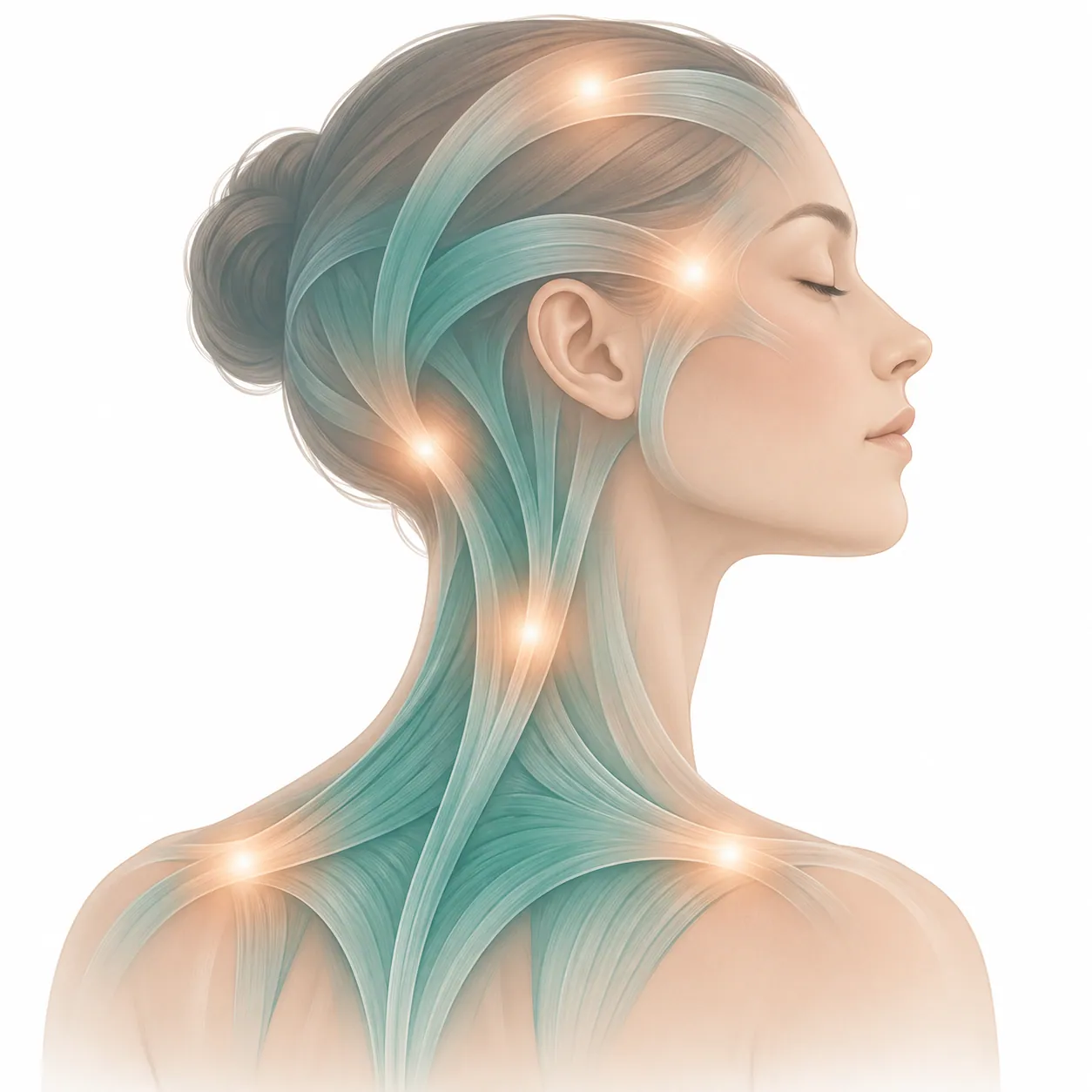
두통은 크게 두 가지로 나눕니다. 뇌나 몸에 다른 병이 없는데 두통 자체가 문제인 일차성 두통, 그리고 다른 질환 때문에 생기는 이차성 두통입니다. 병원을 찾는 두통은 대부분 일차성으로, 머리를 조이듯 아픈 긴장성 두통과 한쪽이 욱신거리며 메스꺼움이 함께 오는 편두통이 가장 많습니다.
두통은 가장 흔한 증상 가운데 하나입니다. 357편의 연구를 모은 분석에서 세계 인구의 52%가 두통을 앓고 있었고, 긴장성 두통은 26%, 편두통은 14%였습니다. 하루 기준으로는 6명 중 1명(15.8%)이 두통을 겪고, 4.6%는 한 달에 15일 이상 머리가 아팠습니다[1].
이런 증상이 있나요?
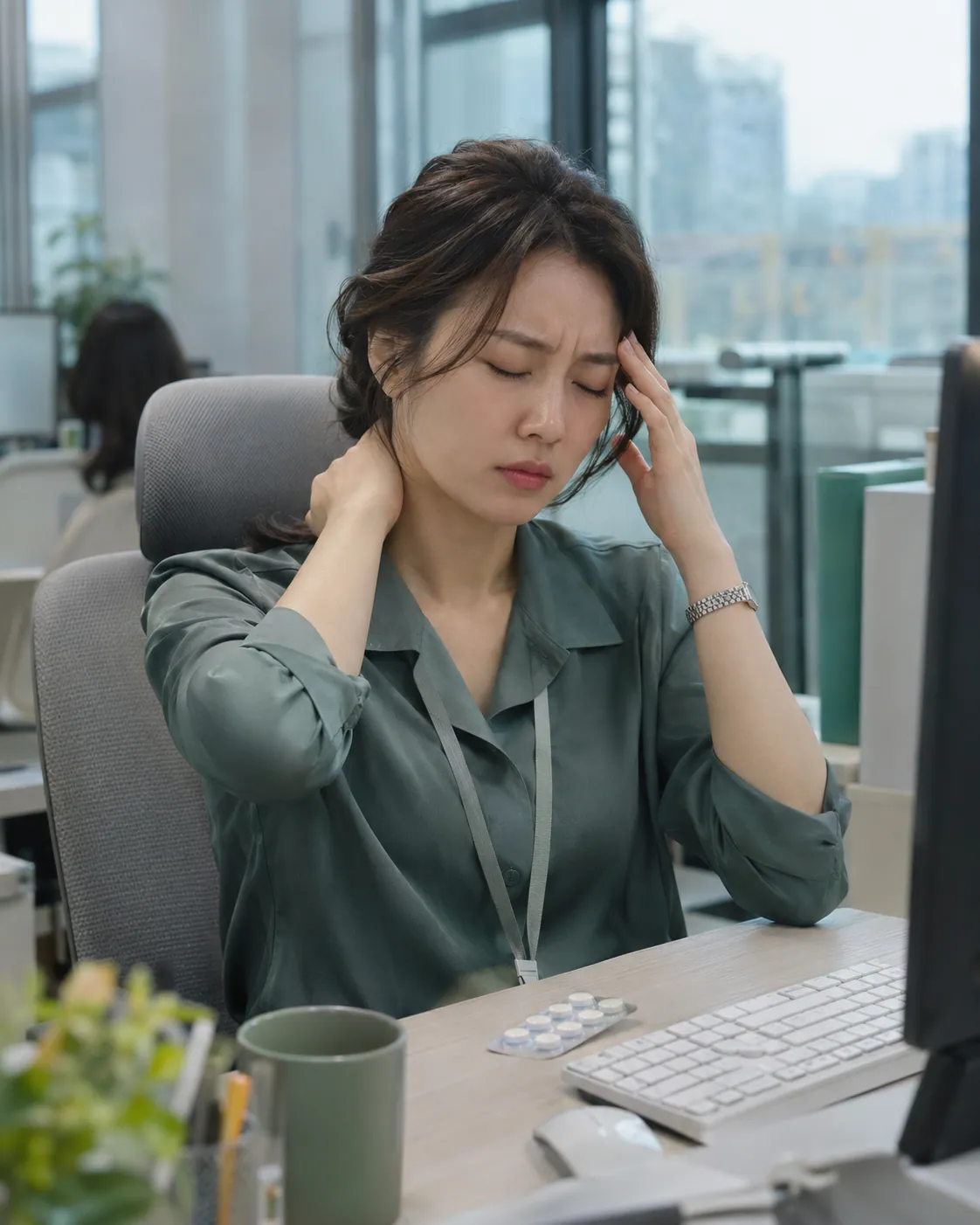
- 머리를 띠로 조이는 듯 양쪽이 묵직하게 아프다
- 한쪽 머리가 욱신거리고 메스꺼우며, 빛과 소리가 거슬린다
- 뒷목과 어깨가 뭉치면서 뒷머리까지 땅긴다
- 오후가 될수록, 스트레스를 받을수록 심해진다
- 체하거나 속이 불편하면 머리도 함께 아프다
- 생리 전후나 잠을 못 잔 다음 날 어김없이 아프다
- 진통제를 일주일에 두세 번 이상 먹는다
대부분의 두통은 혈액검사나 영상검사보다도 아픈 양상을 자세히 듣는 것이 원인을 파악하는 데 중요합니다. 다만 갑자기 시작된 극심한 두통, 65세 이후 새로 생긴 두통, 양상이 달라진 두통처럼 위험 신호가 있으면 다른 질환을 먼저 확인해야 합니다[2].
두통은 왜 생기나요?
- 오래 앉아 있는 자세, 목과 어깨의 긴장
- 스트레스, 긴장이 풀리지 않는 생활
- 수면 부족이나 불규칙한 수면
- 생리 주기, 갱년기 같은 호르몬 변화
- 끼니를 거르거나 체하는 등 소화기의 불편
- 잦은 진통제 복용
머리의 통증이지만, 원인이 머리에서만 시작되는 것은 아닙니다. 스트레스, 불면 등으로 인한 근육 긴장 역시 두통의 흔한 원인입니다. 편두통과 긴장성 두통 환자에게는 목·어깨·머리 근육에 눌렀을 때 아픈 통증 유발점이 흔하게 나타납니다[4]. 잠도 깊이 얽혀 있습니다. 편두통과 수면장애는 뇌의 같은 조절 회로를 함께 쓰는 것으로 보여, 편두통 환자는 수면 상태를 함께 살펴야 합니다[5].
두통의 표준 치료
두통의 일반적인 치료는 아플 때 먹는 진통제와 자주 반복될 때 쓰는 예방약입니다. 하지만 통증을 누르는 것만으로는 반복을 막기 어렵고, 진통제가 늘어나면 오히려 두통이 굳어질 수 있습니다.
두통이 목·어깨의 긴장과 수면, 자율신경의 불균형에서 시작된다면 그 바탕을 다스려야 합니다. 한방치료는 진통제를 줄이고 싶은 분에게 의미 있는 선택지입니다.
연구도 쌓여 있습니다. 28개 연구를 모은 분석에서 침은 가짜 침보다 편두통 치료 효과가 좋았고 약물보다 부작용이 적었으며[6], 긴장성 두통에서도 가짜 침보다 호전율이 1.3배 높았습니다[7]. 한약도 마찬가지입니다. 무작위 대조 연구 19편, 1,832명을 모은 분석에서 천궁이 든 처방은 편두통의 횟수와 기간, 통증을 줄였고 부작용은 적었습니다[8]. 만성 두통 환자 43명이 한약을 양약과 함께 복용한 일본 연구에서는 3개월 뒤 한 달 두통 일수가 20일에서 2일로, 진통제 복용일이 15일에서 0일로 줄었습니다(중앙값, 대조군 없는 연구)[9].
해움한의원은 이렇게 치료합니다

해움한의원은 아픈 머리만이 아니라 두통을 만드는 몸의 상태를 찾아 함께 치료합니다.
1단계. 두통의 종류와 위험 신호를 가립니다
아픈 자리와 양상, 시작되는 상황, 진통제 복용 횟수를 자세히 살펴봅니다. 위험 신호가 있으면 신경과 검사를 먼저 안내해 드립니다. 심박변이도와 적외선 체열검사로 자율신경의 균형과 머리·목으로 몰린 열을 확인합니다.
2단계. 굳은 목과 어깨를 풉니다
침과 약침, 도침으로 목·어깨·머리의 통증 유발점을 풀고, 추나로 목과 등의 정렬을 바로잡아 머리로 가는 긴장을 줄입니다.
3단계. 반복되는 바탕을 다스립니다
체질과 상태에 맞춰 한약을 짓습니다. 수면과 스트레스, 식사 습관을 함께 살피고, 진통제를 줄여 가는 과정도 함께합니다.
4만 건의 처방 사례가 말해주는, 한방 맞춤 치료의 힘




두통 치료후기 총 29건
환자분들이 남긴 치료후기입니다. 본문은 로그인 후 보실 수 있습니다.
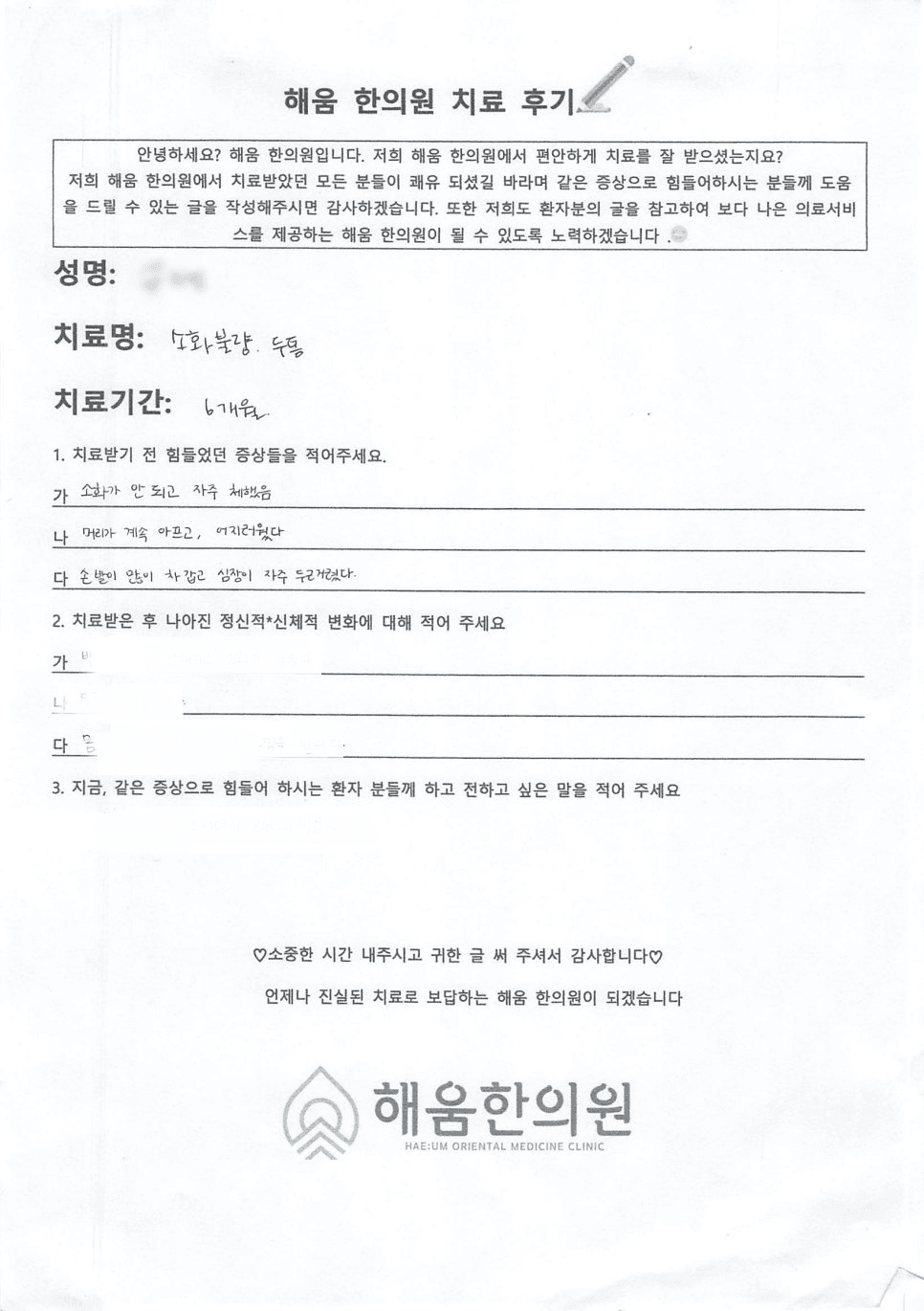
두통 속울렁거림 식은땀, 단순 소화불량이 아니라고요?
2026. 04. 09.

직장 스트레스와 과로로 악화된 편두통·삼차신경통 환자
2026. 01. 06.
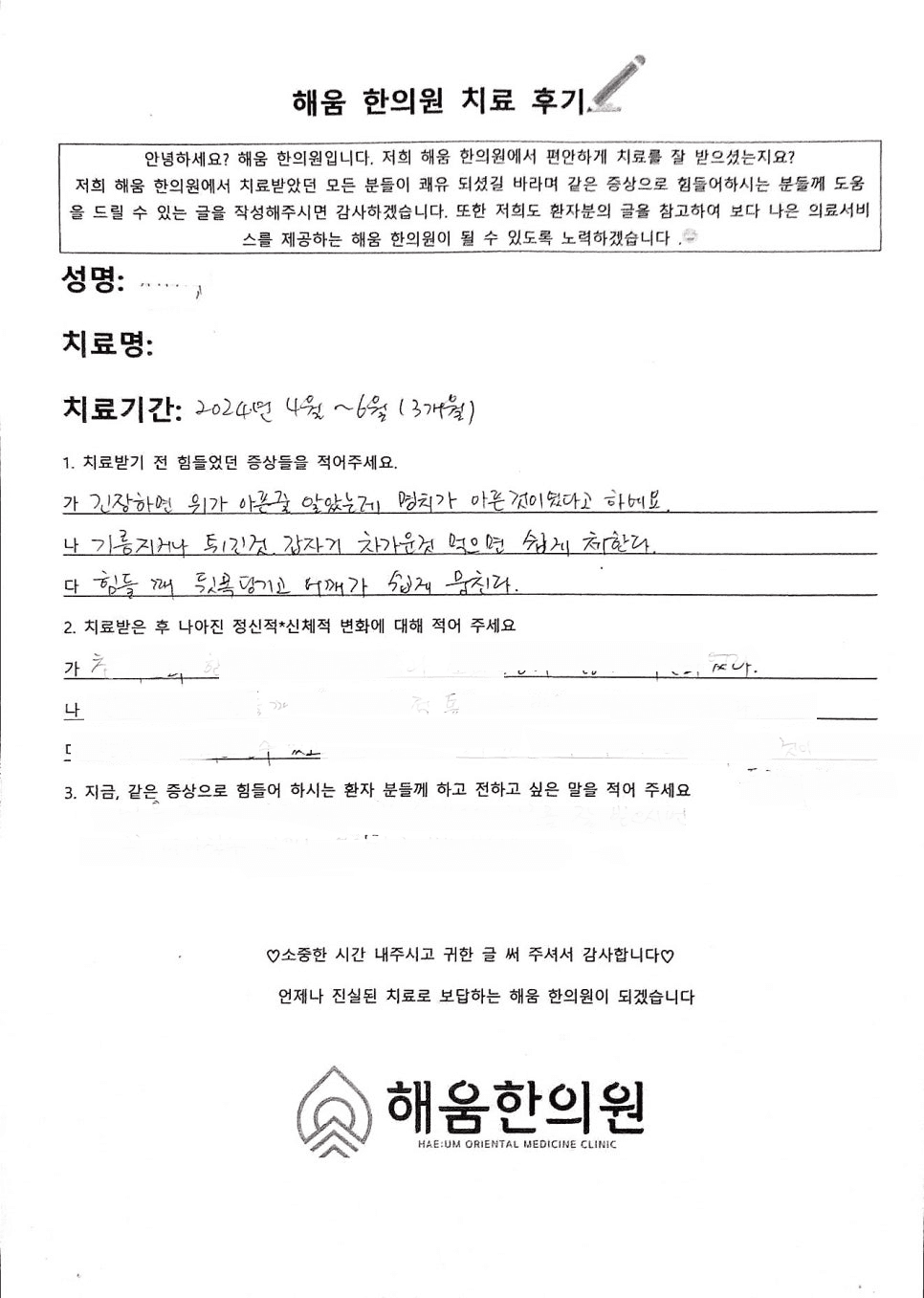
소화불량두통, 체할까 봐 항상 조심스러웠던 마음이 이제는 편해졌어요
2026. 01. 05.

불면증두통, 호흡곤란, 다이어트와 함께
2024. 05. 24.
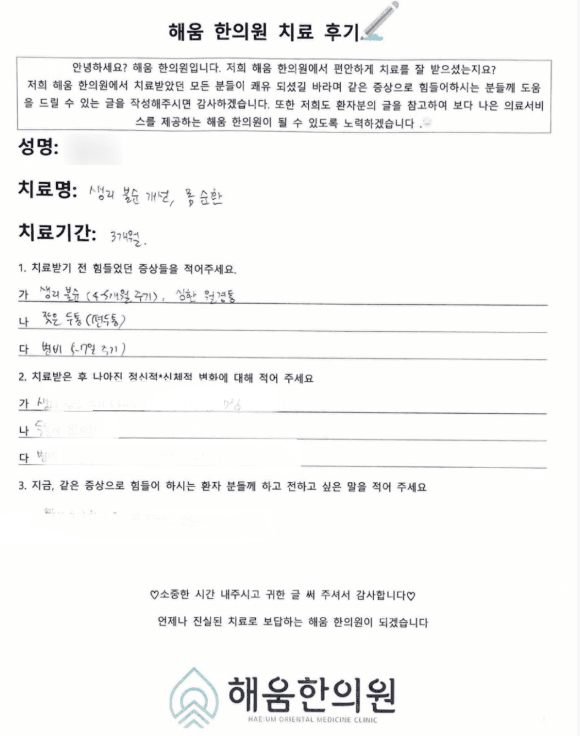
생리전증후군인가요? 진통제를 하루 8알씩.. 심각한 생리통 편두통 변비 한약 먹고 좋아진 사례
2023. 12. 13.
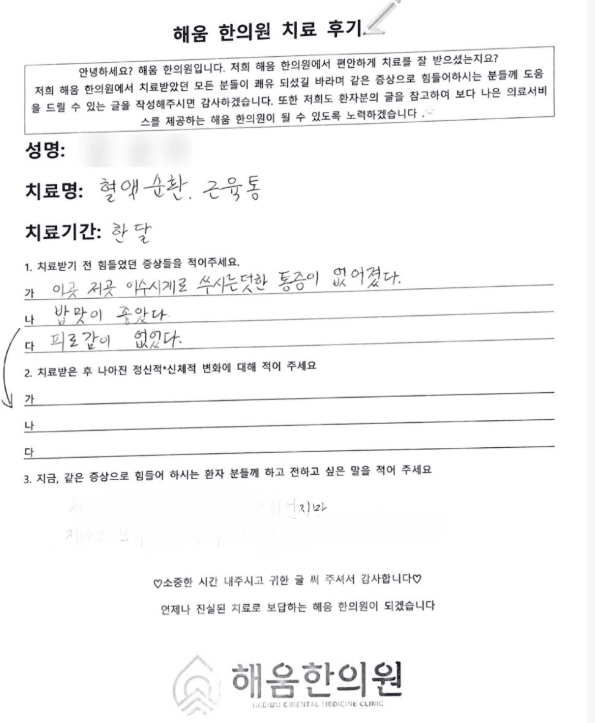
이럴때 보약한재 먹어야해요! 만성피로 편두통 몸살근육통
2023. 01. 17.
치료후기 3건 더 보기접기
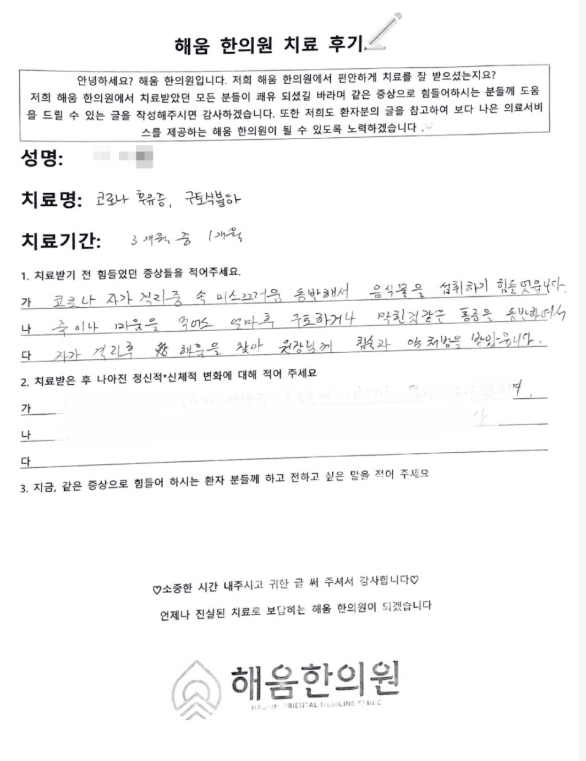
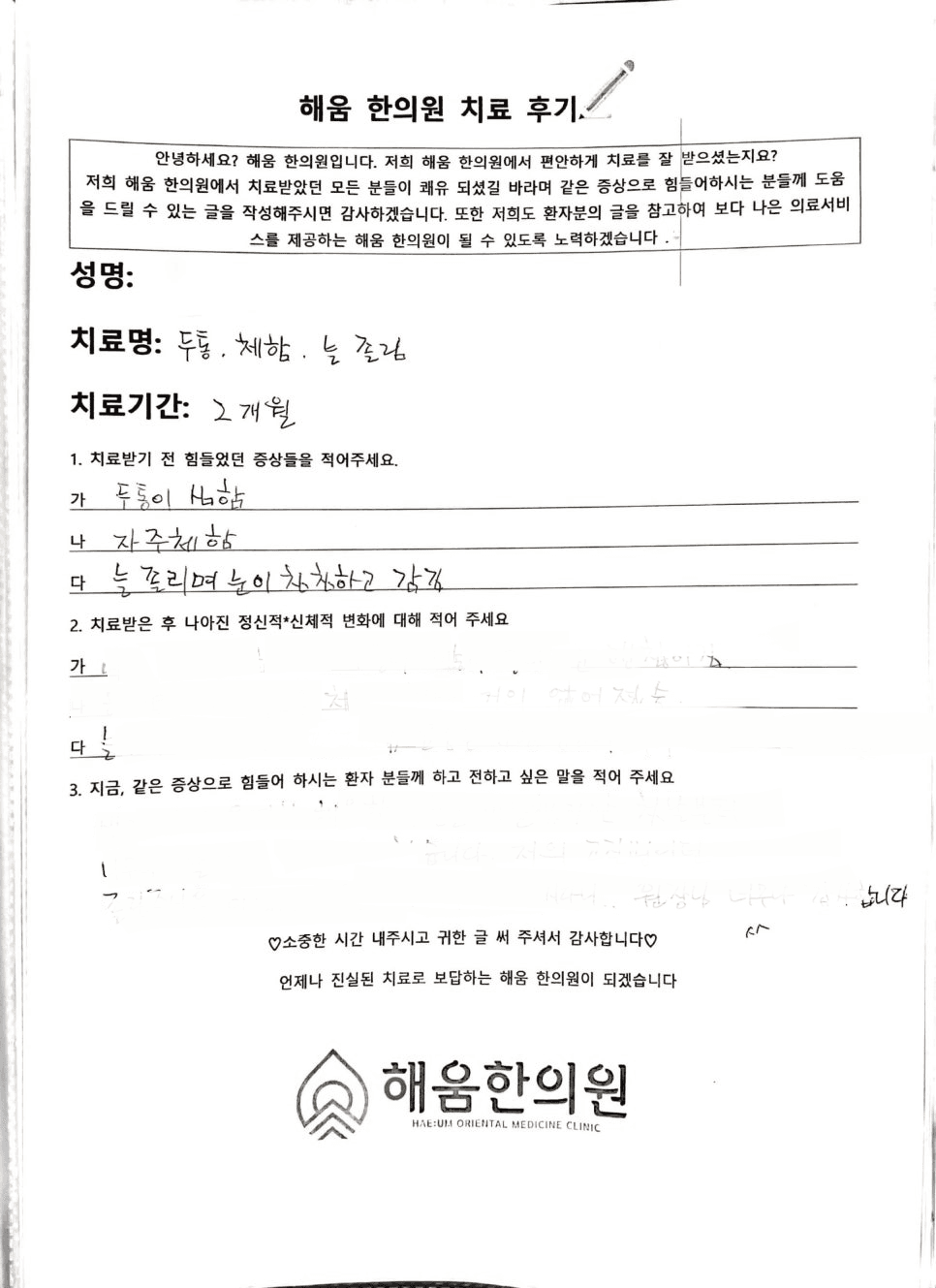
다른 증상으로 내원하신 분들의 후기 중 ‘두통’이 증상으로 함께 언급된 기록
- 입대 전 갑자기 발생한 과민성대장증후군, 한의원에서 치료가 될까요?2026. 06. 01.
- 코로나 백신 맞고 기억이 안날 때는? 머리가 멍해요. 코로나 브레인포그 후유증 브레인포그 극복 혈관성 치매 한의원 후기2026. 05. 04.
- 갑자기어지럽고식은땀이 흐른다구요?2026. 04. 25.
- 재수생에게 갑자기 찾아온 스트레스심장두근거림과 급체이유는 뭘까요?2026. 04. 14.
- 검사는 이상 없는데 복통이 심해요..제가 예민한 걸까요?2026. 01. 09.
- 명치끝 통증, 알고보니 자궁내막암 후유증이었다고?2025. 07. 08.
- 갱년기 증후군, 급성 폐경2024. 07. 18.
- 스트레스로 인한 자율신경 문제가 불러온 화병, 불면증2024. 06. 28.
- 만성 위염, 장상피화생, 소화불량2024. 06. 27.
- 이유모를 공황장애 한약으로 치료한 후기2024. 06. 07.
나머지 10건 더 보기접기
- 코로나 후유증 브레인포그2024. 06. 05.
- 저혈압과 함께 어지러움이 심한 학생2024. 05. 22.
- 내시경 검사상 아무 문제 없는 속쓰림, 위경련 통증, 소화불량2024. 04. 20.
- 안하던 생리를 3일만에 시작했어요! 생리통 생리불규칙 무월경 몸이 가뿐해졌다는 환자 사례2023. 12. 23.
- 아내와 사별후 찾아온 갑자기 가슴두근거림 손발저림 어지러움증2023. 12. 22.
- 어지럼증원인을 몰라 타이레놀까지? 갑자기 생긴 어지럼증 환자2023. 01. 16.
- 스트레스 받으면 화장실로 뛰쳐나가게 하는 복통설사2022. 05. 11.
- 만성피로,소화불량,불면.. 사는게 피곤하셨던 환자분 보약 먹고 기운 차리신 얘기2022. 03. 09.
- 10kg 감량! 스트레스로 인한 체중증가, 한약으로 화병과 비만 둘다 관리할 수 있답니다2021. 10. 15.
- 변비로 항상 더부룩했던 환자, 변비 좋아지면서 불면, 우울증도 같이 좋아진 사례2021. 09. 04.
두통, 누가 진료하나요?
담당 의료진
대표원장 박재은

“병이 아니라 그 뒤의 사람을 봅니다”
경희대학교 한의과대학에서 석사·박사 과정을 마쳤습니다. 심리상담사 1급 자격과 4만 건 이상의 한약 처방 경험을 바탕으로 진료합니다.
의료진 소개 더보기두통, 자주 묻는 질문
긴장성 두통과 편두통은 어떻게 다른가요?
진통제를 얼마나 먹어야 너무 많이 먹는 건가요?
두통이 있으면 MRI를 찍어야 하나요?
두통에 한약도 도움이 되나요?
침 치료는 얼마나 자주 받아야 하나요?
치료 기간은 얼마나 걸리나요?
생활에서 두통을 줄이려면 어떻게 해야 하나요?
해움한의원에서 두통을 진료하나요?
두통으로 내원하려면 어떻게 하나요?
두통에 관해 알아두면 좋은 정보
13건두통과 관련해 정리한 건강정보입니다.
편두통과 눈통증, 왜 같이 올까요? 검사해도 이상 없다는 이유
“머리만 아픈 게 아니라 눈까지 찌르는 느낌… 왜 이럴까요?”한쪽 머리가 지끈거리기 시작하더니,어느 순간 눈까지 욱신거리며 아파오는 경험 있으신가요?특히 왼쪽 편두통이 심할 때눈이 빠질 것처럼 압박감이 느껴지면단순

왼쪽옆머리두통, 검사해도 이상 없다면 ‘이것’ 문제일 수 있습니다
“왼쪽 옆머리가 계속 욱신거려요… 왜 반복될까요?”어느 날부터인지왼쪽 옆머리가 욱신거리거나 찌릿하게 아프기 시작합니다.가끔 지나가는 통증이면 괜찮지만,비슷한 위치에서 반복되면 점점 불안해집니다.“검사했는데 이상 없다

뒷골땡김 머리까지 아프다면, 단순 피로가 아닐 수 있습니다
“뒷골이 당기고 어지럽고, 머리까지 아프다면 불안해질 수밖에 없죠”갑자기 뒷목이 뻣뻣해지면서 뒤통수가 당기고, 동시에 어지럽기까지 하다면 누구나 한 번쯤 이런 생각이 듭니다.“혹시 뇌에 문제가 있는 건 아닐까?”특히

후두신경통주사보다 중요한 것은? 후두신경통한의원에서 찾는 근본 원인
목 뒤가 당기고 두통까지 이어진다면 그냥 피로 때문일까요?"목 뒤가 뻣뻣하게 당겨요.""뒤통수가 쑤시면서 하루 종일 머리가 무거워요.""주사도 맞고 약도 먹었는데 또 아파요."이처럼 목덜미에서 시작된 통증이 뒤통수와

뒷목뻐근 두통 어지러움, 자율신경균형이 핵심입니다
“그냥 두통이겠지…” 하고 넘기고 계신가요?뒷목이 뻐근하면서 머리가 지끈거리고, 때로는 어지러움까지 동반되는 경험. 한 번쯤은 있으셨을 거예요.특히 스트레스를 받는 날이면목이 딱딱하게 굳고, 머리가 무겁고, 눈앞이

머리가아프고어지러워요, 두통과 어지럼증 반복된다면 자율신경을 확인하세요
진통제를 먹어도 낫지 않는 두통, 이유를 찾지 못해 답답하셨나요?머리가 무겁고 어지럽습니다.가만히 있어도 멍한 느낌이 들고, 심할 때는 속이 울렁거리거나 중심을 잡기 어려울 정도로 어지럽습니다.처음에는 피곤해서 그런
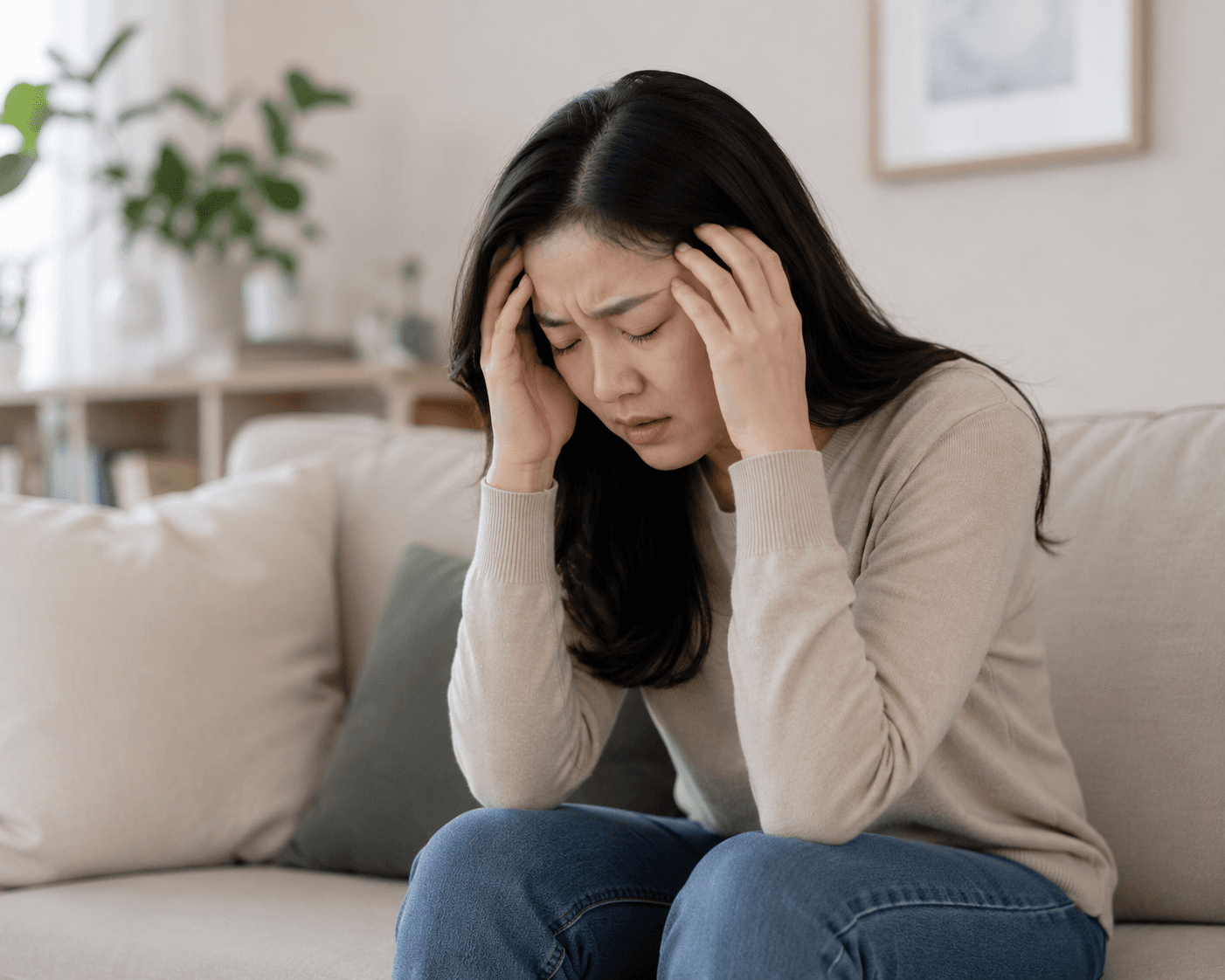
두통속울렁거림식은땀 원인, 단순 컨디션 문제가 아닐 수도 있습니다
이유 없이 찾아오는 불안과 신체 증상갑자기 머리가 아프고 속이 울렁거립니다.식은땀이 흐르고 심장이 두근거립니다.숨도 답답하고 이유 없이 불안해집니다.병원 검사를 받아보지만 특별한 이상은 없다고 합니다.그런데 증상은

"CT도 MRI도 정상이라는데 왜 이렇게 아플까요?" 군발성두통 이야기
"원장님, 진통제를 먹어도 소용이 없어요."군발성두통으로 내원하는 환자분들이 가장 자주 하는 이야기입니다."타이레놀도 먹어보고 다른 진통제도 먹었는데 잠깐 괜찮을 뿐 다시 아파요.""CT도 찍고 MRI도 찍었는데 이

스트레스두통부위, 왜 항상 비슷한 곳만 아플까요?
왜 두통은 늘 비슷한 위치에서 시작될까요?"오늘도 똑같은 곳이 아프네."스트레스를 많이 받은 날이면 머리 양쪽이 조여오는 느낌이 들고, 이마부터 관자놀이, 뒷머리까지 묵직한 통증이 이어지는 분들이 있습니다.어떤 분은

머리는 아프고 속은 울렁거리는데 검사는 정상? 두통 속울렁거림병원 이후 살펴볼 것
“머리가 아플 때마다 속까지 울렁거려요”머리가 지끈거리기 시작하면 얼마 지나지 않아 속까지 메스껍고 울렁거리는 분들이 있습니다.처음 한두 번은 피곤해서 그런가 보다 하고 넘길 수 있어요.하지만 두통이 생길 때마다 속
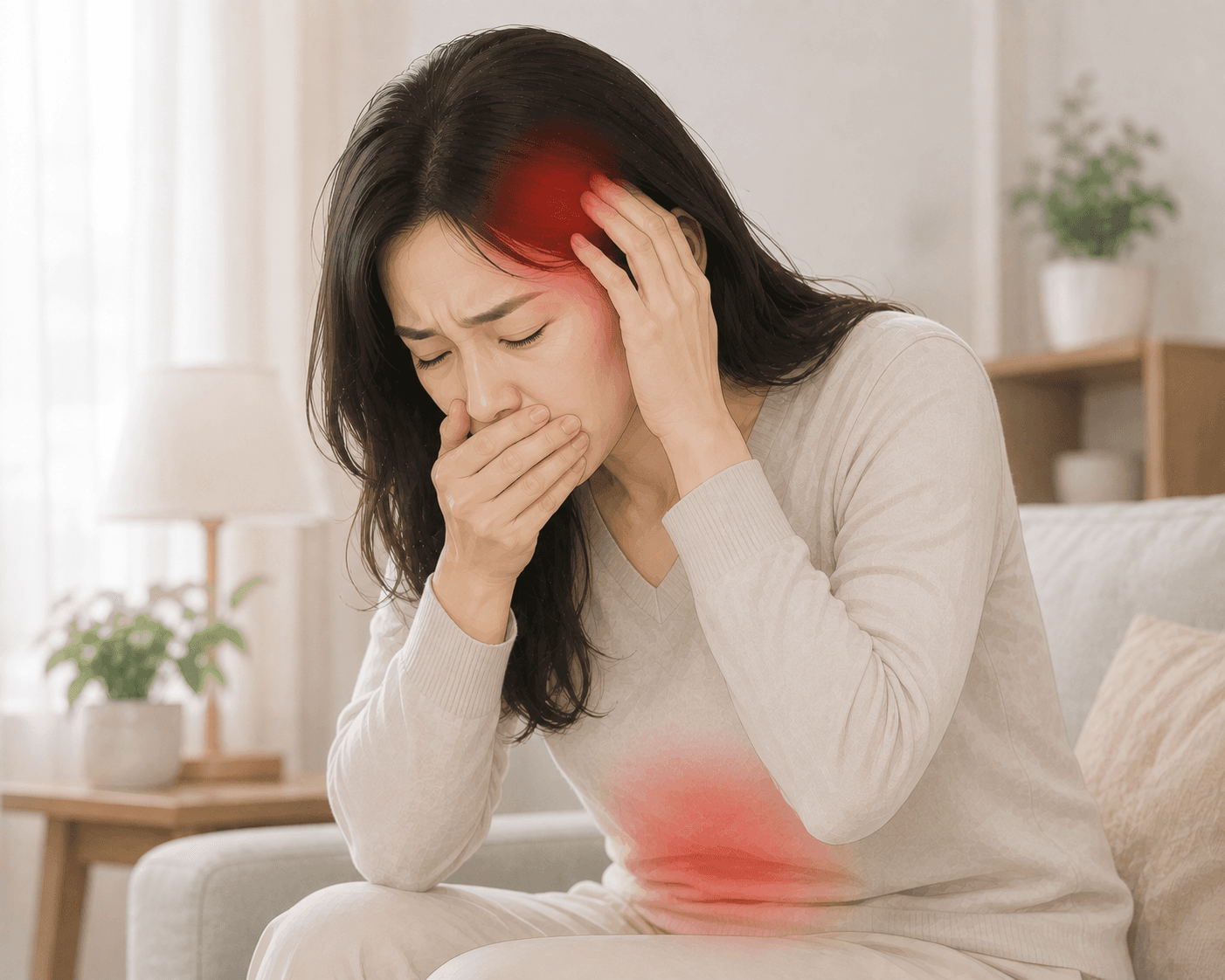
머리 어디가 아프신가요? 두통위치가 원인을 알려줄 수 있습니다
두통은 '어디가 아픈지'부터 확인해야 합니다머리가 아프면 대부분은 진통제를 먼저 찾습니다.잠시 쉬거나 약을 먹으면 통증이 줄어들기도 하기 때문입니다.하지만 같은 두통이라도 통증이 시작되는 위치는 모두 다릅니다.누군가

왼쪽뒷머리찌릿 한 원인, 목과 후두신경을 함께 봐야 합니다
왼쪽 뒷머리가 찌릿할 때, 왜 불안할까요?왼쪽 정수리부터 뒷목, 목덜미까지서늘하고 찌릿한 감각이 느껴질 때가 있습니다.단순히 머리가 지끈거리는 두통과는 조금 다릅니다.마치 전기가 스치는 듯하거나,바늘로 콕 찌르는 듯

뒷머리찌릿 반복된다면 꼭 확인해야 할 원인
“뒤통수를 콕콕 찌르는 느낌, 왜 계속될까요?”가만히 있는데도뒤통수가 갑자기 찌릿하거나“바늘로 콕 찌르는 느낌이 들어요”“순간적으로 전기가 오는 것 같아요”이런 경험 있으신가요?대부분은 단순 두통으로 넘기지만이 증상

두통, 질문 있어요
3건환자분들이 남긴 온라인 상담 질문과 의료진 답변입니다.
이런 경우에는 바로 응급실로 가세요
아래 두통은 뇌출혈이나 뇌졸중, 뇌수막염 같은 위급한 질환일 수 있습니다. 한의원보다 응급실(119)을 먼저 찾으세요.
- 벼락을 맞은 듯 갑자기 시작된, 살면서 가장 심한 두통
- 말이 어눌해지거나, 한쪽 팔다리에 힘이 빠지거나, 물체가 둘로 보인다
- 고열과 함께 목이 뻣뻣하고, 정신이 흐려진다
- 머리를 다친 뒤 두통이 점점 심해지거나 계속 토한다
- 임신 중이거나 출산 직후 새로 생긴 심한 두통
참고문헌 9편
[1]Stovner LJ, Hagen K, Linde M, Steiner TJ. The global prevalence of headache: an update, with analysis of the influences of methodological factors on prevalence estimates. J Headache Pain. 2022;23(1):34. doi:10.1186/s10194-022-01402-2. PMID: 35410119.
초록 (Abstract)
Background: According to the Global Burden of Disease (GBD) study, headache disorders are among the most prevalent and disabling conditions worldwide. GBD builds on epidemiological studies (published and unpublished) which are notable for wide variations in both their methodologies and their prevalence estimates. Our first aim was to update the documentation of headache epidemiological studies, summarizing global prevalence estimates for all headache, migraine, tension-type headache (TTH) and headache on ≥15 days/month (H15+), comparing these with GBD estimates and exploring time trends and geographical variations. Our second aim was to analyse how methodological factors influenced prevalence estimates.
Methods: In a narrative review, all prevalence studies published until 2020, excluding those of clinic populations, were identified through a literature search. Prevalence data were extracted, along with those related to methodology, world region and publication year. Bivariate analyses (correlations or comparisons of means) and multiple linear regression (MLR) analyses were performed.
Results: From 357 publications, the vast majority from high-income countries, the estimated global prevalence of active headache disorder was 52.0% (95%CI 48.9–55.4), of migraine 14.0% (12.9–15.2), of TTH 26.0% (22.7–29.5) and of H15+ 4.6% (3.9–5.5). These estimates were comparable with those of migraine and TTH in GBD2019, the most recent iteration, but higher for headache overall. Each day, 15.8% of the world’s population had headache. MLR analyses explained less than 30% of the variation. Methodological factors contributing to variation, were publication year, sample size, inclusion of probable diagnoses, sub-population sampling (e.g., of health-care personnel), sampling method (random or not), screening question (neutral, or qualified in severity or presumed cause) and scope of enquiry (headache disorders only or multiple other conditions). With these taken into account, migraine prevalence estimates increased over the years, while estimates for all headache types varied between world regions.
Conclusion: The review confirms GBD in finding that headache disorders remain highly prevalent worldwide, and it identifies methodological factors explaining some of the large variation between study findings. These variations render uncertain both the increase in migraine prevalence estimates over time, and the geographical differences. More and better studies are needed in low- and middle-income countries.
Supplementary Information: The online version contains supplementary material available at 10.1186/s10194-022-01402-2.
결과 (Results)
Studies: A total of 357 published papers were identified that were judged relevant to this review (Additional file 1). The table has more than 357 rows because some papers were referred to multiple times, reporting data from two or more studies performed in different years, in different countries or places, with different methods in the same place, or with different timeframes. Some rows have more than one reference because data from the same study but on different headache types (e.g. migraine and TTH) were reported in multiple publications.
The number of publications from each GBD superregion varied considerably: 183 from HI, 25 from CEEAO, 44 from LAC, 42 from NAME, 11 from SA, 24 from SEEAO and 27 from SSA. It should be noted that all GBD superregions are continuous geographical areas except HI, which includes countries in Australasia, Asia Pacific, Western Europe, North America and Southern Latin America.
Descriptive overview: Many studies were deficient in their reporting, hindering our analyses.
For age, many gave data for different groups (e.g., 5-, 10- or 20-year categories), some but not all did so for each gender, some did so for only one of the headache types and some did so for each type. All studies on very specific age groups (e.g., children, adolescents, elderly) gave age ranges, these being the source of all mid-range values below 10, from 10 to 19 or above 65 years. Most of the many studies with mid-range values between 20 and 64 years were conducted in adults (young and middle-aged), but some included all ages (5–99 years). Some, however, were restricted to the actively working population (18–65 or 20–65 years), and some to narrow age ranges (e.g., a single-year cohort of 40 years, or 20–35, or 45–64 years). Hence, our study was not well able to show age-specific effects: we could relate prevalences only to four ranges of mid-range values (< 10, 10–19, 20–64, ≥65 years).
With regard to timeframe, many studies reported 1-year prevalence defined appropriately (a positive response to “have you had headache during the last year?”), but a number used shorter timeframes, often with the assumption that questions about headache during the last year were sufficiently answered by considering only the last 3–6 months. Others asked whether participants had headache “currently”, or specified no timeframe (e.g., “do you suffer from headaches?”), but clearly implied the present rather than throughout the lifetime. Studies with even shorter timeframes (usually 24 h, “headache yesterday”, or “now”) always defined the timeframe when questioning participants.
Many studies did not describe the screening question. As a group, they probably included a mixture of screening questions (neutral or qualified).
Many studies were silent on the distinction between definite and probable diagnoses, and may or may not have included the latter.
Prevalence of an active headache disorder: Globally, an active headache disorder of any type was present in 52.0% of the populations studied (males 44.4%, females 57.8%), migraine in 14.0% (males 8.6%, females 17.0%) and TTH in 26.0% (males 23.4%, females 27.1%) (Table 1). The overall value is not always the mean of the values for males and females because some studies were restricted to one gender while others gave only the overall value. H15+ was reported by 4.6% (males 2.9%, females 6.0%). All these data are detailed in Table 1 by gender and age. Headache prevalences were reportedly similar in all age groups in both genders (overlapping CIs). On the other hand, studies with mid-range age values below 10 or above 65 years reported lower migraine prevalences in both males and females, and studies with values below 10 years reported lower TTH prevalences in both genders. H15+ estimates were lower among females with mid-range age values of 10–19 years and among males. Mean values were approximately 20% higher than the medians, for migraine (mean 14.0% versus median 11.6%), TTH (26.0% versus 21.4%) and H15+ (4.6% versus 3.6%), but not for all headache (52% versus 53.5%) (Table 1).
Table 2 shows prevalences by geographical area (GBD superregions). All headache reportedly varied between 38.7% (SEEAO) and 60.5% (NAME), migraine between 9.0% (SEEAO) and 22.2% (SA), TTH between 11.1% (SEEAO) and 33.1% (SA), and H15+ between 2.8% (SEEAO) and 6.9% (SA).
For comparison, Table 2 also provides the latest available estimates from GBD. For all headache, these were generally somewhat lower than our findings, globally and in several of the GBD superregions (with non-overlapping 95% CIs globally and in HI, LAC, NAME and SSA). This was despite that GBD estimates for migraine and TTH were generally higher. GBD does not give separate data on H15+, although more recent iterations subsume medication-overuse headache within migraine or TTH according to the proportions expected to arise from each.
Table 2 also shows the percentages of the global population living in each GBD superregion. Adjusting for these (not shown in the table), the global prevalence of headache was 45.6%, of migraine 13.6%, of TTH 21.1%, and of H15+ 4.7%. This simple adjustment does not allow CIs to be calculated, and is valid only if estimates per superregion are correctly representative for the whole of each superregion. The adjusted values are more similar to those of GBD for all headache, but not for migraine or TTH.
In studies estimating prevalences of an active headache disorder and of specific headache types, there were clear positive correlations between them: for headache with migraine (r = 0.46, p < 0.01, 142 studies), with TTH (r = 0.48, p < 0.01, 84 studies) and with H15+ (r = 0.45, p < 0.01, 42 studies), for migraine with TTH (0.36, p < 0.0000, 105 studies) and with H15+ (0.45, p < 0.01, 43 studies), and for TTH with H15+ (0.37, p = 0.2, 43 studies).
Prevalence related to methodological and other study variables / Timeframe: Table 3 shows that reported prevalences varied with timeframe. Excepting 1-day estimates, this was mostly with widely overlapping 95% CIs: of all headache from 37.2% (“current”) to 66.6% (lifetime), of migraine from 11.1% (6-month) to 17.5% (lifetime), of TTH from 20.2% (3-month) to 40.6% (lifetime), and of H15+ from 2.7% (3-month) to 6.0% (6-month).
As to 1-day prevalence, 15.8% of the global population reportedly had headache on any particular day (7.0% migraine, 8.7% TTH and 2.5% H15+). Many of the studies reporting 1-day prevalence (as headache yesterday) did not attempt to diagnose headache type.
Definite and probable (or unspecified) diagnoses: Table 4 makes the distinction between definite and probable diagnoses of migraine (reported in 59 studies) or of TTH (33 studies). Mean reported prevalences for migraine were 10.5% for dMig and 8.7% for pMig, the sum being 19.2%. In studies providing gender-specific estimates, these were 6.2 and 6.3% for males, 14.5% and 9.7% for females. For TTH they were 19.4% for dTTH and 10.0% for pTTH (sum 29.4%; males 18.1% and 8.6%, females 22.4% and 9.4%).
Table 4 also provides mean estimates from the 185 studies not making or not specifying the distinction. These studies yielded a prevalence of migraine (12.4%) that was somewhat higher than that of dMig (10.5%) from the 59 studies that did distinguish, but lower than their sum of dMig and pMig (19.2%). The combination of all studies gave the 14.0% global estimate reported above. Similarly for TTH, the mean reported prevalence of unspecified TTH (24.5%) was between that of dTTH (19.4%) and sum of dTTH and pTTH (29.4%), with 26.0% from the combination of all studies.
Table 5 relates definite and probable diagnoses to gender and age. In the contributory studies, pMig constituted 45% (8.7/19.2*100) of all migraine (pMig+dMig), somewhat more among males (49%) than females (40%), and among adolescents 10–19 years of age (52%) than adults aged 20–64 years (43%) or ≥ 65 years (46%). For TTH, proportions of pTTH were somewhat lower (overall 35%, males 32%, females 30%), but markedly higher among adolescents (48%) than among the two adult groups (31% and 32%).
Bivariate analyses: Table 6 shows bivariate correlations of active headache disorders with continuous and ordinal variables (publication year, number of participants [ln-transformed], participating proportion and summed quality score), as well as comparing means of reported prevalences according to various categorical variables. Migraine prevalence was positively associated with publication year (r = 0.30). Headache (r = − 0.27), migraine (r = − 0.26) and H15+ (r = − 0.33) were negatively associated with number of participants, TTH showing a trend in the same direction (r = − 0.17). There were no significant associations with summed quality score (p ≥ 0.7). As to the population of interest, estimates for migraine from general populations, defined regions or schools were not significantly different from those from selected sub-populations, although, among the latter, estimates were higher in health-care personnel than others (23.0% versus 13.4%, p = 0.030). With regard to sampling method (random versus not or failed attempt to secure randomness), estimates for migraine were significantly lower in studies with random sampling (12.8% versus 18.0%, p = 0.002), but this was not so for all headache or the other headache types (p ≥ 0.4). Mode of engagement (telephone or face-to-face interview by untrained, trained or specialized interviewer versus self-administered questionnaire or unknown) influenced estimates for H15+ (5.5% versus 3.6%, p = 0.02), but not those for the other headache types. There was no evident influence of validation of the diagnostic method (p ≥ 0.7). Distinction or not between pMig and dMig made a difference for migraine (19.2% versus 12.4%), and distinction between dTTH and pTTH did so for all headache (61.5% versus 50.2%), migraine (20.0% versus 13.1%), and H15+ (6.2% versus 3.9%). Studies restricted to headache and not including other conditions reported higher estimates for all headache (52.9% versus 35.2%, p = 0.02) and for migraine (14.3% versus 7.8%, p = 0.04). Neutral screening questions were associated with higher estimates for all headache, migraine and TTH than were unspecified questions (intermediate) and those implying some level of severity, frequency or presumed causation.
Multiple linear regression (MLR): None of the dependent variables (headache, migraine, TTH and HA15+, in both genders combined) were normally distributed (p ≤ 0.01, SW). Normalizing the dependent variables (by ln- transformation and removal of outliers, see Statistics) was successful for three (migraine, TTH and HA15+; p > 0.14), but not for headache (p < 0.01). No significant collinearity was found in any of the models (VIF < 1.40). For distribution of residuals, see Additional file 2 (Histograms, P-P plots and Scatterplots).
Table 7 shows the MLR results for original (Model 1) and normalized (Model 2) dependent variables. Model 2 should be the more robust. For TTH, the two models are identical with regard to the variables included and directions of the associations, and for migraine, the principal difference is that one superregion (NAME) is not included in Model 2. For H15+, the two models are very different, probably showing that the robustness of MLR models declines with smaller numbers of observations, particularly when the dependent variable is not normally distributed. For headache, two methodological variables and one superregion occur in both models.Table 7Multiple linear regression with stepwise inclusion of variables (HI superregion serves as reference for other superregions)Model 1: Original data setHeadache, N = 181(5 variables)Migraine, N = 242(8 variables)TTH, N = 109(4 variables)H15+, N = 58(2 variables)Whole modelF = 10.3, p < 0.001, R2 adj: 0.208F = 13.9, p < 0.001, R2 adj: 0.299F = 6.9, p < 0.001, R2 adj: 0.181F = 6.6, p = 0.003, R2 adj: 0.165Variables with significanceβ standardisedSPCsqrβ standardisedSPCsqrβ standardisedSPCsqrβ standardisedSPCsqrYear of publication0.2580.060Number (ln transformed) of participants−0.2070.040− 0.1460.018dMig and pMig0.2690.064dTTH and pTTH0.3210.102Health-care personnel0.1730.022Sampling method−0.1690.022Type of screening question−0.3070.090−0.2850.080Number of conditions−0.1620.026Mode of engagement0.2810.078SSA superregion−0.1480.021−0.1730.028−0.2320.052SEEAO superregion−0.1710.029−0.1360.018−0.2940.084NAME superregion−0.1130.011−0.2310.051Model 2: ln transformed dependent variable and outliers (±1.5 interquartile range) removedHeadache, N = 176(4 variables)Migraine, N = 238(7 variables)TTH, N = 103(4 variables)H15+, N = 57(2 variables)Whole modelF = 11.3 p < 0.001, R2 adj: 0.191F = 13.6, p < 0.001, R2 adj: 0.271F = 5.5, p < 0.001, R2adj:0.150F = 6.5, p = 0.003, R2 adj: 0.164Variables with significanceβ standardisedSPCsqrβ standardisedSPCsqrβ standardisedSPCsqrβ standardisedSPCsqrYear of publication0.2590.064Number (ln transformed) of participants−0.1860.032−0.1370.016−0.3540.125dMig and pMig0.2910.078dTTH and pTTH0.1660.027Health-care personnel0.1330.013Sampling method−0.1690.022Type of screening question−0.2770.072−0.2330.054SEEAO superregion−0.1100.012−0.2060.058−0.2500.062SSA superregion−0.2070.042−0.1800.031−0.2450.042NAME superregion−0.2640.068R2 adj (Adjusted R2): The proportion of variability explained by the whole model (“Goodness of fit”), adjusted for overestimation caused by the number of effectsβ-standardised: The direction and strength of its correlation with the dependent prevalence variableSPCsqr: the proportion of the variability explained by that variable alone
Overall, a relatively small proportion of the variations in reported headache prevalence was explained by these variables, ranging from 29.9% (whole model R2) in migraine to 16.5% in H15+ (Model 1), and from 27.1% (migraine) to 15.0% (H15+, Model 2).
For all headache the methodological variables included in both models were the type of screening question (SPCsqr, explaining 9.0% in Model 1 and 7.2% in Model 2), and the number of participants in the study (4.0% and 3.2%, negatively correlated). Whether the study investigated only headache or included other disorders was included in Model 1(2.6%, lower estimates in the latter), and whether it included both dTTH and pTTH in Model 2 (2.7% more when it did). For migraine, the most important factor was distinction between dMig and pMig (6.4% and 7.8% in the two models), followed by publication year (6.0% and 6.4%, positively correlated), sampling method (2.2% in both models lower estimates when random), selection of health-care personnel (2.2% and 1.3% higher estimates) and number of participants (1.8% and 1.6%, negatively correlated). For TTH, the only methodological factor was the type of screening question (8.0% and 5.4%). For both migraine and TTH, certain world superregions (SSA, SEEAO, and NAME for TTH) had lower estimates than the reference (HI superregion). For H15+, the only methodological variable included in Model 2 was number of participants (12.5%, negatively correlated). SEEAO superregion had lower prevalence (6.2%, Model 2) than HI. In Model 1 were also included whether the study distinguished between dTTH and pTTH (10.2%, higher when they did) and mode of engagement (7.8%, higher with telephone/face-to-face than with unsupervised questionnaire).
Sensitivity analyses: Correlations between the different headache types were very similar using a non-parametric method (Spearman’s rho, 0.36–0.49, p < 0.01 for all). In the bivariate analyses (Table 6), two of the 56 p-values became non-significant with non-parametric methods (headache correlated with age, and TTH related to dTTH or pTTH) while four became significant (migraine related to mode of engagement, TTH to participating proportion, age and screening question). Thirteen analyses remained significant and 37 nonsignificant with both methods.
In addition, a second MLR analysis (not shown), with GBD superregions omitted from the modelling, found exactly the same methodological variables to be significant.
원문 발췌 · Stovner LJ, Hagen K, Linde M, Steiner TJ, J Headache Pain 2022 · CC BY 4.0 라이선스에 따라 수정 없이 인용했습니다(본문 속 인용 번호는 생략).
[2]Do TP, Remmers A, Schytz HW, Schankin C, Nelson SE, Obermann M, et al. Red and orange flags for secondary headaches in clinical practice: SNNOOP10 list. Neurology. 2019;92(3):134-144. doi:10.1212/WNL.0000000000006697. PMID: 30587518.
요약 다른 질환이 원인인 이차성 두통을 가려내기 위한 위험 신호 목록(SNNOOP10)을 정리한 리뷰입니다. 발열 같은 전신 증상, 암 병력, 신경학적 이상, 갑작스러운 시작, 65세 이후 새로 생긴 두통, 양상의 변화, 자세에 따른 두통, 기침·운동으로 유발되는 두통, 임신·출산 직후, 머리 외상 뒤 두통, 진통제 과다 사용 등을 꼽습니다.원문은 출판사 저작권 자료로, 위 링크에서 확인하실 수 있습니다.
[3]Vandenbussche N, Laterza D, Lisicki M, Lloyd J, Lupi C, Tischler H, et al. Medication-overuse headache: a widely recognized entity amidst ongoing debate. J Headache Pain. 2018;19(1):50. doi:10.1186/s10194-018-0875-x. PMID: 30003412.
초록 (Abstract)
Medication overuse in primary headache disorders is a worldwide phenomenon and has a role in the chronification of headache disorders. The burden of disease on individuals and societies is significant due to high costs and comorbidities. In the Third Edition of the International Classification of Headache Disorders, medication-overuse headache is recognized as a separate secondary entity next to mostly primary headache disorders, although many clinicians see the disease as a sole complication of primary headache disorders. In this review, we explore the historical background of medication-overuse headache, its epidemiology, phenomenology, pathophysiology and treatment options. The review explores relevant unanswered questions and summarizes the current debates in medication-overuse headache.
원문 발췌 · Vandenbussche N, Laterza D, Lisicki M, Lloyd J, Lupi C, Tischler H, Toom K, Vandervorst F, Quintana S, Paemeleire K, Katsarava Z, J Headache Pain 2018 · CC BY 4.0 라이선스에 따라 수정 없이 인용했습니다(본문 속 인용 번호는 생략).
[4]Do TP, Heldarskard GF, Kolding LT, Hvedstrup J, Schytz HW. Myofascial trigger points in migraine and tension-type headache. J Headache Pain. 2018;19(1):84. doi:10.1186/s10194-018-0913-8. PMID: 30203398.
초록 (Abstract)
Background: A myofascial trigger point is defined as a hyperirritable spot in skeletal muscle that is associated with a hypersensitive palpable nodule in a taut band. It has been suggested that myofascial trigger points take part in chronic pain conditions including primary headache disorders. The aim of this narrative review is to present an overview of the current imaging modalities used for the detection of myofascial trigger points and to review studies of myofascial trigger points in migraine and tension-type headache.
Findings: Different modalities have been used to assess myofascial trigger points including ultrasound, microdialysis, electromyography, infrared thermography, and magnetic resonance imaging. Ultrasound is the most promising of these modalities and may be used to identify MTrPs if specific methods are used, but there is no precise description of a gold standard using these techniques, and they have yet to be evaluated in headache patients. Active myofascial trigger points are prevalent in migraine patients. Manual palpation can trigger migraine attacks. All intervention studies aiming at trigger points are positive, but this needs to be further verified in placebo-controlled environments. These findings may imply a causal bottom-up association, but studies of migraine patients with comorbid fibromyalgia syndrome suggest otherwise. Whether myofascial trigger points contribute to an increased migraine burden in terms of frequency and intensity is unclear. Active myofascial trigger points are prevalent in tension-type headache coherent with the hypothesis that peripheral mechanisms are involved in the pathophysiology of this headache disorder. Active myofascial trigger points in pericranial muscles in tension-type headache patients are correlated with generalized lower pain pressure thresholds indicating they may contribute to a central sensitization. However, the number of active myofascial trigger points is higher in adults compared with adolescents regardless of no significant association with headache parameters. This suggests myofascial trigger points are accumulated over time as a consequence of TTH rather than contributing to the pathophysiology.
Conclusions: Myofascial trigger points are prevalent in both migraine and tension-type headache, but the role they play in the pathophysiology of each disorder and to which degree is unclarified. In the future, ultrasound elastography may be an acceptable diagnostic test.
원문 발췌 · Do TP, Heldarskard GF, Kolding LT, Hvedstrup J, Schytz HW, J Headache Pain 2018 · CC BY 4.0 라이선스에 따라 수정 없이 인용했습니다(본문 속 인용 번호는 생략).
[5]Tiseo C, Vacca A, Felbush A, Filimonova T, Gai A, Glazyrina T, et al. Migraine and sleep disorders: a systematic review. J Headache Pain. 2020;21(1):126. doi:10.1186/s10194-020-01192-5. PMID: 33109076.
초록 (Abstract)
Migraine and sleep disorders are common and often burdensome chronic conditions with a high prevalence in the general population, and with considerable socio-economic impact and costs.
The existence of a relationship between migraine and sleep disorders has been recognized from centuries by clinicians and epidemiological studies. Nevertheless, the exact nature of this association, the underlying mechanisms and interactions are complex and not completely understood. Recent biochemical and functional imaging studies identified central nervous system structures and neurotransmitters involved in the pathophysiology of migraine and also important for the regulation of normal sleep architecture, suggesting a possible causative role, in the pathogenesis of both disorders, of a dysregulation in these common nervous system pathways.
This systematic review summarizes the existing data on migraine and sleep disorders with the aim to evaluate the existence of a causal relationship and to assess the presence of influencing factors. The identification of specific sleep disorders associated with migraine should induce clinicians to systematically assess their presence in migraine patients and to adopt combined treatment strategies.
원문 발췌 · Tiseo C, Vacca A, Felbush A, Filimonova T, Gai A, Glazyrina T, Hubalek IA, Marchenko Y, Overeem LH, Piroso S, Tkachev A, Martelletti P, Sacco S, European Headache Federation School of Advanced Studies (EHF-SAS), J Headache Pain 2020 · CC BY 4.0 라이선스에 따라 수정 없이 인용했습니다(본문 속 인용 번호는 생략).
[6]Ou MQ, Fan WH, Sun FR, Jie WX, Lin MJ, Cai YJ, et al. A Systematic Review and Meta-analysis of the Therapeutic Effect of Acupuncture on Migraine. Front Neurol. 2020;11:596. doi:10.3389/fneur.2020.00596. PMID: 32714268.
초록 (Abstract)
Background: Migraine is an intractable headache disorder, manifesting as periodic attacks. It is highly burdensome for patients and society. Acupuncture treatment can be beneficial as a supplementary and preventive therapy for migraine.
Objectives: This systematic review and meta-analysis aimed to investigate the efficacy and safety of acupuncture for migraine, and to examine transcranial doppler changes after acupuncture.
Methods: Reports, conference, and academic papers published before March 15, 2019 in databases including PubMed, Cochrane library, Embase, China National Knowledge Infrastructure, WANFANG Database, Chinese journal of Science and Technology, and China Biomedical were searched. Randomized controlled trials (RCTs) involving acupuncture, sham acupuncture, and medication in migraine were included. The Cochrane Collaboration software, RevMan 5.3, was used for data processing and migration risk analysis.
Results: Twenty-eight RCTs were included. 15 RCTs included medication only, 10 RCTs included sham acupuncture only, and 3 RCTs included both. The study included 2874 patients, split into 3 groups: acupuncture treatment group (n = 1396), medication control group (n = 865), and sham acupuncture control group (n = 613). The results showed that treatment was more effective in the acupuncture group than in the sham acupuncture group (MD = 1.88, 95% CI [1.61, 2.20], P < 0.00001) and medication group (MD = 1.16, 95% CI [1.12, 1.21], P < 0.00001). Improvement in visual analog scale (VAS) score was greater in the acupuncture group than in the sham acupuncture group (MD = −1.00, 95% CI [-1.27,−0.46], P < 0.00001; MD = −0.59, 95% CI [-0.81,−0.38], P < 0.00001), and their adverse reaction rate was lower than that of the medication group (RR = 0.16, 95% CI [0.05, 0.52], P = 0.002). The improvement of intracranial blood flow velocity by acupuncture is better than that by medication, but the heterogeneity makes the result unreliable.
Conclusions: Acupuncture reduced the frequency of migraine attacks, lowered VAS scores, and increased therapeutic efficiency compared with sham acupuncture. Compared with medication, acupuncture showed higher effectiveness with less adverse reactions and improved intracranial blood circulation. However, owing to inter-study heterogeneity, a prospective, multicenter RCT with a large sample is required to verify these results.
결과 (Results)
Search Results: A total of 2,272 reports were found: all were published in journals; 813 were written in English; and 1,459 articles were written in Chinese, including 1,453 journal articles and 56 academic theses. Of the initially obtained literature, 544 articles were excluded because they were repeated; 884 articles were excluded because they were non-RCTs; 697 articles were excluded because the title and abstract indicate that the treatment group of the article used both acupuncture and medication; since the efficacy criteria and evaluation time of acupuncture treatment did not meet our entry requirements, 119 articles were excluded after further reading. Twenty-eight articles were included in the subsequent analyses (Figure 1).
Basic Characteristics of Eligible Studies: The 28 RCTs included 2,874 patients: 1,396 received acupuncture treatment, 865 were included as medication controls, and 613 underwent sham acupuncture. Concerning the types of acupuncture administered, 24 applied pure acupuncture; three, electric-acupuncture; and one, acupuncture combined with needling collaterals. Regarding the types of control groups included in the analyzed studies, 13 used sham acupuncture, and 18 administered medication (Figure 1). Five of 28 studies were multi-center controlled trials, and the rest were single-center controlled trials.
For the diagnosis of migraine, three non-Chinese studies adopted internationally recognized diagnostic criteria, and the remaining 25 Chinese studies used international or Chinese diagnostic criteria. Chinese diagnostic criteria for migraine without aura are as fellow: A. at least 5 attacks in accordance with B-D characteristics; B. headache attacks (untreated or ineffective) lasting for 4 to 72 h; C. at least 2 headache characteristics as follows 1. Unilateral 2. Throbbing 3. Moderate or severe pain 4. Daily activities (such as walking or climbing stairs) will aggravate headache or avoid such activities when headache occurs; D. at least accompanied by headache With the following 1. Nausea and / or vomiting 2. Photophobia and voice fear; E. cannot be attributed to other diseases. As for the efficacy criteria for migraine, FM was evaluated in 14 studies. Nine studies evaluated DM. Five studies used TCD to evaluate changes in intracranial blood flow, among which two were measured after completion of treatment and the other three were measured 1 month after treatment, the TCD examination was performed outside migraine attacks. The degree of pain exhibited by the patients was measured with the VAS in 16 studies. A total of 17 studies evaluated the treatment efficiency by referring to the following criteria: clinically curative, the pain disappeared after the treatment and no recurrence was observed after follow-up; effective, the degree of pain is reduced and the frequency/duration of attacks lessened; ineffective: no significant reduction or aggravation of symptoms was observed after treatment. The total effective rate was defined as the sum of the curative and effective rates. A total of four studies reported adverse reactions in the treatment process. Table 1 shows the main characteristics of the included studies: country of study, sample size of the treatment and control groups, withdrawal amount, treatment method selected for the treatment group, treatment method used for the control group, time course of efficacy evaluation, efficacy evaluation index, and follow-up period.
Quality Assessment: The results of methodological evaluation are shown in Figure 2. Of the 28 studies, 24 mentioned their methods of random allocation: 10 used a random number table, 10 used a computer-based method, and four used a central random system. Thirteen studies were blinded: 11 used a single-blind method; and two, a double-blind method. Fifteen articles mentioned their methods of random hiding: 12 used sealed envelopes; one, a computer-based method; and two, a central random system. Eleven articles reported the number of people who discontinued the trial.
Results of Individual Studies / FM: A total of 14 studies evaluated FM, comprising a total of 1,528 patients (Figure 3). The acupuncture group was used as the treatment group, and the sham acupuncture group was used as the control group for the chi-square test: χ2 = 10.11, I2 = 31%, P = 0.18 (P > 0.05). The forest map generated after statistical combination formed the shape of a diamond situated to the left of the invalid line (MD = −1.00, 95% CI [-1.27,−0.46]), indicating that the improvement of FM in the acupuncture-treatment group was better than that in the sham-acupuncture-treatment group. When comparing the FM of the acupuncture group and the medication group after treatment, the difference between above two groups and their heterogeneity were statistically significant (MD = −0.87l, 95% CI [-1.27,−0.46], P < 0.001; I2 = 89%, P < 0.0001; respectively).
DM: Of the studies evaluating the effect of acupuncture on DM (Figure 3), three meta-analyses using sham acupuncture as the control group showed statistical heterogeneity among the results (P = 0.002, I2 = 84%); therefore a random-effect model was adopted. Results show that, relative to the sham-acupuncture group, acupuncture significantly improved DM; the difference between the two groups was statistically significant (MD = −1.03, 95% CI [-1.54, −0.53], P = 0.0009). Although seven studies that administered medication to the control group found that acupuncture did not improve DM more than drug administration (MD = −0.58, 95% CI [-1.22, 0.06], P = 0.08 (P > 0.05)), their results featured significant heterogeneity (I2 = 97%, P < 0.0001); thus, the relative efficacies of the two methods remains unclear.
TCD: Given that migraine is characterized by elevated intracranial blood flow velocity and pulsatile headaches, TCD detection of intracranial hemodynamic changes can be used to evaluate the improvement of migraine symptoms. We, therefore, employed a meta-analysis to analyze the influence of treatment (acupuncture or medication) on intracranial blood flow changes as measured by TCD (Figure 4). Since sham acupuncture treatment was only administered to controls in one of the studies in which TCD was used, a meta-analysis could not be conducted with such studies. Alternatively, we used the 5 studies whose control groups had been treated with medication (mainly ergotamine and flunarizine hydrochloride). All five studies examined blood flow velocity in the bilateral anterior cerebral artery (ACA), middle cerebral artery (MCA), and posterior cerebral artery (PCA) from 0 to 1 month after treatment. The studies collectively included 457 patients. Since the heterogeneity of the three groups of data, as determined by the chi-square test, was found to be significant (ACA, I2 = 84%, P < 0.0001; MCA, I2 = 92%, P < 0.00001; PCA, I2 = 65%, P = 0.02), the data were analyzed using a random-effects model. Our meta-analysis showed that acupuncture-mediated improvements in intracranial blood flow velocity were superior to those mediated by medication (ACA, MD = −6.53, 95% CI [-10.59,−2.47], P = 0.002; MCA, MD = −9.70, 95% CI [-16.70, −2.71], P = 0.007; PCA, MD = −3.02, 95% CI [-6.01, −0.04], P = 0.05).
VAS Score: We conducted a meta-analysis of VAS scores in 16 studies that collectively account for a total of 1,566 people (Figure 5). The results showed that, compared with the sham acupuncture group, VAS scores in the acupuncture group decreased significantly (MD = −0.59, 95% CI [-0.81, −0.38], P < 0.00001); more importantly, no heterogeneity among the studies (I2 = 0%, P = 0.94). We also conducted a meta-analysis of studies using medication as a treatment method. Due to the large heterogeneity (I2 = 91%, P < 0.00001), a random-effect model was selected. The results indicated that there was no significant difference in the improvement of VAS score between the medication groups and acupuncture groups (MD = −0.46, 95% CI [-0.96, −0.04], P = 0.07).
ER: A total of 17 studies of ER (Figure 5) were evaluated: five used sham acupuncture as the control, and 15 administered medication to the control group. Since the data heterogeneity of the two groups was small (sham acupuncture, I2 = 0%, P = 0.53; medication, I2 = 21%, P = 0.22), the fixed-effect model was used for comparisons. Our results showed that, relative to the sham acupuncture and medication, acupuncture achieved a higher rate of effective treatment (sham acupuncture vs. acupuncture, MD = 1.88, 95% CI [1.61, 2.20], P < 0.00001; medication vs. acupuncture, MD = 1.16, 95% CI [1.12, −1.21], P < 0.00001).
AE: A meta-analysis of the adverse reaction rates in four medication studies was conducted (Figure 6); one study was excluded as it used sham acupuncture as the control group. The meta-analysis of the four studies showed that 18 of 158 patients in the medication groups developed adverse reactions (11.39%), while only two of the 159 patients that received acupuncture developed adverse reactions (0.01%); these results indicate that the acupuncture therapy features relatively higher security than medication (RR: 0.16, 95% CI [0.05, −0.52], P = 0.002); the results showed no heterogeneity (I2 = 0%, P = 0.88).
Publishing Bias: We conducted a funnel plot analysis of the literature that administered sham acupuncture and medication to the control groups. The plot was asymmetrical, indicating the existence of publication bias (Supplementary Figure 1).
원문 발췌 · Ou MQ, Fan WH, Sun FR, Jie WX, Lin MJ, Cai YJ, Liang SY, Yu YS, Li MH, Cui LL, Zhou HH, Front Neurol 2020 · CC BY 4.0 라이선스에 따라 수정 없이 인용했습니다(본문 속 인용 번호는 생략).
[7]Kang WL, Xiao XJ, Fan R, Zhong DL, Li YX, She J, et al. Acupuncture for tension-type headache: a systematic review and meta-analysis of randomized controlled trials. Front Neurol. 2022;13:943495. doi:10.3389/fneur.2022.943495. PMID: 37234488.
초록 (Abstract)
Background: Tension-type headache (TTH) is the most common neurologic disease worldwide. Acupuncture is commonly applied to treat TTH, but evidence of acupuncture for TTH is contradictory based on previous meta-analyses. Therefore, we conducted this systematic review and meta-analysis to update the evidence of acupuncture for TTH and aimed to provide a valuable reference for clinical application.
Methods: We searched 9 electronic databases from their inceptions to July 1, 2022 for randomized controlled trials (RCTs) of acupuncture for TTH. We also manually searched reference lists and relevant websites, and the experts in this field were consulted for possible eligible studies. Two independent reviewers conducted literature screening, data extraction, and risk of bias assessment. The revised Cochrane risk-of-bias tool (ROB 2) was used to assess the risk of bias of included studies. Subgroup analyses were carried out based on frequency of acupuncture, total sessions, treatment duration, needle retention, types of acupuncture and categories of medication. Data synthesis was performed using Review Manager 5.3 and Stata 16. The Grading of Recommendations Assessment, Development and Evaluation Approach (GRADE) was used to evaluate the certainty of evidence of each outcome. Meanwhile, the Standards for Reporting Interventions in Clinical Trials of Acupuncture (STRICTA) was used to assess the reporting quality of interventions in clinical trials of acupuncture.
Results: 30 RCTs involving 2,742 participants were included. According to ROB 2, 4 studies were considered as low risk, and the rest studies were some concerns. After treatment, compared with sham acupuncture, acupuncture had greater effect in improvement of responder rate [3 RCTs, RR = 1.30, 95%CI (1.13, 1.50), I2 = 2%, moderate certainty] and headache frequency [5 RCTs, SMD = −0.85, 95%CI (−1.58, −0.12), I2 = 94%, very low certainty]. In contrast to medication, acupuncture was more effective to reduce pain intensity [9 RCTs, SMD = −0.62, 95%CI (−0.86, −0.38), I2 = 63%, low certainty]. Adverse events were evaluated in 16 trials, and no serious event associated with acupuncture occurred.
Conclusions: Acupuncture may be an effective and safe treatment for TTH patients. Due to low or very low certainty of evidence and high heterogeneity, more rigorous RCTs are needed to verify the effect and safety of acupuncture in the management of TTH.
결과 (Results)
We retrieved 20,700 articles from 9 databases and relevant websites. After excluding 7,563 duplicates and 13,076 irrelevant records by screening the titles and abstracts, and 5 RCTs were not retrieved, 56 articles remained for further assessment. Through reading full texts, 26 studies were excluded, and the reasons for exclusion are listed in Appendix 2. We included an article as a supplement to Zhang, a total of 30 RCTs involving 2,742 participants were included (1,349 in the intervention group and 1,393 in the control group) (Figure 1).
3.1. Study characteristics: The details of the included studies are shown in Table 1. Sample size ranged from 9 to 409. The average age of patients varied from 31 to 58 years old. The trials were conducted in 7 countries [China (n = 17), Germany (n = 4), Korea (n = 2), Sweden (n = 2), England (n = 2), Brazil (n = 1), Australia (n = 1), and Turkey (n = 1)]. Among the included studies, two were cross-over RCTs.
For acupuncture treatment, 4 RCTs applied electro-acupuncture, and the rest 26 studies used manual acupuncture. With regard to the needle retention time, 2 studies applied no needle retention, 1 RCT retained for 4–6 hours, the remaining RCTs retained needles from 20 to 45 minutes. The frequency of acupuncture treatment was usually 2 or 3 times per week. The treatment duration of acupuncture ranged from 1 week to 12 weeks. A total of 16 RCTs observed the effect of follow-up, the follow-up period was from 1 week to 40 weeks. Among included studies, 1 study was four-arm trial, 3 RCTs were three-arm, the rest studies were two-arm. With regard to comparison, 16 studies applied medication [antidepressant, muscle relaxant, analgesics, antidepressant plus analgesics ], 12 studies used sham acupuncture, 2 applied exercise, 1 utilized relaxation training, 1 applied usual care, 1 was waiting list, 1 was acupuncture plus exercise, and 1 adopted sham acupuncture plus medication. The most commonly used acupoints were Baihui (GV20), Taiyang (EX-HN5), Fengchi (GB20), Hegu (LI4), Yintang (GV29), Taichong (LR3), Neiguan (PC6), Zusanli (ST36), and “Ashi” points (Appendix 3).
3.2. The reporting quality of interventions in clinical trials of acupuncture: The STRICTA checklist is shown in Appendix 4. All studies reported the acupoint selection, needle retention time, total sessions of treatment, frequency and duration. Five studies did not describe the style of acupuncture. 17 trials specified the reasoning of treatment. Patients in 10 RCTs were treated with fixed acupoint protocols, 14 studies used a fixed set of acupoints combined with acupoints based on syndrome differentiation, and 5 RCTs applied individualized acupoint protocols. A total of 15 studies mentioned the number of needle insertions. More than half of the studies described the depth of insertion. De qi sensation or other response sought were required in 21 RCTs. Except for 5 trials, the rest studies did not specify the setting and context of treatment. Among included studies, 9 RCTs provided information about the acupuncturist's background. Six studies reported details of other interventions administered to the acupuncture group. All studies described the control group in detail, and 13 RCTs elucidated the rationale of control group.
3.3. Risk of bias of included studies: The results of risk of bias are shown in Figure 2. In the randomization process, a total of 10 studies were judged as low risk, while the rest 20 studies were assessed as some concerns because of neglecting the allocation concealment. As for deviation from intended interventions, 8 trials reported that no deviations from the intended intervention were related to experimental context and intention-to-treat (ITT) analysis was applied, thus they were considered as low risk. The remaining 22 RCTs were judged as some concerns due to no double-blinding and lacking of ITT analysis. For the missing outcome, 4 RCTs did not provided details of dropped-outs, which were assessed as some concerns. The rest 26 RCTs were judged as low risk. Considering the measurement of outcomes, 10 studies were rated as low risk. The rest 20 RCTs were judged as some concerns for lacking of blinding method of outcome assessors. With regard to the selection of the reported result, 6 trials provided protocol information and reported all the expected outcomes, thus were considered as low risk. The rest 24 RCTs were some concerns. In summary, the overall bias of 4 RCTs were judged as low risk, and the rest 26 trials were some concerns (Appendix 5).
3.4. Effects of acupuncture for TTH / 3.4.1. Acupuncture vs. sham acupuncture / 3.4.1.1. Responder rate: Four studies (I: 471 participants, C: 387 participants) reported the responder rate. After treatment, the responder rate in acupuncture group was higher than sham acupuncture group [RR = 1.30, 95%CI (1.13, 1.50), P = 0.0003, I2 = 2%]. During the follow-up, acupuncture had long-term therapeutic effect in improving responder rate [1–4 weeks after treatment: RR = 1.55, 95%CI (1.25, 1.92), P < 0.0001, I2 = 0%; 5–8 weeks after treatment: RR = 1.30, 95%CI (1.13, 1.50), P = 0.0004, I2 = 0%; 12–16 weeks after treatment: RR = 1.39, 95%CI (1.10, 1.75), P = 0.005; >16 weeks after treatment: RR = 1.26, 95%CI (1.11, 1.44), P = 0.0005, I2 = 0%] (Figure 3).
3.4.1.2. Headache frequency: Seven studies evaluated headache frequency in comparison of acupuncture vs. sham acupuncture. Results demonstrated that acupuncture had less frequent headache attacks [SMD = −0.85, 95%CI (−1.58, −0.12), P = 0.02, I2 = 94%]. While there was no long-term therapeutic effect in acupuncture group [1–4 weeks after treatment: SMD = −0.59, 95%CI (−1.48, 0.30), P = 0.19, I2 = 94%; 5–8 weeks after treatment: SMD = −0.44, 95%CI (−1.18, 0.30), P = 0.25, I2 = 95%; 12–16 weeks after treatment: SMD = −0.84, 95%CI (−2.31, 0.62), P = 0.26, I2 = 98%; >16 weeks after treatment: SMD = −0.63, 95%CI (−1.48, 0.21), P = 0.14, I2 = 96%] (Figure 4).
3.4.1.3. Pain intensity: Ten studies with 1,129 participants (I: 601, C: 528) observed pain intensity. After treatment, there was no difference between acupuncture and sham acupuncture [SMD = −0.55, 95%CI (−1.21, 0.11), P = 0.10, I2 = 89%]. However, 5 weeks after treatment, acupuncture showed significant effect in reducing pain intensity [5–8 weeks after treatment: SMD = −0.17, 95%CI (−0.32, −0.01), P = 0.03, I2 = 6%; 12–16 weeks after treatment: SMD = −0.35, 95%CI (−0.70, −0.01), P = 0.05, I2 = 67%;>16 weeks after treatment: SMD = −0.26, 95%CI (−0.44, −0.07), P = 0.006, I2 = 23%] (Figure 5).
3.4.1.4. Headache duration: Results of 2 RCTs (I: 143 participants, C: 82 participants) showed that there was no difference between acupuncture and sham acupuncture in reducing headache duration whether after treatment [SMD = 0.34, 95%CI (−0.21, 0.90), P = 0.23] or during follow up [1–4 weeks after treatment: SMD = −0.14, 95%CI (−0.41, 0.14), P = 0.32, I2 = 0%; 5–8 weeks after treatment: SMD = 0.28, 95%CI (−0.28, 0.84), P = 0.33; 12–16 weeks after treatment: SMD = −0.15, 95%CI (−0.47, 0.18), P = 0.37] (Appendix Figure 1).
3.4.1.5. Consumption of medication: Two studies reported consumption of analgesics after treatment. However, no significant difference was detected between acupuncture and sham acupuncture after treatment [SMD = −1.23, 95%CI (−3.24, 0.78), P = 0.23, I2 = 93%]. However, the effect of acupuncture during follow-up was inconsistent [1–4 weeks after treatment: SMD = −1.90, 95%CI (−2.78, −1.02), P < 0.0001, I2 = 93%; 5–8 weeks after treatment: SMD = −0.39, 95%CI (−0.86, 0.09), P = 0.11; 12–16 weeks after treatment: SMD = −1.86, 95%CI (−2.73, −0.98), P < 0.0001; >16 weeks after treatment: SMD = −1.35, 95%CI (−2.15, −0.54), P = 0.001] (Appendix Figure 2).
3.4.1.6. Depression: Two trials involving 233 adults (I:145, C:88) focused on depressive state of TTH patients, and no difference was identified between acupuncture and sham acupuncture after treatment [SMD = −0.04, 95%CI (−0.51, 0.43), P = 0.87] or during follow up period [1–4 weeks after treatment: SMD = −0.16, 95%CI (−0.49, 0.17), P = 0.34; 5–8 weeks after treatment: SMD = −0.31, 95%CI (−0.78, 0.17), P = 0.20; 12–16 weeks after treatment: SMD = −0.07, 95%CI (−0.40, 0.27), P = 0.69] (Appendix Figure 3).
3.4.2. Acupuncture vs. medication / 3.4.2.1. Pain intensity: After pooling data from 10 studies with 919 adults (I: 481, C: 438), we found acupuncture could relieve more pain intensity than medication after treatment [SMD = −0.62, 95%CI (−0.86, −0.38), P < 0.00001, I2 = 63%] and during follow up period [1–4 weeks after treatment: SMD = −1.35, 95%CI (−2.49, −0.21), P = 0.02, I2 = 91%; 5–8 weeks after treatment: SMD = −1.03, 95%CI (−1.49, −0.57), P < 0.0001; 12–16 weeks after treatment: SMD = −0.94, 95%CI (−1.39, −0.50), P < 0.0001] (Figure 6).
3.4.2.2. Headache frequency: The synthesized results from 2 studies (I: 66 participants, C: 66 participants) showed that acupuncture was not superior to medication in reducing headache attacks after treatment [SMD = −0.60, 95%CI (−1.41, 0.20), P = 0.14, I2 = 79%] or during follow up [1–4 weeks after treatment: SMD = −0.20, 95%CI (−0.64, 0.23), P = 0.36; 5–8 weeks after treatment: SMD = −0.30, 95%CI (−0.73, 0.14), P = 0.18] (Appendix Figure 4).
3.4.2.3. Headache duration: Wang et al. reported that acupuncture could decrease more headache duration than medication after treatment (P<0.05).
3.4.2.4. Depression: Five studies (I: 150 participants, C: 149 participants) evaluated the depressive symptoms of patients with TTH, and no difference was found between acupuncture and medication in relieving depression after treatment [SMD = −0.37, 95%CI (−0.90, 0.15), P = 0.161, I2 = 80%] or during follow up [1–4 weeks after treatment: SMD = −0.05, 95%CI (−0.65, 0.56), P = 0.88, I2 = 65%] (Appendix Figure 5).
3.4.2.5. Anxiety: Four studies (I: 118 participants, C: 119 participants) observed anxiety in TTH patients, and acupuncture was not better than medication in relieving anxiety after treatment [SMD = −0.12, 95%CI (−0.69, 0.45), P = 0.68, I2 = 79%] or during follow up [1–4 weeks after treatment: SMD = 0.09, 95%CI (−0.41, 0.60), P = 0.71] (Appendix Figure 6).
3.4.3. Acupuncture vs. exercise / 3.4.3.1. Responder rate: Schiller et al. found that acupuncture was not superior to exercise in improving responder rate (P > 0.05) during follow up period.
3.4.3.2. Headache frequency: Schiller et al. discovered that no differences were detected between acupuncture and exercise in reducing headache frequency during follow up period.
3.4.3.3. Pain intensity: Two studies reported the pain intensity after treatment, the result showed that acupuncture did not differ from exercise in ameliorating pain intensity after treatment [SMD = 0.36, 95%CI (−0.15, 0.87), P = 0.16] or during follow up [5–8 weeks after treatment: SMD = −0.11, 95%CI (−0.68, 0.46), P = 0.70; 12–16 weeks after treatment: SMD = 0.14, 95%CI (−0.37, 0.65), P = 0.59; >16 weeks after treatment: SMD = 0.25, 95%CI (−0.13, 0.63), P = 0.20, I2 = 0%] (Appendix Figure 7).
3.4.4. Acupuncture vs. waiting list: One study demonstrated that acupuncture had better improvement of responder rate, headache frequency, pain intensity, and depression score than waiting list group. Nevertheless, there was no difference between acupuncture and waiting list in improving Medical Outcomes Study Short-Form 36 mental health.
3.4.5. Acupuncture vs. usual care: Schiller et al. investigated the effect of acupuncture in contrast with usual care for TTH. The patients in usual care group were allowed to take preventive medication. At 6 weeks after treatment, acupuncture had better effect over usual care in reducing pain, but no difference in responder rate and headache frequency between acupuncture and usual care. At 18 weeks after treatment, acupuncture increased more responder rate than usual care, but no difference was found in headache frequency.
3.4.6. Acupuncture vs. relaxation training: Söderberg et al. found relaxation training was superior to acupuncture in reduction of headache frequency after treatment, but no significant differences during follow up. And there was no differences between acupuncture and relaxation training in relieving pain intensity.
3.4.7. Acupuncture vs. sham acupuncture plus medication: Zhang reported that, acupuncture group had higher responder rate than sham acupuncture plus medication (Estazolam 0.5 mg per day) group (P < 0.05), and the number of headache days and headache hours in the acupuncture group was shorter than those in sham acupuncture plus medication group (P < 0.05).
3.4.8. Acupuncture vs. acupuncture plus exercise: Schiller et al. demonstrated that no differences were found between acupuncture and acupuncture plus exercise in improving responder rate and pain intensity.
3.5. Adverse events: In total of 16 studies evaluated the adverse events, among which 7 RCTs reported no adverse events, and the rest 9 RCTs documented relevant adverse events. The common acupuncture related adverse events were hematoma, post-needling pain, exacerbation of headache, and acupuncture syncope reaction. Endres et al. found one severe headache was possibly triggered by sham acupuncture.
3.6. Subgroup analysis: The results of subgroup analysis in the comparison of acupuncture vs. sham acupuncture or medication are shown in Table 2 (Appendix 7).
In comparison of acupuncture vs. sham acupuncture, we conducted subgroup analyses based on frequency of acupuncture, total sessions, treatment duration, needle retention and types of acupuncture.
Acupuncture with a frequency at 2–3 times a week was superior to sham acupuncture in improving responder rate and headache frequency. And once a week acupuncture treatment had better efficacy than sham acupuncture in relieving pain intensity. As for total sessions, acupuncture with total sessions ≥10 was more effective than sham acupuncture to improve responder rate. With regard to needle retention, acupuncture with 25–30 minutes needle retention could improve more responder rate and headache frequency than sham acupuncture. Whereas acupuncture with retaining needle eased more pain intensity than sham acupuncture. For types of acupuncture, EA was more effective than sham acupuncture in the reduction of headache frequency.
Subgroup analyses in comparison of acupuncture vs. medication were performed according to categories of medication. The results demonstrated that acupuncture had better effect than muscle relaxants in improvement of pain intensity, depression and anxiety. While there was no difference between acupuncture and antidepressants in relieving the above symptoms.
3.7. Sensitivity analysis: Sensitivity analysis was performed by omitting study one by one. Except for responder rate [acupuncture vs. sham acupuncture (after treatment)], the pooled results of the rest outcomes were robust (Appendix 8).
3.8. Publication bias: Due to insufficient studies of primary outcome (n ≤ 10), we failed to explore the publication bias.
3.9. Assessment of evidence: The outcomes of pain intensity [>16 weeks after treatment (acupuncture vs. sham acupuncture)] were rated as “High” certainty. The outcomes of responder rate [after treatment, 1–4 weeks after treatment, 5–8 weeks after treatment, >16 weeks after treatment (acupuncture vs. sham acupuncture)] and pain intensity [5–8 weeks after treatment (acupuncture vs. sham acupuncture)] were rated as “Moderate” certainty, while the remaining outcomes were considered as “Low” or “Very low” certainty. The certainty of evidence was primarily downgraded by the inconsistency and imprecision of results in the included studies. The summary of findings is presented in Appendix 10.
원문 발췌 · Kang WL, Xiao XJ, Fan R, Zhong DL, Li YX, She J, Li J, Feng Y, Jin RJ, Front Neurol 2022 · CC BY 4.0 라이선스에 따라 수정 없이 인용했습니다(본문 속 인용 번호는 생략).
[8]Shan CS, Xu QQ, Shi YH, Wang Y, He ZX, Zheng GQ. Chuanxiong Formulae for Migraine: A Systematic Review and Meta-Analysis of High-Quality Randomized Controlled Trials. Front Pharmacol. 2018;9:589. doi:10.3389/fphar.2018.00589. PMID: 30013473.
초록 (Abstract)
Objective: Migraine is a complex, prevalent and disabling neurological disorder characterized by recurrent episodes of headache without ideal treatment. We aim to assess the current available evidence of herbal Chuanxiong (Ligusticum chuanxiong Hort. root) formulae for the treatment of migraine according to the high-quality randomized controlled trials (RCTs).
Methods: English and Chinese electronic databases were searched from their inceptions until March 2017. The methodological quality of included study was assessed by the Cochrane Collaboration risk of bias tool. RCTs with Cochrane risk of bias (RoB) score ≥4 were included in the analyses. Meta-analysis was conducted using RevMan 5.3 software. Publication bias was assessed by funnel plot analysis and Egger's test.
Results: Nineteen RCTs with 1832 participants were identified. The studies investigated the Chuanxiong formulae vs. placebo (n = 5), Chuanxiong formulae vs. conventional pharmacotherapy (CP) (n = 13 with 15 comparisons), and Chuanxiong formulae plus CP vs. CP (n = 1). Meta-analysis indicated that Chuanxiong formulae could reduce frequency, duration, days and pain severity of migraine and improve the total clinical efficacy rate (P < 0.05). Adverse event monitoring was reported in 16 out of 19 studies and occurrence rate of adverse event was low.
Conclusion: The findings of present study indicated that Chuanxiong formulae exerted the symptom reliefs of for migraine.
결과 (Results)
Description of studies: A total of 7238 studies were retrieved through searching five electronic databases and other sources. After duplication removed, 5365 records remained. By screening the titles and abstracts, 3467 records were excluded; among which 3096 studies were not related to headache, 31 papers were animal experiments, 15 were mechanism studies and 325 were reviews, protocols, experiences, or case reports. By reading the full text, 1879 studies were removed, including 131 that had improper control interventions, 234 that were lack of control group, 54 that have no full text available, 757 that were not real RCTs, 40 that did not use Chuanxiong formulae, 121 that were other types of headaches, 472 that contained other CAM therapy, such as acupuncture, massage or scraping, and 70 that had low methodological quality. Ultimately, 19 eligible studies with Cochrane RoB score ≥4 were included for this study (Deng et al.,; Luo et al.,; Hu et al.,; Tan,; Xu,; Fu et al.,; Zhang,; Quan et al.,; She,; Cao et al.,; Yang,; Guo,; Liang,; Seng,; He and Zhang,; Liu,; Wang et al.,; Zhang and Xu, ). A PRISMA flow chart depicted the search process and study selection (Figure 1).
Study characteristics: The characteristics of the 19 included trials with 21 comparisons were summarized in Table 1. All eligible studies were conducted in China. Two articles published in English (Fu et al.,; Cao et al., ), while the rest of articles published in Chinese (Deng et al.,; Luo et al.,; Hu et al.,; Tan,; Xu,; Zhang,; Quan et al.,; She,; Yang,; Guo,; Liang,; Seng,; He and Zhang,; Liu,; Wang et al., ). There were 17 RCTs with two arms (Deng et al.,; Luo et al.,; Tan,; Xu,; Fu et al.,; Zhang,; She,; Cao et al.,; Yang,; Guo,; Liang,; Seng,; He and Zhang,; Liu,; Wang et al.,; Zhang and Xu, ), 2 RCTs with three arms (Hu et al.,; Quan et al., ). Two main diagnostic criteria for migraine were ICHD-I and ICHD-II.The sample size of the included studies ranged from 48 to 223, enrolling a total of 1832 participants, 974 patients in treatment groups and 858 patients serving as controls. Five studies compared Chuanxiong formulae alone with placebo (Luo et al.,; Xu,; Fu et al.,; Cao et al.,; Yang, ) and 12 studies compared Chuanxiong formulae with CP (Deng et al.,; Hu et al.,; Tan,; Zhang,; Quan et al.,; She,; Guo,; Liang,; He and Zhang,; Liu,; Wang et al., ). Two studies combined Chuanxiong formulae with CP vs. CP (Seng,; Zhang and Xu, ). The CP all was Flunarizine Hydrochloride. The preparations used in 19 RCTs with 21 comparisons were administered orally in decoctions (9 comparisons), granules (7 comparisons), capsules (2 comparisons) and pills (3 comparisons). The treatment duration ranged from 1 to 16 weeks. Eleven studies mentioned the duration of follow-up, which lasted from 1 week to 6 months (Deng et al.,; Hu et al.,; Fu et al.,; Zhang,; She,; Cao et al.,; Guo,; Liang,; Seng,; Liu,; Wang et al., ).
Description of the Chuanxiong formulae: The constituent of Chuanxiong formulae in each included study was detailed in Table 2. Sixty-four herbs were used in the 19 different Chuanxiong formulae. The top 12 most frequently used herbs were ordinally Rhizoma Ligustici Chuanxiong (sichuan lovage rhizome), Radix Angelicae Dahuricae (dahurian angelica root), Ramulus Uncariae Cum Uncis (gambir plant nod), Herba Asari (manchurian wildginger), Radix Angelicae Sinensis (Chinese angelica), Scorpio (scorpion), Radix Glycyrrhizae (liquorice root), Radix Paeoniae Alba (debark peony root), Flos Carthami (safflower), Radix Cyathulae (medicinal cyathula root), Radix Paeoniae Rubra (peony root), Rhizoma Corydalis (yanhusuo), which were used more than 4 times (Table 3).
RoB: RoB assessment is shown in Table 4. All included studies were described as “randomized” with appropriate methods of sequence generation. Twelve studies used a random number table in the allocation of participants (Deng et al.,; Luo et al.,; Hu et al.,; Tan,; Quan et al.,; She,; Guo,; Seng,; Zhang,; Liu,; Wang et al.,; Zhang and Xu, ); three studies applied Statistical Analysis System (SAS) software (Zhang,; Liang,; He and Zhang, ); two studies were central assignment (Xu,; Fu et al., ); one study employed Statistical Product and Service Solutions (SPSS) software to generate the random numbers (Yang, ) and another one mentioned randomization by computer-generated stochastic system (Cao et al., ). These 19 studies were assessed to be low RoB in the domain of sequence generation. One study applied “sealed envelopes” (He and Zhang, ) and two studies applied central allocation concealment in the trial design (Xu,; Fu et al., ). Five studies were double blindness (Luo et al.,; Xu,; Fu et al.,; Cao et al.,; Yang, ). All studies either had dropouts with adequate explanations and appropriate methods to treat missing data or had no dropouts. Finally, 16 out of 19 studies were at low RoB from other sources including funding, protocols, conflicts of interest, and baseline balance (Deng et al.,; Hu et al.,; Tan,; Xu,; Fu et al.,; Zhang,; Quan et al.,; She,; Yang,; Guo,; Liang,; Seng,; Liu,; Wang et al.,; Zhang and Xu, ), except for 3 studies that did not reported available funding or protocols was therefore at unclear RoB (Luo et al.,; Cao et al.,; He and Zhang, ).
Effectiveness / Migraine frequency: Thirteen studies evaluated the frequency of migraine attack in a month, and data showed a significant reduction both in studies that compared with placebo (SMD = −0.65, 95% CI −0.93 to −0.38, P < 0.00001, heterogeneity χ2 = 8.67, P = 0.07, I2 = 54%, Figure 2; Luo et al.,; Xu,; Fu et al.,; Cao et al.,; Yang, ) and compared with CP (SMD = −1.05, 95% CI −1.28 to −0.82, P < 0.00001, heterogeneity χ2 = 17.95, P = 0.02, I2 = 55%, Figure 2; Deng et al.,; Hu et al.,; Quan et al.,; She,; Liang,; Zhang,; Liu, ). Only one study (Zhang and Xu, ) compared Chuanxiong formulae plus CP with CP alone. The result of the study favored the combined treatment with P < 0.05.
Migraine duration: There were 12 trials with 14 comparisons reported headache duration as outcome measure. Meta-analysis demonstrated that Chuanxiong formulae were significantly better at reducing the duration of migraine than placebo (SMD = −0.50, 95% CI −0.68 to −0.32, P < 0.00001, heterogeneity χ2 = 4.34, P = 0.36, I2 = 8%, Figure 3; Xu,; Fu et al.,; Cao et al.,; Yang, ) and CP (SMD = −0.76, 95% CI −0.99 to −0.52, P < 0.00001, heterogeneity χ2 = 19.50, P = 0.01, I2 = 59%, Figure 3; Deng et al.,; Hu et al.,; Quan et al.,; She,; Liang,; He and Zhang,; Liu, ). There was homogeneity for this outcome in the placebo comparison but not in the Chuanxiong formulae vs. CP comparison. After excluding one study (Deng et al., ) which had relatively short course of disease, the result still indicated a benefit in the Chuanxiong formulae groups (SMD −0.62, 95% CI −0.78 to −0.47, P < 0.00001, heterogeneity χ2 = 1.47, P = 0.98, I2 = 0%). For the comparison of Chuanxiong formulae plus CP vs. CP, one study (Zhang and Xu, ) demonstrated that combined treatment had better effect than conventional medicine alone (P < 0.05).
Migraine days: Four studies analyzed showed a statistically significant difference in the outcome of migraine days. For two multi-center RCTs (Fu et al.,; Cao et al., ) that compared Chuanxiong formulae with placebo, the data of migraine days in Chuanxiong formulae was significantly lower (MD = −0.74, 95% CI −1.30 to −0.18, P = 0.01, heterogeneity χ2 = 0.08, P = 0.78, I2 = 0%, Figure 4). For comparisons with CP, there was a benefit for the Chinese herbal medicine (CHM) group as well (MD = −0.50, 95% CI −0.80 to −0.20, P = 0.001, heterogeneity χ2 = 0.00, P = 1.00, I2 = 0%, Figure 4; She,; Liang, ).
Pain intensity: Pain intensity of migraine was observed in 14 studies. Pooled data showed that Chuanxiong formulae were significantly better at relieving the pain compared with placebo in 3 studies (SMD = −0.71, 95% CI −0.98 to −0.43, P < 0.00001, heterogeneity χ2 = 1.45, P = 0.48, I2 = 0%, Figure 5; Xu,; Fu et al.,; Yang, ) and with CP in 10 studies (SMD = −0.67, 95% CI −0.84 to −0.47, P < 0.00001, heterogeneity χ2 = 22.59, P = 0.02, I2 = 51%, Figure 5; Deng et al.,; Hu et al.,; Zhang,; Quan et al.,; She,; Guo,; Liang,; Liu,; Wang et al., ). One study (Zhang and Xu, ) indicated that the pain score of CHM plus CP groups was significantly lower than that of the CP group (P < 0.05).
The total clinical efficacy rate: The total clinical efficacy rate was reported in 16 studies with 18 comparisons. There were significant improvement comparing Chuanxiong formulae with placebo (RR = 3.55, 95% CI 2.44–5.17, P < 0.00001, heterogeneity χ2 = 0.13, P = 0.94, I2 = 0%, Figure 6; Luo et al.,; Xu,; Yang, ). Compared with CP, the pooled data showed that Chuanxiong formulae was superior to CP (RR = 1.25, 95% CI 1.18–1.33, P < 0.00001, heterogeneity χ2 = 20.27, P = 0.06, I2 = 41%, Figure 6; Deng et al.,; Hu et al.,; Tan,; Zhang,; Quan et al.,; She,; Guo,; Liang,; He and Zhang,; Liu,; Wang et al., ). Two studies (Seng,; Zhang and Xu, ) showed that there was a benefit for the Chuanxiong formulae plus CP group when compared with CP (RR = 1.24, 95% CI 1.06–1.45, P = 0.007, heterogeneity χ2 = 0.01, P = 0.91, I2 = 0%, Figure 6).
Adverse events: Sixteen out of 19 studies (Luo et al.,; Hu et al.,; Tan,; Xu,; Fu et al.,; Zhang,; Quan et al.,; She,; Cao et al.,; Yang,; Guo,; Seng,; Liu,; Wang et al.,; Zhang and Xu, ) reported the adverse events occurring during the treatment, in which a total of 61/742 (8.22%) patients suffered adverse events in the trial groups and 56/623 (8.99%) patients did so in control groups, and the rest three studies (Deng et al.,; Liang,; He and Zhang, ) did not mention any information about adverse events. Ten studies (Tan,; Xu,; Zhang,; Quan et al.,; Yang,; Guo,; Seng,; Liu,; Wang et al., ) stated that no adverse event happened during the treatment. In the 3 studies (Luo et al.,; She,; Cao et al., ) with adequate information of adverse events, 40 cases reported that there were adverse reactions of the gastrointestinal reactions including indigestion, bloating and flatulence, epigastric pain, abdominal pain, constipation, vomiting and nausea in the experimental group, whereas it was occurred in 38 cases in the control group. Adverse reactions of nervous system such as somnolence, insomnia, dizziness is the second most frequent, 13 cases in trial groups and 15 cases in control groups. Adverse events of all studies were generally mild both in the Chuanxiong formulae and control groups. One study (Luo et al., ) reported that a patient suffered severe chest congestion and nausea, but the investigator did not consider the event to be related to study medication.
Publication bias: Funnel plots were reviewed for four outcomes (Figure 7). The results showed symmetrical distribution for the outcomes of migraine frequency (Egger's test t = −1.17, 95% CI −6.58 to 1.95, p = 0.263), migraine duration (Egger's test t = −1.27, 95% CI −5.44 to 1. 42, p = 0.227), and pain intensity (Egger's test t = −0.96, 95% CI −4.79 to 1.82, P = 0.352), which did not suggest an obvious publication bias. However, there was a significant bias in the total clinical efficacy rate with Egger's test (t = 6.37, 95% CI 2.58 to 5.16, p < 0.001). Because the number of studies in the outcome of migraine days was limited (n = 4), funnel plot and Egger's test were not appropriate.
원문 발췌 · Shan CS, Xu QQ, Shi YH, Wang Y, He ZX, Zheng GQ, Front Pharmacol 2018 · CC BY 4.0 라이선스에 따라 수정 없이 인용했습니다(본문 속 인용 번호는 생략).
[9]Katsuki M, Kashiwagi K, Kawamura S, Koh A. The Efficacy of Japanese Herbal Kampo Medicine as an Acute and Prophylactic Medication to Treat Chronic Daily Headache and Medication Overuse Headache:-Single Arm Retrospective Study. Cureus. 2022;14(5):e25419. doi:10.7759/cureus.25419. PMID: 35769688.
요약 일본의 만성 두통 초진 환자 43명을 돌아본 단일군 후향 연구입니다. 양약에 더해 증상에 따라 오령산·오수유탕·갈근탕을 처방했고, 27명은 약물과용두통이 함께 있었습니다. 3개월 뒤 한 달 두통 일수는 중앙값 20일에서 2일로, 급성기 약 복용일은 15일에서 0일로 줄었습니다. 대조군이 없는 연구입니다.원문은 출판사 저작권 자료로, 위 링크에서 확인하실 수 있습니다.