

지하철 안에서 갑자기 심장이 터질 듯 뛰고 숨이 막혀 옵니다. "이러다 죽는 건 아닐까" 싶어 응급실로 달려갔지만 검사 결과는 정상. 그날 이후 또 그럴까 봐 지하철을 타는 것조차 두려워졌다면, 공황장애일 수 있습니다.
공황장애 한눈에 보기
- 이유 없이 극심한 공포와 두근거림·숨막힘이 몰려오는 공황발작이 반복되고, 또 올까 봐 걱정하며 피하는 상태입니다.
- 100명 중 13명이 평생 한 번은 공황발작을 겪을 만큼 흔하고, 공황장애는 30대 전후에 많이 시작됩니다.
- 공황장애가 있으면 몸을 쉬게 하는 부교감신경 기능이 떨어져 있어, 발작을 멈추는 것과 함께 자율신경의 균형을 되찾는 치료가 필요합니다.
- 치료후기 16건
- 의료진 칼럼 3편
- 건강정보 9편
- 온라인 상담 5건
공황장애란?
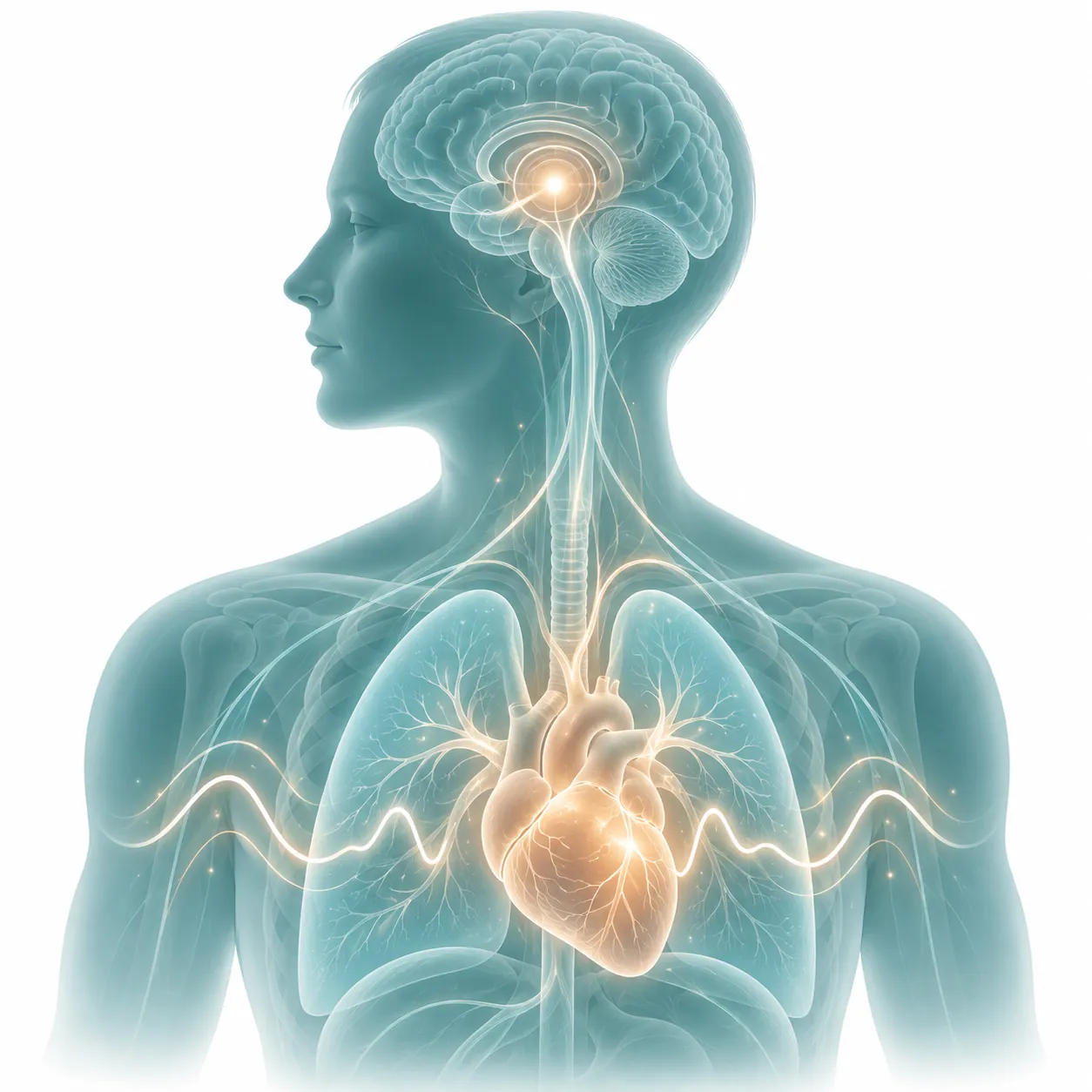
공황발작은 뚜렷한 이유 없이 극심한 공포가 갑자기 몰려와 몇 분 안에 최고조에 이르는 것을 말합니다. 심장이 마구 뛰고, 숨이 막히고, 가슴이 조이며, 쓰러지거나 죽을 것 같은 두려움이 함께 옵니다. 이런 발작이 반복되고, "또 그러면 어떡하지" 하는 걱정(예기불안) 때문에 특정 장소나 상황을 피하게 되면 공황장애라고 합니다.
공황발작은 생각보다 흔합니다. 25개국 14만여 명을 조사한 세계보건기구 연구에서 성인 100명 중 13명이 평생 한 번 이상 공황발작을 겪었고, 공황장애는 1.7%, 처음 시작되는 나이는 대개 30대 초반(중앙값 32세)이었습니다[1]. 공황발작 자체는 생명을 위협하지 않지만, 제때 도움을 받지 못하면 공포가 굳어져 공황장애와 광장공포증으로 이어질 수 있습니다[2].
이런 증상이 있나요?

- 갑자기 심장이 터질 듯 빨리 뛰고 가슴이 조이거나 아프다
- 숨이 막히거나 숨을 쉬어도 공기가 부족한 느낌이 든다
- 어지럽고 쓰러질 것 같으며, 손발이 저리거나 떨린다
- 식은땀이 나고 몸이 뜨거웠다 차가워졌다 한다
- 이러다 죽거나 미쳐 버릴 것 같은 공포가 몰려온다
- 응급실에 갔지만 검사에서는 "이상 없음"이 나왔다
- 또 발작이 올까 봐 지하철·엘리베이터·운전·사람 많은 곳을 피한다
발작은 보통 10분 안팎에 정점을 찍고 가라앉습니다. 이런 발작이 한 달 넘게 반복되거나 발작에 대한 걱정으로 생활이 바뀌었다면 공황장애를 의심해 볼 수 있습니다.
공황장애는 왜 생기나요?
공황발작은 몸의 경보 장치가 지나치게 예민해진 상태에서 일어납니다. 공황장애가 있는 사람은 숨 속 이산화탄소나 몸의 산도 변화에 특히 민감해서, 이산화탄소를 들이마시게 하거나 젖산을 주입하는 것만으로도 발작이 유발됩니다[4]. 숨이 막히고 공기가 부족한 느낌이 공황의 대표 증상인 이유입니다.
공황장애 환자들은 자율신경의 균형도 무너져 있습니다. 불안장애 환자의 심박변이도를 분석한 연구에서 공황장애 환자는 몸을 쉬게 하는 부교감신경 기능이 뚜렷하게 떨어져 있었습니다[5]. 브레이크가 약해진 상태에서 작은 자극에도 교감신경이 급가속하는 셈입니다.
- 오래 이어진 스트레스, 과로, 수면 부족
- 큰 상실이나 충격적인 사건 이후
- 카페인·술, 갑작스러운 약 중단
- 코로나 감염이나 큰 병을 앓은 뒤 몸이 회복되지 않았을 때
- 가족 중 공황장애나 불안장애가 있는 경우
공황장애의 표준 치료
공황장애의 표준 치료는 약물과 인지행동치료입니다. 인지행동치료에서도 두근거림이나 숨참 같은 몸의 감각에 조금씩 익숙해져 그 감각을 두려워하지 않게 되는 것이 회복의 핵심으로 꼽힙니다[6].
그런데 몸의 감각에 익숙해지려면 그 감각을 만들어 내는 몸 자체가 덜 예민해야 합니다. 부교감신경이 약해져 작은 자극에도 심장이 뛰고 숨이 가빠지는 상태에서는 발작도 쉽게 다시 오고, 감각에 익숙해지는 과정도 버겁습니다. 한의학 치료는 바로 이 예민해진 몸의 바탕, 곧 자율신경의 균형과 회복력을 다스려 발작이 덜 일어나고 몸의 감각을 견딜 수 있는 상태를 만드는 데 초점을 둡니다.
해움한의원은 이렇게 치료합니다

해움한의원은 발작의 고리를 끊는 것과 함께, 쉽게 놀라는 몸을 만드는 자율신경의 불균형을 바로잡는 데 치료의 중심을 둡니다.
1단계. 몸의 경보 상태를 확인합니다
발작이 시작된 시기와 상황, 피하게 된 장소, 수면과 스트레스를 자세히 살펴보고, 심박변이도와 뇌파로 자율신경의 균형과 긴장 상태를 확인합니다. 심장이나 갑상선 같은 다른 원인이 의심되면 필요한 검사를 먼저 안내해 드립니다.
2단계. 놀란 몸을 진정시키고 균형을 되찾습니다
체질과 상태에 맞춰 한약을 짓습니다. 가슴과 목·어깨의 긴장에는 약침과 추나를 더해 숨 쉬는 길을 편하게 합니다.
3단계. 발작을 두려워하지 않게 돕습니다
발작이 왔을 때 몸에서 무슨 일이 일어나는지 이해하고, 천천히 내쉬는 호흡으로 스스로 가라앉히는 방법을 익힙니다. 심리상담사 1급 자격을 갖춘 원장이 예기불안과 피하게 된 상황을 함께 다루며, 정신건강의학과 약을 복용 중이라면 처방한 의사와 상의하며 병행할 수 있도록 안내합니다.
4만 건의 처방 사례가 말해주는, 한방 맞춤 치료의 힘




공황장애 치료후기 총 16건
환자분들이 남긴 치료후기입니다. 본문은 로그인 후 보실 수 있습니다.
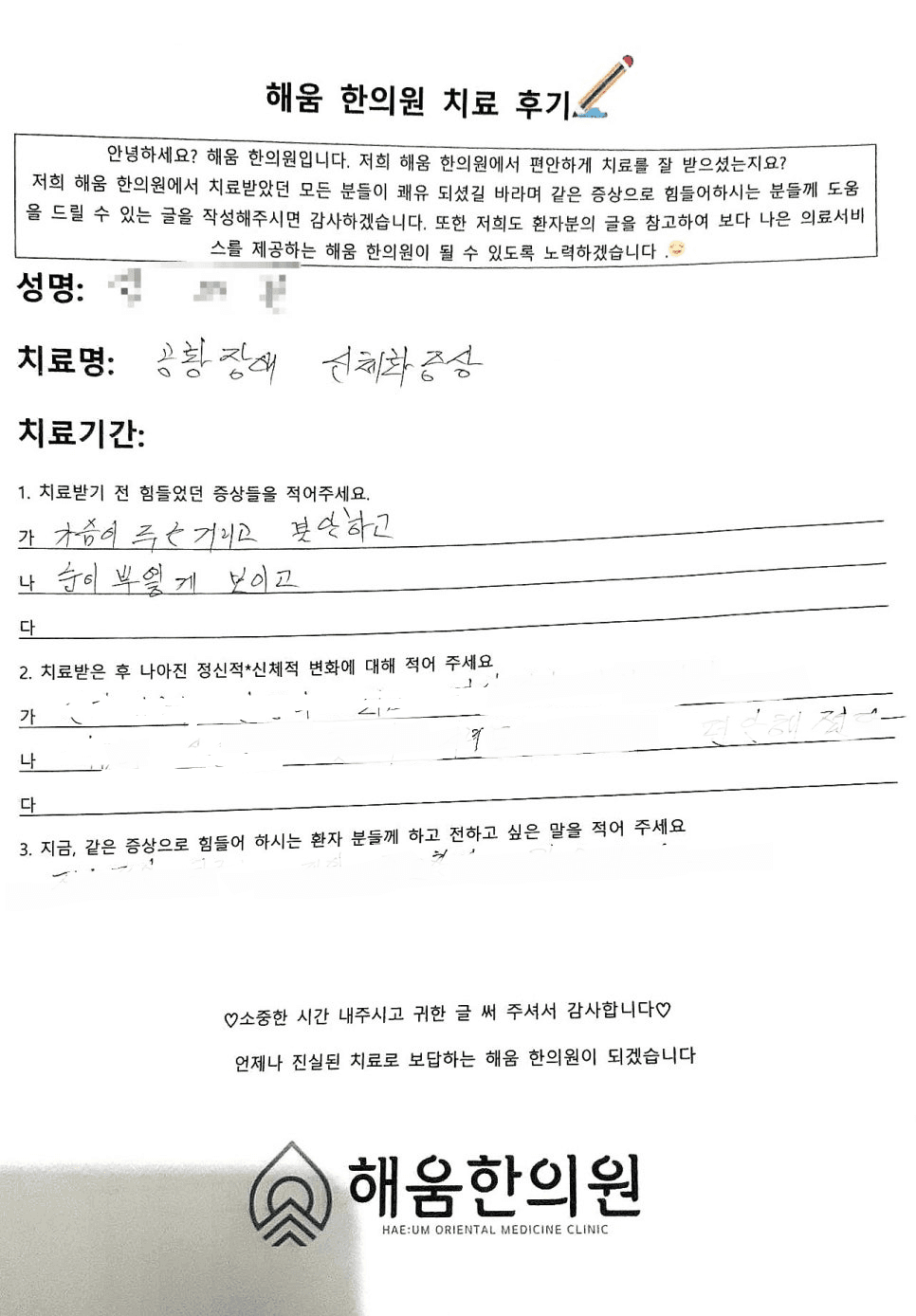
공황장애 유전되나요? 공황장애
2026. 02. 12.

가슴답답 호흡곤란 공황장애 우울증 심장빨리뜀 우측 아랫배 통증 한의원 4개월
2024. 12. 18.
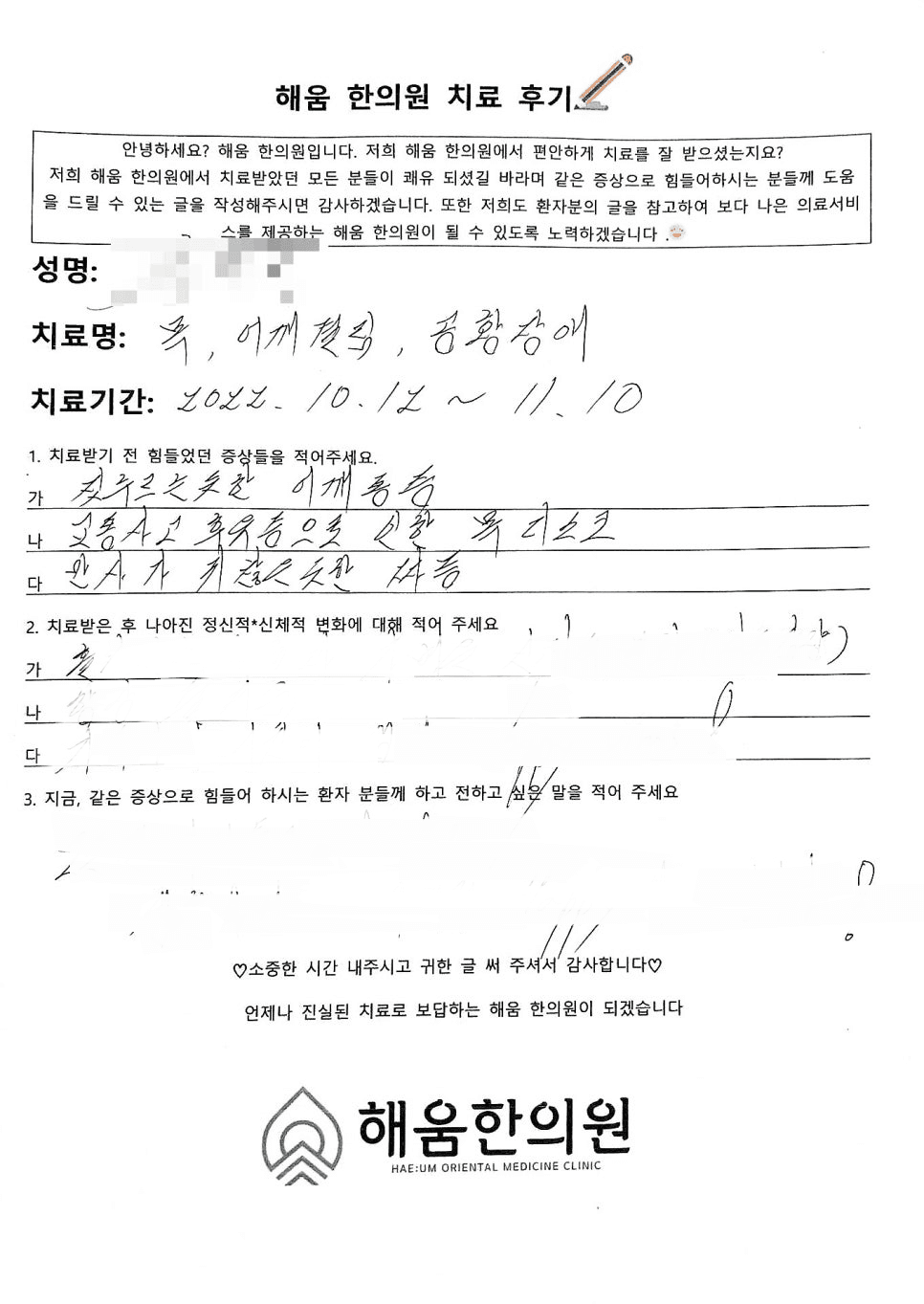
공황장애 가슴통증 가슴답답 두근거림, 목디스크, 어깨결림 증상, 불면증 1개월
2024. 12. 13.

코로나 백신 후유증으로 인한 공황장애 발작
2024. 06. 28.
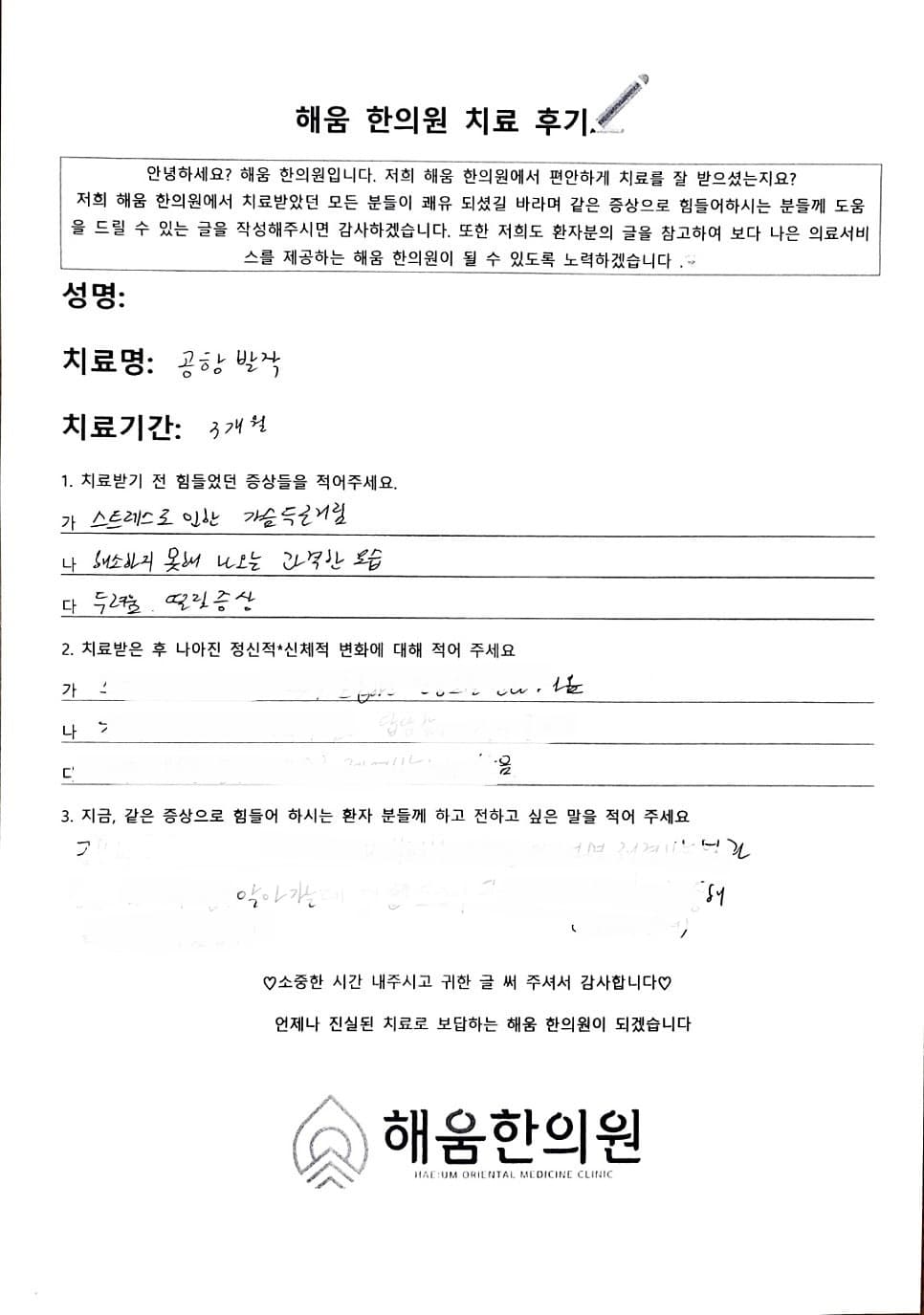
이유모를 공황장애 한약으로 치료한 후기
2024. 06. 07.
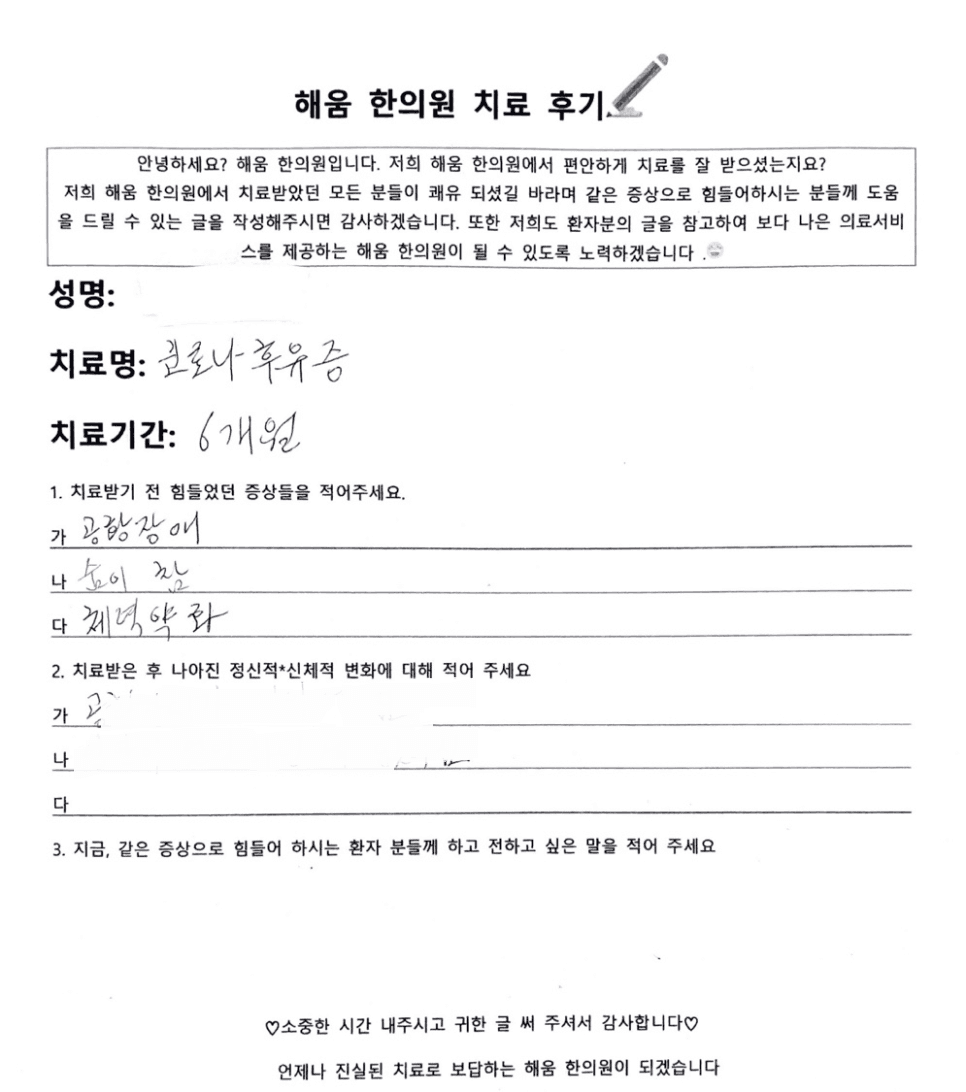
코로나로 악화된 공황장애 분열정동장애 한약 6개월
2023. 11. 22.
치료후기 5건 더 보기접기
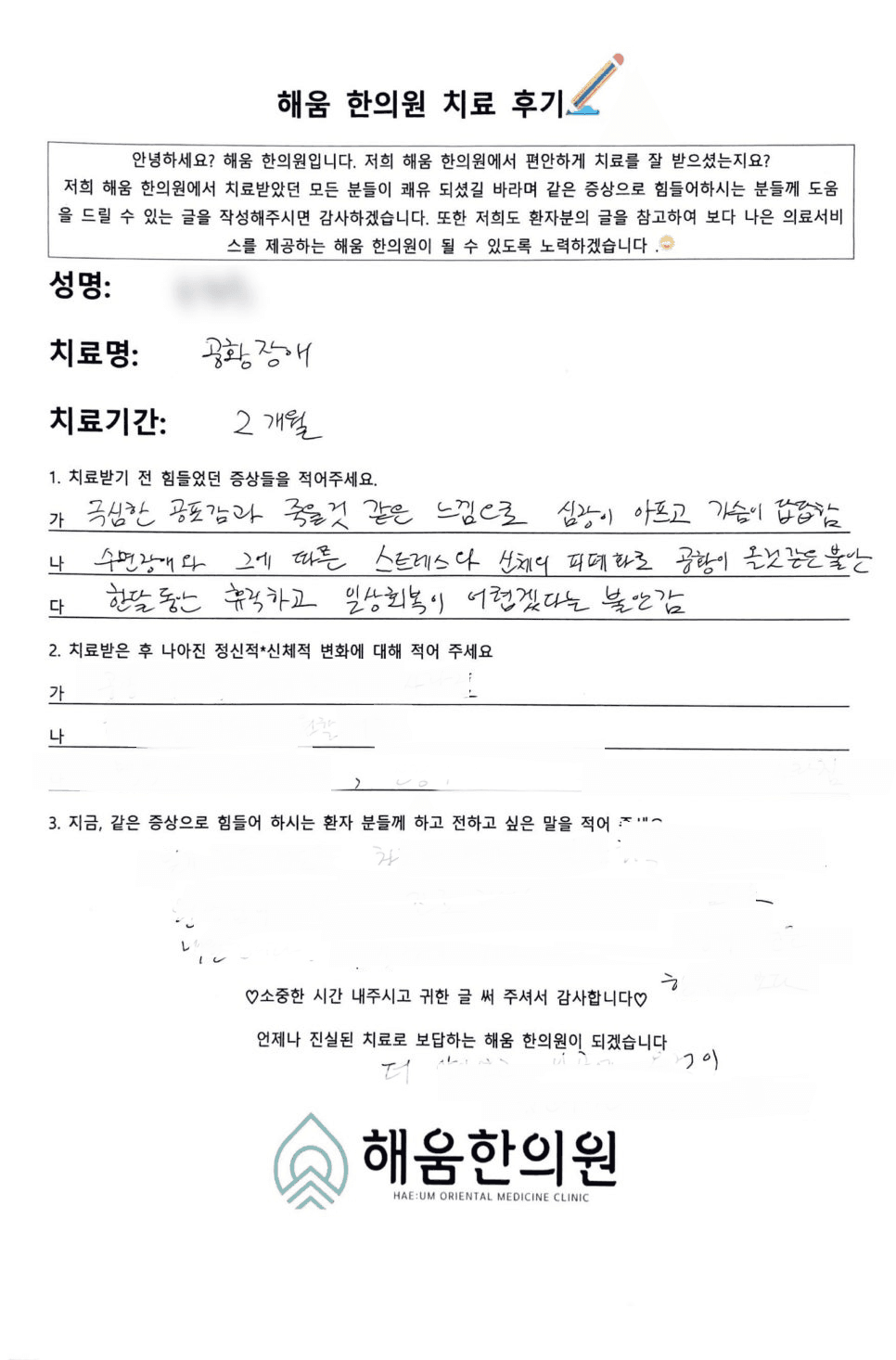
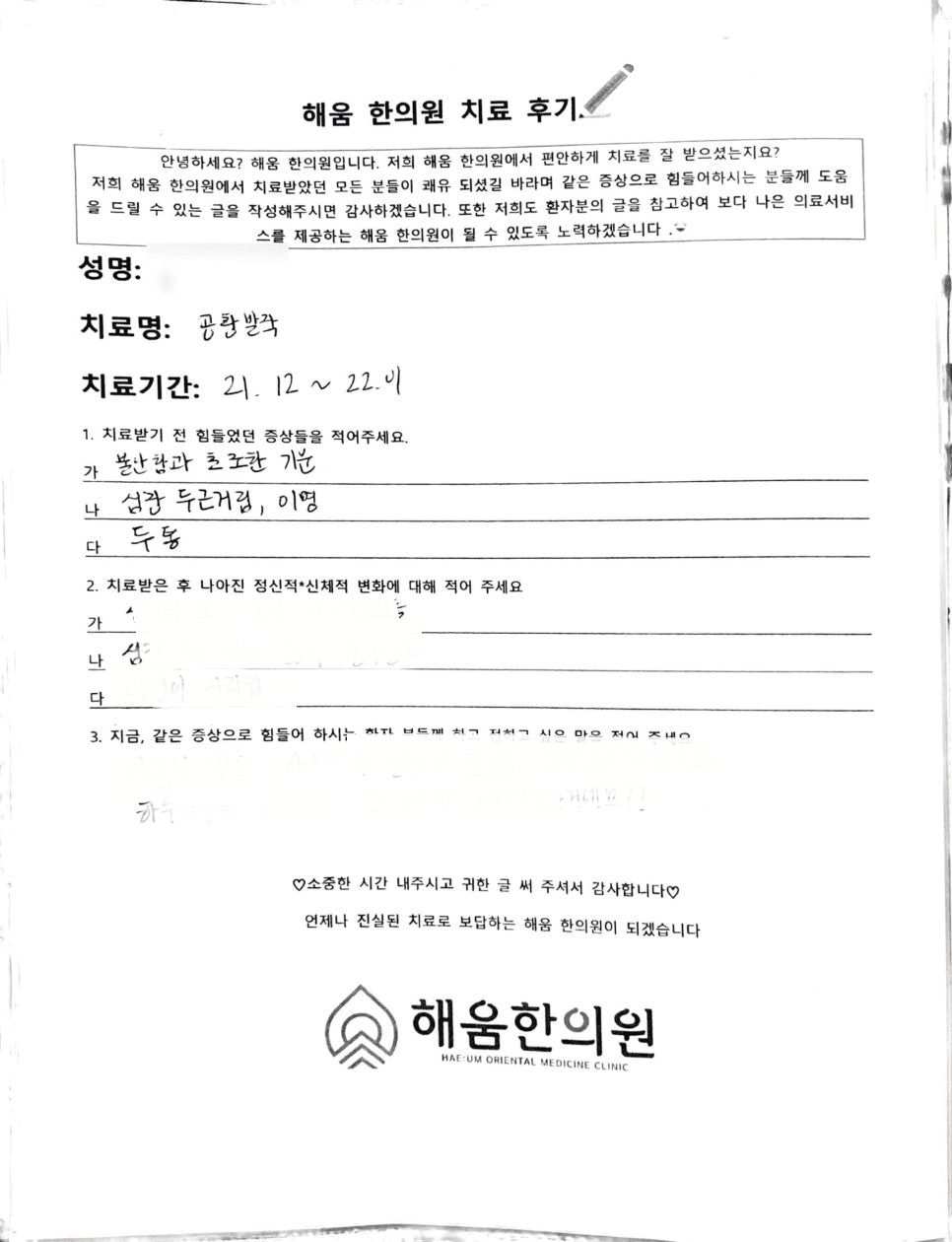
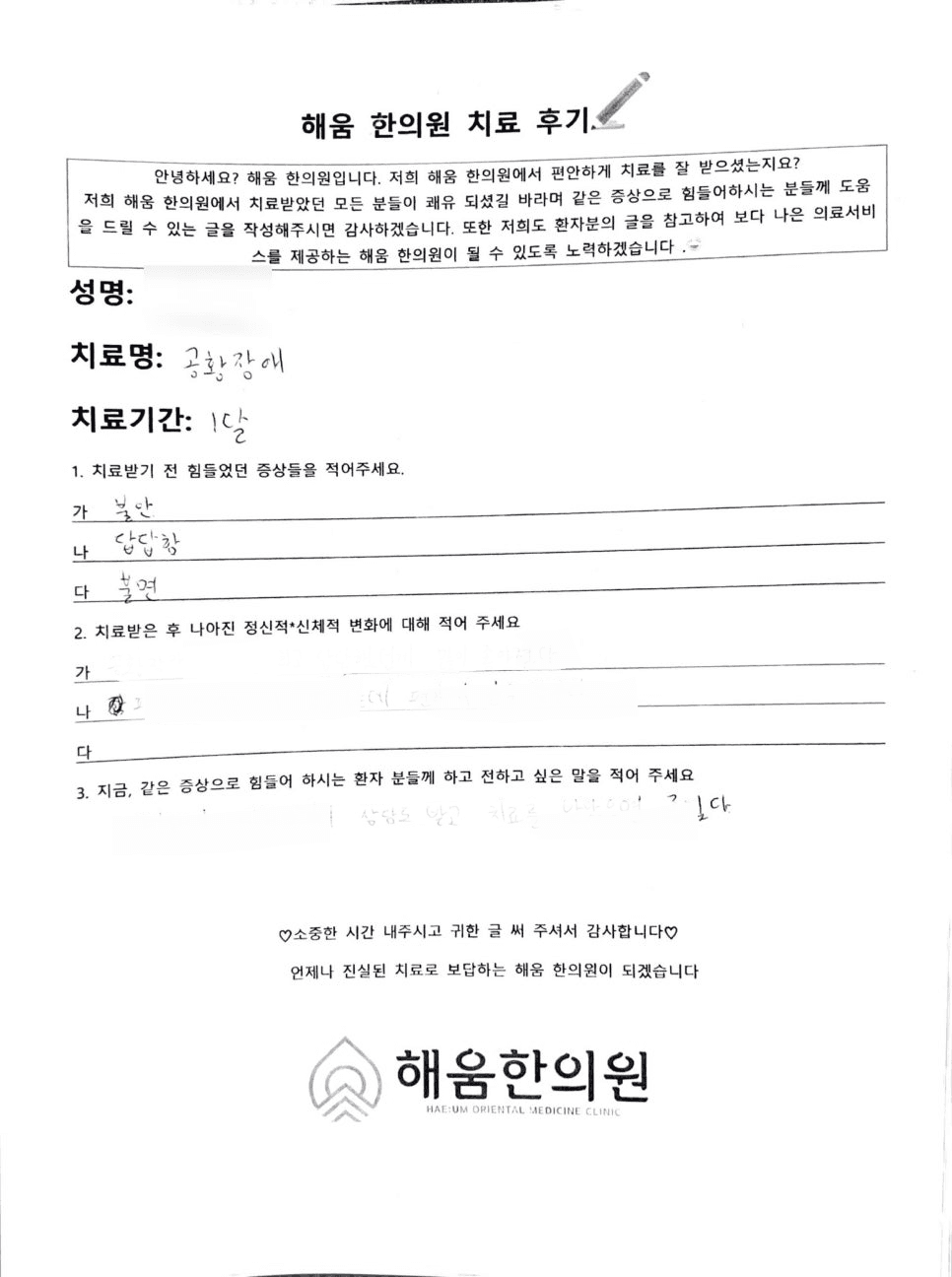
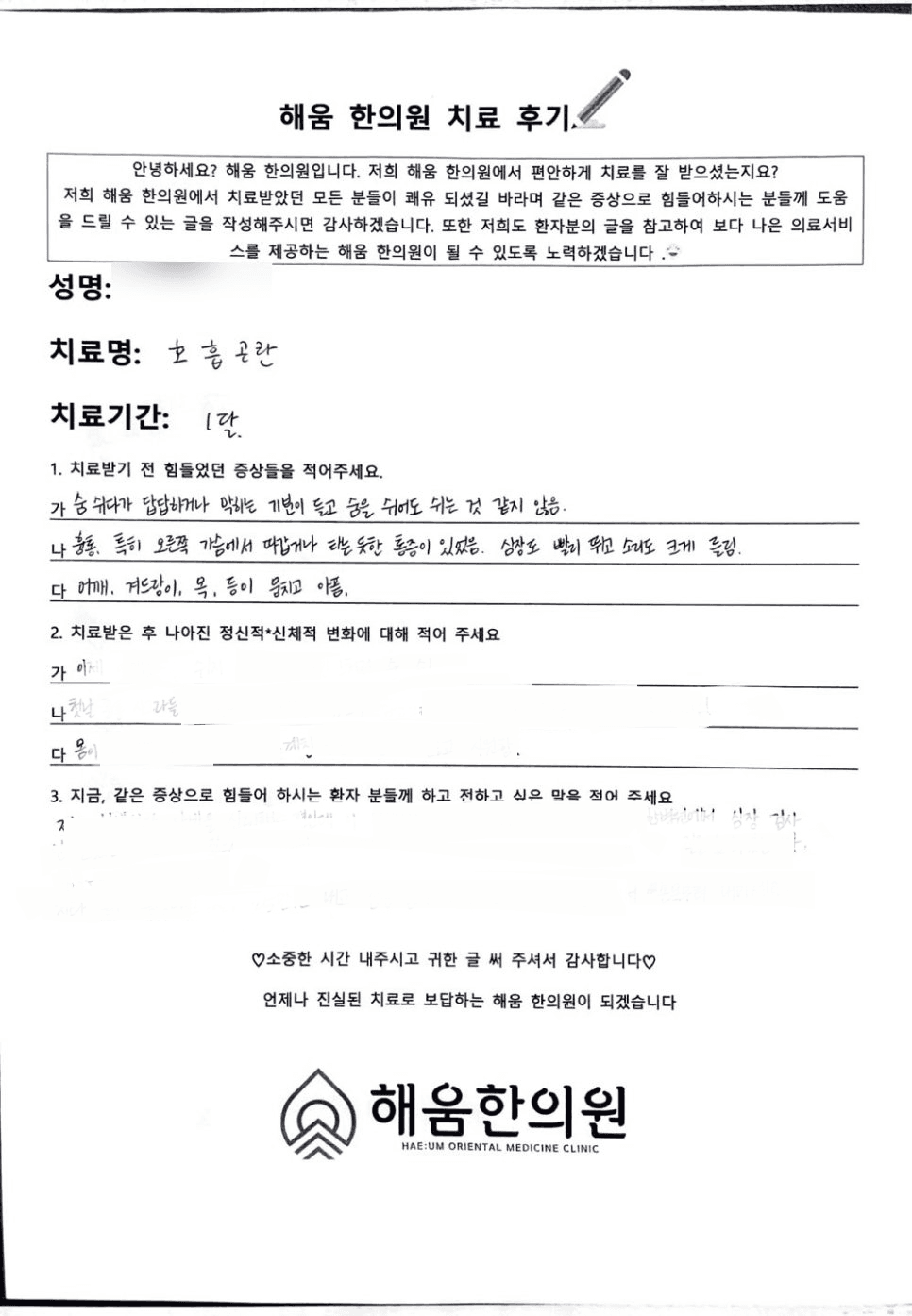
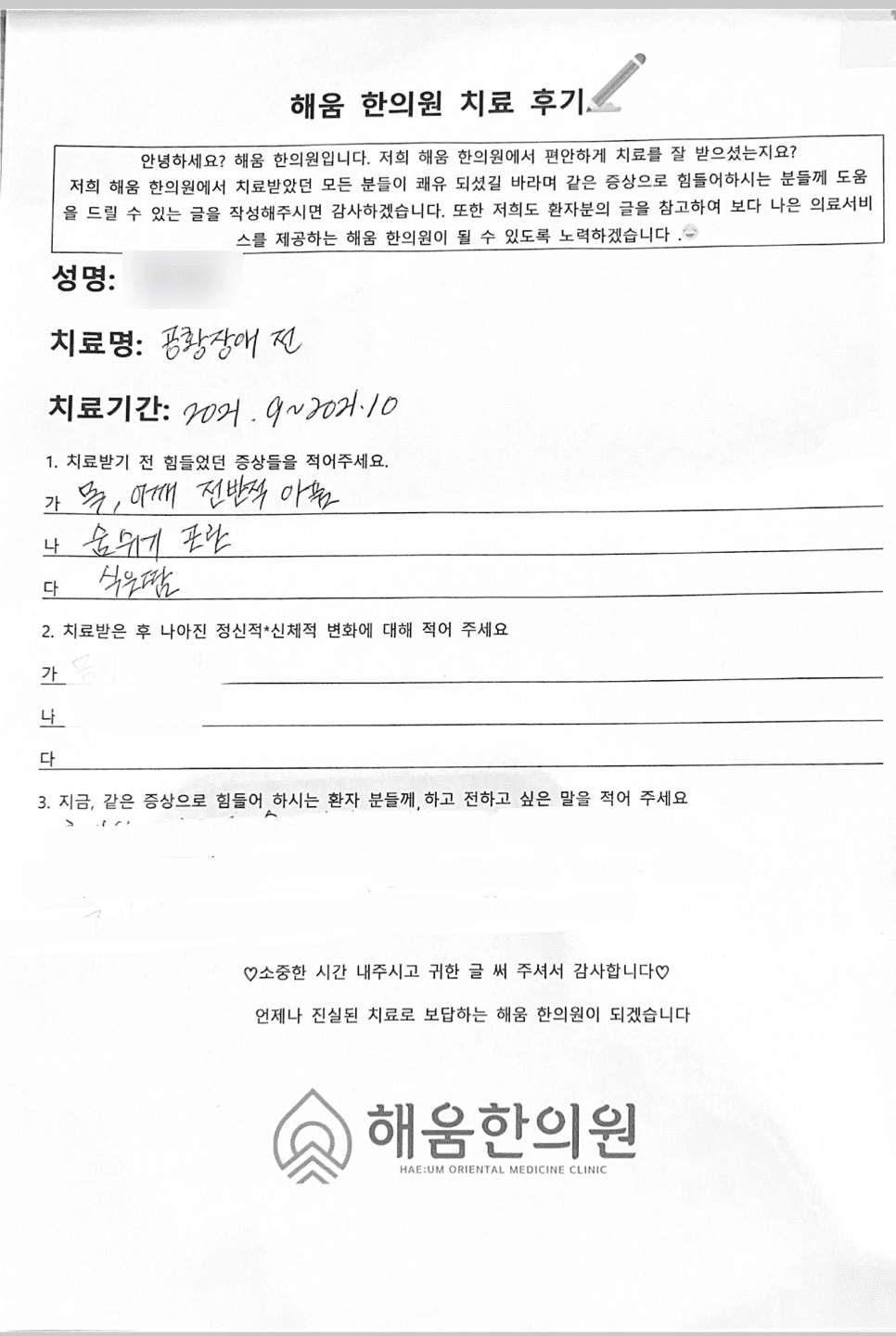
다른 증상으로 내원하신 분들의 후기 중 ‘공황장애’가 증상으로 함께 언급된 기록
공황장애, 누가 진료하나요?
담당 의료진
대표원장 박재은

“병이 아니라 그 뒤의 사람을 봅니다”
경희대학교 한의과대학에서 석사·박사 과정을 마쳤습니다. 심리상담사 1급 자격과 4만 건 이상의 한약 처방 경험을 바탕으로 진료합니다.
의료진 소개 더보기공황장애, 자주 묻는 질문
공황발작이 왔을 때 어떻게 해야 하나요?
정신건강의학과 약을 먹고 있는데 한방치료를 같이 받아도 되나요?
공황장애는 유전되나요?
공황장애는 재발하나요?
치료 기간은 얼마나 걸리나요?
한의원 진료 기록이 남으면 불이익이 있나요?
해움한의원에서 공황장애를 진료하나요?
공황장애로 내원하려면 어떻게 하나요?
공황장애가 심할 때는 어떻게 해야 하나요?
공황장애에 관해 알아두면 좋은 정보
9건공황장애과 관련해 정리한 건강정보입니다.
스트레스성공황장애 증상 어지러움, 약 부작용이 걱정될 때 꼭 봐야 할 이야기
“갑자기 죽을 것 같고, 숨이 막히고, 어지러우면 누구라도 겁이 납니다”멀쩡하게 출근하던 길이었는데,갑자기 가슴이 조여 오고 숨이 턱 막히는 느낌이 들 때가 있습니다.사람 많은 엘리베이터 안, 붐비는 지하철, 복잡한

약을 먹어도 숨쉬는게답답 하다면, ‘호흡’이 아니라 ‘신경’ 문제일 수 있습니다
“약을 먹어도 그대로라면, 어디를 봐야 할까요?”숨이 답답하고 숨참,가슴이 막힌 것처럼 느껴져서 병원까지 다녀왔는데,검사도 이상 없고 약도 먹었는데 크게 달라진 게 없다면…이럴 때 가장 많이 드는 생각이죠.“도대체

응급실에서는 멈추지만 왜 다시 반복될까? 공황발작의 핵심 구조
“죽을 것 같아서 갔는데… 막상 도착하니 괜찮아졌어요”공황장애를 겪는 분들이 가장 많이 하시는 이야기입니다.갑자기 숨이 막히고, 심장이 미친 듯이 뛰고, 쓰러질 것 같은 느낌이 들어서급하게 응급실까지 갔는데…도착하고

두근거림·호흡곤란 반복된다면, 공황장애 해결의 답은 자율신경입니다
“이제 밖에 나가는 것도 무서워요…”갑자기 숨이 가빠지고, 어지럽고, 심장이 미친 듯이 뛰는 느낌.이런 증상이 한 번이 아니라 반복되기 시작하면단순한 스트레스라고 넘기기 어려워집니다.특히∙ 사람이 많은 곳∙ 지하철,

죽을 것 같은 공포와 호흡곤란, 공황발작응급실 반복 전 원인을 찾아야 합니다
갑자기 죽을 것 같은 공포가 밀려올 때평소에는 아무렇지 않게 지내다가 어느 순간 갑자기 심장이 미친 듯이 뛰고, 숨이 막히며, 식은땀이 흐르는 순간이 있습니다.머리로는 “괜찮을 거야”라고 생각하려 해도 몸은 이미 위

두통속울렁거림식은땀 원인, 단순 컨디션 문제가 아닐 수도 있습니다
이유 없이 찾아오는 불안과 신체 증상갑자기 머리가 아프고 속이 울렁거립니다.식은땀이 흐르고 심장이 두근거립니다.숨도 답답하고 이유 없이 불안해집니다.병원 검사를 받아보지만 특별한 이상은 없다고 합니다.그런데 증상은

갑자기 식은땀과 어지러움이 함께 나타난다면 공황장애를 의심해야 할까요?
갑자기 식은땀이 나고 어지럽다면 단순한 컨디션 문제만은 아닐 수 있습니다갑자기 식은땀이 흐르고 숨이 가빠지면서 어지러움이 몰려온 적 있으신가요?심장이 빠르게 뛰고, 금방이라도 쓰러질 것 같은 불안감까지 함께 찾아온다

공황장애유전 걱정된다면? 공황발작의 진짜 원인을 알아야 합니다
이유 없이 심장이 뛰고 죽을 것 같은 공포가 찾아오나요?운전 중 갑자기 숨이 막히고 심장이 미친 듯이 뛰기 시작합니다.마트 계산대에 서 있는데 식은땀이 흐르고 눈앞이 흐려집니다.엘리베이터 안에서 갑자기 "이대로 죽는

공황장애과호흡 반복된다면? 숨이 막히는 진짜 원인을 찾아야 합니다
갑자기 숨이 막히고 죽을 것 같은 공포가 몰려오시나요?평소처럼 지하철을 타고 출근하던 중 갑자기 숨이 차오릅니다.심장은 빠르게 뛰고, 가슴은 조여오며 "이대로 쓰러지는 건 아닐까?" 하는 생각이 머릿속을 가득 채웁니

공황장애, 질문 있어요
5건환자분들이 남긴 온라인 상담 질문과 의료진 답변입니다.
이런 경우에는 바로 응급실로 가세요
아래 상황은 공황발작이 아니라 심장이나 뇌의 응급 질환일 수 있습니다. 한의원보다 응급실(119)을 먼저 찾으세요.
- 처음 겪는 가슴 통증이거나, 가슴을 쥐어짜는 통증이 20분 넘게 이어진다
- 가슴 통증과 함께 식은땀, 팔·턱·등으로 뻗치는 통증이 온다
- 정신을 잃고 쓰러졌다
- 말이 어눌해지거나, 한쪽 팔다리에 힘이 빠진다
- 죽고 싶다는 생각이나 자해 생각이 든다: 자살예방 상담전화 109(24시간)
참고문헌 6편
[1]de Jonge P, Roest AM, Lim CC, Florescu SE, Bromet EJ, Stein DJ, et al. Cross-national epidemiology of panic disorder and panic attacks in the world mental health surveys. Depress Anxiety. 2016;33(12):1155-1177. doi:10.1002/da.22572. PMID: 27775828.
요약 세계보건기구 정신건강조사로 25개국 성인 14만 2천여 명을 분석한 연구입니다. 평생 한 번 이상 공황발작을 겪은 사람은 13.2%였고, 그중 3분의 2는 발작이 반복되었습니다. 공황장애의 평생 유병률은 1.7%, 처음 시작되는 나이의 중앙값은 32세였으며, 공황장애가 있는 사람의 80.4%는 다른 정신건강 문제를 함께 겪었습니다.원문은 출판사 저작권 자료로, 위 링크에서 확인하실 수 있습니다.
[2]Kelly CM, Jorm AF, Kitchener BA. Development of mental health first aid guidelines for panic attacks: a Delphi study. BMC Psychiatry. 2009;9:49. doi:10.1186/1471-244x-9-49. PMID: 19664244.
초록 (Abstract)
Background: Panic attacks are common, and while they are not life-threatening events, they can lead to the development of panic disorder and agoraphobia. Appropriate help at the time that a panic attack occurs may decrease the fear associated with the attack and reduce the risk of developing an anxiety disorder. However, few people have the knowledge and skills required to assist. Simple first aid guidelines may help members of the public to offer help to people who experience panic attacks.
Methods: The Delphi method was used to reach consensus in a panel of experts. Experts included 50 professionals and 6 people who had experience of panic attacks and were active in mental health advocacy. Statements about how to assist someone who is having a panic attack were sourced through a systematic search of both professional and lay literature. These statements were rated for importance as first aid guidelines by the expert and consumer panels and guidelines were written using the items most consistently endorsed.
Results: Of 144 statements presented to the panels, 27 were accepted. These statements were used to develop the guidelines appended to this paper.
Conclusion: There are a number of actions which are considered to be useful for members of the public to do if they encounter someone who is having a panic attack. These guidelines will be useful in revision of curricula of mental health first aid programs. They can also be used by members of the public who want immediate information about how to assist someone who is experiencing panic attacks.
결과 (Results)
Table 1 shows the continuity of participation across the three rounds.
Figure 2 shows the rates of inclusion, exclusion, and re-rating of the items in each round of the questionnaire. From a total of 144 items, 27 were eventually included in the guidelines. (See Table 2 for a categorised list of included items.)
Writing the Guidelines: It was important to the research team to avoid making the guidelines read like a list of 'dos' and 'don'ts'. The accepted items were incorporated into a plain language document. To illustrate, consider the following statements:
1. The first aider should reassure the person that a panic attack, while very frightening, is not life threatening.
2. The first aider should reassure the person that a panic attack, while very frightening, is not dangerous.
3. The first aider should not belittle the person's experience.
4. The first aider should reassure the person that they are safe.
5. The first aider should reassure the person that the symptoms will pass.
These statements were incorporated to make the following paragraph:
Do not belittle the person's experience. Acknowledge that the terror feels very real, but reassure them that a panic attack, while very frightening, is not life threatening or dangerous.
When the guidelines were in draft form, they were sent to all the panel members for feedback. Only feedback related to readability and structure was sought and incorporated. The guidelines are appended to this article and can be freely distributed (see additional file 1).
원문 발췌 · Kelly CM, Jorm AF, Kitchener BA, BMC Psychiatry 2009 · CC BY 2.0 라이선스에 따라 수정 없이 인용했습니다(본문 속 인용 번호는 생략).
[3]Smoller JW, Pollack MH, Wassertheil-Smoller S, Jackson RD, Oberman A, Wong ND, et al. Panic attacks and risk of incident cardiovascular events among postmenopausal women in the Women's Health Initiative Observational Study. Arch Gen Psychiatry. 2007;64(10):1153-1160. doi:10.1001/archpsyc.64.10.1153. PMID: 17909127.
요약 미국 폐경 후 여성 3,369명을 평균 5.3년 추적한 연구입니다. 최근 6개월 사이 공황발작을 겪은 여성(약 10%)은 여러 요인을 보정한 뒤에도 관상동맥질환 위험이 4.2배, 관상동맥질환 또는 뇌졸중 위험이 3.1배 높았습니다. 연구진은 공황발작이 나이 든 여성에게 심혈관 질환의 독립적인 위험 요인일 수 있다고 보았습니다.원문은 출판사 저작권 자료로, 위 링크에서 확인하실 수 있습니다.
[4]Vollmer LL, Strawn JR, Sah R. Acid-base dysregulation and chemosensory mechanisms in panic disorder: a translational update. Transl Psychiatry. 2015;5:e572. doi:10.1038/tp.2015.67. PMID: 26080089.
초록 (Abstract)
Panic disorder (PD), a complex anxiety disorder characterized by recurrent panic attacks, represents a poorly understood psychiatric condition which is associated with significant morbidity and an increased risk of suicide attempts and completed suicide. Recently however, neuroimaging and panic provocation challenge studies have provided insights into the pathoetiology of panic phenomena and have begun to elucidate potential neural mechanisms that may underlie panic attacks. In this regard, accumulating evidence suggests that acidosis may be a contributing factor in induction of panic. Challenge studies in patients with PD reveal that panic attacks may be reliably provoked by agents that lead to acid–base dysbalance such as CO2 inhalation and sodium lactate infusion. Chemosensory mechanisms that translate pH into panic-relevant fear, autonomic, and respiratory responses are therefore of high relevance to the understanding of panic pathophysiology. Herein, we provide a current update on clinical and preclinical studies supporting how acid–base imbalance and diverse chemosensory mechanisms may be associated with PD and discuss future implications of these findings.
원문 발췌 · Vollmer LL, Strawn JR, Sah R, Transl Psychiatry 2015 · CC BY 4.0 라이선스에 따라 수정 없이 인용했습니다(본문 속 인용 번호는 생략).
[5]Chalmers JA, Quintana DS, Abbott MJ, Kemp AH. Anxiety Disorders are Associated with Reduced Heart Rate Variability: A Meta-Analysis. Front Psychiatry. 2014;5:80. doi:10.3389/fpsyt.2014.00080. PMID: 25071612.
초록 (Abstract)
Background: Anxiety disorders increase risk of future cardiovascular disease (CVD) and mortality, even after controlling for confounds including smoking, lifestyle, and socioeconomic status, and irrespective of a history of medical disorders. While impaired vagal function, indicated by reductions in heart rate variability (HRV), may be one mechanism linking anxiety disorders to CVD, prior studies have reported inconsistent findings highlighting the need for meta-analysis.
Method: Studies comparing resting-state HRV recordings in patients with an anxiety disorder as a primary diagnosis and healthy controls were considered for meta-analysis.
Results: Meta-analyses were based on 36 articles, including 2086 patients with an anxiety disorder and 2294 controls. Overall, anxiety disorders were characterized by lower HRV [high frequency (HF): Hedges’ g = −0.29. 95% CI: −0.41 to −0.17, p < 0.001; time domain: Hedges’ g = −0.45, 95% CI: −0.57 to −0.33, p < 0.001] than controls. Panic disorder (n = 447), post-traumatic stress disorder (n = 192), generalized anxiety disorder (n = 68), and social anxiety disorder (n = 90), but not obsessive–compulsive disorder (n = 40), displayed reductions in HF HRV relative to controls (all ps < 0.001).
Conclusion: Anxiety disorders are associated with reduced HRV, findings associated with a small-to-moderate effect size. Findings have important implications for future physical health and well-being of patients, highlighting a need for comprehensive cardiovascular risk reduction.
결과 (Results)
Included studies: The search of electronic databases for HRV research in anxiety revealed 4149 studies as at October 2013; these were reduced to 194 after examining study abstracts and then to 36 after reviewing the study methods (Figure 1).
Impact of anxiety disorders on HRV: High frequency HRV was reduced in participants with any anxiety disorder, regardless of specific diagnosis, relative to healthy controls [Hedges’ g = −0.29 (−0.41 to −0.17); SE = 0.06; p < 0.001], a finding associated with a small effect size. Egger’s regression test (p = 0.43) indicated no evidence of publication bias. The Q statistic was significant (Q = 51.39, p = 0.002) indicating study heterogeneity (I2 statistic = 35.8%). To examine findings in further detail, we examined effect sizes in specific anxiety disorders (see Table 2, which displays the summary effect sizes for each disorder; and Supplementary Material, which displays the relevant forest plots for each analysis.). HF HRV was significantly reduced in patients with GAD and SAD, findings associated with a moderate effect size, as well as in those with PD and PTSD, findings associated with a small effect size. Findings for OCD, specific phobia, and those studies in which anxiety disorders were grouped were all non-significant.
Moderator analysis revealed no significant differences across anxiety disorder diagnoses (Q = 6.83; p = 0.34). There was no evidence of heterogeneity between studies using different diagnostic criteria including DSM-III, DSM-IV, or ICD-10 (Q = 0.85, p = 0.65), nor was there heterogeneity for use of medication (Q = 0.1, p = 0.75), co-morbid psychiatric diagnoses (Q = 0.29, p = 0.59), or co-morbid medical disorders (Q = 0.004, p = 0.95). No evidence of heterogeneity between studies using short-term versus long-term recordings was obtained either (Q = 2.92, p = 0.09).
Low frequency HRV did not differ between participants with any anxiety disorder and controls [Hedges’ g = −0.08 (−0.31–0.15); SE = 0.09; p = 0.49]. Egger’s regression test (p = 0.001) indicated evidence of publication bias and the Q statistic was significant (Q = 85.02, p < 0.001) (I2 statistic = 75.3%). However, LF HRV did not differ for any anxiety disorder relative to healthy controls (Table 2). Moderator analyses revealed that LF HRV did not differ across anxiety disorders (Q = 3.73, p = 0.59); nor was there any evidence of heterogeneity from other factors.
Time domain HRV was reduced in participants with any anxiety disorder relative to controls [Hedges’ g = −0.7 (−1.45– 0.05); SE = 0.38; p = 0.07], a finding associated with a moderate effect size. While this finding was at trend levels, the overall Q statistic was significant (Q = 1027.39, p < 0.001) and the I2 statistic was 98.2% indicating high variance between studies, highlighting a need to further inspect these data. Egger’s regression test (p < 0.001) also indicated evidence of publication bias. After the exclusion of a clear outlier (see Supplementary Material), HRV was significantly reduced in those with anxiety disorders relative to healthy controls [Hedges’ g = −0.45 (−0.57 to −0.33); SE = 0.06; p < 0.001], and there was no longer evidence of heterogeneity between studies (Q = 18.46, p = 0.43, I2 statistic = 2.5%). Egger’s regression test still revealed evidence of publication bias (p = 0.01). TD HRV was significantly reduced in patients with PTSD and GAD, findings associated with a moderate effect size, as well as in PD, SAD, and Specific Phobias, findings associated with a small effect size (see Table 2). Follow-up moderator analyses revealed no difference in summary effect sizes between disorders (Q = 2.8, p = 0.73). No evidence of heterogeneity from other factors was observed.
원문 발췌 · Chalmers JA, Quintana DS, Abbott MJ, Kemp AH, Front Psychiatry 2014 · CC BY 3.0 라이선스에 따라 수정 없이 인용했습니다(본문 속 인용 번호는 생략).
[6]Pompoli A, Furukawa TA, Efthimiou O, Imai H, Tajika A, Salanti G. Dismantling cognitive-behaviour therapy for panic disorder: a systematic review and component network meta-analysis. Psychol Med. 2018;48(12):1945-1953. doi:10.1017/s0033291717003919. PMID: 29368665.
초록 (Abstract)
Cognitive-behaviour therapy (CBT) for panic disorder may consist of different combinations of several therapeutic components such as relaxation, breathing retraining, cognitive restructuring, interoceptive exposure and/or in vivo exposure. It is therefore important both theoretically and clinically to examine whether specific components of CBT or their combinations are superior to others in the treatment of panic disorder. Component network meta-analysis (NMA) is an extension of standard NMA that can be used to disentangle the treatment effects of different components included in composite interventions. We searched MEDLINE, EMBASE, PsycINFO and Cochrane Central, with supplementary searches of reference lists and clinical trial registries, for all randomized controlled trials comparing different CBT-based psychological therapies for panic disorder with each other or with control interventions. We applied component NMA to disentangle the treatment effects of different components included in these interventions. After reviewing 2526 references, we included 72 studies with 4064 participants. Interoceptive exposure and face-to-face setting were associated with better treatment efficacy and acceptability. Muscle relaxation and virtual-reality exposure were associated with significantly lower efficacy. Components such as breathing retraining and in vivo exposure appeared to improve treatment acceptability while having small effects on efficacy. The comparison of the most v. the least efficacious combination, both of which may be provided as ‘evidence-based CBT,’ yielded an odds ratio for the remission of 7.69 (95% credible interval: 1.75 to 33.33). Effective CBT packages for panic disorder would include face-to-face and interoceptive exposure components, while excluding muscle relaxation and virtual-reality exposure.
결과 (Results)
Results of the search: Our search identified 2526 references. After removal of duplicates and screening based on title and abstract, 616 references (353 studies) were retrieved for a full inspection. Finally, 72 studies, representing 4064 participants, were included in quantitative analyses (online Supplement 3).
Description of studies: Online Supplement 4 summarizes the references and characteristics of the included and excluded studies. Table 3 shows the number of study arms that included each component. Apart from third wave components, which were administered only in two studies (each contributing to only one outcome), all other components were well represented in the network. The percentage of agreement among raters for the identification of components ranged from 99.0 to 99.7%.
The risk of bias of many included studies was judged as unclear or high in various important domains. Online Supplement 5 provides the RoB assessment for each domain and for each study. The percentage of agreement among raters for the assessment of RoB ranged from 75 to 96%.
Assessments of transitivity, inconsistency and additivity assumption: We compiled a table of important trial and patient characteristics (therapy duration, percentages of agoraphobic, depressed and drug-treated patients) across treatment comparisons and components. Its visual inspection showed that those effect modifiers were likely to be similarly distributed across the networks of treatments and components, although there was missing information from several studies (online Supplement 2). Overall there was little concern about the plausibility of the transitivity assumption.
After exploring data for inconsistencies, first at the treatment level and then at the component level, we found no strong evidence of inconsistency for any of the explored outcomes but the power of this analysis is expected to be low (online Supplement 6).
We did not find any strong evidence against the additivity assumption (online Supplement 6). Sensitivity analyses examining several clinically relevant interaction terms in the model (ftf with ine, ftf with cr, pe with ine, cr with ive, br with ine, br with ive) did not alter the results: none of these interactions was statistically significant (online Supplement 7).
Primary outcome: remission of panic disorder: Data regarding remission were available from 60 studies, with a total of 134 study arms (3556 patients). Figure 1 shows the network at the treatment level and at the component level.
Including the variance of the treatment effect in the meta-regression model reduced the median heterogeneity standard deviation from τ = 0.85 (0.56–1.22) to τ = 0.40 (0.05–0.73) and the regression coefficient was estimated to be −1.96 (−2.72 to −1.30) providing strong evidence for the presence of small study effects. Heterogeneity was found to be close to the expected values (Turner et al. ). The results from the network meta-regression are presented in Table 3.
The inclusion of third-wave components, interoceptive exposure, face-to-face setting and cognitive restructuring in a composite intervention apparently led to higher odds of remission but uncertainty was large, as seen from the very wide CIs for the corresponding iOR (Table 3). Conversely, placebo effect, breathing retraining, psychoeducation, psychological support, in-vivo exposure and virtual reality exposure were found to decrease the odds of remission, but again with large uncertainty in the estimates. However, including muscle relaxation in a complex treatment was shown to significantly reduce the efficacy in terms of short-term remission. Results were favourable for third-wave components, but with very large uncertainty. As expected, the waiting component (which is mainly administered without other components as a supposedly inert control condition) showed the smallest mean iOR.
Based on the findings of Table 3 (and excluding third wave components, which was only informed by a single study, and for which the estimate was very imprecise) we can identify the CBT associated with the largest remission rates as consisting of (ftf + pl + pe + ps + cr + ine) and the least effective CBT as (pl + pe + ps + br + mr + ive + vre); the components of pl, pe and ps are included here as would be expected in typical CBT programs but in the calculation of relative efficacy their effects are cancelled out and the best treatment would provide an average relative increase in the odds of remission by almost 700% (OR 7.69 CrI 1.75 to 33.33).
Response to the interventions: A total of 55 studies (124 study arms including 3275 patients) provided evidence on the response. There was evidence of small study effects in the comparisons of active interventions v. waiting list. Heterogeneity was found to be within the range of expected values (Turner et al. ). Table 3 gives the values of the iOR values for response estimated from the component network meta-regression. Taken together, results about response were in general agreement with those for remission. Results were more precise for muscle relaxation and virtual reality exposure, which appeared to reduce the odds of response.
Dropout rate from the study: Data regarding dropouts was available from 68 studies, with a total of 153 study arms (3705 patients). Table 3 gives the estimates of the iOR parameters for dropouts, where values smaller than 1 are associated with higher treatment acceptability. Heterogeneity was again found to be within the range of expected values (Turner et al. ).
The low estimate for iORftf suggests that dropouts were generally less frequent in face-to-face therapies than in self-help therapies. Components such as breathing retraining and in vivo exposure seemed to marginally improve treatment acceptability; the inclusion of psychoeducation, interoceptive exposure, cognitive restructuring and muscle relaxation showed negligible influence on dropouts. Finally, psychological support and virtual reality exposure were associated with lower acceptability, although the corresponding estimate came with a lot of uncertainty. The placebo effect was associated with the highest and the waiting component with the second highest odds of dropout. Because all active interventions are administered together with the placebo effect, the estimate for this component can be seen as a sort of an average acceptability of the active treatments. Therefore, our results suggest that the risk of dropout was on average higher in active treatments as a whole than in waiting list (people placed on the waiting list were more likely to return for the assessment at end of a trial than people in active treatments). Results were again favourable but very imprecise for third-wave components.
원문 발췌 · Pompoli A, Furukawa TA, Efthimiou O, Imai H, Tajika A, Salanti G, Psychol Med 2018 · CC BY 4.0 라이선스에 따라 수정 없이 인용했습니다(본문 속 인용 번호는 생략).