

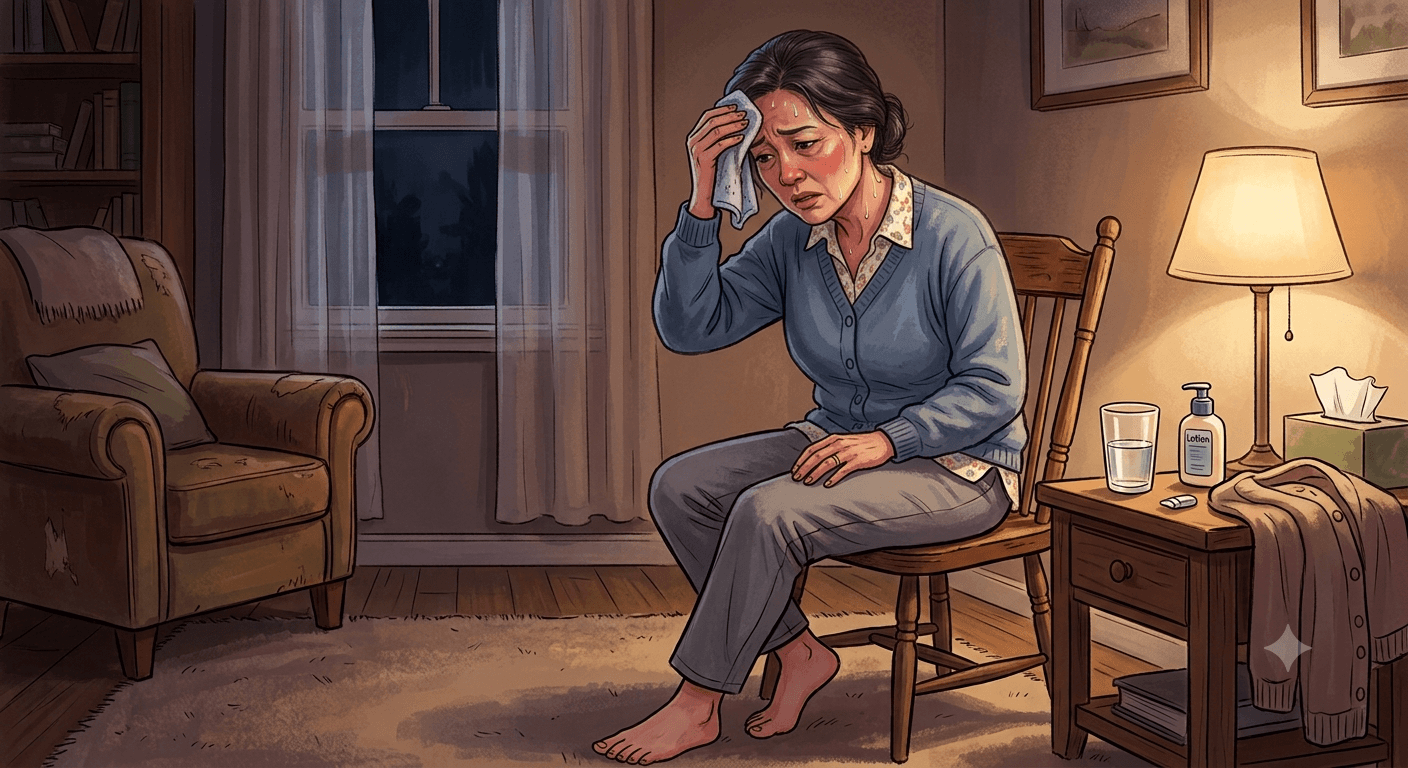
시도 때도 없이 얼굴로 불이 확 오르고 땀이 쏟아지다가, 금세 또 오싹하게 춥습니다. 이유 없이 심장이 두근거리고, 사소한 일에 억울함이 밀려옵니다. 호르몬만의 문제일까요? 갱년기 증상은 사람마다 왜 이렇게 다를까요?
갱년기 한눈에 보기
- 갱년기는 난소의 노화로 여성호르몬이 줄면서 열감, 두근거림, 불면, 감정 변화 같은 증상이 나타나는 시기입니다.
- 열감과 식은땀은 평균 7년 넘게 이어질 수 있고, 폐경기 여성의 절반 이상이 수면장애를 겪습니다.
- 호르몬 변화에 과로와 스트레스가 겹치면 자율신경이 흔들려 증상이 더 심하고 오래가므로, 진액과 긴장을 함께 다스려야 합니다.
- 치료후기 7건
- 의료진 칼럼 3편
- 온라인 상담 4건

이런 증상이 있나요?

- 얼굴로 불이 확 오르고 땀이 쏟아지다가 금세 춥다
- 이유 없이 심장이 두근거리고 가슴이 조이듯 답답하다
- 잠들기 어렵고 얕은 잠을 잔다
- 사소한 일에 예민해지고 억울함과 짜증이 밀려온다
- 명치가 막힌 듯 소화가 안 되고 음식이 걸린 느낌이 든다
- 눈, 입, 질 점막이 마르고 쓰라리다
- 관절이 뻣뻣하고 몸이 무겁다
갱년기는 나이와 증상으로 대부분 확인이 가능하나, 간혹 나이 또는 생리 변화와 같은 시기 상관없이 나타나는 경우도 있어 호르몬 검사를 통해 이를 최종적으로 진단하기도 합니다. 또한 비슷한 증상을 일으키는 갑상선 질환이나 빈혈, 심장 질환이 없는지도 함께 확인해야 합니다.
갱년기 증상은 왜 사람마다 다른가요?
- 난소 기능 저하와 여성호르몬 감소
- 오랜 과로와 쉬지 못하는 생활
- 수십 년 쌓인 스트레스
- 수면 부족
- 이전의 우울증 병력
- 끼니를 거르거나 약해진 소화 기능
같은 호르몬 변화를 겪어도 어떤 분은 가볍게 지나가고, 어떤 분은 일상이 무너집니다. 특히 폐경기에 잠깐 지나가지 않고, 갱년기 증상이 너무 일찍 시작하거나 너무 늦게까지 이어지는 경우가 있습니다. 스트레스를 많이 받고 자율신경 조절 기능이 약해진 분들인데요. 이런 분들은 호르몬 변화를 만나면 교감신경이 과항진되어 작은 자극에도 심장이 두근거리고 잠과 소화가 무너집니다. 마음도 함께 흔들립니다. 갱년기에는 우울과 불안에 취약해지고, 열감이 심하거나 우울증을 겪은 적이 있으면 위험이 더 커집니다[3].
갱년기의 표준 치료
표준 치료는 부족한 여성호르몬을 보충하는 호르몬 치료와, 불면이나 감정 변화처럼 증상에 맞는 약물입니다. 호르몬 치료는 열감에 효과적이지만 위험도 함께 따져야 합니다. 에스트로겐과 프로게스토겐을 함께 쓰면 1~4년 사용만으로도 유방암 위험이 1.6배 높았고[4], 뇌졸중은 1.23배, 정맥혈전은 1.86배 높았습니다[5].
호르몬을 쓸 수 없거나 쓰기를 꺼리는 분, 호르몬 치료 뒤에도 불면과 두근거림이 남는 분에게는 내 몸의 약해진 부분을 다스리고 새로운 변화에 적응할 수 있도록 도와주는 한방 갱년기 치료가 필요합니다.
관련 연구를 살펴보면, 침 치료는 12개 연구, 869명을 모은 분석에서 열감의 횟수와 정도, 심리·신체 증상 점수를 줄였습니다[6]. 갱년기 불면에서는 수면 점수(PSQI)가 8.03점 줄어 가짜 침(1.29점)보다 많이 좋아졌습니다[7]. 다만 가짜 침과 비교한 코크란 리뷰에서는 열감 횟수의 차이가 뚜렷하지 않다고 하는 등 아직 추가적인 연구가 더 필요합니다[8].
해움한의원은 이렇게 치료합니다

해움한의원은 달아오른 몸을 식혀 줄 진액을 채우고, 오랜 과로와 스트레스로 예민해진 몸과 마음의 긴장을 풉니다.
1단계. 증상과 유형을 가립니다
생리 변화와 증상, 수면과 소화, 살아온 과로와 스트레스를 자세히 살펴봅니다. 다른 질환이 의심되면 해당 진료를 안내해 드립니다. 심박변이도와 적외선 체열검사로 자율신경의 균형과 위로 몰린 열을 확인합니다.
2단계. 긴장을 풀고 열을 내립니다
침과 약침으로 가슴과 목·어깨의 긴장을 풀고, 곤두선 자율신경이 쉴 수 있도록 돕습니다.
3단계. 유형에 맞춰 바탕을 다스립니다
체질과 상태에 맞춰 한약을 짓습니다. 식사와 수면, 휴식도 함께 살핍니다.
4만 건의 처방 사례가 말해주는, 한방 맞춤 치료의 힘



갱년기 치료후기 총 7건
환자분들이 남긴 치료후기입니다. 본문은 로그인 후 보실 수 있습니다.
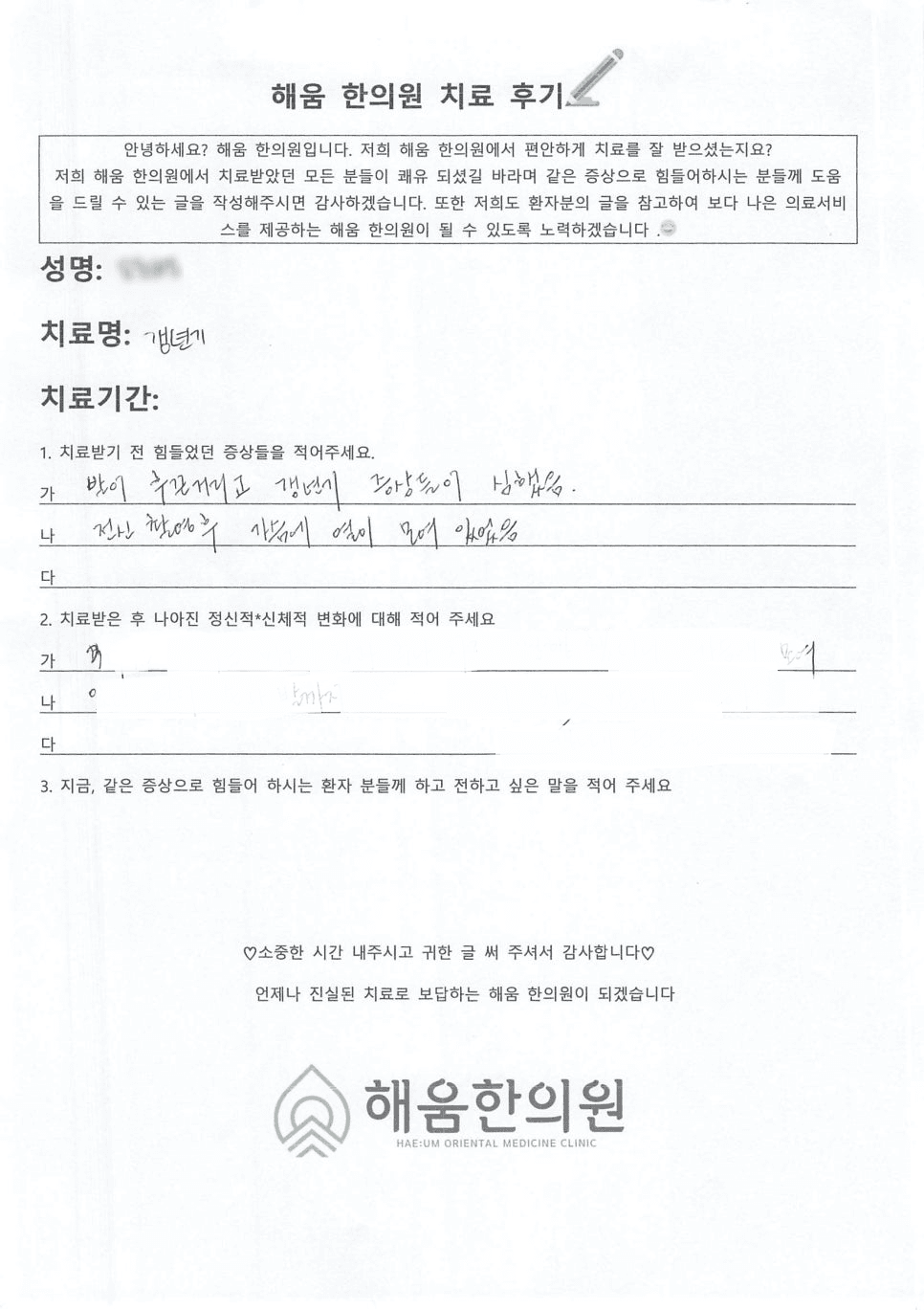
갱년기인 줄 알았는데 화병이었습니다 발후끈거림 홧병
2026. 01. 30.
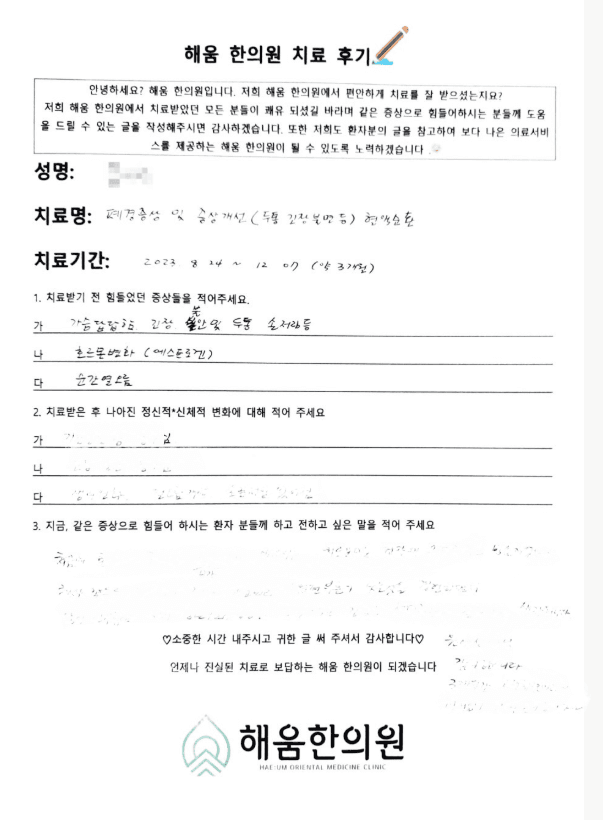
갱년기 증후군, 급성 폐경
2024. 07. 18.
다이어트 한약으로 65>61>59KG까지 요요없이 1년동안 유지한 사례
2022. 07. 12.
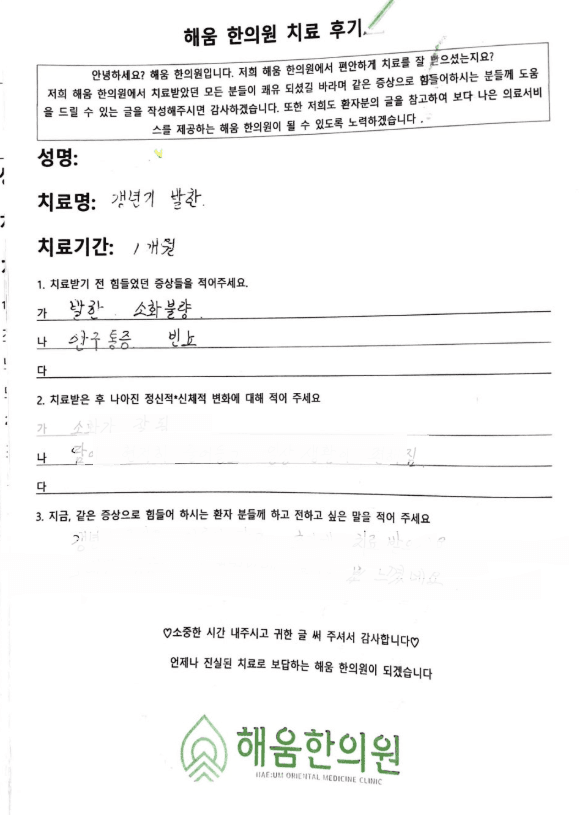
오래된 발한 식은땀 소화불량 한약 먹고 10일만에..?!
2022. 05. 12.
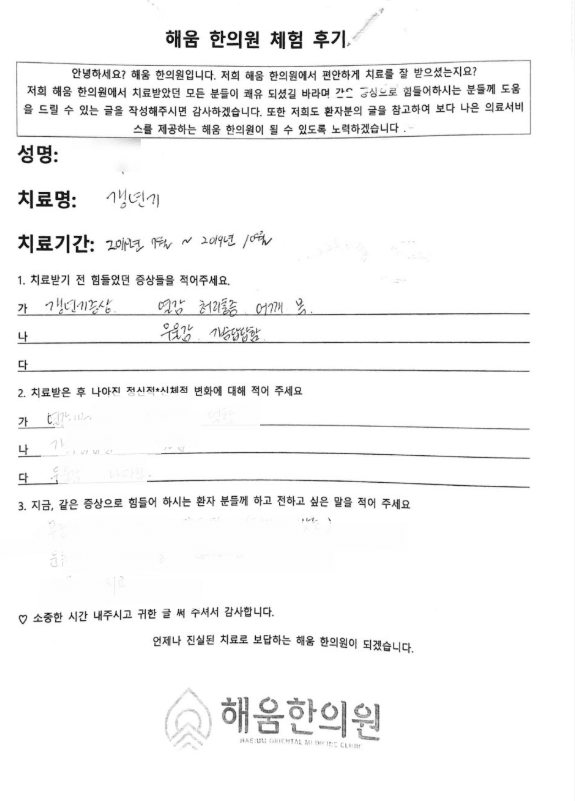
가슴답답하고 우울하고 열이 오르고 전신이 다 아프다 하신 환자분 3개월
2022. 04. 11.
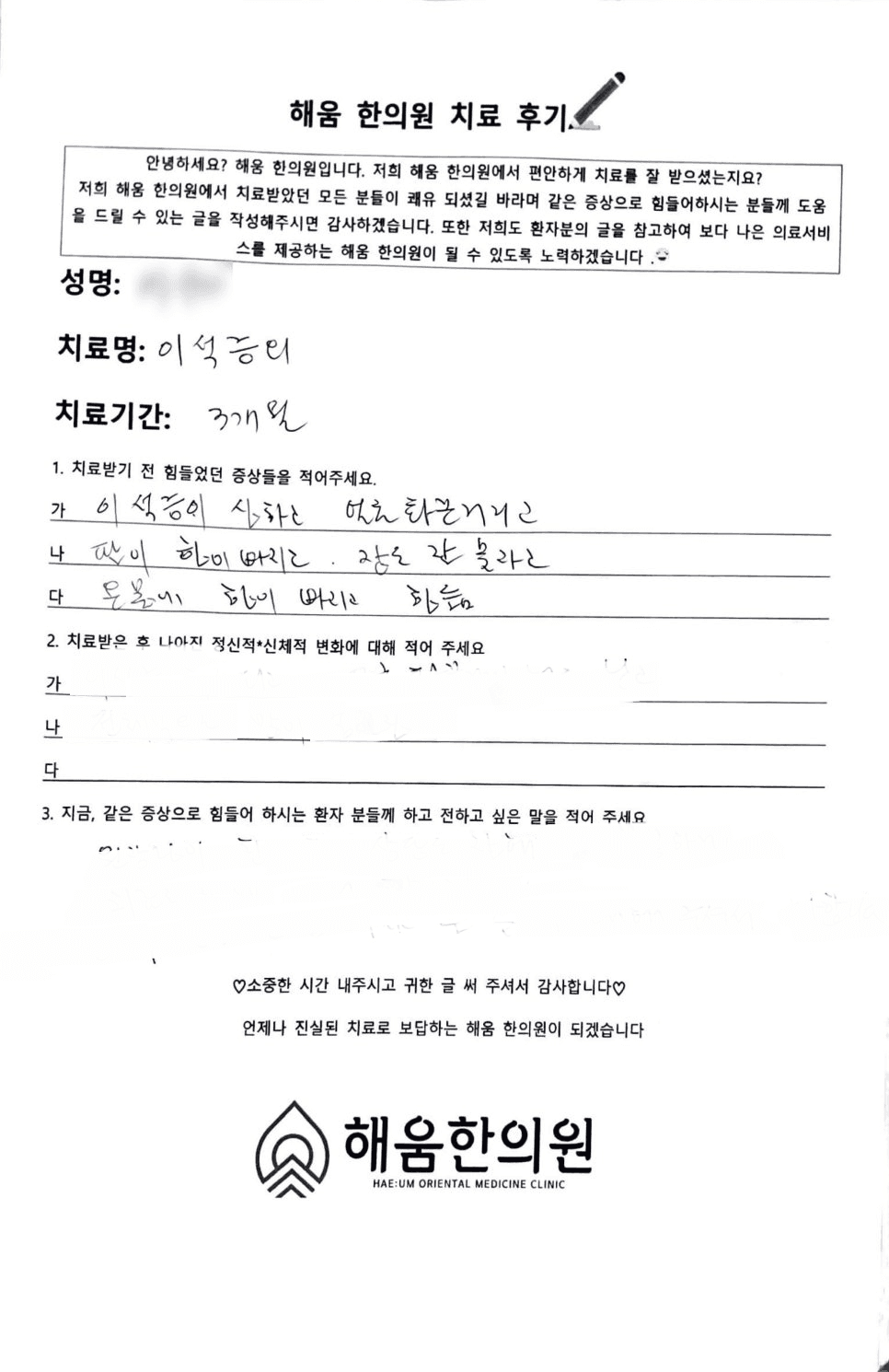 관련 후기
얼굴이 화끈거리고 어지럽고 불면증을 동반한 이석증
2022. 08. 19.
다른 증상으로 내원하신 분들의 후기 중 ‘갱년기’가 증상으로 함께 언급된 기록
갱년기, 누가 진료하나요?
담당 의료진
대표원장 박재은

“병이 아니라 그 뒤의 사람을 봅니다”
경희대학교 한의과대학에서 석사·박사 과정을 마쳤습니다. 심리상담사 1급 자격과 4만 건 이상의 한약 처방 경험을 바탕으로 진료합니다.
의료진 소개 더보기갱년기, 자주 묻는 질문
갱년기 증상은 언제까지 가나요?
호르몬 치료와 한약을 같이 해도 되나요?
유방암 치료를 받았는데 한약을 먹어도 되나요?
이소플라본이나 영양제를 먹으면 되나요?
치료 기간은 얼마나 걸리나요?
생활에서 어떻게 관리해야 하나요?
해움한의원에서 갱년기를 진료하나요?
갱년기로 내원하려면 어떻게 하나요?
갱년기, 질문 있어요
4건환자분들이 남긴 온라인 상담 질문과 의료진 답변입니다.
이런 경우에는 미루지 말고 진료를 받으세요
아래 증상은 갱년기가 아니라 다른 질환일 수 있습니다. 지체하지 말고 응급실이나 전문 진료를 먼저 찾으세요.
- 폐경 뒤에 질 출혈이 다시 있다
- 가슴 통증이 20분 넘게 이어지거나 식은땀과 함께 팔·턱으로 뻗친다: 119
- 한쪽 다리가 갑자기 붓고 아프거나 갑자기 숨이 찬다: 119
- 유방에 멍울이 만져지거나 분비물이 나온다
- 죽고 싶다는 생각이나 자해 생각이 든다: 자살예방 상담전화 109(24시간) 또는 가까운 응급실
참고문헌 8편
[1]Avis NE, Crawford SL, Greendale G, Bromberger JT, Everson-Rose SA, Gold EB, et al. Duration of menopausal vasomotor symptoms over the menopause transition. JAMA Intern Med. 2015;175(4):531-539. doi:10.1001/jamainternmed.2014.8063. PMID: 25686030.
요약 미국 여성을 추적한 코호트 연구입니다. 열감과 식은땀이 이어진 기간은 중앙값 7.4년이었고, 마지막 생리 뒤에도 4.5년 지속되었습니다. 스트레스를 많이 느낄수록, 증상에 민감할수록 더 오래갔습니다.원문은 출판사 저작권 자료로, 위 링크에서 확인하실 수 있습니다.
[2]Salari N, Hasheminezhad R, Hosseinian-Far A, Rasoulpoor S, Assefi M, Nankali S, et al. Global prevalence of sleep disorders during menopause: a meta-analysis. Sleep Breath. 2023;27(5):1883-1897. doi:10.1007/s11325-023-02793-5. PMID: 36892796.
요약 메타분석 결과 폐경기 여성의 수면장애 유병률은 51.6%였습니다.원문은 출판사 저작권 자료로, 위 링크에서 확인하실 수 있습니다.
[3]Alblooshi S, Taylor M, Gill N. Does menopause elevate the risk for developing depression and anxiety? Results from a systematic review. Australas Psychiatry. 2023;31(2):165-173. doi:10.1177/10398562231165439. PMID: 36961547.
초록 (Abstract)
Objective: To determine whether menopause elevates the risk for developing diagnostic depression and anxiety. Menopause-associated vasomotor symptoms such as insomnia and hot flushes are well recognized, but no systematic review of the psychological consequences of menopause has been undertaken. Menopause can be a time of social change for women, confounding any correlation.
Methods: Using PRISMA methodology, we conducted a systematic review of all published (in English) original data examining a relationship between menopause and depression and anxiety. We ranked the quality of all included studies using Grading of Recommendations, Assessment, Development and Evaluation (GRADE) criteria.
Results: Twenty-two selected studies were summarized and compared, being eight cross-sectional surveys; one retrospective cohort, and 13 prospective cohort studies. Depression and anxiety are common during menopause and the post-menopause, with vasomotor symptoms and a prior history of major depression elevating risk of menopausal associated depression. Psychosocial factors also may increase risk of depression during menopause.
Conclusions: Menopause increases vulnerability to depression and anxiety, perhaps via estrogen fluctuations affecting serotonin and GABA. Underlying neuroticism and contemporaneous adverse life events are also risk factors for menopausal decompensation with depression.
결과 (Results)
Synthesis of results / Prevalence of depression and/or anxiety during the menopausal transition: Seven of the studies included here, namely, five cohort studies and two cross-sectional surveys, found a significant association between the menopausal transition and depression and/or anxiety. Five other studies didn’t (Table 1).
The Study of Women’s Health Across the Nation found that being peri-menopausal confers a high risk for recurrence of major depressive disorder (MDD) but not for de novo MDD, relative to pre-menopause status. Being peri-menopausal compared to pre-menopausal more than doubled the risk of depression during follow-up.
The Penn Ovarian Aging Study noted a four-fold increase in depression in women with no history of depression during their menopausal transition compared to their pre-menopausal status. Moreover, a diagnosis of MDD was more than twice likely to occur in women with no history of pre-menopausal depression.
The PATH project revealed that being peri-menopausal was associated with a significantly increased risk of depressive symptoms relative to pre-menopause. Furthermore, being peri-menopausal was associated with an increased risk of depression and anxiety in women without history of probable depressive or anxiety disorder.
The Harvard study found that pre-menopausal women with no lifetime history of MDD were nearly twice as likely to develop peri-menopausal depressive symptoms compared to women with no history of depression. The Melbourne women’s midlife health project (MWMHP) also found that women in the menopausal transition and early post-menopausal phase were at higher risk of depressive symptoms and low mood than the late post-menopause.
Pimenta et al. showed that psychological symptoms were significantly elevated in peri-menopausal women compared to matched pre-menopausal women. Almeida et al. reported that reproductive status did not affect the prevalence of MDD, but when contrasted with pre-menopause, the peri-menopausal phase was associated with an elevated risk of developing depressive symptoms.
The prevalence of depression and/or anxiety after menopause: Five out of the twenty-two studies found a significant increased prevalence of depression and anxiety in post-menopausal women. A cross-sectional survey from Italy showed that depressive symptoms were significantly higher in the post-menopausal compared to the pre-menopausal women.
Almeida et al. reported that significantly more post-menopausal than pre-menopausal women had depressive symptoms, and the PATH project revealed that being post-menopausal was associated with increased risk of anxiety symptoms compared to pre-menopause.
Pimenta et al. noted adverse psychological symptoms were significantly elevated in post-menopausal women compared to their pre-menopausal counterparts.
In the Study of Women’s Health Across the Nation, being post-menopausal elevated the risk four-fold for major depressive relapse but did not significantly elevate risk for new MDD.
By contrast, Gibson et al. documented that in women who reached menopause, symptoms of anxiety and depression decreased in the years after the final menstrual period or hysterectomy.
Potential risk factors affecting mood, anxiety, and menopause: Biological risk factors have been shown in eleven studies here to play a role in the onset of depression and/or anxiety in the different menopausal stages. These biological factors include the vasomotor symptoms (VMS) of menopause, unrelated chronic medical diseases, and a history of premenstrual syndrome. Seven studies reported that depression and anxiety were strongly associated with VMS and related poor sleep.
A prospective longitudinal study from New Jersey, USA, suggested that depressed women had more difficulty coping with the symptoms and physical changes of menopausal transition, and that those who experience more severe menopausal symptoms were more likely to have depressive symptoms during the menopausal transition.
Juang et al. noted a significant relationship between depression and anxiety, and the presence of hot flushes (part of VMS) in both peri- and post-menopausal women. This association remained significant even after educational status and insomnia were controlled for.
Chronic medical diseases and a decrease in physical health have also been associated with mood symptoms during menopause. Having at least one chronic medical condition prior to study entry more than doubled the risk of depression. Impaired role functioning because of physical health problems increased the risk of developing depression by 88%.
Psychological factors that played a role in the onset of new mood disorder in menopause include a past history of depression and anxiety, a history of postpartum depression, and an adverse perception of menopause. A past history of depression or anxiety was also a significant predictor of the onset of depressive symptoms during the menopausal stages. Women with a history of depression or anxiety were more prone to develop mood symptoms during menopause. A history of anxiety also increased the risk of development of depressive symptoms during menopause.
The prospective long-term Zurich study demonstrated that neuroticism (a personality trait disposition to negative mood and anxiety) at age 30 significantly predicted increased prevalence of major depression and anxiety disorders during menopause. Chou et al. demonstrated that regardless of age, neuroticism was found to be significantly associated with depressive symptoms during the menopause transition.
Numerous studies have demonstrated the relationship between social factors and mood disorders during menopause, such as age, stressful life events, marital status, low socio-economic or financial status, and lack of family or social support. These stressful life events included decreased sexual activity; and children failing to enter college or get a job. Anxiety and depression were also more severe in post-menopausal women from rural or low socio-economic areas.
원문 발췌 · Alblooshi S, Taylor M, Gill N, Australas Psychiatry 2023 · CC BY 4.0 라이선스에 따라 수정 없이 인용했습니다(본문 속 인용 번호는 생략).
[4]Collaborative Group on Hormonal Factors in Breast Cancer. Type and timing of menopausal hormone therapy and breast cancer risk: individual participant meta-analysis of the worldwide epidemiological evidence. Lancet. 2019;394(10204):1159-1168. doi:10.1016/s0140-6736(19)31709-x. PMID: 31474332.
초록 (Abstract)
Background: Published findings on breast cancer risk associated with different types of menopausal hormone therapy (MHT) are inconsistent, with limited information on long-term effects. We bring together the epidemiological evidence, published and unpublished, on these associations, and review the relevant randomised evidence.
Methods: Principal analyses used individual participant data from all eligible prospective studies that had sought information on the type and timing of MHT use; the main analyses are of individuals with complete information on this. Studies were identified by searching many formal and informal sources regularly from Jan 1, 1992, to Jan 1, 2018. Current users were included up to 5 years (mean 1·4 years) after last-reported MHT use. Logistic regression yielded adjusted risk ratios (RRs) comparing particular groups of MHT users versus never users.
Findings: During prospective follow-up, 108 647 postmenopausal women developed breast cancer at mean age 65 years (SD 7); 55 575 (51%) had used MHT. Among women with complete information, mean MHT duration was 10 years (SD 6) in current users and 7 years (SD 6) in past users, and mean age was 50 years (SD 5) at menopause and 50 years (SD 6) at starting MHT. Every MHT type, except vaginal oestrogens, was associated with excess breast cancer risks, which increased steadily with duration of use and were greater for oestrogen-progestagen than oestrogen-only preparations. Among current users, these excess risks were definite even during years 1–4 (oestrogen-progestagen RR 1·60, 95% CI 1·52–1·69; oestrogen-only RR 1·17, 1·10–1·26), and were twice as great during years 5–14 (oestrogen-progestagen RR 2·08, 2·02–2·15; oestrogen-only RR 1·33, 1·28–1·37). The oestrogen-progestagen risks during years 5–14 were greater with daily than with less frequent progestagen use (RR 2·30, 2·21–2·40 vs 1·93, 1·84–2·01; heterogeneity p<0·0001). For a given preparation, the RRs during years 5–14 of current use were much greater for oestrogen-receptor-positive tumours than for oestrogen-receptor-negative tumours, were similar for women starting MHT at ages 40–44, 45–49, 50–54, and 55–59 years, and were attenuated by starting after age 60 years or by adiposity (with little risk from oestrogen-only MHT in women who were obese). After ceasing MHT, some excess risk persisted for more than 10 years; its magnitude depended on the duration of previous use, with little excess following less than 1 year of MHT use.
Interpretation: If these associations are largely causal, then for women of average weight in developed countries, 5 years of MHT, starting at age 50 years, would increase breast cancer incidence at ages 50–69 years by about one in every 50 users of oestrogen plus daily progestagen preparations; one in every 70 users of oestrogen plus intermittent progestagen preparations; and one in every 200 users of oestrogen-only preparations. The corresponding excesses from 10 years of MHT would be about twice as great.
Funding: Cancer Research UK and the Medical Research Council.
결과 (Results)
Anonymised information on individual participants was obtained from 58 studies (appendix pp 10, 11), including 143 887 postmenopausal women with invasive breast cancer (cases) and 424 972 without breast cancer (controls). The 24 prospective studies contributed three-quarters (108 647) of the cases, diagnosed in median year 2005 (IQR 2000–09) at mean age 65 years (SD 7); 55 575 (51%) had ever used MHT. The 34 retrospective studies contributed a quarter (35 240) of the cases, diagnosed in median year 1995 (IQR 1992–98); 15 642 (44%) had ever used MHT (figure 1).
Overall, breast cancer risk was greater in MHT ever users than never users (appendix p 31). Since the aim is to assess risks associated with specific types of MHT in relation to the timing of use, further analyses are restricted to 128 435 cases, three-quarters (95 717) in prospective studies, and 366 965 controls with complete information on the type last used, duration of use, and time since last use. With this restriction (appendix p 32) or without it (appendix p 31), the study-specific RRs for ever users versus never users of MHT differed significantly between retrospective and prospective studies, as did the RRs for current users versus never users (appendix p 33). This difference was largely due to lower RRs in North American retrospective studies. The RRs for a particular duration of use of a particular type of MHT were about one fifth lower in the aggregated retrospective than in the aggregated prospective studies (appendix p 19, 34). Given that some MHT users in retrospective studies might have been more willing than non-users to participate as controls, or that there may have been differential recall of use between cases and controls, the main analyses include only the prospective studies, but corresponding analyses for the retrospective studies are in the appendix (pp 50–55). As the prospective studies include three-quarters of the cases, they would have dominated the overall evidence if both study types had been combined.
Among women who developed breast cancer in the prospective studies, mean age at menopause was 50 years (SD 5), mean age at first MHT use was 50 years (SD 6), and mean duration of MHT use was 10 years (SD 6) in current users and 7 years (SD 6) in past users. Hysterectomy largely determined MHT type; the proportions of women reported to have had the procedure were 2710 (7%) of 37 951 for oestrogen-progestagen users, but 31 187 (84%) of 37 213 for oestrogen-only users.
RRs were consistently greater for oestrogen-progestagen than oestrogen-only preparations, were greater in current than in past users, and (in both current and past users) increased steadily with duration of use (figure 2). For each MHT type, there was a significant excess risk even during years 1–4 (mean: year 3) of current use: the RRs were 1·60 (95% CI 1·52–1·69) for oestrogen-progestagen and 1·17 (1·10–1·26) for oestrogen-only MHT. During years 5–14 (mean: year 9) current use the RRs were 2·08 (2·02–2·15) for oestrogen-progestagen and 1·33 (1·28–1·37) for oestrogen-only MHT. In past users, excess duration-dependent risks persisted for more than a decade after stopping MHT use. There is little information about breast cancer risk associated with past use that had ceased more than 15 years previously.Figure 2Type and timing of MHT use in current users and past users(A) All current and past users. (B) Past users only, by time since last use of MHT. Fully adjusted relative risks for current versus never users by years of current use, and for past users versus never users by years of use and time since cessation of use (prospective studies). MHT=menopausal hormone therapy.
Few women had started MHT at ages 30–39 years, but among those who were still current users 15 years later, there were significant risks with oestrogen-progestagen and oestrogen-only preparations (appendix p 40). Substantial numbers of women, however, had started MHT in each of the age groups 40–44, 45–49, 50–54, and 55–59 years, and for each group the RRs were similar (figure 3; appendix pp 35–39). Few women had started MHT at ages 60–69 years, and their excess risks during years 5–14 of current use were significant for oestrogen-progestagen (RR 1·75, 95% CI 1·48–2·06) but not for oestrogen-only MHT (RR 1·08, 0·90–1·31, based on only 135 exposed cases). For comparability, the RRs in figure 3 and in subsequent figures are based on cases arising during years 5–14 of MHT use (which includes most cases in current users).Figure 3Age at first use: relative risks during years 5–14 of current MHT useFully adjusted relative risks for current versus never users during years 5–14 of current use, subdivided by age at first use of MHT, giving in each subgroup a mean age at menopause and mean duration of MHT use in cases (prospective studies). Tests for trend in RR with age of start of MHT use (χ2, 1 degree of freedom): oestrogen-only MHT 4·04, p=0·044; oestrogen-progestagen MHT 6·44, p=0·011. MHT=menopausal hormone therapy.
Sensitivity analyses left the main findings largely unchanged (appendix pp 20, 21, 43, 44). The RRs were little altered by additional adjustment for ethnicity, education, age at menarche, height, and oral contraeptive use, restriction to women with data on all adjustment variables, variation of the 5–year cutoff, exclusion of the largest or the smaller studies, or exclusion of women with an index date of less than 1 year after the last report. Failure to account for any additional use between last-recorded use and cancer diagnosis would, however, have increased duration-specific RRs, especially for less than 1 year MHT use.
Figure 4 (and appendix pp 22, 23) show breast cancer RRs during years 5–14 (mean: year 9) of current use according to the main constituents, doses, and modes of delivery of the last-used MHT. For oestrogen-only preparations, there was no heterogeneity of risk between equine oestrogen and oestradiol, or between oral administration and transdermal. By contrast, there appeared to be little risk for topical vaginal oestrogens (RR 1·09, 0·97–1·23; p=0·15).Figure 4Main types of MHT: relative risks during years 5–14 of current useFully adjusted relative risks for current versus never users during years 5–14 (mean: year 9) of use. MHT=menopausal hormone therapy. Appendix p 45 gives results for uncommon constituents.
During years 5–14 of use of an oestrogen-progestagen combination, the RR was greater for oestrogen plus daily progestagen than for oestrogen plus intermittent progestagen (which usually involved 10–14 days of progestagen per month); RR 2·30 (2·21–2·40) and RR 1·93 (1·84–2·01), respectively, heterogeneity p<0·0001. In general, the RR did not differ substantially by the progestagenic constituent of the combinations, including rarely used hormones, such as micronised [natural] progesterone (RR 2·05, 1·38–3·56), although the RR appeared to be somewhat lower for oestrogen plus dydrogesterone (appendix p 45). The RR was significantly increased during years 5–14 of progestagen-only MHT (1·39, 1·11–1·75; p=0·0055) and of tibolone (1·57, 1·43–1·72; p<0·0001).
Most studies provided data on tumour characteristics. RRs in current users during years 5–14 were substantially greater for ER+ than ER– tumours and for lobular than ductal tumours, but were similar for localised tumours and tumours that had spread beyond the breast (figure 5). The appendix (pp 46–47) gives further results by ER status.Figure 5Tumour characteristics: relative risks during years 5–14 of current useFully adjusted relative risks for current versus never users during years 5–14 (mean: year 9) of use. MHT=menopausal hormone therapy.
The RRs during years 5–14 of MHT use varied little with any personal characteristics except BMI (appendix p 49). Figure 6 shows the absolute breast cancer incidence rates per decade in the age range 55–64 years among never users and among current users during years 5–14 of MHT use. Risk increased with increasing BMI among never users (an association that did not weaken with age, appendix p 26), but not among current users. Hence, the absolute and relative excess risks associated with MHT use were greater for lean women than for obese women. For oestrogen-only MHT, the RRs comparing current users versus never users in the same BMI category were 1·52 (1·45–1·60) for lean, 1·26 (1·19–1·34) for overweight, and 1·10 (1·02–1·20) for obese women. For oestrogen-progestagen MHT, the RRs were 2·36 (2·28–2·45) for lean, 1·92 (1·82–2·02) for overweight, and 1·65 (1·52–1·79) for obese women. Among never users, the incidence of ER– disease was low and little related to BMI, but the incidence of ER+ disease increased with BMI. Hence, ER+ disease accounted for almost all of the association of breast cancer risk with BMI in never users and of the MHT-associated excess risk in users (figure 6; appendix p 48).Figure 6Relevance of BMI to the absolute 10 year breast cancer incidence rate per 100 women at ages 55–64 years in never users and in current users of MHTAdjusted relative risks for all cancers during 5–14 years of current use were calculated taking never users with a BMI of 25–29 kg/m2 as the reference, and then standardising to the incidence rate of breast cancer in never users aged 55–64 years of average weight in western countries (ie, 3 per 100 women; appendix p 17). Separate results for ER+ and ER– breast cancer are shown (both with broken lines) only for never users of MHT (but are shown for current users in the appendix, p 48). BMI groups: <25 kg/m2 (lean); 25–30 kg/m2 (overweight); and ≥30 kg/m2 (obese); incidence is plotted against mean BMI values. BMI=body-mass index. ER+=oestrogen-receptor positive. ER–=oestrogen-receptor negative. MHT=menopausal hormone therapy.
To estimate the absolute risks of breast cancer by age 70 years that would be associated with starting various types of MHT at age 50 years and continuing for 5 years or for 10 years, we combined prospective study RRs for women who began any oestrogen-progestagen MHT at ages 45–54 years (appendix p 41) with estimates of the breast cancer incidence rates at ages 50–69 years among never users of average weight in western countries (appendix pp 24–27). The excess risks associated with daily and with intermittent progestagen use were estimated as being, respectively, about one-sixth greater and one-sixth less than this overall excess risk, and the excess risks for oestrogen-only MHT were estimated as being about one-third as great as it (figure 4).
These absolute risks of developing breast cancer during the 20-year age range 50–69 inclusive are shown in figure 7. They assume that 6·3% of never users of average weight (ie, 6·3 in every 100 never users of MHT) would develop breast cancer during this 20-year period (appendix pp 17, 18, 24, 25, 26). With 5 years of MHT use followed by 15 years of past use, the 20-year risk for oestrogen-plus-daily-progestagen would then become about 8·3%, an absolute increase of 2·0 per every 100 women (one in every 50 users). For oestrogen-plus-intermittent-progestagen, the risk would become about 7·7%, an absolute increase of 1·4 per 100 women (one in every 70 users). For oestrogen-only the risk would become about 6·8%, an absolute increase of 0·5 per 100 women (one in every 200 users; this excess would be greater in lean women, but slight in obese women). About half the excess would be during the first 5 years of current use of MHT, and half would be during the next 15 years of past use. The 20-year excess risks with 10 years of use from age 50 years would be about double those with 5 years of use.Figure 7Effect of 5 years or of 10 years of MHT use, starting from age 50 years, on 20-year breast cancer incidence ratesRelevance of MHT use and of adiposity to the absolute 20-year risk of developing breast cancer from ages 50–69 years inclusive, assuming that the relative risks found in the prospective studies would apply to women of average weight in a typical developed country in which the absolute 20-year risk of developing breast cancer in never users is 6·3 per 100 women (appendix pp 17, 18, 24, 25, 26). Results for women of average weight are shown for never users and for various categories of MHT use from age 50 years. A) Effects of 5 years or of 10 years of oestrogen-plus-daily-progestagen MHT. B) Effects of 5 years or of 10 years of oestrogen-plus-intermittent-progestagen MHT. C) Effects of 5 years or of 10 years of oestrogen-only MHT. D) Effects of adiposity among women who never use MHT, comparing those of average weight with those who were lean or obese. MHT=menopausal hormone therapy.
원문 발췌 · Collaborative Group on Hormonal Factors in Breast Cancer, Lancet 2019 · CC BY 4.0 라이선스에 따라 수정 없이 인용했습니다(본문 속 인용 번호는 생략).
[5]Gu Y, Han F, Xue M, Wang M, Huang Y. The benefits and risks of menopause hormone therapy for the cardiovascular system in postmenopausal women: a systematic review and meta-analysis. BMC Womens Health. 2024;24(1):60. doi:10.1186/s12905-023-02788-0. PMID: 38263123.
초록 (Abstract)
Background: Menopause hormone therapy (MHT), as an effective method to alleviate the menopause-related symptoms of women, its benefits, risks, and potential influencing factors for the cardiovascular system of postmenopausal women are not very clear.
Objectives: To evaluate cardiovascular benefits and risks of MHT in postmenopausal women, and analyze the underlying factors that affect both.
Search strategy: The EMBASE, MEDLINE, and CENTRAL databases were searched from 1975 to July 2022.
Selection criteria: Randomized Clinical Trials (RCTs) that met pre-specified inclusion criteria were included.
Data collection and analysis: Two reviewers extracted data independently. A meta-analysis of random effects was used to analyze data.
Main results: This systematic review identified 33 RCTs using MHT involving 44,639 postmenopausal women with a mean age of 60.3 (range 48 to 72 years). There was no significant difference between MHT and placebo (or no treatment) in all-cause death (RR = 0.96, 95%CI 0.85 to 1.09, I2 = 14%) and cardiovascular events (RR = 0.97, 95%CI 0.82 to 1.14, I2 = 38%) in the overall population of postmenopausal women. However, MHT would increase the risk of stroke (RR = 1.23, 95%CI 1.08 to 1.41,I2 = 0%) and venous thromboembolism (RR = 1.86, 95%CI 1.39 to 2.50, I2 = 24%). Compared with placebo, MHT could improve flow-mediated arterial dilation (FMD) (SMD = 1.46, 95%CI 0.86 to 2.07, I2 = 90%), but it did not improve nitroglycerin-mediated arterial dilation (NMD) (SMD = 0.27, 95%CI − 0.08 to 0.62, I2 = 76%). Compared with women started MHT more than 10 years after menopause, women started MHT within 10 years after menopause had lower frequency of all-cause death (P = 0.02) and cardiovascular events (P = 0.002), and more significant improvement in FMD (P = 0.0003). Compared to mono-estrogen therapy, the combination therapy of estrogen and progesterone would not alter the outcomes of endpoint event. (all-cause death P = 0.52, cardiovascular events P = 0.90, stroke P = 0.85, venous thromboembolism P = 0.33, FMD P = 0.46, NMD P = 0.27).
Conclusions: MHT improves flow-mediated arterial dilation (FMD) but fails to lower the risk of all-cause death and cardiovascular events, and increases the risk of stroke and venous thrombosis in postmenopausal women. Early acceptance of MHT not only reduces the risk of all-cause death and cardiovascular events but also further improves FMD, although the risk of stroke and venous thrombosis is not reduced. There is no difference in the outcome of cardiovascular system endpoints between mono-estrogen therapy and combination therapy of estrogen and progesterone.
Supplementary Information: The online version contains supplementary material available at 10.1186/s12905-023-02788-0.
결과 (Results)
4853 records were identified in this systematic review. Among the 65 full-text articles assessed for eligibility, 32 studies were excluded because of the following reasons: duplicated articles (n = 13), reviews or editorials (n = 8), no blank control group (n = 2), non-randomized trial design (n = 1), interventions not including MHT (n = 3), and subjects were non-menopausal women (n = 3), outcome mismatch (n = 2). 33 RCTs with a total of 44,639 subjects that finally met the evaluation criteria were included (Fig. 1).
Description of included studies: The included studies were published from July 1979 to May 2020. All these studies used estrogen drugs. The subjects were all postmenopausal women, with an average age of 60.3 (range 48 to 72 years). In addition, the single therapeutic doses ranged from 10μg to 4 mg, and the duration of treatment varied from 2 hours to 16 years. The interventions included in studies and the baseline characteristics of subjects are shown in Table 1.
Risk of bias analysis: The overall bias risk of the included studies in this review was low. However, among them, ERT II (1979) had defects in randomization and allocation concealment, Aris (2012) and DOPS (2012) had defects in double-blinding and blind methods for outcome assessment, and WHISP (2006) had defects in incomplete outcome data. The above four studies were considered to have a high risk of bias. Risk assessment of study bias was summarized in Fig. S1. No strong evidence of publication bias was found. For the rating results of the GRADE method, PRISMA and MOOSE checklists can be found respectively in Table S1-S3.
Main outcomes / All-cause death: Nineteen studies reported all-cause death in 16 trials (n = 40,913). There was no significant difference in the risk of all-cause death in the overall population of postmenopausal women receiving MHT compared with placebo (or no treatment) (796 vs 806; RR = 0.96, 95%CI 0.85 to 1.09, I2 = 14%; high-certainty evidence, Fig. 2A). TSA results of all-cause death showed that the cumulative Z-curve did not cross the conventional boundary and the trial sequential monitoring boundary, which confirmed the reliability of the negative conclusion drawn from meta-analysis, but the cumulative sample size did not reach the RIS to confirm this negative conclusion (RIS = 374,497, Fig. 2B).
Cardiovascular events: Thirteen studies reported cardiovascular events in 12 trials (n = 38,370). There was no significant difference in the risk of cardiovascular events between the overall population of postmenopausal women receiving MHT and placebo (or no treatment) (669 vs 670; RR = 0.97, 95%CI 0.82 to 1.14, I2 = 38%; high-certainty evidence, Fig. 2C). TSA results of cardiovascular events showed that the cumulative Z-curve did not cross the conventional boundary and the trial sequential monitoring boundary, which confirmed the reliability of the negative conclusion obtained from meta-analysis, but the cumulative sample size did not reach the RIS to confirm this negative conclusion (RIS = 539,124, Fig. 2D).
Stroke: Fifteen studies reported stroke outcome in 13 trials (n = 35,979). Compared with placebo (or no treatment), MHT was significantly associated with the risk of stroke in the overall population of postmenopausal women (476 vs 381; RR = 1.23, 95%CI 1.08 to 1.41, I2 = 0%; high-certainty evidence, Fig. 2E). Three studies reported the onset time of stroke (14,153 subjects receiving MHT vs 13,858 subjects receiving placebo; HR = 1.31, 95%CI 1.08 to 1.59, Fig. 3). TSA results of stroke outcome showed that the cumulative Z-curve crossed the conventional boundary, and the cumulative sample size reached the RIS to confirm this positive conclusion (RIS = 5180, Fig. 2F), which confirmed the reliability of the positive conclusion obtained from meta-analysis.
Venous thromboembolism: Sixteen studies reported venous thromboembolism outcome in 14 trials (n = 39,878). Compared with placebo (or no treatment), MHT was significantly related to the risk of venous thromboembolism in the overall population of postmenopausal women (345 vs 184; RR = 1.86, 95%CI 1.39 to 2.50, I2 = 24%; high-certainty evidence, Fig. 2G). TSA results of venous thromboembolism showed that the cumulative Z-curve crossed the conventional boundary and the trial sequential monitoring boundary, and the cumulative sample size reached the RIS to confirm this positive conclusion (RIS = 2980, Fig. 2H), which confirmed the reliability of the positive conclusion obtained from meta-analysis.
Flow-mediated arterial dilation(FMD): Fifteen studies reported FMD outcome in 13 trials (n = 674). Compared with placebo, MHT was significantly related to the improvement degree of FMD in the overall population of postmenopausal women (SMD = 1.46, 95%CI 0.86 to 2.07, I2 = 90%; moderate-certainty evidence, Fig. 2I). TSA results of FMD outcome showed that the cumulative Z-curve crossed the conventional boundary and the trial sequential monitoring boundary, which confirmed the reliability of the positive conclusions obtained from meta-analysis, although the Z-curve did not cross the RIS boundary (RIS = 2077, Fig. 2J).
Nitroglycerin-mediated arterial dilation(NMD): Thirteen studies reported NMD outcome in 11 trials (n = 635). There was no significant difference in the improvement degree of NMD between the overall postmenopausal women receiving MHT and placebo (or no treatment) (SMD = 0.27, 95%CI − 0.08 to 0.62, I2 = 76%; moderate-certainty evidence, Fig. 2K). TSA results of NMD outcome showed that the cumulative Z-curve did not cross the conventional boundary, which confirmed the reliability of the negative conclusion obtained from meta-analysis. However, the trial sequential monitoring boundary and RIS boundary were automatically ignored due to the small cumulative sample size (RIS = 15,737, Fig. 2L).
Sensitivity analysis: FMD (I2 = 90%) and NMD (I2 = 76%) were considered to be highly heterogeneous in the outcomes of the above-included studies. Leave-one-out method was used for sensitivity analysis of studies related to FMD and NMD outcomes, and the amplitude of I2 change was not obvious (the average change value of FMD I2 = 0.53%, range 0 to 3%; the average change value of NMD I2 = 2.15%, range 0 to 9%). When we eliminated the studies with relatively large heterogeneity changes in these two outcomes (number of excluded trials: FMD n = 7, NMD n = 5), the I2 and SMD values of FMD and NMD outcomes changed to varying degrees, FMD (from: SMD = 1.46, 95%CI 0.86 to 2.07, I2 = 90% to SMD = 1.19, 95%CI 0.98 to 1.39, I2 = 0%, Fig. S2A), NMD (from: SMD = 0.27, 95%CI − 0.08 to 0.62, I2 = 76% to SMD = 0.03, 95%CI − 0.15 to 0.22, I2 = 0%, Fig. S2B), but the conclusions obtained through meta-analysis had not changed. The funnel plot of FMD showed that there were two studies (J.E.B 2003 and Marie (2) 1998) with significant deviation compared with the other 13 studies, but the conclusions of these two studies were positive, and one of them (Marie (2) 1998) was a part of Marie 1998 trial, we considered publication bias for FMD to be at low risk (Fig. S3A and B). Apart from that, we found that the duration of treatment in the studies related to FMD and NMD outcomes was significantly different (range 2 hours to 34 months). To assess the impact of this, we conducted a subgroup analysis of different treatment duration ranges (< 1 month, ≥1 month and < 6 months, ≥ 6 months and < 12 months, ≥ 12 months). In the two subgroups of treatment time range < 1 month (SMD = 4.47, 95%CI − 3.40 to 12.35, I2 = 95%) and ≥ 12 months (SMD = 0.38, 95%CI − 0.77 to 1.53, I2 = 93%), there was no significant difference between MHT and placebo (or no treatment) in the improvement degree of FMD, which changed the positive conclusion obtained from meta-analysis. However, due to fewer included studies (< 1 month: 2 studies; ≥ 12 months: 3 studies) and large heterogeneity, the reliability of this conclusion was low (Fig. S4A). In the subgroup of NMD outcome ≥6 months and < 12 months, MHT was significantly correlated with the improvement of NMD (SMD = 1.01, 95%CI 0.26 to 1.75, I2 = 79%), which changed the negative conclusion obtained from meta-analysis. Similarly, due to fewer included studies (≥ 6 months and < 12 months: 3 studies) and large heterogeneity, the reliability of the conclusion was not high (Fig. S4B).
Subgroup analysis / The onset time of MHT: To assess the effects of MHT onset time and “time hypothesis”, we stratified trials for each outcome. The specific stratification criterion was < 10 years or ≥ 10 years since the onset of MHT after menopause, and if this stratified criterion was limited, the mean age of subjects at baseline would be used as a substitute. To minimize the limitations of using baseline age to replace MHT onset time stratification as much as possible, and highlight the characteristic differences between subgroups, we selected the subjects with mean age at baseline ≤60 years or ≥ 65 years as the stratified conditions for all-cause death, cardiovascular events, stroke, and venous thromboembolism, and the average age ≤ 59 years or ≥ 64 years as stratified conditions for FMD and NMD. The results of the subgroup analysis provided some evidence for the “time hypothesis” of all-cause death, cardiovascular events, and improvement in FMD. Compared with women started MHT more than 10 years after menopause, women started MHT within 10 years after menopause had lower frequency of all-cause death and cardiovascular events, and more significant improvement in FMD (all-cause death P = 0.02, cardiovascular events P = 0.002, FMD P = 0.0003, Fig. S5A, B and E), while women started MHT more than 10 years after menopause did not improve. In addition, we found that the improvement of NMD in women started MHT within 10 years after menopause seemed to be better than that in women started MHT more than 10 years after menopause (NMD P = 0.08, Fig. S5F), while stroke (P = 0.53, Fig. S5C), venous thromboembolism (P = 0.79, Fig. S5D) did not show significant risk difference between subgroups.
Primary prevention and secondary prevention: The above conclusions indicated that MHT could not reduce the risk of cardiovascular disease in the overall population of postmenopausal women. We stratified the subjects according to their baseline health status (healthy postmenopausal women or postmenopausal women with coronary heart disease and atherosclerotic vascular disease) to assess the effects of MHT on the cardiovascular system as an intervention of different prevention levels (primary or secondary prevention) of cardiovascular diseases. There was no evidence of statistically significant difference between the subgroups of primary and secondary prevention for the six outcomes included in this systematic review (Fig. S6A-F). It was noteworthy that the improvement of FMD in postmenopausal women with coronary heart disease and atherosclerotic vascular disease appears to be more significant compared with healthy postmenopausal women (FMD P = 0.08, Fig. S6E), although the statistical requirements were not met, this might be due to the cumulative sample size not reaching the RIS, which was worthy of further study in the future.
Treatment protocol: Progesterone has been believed to have the effect of antagonizing estrogen. To evaluate the effects of different treatment protocols (mono-estrogen therapy or combination therapy of estrogen and progesterone) on the outcomes of the included study, we conducted a subgroup analysis of this, but there was no evidence to suggest that the six outcomes included in this systematic review were statistically different between the subgroups of mono-estrogen therapy or combination therapy of estrogen and progesterone (Fig. S7A-F).
원문 발췌 · Gu Y, Han F, Xue M, Wang M, Huang Y, BMC Womens Health 2024 · CC BY 4.0 라이선스에 따라 수정 없이 인용했습니다(본문 속 인용 번호는 생략).
[6]Chiu HY, Pan CH, Shyu YK, Han BC, Tsai PS. Effects of acupuncture on menopause-related symptoms and quality of life in women in natural menopause: a meta-analysis. Menopause. 2015;22(2):234-244. doi:10.1097/gme.0000000000000260. PMID: 25003620.
요약 자연 폐경 여성을 다룬 12개 연구, 869명의 메타분석입니다. 침 치료는 열감의 횟수와 정도를 줄였고, 갱년기 평가 척도의 심리, 신체, 비뇨생식기 점수도 낮췄습니다.원문은 출판사 저작권 자료로, 위 링크에서 확인하실 수 있습니다.
[7]Fu C, Zhao N, Liu Z, Yuan LH, Xie C, Yang WJ, et al. Acupuncture Improves Peri-menopausal Insomnia: A Randomized Controlled Trial. Sleep. 2017;40(11). doi:10.1093/sleep/zsx153. PMID: 29029258.
요약 폐경 전후 불면 환자를 침과 가짜 침으로 나눈 무작위 대조 연구입니다. 치료 뒤 수면 점수(PSQI)는 침 군이 8.03점, 가짜 침 군이 1.29점 줄었습니다. 수면다원검사에서도 침 군의 수면 효율과 총수면시간이 좋아졌습니다.원문은 출판사 저작권 자료로, 위 링크에서 확인하실 수 있습니다.
[8]Dodin S, Blanchet C, Marc I, Ernst E, Wu T, Vaillancourt C, et al. Acupuncture for menopausal hot flushes. Cochrane Database Syst Rev. 2013:CD007410. doi:10.1002/14651858.cd007410.pub2. PMID: 23897589.
요약 가짜 침과 비교한 8개 연구에서 열감 횟수는 유의한 차이가 없었고, 열감의 정도는 침 군이 약간 덜했습니다. 다만 유방암 환자 연구를 뺀 민감도 분석에서는 둘 다 차이가 없었습니다.원문은 출판사 저작권 자료로, 위 링크에서 확인하실 수 있습니다.