

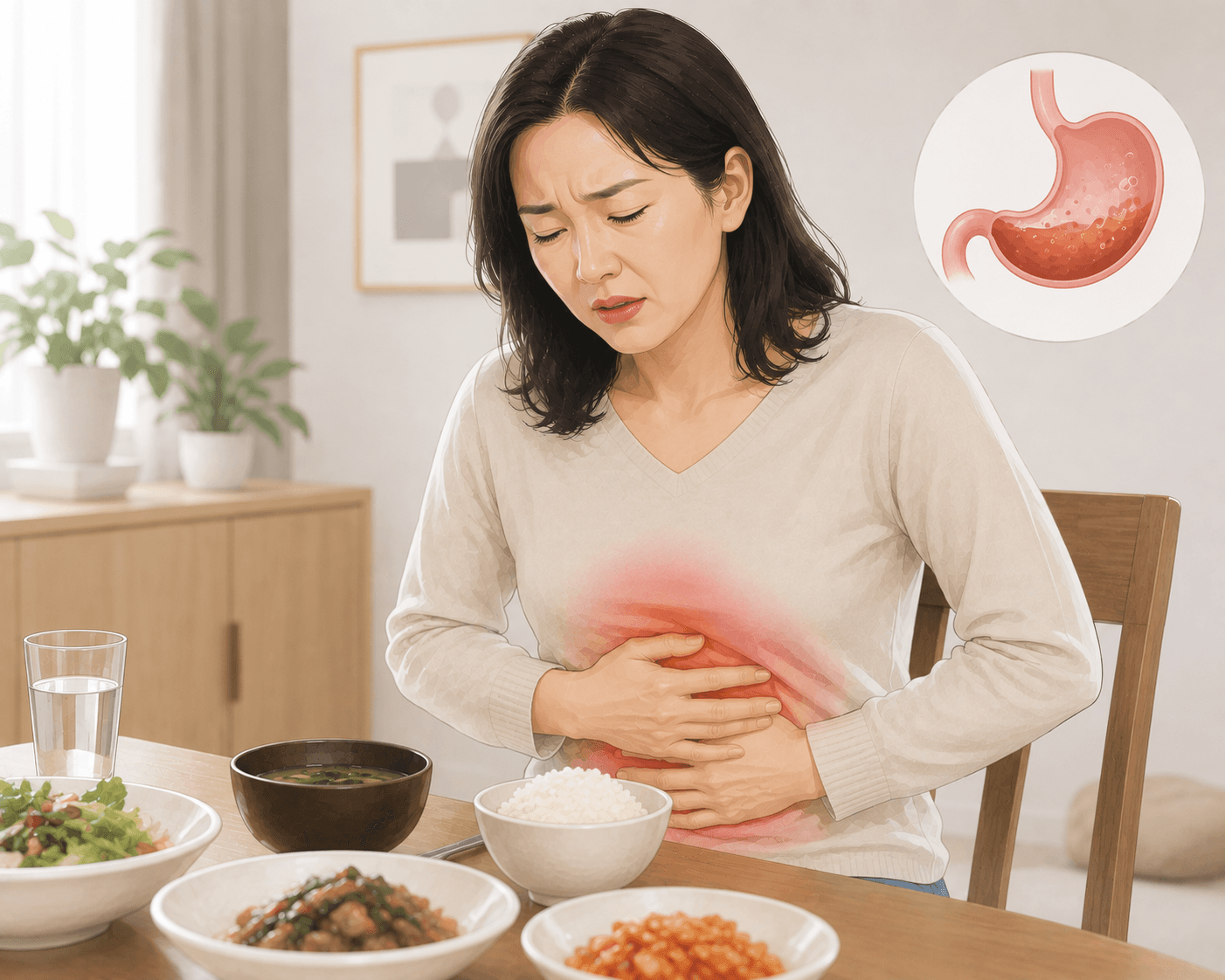
몇 숟가락만 먹어도 배가 부르고, 식사 뒤에는 명치가 꽉 막힌 듯 답답합니다. 소화제를 달고 살다 내시경까지 받았지만 결과는 "깨끗합니다". 검사는 정상인데 속은 여전히 불편하다면, 기능성 소화불량일 수 있습니다.
소화불량 한눈에 보기
- 내시경 같은 검사에서 이상이 없는데도 식후 더부룩함, 조기 포만감, 명치 통증이 이어지는 상태를 기능성 소화불량이라고 합니다.
- 성인 5명 중 1명이 소화불량을 겪을 만큼 흔하고, 과민성대장증후군과 자주 겹칩니다.
- 위는 미주신경으로 뇌와 연결되어 있어 스트레스와 불안·우울에 크게 흔들리며, 일본의 공식 표준진료지침은 한약(육군자탕)을 위장약과 나란히 1차 치료로 권합니다.
- 치료후기 54건
- 의료진 칼럼 3편
- 건강정보 14편
- 온라인 상담 5건
기능성 소화불량이란?
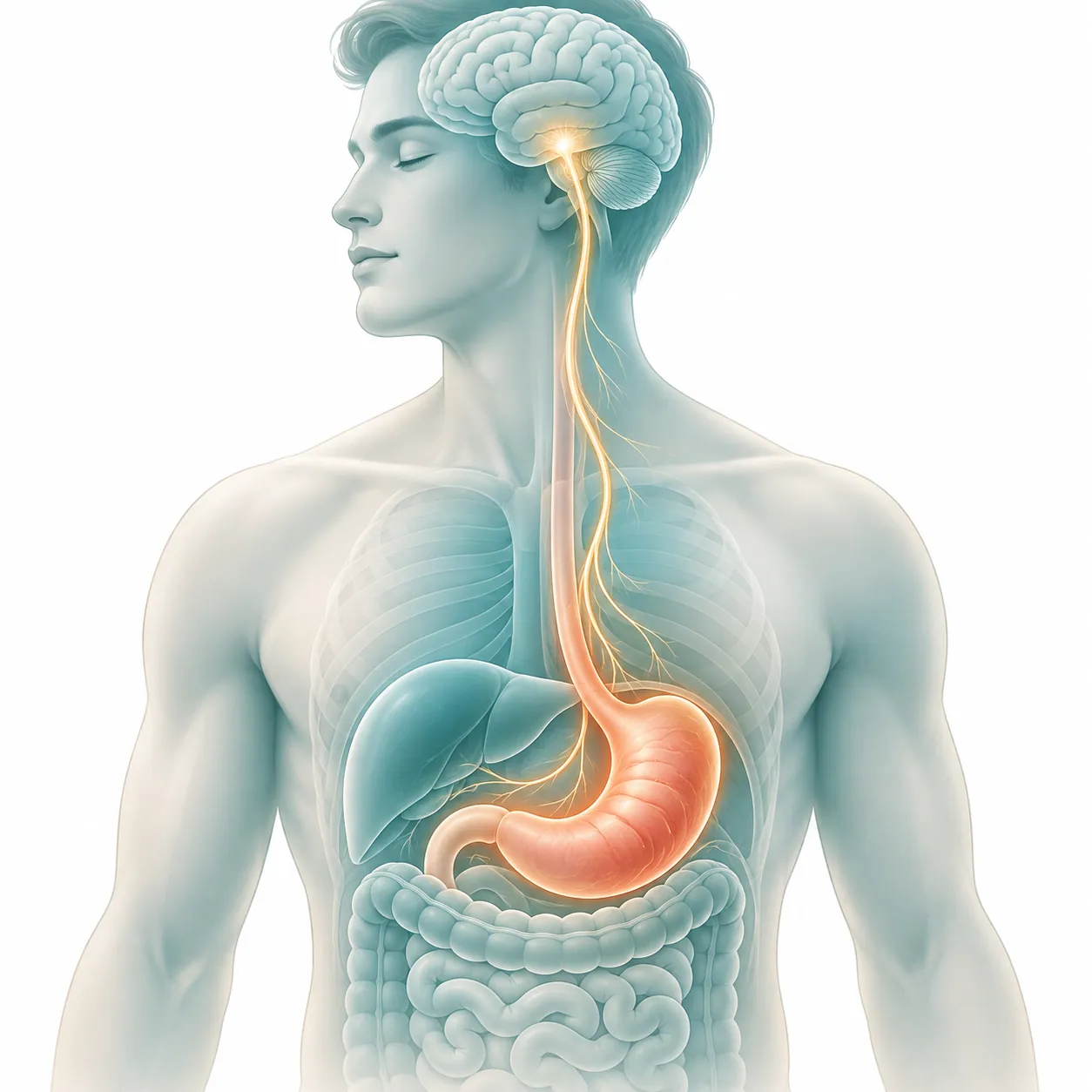
조금만 먹어도 배가 부르거나(조기 포만감), 식사 뒤 더부룩함이 오래가거나, 명치가 아프고 쓰린 증상이 반복되는데 내시경 같은 검사에서 원인이 될 만한 이상이 보이지 않는 상태를 기능성 소화불량이라고 합니다. 위에 상처는 없지만 위가 움직이고 느끼는 "기능"에 문제가 생긴 것입니다.
이러한 기능성 소화불량은 매우 흔합니다. 전 세계 31만여 명을 분석한 연구에서 성인 5명 중 1명(20.8%)이 소화불량을 겪었고, 여성과 흡연자, 소염진통제를 자주 먹는 사람에게서 더 많았습니다[1]. 일본은 2013년부터 기능성 소화불량을 건강보험 병명으로 인정했고, 진료지침에서는 다른 질환이 의심될 때만 내시경을 하도록 권합니다[2]. (주의: 60세 이상에서 소화불량이 새로 생겼다면 내시경으로 다른 질환을 먼저 확인해야 하고[3], 급격한 체중 감소나 출혈 같은 위험 신호가 있을 때도 먼저 검사를 받아야 합니다.)
이런 증상이 있나요?
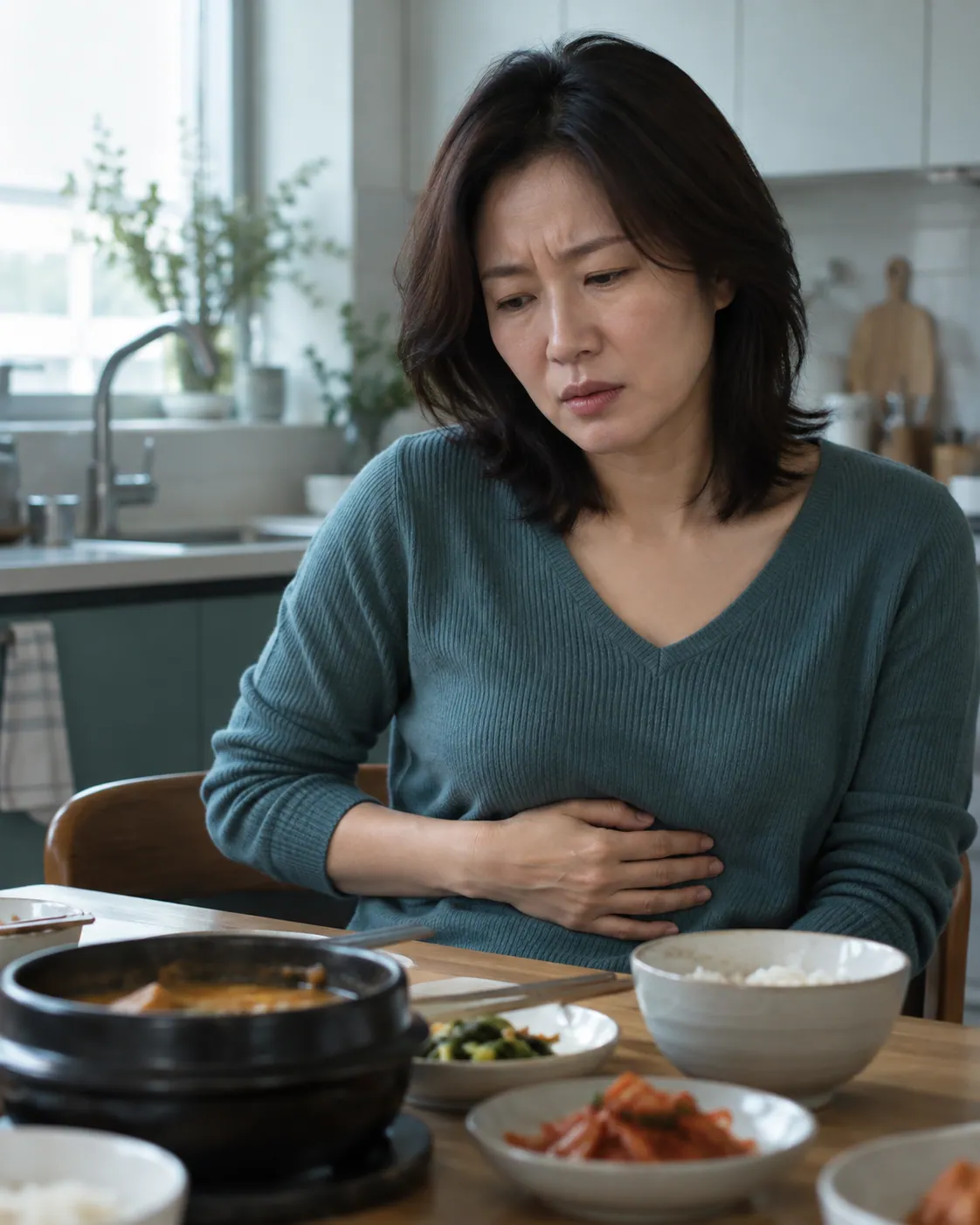
- 몇 숟가락만 먹어도 배가 불러 식사를 다 못 한다
- 식사 뒤 더부룩함이 몇 시간씩 이어진다
- 명치가 아프거나 쓰리고, 꽉 막힌 듯 답답하다
- 트림이 잦고 속이 울렁거린다
- 자주 체하고, 체할까 봐 먹는 것이 조심스럽다
- 긴장하거나 스트레스를 받으면 증상이 심해진다
- 내시경을 받았지만 "위염 조금" 또는 "이상 없음"이라는 말을 들었다
이런 증상이 최근 석 달 넘게 반복되고 검사에서 원인이 나오지 않았다면 기능성 소화불량일 가능성이 높습니다.
기능성 소화불량은 왜 생기나요?
- 위가 음식을 받아들이고 내려보내는 움직임이 약해진 경우
- 위가 작은 자극에도 지나치게 예민하게 반응하는 경우
- 헬리코박터 감염, 소염진통제 복용, 흡연
- 불규칙한 식사, 급하게 먹거나 늦은 밤에 먹는 습관
- 스트레스와 긴장, 수면 부족
위는 뇌와 미주신경으로 직접 연결되어 있습니다. 미주신경은 소화와 함께 기분과 면역, 심박을 조절하고, 위장의 상태를 뇌에 전하는 통로입니다[5]. 그래서 스트레스를 받으면 위가 먼저 반응하고, 위가 불편하면 다시 마음이 예민해집니다. 실제로 기능성 소화불량 환자는 우울과 불안이 훨씬 흔했고, 치료가 잘 듣지 않는 환자에게서는 우울 63.3%, 불안 61.5%에 이르렀습니다[6].
소화불량의 표준 치료
기능성 소화불량에는 보통 위산억제제와 위장운동촉진제를 쓰고, 효과가 부족하면 항우울제를 더합니다. 일본 소화기학회 진료지침은 여기에 한약을 공식 치료로 넣어, 육군자탕(六君子湯)을 1차 치료로, 다른 한약을 2차 치료로 권합니다[2]. 국내에서도 건강보험으로 기능성 소화불량에 처방된 한약이 10년간 1,900만 건이 넘었고, 평위산·향사평위산·반하사심탕이 많이 쓰였습니다[7].
위장약은 위의 산과 움직임을 조절하지만, 위를 흔드는 스트레스와 자율신경의 불균형까지 다루지는 못합니다. 한약은 위의 기능과 함께 몸 전체의 균형을 살피는 치료입니다.
연구도 쌓여 있습니다. 한약이 위장운동촉진제보다 4주 뒤 전체 증상 개선이 더 나았다는 분석이 있고[8], 불안·우울이 함께 있는 기능성 소화불량에서는 소화 증상과 함께 불안·우울 점수가 줄었다는 보고도 있습니다[9].
해움한의원은 이렇게 치료합니다
해움한의원은 위만 보지 않고, 위를 흔드는 자율신경과 스트레스까지 함께 다스립니다.
1단계. 위험 신호부터 확인하고 원인을 찾습니다
나이와 체중 변화, 위험 신호를 먼저 확인해 내시경이 필요한 경우에는 먼저 검사를 받도록 안내합니다. 식사 습관과 증상이 심해지는 상황을 자세히 살펴보고, 심박변이도와 적외선 체열검사로 자율신경의 균형과 배의 냉열 상태를 확인합니다.
2단계. 위의 기능을 되살리는 한약을 짓습니다
체질과 상태에 맞춰 한약을 짓습니다.
3단계. 굳은 배와 긴장을 함께 풉니다
약침과 추나로 명치와 등, 목의 긴장을 풀어 위가 편하게 움직이도록 돕습니다. 스트레스와 걱정이 증상을 키운다면 상담을 함께 진행하고, 천천히 먹기와 식사 시간처럼 위를 쉬게 하는 식습관을 안내합니다.
4만 건의 처방 사례가 말해주는, 한방 맞춤 치료의 힘




소화불량 치료후기 총 54건
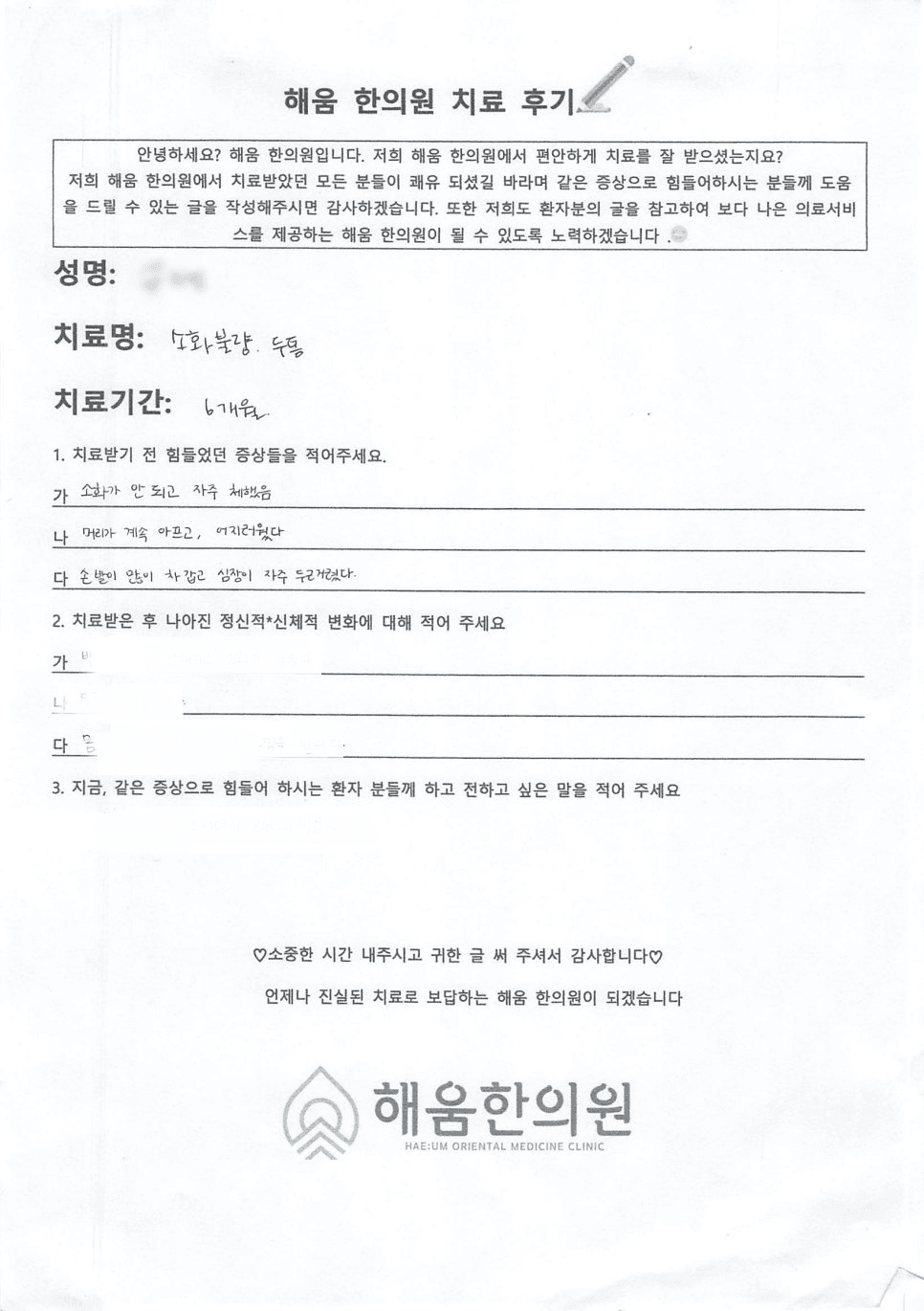
환자분들이 남긴 치료후기입니다. 본문은 로그인 후 보실 수 있습니다.
두통 속울렁거림 식은땀, 단순 소화불량이 아니라고요?
2026. 04. 09.
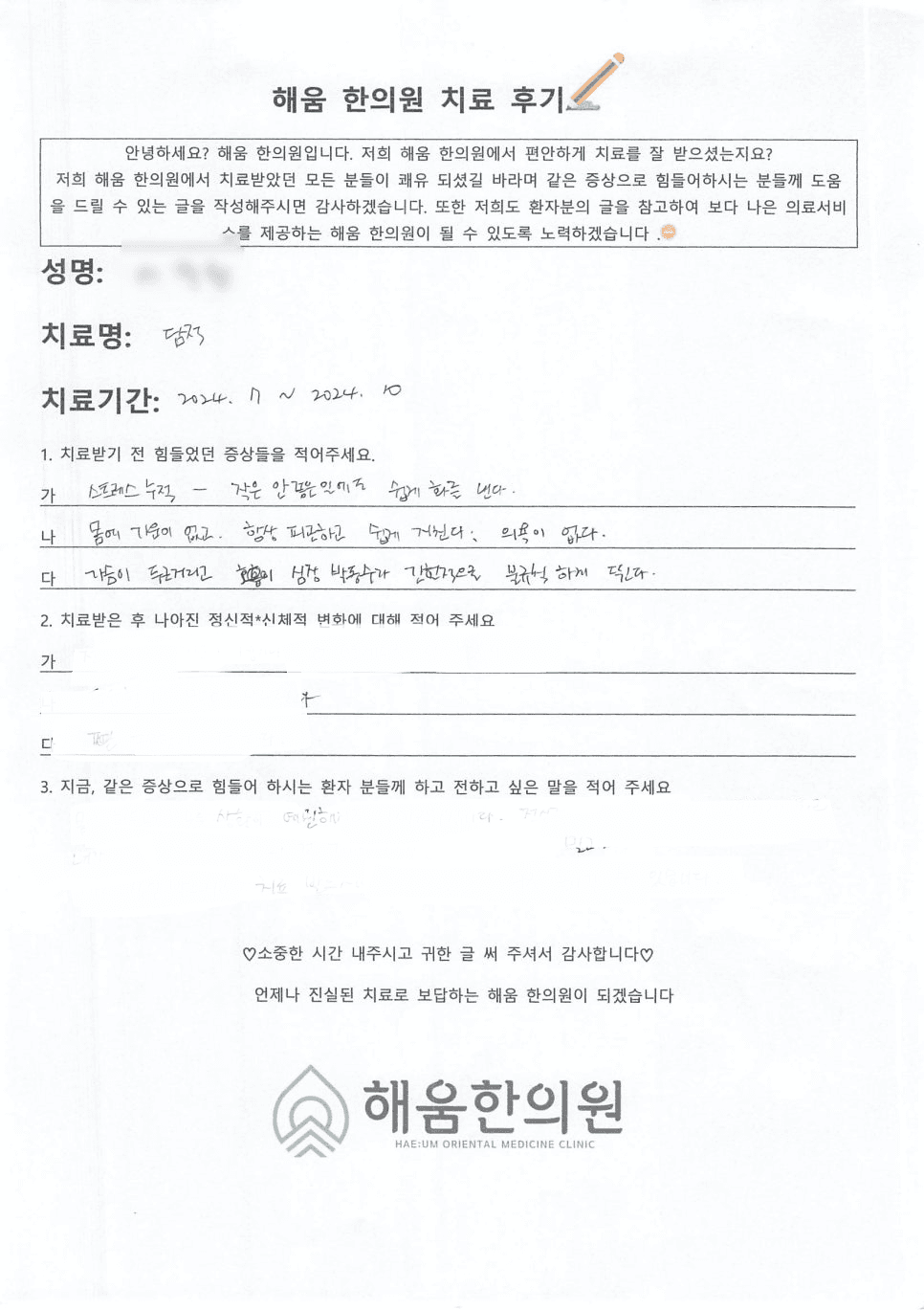
명치답답 소화불량, 담적 증상 같은데 원인이 없대요. 정신과 문제인 걸까요?
2026. 01. 31.

검사는 이상 없는데 복통이 심해요..제가 예민한 걸까요?
2026. 01. 09.
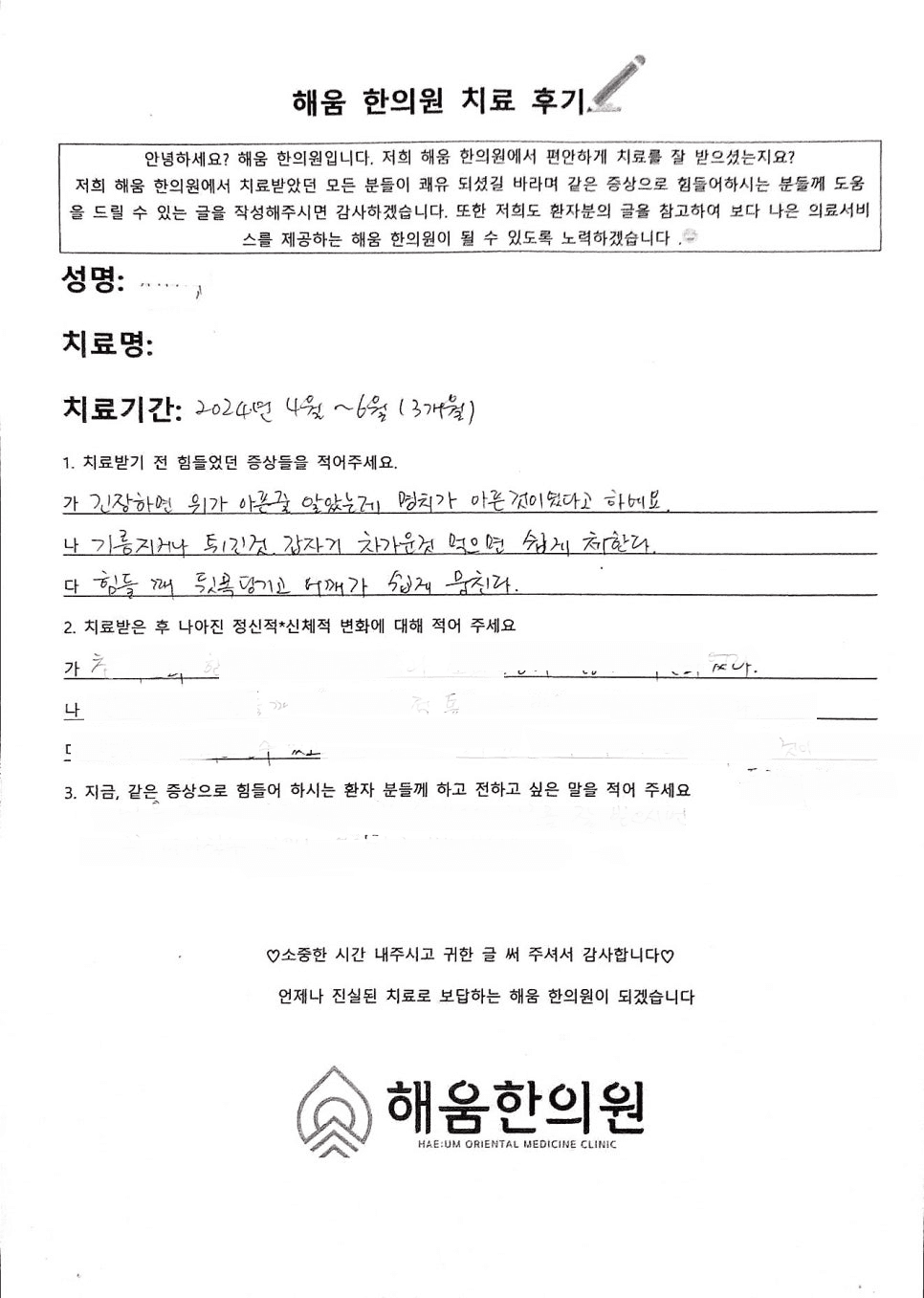
소화불량두통, 체할까 봐 항상 조심스러웠던 마음이 이제는 편해졌어요
2026. 01. 05.
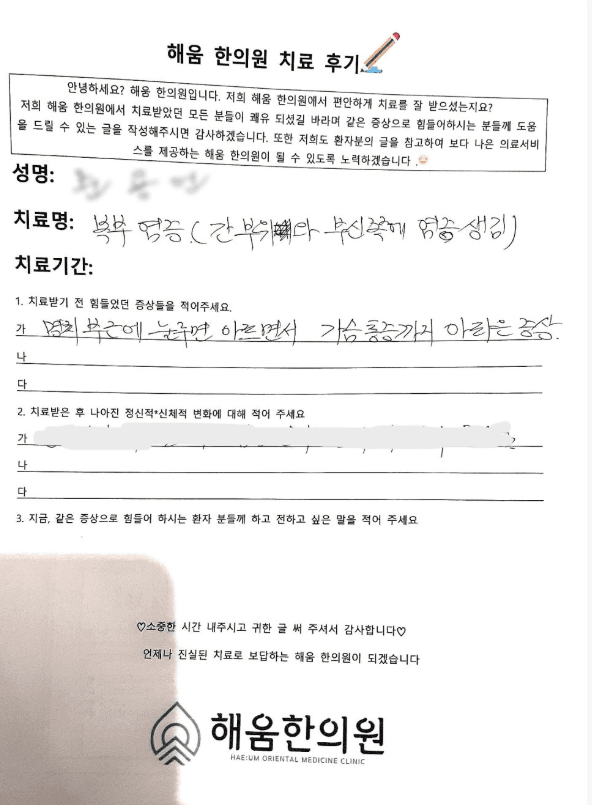
검사에선 이상 없다는데, 명치가 왜 계속 아플까요? 소화불량 명치통증 내시경 원인 치료
2025. 12. 16.
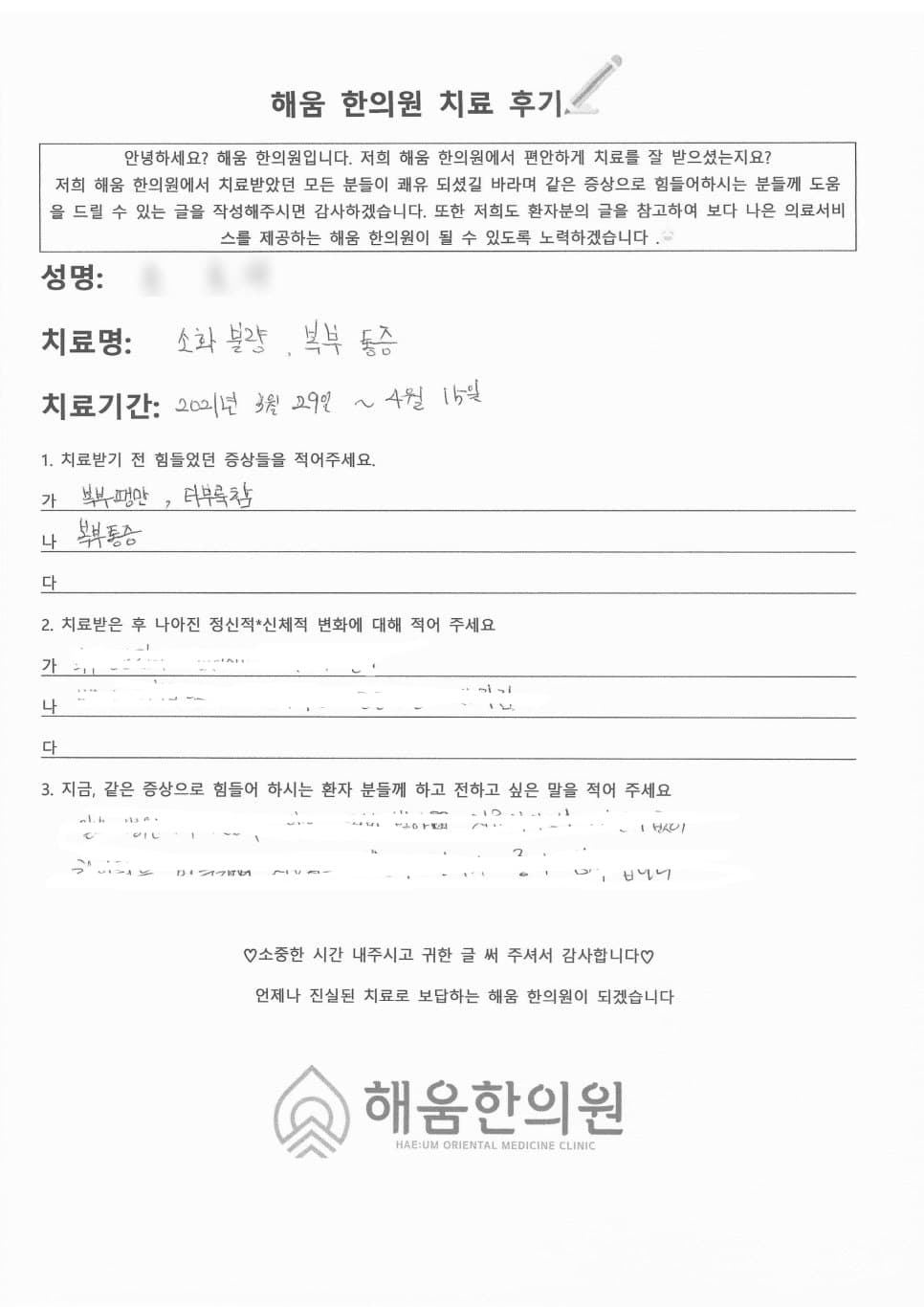
간이 너무 뚱뚱해도 소화불량이 올 수 있어요 갑작스러운 복부 팽만감, 체함, 소화불량 추나 침치료로 좋아진 사례
2025. 07. 17.
치료후기 25건 더 보기접기

갑상샘항진증 아급성갑상선염 치료 환자, 피로감 소화불량 고지혈증 완화 한약 2달간
2025. 01. 25.
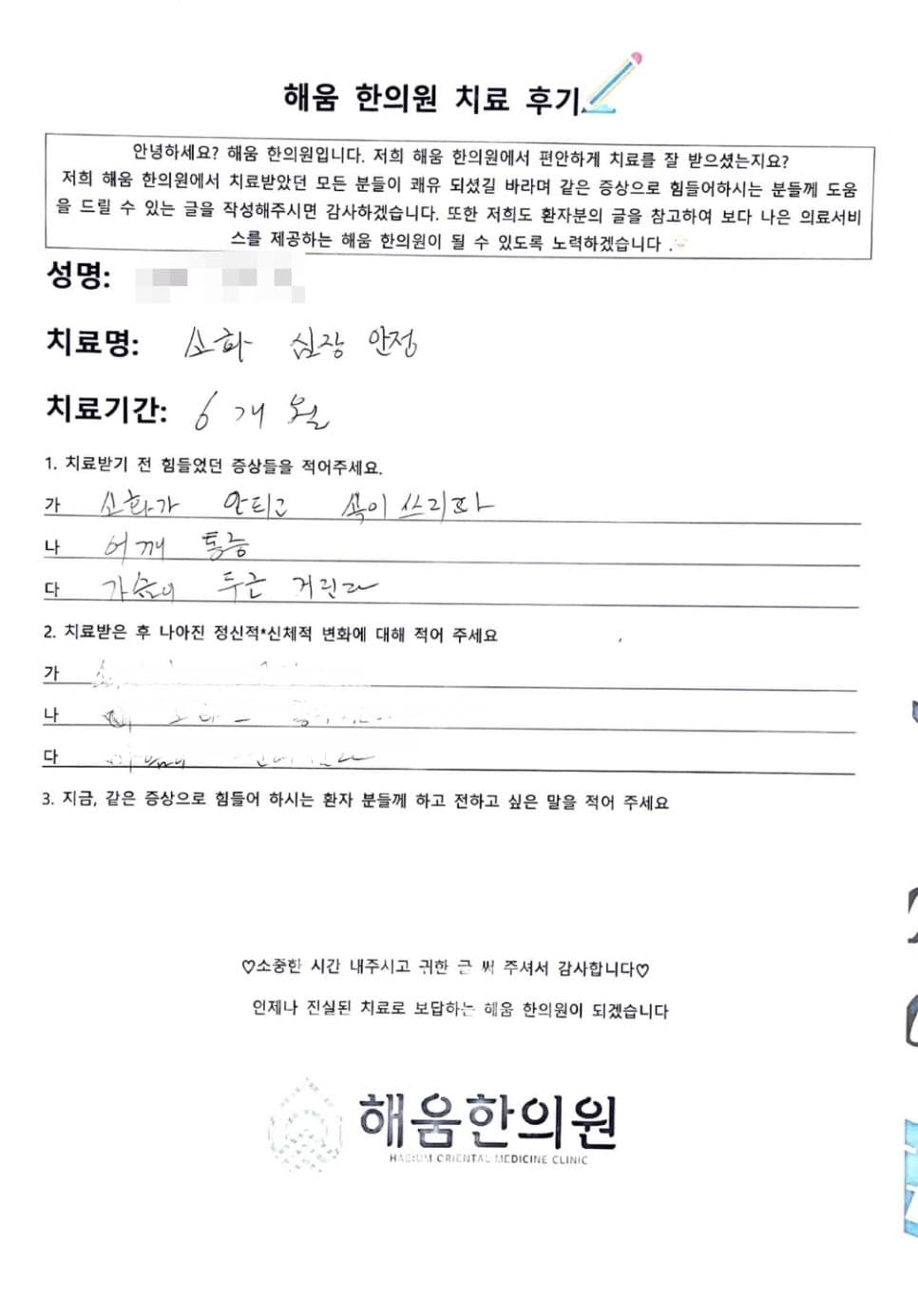
만성 위염, 장상피화생, 소화불량
2024. 06. 27.
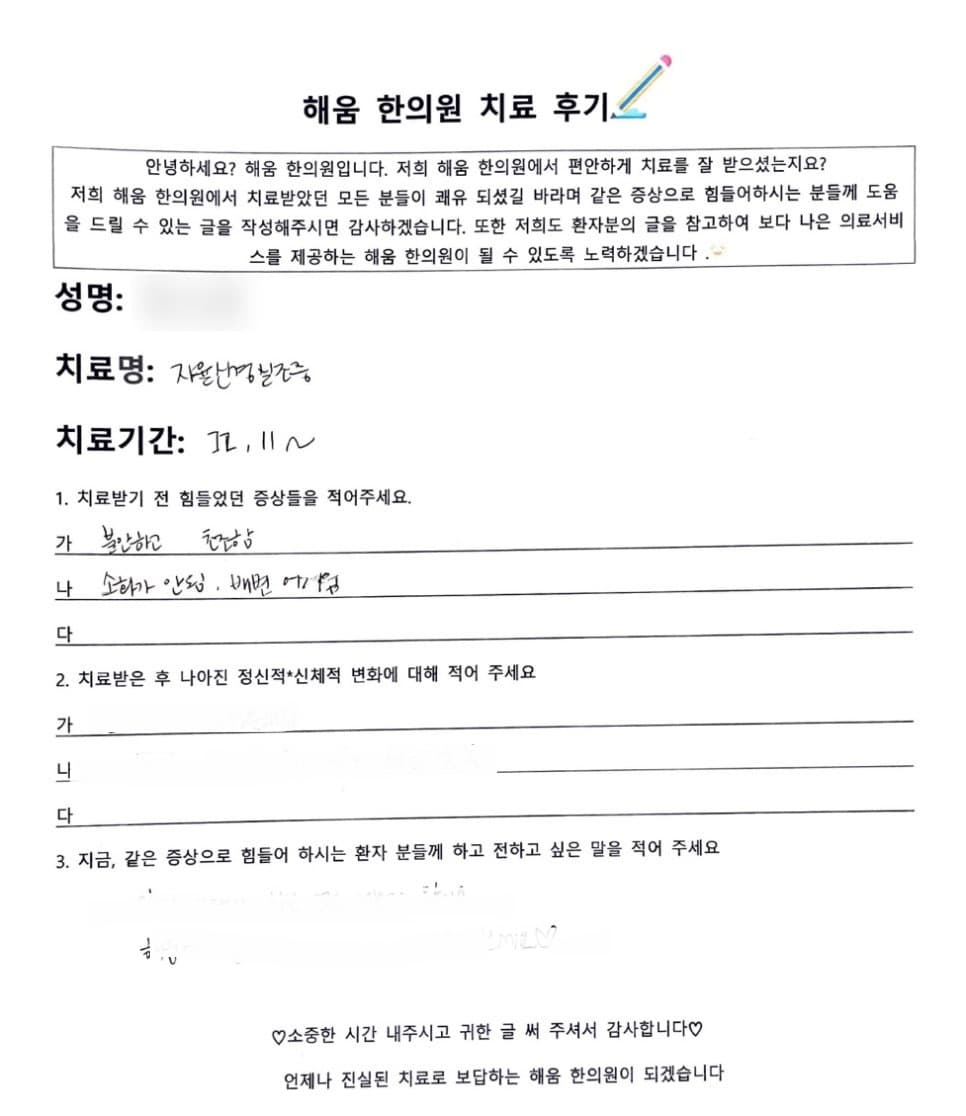
심한 변비 배아픔에 직빵, 소화불량 불안 불면 3개월
2024. 05. 02.
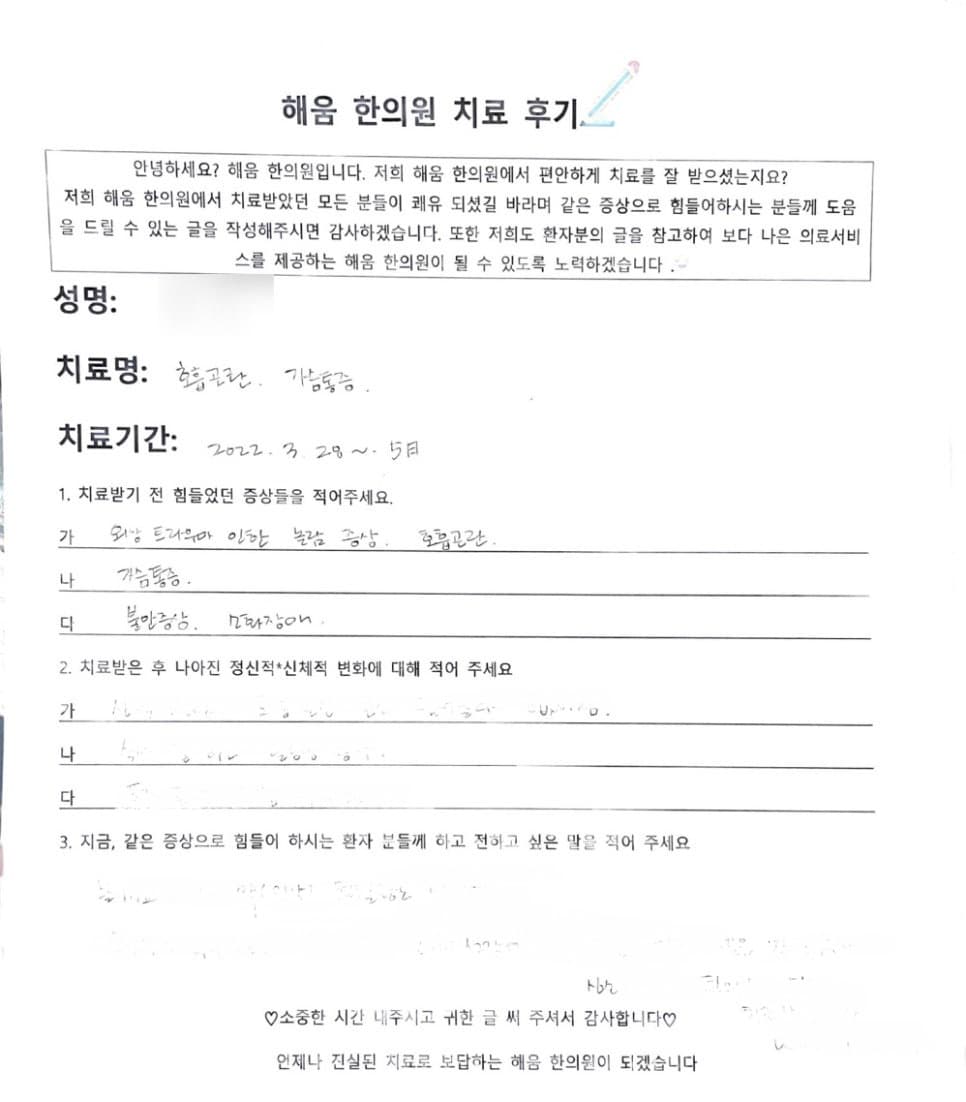
PTSD 외상후스트레스장애 증상으로 찾아온 초등학생, 한약 치료로 두근거림,호흡곤란,불안장애,소화불량이 좋아졌어요
2024. 05. 01.
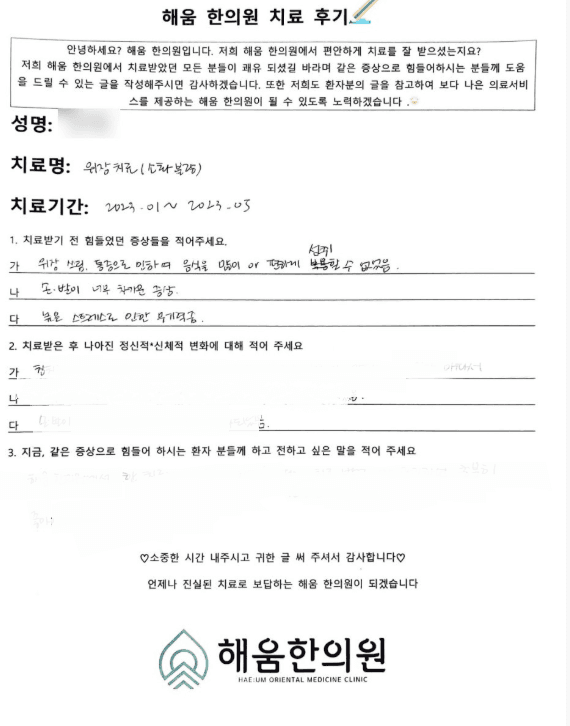
내시경 검사상 아무 문제 없는 속쓰림, 위경련 통증, 소화불량
2024. 04. 20.
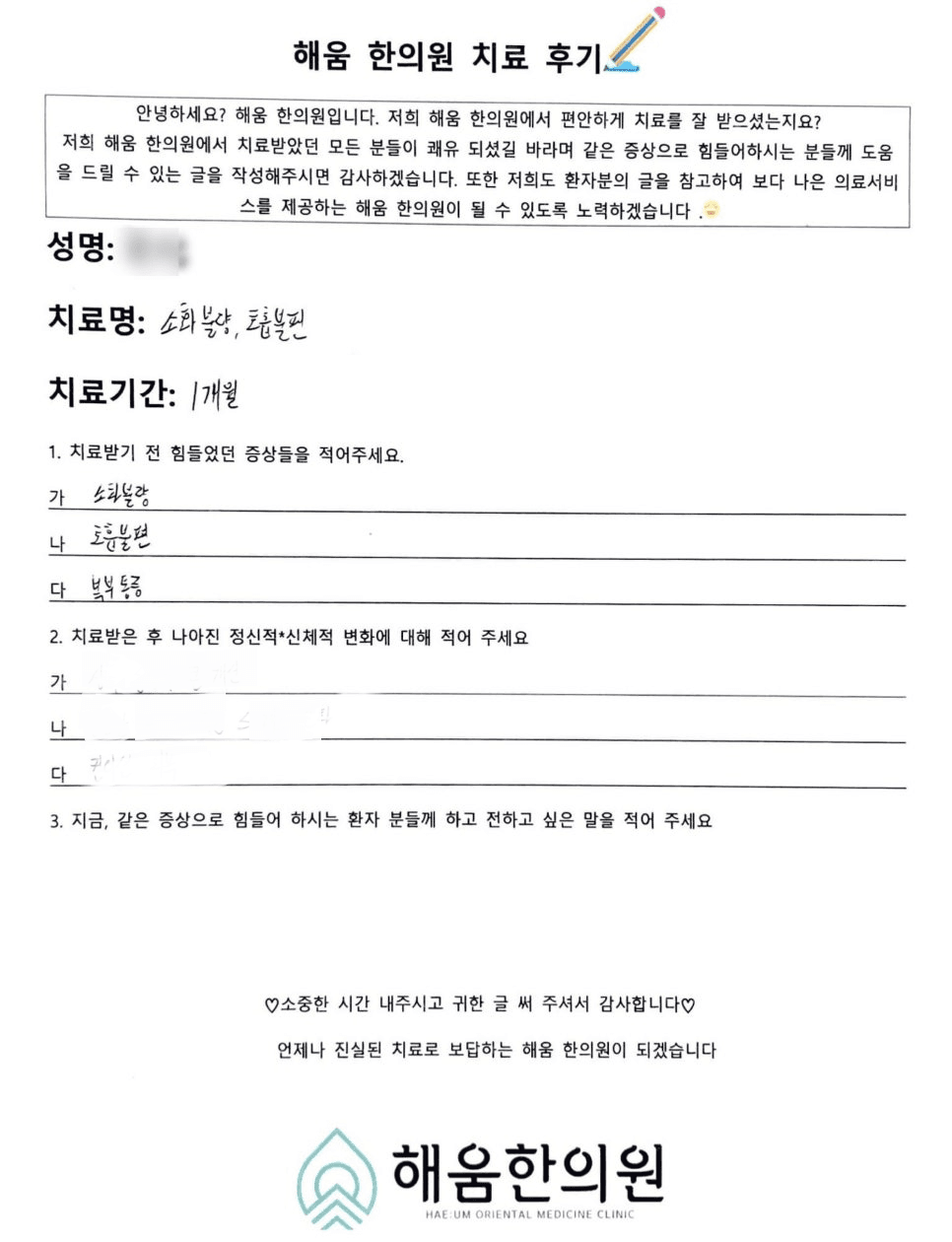
3개월간 고생한 옆구리통증 명치통증 호흡곤란 소화불량 1달만에
2022. 12. 29.
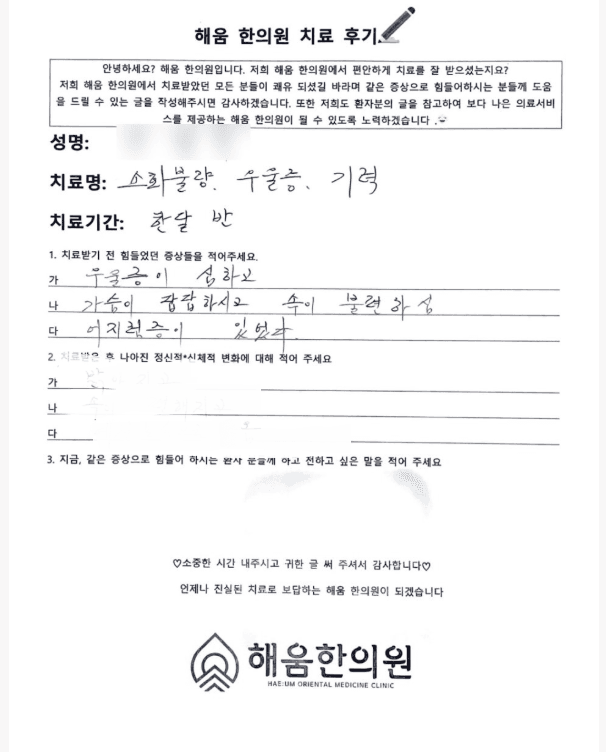
평생을 달고 살아온 소화불량, 노인 우울증 한약 1달반 먹고 좋아진 사례
2022. 08. 02.
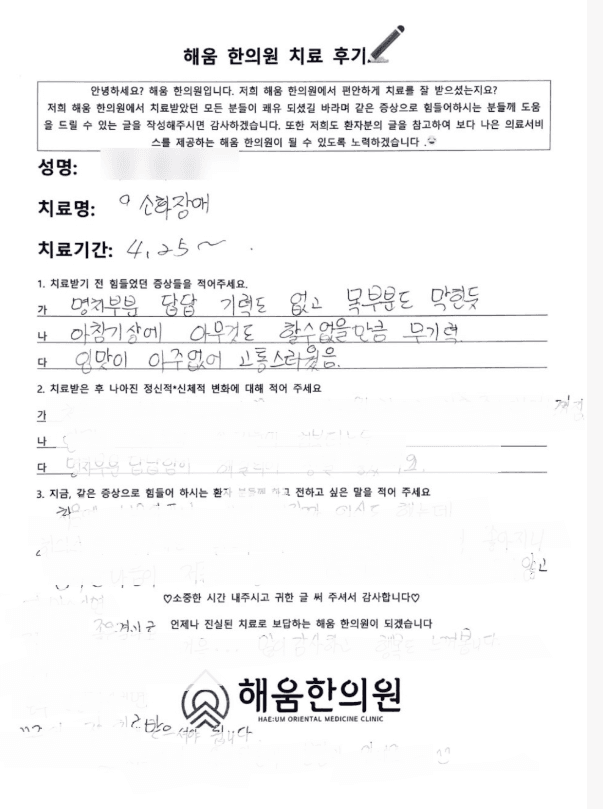
신경성소화불량? 담적병? 기능성위장장애? 원인을 못 찾던 위장병, 한약 1달
2022. 06. 03.
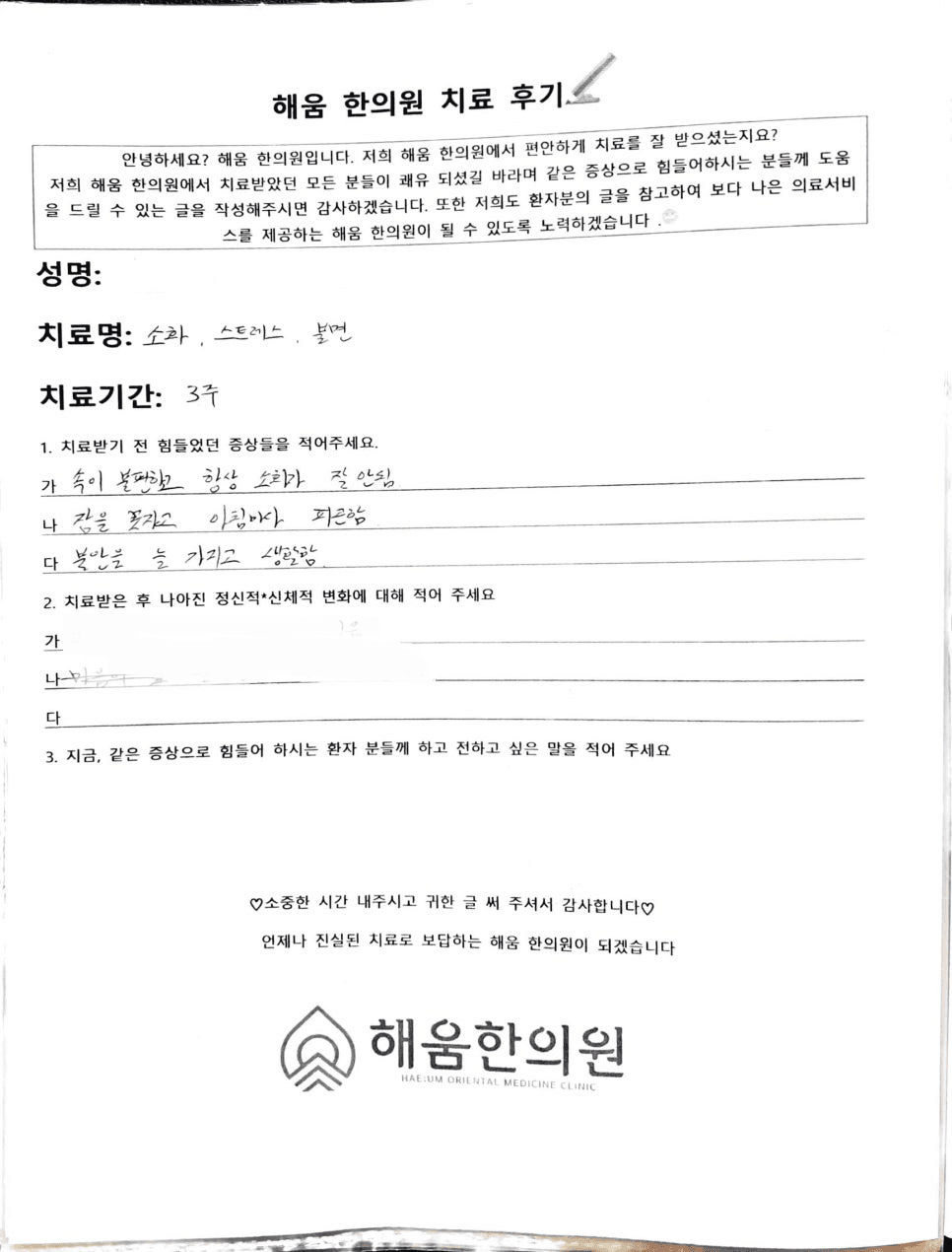
3주만에 좋아졌어요 스트레스로 인한 소화불량, 불면증
2022. 05. 19.
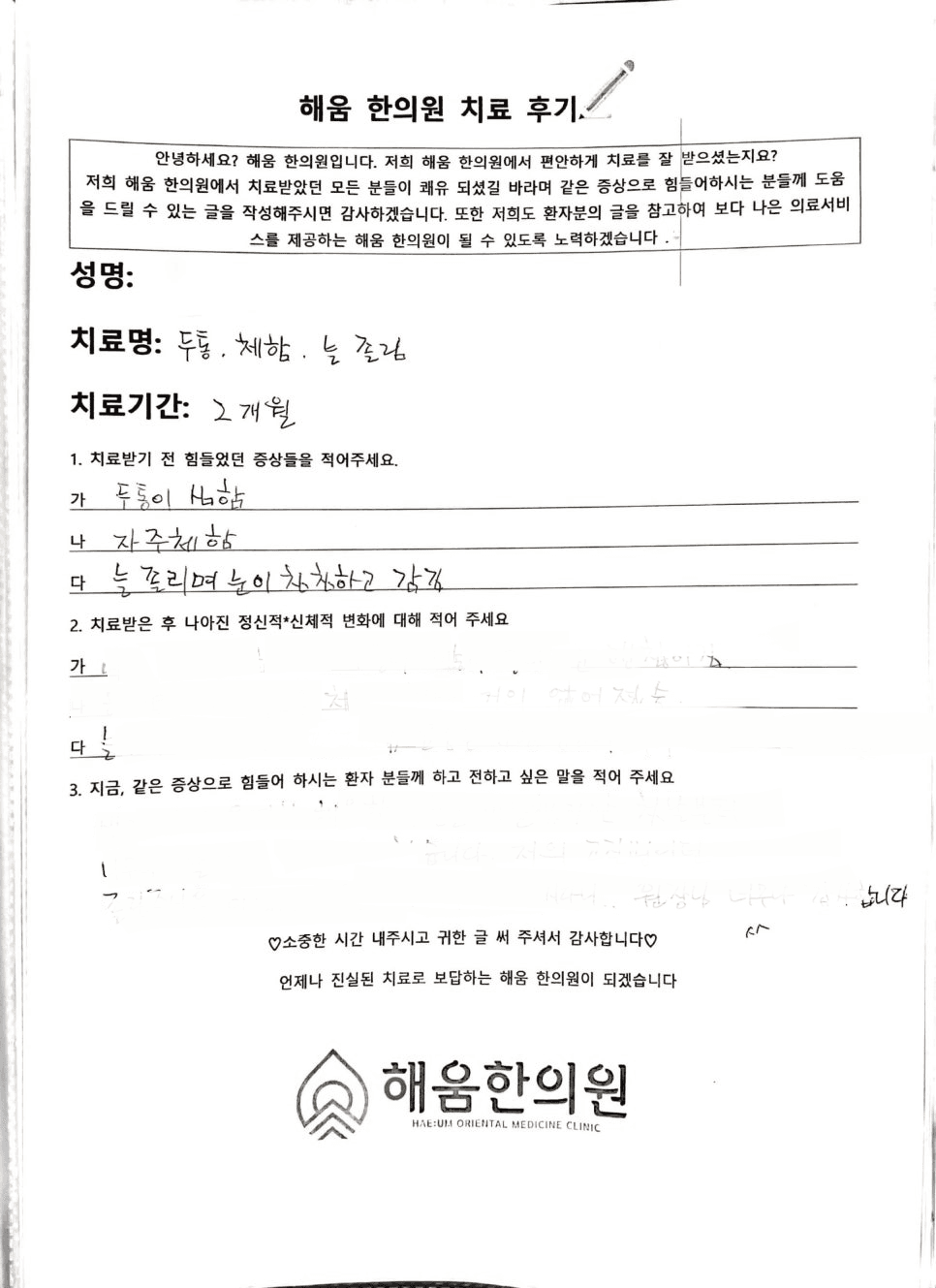
소화불량이 두통과 눈침침함을 유발하는 이유? 몇년 된 증상 2개월만에
2022. 05. 17.
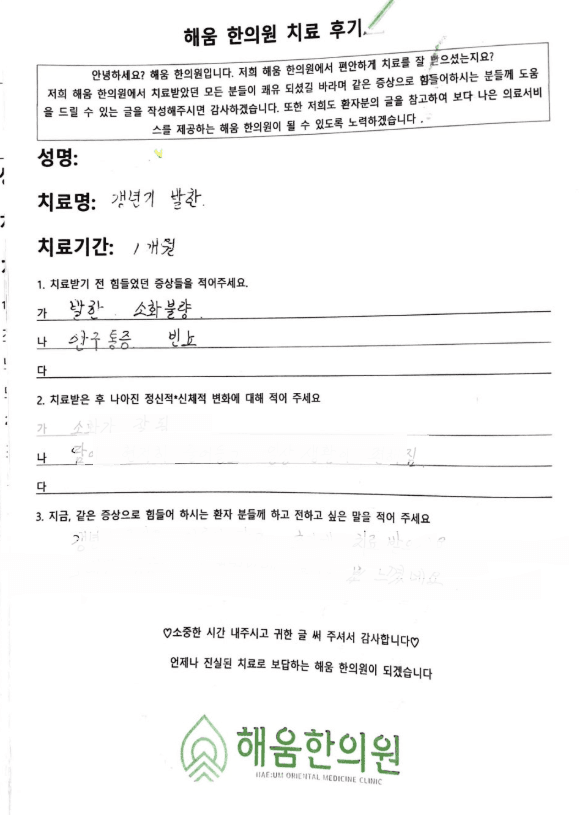
오래된 발한 식은땀 소화불량 한약 먹고 10일만에..?!
2022. 05. 12.
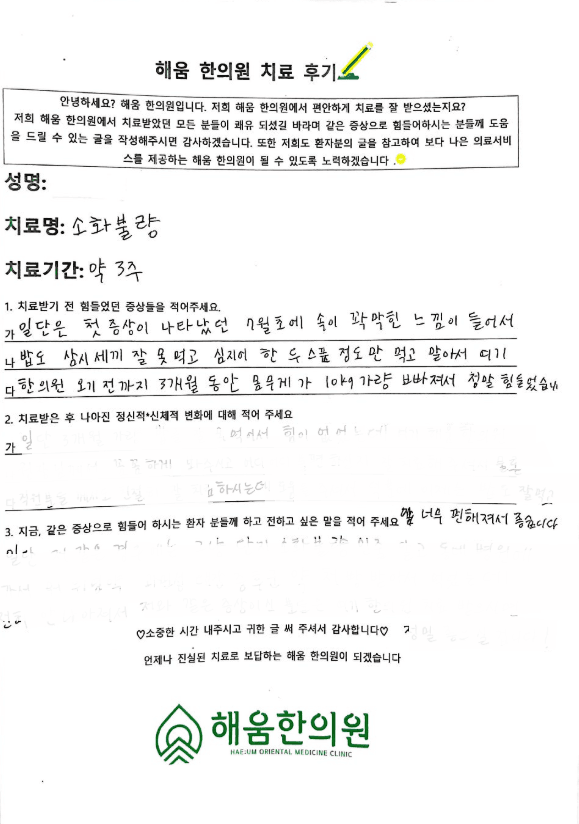
소화불량으로 3개월동안 10kg 빠져서 고생하신 환자분 한약 치료기
2022. 05. 12.
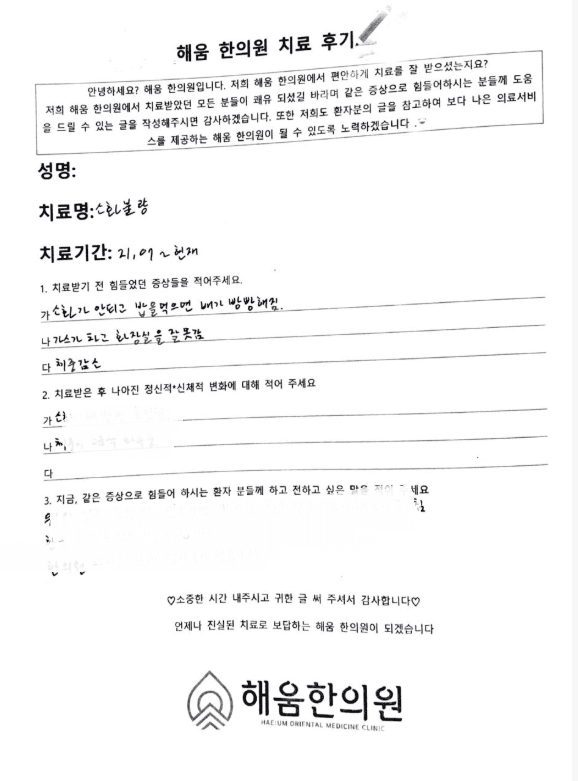
만성소화불량 체중감소
2022. 05. 10.
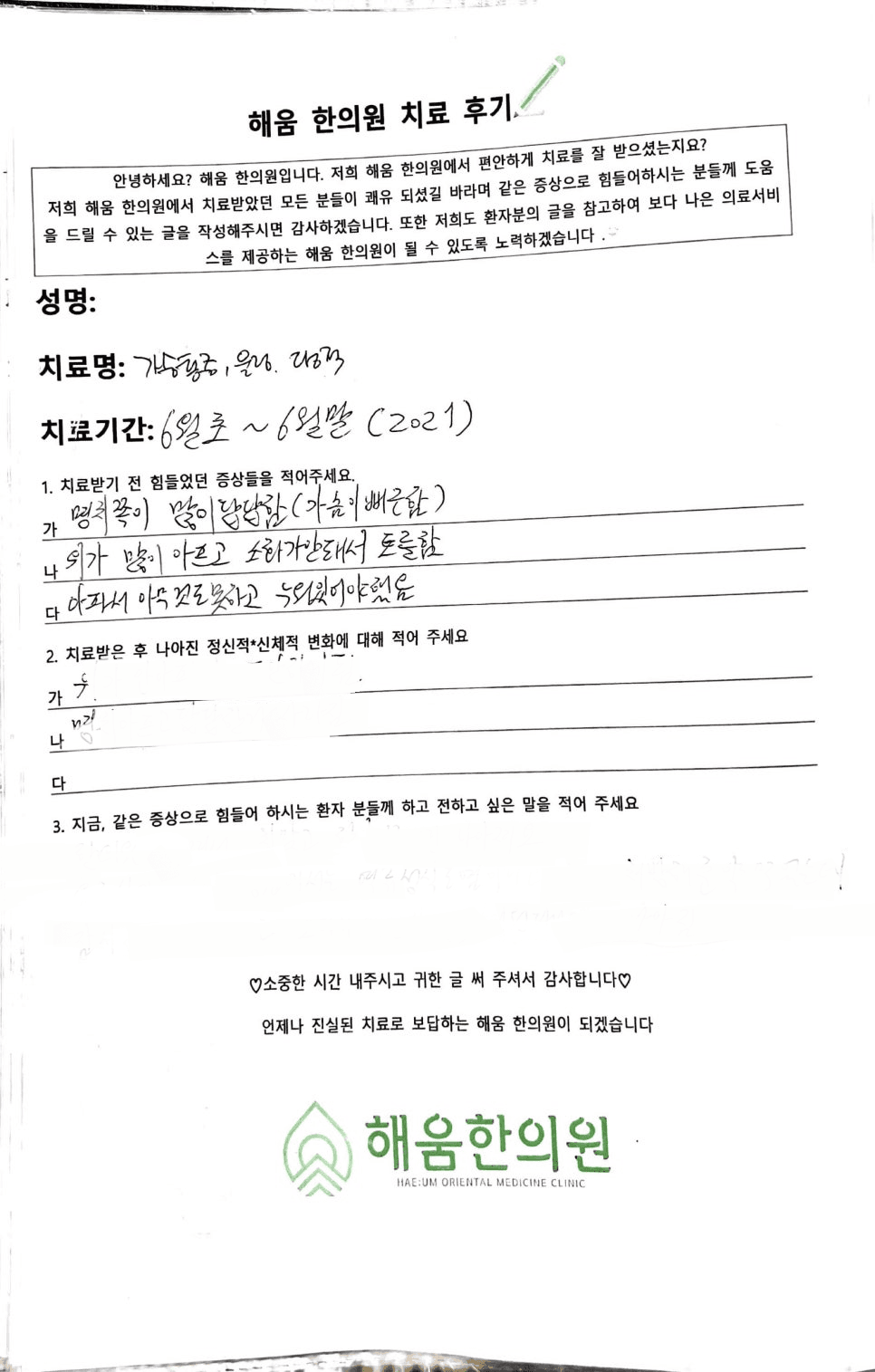
명치가 답답하고 뻐근한데 이거 가슴담적인가요?? 가슴통증,구토,소화불량 신정동한의원 치료후기
2022. 04. 15.
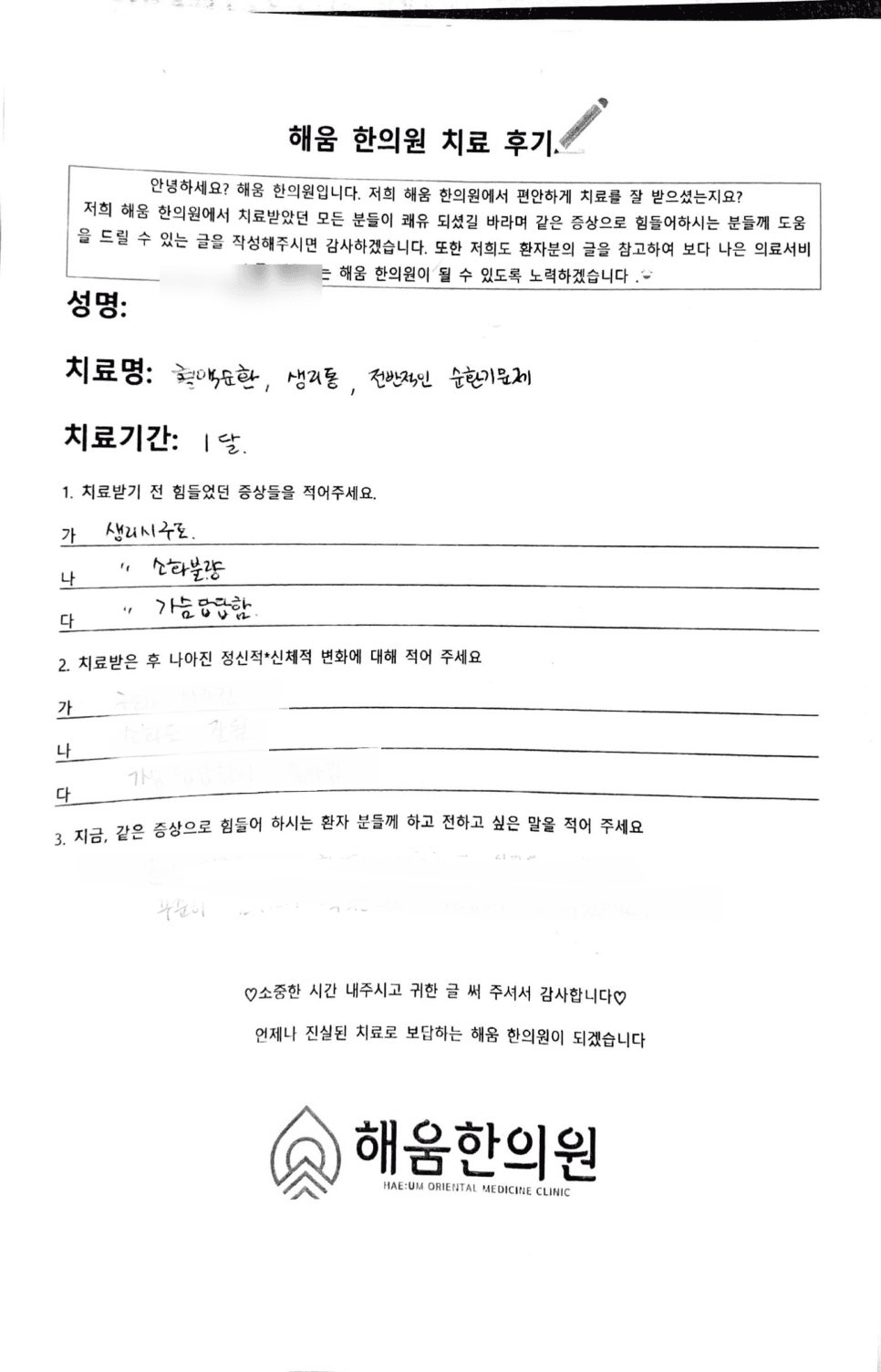
생리할때 구토, 소화불량, 가슴답답함으로 고생하셨던 환자분 1달만에 치료된 사례
2022. 03. 16.
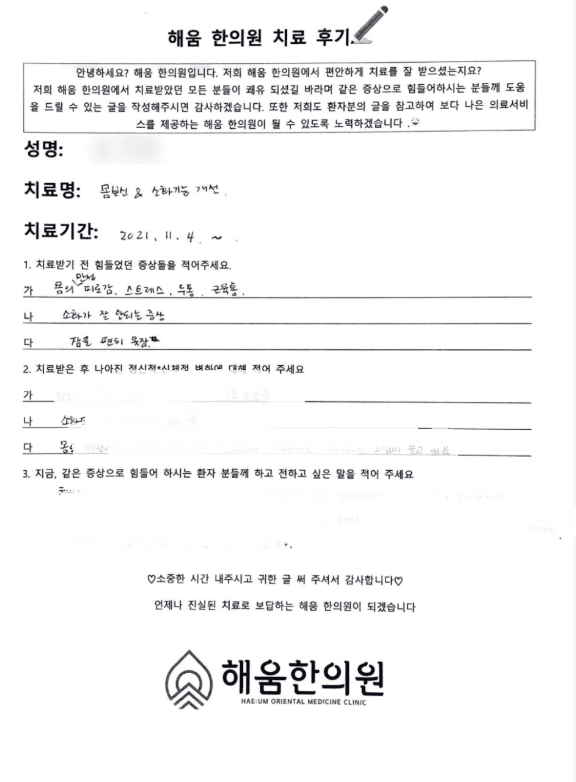
만성피로,소화불량,불면.. 사는게 피곤하셨던 환자분 보약 먹고 기운 차리신 얘기
2022. 03. 09.
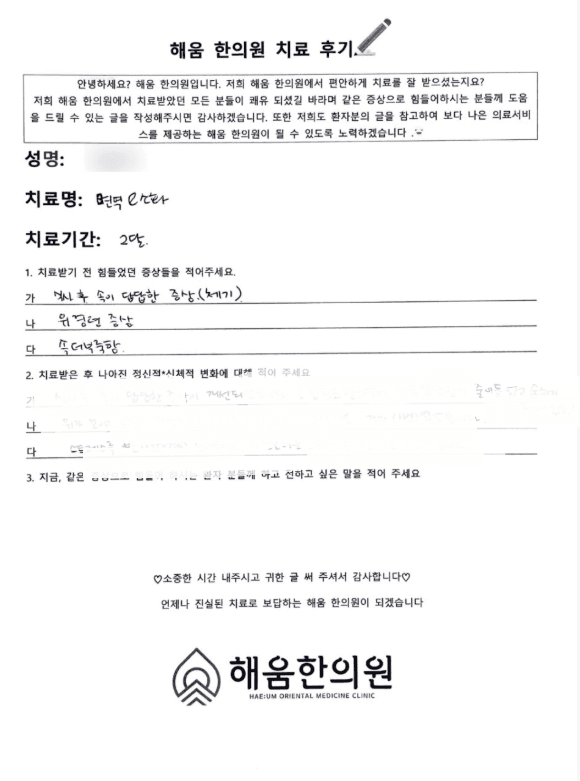
잔병치레를 달고 살던 환자분, 한약으로 소화불량 위경련 예민함 치료를 통해 좋아진 사례
2022. 03. 07.
생리시 구토, 헛구역질, 소화불량 으로 고생하는 여학생 한약 한달만에 좋아진 사례
2022. 03. 04.
응급실 다녀온 후 생긴 식사불가,호흡곤란,불면 으로 직장을 그만둘뻔했던 분 완치 사례
2021. 10. 29.
소화가 안되서 많이 먹지도 못하는데 비만이.. 붓기 빠지는 것만으로도 체중감량된 사례
2021. 10. 15.
10년 이상 된 소화불량, 무기력하고 우울하던 인생이 바뀌었다는 환자분의 한약 치료 후기
2021. 07. 30.
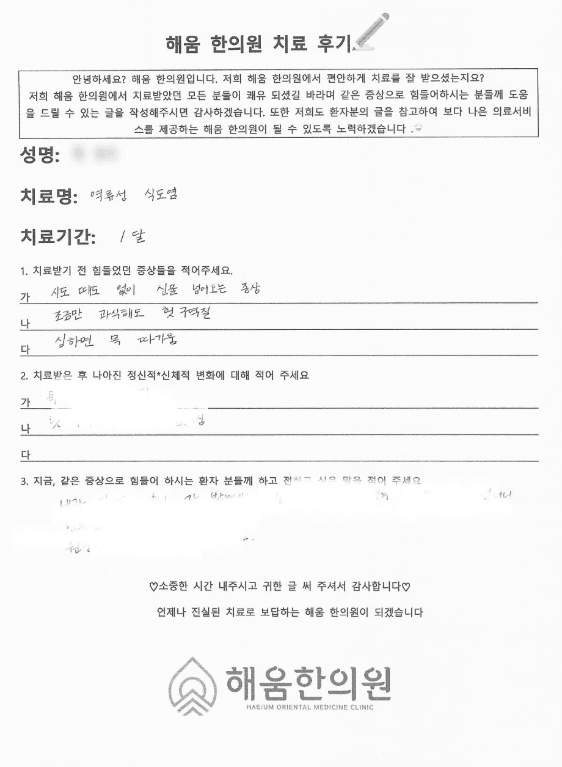
내과약이 효과없던 소화불량으로 헛구역질과 신물로 고생하시던 환자 한약치료후기
2021. 07. 29.
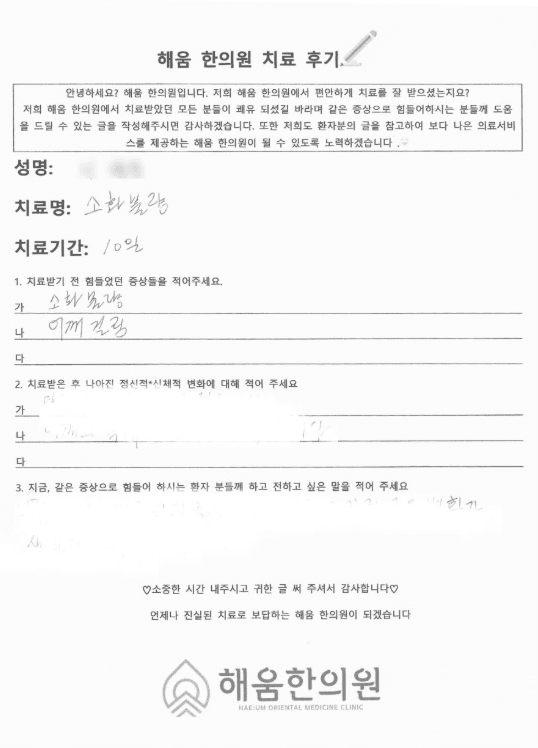
내시경상 원인을 모르는 소화불량 약침 추나치료 3번만에 완쾌한 후기
2021. 07. 16.
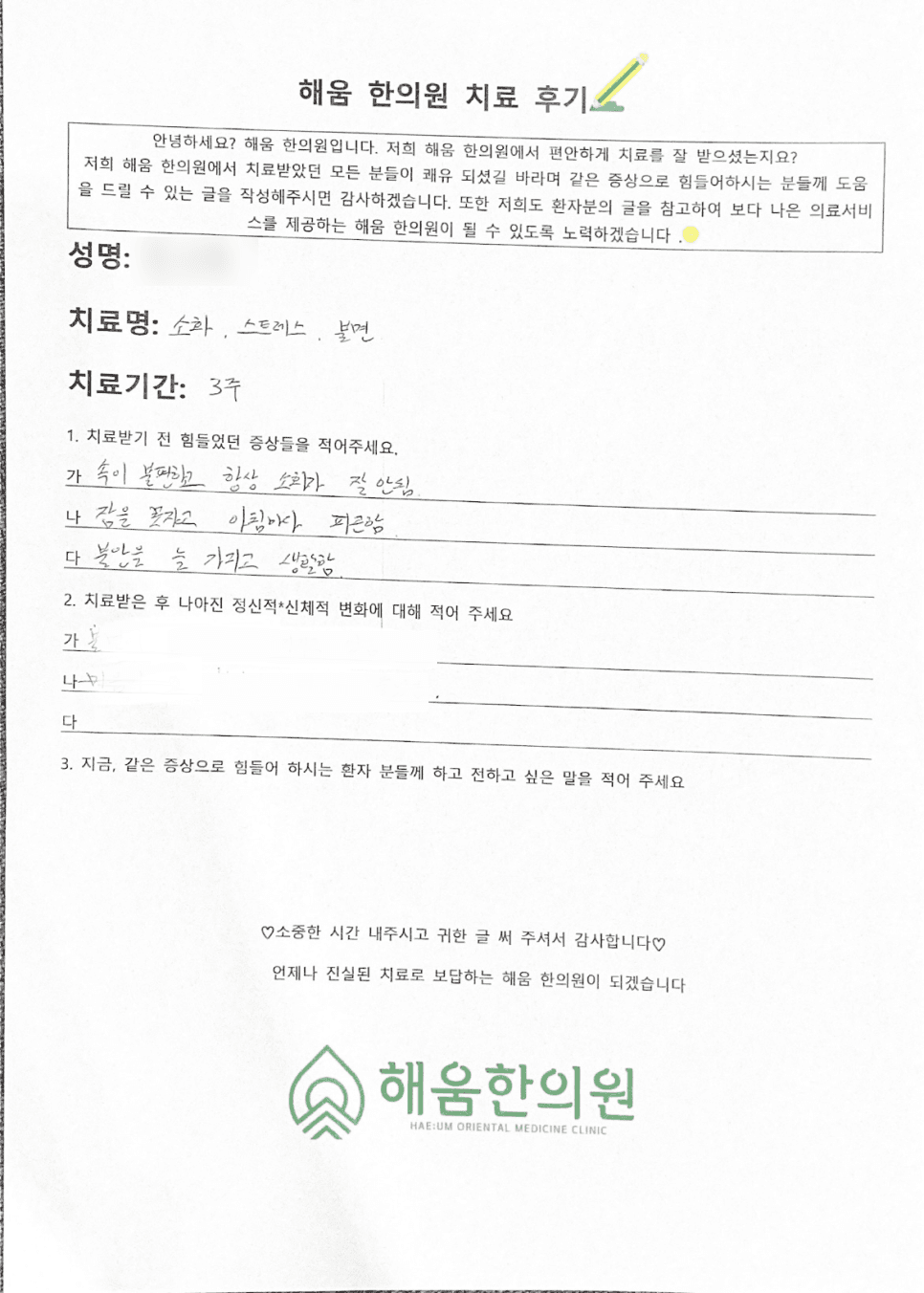
코로나 백신 후유증으로 생긴 불면, 불안, 소화불량, 이명
2021. 01. 14.

속이 메스꺼울때 약 먹어도 효과없었던 환자분 해움한의원 치료 후기
2020. 11. 20.
다른 증상으로 내원하신 분들의 후기 중 ‘소화불량’이 증상으로 함께 언급된 기록
- 입대 전 갑자기 발생한 과민성대장증후군, 한의원에서 치료가 될까요?2026. 06. 01.
- 코로나 백신 맞고 기억이 안날 때는? 머리가 멍해요. 코로나 브레인포그 후유증 브레인포그 극복 혈관성 치매 한의원 후기2026. 05. 04.
- 시험만 보려고 하면 배가 아프고 설사하고 심장이 두근거려요2026. 01. 19.
- 직장 스트레스와 과로로 악화된 편두통·삼차신경통 환자2026. 01. 06.
- 스트레스로 인한 자율신경 문제가 불러온 화병, 불면증2024. 06. 28.
- 치료 안 돼서 고생하던 과민대장증후군2024. 06. 06.
- 저혈압과 함께 어지러움이 심한 학생2024. 05. 22.
- 속이 메스꺼울때 약 먹어도 효과없었던 환자분 해움한의원 치료 후기2024. 04. 25.
- 아내와 사별후 찾아온 갑자기 가슴두근거림 손발저림 어지러움증2023. 12. 22.
- 생리전증후군인가요? 진통제를 하루 8알씩.. 심각한 생리통 편두통 변비 한약 먹고 좋아진 사례2023. 12. 13.
나머지 13건 더 보기접기
- 스트레스인지 코로나후유증인지.. 왼쪽가슴통증손저림 만성피로 염증 한 방에!2023. 01. 18.
- 코로나 후유증으로 구토 미식거림 두통 어지러움 연하장애로 고생하신 노인 환자분2023. 01. 03.
- 스트레스성 공황장애 초기증상 한약 치료사례: 공황발작과 공황장애의 차이2022. 12. 27.
- 이유 모르게 토하고 배가 부글거리고 구토 증상2022. 07. 30.
- 심박수가 120까지.. 코로나 확진 후 두근거림 숨이차고 소화가 안 되었는데 한약치료로 좋아졌어요2022. 06. 02.
- 선생님 덕분에 수능 너무 잘봤어요!! 수험생 피로보약,과민대장증후군2022. 05. 13.
- 한약 치료 왈칵왈칵 역류하는 위산으로 목구멍이 아프고 따갑던 환자 이야기2022. 03. 30.
- 소화도 안되고 손발도 차고 생리통도 심하고.. 마르고 허약한 여자분 체질개선 치료기2022. 03. 25.
- 이게 담적인가요? 위내시경 후유증으로 명치 가슴이 답답하고 딱딱하게 만져지는 환자분 한약 1달 치료기2021. 11. 24.
- 코로나백신 맞고 가슴쪽으로 열감이 돌아다니고 소화가 안되기 시작한 환자, 침 및 추나로 호전된 사례2021. 11. 18.
- 화이자 백신 맞고 호흡곤란, 가슴통증으로 고생하신 분 3주만에 완쾌 사례2021. 10. 28.
- 애기때부터 시작한 만성변비와 여드름 치료사례, 장건강이 피부건강에 얼마나 중요하냐면요2021. 10. 28.
- 어떤 검사로도 원인을 알 수 없던 호흡곤란과 역류성식도염 한방 치료후기2021. 07. 19.
소화불량, 누가 진료하나요?
담당 의료진
대표원장 박재은

“병이 아니라 그 뒤의 사람을 봅니다”
경희대학교 한의과대학에서 석사·박사 과정을 마쳤습니다. 심리상담사 1급 자격과 4만 건 이상의 한약 처방 경험을 바탕으로 진료합니다.
의료진 소개 더보기소화불량, 자주 묻는 질문
내시경에서 이상이 없는데 왜 계속 속이 불편한가요?
위장약을 계속 먹어도 괜찮을까요?
담적이 무엇인가요?
어떤 음식을 조심해야 하나요?
치료 기간은 얼마나 걸리나요?
"신경성"이라고 하는데 정신과에 가야 하나요?
해움한의원에서 소화불량을 진료하나요?
소화불량으로 내원하려면 어떻게 하나요?
소화불량에 관해 알아두면 좋은 정보
14건소화불량과 관련해 정리한 건강정보입니다.
위가 쓰릴때와 위가 더부룩할때, 검사 이상 없는데 왜 계속될까요?
식사만 하면 속이 답답하고 더부룩하다면 단순한 소화불량이 아닐 수도 있습니다"조금만 먹어도 배가 금방 부른 것 같아요.""식사 후에는 항상 위가 꽉 막힌 느낌이 듭니다.""내시경은 정상이라는데 속은 계속 쓰리고 답답

위염에좋은과일과 위염에좋은차, 내 위 상태에 맞게 먹어야 합니다
속이 쓰리고 더부룩할 때 가장 먼저 찾게 되는 음식식사를 조금만 많이 해도 속이 더부룩합니다.아침에 일어나면 명치가 답답하고, 공복에는 속이 쓰린데 막상 밥을 먹으면 또 소화가 잘되지 않습니다.처음에는 단순한 소화불

명치복통이 반복된다면 소화불량만 의심하지 마세요
명치복통, 단순한 체증으로 넘겨도 될까요?"명치가 꽉 조이는 것처럼 아파요.""식사 후마다 명치복통이 심해집니다.""혹시 췌장에 문제가 생긴 것은 아닐까 걱정됩니다."명치 부위에 통증이 생기면 대부분 체했거나 위염

먹기만 하면 소화가 안 돼요, 검사까지 정상이라면 무엇을 살펴봐야 할까요?
밥을 먹는 일이 어느 순간 부담이 되기 시작했다면“조금밖에 안 먹었는데 벌써 배가 꽉 찬 것 같아요.”“점심에 먹은 음식이 저녁까지 그대로 남아 있는 느낌이에요.”“먹기만 하면 소화가 안 돼요. 그런데 검사에서는 별
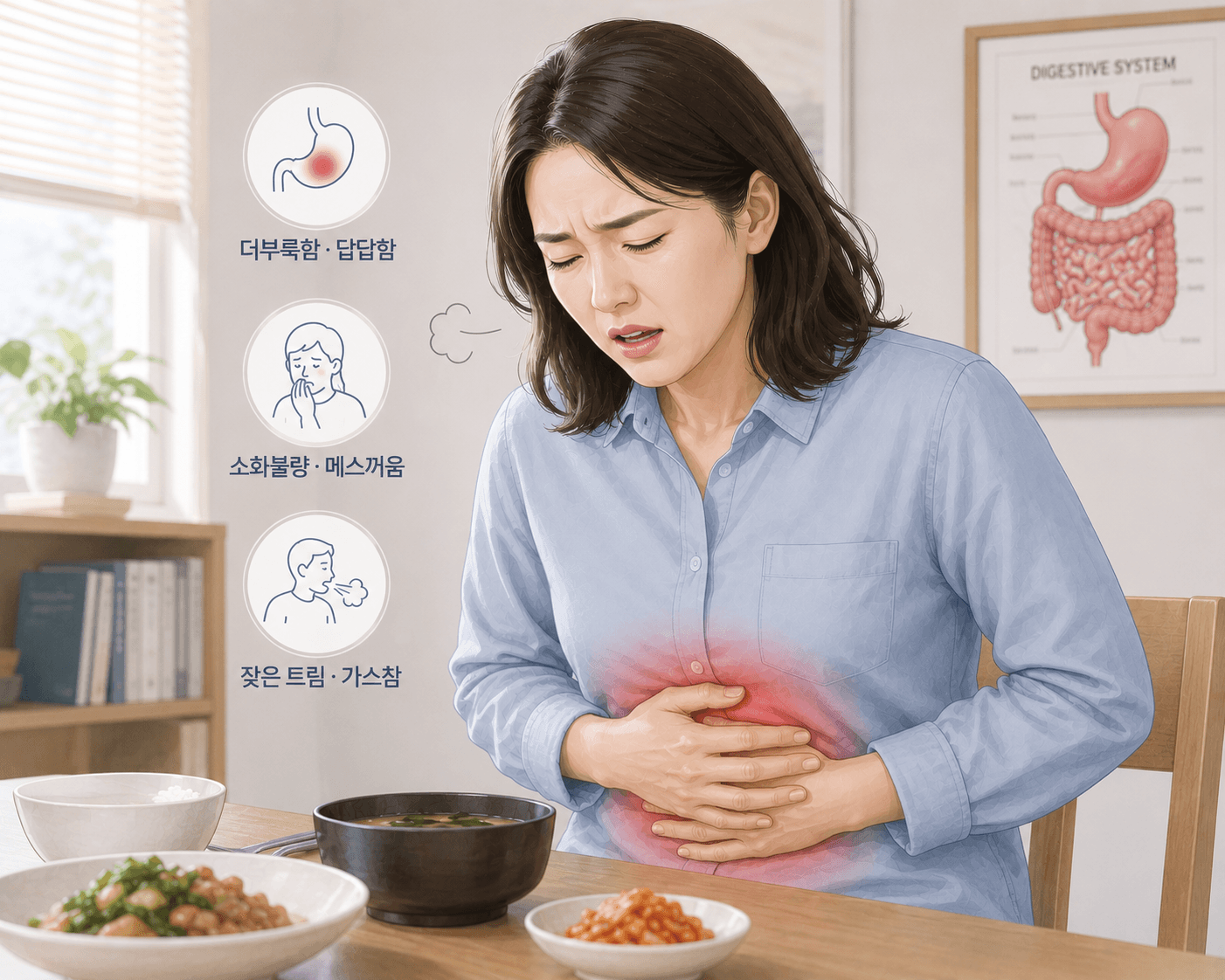
기능성소화불량 완치 가능할까? 반복되는 더부룩함의 원인부터 살펴보세요
조금만 먹어도 배가 꽉 찬 것처럼 답답하다면분명 많이 먹은 것도 아닌데 식사를 조금만 하면 금세 배가 꽉 찬 것처럼 느껴지고, 한참이 지나도 음식이 내려가지 않는 듯 답답할 때가 있습니다.트림이 계속 나오거나 가스가
두근거림부터 소화불량까지... 모두 자율신경계이상질환 때문일 수 있습니다
검사에서는 이상이 없다는데, 몸은 계속 불편하신가요?머리는 무겁고, 심장은 이유 없이 두근거립니다.조금만 움직여도 어지럽고, 소화는 잘되지 않으며 잠도 깊게 들지 못합니다.병원을 찾아 심장검사와 혈액검사, 위내시경,

명치가 너무 아파요..소화제만 먹기 전에 꼭 확인해야 할 원인들
“명치가 너무 아파요” 갑자기 이런 통증이 시작됐다면가슴과 배가 만나는 한가운데가 꽉 막힌 것처럼 답답하고, 안쪽에서 조이는 듯한 통증이 반복되는 분들이 있습니다.처음에는 “체했나?”라고 생각하기 쉽습니다.실제로 명

생리통 속쓰림 반복된다면? 소화불량과 메스꺼움이 생기는 이유
생리통 속쓰림, 아랫배뿐 아니라 위장까지 불편한 이유생리 기간만 되면 아랫배가 아픈 것도 힘든데, 속까지 쓰리고 메스꺼워 식사조차 어려운 분들이 있습니다.평소에는 소화가 잘되다가도 생리가 시작될 무렵이면 갑자기 속이

생리전소화불량 치료방법, 소화제를 먹어도 답답하다면?
생리전소화불량, 생리만 다가오면 속이 더부룩해지는 이유평소에는 식사를 잘하다가도 생리 날짜가 가까워지면 유독 속이 더부룩하고 소화가 잘되지 않는 분들이 있습니다.음식을 조금만 먹어도 배가 빵빵해지는 느낌이 들고, 평

기능성소화불량정신과, 스트레스와 소화불량의 연결고리를 찾아야 합니다
소화가 안 되는 것도 힘든데, 마음까지 지쳐가고 있지는 않으신가요?식사를 해도 속이 편하지 않습니다.조금만 먹어도 금세 배가 부르고, 하루 종일 더부룩함이 이어집니다.병원 검사를 받아도 특별한 이상은 없다는 이야기를

소화불량 침 맞아도 다시 불편하다면, 위만 보고 있지 않았나요?
“조금만 먹어도 배가 꽉 찬 것 같아요.”“몇 시간이 지나도 음식이 그대로 남아 있는 느낌이에요.”“내시경에서는 괜찮다는데 저는 계속 불편해요.”소화가 안 되면 처음에는 음식 탓을 합니다.기름진 걸 먹었나, 너무 빨
명치끝통증 원인, 위장 문제와 자율신경 균형을 함께 봐야 하는 이유
명치가 콕 아플 때, 그냥 체한 걸까요?명치 끝이 콕 찌르듯 아프거나,타는 듯 쓰리고 답답한 느낌이 들면대부분 먼저 “체했나?” 하고 생각합니다.그런데 명치 끝통증은단순 소화불량만으로 나타나는 증상이 아닐 수 있습니

생리전속울렁, 단순 소화불량이 아니라 PMS 증상일 수 있습니다
생리 전만 되면 속이 울렁거리고 몸이 달라지는 느낌생리 날짜가 가까워질수록속이 메스껍고 울렁거리며,음식을 먹어도 편하지 않고괜히 토하면 나아질 것 같은 느낌이 들 때가 있습니다.가임기 여성에게 월경은한 달에 한 번

조금만먹어도배부름, 소화 문제가 아니라 자율신경 문제일 수 있습니다
“분명 많이 먹지 않았는데, 왜 이렇게 답답할까요?”“밥을 몇 숟갈 안 먹었는데 벌써 배가 꽉 찬 느낌이에요.”“조금만 먹어도 더부룩하고, 소화가 안 되는 것 같아요.”혹시 이런 경험, 반복되고 있지 않으신가요?처음

소화불량, 질문 있어요
5건환자분들이 남긴 온라인 상담 질문과 의료진 답변입니다.
이런 경우에는 내시경 등 검사를 먼저 받으세요
아래 위험 신호가 있다면 단순한 소화불량이 아닐 수 있습니다. 소화기내과 진료와 내시경 같은 검사를 먼저 받으시고, 피를 토하거나 검은 변을 본다면 바로 응급실로 가세요.
- 피를 토하거나 커피 찌꺼기 같은 것을 토했다, 또는 검은 변이나 피가 섞인 변을 봤다
- 일부러 빼지 않았는데 체중이 눈에 띄게 줄었다
- 음식을 삼키기 어렵거나 삼킬 때 아프다
- 먹으면 계속 토한다
- 60세 이상에서 소화불량이 새로 생겼거나, 가족 중 위암 환자가 있다
참고문헌 9편
[1]Ford AC, Marwaha A, Sood R, Moayyedi P. Global prevalence of, and risk factors for, uninvestigated dyspepsia: a meta-analysis. Gut. 2015;64(7):1049-1057. doi:10.1136/gutjnl-2014-307843. PMID: 25147201.
요약 전 세계 100개 집단, 31만 2천여 명을 분석한 메타분석입니다. 검사 전 단계의 소화불량 유병률은 20.8%로 성인 5명 중 1명꼴이었고, 나라에 따라 1.8~57.0%까지 차이가 났습니다. 여성, 흡연자, 소염진통제(NSAID) 복용자, 헬리코박터 감염자에게서 더 흔했습니다.원문은 출판사 저작권 자료로, 위 링크에서 확인하실 수 있습니다.
[2]Miwa H, Nagahara A, Asakawa A, Arai M, Oshima T, Kasugai K, et al. Evidence-based clinical practice guidelines for functional dyspepsia 2021. J Gastroenterol. 2022;57(2):47-61. doi:10.1007/s00535-021-01843-7. PMID: 35061057.
초록 (Abstract)
Background: Functional dyspepsia (FD) is a disorder that presents with chronic dyspepsia, which is not only very common but also highly affects quality of life of the patients. In Japan, FD became a disease name for national insurance in 2013, and has been gradually recognized, though still not satisfactory. Following the revision policy of Japanese Society of Gastroenterology (JSGE), the first version of FD guideline was revised this time.
Method: Like previously, the guideline was created by the GRADE (grading of recommendations assessment, development and evaluation) system, but this time, the questions were classified to background questions (BQs, 24 already clarified issues), future research questions (FRQs, 9 issues cannot be addressed with insufficient evidence), and 7 clinical questions that are mainly associated with treatment.
Results and Conclusion: These revised guidelines have two major features. The first is the new position of endoscopy in the flow of FD diagnosis. While endoscopy was required to all cases for diagnosis of FD, the revised guidelines specify the necessity of endoscopy only in cases where organic disease is suspected. The second feature is that the drug treatment options have been changed to reflect the latest evidence. The first-line treatment includes gastric acid-secretion inhibitors, acetylcholinesterase (AChE) inhibitors (acotiamide, a prokinetic agent), and Japanese herbal medicine (rikkunshito). The second-line treatment includes anxiolytics /antidepressant, prokinetics other than acotiamide (dopamine receptor antagonists, 5-HT4 receptor agonists), and Japanese herbal medicines other than rikkunshito. The patients not responding to these treatment regimens are regarded as refractory FD.
원문 발췌 · Miwa H, Nagahara A, Asakawa A, Arai M, Oshima T, Kasugai K, Kamada K, Suzuki H, Tanaka F, Tominaga K, Futagami S, Hojo M, Mihara H, Higuchi K, Kusano M, Arisawa T, Kato M, Joh T, Mochida S, Enomoto N, Shimosegawa T, Koike K, J Gastroenterol 2022 · CC BY 4.0 라이선스에 따라 수정 없이 인용했습니다(본문 속 인용 번호는 생략).
[3]Moayyedi P, Lacy BE, Andrews CN, Enns RA, Howden CW, Vakil N. ACG and CAG Clinical Guideline: Management of Dyspepsia. Am J Gastroenterol. 2017;112(7):988-1013. doi:10.1038/ajg.2017.154. PMID: 28631728.
요약 미국·캐나다 소화기학회의 소화불량 진료지침입니다. 60세 이상에서 소화불량이 생기면 위내시경으로 다른 질환을 먼저 확인하도록 권하고, 위암 위험이 높은 사람은 더 젊은 나이에도 내시경을 고려하도록 합니다. 내시경에서 이상이 없으면 기능성 소화불량으로 진단하며, 헬리코박터 치료, 위산억제제, 삼환계 항우울제, 위장운동촉진제 순으로 치료를 권합니다.원문은 출판사 저작권 자료로, 위 링크에서 확인하실 수 있습니다.
[4]Wang A, Liao X, Xiong L, Peng S, Xiao Y, Liu S, et al. The clinical overlap between functional dyspepsia and irritable bowel syndrome based on Rome III criteria. BMC Gastroenterol. 2008;8:43. doi:10.1186/1471-230x-8-43. PMID: 18808723.
초록 (Abstract)
Background: Epidemiological studies suggest considerable overlap between functional dyspepsia (FD) and irritable bowel syndrome (IBS). To date, no surveys have been performed to investigate the clinical overlap between these two disorders using Rome III criteria. Our aim was to investigate the prevalence and risk factors for the overlap of FD and IBS based on Rome III criteria in a large clinical sample.
Methods: Consecutive patients at the general gastroenterology outpatient clinic were requested to complete a self-report questionnaire. FD and IBS were defined by Rome III criteria.
Results: Questionnaires were returned by 3014 patients (52.8% female, 89% response rate). FD-IBS overlap was observed in 5.0% of the patients, while 15.2% and 10.9% of the patients were classified as FD alone and IBS alone, respectively. Compared with non-IBS patients, the odds ratio of having FD among IBS patients was 2.09 (95% CI: 1.68–2.59). Patients with FD-IBS overlap had higher severity scores for the postprandial fullness symptom (2.35 ± 1.49 vs. 1.72 ± 1.59, P < 0.001) and overall FD symptom (6.65 ± 2.88 vs. 5.82 ± 2.76, P = 0.002) than those with FD alone. The only independent risk factor for FD-IBS overlap vs. FD alone was the presence of postprandial fullness symptom (OR 2.67, 95% CI: 1.34–5.31).
Conclusion: Clinical overlap of FD and IBS according to Rome III criteria is very common. One risk factor for FD-IBS overlap is the presence of postprandial fullness symptom. This study provides clues for future pathophysiological studies of FD and IBS.
결과 (Results)
Sample characteristics: Of the 3379 eligible patients, 3014 patients completed questionnaires (response rate 89.2%). Overall, 47.2% (1422 patients) of the respondents were male with the mean (± s.d.) age of 43.2 (± 15.9) years and a range of 18–97 years. Among non-respondents, 47.6% were males with a mean (± s.d.) age of 44.0 (± 16.0) with a range of 20–95 years. There was no significant difference between the responders and non-responders with respect to sex or age.
Demographic and symptomatic characteristics of FD-IBS overlap versus FD alone and versus IBS alone: The demographic and symptomatic characteristics of patients with FD-IBS overlap, FD alone and IBS alone are shown in Tables 1 and 2. Overlap between FD and IBS according to Rome III criteria was very common in clinical practice, as summarized in Figure 1; in addition, 24.8% (151/608) of FD patients and 31.5% (151/480) of IBS patients fulfilled the diagnostic criteria of the other disorder. There was no significant difference with respect to sex or age among FD alone, IBS alone and FD-IBS overlap groups. The odds ratio [the ratio of the odds of having IBS among those with FD to the odds of having IBS among those without FD, or the ratio of the odds of having FD among those with IBS to the odds of having FD among those without IBS] was 2.09 (95% CI: 1.68–2.59).
More patients with PDS alone had IBS than those with EPS alone (26.5% vs. 18.3%, P = 0.039). Patients with FD-IBS overlap were more likely to be classified as the PDS+EPS subtype (33.8% vs. 24.1%, P = 0.02), had more frequent presence of the postprandial fullness symptom (76.2% vs. 58.2%, P < 0.001) and higher severity scores for the postprandial fullness symptom (2.35 ± 1.49 vs. 1.72 ± 1.59, P < 0.001) and overall FD symptom (6.65 ± 2.88 vs. 5.82 ± 2.76, P = 0.002) than those with FD alone. In addition, they were less likely to be classified as the EPS alone subtype (27.2% vs. 40.0%, P = 0.004) compared to patients classified as FD alone (Table 1). Demographic features and patterns of symptom and subtype were not significantly different between patients with FD-IBS overlap and IBS alone (Table 2).
Potential risk factors for FD-IBS overlap: Table 1 summarizes the comparison of variables in patients with FD-IBS overlap relative to those with FD alone. Of the dichotomously classified potential correlates of the probability of overlap, the presence of postprandial fullness symptom (P < 0.001), epigastric burning symptom (P = 0.11) and EPS alone subtype (P = 0.004) were included in the multivariate logistic regression analysis. Of these, only the presence of postprandial fullness (OR 2.67, 95% CI: 1.34–5.31, P = 0.005) had a statistically significant and independent effect on the probability of having overlap in the final logistic model (Table 3).
Table 2 summarizes the comparison of variables in patients with FD-IBS overlap relative to those of patients with IBS alone. Male gender (P = 0.17) and subtypes of IBS-M (P = 0.12) and non-IBS-D (P = 0.08) were included in multivariate logistic regression analysis after the univariate analysis. As shown in Table 4, none of these variables were identified as risk factors for FD-IBS clinical overlap vs. IBS alone in the final logistic model.
원문 발췌 · Wang A, Liao X, Xiong L, Peng S, Xiao Y, Liu S, Hu P, Chen M, BMC Gastroenterol 2008 · CC BY 2.0 라이선스에 따라 수정 없이 인용했습니다(본문 속 인용 번호는 생략).
[5]Breit S, Kupferberg A, Rogler G, Hasler G. Vagus Nerve as Modulator of the Brain-Gut Axis in Psychiatric and Inflammatory Disorders. Front Psychiatry. 2018;9:44. doi:10.3389/fpsyt.2018.00044. PMID: 29593576.
초록 (Abstract)
The vagus nerve represents the main component of the parasympathetic nervous system, which oversees a vast array of crucial bodily functions, including control of mood, immune response, digestion, and heart rate. It establishes one of the connections between the brain and the gastrointestinal tract and sends information about the state of the inner organs to the brain via afferent fibers. In this review article, we discuss various functions of the vagus nerve which make it an attractive target in treating psychiatric and gastrointestinal disorders. There is preliminary evidence that vagus nerve stimulation is a promising add-on treatment for treatment-refractory depression, posttraumatic stress disorder, and inflammatory bowel disease. Treatments that target the vagus nerve increase the vagal tone and inhibit cytokine production. Both are important mechanism of resiliency. The stimulation of vagal afferent fibers in the gut influences monoaminergic brain systems in the brain stem that play crucial roles in major psychiatric conditions, such as mood and anxiety disorders. In line, there is preliminary evidence for gut bacteria to have beneficial effect on mood and anxiety, partly by affecting the activity of the vagus nerve. Since, the vagal tone is correlated with capacity to regulate stress responses and can be influenced by breathing, its increase through meditation and yoga likely contribute to resilience and the mitigation of mood and anxiety symptoms.
원문 발췌 · Breit S, Kupferberg A, Rogler G, Hasler G, Front Psychiatry 2018 · CC BY 4.0 라이선스에 따라 수정 없이 인용했습니다(본문 속 인용 번호는 생략).
[6]Esterita T, Dewi S, Suryatenggara FG, Glenardi G. Association of Functional Dyspepsia with Depression and Anxiety: A Systematic Review. J Gastrointestin Liver Dis. 2021;30(2):259-266. doi:10.15403/jgld-3325. PMID: 33951117.
요약 13개 연구, 1만 4천여 명을 검토한 체계적 문헌고찰입니다. 거의 모든 연구에서 기능성 소화불량 환자는 우울과 불안이 더 흔했습니다. 특히 치료가 잘 듣지 않는 기능성 소화불량 환자의 우울·불안 증상 유병률은 63.3%와 61.5%로, 그렇지 않은 환자(20.9%, 23.3%)나 건강한 사람(각 10%)보다 훨씬 높았습니다.원문은 출판사 저작권 자료로, 위 링크에서 확인하실 수 있습니다.
[7]Lee B, Ahn EK, Yang C. Herbal Medicine Prescriptions for Functional Dyspepsia: A Nationwide Population-Based Study in Korea. Evid Based Complement Alternat Med. 2022;2022:3306420. doi:10.1155/2022/3306420. PMID: 35132326.
초록 (Abstract)
Background: Herbal medicine is widely used for the treatment of functional dyspepsia (FD) in East Asian countries. We aimed to analyze the prescription patterns of herbal medicine for patients with FD in Korean medicine clinical settings through the analysis of national health insurance claims data over the past 10 years and to check how herbal medicine has been used for FD within the scope of national health insurance.
Methods: All prescription data claimed to the Health Insurance Review and Assessment Service with the diagnosis of FD and herbal medicine prescriptions in 2010–2019 were reviewed. We estimated the demographics, clinical characteristics, and annual prescription amount and cost of each herbal medicine. Frequent comorbidities of FD were investigated by analyzing the frequency of the Korean standard classification of diseases codes used together with FD.
Results: In total, 19,388,248 herbal medicine prescriptions were identified. Herbal medicine prescriptions were mostly claimed by women, the elderly, outpatients at Korean medicine clinics, and national health insurance; the number increased every year. The most frequently prescribed herbal medicine was Pingwei-san (Pyeongwi-san) (31.12%), followed by Xiangshapingwei-san (Hyangsapyeongwi-san) (23.20%), Qiongxia-tang (Gungha-tang) (6.31%), and Banxiaxiexin-tang (Banhasasim-tang) (6.25%). The total cost of herbal medicine prescriptions increased every year, and it was highest for Xiangshapingwei-san (Hyangsapyeongwi-san) (19.37%), followed by Banxiaxiexin-tang (Banhasasim-tang) (17.50%) and then Pingwei-san (Pyeongwi-san) (15.63%). Musculoskeletal and connective tissue diseases including low back pain and myalgia were the commonest comorbidities associated with FD.
Conclusion: This is the first study to investigate the disease burden and actual prescription pattern of herbal medicine for FD using claim data. Future clinical research and related healthcare policies should be established based on our study.
결과 (Results)
3.1. Selection Process of Target Prescriptions: In total, 123,506,249 prescriptions (medications, procedures, etc.) included K30 in either the primary or first secondary diagnosis in Korean medical institutions. Among them, 19,428,028 prescriptions included herbal medicines. After excluding prescriptions of individual herbs, only the prescriptions that corresponded to the predefined 56 herbal formulas (mixed extracts) were selected for analysis. Finally, 19,388,248 herbal medicine prescriptions from 3,687,700 patients were included in the analysis.
3.2. Demographics and Clinical Characteristics: The study population comprising 3,687,700 FD patients—1,105,503 men (29.98%) and 2,582,197 women (70.02%)—showed a mean age (standard deviation) of 49.17 (22.02) years. Regarding the type of medical institution, Korean medical clinics issued most (n = 19,152,474 [98.58%]) of the 19,388,248 herbal medicine prescriptions issued during the study period. Stratification by the type of health insurance showed that the NHI covered most of the herbal medicine prescriptions (n = 18,539,775 [95.62%]). In addition, most hospital visits were made by outpatients (n = 19,341,996, 99.76%). The mean prescription period and cost were 1.68 days and approximately ₩1,880 KRW, respectively (Table 1).
3.3. Number of Herbal Medicine Prescriptions for FD Stratified by Sex, Age, and Year: A sex-stratified comparison of the number of herbal medicine prescriptions showed that approximately three times more women (n = 14,414,514, 74.3%) than men (n = 4,973,734, 25.7%) received these prescriptions. Age-stratified analysis showed that the number of herbal medicine prescriptions tended to increase proportionally with age: patients in their 70s accounted for the most prescriptions (n = 6,745,042; 34.8%), followed by those in their 60s (n = 4,430,108; 22.8%); thus, subjects in their 60s and 70s accounted for more than half of all herbal medicine prescriptions (Figure 1). The total number of herbal medicine prescriptions steadily increased throughout the study period and, in particular, increased 5.5-fold from 2010 (n = 536,372) to 2019 (n = 2,914,167). A similar trend was observed in the age-stratified analyses; the upward trend was particularly evident in subjects aged 60 or older (Figure 2).
3.4. Number and Cost of Frequently Prescribed Herbal Medicines for FD Based on the Year: According to the number of herbal medicine prescriptions for FD that were submitted in claims to the HIRA over 10 years, Pingwei-san (Pyeongwi-san) was the most prescribed medication, accounting for 31.12% (n = 6,033,229) of all prescriptions. Xiangshapingwei-san (Hyangsapyeongwi-san) was the second most prescribed agent (n = 4,497,837; 23.20%), followed by Qiongxia-tang (Gungha-tang; n = 1,222,565; 6.31%), Banxiaxiexin-tang (Banhasasim-tang; n = 1,210,996; 6.25%), and Erchen-tang (Yijin-tang; n = 1,169,238; 6.03%) (Figure 3). The year-wise comparison showed that Pingwei-san (Pyeongwi-san) was the most prescribed medicine across all years during the study period except 2010. The total cost of herbal medicine prescriptions was highest for Xiangshapingwei-san (Hyangsapyeongwi-san) at ₩7,051,079,037 KRW (19.37%), followed by Banxiaxiexin-tang (Banhasasim-tang; ₩6,370,364,917 KRW, 17.50%), Pingwei-san (Pyeongwi-san; ₩5,687,566,199 KRW, 15.63%), Neixiao-san (Naeso-san; 2,335, ₩428,678 KRW, 6.42%), and Buzhongyiqi-tang (Bojungikgi-tang; ₩1,905,819,409 KRW, 5.24%) (Figure 4). The total cost of 56 herbal medicine prescriptions for the treatment of FD during the 10-year study period was ₩36,399,342,776 KRW (Supplement 2).
3.5. Frequent Comorbidities of FD: This study cohort comprised 21,771,403 comorbidities in total that were associated with the FD code (K30). Among them, M code (Diseases of the Musculoskeletal System and Connective Tissue) accounted for most (57.05%; n = 12,420,825) comorbidities, followed by the R code (Symptoms, Signs, and Abnormal Clinical and Laboratory Findings, Not Elsewhere Classified; 11.39%), S code (Injury, Poisoning, and Certain Other Consequences of External Causes; 9.82%), U code (Codes for Special Purposes; 8.07%), G code (Diseases of the Nervous System; 4.49%), J code (Diseases of the Respiratory System; 3.89%), and K code (Diseases of the Digestive System; 1.75%). The commonest comorbidity was lower back pain (M545; n = 3,225,059), followed by myalgia (M791; n = 1,390,267), muscle strain (M626; n = 1,118,574), joint pain (M255; n = 870,202), and pain localized to the upper abdomen (R101; n = 796,848) (Table 2). When the K30 code was the primary, secondary, or primary and secondary diagnosis, the ranking of comorbidities showed a similar trend. However, when the K30 code was the primary, the U code (Codes for special purposes, encompassing diseases name in Oriental medicine, disease patterns/syndromes in Oriental medicine, and disease patterns/syndromes of Four-Constitution Medicine) comprised the most frequent comorbidity. In particular, the “spleen qi deficiency pattern (U680)” and “food-retention disorder (U280)” were frequently reported when the K30 code was the primary or secondary diagnosis (Supplement 3).
원문 발췌 · Lee B, Ahn EK, Yang C, Evid Based Complement Alternat Med 2022 · CC BY 4.0 라이선스에 따라 수정 없이 인용했습니다(본문 속 인용 번호는 생략).
[8]Ho L, Zhong CCW, Wong CHL, Wu JCY, Chan KKH, Wu IXY, et al. Chinese herbal medicine for functional dyspepsia: a network meta-analysis of prokinetic-controlled randomised trials. Chin Med. 2021;16(1):140. doi:10.1186/s13020-021-00556-6. PMID: 34930390.
초록 (Abstract)
Background: Prokinetic is the first-line conventional treatment for functional dyspepsia (FD) in Asia despite potential adverse events. Chinese herbal medicine (CHM) may be an effective and safe substitution. This network meta-analysis (NMA) aimed to evaluate the comparative effectiveness of different CHM formulae for FD against prokinetics.
Methods: Seven international and Chinese databases were searched from their inception to July 2020 for randomised controlled trials (RCTs) on CHM versus prokinetics. Data from each RCT were first pooled using random-effect pairwise meta-analyses and illustrated as risk difference (RD) or standardised mean difference (SMD) with 95% confidence interval (CI). Random-effect NMAs were then performed to evaluate the comparative effectiveness of CHM formulae and displayed as RD with 95% CI or SMD with 95% credible interval (CrI). The GRADE partially contextualised framework was applied for NMA result interpretation.
Results: Twenty-six unique CHM formulae were identified from twenty-eight RCTs of mediocre quality. Pairwise meta-analyses indicated that CHM was superior to prokinetics in alleviating global symptoms at 4-week follow-up (pooled RD: 0.14; 95% CI: 0.10–0.19), even after trim and fill adjustment for publication bias. NMAs demonstrated that Modified Zhi Zhu Decoction may have a moderate beneficial effect on alleviating global symptoms at 4-week follow-up (RD: 0.28; 95% CI: − 0.03 to 0.75). Xiao Pi Kuan Wei Decoction may have a large beneficial effect on alleviating postprandial fullness (SMD: − 2.14; 95% CI: − 2.76 to 0.70), early satiety (SMD: − 3.90; 95% CI: − 0.68 to − 0.42), and epigastric pain (SMD: − 1.23; 95% CI: − 1.66 to − 0.29). No serious adverse events were reported.
Conclusion: Modified Zhi Zhu Decoction and Xiao Pi Kuan Wei Decoction may be considered as an alternative for patients unresponsive to prokinetics. Confirmatory head-to-head trials should be conducted to investigate their comparative effectiveness against prokinetics.
Supplementary Information: The online version contains supplementary material available at 10.1186/s13020-021-00556-6.
결과 (Results)
Study selection and characteristics: A total of 1,927 citations were yielded from the literature search. 1,572 titles and abstracts were screened after deduplication. 110 potential full-texts then proceeded to further eligibility assessment. Finally, twenty-eight RCTs were included in this study. Selection process is illustrated in Fig. 1.
All RCTs were conducted in China, with only one of them published in English, and spanned 2004 to 2019 (Table 1). A total of 2,736 participants took part in the twenty-eight trials, with an average sample size of 98 (range, 56–202). Average age of the participants ranged from 24.0 to 54.6 years. Duration of their FD symptoms ranged from less than one year to over twenty-four years. Participants in twenty-three trials were diagnosed by the Rome III criteria, while those in the other five trials were diagnosed by the Rome II criteria. Fifteen out of twenty-eight RCTs adopted TCM diagnostic pattern as part of their inclusion criteria (Table 1). Nine unique TCM diagnostic patterns were included: food stagnation, liver qi invading the stomach, liver depression and spleen deficiency, cold-heat complex, liver qi depression, spleen deficiency and qi stagnation, spleen-stomach weakness, spleen qi deficiency, and spleen deficiency and dampness-heat.
Twenty-six unique CHM formulae were studied in the twenty-eight RCTs (Table 2). TCM function(s) of the CHM formulae corresponded to the diagnostic pattern(s) adopted in the fifteen RCTs according to TCM theories. Twenty-one formulae were compared against domperidone in twenty-three RCTs, with Liu Wei An Xiao Capsule and He Wei Decoction studied in two RCTs respectively. Five formulae were compared against mosapride in five RCTs. Treatment duration ranged from two to six weeks. Twenty trials had a length of follow-up of four weeks, while seven and one trials had a 2-week follow-up and 6-week follow-up, respectively.
Risk of bias assessment: The overall risk of bias among the included studies was mediocre, with none of them being at low risk, twenty-four having some concerns, and four being at high risk [Additional file 1: Appendix 2]. Those having some concerns did not implement blinding for trial participants, carers, and people delivering interventions. Moreover, they did not report details on allocation sequence generation or provide information on whether the data were analysed following a pre-specified analysis plan. For those at high risk of bias, despite limitations described, they did not report details on baseline differences groups.
Pairwise meta-analysis: Six pairwise meta-analyses were conducted to compare CHM with prokinetics in alleviating global symptoms, postprandial fullness, early satiety, and epigastric pain (Figs. 2, 3).
Alleviation of global symptoms: Compared to prokinetics, CHM had a stronger effect in alleviating global symptoms at 4-week follow-up (20 RCTs; pooled RD: 0.14; 95% CI: 0.10–0.19; p < 0.00001; I2 = 56%; low-quality of evidence) (Table 3). CHM was also superior to domperidone alone (17 RCTs; pooled RD: 0.16; 95% CI: 0.10–0.21; p < 0.00001; I2 = 57%; low-quality of evidence). Substantial heterogeneity was observed in both results. No significant difference was found between CHM and mosapride (3 RCTs; pooled RD: 0.07; 95% CI: − 0.03 to 0.17; p = 0.19; I2 = 34%; low-quality of evidence). At 2-week follow-up, CHM was more effective than prokinetics (7 RCTs; pooled RD: 0.14; 95% CI: 0.04–0.23; p = 0.005; I2 = 73%; moderate-quality of evidence) and domperidone alone (6 RCTs; pooled RD: 0.11; 95% CI: 0.02–0.20; p = 0.01; I2 = 61%; moderate-quality of evidence). High-level heterogeneity existed in both pooling results. The MCID of 0.20 RD was not met by any comparisons above.
Alleviation of postprandial fullness: When compared with prokinetics, CHM showed a stronger effect in alleviating postprandial fullness at 4-week follow-up (8 RCTs; pooled SMD: − 1.08; 95% CI: − 1.64 to − 0.51; p = 0.0002; I2 = 90%; moderate-quality of evidence) (Table 4), with the effect size exceeded the MCID of − 0.50 SMD. CHM was also superior to domperidone (6 RCTs; pooled SMD: − 0.81; 95% CI: − 1.37, − 0.24; p = 0.005; I2 = 88%; low-quality of evidence) and mosapride alone (6 RCTs; pooled SMD: − 1.97; 95% CI: − 3.79, − 0.16; p = 0.03; I2 = 93%; very low-quality of evidence). Substantial heterogeneity was detected in all results.
Alleviation of early satiety: There was no significant difference between CHM and domperidone in alleviating early satiety at 4-week follow-up (4 RCTs; pooled SMD: − 1.19; 95% CI: − 2.40 to 0.10; p = 0.05; I2 = 96%; very low-quality of evidence) (Table 4). High-level heterogeneity was observed in this comparison.
Alleviation of epigastric burning: No significant difference was found between CHM and domperidone in alleviating epigastric burning at 4-week follow-up (4 RCTs; pooled SMD: − 1.93; 95% CI: − 4.29 to 0.43; p = 0.11; I2 = 97%; very low-quality of evidence) (Table 4). High-level heterogeneity existed for this meta-analysis.
Alleviation of epigastric pain: CHM was more effective than domperidone in alleviating epigastric pain at 4-week follow-up (4 RCTs; pooled SMD: − 0.84; 95% CI: − 1.10 to − 0.58; p < 0.00001; I2 = 23%; low-quality of evidence), with moderate-level heterogeneity (Table 4). The effect size was higher than the MCID of − 0.50 SMD.
Sensitivity analysis: Sensitivity analysis comparing pooled results from “studies with some concerns over risk of bias” and “studies at high risk of bias” is illustrated in Fig. 4. There was no significant subgroup difference (p = 0.18) between the two groups, implying that the difference in risk of bias level did not influence the pooled results on global symptom alleviation at 4-week.
Publication bias assessment: Judging from visual inspection of contour-enhanced funnel plots [Additional file 1: Appendix 3a–3b], evidence of funnel plot asymmetry was observed, indicating the potential presence of publication bias favouring CHM in alleviating global symptoms at 4-week follow-up, as compared to all prokinetics and domperidone alone. After applying the trim and fill adjustment, CHM remained to be superior to prokinetics (adjusted RD: 0.10; 95% CI: 0.05–0.15) and domperidone alone (adjusted RD: 0.12; 95% CI: 0.06–0.17) (Table 3).
Network meta-analysis: Five star-shaped networks were devised to illustrate comparison networks of CHM formulae in alleviating global symptoms, postprandial fullness, early satiety, and epigastric pain against domperidone (Figs. 5, 6, 7). Another star-shaped network was used to illustrate the comparison network of CHM formulae in alleviating global symptoms against mosapride [Fig. 10]. The quality of evidence supporting each network is illustrated in Additional file 1: Appendix 4–9.
Alleviation of global symptoms: In the NMA of seventeen RCTs, no specific CHM formula was significantly better than domperidone or other CHM formulae in the network in alleviating global symptoms at 4-week follow-up (Table 5). Nevertheless, according to the partially contextualised framework, Modified Zhi Zhu Decoction (RD: 0.28; 95% CI: − 0.03 to 0.75) may have a moderate beneficial effect in alleviating global symptoms at 4-week, comparing to domperidone. It was the best-ranked intervention in the network (SUCRA: 0.85), as supported by low certainty of evidence (Table 6).
Similarly, in the NMA of six RCTs, no specific CHM formula was significantly superior to domperidone or other CHM formulae in the network in alleviating global symptoms at 2-week. Under the partially contextualised framework, both Cai Hu Shu Gan Powder (RD: 0.16; 95% CI: − 0.06 to 0.50) and Wei Kang Ping Decoction (RD: 0.16; 95% CI: − 0.07 to 0.49) may have a small beneficial effect in alleviating global symptoms at 2-week, as compared to domperidone. They were the best-ranked intervention in the network (SUCRA: 0.79), as supported by low certainty of evidence (Table 7).
In the NMA of three RCTs, no specific CHM formula was significantly more effective than mosapride or other CHM formulae in the network in alleviating global symptoms at 2-week (Table 8). According to the partially contextualised framework, Da Li Tong Granules (RD: 0.12; 95% CI: − 0.05 to 0.35) may have a small beneficial effect in alleviating global symptoms at 2-week, when compared to mosapride. It was the best-ranked intervention in the network (SUCRA: 0.85), as supported by low certainty of evidence (Table 9).
Alleviation of postprandial fullness: In the NMA of six RCTs, no specific CHM formulae were significantly superior to domperidone or other CHM formulae in alleviating postprandial fullness at 4-week (Table 5). However, based on the partially contextualised framework, Xiao Pi Kuan Wei Decoction (SMD: − 2.14; 95% CrI: − 2.76 to 0.70) may have a large beneficial effect on postprandial fullness alleviation at 4-week follow-up. It was the best-ranked intervention in the network (SUCRA: 0.85), and this finding was supported by low certainty of evidence (Table 10).
Alleviation of early satiety: In the NMA of four RCTs, Xiao Pi Kuan Wei Decoction was significantly more effective than domperidone in alleviating early satiety at 4-week follow-up (SMD: − 3.90; 95% CrI: − 0.68 to − 0.42) (Table 5). Under the partially contextualised framework, Xiao Pi Kuan Wei Decoction may have a large beneficial effect on early satiety alleviation at 4-week follow-up. It was the best-ranked intervention in the network (SUCRA: 0.92), as supported by low certainty of evidence (Table 10).
원문 발췌 · Ho L, Zhong CCW, Wong CHL, Wu JCY, Chan KKH, Wu IXY, Leung TH, Chung VCH, Chin Med 2021 · CC BY 4.0 라이선스에 따라 수정 없이 인용했습니다(본문 속 인용 번호는 생략).
[9]Luo X, Wang L, Fang S, Qing X, Jiang T, Yang Y, et al. Chinese Herbal Medicine for Functional Dyspepsia With Psychological Disorders: A Systematic Review and Meta-Analysis. Front Neurosci. 2022;16:933290. doi:10.3389/fnins.2022.933290. PMID: 35911981.
초록 (Abstract)
Background and Aims: Functional dyspepsia (FD) is closely associated with gut–brain interaction disorder (DGBI), characterized by the interaction of gastrointestinal symptoms and central nervous system dysregulation. Chinese herbal medicine (CHM) has a good concurrent effect in the treatment of FD, especially for patients with concurrent psychological disorders. A meta-analysis was designed to evaluate the efficacy and safety of CHMs in the treatment of FD.
Methods: The PubMed, Embase, Cochrane Library, Web of Science, Chinese Biological Medical Database (CBM), Wanfang Data, China National Knowledge Infrastructure (CNKI), and China Science and Technology Journal Database (VIP) were searched to collect randomized controlled trials of FD treated with CHM. The retrieval time limit is from the establishment of the database till 11 April 2022. Two researchers independently searched databases, screened documents, extracted data, and evaluated the risk of bias of included studies. RevMan 5.4 software was used for meta-analysis.
Results: A total of 11 studies including 951 patients were included. The study was divided into two parts. The first part included 5 clinical trials, including 471 patients. The experimental group was treated only with CHM and the control group was only treated with placebo. The results of first part showed that the total effective rate of CHM in the treatment of FD was higher than that in the placebo group (84.5 vs. 49.4%) [relative risk (RR) = 1.76; 95% confidence interval (CI) (1.13, 2.75); P = 0.01]. In addition, CHM treatment could reduce the total symptom score [standardized mean difference (SMD) = −10.05; 95% CI (−13.50, −6.59); Z = 5.70; P < 0.0001] and depression score [SMD = −7.68; 95% CI (−14.43, −0.94); Z = 2.23; P = 0.03]. The second part included 6 clinical trials, including 480 patients. The experimental group was only treated with CHM and the control group was treated with prokinetic agents combined with flupentixol melitracen (deanxit). The results of second part showed that the total effective rate of CHM in the treatment of FD was higher than that of the control group (92.6 vs. 78.8%) [RR = 1.17; 95% CI (1.09, 1.26), P < 0.0001]. In addition, CHM treatment could reduce HAMA score [mean difference (MD) = −3.19; 95% CI (−3.79, −2.59); Z = 10.40; P < 0.00001], HAMD score [MD = −4.32; 95% CI (−6.04, −2.61); Z = 4.94; P < 0.00001], and gastric emptying rate [MD = 12.62; 95% CI (5.84, 19.40); Z = 3.65; P = 0.0003]. The results of the two parts of the meta-analysis showed no serious adverse reactions, and there was no significant difference in the adverse reactions between the experimental group and the control group [MD = 1.14; 95% CI (0.53, 2.42); Z = 0.33; P = 0.74]; [MD = 0.14; 95% CI (0.01, 2.67); Z = 1.30; P = 0.19].
Conclusion: The current evidence shows that CHM treatment has great potential and safety in alleviating the symptoms of FD and improving the psychological disorders of anxiety and depression in patients with FD. Limited by the quantity and quality of the included studies and other biases, the above conclusions need more high-quality studies to be verified.
Systematic Review Registration: https://www.crd.york.ac.uk/PROSPERO/, identifier [CRD42022311129].
결과 (Results)
Retrieval Results: A total of 185 studies were obtained through preliminary search, including 140 in CNKI, 1 in Wanfang, 13 in PubMed, 3 in VIP, 25 in Cochrane, and 3 in Web of Science. First, we removed 14 duplicate documents. Second, 152 articles were excluded by reading the literature titles and abstracts, and 8 articles were excluded by reading the full text. Finally, 11 studies were included in the meta-analysis (;;;;;;;;;; ). Among them, there are five studies (;;;; ) on CHM vs. placebo and six studies (;;;;; ) on CHM vs. prokinetics + deanxit (Figure 1).
Basic Characteristics of Included Studies: A total of 11 RCTs were selected. Among them, there are five studies on CHM vs. placebo, one from Japan and the rest (;;; ) from China. Four (;;; ) of all studies were published in English and one in Chinese.
There are six studies of CHM vs. prokinetics + deanxit, all from China and published in Chinese. The 951 participants in the 11 RCTs were divided into the following 2-part studies, and the number of participants in each study ranged from 43 to 118. Of the 11 studies involved, 2 (; ) were multicenter studies, and the number of participating research centers ranged from 9 to 56. The basic information of the 11 studies included in the analysis is shown in Table 1. The specific drug composition of Chinese medicine compounds involved in the study is shown in Table 2.
Risk of Bias Assessment: All the inclusion trials were randomized, but some of them did not describe the specific randomization method, hence the evaluation was “unclear.” Some of these inclusion trials did not describe blindness. Among them, trials that neither described randomization method nor blindness were considered high risk, and the others were evaluated as “unclear.” Complete details of the bias risk assessment are shown in Figures 2, 3.
Meta Results / Total Effective Rate / Chinese Herbal Medicine vs. Placebo Group: Among the five studies included, three studies (;; ) reported the total effective rate. There were a total of 341 cases, of which 181 cases were in the Chinese medicine compound treatment group. Of these, 153 cases were reported effective (84.5%). Of the 160 cases in the placebo control group, of which 79 cases were effective (49.4%).
The heterogeneity test showed high heterogeneity (P = 0.006, I2 = 80%); therefore, a randomized effect model was adopted. The results showed that the therapeutic effect of CHM was significantly better than that of placebo on the overall symptom improvement [RR = 1.76; 95% confidence interval (CI) (1.13, 2.75), P = 0.01] (Figure 4).
Chinese Herbal Medicine vs. Western Medicine Group: Six studies (;;;;; ) all reported the total clinical effective rate. Totaling 480 cases, 244 cases were in the Chinese medicine compound treatment group. Of these, 226 cases were effective (92.6%), and of the 236 cases in the control group, 186 cases were effective (78.8%).
The comprehensive analysis showed low heterogeneity (I2 = 0, P = 0.98), and a fixed-effects model was used. The comprehensive results showed that the effective rate of the CHM was significantly better than that of the control group, and the difference was statistically significant [RR = 1.17; 95% CI (1.09, 1.26), P < 0.0001] (Figure 5).
Total Symptom Score / Chinese Herbal Medicine vs. Placebo Group: A total of 4 studies (;;; ), including 381 participants compared total symptom scores. The comprehensive analysis showed high heterogeneity (I2 = 98%), and a random-effects model was used. The comprehensive results showed that the CHM could effectively reduce the total symptom score [SMD = −10.05; 95% CI (−13.50, −6.59); Z = 5.70; P < 0.00001] (Figure 6).
Depression Scale / Chinese Herbal Medicine vs. Placebo Group: Three studies (;; ) including 341 investigators compared post-treatment depression scores. The heterogeneity test showed high heterogeneity (P < 0.00001, I2 = 99%); therefore, a randomized effect model was adopted. Two of the studies used the HAMD score (; ) and one study used the HADS score. The comprehensive results showed that the CHM could effectively reduce the depression score [SMD = −7.68; 95% CI (−14.43, −0.94); Z = 2.23; P = 0.03] (Figure 7).
Two other studies also evaluated depression improvement. According to results, the JX pill group had a greater improvement in the HAMD total score from baseline to 4 weeks than the placebo group, but the difference was not significant [mean between-group difference, −0.7 points (95% CI, −1.8 to −0.3); P = 0.093]. showed that compared with the placebo group, the effective rate of the CHM group was significantly increased (68.75 vs. 37.50%, P < 0.05). The cure rates of the CHM group were significantly higher than those of the placebo group (27.08% vs. 0, P < 0.05).
Chinese Herbal Medicine vs. Western Medicine Group: Six studies (;;;;; ) including 480 investigators compared HAMD scores after treatment. The comprehensive analysis showed high heterogeneity (I2 = 98%), and a random-effects model was used. The comprehensive results showed that the CHM could effectively reduce the HAMD score [MD = −4.32; 95% CI (−6.04, −2.61); Z = 4.94; P < 0.00001] (Figure 8).
HAMA Score / Chinese Herbal Medicine vs. Placebo Group: Only evaluated anxiety. The results showed that JX pill had a greater improvement in the HAMA scores from baseline to 4 weeks than the placebo group, but the difference was not significant [mean between-group difference, −0.3 points (95% CI, −1.3 to −0.7); P = 0.446].
Chinese Herbal Medicine vs. Western Medicine Group: Three studies (;; ) including 254 investigators compared HAMA scores after treatment. The comprehensive analysis showed high heterogeneity (I2 = 80%), and a random-effects model was used. The comprehensive results showed that the CHM could effectively reduce the HAMA score [MD = −3.19; 95% CI (−3.79, −2.59); Z = 10.40; P < 0.00001] (Figure 9).
Gastric Emptying Rate / Chinese Herbal Medicine vs. Western Medicine Group: Three studies (;; ) involving six articles reported the gastric emptying rate. All studies used radioimaging. The heterogeneity test showed high heterogeneity (P < 0.00001, I2 = 97%); thus, the randomized effect model was adopted. The combined results showed that the Chinese herbal formula could effectively reduce the gastric emptying rate [MD = 12.62; 95% CI (5.84, 19.40); Z = 3.65; P = 0.0003] (Figure 10).
Adverse Reactions / Chinese Herbal Medicine vs. Placebo Group: All 5 studies reported drug safety evaluations and included a total of 561 patients. In study, eight cases of adverse reactions occurred in the GHM group, including three cases of dry mouth, two cases of dizziness, one case of loss of appetite, one case of nausea, and one case of gastrointestinal discomfort. There were seven cases of adverse reactions in the placebo group, including nausea two cases, one case of insomnia, one case of fatigue, three cases of constipation. In, one participant in the CHM group reported slight diarrhea, one participant reported mild constipation, and one participant had abnormal liver function (ALT, 108.7 U/L; AST, 63.7 U/L); no specific adverse reactions were reported in the placebo group. The comprehensive results showed that the incidence of adverse reactions was 4.68% in the CHM group and 3.44% in the placebo group, with no significant difference between the two groups [MD = 1.14; 95% CI (0.53, 2.42); Z = 0.33; P = 0.74] (Figure 11).
Chinese Herbal Medicine vs. Western Medicine Group: Out of the six studies (;;; ), four conducted drug safety evaluation. Among them mentioned only in the abstract that there were no adverse reactions in either group during the study period. conducted a 6-month follow-up, and the result was that there were no serious adverse reactions in both groups. During treatment, two patients in the control group had mild dizziness, one patient had dry mouth and slight bitterness, and no adverse reactions occurred in the treatment group. During the study, no adverse reactions occurred in both groups. None of the reported adverse reactions affected the course of treatment. The comprehensive results showed that there was no significant difference in the occurrence of adverse reactions between the two groups [MD = 0.14; 95% CI (0.01, 2.67); Z = 1.30; P = 0.19] (Figure 12).
원문 발췌 · Luo X, Wang L, Fang S, Qing X, Jiang T, Yang Y, Su X, Wei W, Front Neurosci 2022 · CC BY 4.0 라이선스에 따라 수정 없이 인용했습니다(본문 속 인용 번호는 생략).