

명치가 돌처럼 딱딱하게 뭉쳐 있고, 먹은 것이 내려가지 않고 가슴에 얹혀 있는 것 같습니다. 소화제도 위장약도 듣지 않는데 내시경은 깨끗합니다. 한의학에서는 이런 상태를 담적이라고 부릅니다.
담적 한눈에 보기
- 담적은 소화되지 못한 노폐물(담음)과 긴장이 위장 주변에 쌓여 명치가 딱딱하고 더부룩한 상태를 부르는 한의학 용어입니다.
- 서양의학 병명은 아니나, 내시경이 정상인 기능성 소화불량과 설명이 흡사합니다. 이런 기능성 소화불량(기능성 위장장애)은 세계 성인 5명 중 1~2명이 겪습니다.
- 담적을 다스릴 때 쓰는 육군자탕·반하사심탕 계열 처방은 기능성 소화불량에서 연구가 쌓여 있습니다.
- 치료후기 11건
- 의료진 칼럼 2편
- 건강정보 4편
- 온라인 상담 3건
담적이란?
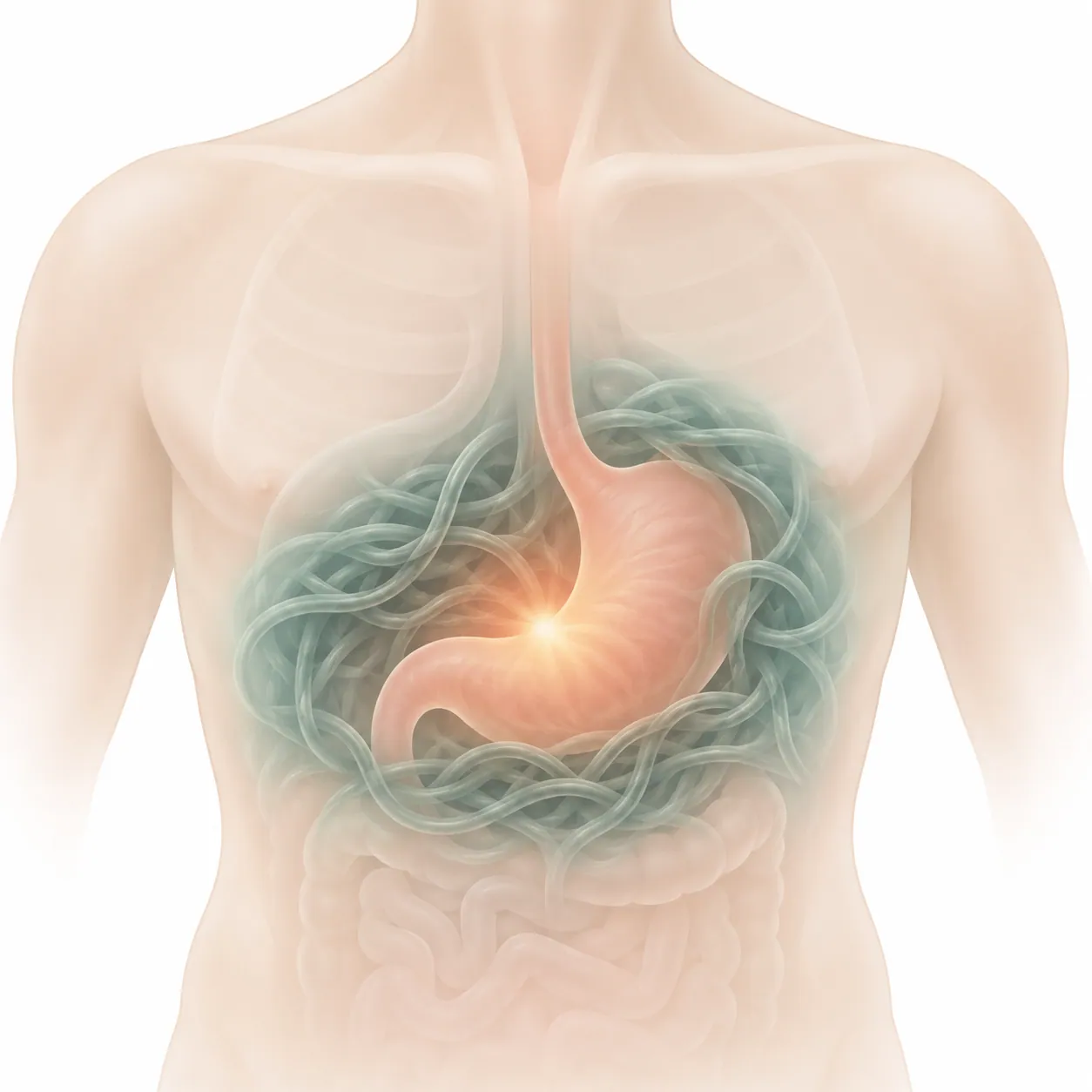
담적(痰積)은 한의학에서 말하는 담(痰), 곧 제대로 소화·순환되지 못하고 몸에 남은 노폐물이 위장 주변에 쌓여(積) 굳은 상태를 뜻합니다. 그 결과 명치와 배가 딱딱하게 뭉치고, 먹은 것이 잘 내려가지 않으며, 머리가 무겁고 몸이 늘 피곤해집니다.
담적은 한의학의 설명 방식이고, 서양의학의 정식 병명은 아닙니다. 내시경과 혈액검사에서 뚜렷한 이상이 없는데 소화 증상이 계속되는 기능성 소화불량, 기능성 위장장애와 겹치는 부분이 많습니다. 기능성 위장장애는 33개국 7만 3천여 명을 조사한 세계 연구에서 조사 방식에 따라 성인의 20.7~40.3%가 해당할 만큼 흔했습니다[1].
이런 증상이 있나요?

- 명치나 윗배가 딱딱하게 뭉쳐 있고 누르면 아프다
- 먹은 것이 가슴에 얹힌 듯 잘 내려가지 않고 자주 체한다
- 트림과 가스가 많고 배가 늘 빵빵하다
- 식사 뒤에 쏟아지듯 졸리고 몸이 무겁다
- 머리가 맑지 않고 어지럽거나 뒷목이 뻐근하다
- 입이 텁텁하고 입냄새가 나며, 혀에 하얀 설태가 낀다
- 소화제와 위장약을 먹어도 그때뿐이고, 내시경은 정상이다
담적은 혈액검사나 내시경으로 진단하는 병이 아니라, 증상과 함께 배를 직접 만져 보는 복진으로 살핍니다.
해움한의원은 이렇게 치료합니다

담적이라는 이름으로 진행된 대규모 연구는 아직 없습니다. 하지만 증상이 겹치는 기능성 소화불량에서는 한약의 근거가 쌓이고 있습니다. 일본 소화기학회 표준진료지침은 육군자탕을 위장약과 나란히 1차 치료로 권하고[4], 위약과 비교한 연구에서는 식후 더부룩함과 조기 포만감이 좋아졌습니다[5].
국내 연구진의 분석에서도 육군자탕과 반하사심탕은 기능성 소화불량에서 서양 약보다 전체 유효율이 높았고[6,7], 위장 운동을 돕는 것 외의 기전도 연구되고 있습니다[8]. 국내 건강보험 처방에서도 평위산·향사평위산·반하사심탕이 기능성 소화불량에 많이 쓰이고 있습니다[9]. 위만 달래는 약으로 낫지 않는 분들이 한약을 찾는 이유입니다.
해움한의원은 쌓인 것을 풀고 소화기의 힘을 되살리며, 위를 흔드는 자율신경과 스트레스까지 함께 다스립니다.
1단계. 위험 신호를 먼저 확인합니다
체중 감소나 출혈처럼 다른 질환을 의심할 신호가 있는지 살피고, 필요하면 내시경을 먼저 안내합니다. 그다음 복진으로 명치와 배의 뭉침을 확인하고, 심박변이도와 적외선 체열검사로 자율신경의 균형과 배의 냉열 상태를 봅니다.
2단계. 쌓인 것을 풀고 소화기의 힘을 되살립니다
막힌 기운과 체기를 푸는 처방(반하사심탕·향사평위산 계열), 담음을 없애는 처방, 약해진 소화기를 북돋는 처방(육군자탕 계열) 가운데 체질과 상태에 맞는 한약을 짓습니다.
3단계. 굳은 배와 생활 습관을 함께 풉니다
약침과 추나로 명치와 등, 목의 긴장을 풀어 위가 편하게 움직이도록 돕습니다. 천천히 먹기와 식사 시간, 식후 걷기처럼 다시 쌓이지 않는 식습관을 안내하고, 스트레스가 크면 상담을 함께 진행합니다.
4만 건의 처방 사례가 말해주는, 한방 맞춤 치료의 힘




담적 치료후기 총 11건
환자분들이 남긴 치료후기입니다. 본문은 로그인 후 보실 수 있습니다.
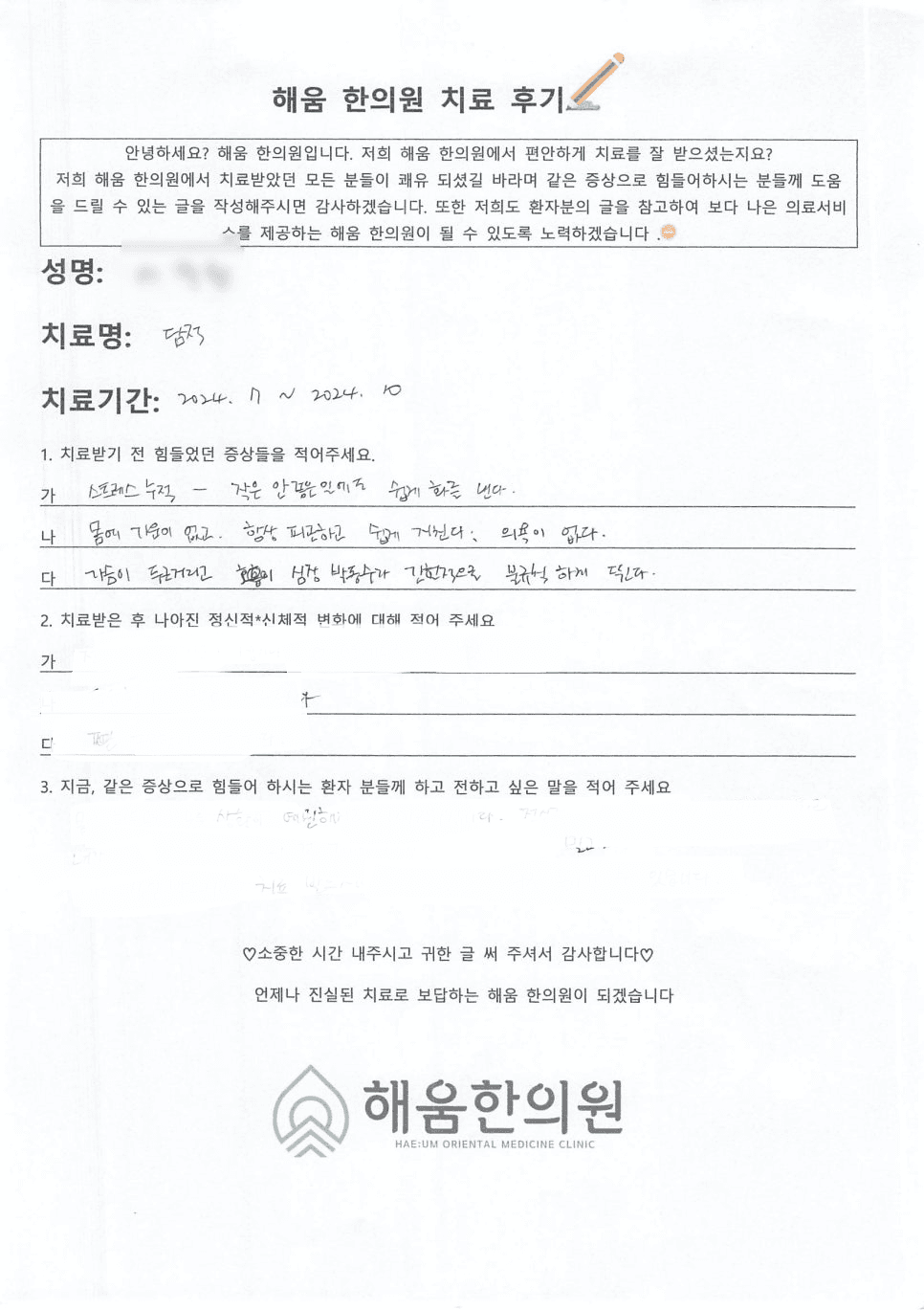
명치답답 소화불량, 담적 증상 같은데 원인이 없대요. 정신과 문제인 걸까요?
2026. 01. 31.
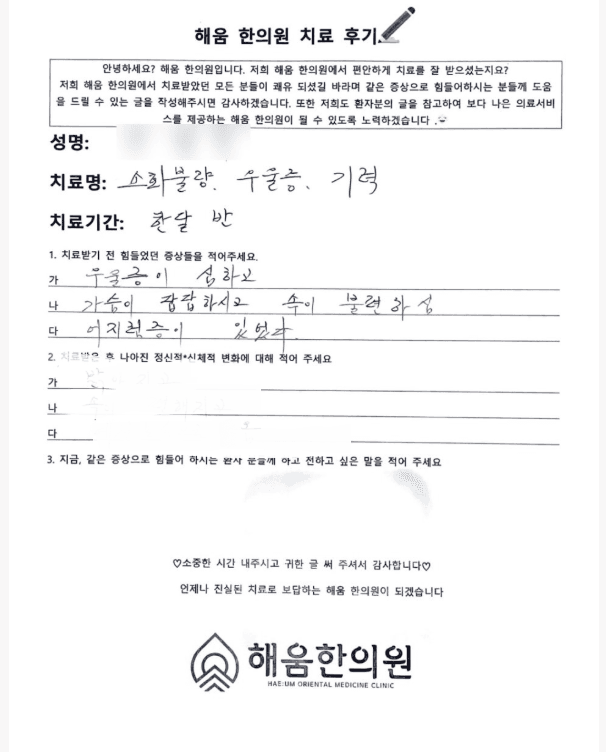
평생을 달고 살아온 소화불량, 노인 우울증 한약 1달반 먹고 좋아진 사례
2022. 08. 02.
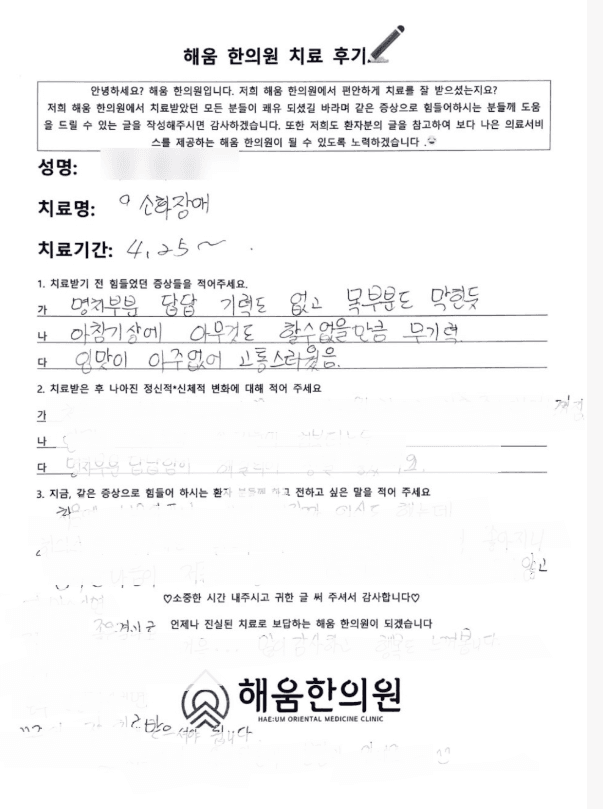
신경성소화불량? 담적병? 기능성위장장애? 원인을 못 찾던 위장병, 한약 1달
2022. 06. 03.
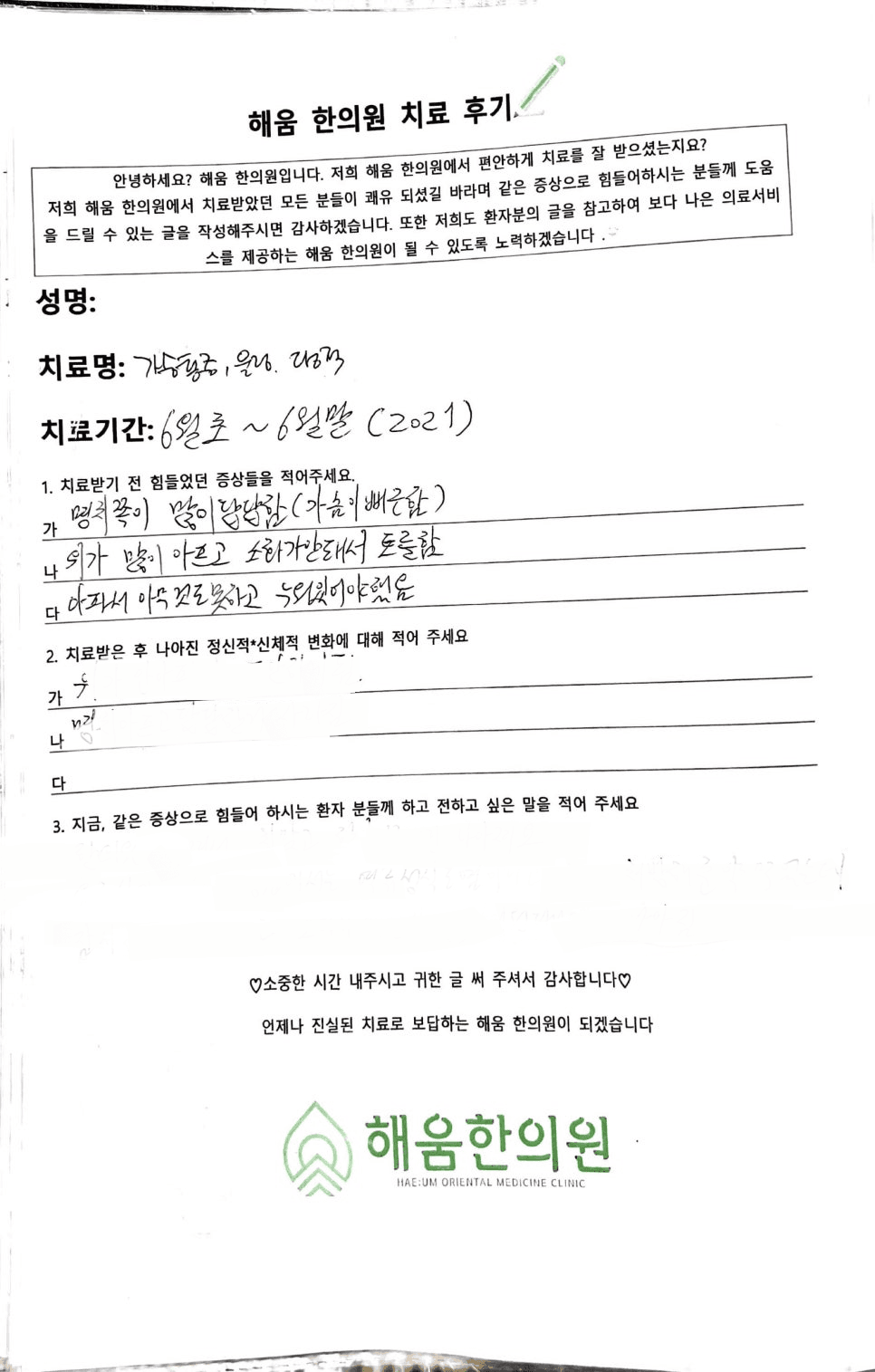
명치가 답답하고 뻐근한데 이거 가슴담적인가요?? 가슴통증,구토,소화불량 신정동한의원 치료후기
2022. 04. 15.
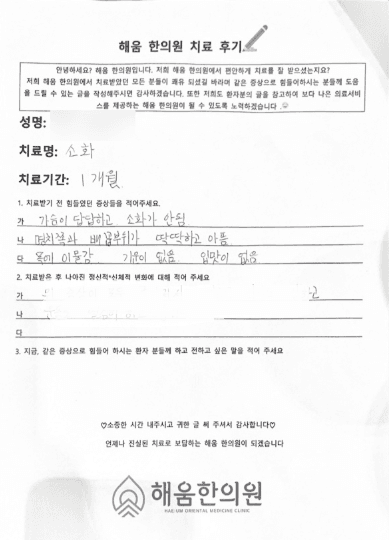
이게 담적인가요? 위내시경 후유증으로 명치 가슴이 답답하고 딱딱하게 만져지는 환자분 한약 1달 치료기
2021. 11. 24.
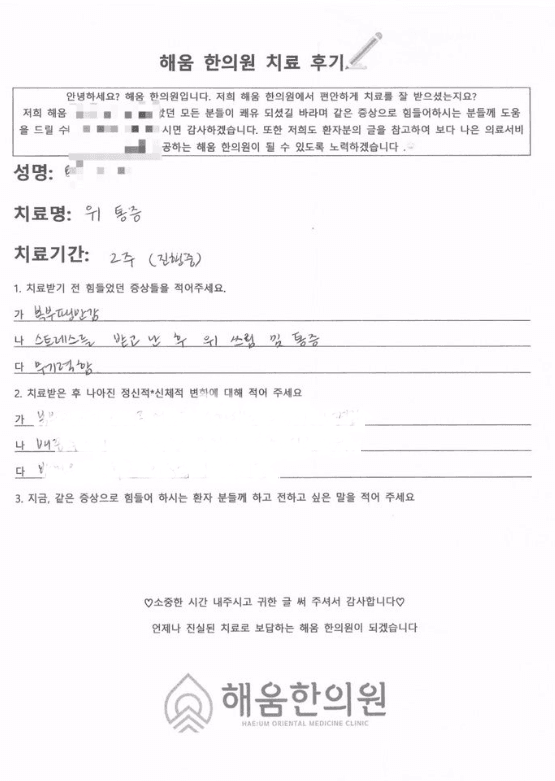
담적 위통증 치료 후기 미녀는 원래 소화가 안되는 법..
2021. 07. 20.
담적, 누가 진료하나요?
담당 의료진
대표원장 박재은

“병이 아니라 그 뒤의 사람을 봅니다”
경희대학교 한의과대학에서 석사·박사 과정을 마쳤습니다. 심리상담사 1급 자격과 4만 건 이상의 한약 처방 경험을 바탕으로 진료합니다.
의료진 소개 더보기담적, 자주 묻는 질문
담적은 병원에서 진단받을 수 있는 병인가요?
담적과 소화불량은 어떻게 다른가요?
명치가 딱딱하게 만져지는데 위험한 건 아닌가요?
담적 때문에 살이 빠질 수도 있나요?
치료 기간은 얼마나 걸리나요?
담적에 좋은 식습관은 무엇인가요?
해움한의원에서 담적을 진료하나요?
담적으로 내원하려면 어떻게 하나요?
담적에 관해 알아두면 좋은 정보
4건담적과 관련해 정리한 건강정보입니다.
배꼽 아래 딱딱하고 아프다면 담적일까요? 검사 전 꼭 알아야 할 내용
배꼽 아래가 딱딱하고 아픈 느낌, 왜 생기는 걸까요?"배꼽 아래를 누르면 딱딱한 느낌이 들어요.""식사만 하면 아랫배가 더부룩하고 통증이 심해집니다.""병원에서는 이상이 없다는데 계속 불편합니다."이처럼 여자 배꼽

갑자기속울렁 반복된다면? 담적병과 자율신경 문제를 살펴보세요
이유 없이 속이 울렁거릴 때, 몸은 이미 신호를 보내고 있습니다멀쩡하게 일상을 보내다가 갑자기 속이 울렁거리는 경험을 해보신 적 있으신가요?음식을 잘못 먹은 것도 아닌데 메스껍고, 속이 뒤집히는 느낌이 들며 심한 경

소화제도 듣지 않는 속 더부룩함, 담적치료법이 필요한 이유
처음에는 단순히 체한 줄 알았습니다식사를 조금 급하게 했거나 기름진 음식을 먹은 날.속이 더부룩하고 소화가 잘되지 않으면 대부분은 일시적인 체기라고 생각합니다.이럴 때는 소화제를 먹거나 충분히 쉬면 증상이 좋아지는

왼쪽 명치 아래 통증과 더부룩함이 함께 온다면? 담적 치료를 살펴보세요
왼쪽 명치 아래 통증, 왜 자꾸 반복될까요?밥을 조금만 먹어도 왼쪽 명치 아래가 묵직하고 답답하거나, 손으로 눌렀을 때 유독 불편하게 느껴지는 분들이 있습니다.처음에는 단순히 체했거나 소화가 잘되지 않아서 그런가 보

담적, 질문 있어요
3건환자분들이 남긴 온라인 상담 질문과 의료진 답변입니다.
이런 경우에는 내시경 등 검사를 먼저 받으세요
아래 위험 신호가 있다면 담적이 아닐 수 있습니다. 내시경을 받은 지 오래되었다면 소화기내과 진료와 검사를 먼저 받으시고, 피를 토하거나 검은 변을 본다면 바로 응급실로 가세요.
- 피를 토하거나 커피 찌꺼기 같은 것을 토했다, 또는 검은 변이나 피가 섞인 변을 봤다
- 일부러 빼지 않았는데 체중이 눈에 띄게 줄었다
- 음식을 삼키기 어렵거나 먹으면 계속 토한다
- 배에 손으로 잡히는 덩어리가 있거나, 눈과 피부가 노랗게 변했다
- 60세 이상에서 소화 증상이 새로 생겼거나, 가족 중 위암 환자가 있다
참고문헌 9편
[1]Sperber AD, Bangdiwala SI, Drossman DA, Ghoshal UC, Simren M, Tack J, et al. Worldwide Prevalence and Burden of Functional Gastrointestinal Disorders, Results of Rome Foundation Global Study. Gastroenterology. 2021;160(1):99-114.e3. doi:10.1053/j.gastro.2020.04.014. PMID: 32294476.
요약 33개국 성인 7만 3천여 명을 조사한 로마재단의 세계 연구입니다. 인터넷 조사에서는 40.3%, 대면 조사에서는 20.7%가 기능성 위장장애(뇌-장 상호작용 장애) 기준에 해당했습니다. 여성에게 더 많았고, 삶의 질이 낮았으며 병원을 더 자주 찾았습니다.원문은 출판사 저작권 자료로, 위 링크에서 확인하실 수 있습니다.
[2]Breit S, Kupferberg A, Rogler G, Hasler G. Vagus Nerve as Modulator of the Brain-Gut Axis in Psychiatric and Inflammatory Disorders. Front Psychiatry. 2018;9:44. doi:10.3389/fpsyt.2018.00044. PMID: 29593576.
초록 (Abstract)
The vagus nerve represents the main component of the parasympathetic nervous system, which oversees a vast array of crucial bodily functions, including control of mood, immune response, digestion, and heart rate. It establishes one of the connections between the brain and the gastrointestinal tract and sends information about the state of the inner organs to the brain via afferent fibers. In this review article, we discuss various functions of the vagus nerve which make it an attractive target in treating psychiatric and gastrointestinal disorders. There is preliminary evidence that vagus nerve stimulation is a promising add-on treatment for treatment-refractory depression, posttraumatic stress disorder, and inflammatory bowel disease. Treatments that target the vagus nerve increase the vagal tone and inhibit cytokine production. Both are important mechanism of resiliency. The stimulation of vagal afferent fibers in the gut influences monoaminergic brain systems in the brain stem that play crucial roles in major psychiatric conditions, such as mood and anxiety disorders. In line, there is preliminary evidence for gut bacteria to have beneficial effect on mood and anxiety, partly by affecting the activity of the vagus nerve. Since, the vagal tone is correlated with capacity to regulate stress responses and can be influenced by breathing, its increase through meditation and yoga likely contribute to resilience and the mitigation of mood and anxiety symptoms.
원문 발췌 · Breit S, Kupferberg A, Rogler G, Hasler G, Front Psychiatry 2018 · CC BY 4.0 라이선스에 따라 수정 없이 인용했습니다(본문 속 인용 번호는 생략).
[3]Esterita T, Dewi S, Suryatenggara FG, Glenardi G. Association of Functional Dyspepsia with Depression and Anxiety: A Systematic Review. J Gastrointestin Liver Dis. 2021;30(2):259-266. doi:10.15403/jgld-3325. PMID: 33951117.
요약 13개 연구, 1만 4천여 명을 검토한 체계적 문헌고찰입니다. 거의 모든 연구에서 기능성 소화불량 환자는 우울과 불안이 더 흔했습니다. 특히 치료가 잘 듣지 않는 환자의 우울·불안 증상 유병률은 63.3%와 61.5%로, 건강한 사람(각 10%)보다 훨씬 높았습니다.원문은 출판사 저작권 자료로, 위 링크에서 확인하실 수 있습니다.
[4]Miwa H, Nagahara A, Asakawa A, Arai M, Oshima T, Kasugai K, et al. Evidence-based clinical practice guidelines for functional dyspepsia 2021. J Gastroenterol. 2022;57(2):47-61. doi:10.1007/s00535-021-01843-7. PMID: 35061057.
초록 (Abstract)
Background: Functional dyspepsia (FD) is a disorder that presents with chronic dyspepsia, which is not only very common but also highly affects quality of life of the patients. In Japan, FD became a disease name for national insurance in 2013, and has been gradually recognized, though still not satisfactory. Following the revision policy of Japanese Society of Gastroenterology (JSGE), the first version of FD guideline was revised this time.
Method: Like previously, the guideline was created by the GRADE (grading of recommendations assessment, development and evaluation) system, but this time, the questions were classified to background questions (BQs, 24 already clarified issues), future research questions (FRQs, 9 issues cannot be addressed with insufficient evidence), and 7 clinical questions that are mainly associated with treatment.
Results and Conclusion: These revised guidelines have two major features. The first is the new position of endoscopy in the flow of FD diagnosis. While endoscopy was required to all cases for diagnosis of FD, the revised guidelines specify the necessity of endoscopy only in cases where organic disease is suspected. The second feature is that the drug treatment options have been changed to reflect the latest evidence. The first-line treatment includes gastric acid-secretion inhibitors, acetylcholinesterase (AChE) inhibitors (acotiamide, a prokinetic agent), and Japanese herbal medicine (rikkunshito). The second-line treatment includes anxiolytics /antidepressant, prokinetics other than acotiamide (dopamine receptor antagonists, 5-HT4 receptor agonists), and Japanese herbal medicines other than rikkunshito. The patients not responding to these treatment regimens are regarded as refractory FD.
원문 발췌 · Miwa H, Nagahara A, Asakawa A, Arai M, Oshima T, Kasugai K, Kamada K, Suzuki H, Tanaka F, Tominaga K, Futagami S, Hojo M, Mihara H, Higuchi K, Kusano M, Arisawa T, Kato M, Joh T, Mochida S, Enomoto N, Shimosegawa T, Koike K, J Gastroenterol 2022 · CC BY 4.0 라이선스에 따라 수정 없이 인용했습니다(본문 속 인용 번호는 생략).
[5]Tominaga K, Sakata Y, Kusunoki H, Odaka T, Sakurai K, Kawamura O, et al. Rikkunshito simultaneously improves dyspepsia correlated with anxiety in patients with functional dyspepsia: A randomized clinical trial (the DREAM study). Neurogastroenterol Motil. 2018;30(7):e13319. doi:10.1111/nmo.13319. PMID: 29498457.
요약 일본 56개 병원이 참여한 위약 대조 이중맹검 연구(DREAM)입니다. 기능성 소화불량 환자 125명이 8주간 육군자탕이나 위약을 복용했고, 육군자탕군에서 전반적 호전과 식후 더부룩함·조기 포만감·복부 팽만이 더 좋아졌습니다. 불안·우울 점수의 개선은 위장 증상의 개선과 함께 나타났습니다.원문은 출판사 저작권 자료로, 위 링크에서 확인하실 수 있습니다.
[6]Ko SJ, Park J, Kim MJ, Kim J, Park JW. Effects of the herbal medicine Rikkunshito, for functional dyspepsia: A systematic review and meta-analysis. J Gastroenterol Hepatol. 2021;36(1):64-74. doi:10.1111/jgh.15208. PMID: 32767596.
요약 국내 연구진이 52개 무작위 대조 연구, 5,475명을 분석한 메타분석입니다. 기능성 소화불량에서 육군자탕은 서양 약보다 전체 유효율이 높았습니다(상대위험도 1.21). 연구진은 더 엄밀한 연구가 필요하다고 덧붙였습니다.원문은 출판사 저작권 자료로, 위 링크에서 확인하실 수 있습니다.
[7]Kim K, Ko SJ, Cho SH, Kim J, Park JW. Herbal medicine, <i>Banxia-xiexin tang</i>, for functional dyspepsia: a systematic review and meta-analysis. Front Pharmacol. 2023;14:1130257. doi:10.3389/fphar.2023.1130257. PMID: 37274096.
초록 (Abstract)
Background: The demand for complementary and alternative medicine for the management of functional dyspepsia (FD) is increasing due to the insufficient efficacy of conventional treatment options. In Asia, the Chinese herbal medicine formula Banxia-xiexin tang (BXT) has been used to treat FD.
Methods: We searched 11 digital medical databases on 1 September 2021. Randomized controlled trials (RCTs) that investigated the efficacy of BXT or combination therapy (BXT plus Western medicines) for FD were selected. The outcome parameters were total clinical efficacy rate (TCE), motilin level, symptom checklist-90-revised (SCL-90-R), and visual analog scale (VAS) for dyspepsia and adverse events. Cochrane risk of bias tool 2.0 (RoB 2) was used for the quality assessment of included studies.
Results: The meta-analysis comprised 57 RCTs with 5,525 participants. BXT was more efficacious, with a higher TCE than Western medicine. Combination therapy (BXT plus Western medicine) also resulted in a higher TCE than Western medicine. Combination therapy improved motilin levels and psychological symptoms to a greater extent than Western medicine, evidenced by a higher SCL-90-R score. However, no significant difference in VAS scores was observed between the BXT and placebo groups. BXT and combination therapy were associated with fewer adverse events than Western medicine or placebo.
Conclusion: Our findings suggest that BXT and its combination therapy may be an effective and safe alternative treatment for FD. More RCTs with better methodologies are required to strengthen this evidence.
Systematic Review Registration: [https://www.crd.york.ac.uk/prospero/display_record.php?ID=CRD42019123285], identifier [CRD42019123285].
결과 (Results)
3.1 Selection of study: The initial search identified 504 studies, of which 83 duplicates were excluded. After screening the titles and abstracts, 340 studies were excluded. Fifteen studies were excluded because 14 did not meet the inclusion criteria, and one presented inaccurate data. Finally, 66 studies were included, and 57 were selected for the meta-analysis (Figure 1).
3.2 Characteristics of included studies: We included 66 studies published between 2001 and 2021. All articles were RCTs and parallel-design studies. Four studies were written in English and 62 in Chinese. Three randomized trials were conducted in Korea and 63 in China. BXT was compared with Western medicine in 51 RCTs. In 10 articles, combination therapy (BXT plus Western medicine), and Western medicine were compared. BXT was also compared with a placebo in five RCTs. The total number of patients included in the meta-analysis was 5,615. In each study, 31–200 patients were included. Table 1 shows a summary of the analyzed RCTs.
3.3 Assessment of risk of bias: Figure 2 shows the quality assessment results of the 57 studies selected for this meta-analysis using the RoB 2 tool. Table 2 shows the ratings for the individual domains at the study level for the 66 included studies.
3.3.1 Bias arising from the randomization process: Concerns were raised in 55 of the RCTs. These randomization studies did not report the sequence of allocation concealment. Two studies (; ) used a center-controlled method to randomize participants and were assessed to have a low RoB.
3.3.2 Bias due to deviations from intended interventions: Three trials (;; ) had low RoB because the participants and personnel were blinded to the placebo. Fifty-five studies had high RoB because participants and those delivering the interventions were aware of their assigned interventions. Deviations from the intended intervention occurred in these studies because of the trial context and group balance, which probably affected the outcome.
3.3.3 Bias due to missing outcome data: conducted a per-protocol analysis and had a high RoB. However, the other studies had a low RoB. Fifty-four trials did not have missing patients. conducted an intention-to-treat analysis, while had one missing patient before administering the test drug.
3.3.4 Bias in measurement of the outcome: While three RCTs (;; ) blinded outcome assessment, 54 did not report blinding of statistical analyses, and the outcome assessment was probably influenced by knowledge of the intervention received.
3.3.5 Bias in selection of the reported result: Two RCTs (; ) with published study protocols had a low RoB. The remaining 55 studies were biased due to insufficient information.
3.3.6 Overall bias: Of the 57 studies included in this meta-analysis, two had a low risk, one had a moderate risk, and 54 had a high overall RoB.
3.4 Primary outcome: total clinical efficacy rate: This systematic review examined the efficacy of BXT and combination therapy (BXT plus Western medicine) in treating FD using TCE.
3.4.1 BXT versus western medicine: Western medicine groups were subdivided into PK agent groups, such as domperidone, trimebutine maleate, mosapride, and cisapride, as well as combinations of the PK and PPI groups. BXT was more efficacious than domperidone (RR: 1.19; 95% CI:1.11–1.21; p < 0.001), trimebutine maleate (RR: 1.24; 95% CI: 1.15–1.33; p < 0.001), mosapride (RR: 1.18; 95% CI: 1.13 to 1.24; p < 0.001), and combinations of PK and PPI (RR: 1.20; 95% CI: 1.12–1.29; p < 0.001). Heterogeneity was not significant in the trimebutine maleate (p = 0.99; I 2 = 0%), mosapride (p = 0.89; I 2 = 0%), or the combination of the PK and PPI groups (p = 0.31; I 2 = 16%).
In the integrated analysis of the five groups, 43 RCTs with 4,183 patients were included. They showed that BXT was more efficacious than Western medicine against FD (RR: 1.19; 95% CI: 1.15–1.23; p < 0.001) and had moderate heterogeneity (p = 0.02; I 2 = 33%) (Figure 3).
3.4.2. Combination of BXT and western medicine versus western medicine: The Western medicine group was divided into two subgroups: domperidone and mosapride. The combination of BXT and Western medicine was more efficacious than domperidone (RR: 1.16; 95% CI: 1.06–1.27; p = 0.002) and mosapride (RR: 1.21; 95% CI: 1.10–1.33; p < 0.001). Heterogeneity was insignificant in either subgroup (p = 0.66, I 2 = 0%; p = 0.79, I 2 = 0%).
Six studies with 601 patients were analyzed by integrating the subgroups. Combination therapy (BXT plus Western medicine) was more efficacious (RR: 1.18; 95% CI: 1.11–1.26; p < 0.001) and had lower heterogeneity (p = 0.88; I 2 = 0%) than Western medicine (Figure 4).
3.5 Motilin: The meta-analysis included only plasma motilin levels (pg/ml) measured using radio-immunoassays before meals. Analysis of three RCTs with 286 participants showed that combination therapy (BXT plus Western medication) was more efficacious than Western medicine alone in boosting motilin secretion (MD: 96.89; 95% CI: 82.49–111.30; p < 0.001). Western medicine groups included domperidone, mosapride, and a combination of mosapride, omeprazole, amitriptyline (on demand), and clarithromycin (on demand). Heterogeneity was high (p < 0.001; I 2 = 0%) (Figure 5).
3.6 Symptom checklist-90-revised: Two studies (; ) compared combination therapy (BXT plus domperidone) with domperidone alone and used the SCL-90-R to evaluate psychological symptoms. These studies included 166 patients. The SCL-90-R has nine subscales. Combination therapy (BXT plus domperidone) was more efficacious than domperidone alone in all aspects of the SCL-90-R.
The somatization score was significantly lower in the combination therapy group (BXT plus domperidone) than in the domperidone group (MD: –13.51; 95% CI: [–14.52]—[–12.49]; p < 0.001). Obsessive-compulsive symptoms improved remarkably in the combination therapy group (BXT plus domperidone) than in the domperidone group (MD: –10.63; 95% CI: [–12.05]- [–9.20]; p < 0.001), and interpersonal sensitivity was found to be more significantly improved in the combination therapy group than in the domperidone group (MD: –11.08; 95% CI: [–12.16] -[–10.01]; p < 0.001). Depression scores were significantly lower in the combination therapy group (BXT plus domperidone) than in the domperidone group (MD: –13.00; 95% CI: [–14.39]—[–11.60]; p < 0.001). Combination therapy (BXT plus domperidone) was found to be remarkably more efficacious against anxiety than domperidone (MD: –14.14; 95% CI: [–21.01]—[ −7.27]; p < 0.001) and reduced hostile symptoms more significantly than domperidone (MD: –7.46; 95% CI: [–8.47]—[–6.45]; p < 0.001). Combination therapy (BXT plus domperidone) was more efficacious in reducing phobic anxiety than domperidone (MD: –8.97; 95% CI [–10.00] - [–7.94]; p < 0.001). The paranoid ideation score was significantly lower in the combination therapy group (BXT plus domperidone) than in the domperidone group (MD: –12.19; 95% CI: [–13.25]—[–11.14]; p < 0.001). Combination therapy (BXT plus domperidone) was more efficacious in reducing the psychoticism score than domperidone (MD: –13.09; 95% CI [–14.42] - [–11.77]; p < 0.001) (Figure 6).
3.7 Visual analog scale: Three RCTs (;; ) with 179 participants compared the BXT and placebo groups using the VAS. No significant difference was observed between the BXT and placebo groups (MD: –4.31; 95% CI: [–17.40]—[–8.77]; p = 0.52). Heterogeneity was high (p = 0.01; I 2 = 78%) (Figure 7).
3.8 Subgroup analysis: Chaizhi-BXT versus western medicine: In this meta-analysis, the modified BXT group was integrated with the BXT group. A subgroup analysis was performed to minimize heterogeneity in the experimental groups. Three RCTs (;; ) with 240 participants showed that Chaizhi-BXT had a significantly higher TCE than Western medicine (RR: 1.25; 95% CI: 1.09–1.43; p = 0.001) (Figure 8).
3.9 Adverse events: Of the 66 studies, 54 did not report any adverse events. The experimental group included BXT and Western medicine, and the control group included Western medicine and placebo. Two articles (; ) reported no adverse events, and one reported the number of occurrences alone. The remaining nine RCTs reported mild adverse events. The number of adverse events was significantly lower in the experimental group than in the control group (RR: 0.53; 95% CI: 0.35–0.81; p = 0.003) (Figure 9).
Relatively mild adverse events such as nausea, vomiting, diarrhea, abdominal pain, acid reflux, epigastric fullness, dizziness, headache, urticaria, and insomnia were reported in the experimental groups. Adverse events in the control group were similar to those in the experimental groups and were mostly mild. However, reported intestinal obstruction (n = 1) due to progressive aggravation of constipation in the Western medicine (mosapride and estazolam) group.
3.10 Publication bias: Figure 10 shows a funnel plot of TCE comparing BXT and Western medicine. It is possible that smaller studies with lower estimates of benefits have not been published. However, the asymmetry is difficult to equate with publication bias because most of the included RCTs were published in Chinese, and the overall methodological quality of the studies was low.
3.11 Level of evidence: Table 3 shows the level of evidence for each outcome. Regarding TCE, BXT was more efficacious than Western medicine against FD. Because of the high RoB, the level of evidence was moderate. In the subgroup analysis, the level of evidence for BXT was lower than that of domperidone, considering the unexplained heterogeneity. The level of evidence for BXT was lower than that of cisapride due to unexplained heterogeneity and the small sample size. Combination therapy (BXT plus Western medicine) was more efficacious than Western medicine against FD. A high RoB led to a moderate level of evidence. In the subgroup analysis, the level of evidence was low because of the small sample size. Combination therapy (BXT plus Western medicine) was more efficacious than Western medicine alone in boosting motilin secretion. Because of the high RoB and the small sample size, the level of evidence was low. Combination therapy (BXT plus domperidone) had significantly better efficacy than domperidone in all aspects of the SCL-90-R. The level of evidence was low because of the high RoB and small sample size. The VAS scores showed no significant differences between the BXT and placebo groups. The RoB was low in the VAS; however, the small sample size led to a moderate level of evidence. The number of adverse events was significantly lower in the experimental group than in the control group. The level of evidence was moderate because of the high RoB.
원문 발췌 · Kim K, Ko SJ, Cho SH, Kim J, Park JW, Front Pharmacol 2023 · CC BY 4.0 라이선스에 따라 수정 없이 인용했습니다(본문 속 인용 번호는 생략).
[8]Inokuchi K, Masaoka T, Kanai T. Rikkunshito as a Therapeautic Agent for Functional Dyspepsia and its Prokinetic and Non-Prokinetic Effects. Front Pharmacol. 2021;12:640576. doi:10.3389/fphar.2021.640576. PMID: 34168558.
초록 (Abstract)
Prokinetics is one of the therapeutic agents for functional and motility disorders of the stomach. However, its efficacy is limited. Kampo medicine is a unique medical system that was developed in Japan. In Kampo medicine, herbal medicine is prescribed based on the patient’s condition. Therefore, even for functional and motility disorders of the stomach, some herbal medicines are considered as a therapeutic option. Recently, there has been an increase in evidence for the efficacy or the mechanism of herbal medicine for functional and motility disorders of the stomach. Among these, rikkunshito is a well-studied herbal medicine that could be used as an alternative to prokinetics. In this review, we discuss the possibilities of rikkunshito for functional dyspepsia with its prokinetic and non-prokinetic effects and provide an overview of their current use with a focus on their therapeutic mechanism.
원문 발췌 · Inokuchi K, Masaoka T, Kanai T, Front Pharmacol 2021 · CC BY 4.0 라이선스에 따라 수정 없이 인용했습니다(본문 속 인용 번호는 생략).
[9]Lee B, Ahn EK, Yang C. Herbal Medicine Prescriptions for Functional Dyspepsia: A Nationwide Population-Based Study in Korea. Evid Based Complement Alternat Med. 2022;2022:3306420. doi:10.1155/2022/3306420. PMID: 35132326.
초록 (Abstract)
Background: Herbal medicine is widely used for the treatment of functional dyspepsia (FD) in East Asian countries. We aimed to analyze the prescription patterns of herbal medicine for patients with FD in Korean medicine clinical settings through the analysis of national health insurance claims data over the past 10 years and to check how herbal medicine has been used for FD within the scope of national health insurance.
Methods: All prescription data claimed to the Health Insurance Review and Assessment Service with the diagnosis of FD and herbal medicine prescriptions in 2010–2019 were reviewed. We estimated the demographics, clinical characteristics, and annual prescription amount and cost of each herbal medicine. Frequent comorbidities of FD were investigated by analyzing the frequency of the Korean standard classification of diseases codes used together with FD.
Results: In total, 19,388,248 herbal medicine prescriptions were identified. Herbal medicine prescriptions were mostly claimed by women, the elderly, outpatients at Korean medicine clinics, and national health insurance; the number increased every year. The most frequently prescribed herbal medicine was Pingwei-san (Pyeongwi-san) (31.12%), followed by Xiangshapingwei-san (Hyangsapyeongwi-san) (23.20%), Qiongxia-tang (Gungha-tang) (6.31%), and Banxiaxiexin-tang (Banhasasim-tang) (6.25%). The total cost of herbal medicine prescriptions increased every year, and it was highest for Xiangshapingwei-san (Hyangsapyeongwi-san) (19.37%), followed by Banxiaxiexin-tang (Banhasasim-tang) (17.50%) and then Pingwei-san (Pyeongwi-san) (15.63%). Musculoskeletal and connective tissue diseases including low back pain and myalgia were the commonest comorbidities associated with FD.
Conclusion: This is the first study to investigate the disease burden and actual prescription pattern of herbal medicine for FD using claim data. Future clinical research and related healthcare policies should be established based on our study.
결과 (Results)
3.1. Selection Process of Target Prescriptions: In total, 123,506,249 prescriptions (medications, procedures, etc.) included K30 in either the primary or first secondary diagnosis in Korean medical institutions. Among them, 19,428,028 prescriptions included herbal medicines. After excluding prescriptions of individual herbs, only the prescriptions that corresponded to the predefined 56 herbal formulas (mixed extracts) were selected for analysis. Finally, 19,388,248 herbal medicine prescriptions from 3,687,700 patients were included in the analysis.
3.2. Demographics and Clinical Characteristics: The study population comprising 3,687,700 FD patients—1,105,503 men (29.98%) and 2,582,197 women (70.02%)—showed a mean age (standard deviation) of 49.17 (22.02) years. Regarding the type of medical institution, Korean medical clinics issued most (n = 19,152,474 [98.58%]) of the 19,388,248 herbal medicine prescriptions issued during the study period. Stratification by the type of health insurance showed that the NHI covered most of the herbal medicine prescriptions (n = 18,539,775 [95.62%]). In addition, most hospital visits were made by outpatients (n = 19,341,996, 99.76%). The mean prescription period and cost were 1.68 days and approximately ₩1,880 KRW, respectively (Table 1).
3.3. Number of Herbal Medicine Prescriptions for FD Stratified by Sex, Age, and Year: A sex-stratified comparison of the number of herbal medicine prescriptions showed that approximately three times more women (n = 14,414,514, 74.3%) than men (n = 4,973,734, 25.7%) received these prescriptions. Age-stratified analysis showed that the number of herbal medicine prescriptions tended to increase proportionally with age: patients in their 70s accounted for the most prescriptions (n = 6,745,042; 34.8%), followed by those in their 60s (n = 4,430,108; 22.8%); thus, subjects in their 60s and 70s accounted for more than half of all herbal medicine prescriptions (Figure 1). The total number of herbal medicine prescriptions steadily increased throughout the study period and, in particular, increased 5.5-fold from 2010 (n = 536,372) to 2019 (n = 2,914,167). A similar trend was observed in the age-stratified analyses; the upward trend was particularly evident in subjects aged 60 or older (Figure 2).
3.4. Number and Cost of Frequently Prescribed Herbal Medicines for FD Based on the Year: According to the number of herbal medicine prescriptions for FD that were submitted in claims to the HIRA over 10 years, Pingwei-san (Pyeongwi-san) was the most prescribed medication, accounting for 31.12% (n = 6,033,229) of all prescriptions. Xiangshapingwei-san (Hyangsapyeongwi-san) was the second most prescribed agent (n = 4,497,837; 23.20%), followed by Qiongxia-tang (Gungha-tang; n = 1,222,565; 6.31%), Banxiaxiexin-tang (Banhasasim-tang; n = 1,210,996; 6.25%), and Erchen-tang (Yijin-tang; n = 1,169,238; 6.03%) (Figure 3). The year-wise comparison showed that Pingwei-san (Pyeongwi-san) was the most prescribed medicine across all years during the study period except 2010. The total cost of herbal medicine prescriptions was highest for Xiangshapingwei-san (Hyangsapyeongwi-san) at ₩7,051,079,037 KRW (19.37%), followed by Banxiaxiexin-tang (Banhasasim-tang; ₩6,370,364,917 KRW, 17.50%), Pingwei-san (Pyeongwi-san; ₩5,687,566,199 KRW, 15.63%), Neixiao-san (Naeso-san; 2,335, ₩428,678 KRW, 6.42%), and Buzhongyiqi-tang (Bojungikgi-tang; ₩1,905,819,409 KRW, 5.24%) (Figure 4). The total cost of 56 herbal medicine prescriptions for the treatment of FD during the 10-year study period was ₩36,399,342,776 KRW (Supplement 2).
3.5. Frequent Comorbidities of FD: This study cohort comprised 21,771,403 comorbidities in total that were associated with the FD code (K30). Among them, M code (Diseases of the Musculoskeletal System and Connective Tissue) accounted for most (57.05%; n = 12,420,825) comorbidities, followed by the R code (Symptoms, Signs, and Abnormal Clinical and Laboratory Findings, Not Elsewhere Classified; 11.39%), S code (Injury, Poisoning, and Certain Other Consequences of External Causes; 9.82%), U code (Codes for Special Purposes; 8.07%), G code (Diseases of the Nervous System; 4.49%), J code (Diseases of the Respiratory System; 3.89%), and K code (Diseases of the Digestive System; 1.75%). The commonest comorbidity was lower back pain (M545; n = 3,225,059), followed by myalgia (M791; n = 1,390,267), muscle strain (M626; n = 1,118,574), joint pain (M255; n = 870,202), and pain localized to the upper abdomen (R101; n = 796,848) (Table 2). When the K30 code was the primary, secondary, or primary and secondary diagnosis, the ranking of comorbidities showed a similar trend. However, when the K30 code was the primary, the U code (Codes for special purposes, encompassing diseases name in Oriental medicine, disease patterns/syndromes in Oriental medicine, and disease patterns/syndromes of Four-Constitution Medicine) comprised the most frequent comorbidity. In particular, the “spleen qi deficiency pattern (U680)” and “food-retention disorder (U280)” were frequently reported when the K30 code was the primary or secondary diagnosis (Supplement 3).
원문 발췌 · Lee B, Ahn EK, Yang C, Evid Based Complement Alternat Med 2022 · CC BY 4.0 라이선스에 따라 수정 없이 인용했습니다(본문 속 인용 번호는 생략).