

출근길 지하철에서, 시험 직전에, 중요한 회의 앞에서 갑자기 배가 아프고 화장실부터 찾게 됩니다. 내시경은 깨끗하다는데 외출이 두렵습니다. 장은 멀쩡하다는데 왜 이럴까요? 바로 과민성대장증후군입니다.
과민성대장증후군 한눈에 보기
- 과민성대장증후군은 검사에 이상이 없는데 복통과 함께 설사나 변비가 되풀이되는 장 기능 질환입니다.
- 성인 9명 중 1명이 겪고, 환자의 약 40%는 불안 증상을, 약 30%는 우울 증상을 함께 겪습니다.
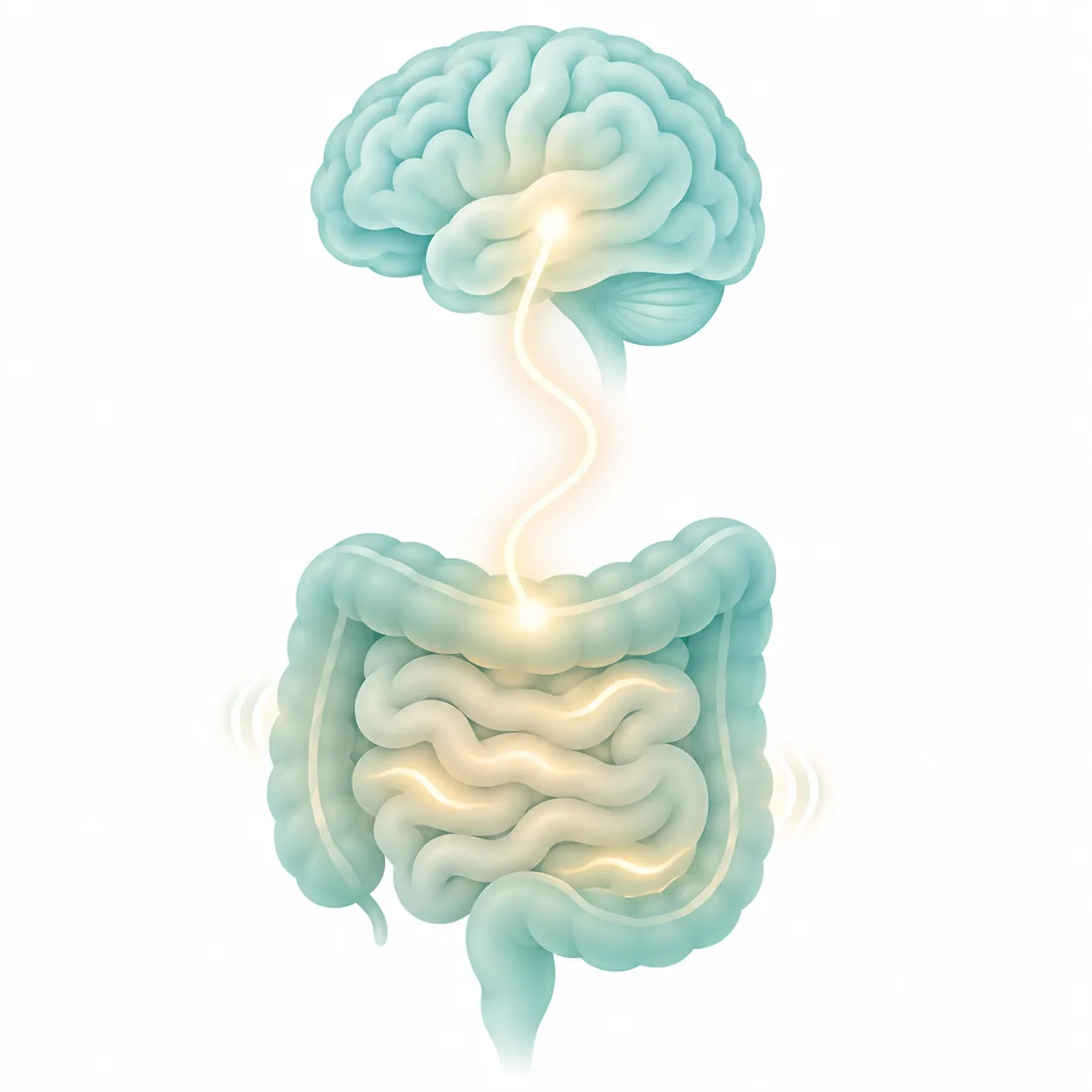
- 장은 뇌와 자율신경으로 이어져 있어, 장뿐 아니라 스트레스와 긴장, 소화 기능을 함께 다스려야 합니다.
- 치료후기 12건
- 의료진 칼럼 1편
- 건강정보 2편
- 온라인 상담 2건
이런 증상이 있나요?

- 배가 아프다가 화장실에 다녀오면 나아진다
- 긴장하거나 중요한 일을 앞두면 배가 아프고 설사를 한다
- 설사와 변비가 번갈아 온다
- 배에 가스가 차고 꾸르륵 소리가 난다
- 식사 뒤에 바로 화장실에 가고 싶다
- 변을 봐도 시원하지 않다
- 외출하면 화장실 위치부터 확인한다
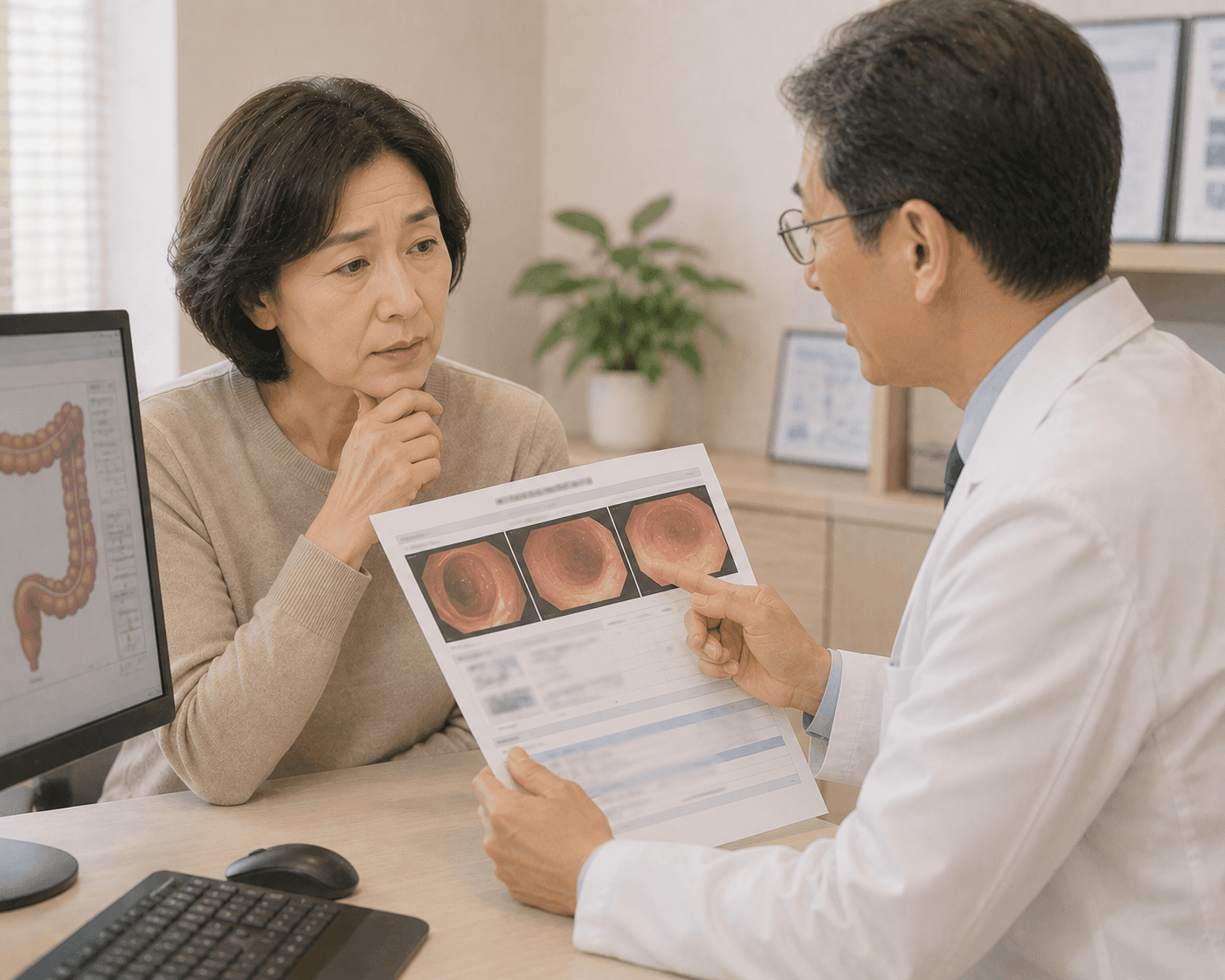
진단할 때는 복통이 배변과 관련이 있는지, 변의 횟수와 모양이 달라졌는지를 살핍니다. 위험 신호가 없다면 많은 검사가 꼭 필요하지는 않지만, 혈변이나 체중 감소가 있으면 대장내시경으로 다른 질환을 먼저 확인해야 합니다.
과민성대장증후군은 왜 생기나요?
- 스트레스와 긴장, 시험이나 발표 같은 압박
- 불안과 우울
- 장염을 앓은 뒤의 후유증
- 기름지거나 맵고 찬 음식, 잘 발효되는 음식
- 불규칙한 식사와 수면
- 소화 기능이 약하고 배가 찬 체질
이 중에서도 '스트레스와 긴장'은 꼭 살펴봐야 할 부분입니다. 장은 뇌와 자율신경으로 연결되어 있어, 긴장하면 장이 예민해지고 움직임이 흐트러집니다. 그래서 과민성대장증후군 환자의 39.1%는 불안 증상을, 28.8%는 우울 증상을 함께 겪습니다. 이는 건강한 사람보다 약 3배 많은 수치입니다[3].
과민성대장증후군의 표준 치료
표준 치료는 증상에 따라 지사제나 변비약, 장의 경련을 줄이는 약을 쓰고, 식이 조절과 인지행동치료를 함께하는 것입니다[1]. 잘 발효되는 음식을 줄이는 저포드맵 식이는 증상이 좋아지지 않을 위험을 33% 낮췄습니다[4].
그러나 증상을 누르는 약을 써도 완치가 어려운 것이 현실입니다. 장을 예민하게 만드는 바탕이 그대로라면 증상은 돌아올 수밖에 없기 때문입니다. 한의학 치료는 장과 자율신경의 균형, 약해진 장을 다시 회복시킵니다.
관련 연구를 살펴보면, 침 치료는 531명을 대상으로 한 연구에서 6주 동안 증상 점수를 123.5점 낮춰 약물 치료(94.7점)보다 많이 줄였습니다[5]. 한약은 위약보다 증상을 더 호전시켰고, 치료가 끝나고 14주 뒤에는 개인별 맞춤 처방을 받은 군만 호전이 유지되었습니다[6]. 일본 진료지침도 한약이 과민성대장증후군에 효과가 있다고 적고 있으나, 근거의 질이라는 아쉬움이 있습니다[7].
해움한의원은 이렇게 치료합니다

해움한의원은 장만 보지 않고, 장을 흔드는 자율신경과 스트레스까지 함께 다스립니다.
1단계. 위험 신호와 유형을 가립니다
배변 양상과 증상이 심해지는 상황, 식사와 수면, 스트레스를 자세히 살펴봅니다. 위험 신호가 있으면 대장내시경 검사를 먼저 안내해 드립니다. 심박변이도 검사로 자율신경의 긴장 상태를 확인합니다.
2단계. 예민해진 장을 안정시킵니다
침과 약침, 뜸으로 배의 긴장을 풀고 장의 움직임을 고르게 하며, 자율신경의 균형을 돕습니다.
3단계. 유형에 맞춰 바탕을 다스립니다
체질과 상태에 맞춰 한약을 짓습니다. 나에게 맞지 않는 음식을 찾는 식사 관리도 함께합니다.
4만 건의 처방 사례가 말해주는, 한방 맞춤 치료의 힘



해움한의원 원장이 쓴 과민성대장증후군 칼럼

소화질환과 자율신경치료: 이게 혹시 담적 병증상인가요?
오늘 글은 검사도 멀쩡하고 치료도 안 되는, 이상하게 안 낫는 소화불량에 대한 내용입니다.
읽어보기과민성대장증후군 치료후기 총 12건
환자분들이 남긴 치료후기입니다. 본문은 로그인 후 보실 수 있습니다.
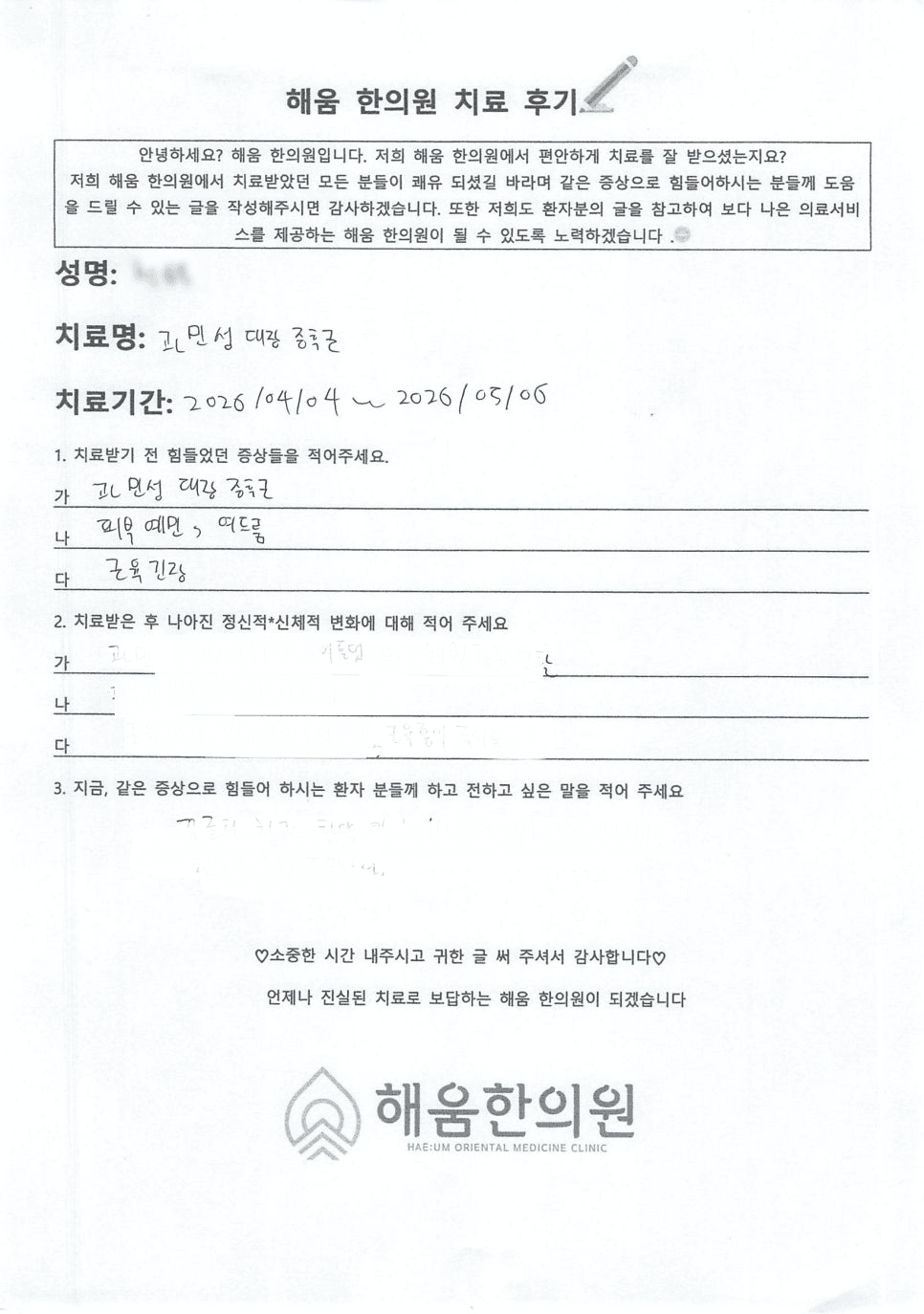
입대 전 갑자기 발생한 과민성대장증후군, 한의원에서 치료가 될까요?
2026. 06. 01.
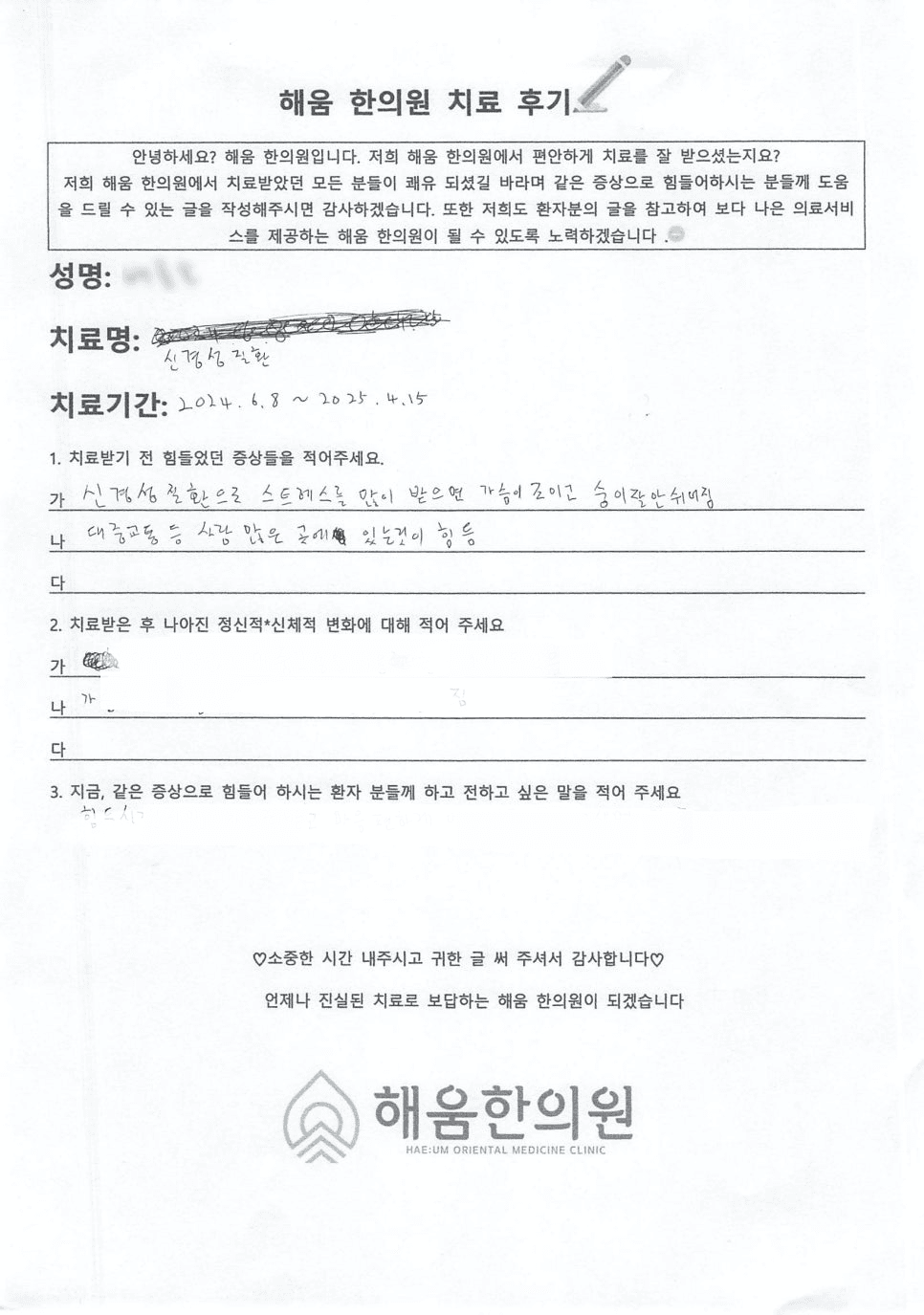
갑자기 화장실을 못참겠다면? 과민성대장증후군가스잦은설사 한약으로 치료가 될까요? 과민성대장증후군병원
2026. 05. 27.

시험만 보려고 하면 배가 아프고 설사하고 심장이 두근거려요
2026. 01. 19.
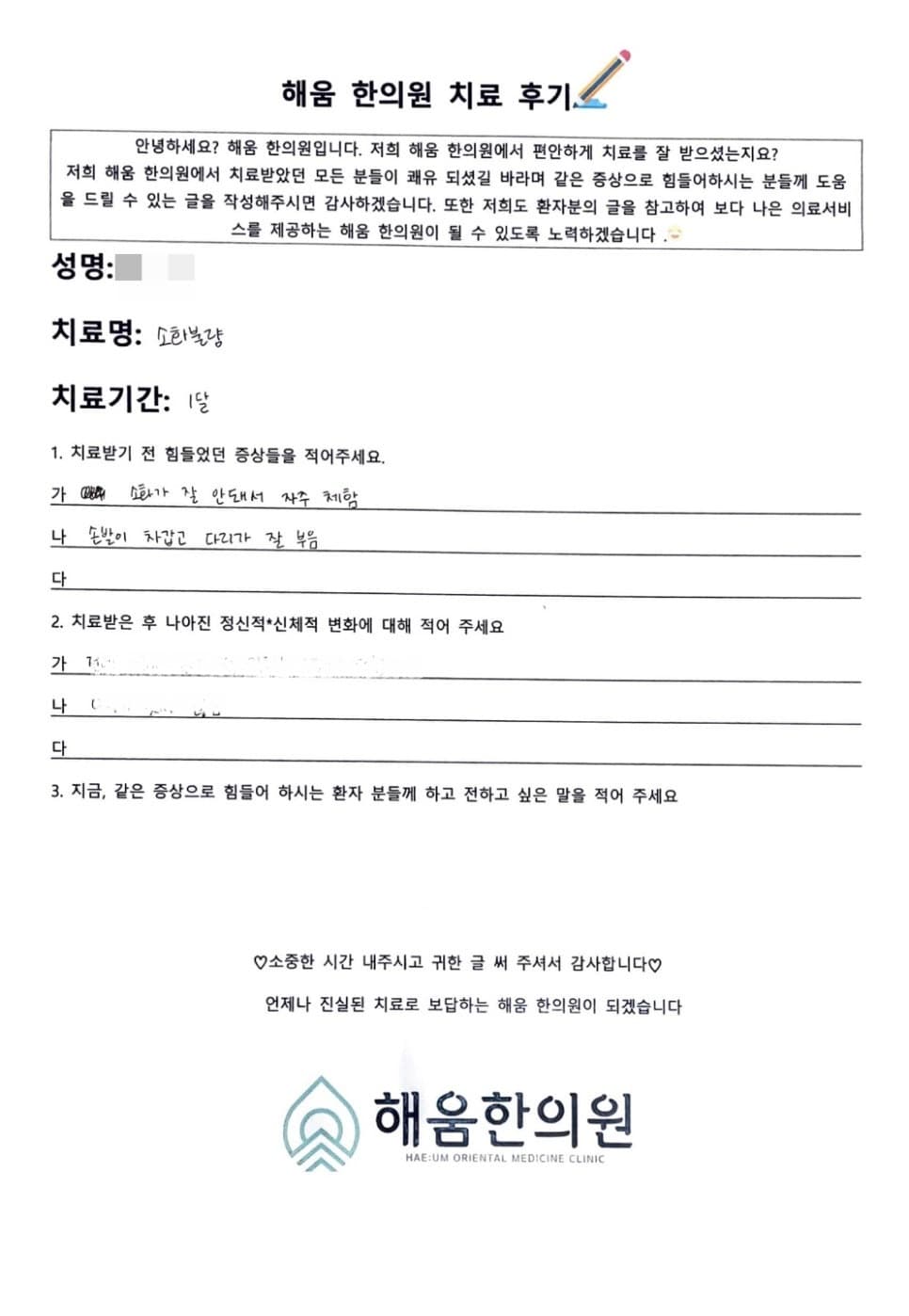
치료 안 돼서 고생하던 과민대장증후군
2024. 06. 06.
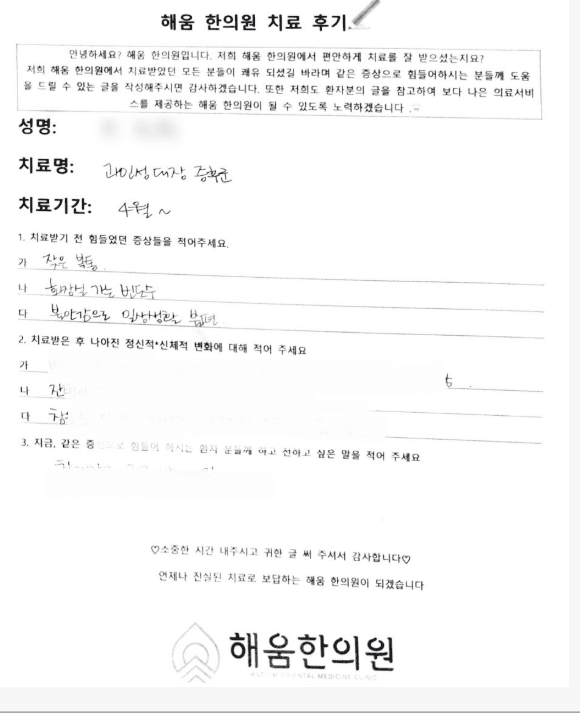
복통 설사가 너무 심해서 출근도 못하는 과민성대장 환자
2023. 12. 10.
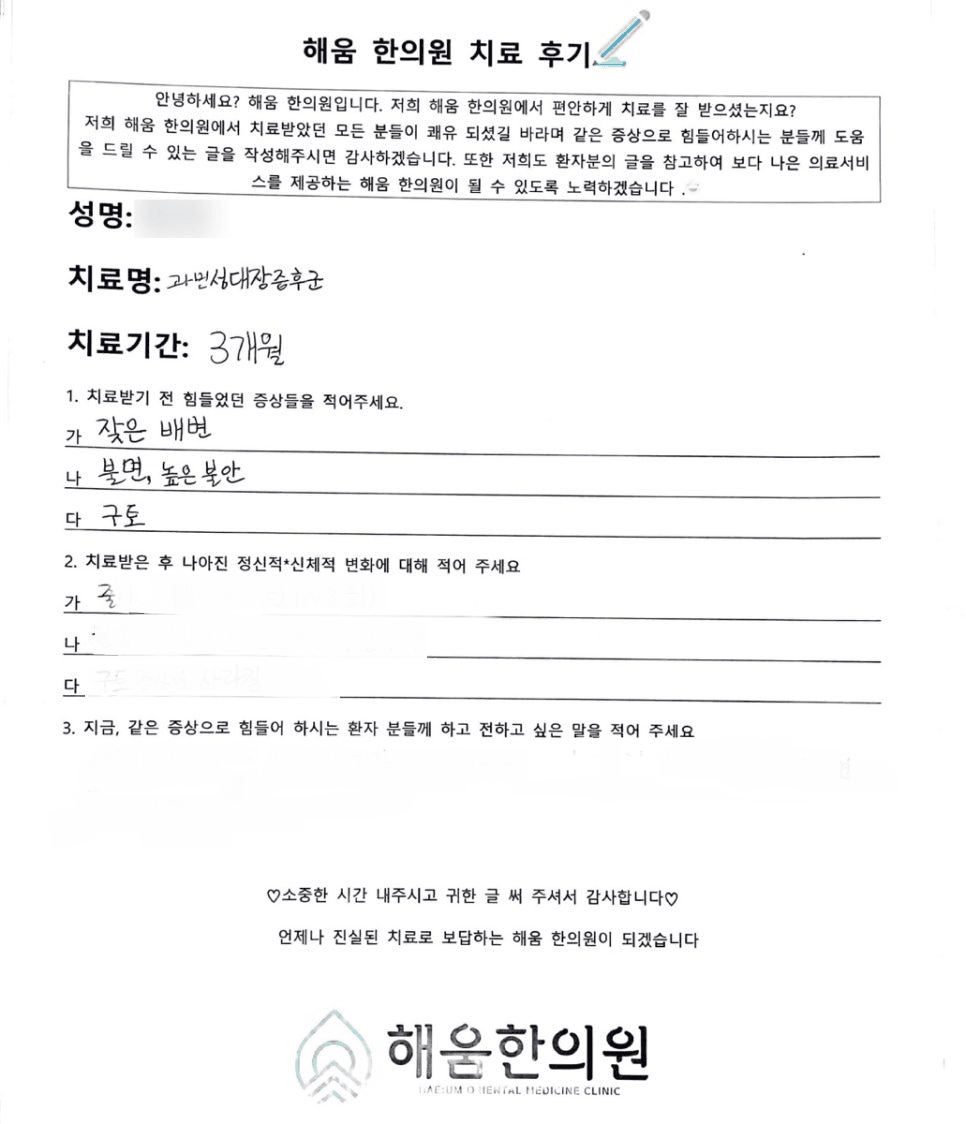
과민성대장증후군 불면증치료법 중에 한약이 최고?!
2023. 01. 14.
치료후기 5건 더 보기접기
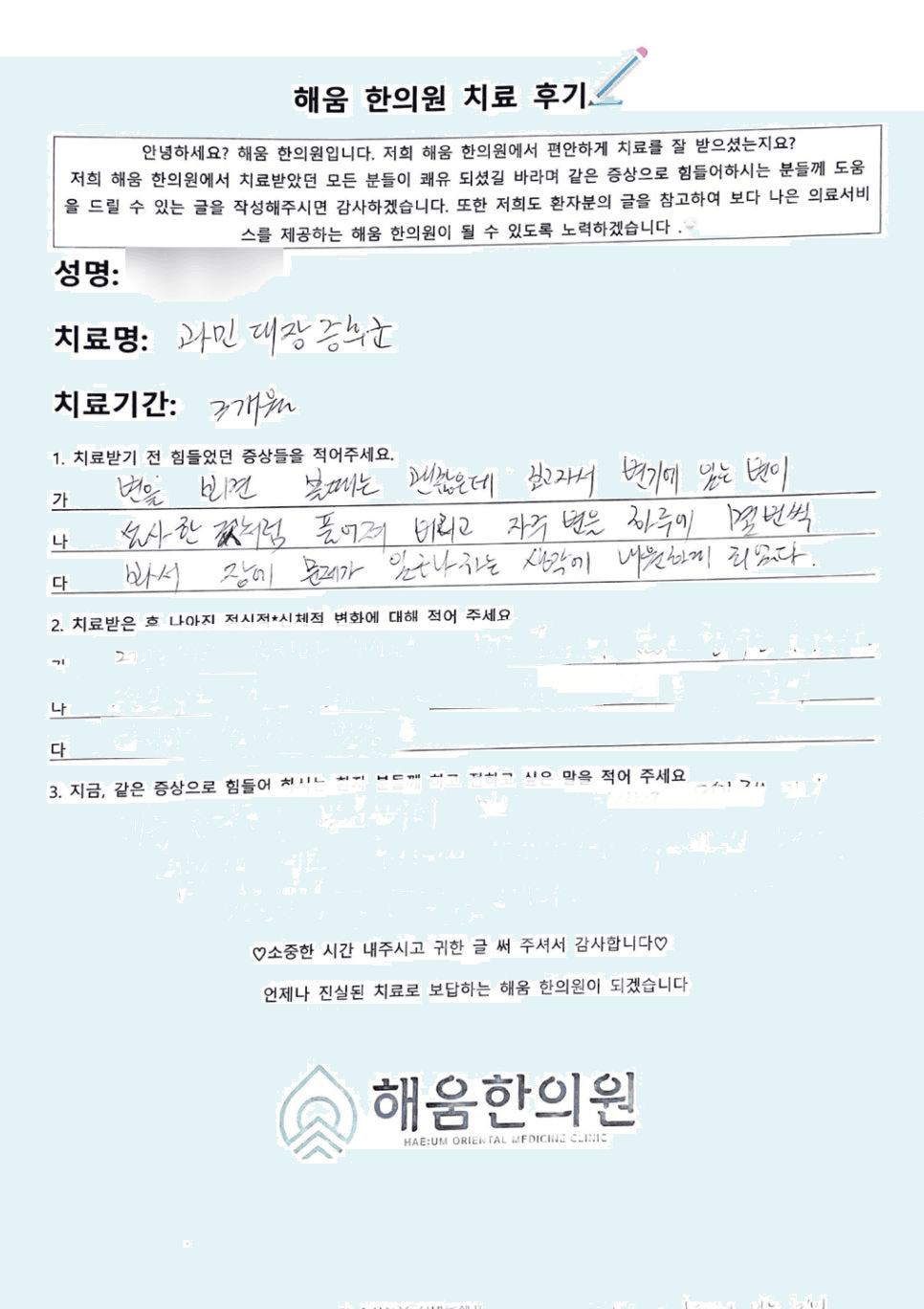

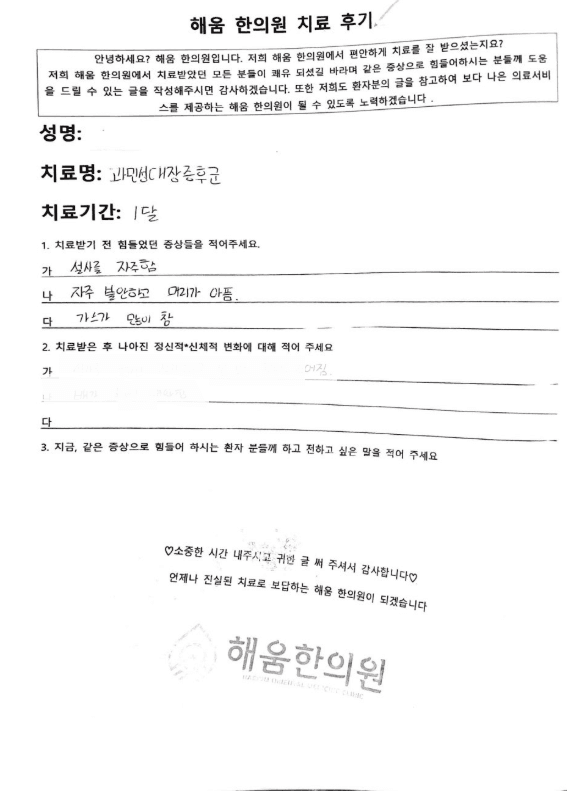
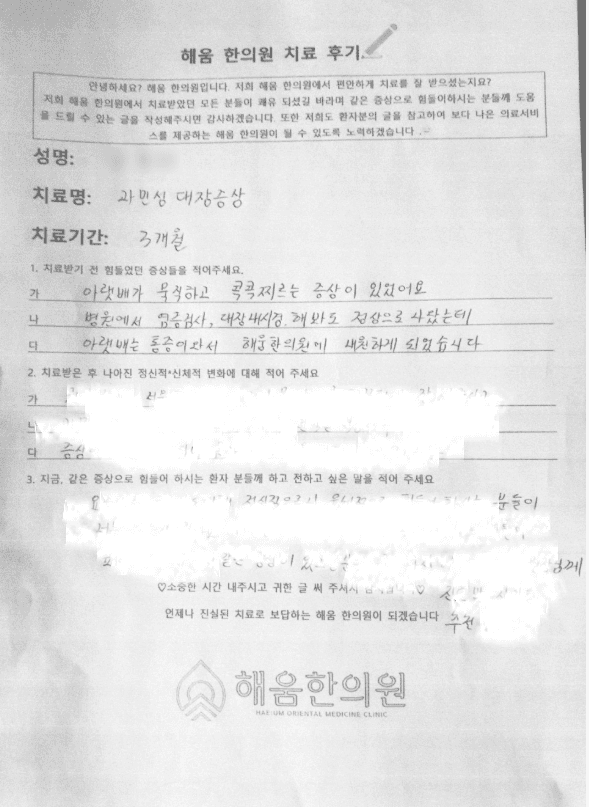
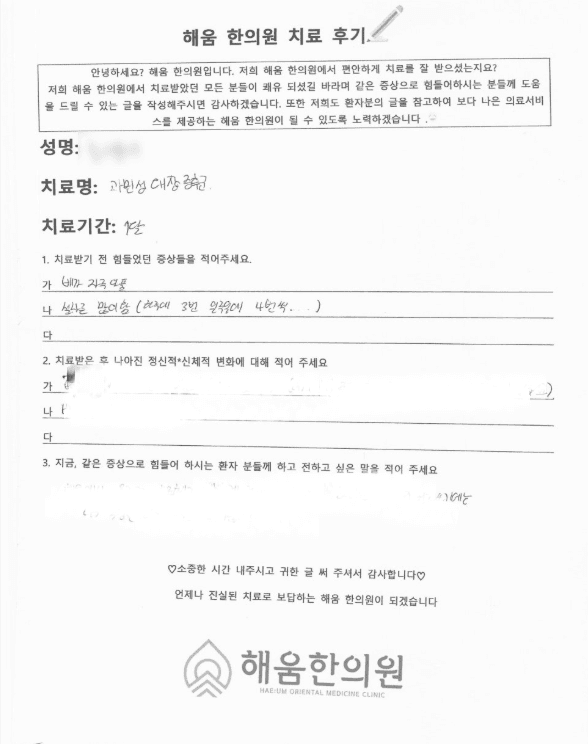
다른 증상으로 내원하신 분들의 후기 중 ‘과민성대장증후군’이 증상으로 함께 언급된 기록
과민성대장증후군, 누가 진료하나요?
담당 의료진
대표원장 박재은

“병이 아니라 그 뒤의 사람을 봅니다”
경희대학교 한의과대학에서 석사·박사 과정을 마쳤습니다. 심리상담사 1급 자격과 4만 건 이상의 한약 처방 경험을 바탕으로 진료합니다.
의료진 소개 더보기과민성대장증후군, 자주 묻는 질문
내시경이 정상인데 왜 배가 아픈가요?
과민성대장증후군이 대장암이 되나요?
시험이나 면접 때마다 배가 아파요. 왜 그런가요?
양약과 한약을 같이 먹어도 되나요?
치료 기간은 얼마나 걸리나요?
어떤 음식을 조심해야 하나요?
해움한의원에서 과민성대장증후군을 진료하나요?
과민성대장증후군으로 내원하려면 어떻게 하나요?
과민성대장증후군에 관해 알아두면 좋은 정보
2건과민성대장증후군과 관련해 정리한 건강정보입니다.
배가 늘 빵빵하고 방귀가 잦다면? 과민성대장증후군 가스형을 살펴보세요
“배에 가스가 너무 차서 하루 종일 불편해요”아침에는 괜찮다가 식사를 하고 나면 배가 점점 부풀어 오르고, 오후가 되면 바지가 꽉 끼는 것처럼 답답해지는 분들이 있습니다.회의나 수업 중에는 방귀가 나올까 봐 신경이
식사후 복통 설사 때문에 외식이 두렵다면 확인해야 할 원인
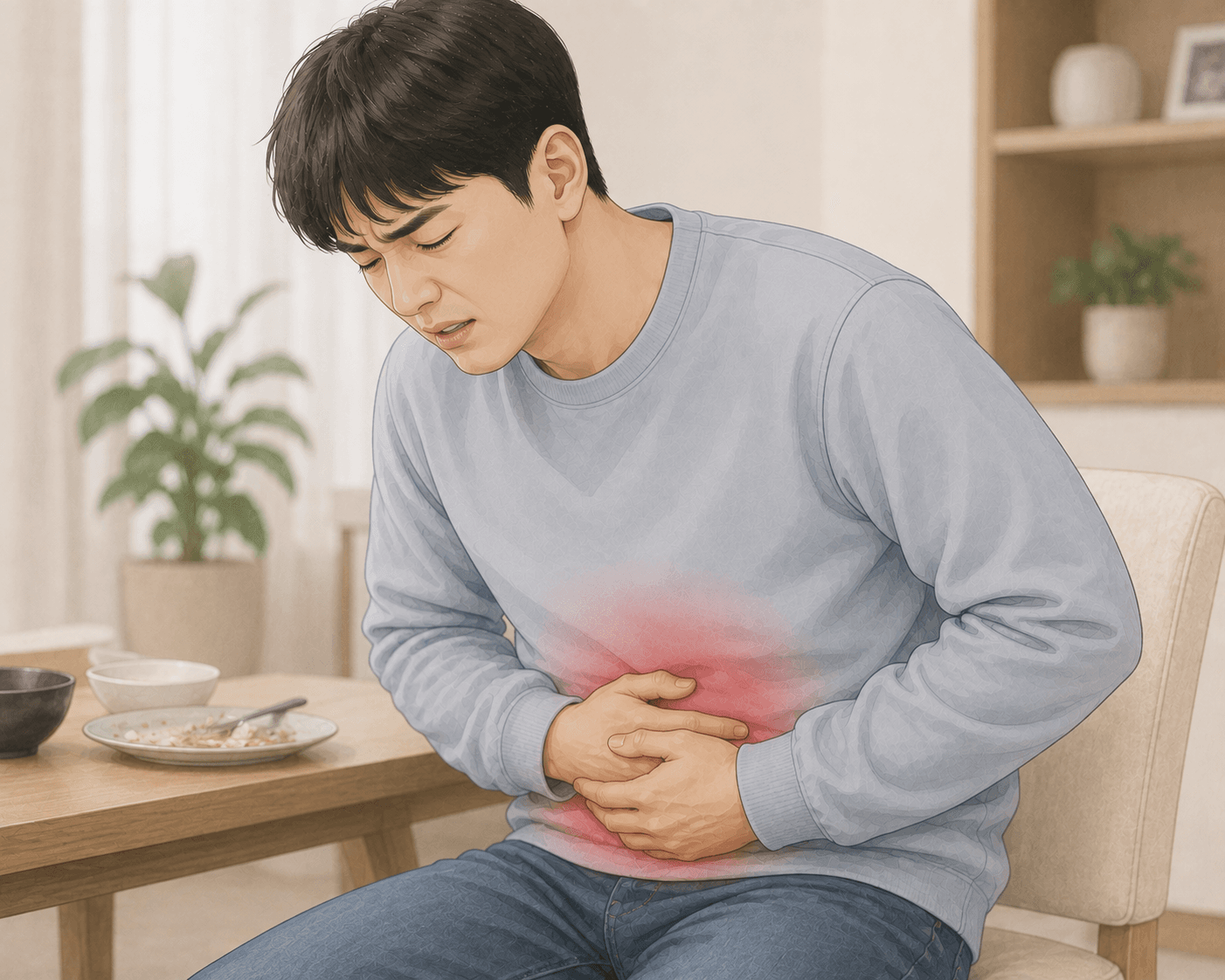
밥을 먹는 게 두려워질 정도로 배가 아프다면“밥만 먹으면 배가 아파요.”“식사를 끝내기도 전에 화장실부터 찾게 됩니다.”“중요한 약속이 있는 날에는 아예 밥을 안 먹는 게 마음이 편해요.”식사후 복통 설사가 반복되는
과민성대장증후군, 질문 있어요
2건환자분들이 남긴 온라인 상담 질문과 의료진 답변입니다.
이런 경우에는 미루지 말고 진료를 받으세요
아래 증상이 있다면 과민성대장증후군이 아니라 염증성 장질환이나 대장암일 수 있습니다. 지체하지 말고 소화기 진료를 먼저 받으세요.
- 혈변을 보거나 변이 검게 나온다
- 이유 없이 체중이 줄고 있다
- 자다가 복통이나 설사로 깬다
- 열이 나거나, 50세 이후 증상이 새로 생겼다
- 심한 복통이 멎지 않고 구토가 계속된다: 119
참고문헌 7편
[1]Moayyedi P, Andrews CN, MacQueen G, Korownyk C, Marsiglio M, Graff L, et al. Canadian Association of Gastroenterology Clinical Practice Guideline for the Management of Irritable Bowel Syndrome (IBS). J Can Assoc Gastroenterol. 2019;2(1):6-29. doi:10.1093/jcag/gwy071. PMID: 31294724.
초록 (Abstract)
Background & aims: Irritable bowel syndrome (IBS) is one of the most common gastrointestinal (GI) disorders, affecting about 10% of the general population globally. The aim of this consensus was to develop guidelines for the management of IBS.
Methods: A systematic literature search identified studies on the management of IBS. The quality of evidence and strength of recommendations were rated according to the Grading of Recommendation Assessment, Development and Evaluation (GRADE) approach. Statements were developed through an iterative online platform and then finalized and voted on by a multidisciplinary group of clinicians and a patient.
Results: Consensus was reached on 28 of 31 statements. Irritable bowel syndrome is diagnosed based on symptoms; serological testing is suggested to exclude celiac disease, but routine testing for C-reactive protein (CRP), fecal calprotectin or food allergies is not recommended. A trial of a low fermentable oligosaccharides, disaccharides, monosaccharides, polyols (FODMAP) diet is suggested, while a gluten-free diet is not. Psyllium, but not wheat bran, supplementation may help reduce symptoms. Alternative therapies such as peppermint oil and probiotics are suggested, while herbal therapies and acupuncture are not. Cognitive behavioural therapy and hypnotherapy are suggested psychological therapies. Among the suggested or recommended pharmacological therapies are antispasmodics, certain antidepressants, eluxadoline, lubiprostone, and linaclotide. Loperamide, cholestyramine and osmotic laxatives are not recommended for overall IBS symptoms. The nature of the IBS symptoms (diarrhea-predominant or constipation-predominant) should be considered in the choice of pharmacological treatments.
Conclusions: Patients with IBS may benefit from a multipronged, individualized approach to treatment, including dietary modifications, psychological and pharmacological therapies.
원문 발췌 · Moayyedi P, Andrews CN, MacQueen G, Korownyk C, Marsiglio M, Graff L, Kvern B, Lazarescu A, Liu L, Paterson WG, Sidani S, Vanner S, J Can Assoc Gastroenterol 2019 · CC BY 4.0 라이선스에 따라 수정 없이 인용했습니다(본문 속 인용 번호는 생략).
[2]Lovell RM, Ford AC. Global prevalence of and risk factors for irritable bowel syndrome: a meta-analysis. Clin Gastroenterol Hepatol. 2012;10(7):712-721.e4. doi:10.1016/j.cgh.2012.02.029. PMID: 22426087.
요약 26만여 명을 다룬 80개 연구의 메타분석입니다. 과민성대장증후군 유병률은 11.2%였고, 여성이 남성보다 1.67배 많았으며, 50세 이상에서는 적었습니다.원문은 출판사 저작권 자료로, 위 링크에서 확인하실 수 있습니다.
[3]Zamani M, Alizadeh-Tabari S, Zamani V. Systematic review with meta-analysis: the prevalence of anxiety and depression in patients with irritable bowel syndrome. Aliment Pharmacol Ther. 2019;50(2):132-143. doi:10.1111/apt.15325. PMID: 31157418.
요약 73편의 메타분석입니다. 과민성대장증후군 환자의 39.1%가 불안 증상을, 28.8%가 우울 증상을 겪었습니다. 건강한 사람보다 불안 증상은 3.11배, 우울 증상은 3.04배 많았습니다.원문은 출판사 저작권 자료로, 위 링크에서 확인하실 수 있습니다.
[4]Black CJ, Staudacher HM, Ford AC. Efficacy of a low FODMAP diet in irritable bowel syndrome: systematic review and network meta-analysis. Gut. 2022;71(6):1117-1126. doi:10.1136/gutjnl-2021-325214. PMID: 34376515.
요약 13개 무작위 대조 연구, 944명의 네트워크 메타분석입니다. 저포드맵 식이는 평소 식사보다 증상이 좋아지지 않을 위험을 33% 낮췄고, 복통과 복부 팽만에서도 가장 높은 순위였습니다.원문은 출판사 저작권 자료로, 위 링크에서 확인하실 수 있습니다.
[5]Pei L, Geng H, Guo J, Yang G, Wang L, Shen R, et al. Effect of Acupuncture in Patients With Irritable Bowel Syndrome: A Randomized Controlled Trial. Mayo Clin Proc. 2020;95(8):1671-1683. doi:10.1016/j.mayocp.2020.01.042. PMID: 32499125.
요약 과민성대장증후군 환자 531명을 침 치료와 약물 치료로 나눈 무작위 대조 연구입니다. 6주 동안 증상 점수는 침 치료 군이 123.51점, 약물 군이 94.73점 줄었고, 효과는 12주까지 이어졌습니다.원문은 출판사 저작권 자료로, 위 링크에서 확인하실 수 있습니다.
[6]Bensoussan A, Talley NJ, Hing M, Menzies R, Guo A, Ngu M. Treatment of irritable bowel syndrome with Chinese herbal medicine: a randomized controlled trial. JAMA. 1998;280(18):1585-1589. doi:10.1001/jama.280.18.1585. PMID: 9820260.
요약 한약을 위약과 비교한 무작위 대조 연구입니다. 한약 군은 위약 군보다 장 증상과 전반적 호전이 더 좋았습니다. 치료가 끝나고 14주 뒤에는 개인별 맞춤 처방을 받은 군만 호전이 유지되었습니다.원문은 출판사 저작권 자료로, 위 링크에서 확인하실 수 있습니다.
[7]Fukudo S, Okumura T, Inamori M, Okuyama Y, Kanazawa M, Kamiya T, et al. Evidence-based clinical practice guidelines for irritable bowel syndrome 2020. J Gastroenterol. 2021;56(3):193-217. doi:10.1007/s00535-020-01746-z. PMID: 33538894.
초록 (Abstract)
Managing irritable bowel syndrome (IBS) has attracted international attention because single-agent therapy rarely relieves bothersome symptoms for all patients. The Japanese Society of Gastroenterology (JSGE) published the first edition of evidence-based clinical practice guidelines for IBS in 2015. Much more evidence has accumulated since then, and new pharmacological agents and non-pharmacological methods have been developed. Here, we report the second edition of the JSGE-IBS guidelines comprising 41 questions including 12 background questions on epidemiology, pathophysiology, and diagnostic criteria, 26 clinical questions on diagnosis and treatment, and 3 questions on future research. For each question, statements with or without recommendations and/or evidence level are given and updated diagnostic and therapeutic algorithms are provided based on new evidence. Algorithms for diagnosis are requisite for patients with chronic abdominal pain or associated symptoms and/or abnormal bowel movement. Colonoscopy is indicated for patients with one or more alarm symptoms/signs, risk factors, and/or abnormal routine examination results. The diagnosis is based on the Rome IV criteria. Step 1 therapy consists of diet therapy, behavioral modification, and gut-targeted pharmacotherapy for 4 weeks. For non-responders, management proceeds to step 2 therapy, which includes a combination of different mechanistic gut-targeted agents and/or psychopharmacological agents and basic psychotherapy for 4 weeks. Step 3 therapy is for non-responders to step 2 and comprises a combination of gut-targeted pharmacotherapy, psychopharmacological treatments, and/or specific psychotherapy. These updated JSGE-IBS guidelines present best practice strategies for IBS patients in Japan and we believe these core strategies can be useful for IBS diagnosis and treatment globally.
원문 발췌 · Fukudo S, Okumura T, Inamori M, Okuyama Y, Kanazawa M, Kamiya T, Sato K, Shiotani A, Naito Y, Fujikawa Y, Hokari R, Masaoka T, Fujimoto K, Kaneko H, Torii A, Matsueda K, Miwa H, Enomoto N, Shimosegawa T, Koike K, J Gastroenterol 2021 · CC BY 4.0 라이선스에 따라 수정 없이 인용했습니다(본문 속 인용 번호는 생략).