

속이 쓰리고 더부룩해서 검진을 받았더니 "위염이 있네요"라는 말을 들었습니다. 약을 먹으면 나아지는 듯하다가, 스트레스를 받거나 조금만 무리해도 다시 시작됩니다. 끝나지 않는 위염, 왜 그럴까요?
위염 한눈에 보기
- 위염은 위 점막에 염증이 생긴 상태로, 속쓰림, 더부룩함, 명치 통증이 되풀이되는 질환입니다.
- 세계 인구의 절반 이상이 감염된 헬리코박터균과 진통제, 음주, 스트레스가 주된 원인으로 꼽힙니다.
- 내시경 소견과 증상이 꼭 일치하지는 않아, 위 점막과 함께 소화 기능과 자율신경의 균형을 살펴야 합니다.
- 치료후기 4건
- 건강정보 5편
위염이란?
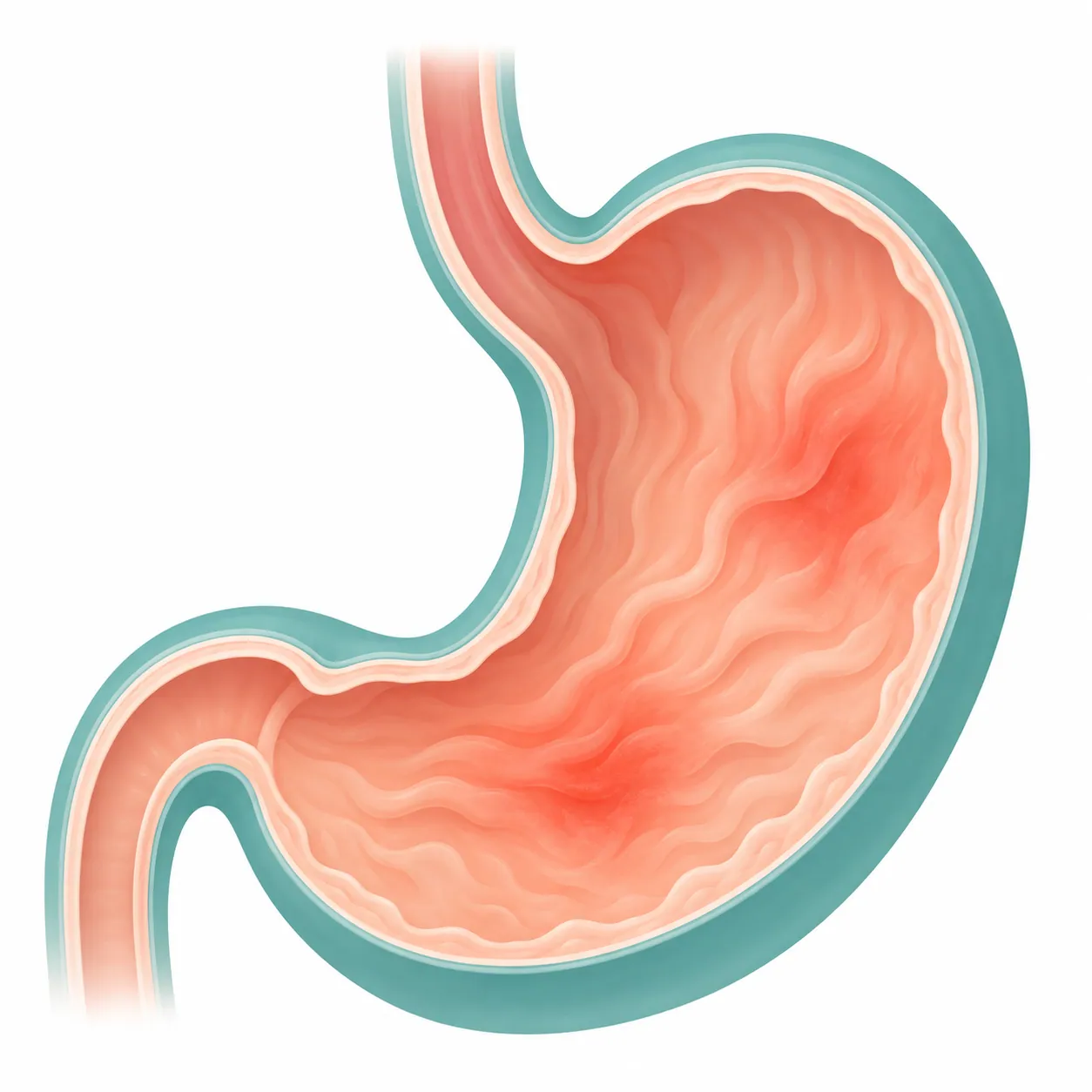
위염은 위 안쪽 점막에 염증이 생긴 상태입니다. 갑자기 생기는 급성 위염과 오래 이어지는 만성 위염이 있고, 내시경에서는 표재성, 미란성, 위축성 위염처럼 점막의 모습에 따라 나눕니다. 특히 위축성 위염과 장상피화생은 점막이 오래 손상되며 생긴 변화라 정기적인 내시경이 필요합니다.
가장 흔한 원인 가운데 하나인 헬리코박터균은 세계 약 44억 명, 인구의 절반 이상이 감염된 것으로 추정됩니다[1].
이런 증상이 있나요?

- 속이 쓰리고 명치가 아프다
- 식후에 더부룩하고 트림이 난다
- 입맛이 없고 메스껍다
- 공복이나 밤에 속이 쓰리다
- 스트레스를 받으면 속이 뒤집힌다
- 위장약을 먹을 때만 잠깐 괜찮다
- 내시경에서 위염이라는데 증상이 오래간다
위염은 내시경으로 점막의 상태를 확인하고, 필요하면 조직검사와 헬리코박터균 검사를 합니다. 내시경에서 위염이 있어도 증상이 없는 분이 있고, 증상이 심해도 내시경이 깨끗한 분이 있어 내시경 소견과 증상을 함께 봐야 합니다.
위염은 왜 생기나요?
- 헬리코박터균 감염
- 소염진통제, 아스피린 같은 약
- 잦은 음주와 담배
- 맵고 짠 음식, 불규칙한 식사
- 스트레스와 수면 부족
- 비만
이 중에서도 스트레스는 꼭 살펴봐야 합니다. 소화 기능은 우리 몸의 자율신경의 작용에 영향을 많이 받습니다. 따라서 극도의 스트레스로 인해 위산의 분비나 위장의 움직임에 이상이 생기면 위염을 유발할 수 있습니다. 긴장하면 위의 움직임과 혈류가 달라져 같은 염증이라도 증상이 더 크게 느껴집니다. 생활 습관도 중요합니다. 유전 연구에서 흡연과 비만은 위궤양 위험을 높이는 요인으로 나타났습니다[2].
해움한의원은 이렇게 치료합니다

해움한의원은 위 점막만 보지 않고, 위를 예민하게 만드는 자율신경과 소화 기능을 함께 살핍니다.
1단계. 위험 신호와 유형을 가립니다
내시경 결과와 증상, 복용 중인 약, 식습관과 스트레스를 자세히 살펴봅니다. 위험 신호가 있으면 내시경 검사를 먼저 안내해 드립니다. 심박변이도 검사로 자율신경의 긴장 상태를 확인합니다.
2단계. 굳은 명치와 배를 풉니다
침과 약침, 뜸으로 명치와 배, 등의 긴장을 풀어 위가 편하게 움직이도록 돕습니다.
3단계. 유형에 맞춰 바탕을 다스립니다
체질과 상태에 맞춰 한약을 짓습니다. 식사 시간과 음식, 수면 습관도 함께 바로잡습니다.
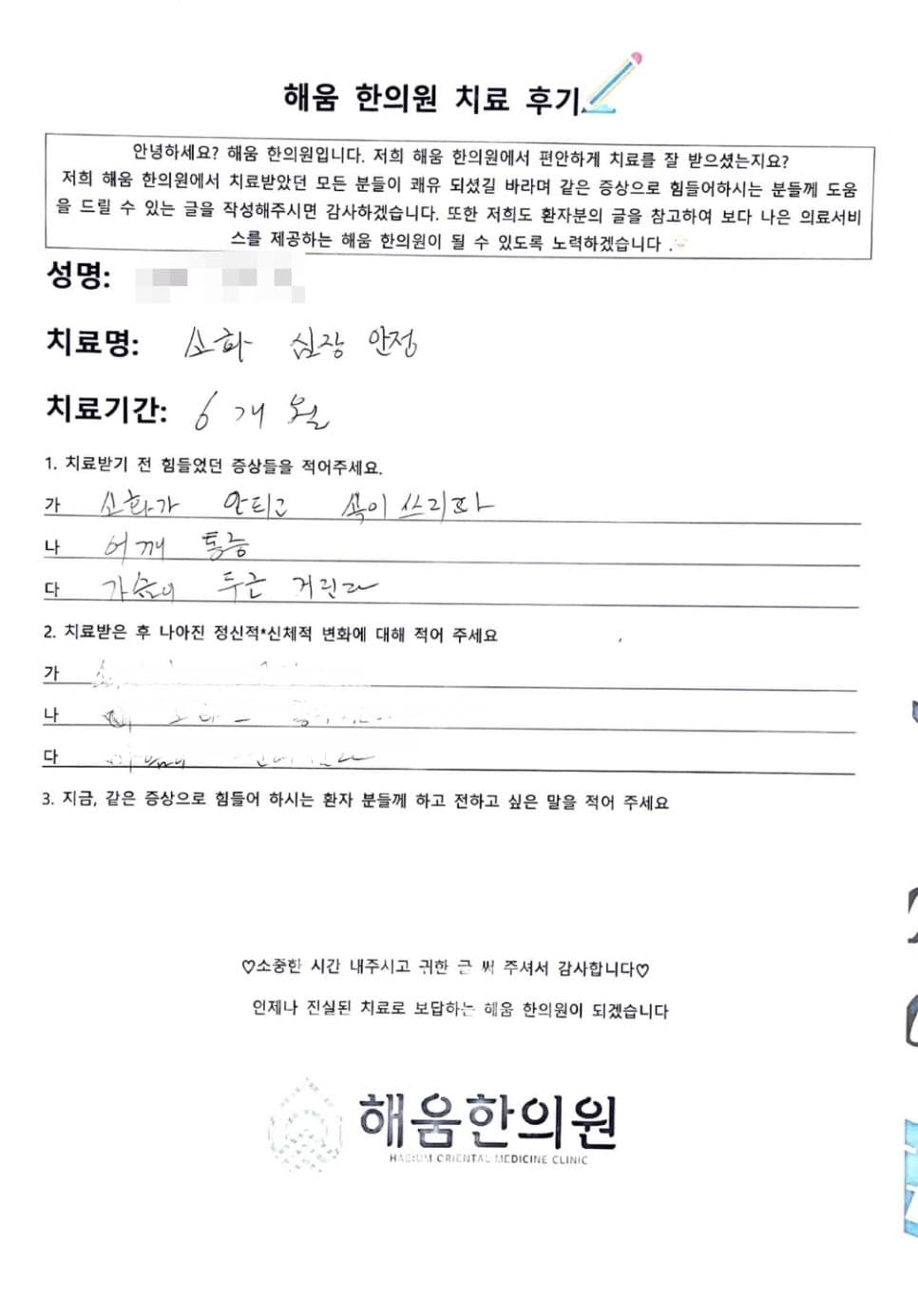
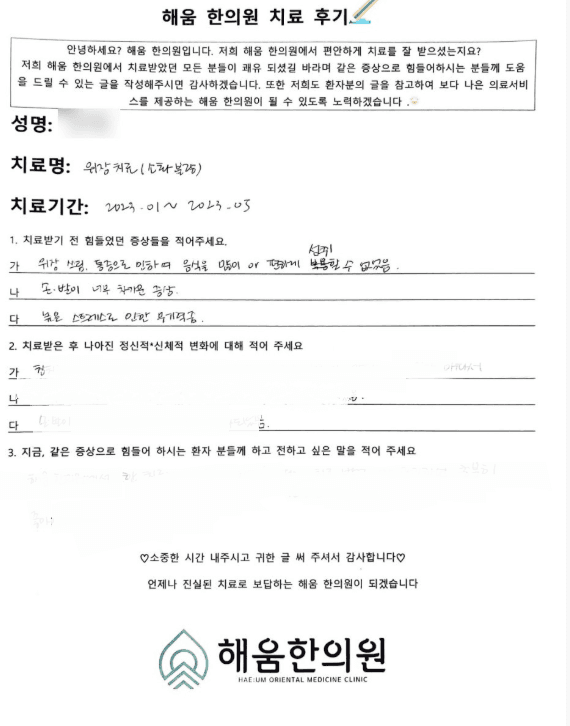
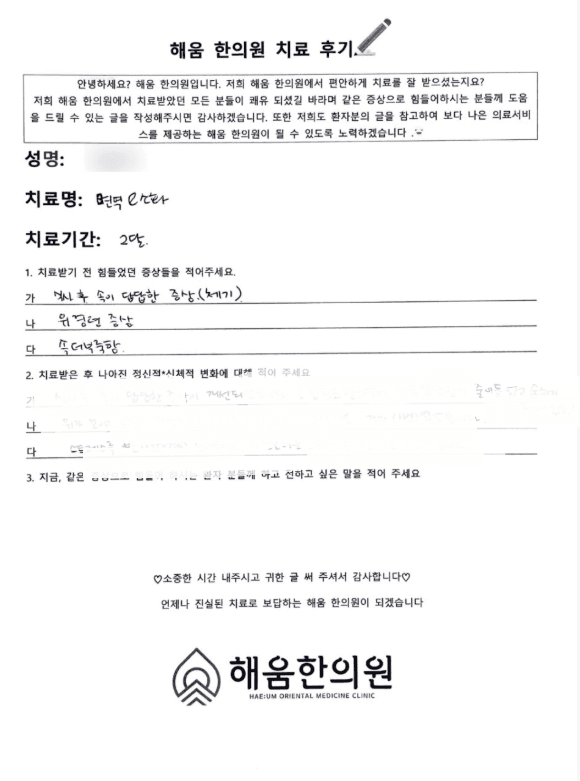
4만 건의 처방 사례가 말해주는, 한방 맞춤 치료의 힘



위염, 누가 진료하나요?
담당 의료진
대표원장 박재은

“병이 아니라 그 뒤의 사람을 봅니다”
경희대학교 한의과대학에서 석사·박사 과정을 마쳤습니다. 심리상담사 1급 자격과 4만 건 이상의 한약 처방 경험을 바탕으로 진료합니다.
의료진 소개 더보기위염, 자주 묻는 질문
위염이 위암이 되나요?
헬리코박터균은 꼭 치료해야 하나요?
양약과 한약을 같이 먹어도 되나요?
치료 기간은 얼마나 걸리나요?
생활에서 어떻게 관리해야 하나요?
해움한의원에서 위염을 진료하나요?
위염으로 내원하려면 어떻게 하나요?
위염에 관해 알아두면 좋은 정보
5건위염과 관련해 정리한 건강정보입니다.
위염에좋은과일과 위염에좋은차, 내 위 상태에 맞게 먹어야 합니다
속이 쓰리고 더부룩할 때 가장 먼저 찾게 되는 음식식사를 조금만 많이 해도 속이 더부룩합니다.아침에 일어나면 명치가 답답하고, 공복에는 속이 쓰린데 막상 밥을 먹으면 또 소화가 잘되지 않습니다.처음에는 단순한 소화불

명치복통이 반복된다면 소화불량만 의심하지 마세요
명치복통, 단순한 체증으로 넘겨도 될까요?"명치가 꽉 조이는 것처럼 아파요.""식사 후마다 명치복통이 심해집니다.""혹시 췌장에 문제가 생긴 것은 아닐까 걱정됩니다."명치 부위에 통증이 생기면 대부분 체했거나 위염

명치끝통증 원인, 위장 문제와 자율신경 균형을 함께 봐야 하는 이유
명치가 콕 아플 때, 그냥 체한 걸까요?명치 끝이 콕 찌르듯 아프거나,타는 듯 쓰리고 답답한 느낌이 들면대부분 먼저 “체했나?” 하고 생각합니다.그런데 명치 끝통증은단순 소화불량만으로 나타나는 증상이 아닐 수 있습니

장상피화생, 치료 안 하면 위암으로 이어질 수 있습니다
“속이 더부룩한데… 그냥 위염일까요?”식사만 하면 속이 더부룩하고소화가 잘 안 되는 느낌, 한 번쯤 경험해보셨을 겁니다.그래서 대부분 이렇게 생각합니다.“소화가 좀 안 되는 거겠지…”“위염이겠지, 약 먹으면 괜찮아지

반복되는위염, 자율신경이 무너지면 생기는 신호입니다
“괜찮아질 줄 알았는데, 왜 계속 반복될까요?”“속이 쓰리고, 밥을 먹으면 더부룩하고… 공복에는 또 아파요.”이런 증상 때문에 병원을 찾고 약을 먹어보셨나요?그런데도 이상하게 며칠 괜찮다가 다시 반복되는 경험, 해보

이런 경우에는 미루지 말고 진료를 받으세요
아래 증상이 있다면 위궤양 출혈이나 위암 같은 질환일 수 있습니다. 지체하지 말고 응급실이나 소화기 진료를 먼저 찾으세요.
- 피를 토하거나 변이 검게 나온다: 119
- 배를 칼로 찌르듯 갑자기 심하게 아프다: 119
- 이유 없이 체중이 줄고 있다
- 음식을 삼키기 어렵거나 먹으면 바로 토한다
- 40세 이상인데 내시경을 받은 지 2년이 넘었다
참고문헌 4편
[1]Hooi JKY, Lai WY, Ng WK, Suen MMY, Underwood FE, Tanyingoh D, et al. Global Prevalence of Helicobacter pylori Infection: Systematic Review and Meta-Analysis. Gastroenterology. 2017;153(2):420-429. doi:10.1053/j.gastro.2017.04.022. PMID: 28456631.
요약 62개국 자료의 메타분석입니다. 2015년 기준 세계 약 44억 명이 헬리코박터균에 감염되어, 세계 인구의 절반 이상으로 추정되었습니다.원문은 출판사 저작권 자료로, 위 링크에서 확인하실 수 있습니다.
[2]Liu Y, Xiao Z, Ye K, Xu L, Zhang Y. Smoking, alcohol consumption, diabetes, body mass index, and peptic ulcer risk: A two-sample Mendelian randomization study. Front Genet. 2022;13:992080. doi:10.3389/fgene.2022.992080. PMID: 36685897.
초록 (Abstract)
Background: Observational evidence has shown that smoking, alcohol consumption, type 2 diabetes, and body mass index (BMI) are risk factors for peptic ulcer disease (PUD), including gastric ulcer (GU) and duodenal ulcer (DU). However, the observed associations may be confounding factors. Herein, we use Mendelian randomization (MR) to examine causal associations such as smoking, alcohol, type 2 diabetes, BMI, and risks of PUD.
Methods: We used 8,17,41,325,82, 231, and 616 identified genetic variants as proxies for age of smoking initiation (AgeSmk), smoking cessation (SmkCes, current/former), number of cigarettes smoked per day (CigDay), smoking status (SmkIni, ever/never), alcohol consumption, type 2 diabetes, and BMI to obtain unconfounded effect estimates on the GU and DU levels among 452,264 participants from the Gene ATLAS. The causal relationship was estimated by using inverse-variance weighted (IVW) as the main method. Sensitivity analysis includes Cochran’s Q test, the MR-Egger test, MR pleiotropy residual sum and outlier (MR-PRESSO), and MR-robust adjusted profile score (MR-RAPS). In addition, secondary MR analysis was conducted within summary data using genetic risk scores (GRSs) as instrumental variables (IVs).
Results: In our two-sample MR analyses, genetic predisposition to smoking (SmkInit) and BMI were associated with an increased risk of GU. The beta values were 0.0035 (95% CI, 0.0021, 0.0049, p = 1.56E-06) for smoking (SmkInit) and 0.0021 (95% CI, 0.0009, 0.0033, p = 0.0008) for BMI. Genetic predisposition to smoking (SmkInit) and higher genetically predicted BMI were associated with an increased risk of DU. The beta values of DU were 0.0029 (95% CI, 0.0017, 0.0041, p = 2.43E-06) for smoking (SmkInit) and 0.0018 (95% CI, 0.0007, 0.0029, p = 0.001) for BMI. No other causal association between smoking (AgeSmk, CigDay, and SmkCes), alcohol consumption, type 2 diabetes, and GU or DU was observed. Consistent results were obtained in sensitivity analyses. Furthermore, the GRS approach showed similar results in the several MR methods.
Conclusion: These findings do not support a causal role of AgeSmk, CigDay, SmkCes, alcohol consumption, and type 2 diabetes in the development of GU and DU. However, it is confirmed that SmkInit and BMI have a causal part in the development of GU and DU.
결과 (Results)
3.1 Instrumental variables and their validity: A total of 231 independent SNPs for type 2 diabetes, 82 independent SNPs for alcohol consumption, 616 independent SNPs for BMI, and 8, 41, 17, and 325 SNPs for the AgeSmk, CigDay, SmkCes, and SmkInit of smoking phenotypes, respectively, were included as IVs (Supplementary Tables S1–S7).
3.2 Mendelian randomization / 3.2.1 MR results of smoking to GU and DU: Genetic predisposition to SmkInit was associated with an increased risk of GU and DU. These associations are consistent across multiple MR methods. The beta and corresponding 95% CIs of GU were 0.0035 (95% CI, 0.0021, 0.0049) for one SD increase for SmkInit and DU were 0.0029 (95% CI, 0.0017, 0.0041) for one SD increase for SmkInit (Table 1, Supplementary Figures S1–S2). Genetic predisposition to AgeSmk, CigDay, and SmkCes was not associated with GU and DU susceptibilities (Table 1, Supplementary Figures S1–S2).
3.2.2 MR results of alcohol consumption to GU and DU: Increased alcohol consumption had no discernible influence on the risk of GU and DU (beta = -0.0030, 95% CI = -0.0080, 0.0021, p = 0.25; beta = 0.0027, 95% CI = -0.0016, 0.0070, p = 0.21, respectively) (Table 1). The MR-Egger regression and Cochran’s Q test did not reveal any evidence that supported horizontal pleiotropy and heterogeneity. MR-PRESSO shows an SNP with horizontal pleiotropic, with one SNP identified as outliers (rs281379). When we removed rs281379, our results were stable, and neither horizontal pleiotropic nor heterogeneity was detected (Table 3). The results of all methods were consistent, and MR-PRESSO did not show the existence of pleiotropic SNPs (Table 1, Supplementary Figures S1–S2).
3.2.3 MR results of type 2 diabetes to GU and DU: Genetic predisposition to type 2 diabetes was not associated with an increased risk of GU and DU. These associations are consistent across multiple MR methods. The beta and corresponding 95% CIs of GU were 0.0002 (95% CI, -0.0003, 0.0007) for type 2 diabetes and DU were 0.0002 (95% CI, -0.0002, 0.0007) for type 2 diabetes (Table 1, Supplementary Figures S1–S2). The MR-Egger regression intercept provided no support for directional pleiotropy (Table 3). The Cochran’s Q test did show some heterogeneity among individual SNPs effect estimates in type 2 diabetes on DU; therefore, a random-effects IVW model would be implemented. Random-effects IVW model results were consistent with other methods (fixed-effects IVW model weighted median estimator, simple median estimator, MR-RAPS, and MR-PRESSO) (Table 1, Supplementary Figures S1–S2).
3.2.4 MR results of BMI to GU and DU: There was a link between a higher risk of GU and DU and a genetic tendency to BMI. The beta and corresponding 95% CIs of GU were 0.0021 (95% CI, 0.0009, 0.0033) for one SD increase for BMI and DU were 0.0018 (95% CI, 0.0007, 0.0029) for one SD increase for BMI (Table 1, Supplementary Figures S1–S2). The Cochran’s Q test and MR-Egger regression intercept for the relationship between BMI and GU did not reveal any evidence of directional pleiotropy or heterogeneity, and the Cochran’s Q test and MR-Egger regression intercept did show heterogeneity and directional pleiotropy among individual SNPs effect estimates in BMI on DU (Table 3). However, no SNPs were identified as an outlier in the MR-PRESSO method in the BMI to DU MR analysis. In addition, random-effects IVW model results were consistent with other methods (fixed-effects IVW model, weighted median estimator, simple median estimator, MR-RAPS, and MR-PRESSO) (Table 1, Supplementary Figures S1–S2).
3.3 GRSsmoking, GRSalcohol, GRStype 2 diabetes, and GRSBMI with GU and DU: Consistent with the MR results of smoking (AgeSmk, CigDay, SmkCes, and Smklnit), alcohol consumption, type 2 diabetes, and BMI to GU and DU, the GRS revealed no causal effect of smoking (AgeSmk, CigDay, and SmkCes), alcohol consumption, and type 2 diabetes on GU and DU risks (Table 2). The GRS revealed significant causal effect of smoking (Smklnit) and BMI on GU and DU (Table 2). The beta and corresponding 95% CIs of GU were 0.0035 (95% CI, 0.0022, 0.0048) for one SD increase for Smklnit and DU were 0.0029 (95% CI, 0.0018, 0.0041) for one SD increase for Smklnit (Table 2, Supplementary Figure S3). The beta and corresponding 95% CIs of GU were 0.0021 (95% CI, 0.0009, 0.0033) for one SD increase for BMI and DU were 0.0018 (95% CI, 0.0008, 0.0028) for one SD increase for BMI (Table 2, Supplementary Figure S3).
3.4 Heterogeneity and sensitivity analysis: Cochran’s Q tests revealed that there was no heterogeneity between the smoking, alcohol consumption, type 2 diabetes, and BMI IVs in the study of smoking, alcohol consumption, type 2 diabetes, BMI, and GU MR (Table 3). In smoking and alcohol consumption to DU MR analysis, the results of Cochran’s Q tests showed that there was no heterogeneity among the smoking and alcohol consumption-related IVs (Table 3). In type 2 diabetes and BMI to DU MR analysis, the Cochran’s Q tests revealed some heterogeneity between both the IVs for type 2 diabetes (Q = 284.7, p = 0.01) and BMI (Q = 689.6, p = 0.02) (Table 3); however, random-effects IVW model results were consistent with other methods (fixed-effects IVW model, weighted median estimator, simple median estimator, MR-RAPS, and MR-PRESSO). Therefore, our results are still very reliable and this little heterogeneity has little effect on our results.
The MR-Egger regression analysis revealed that alcohol consumption, type 2 diabetes, smoking, and BMI to GU MR did not indicate horizontal pleiotropy of the IVs (Table 3), and the horizontal pleiotropy of the IVs was not present for alcohol consumption, smoking (CigDay, SmkCes, and Smklnit), and type 2 diabetes to DU MR and it was present for smoking (AgeSmk, MR-Egger p = 0.01) and BMI (MR-Egger p = 0.049) (Table 3). The MR-PRESSO global test p was >0.05 in smoking (AgeSmk) and global test p was <0.05 in BMI to DU MR, with no SNPs identified as outliers (Table 3).
3.5 Excluding associations between individual exposure factors: To exclude associations between individual exposure factors, we searched the phenoscanner website for SNPs of each exposure factor. SNPs that were strongly correlated with other exposure factors were eliminated. Specific screening results of SNPs for each exposure factor are presented in Supplementary Table S8. After removing these SNPs, which were strongly correlated with other exposure factors, we performed MR analysis again, and we got the same results as before (Supplementary Table S9). Therefore, our results can be considered very reliable.
원문 발췌 · Liu Y, Xiao Z, Ye K, Xu L, Zhang Y, Front Genet 2022 · CC BY 4.0 라이선스에 따라 수정 없이 인용했습니다(본문 속 인용 번호는 생략).
[3]Sugano K, Tack J, Kuipers EJ, Graham DY, El-Omar EM, Miura S, et al. Kyoto global consensus report on Helicobacter pylori gastritis. Gut. 2015;64(9):1353-1367. doi:10.1136/gutjnl-2015-309252. PMID: 26187502.
요약 헬리코박터 위염에 관한 세계 합의문입니다. 심각한 합병증의 위험을 줄이기 위해, 전암성 변화가 생기기 전에 가능하다면 제균 치료를 하도록 권합니다.원문은 출판사 저작권 자료로, 위 링크에서 확인하실 수 있습니다.
[4]Qin F, Liu JY, Yuan JH. Chaihu-Shugan-San, an oriental herbal preparation, for the treatment of chronic gastritis: a meta-analysis of randomized controlled trials. J Ethnopharmacol. 2013;146(2):433-439. doi:10.1016/j.jep.2013.01.029. PMID: 23376045.
요약 시호소간산을 다룬 메타분석입니다. 만성 위염 유형에 따라 양약 대조군보다 치료 반응이 1.20~1.48배 높았고, 심각한 이상반응은 없었습니다. 저자들은 근거가 아직 충분하지 않다고 밝혔습니다.원문은 출판사 저작권 자료로, 위 링크에서 확인하실 수 있습니다.