
양천구 목동 구토 한의원
구토
먹은 것도 별로 없는데 속이 울렁거리더니 결국 토합니다. 검사를 받아도 뚜렷한 원인이 없고, 다음에 또 토할까 봐 밥상 앞에서 긴장이 됩니다. 되풀이되는 구토는 원인을 찾아야 멈출 수 있습니다.
구토 한눈에 보기
- 구토는 위의 내용물이 입으로 강하게 넘어오는 증상으로, 그 자체가 병명이 아니라 원인을 찾아야 하는 신호입니다.
- 4주 넘게 이어지면 만성으로 보고, 성인의 약 2%는 뚜렷한 원인이 없는 기능성 구역·구토 질환의 증상 기준에 해당합니다.
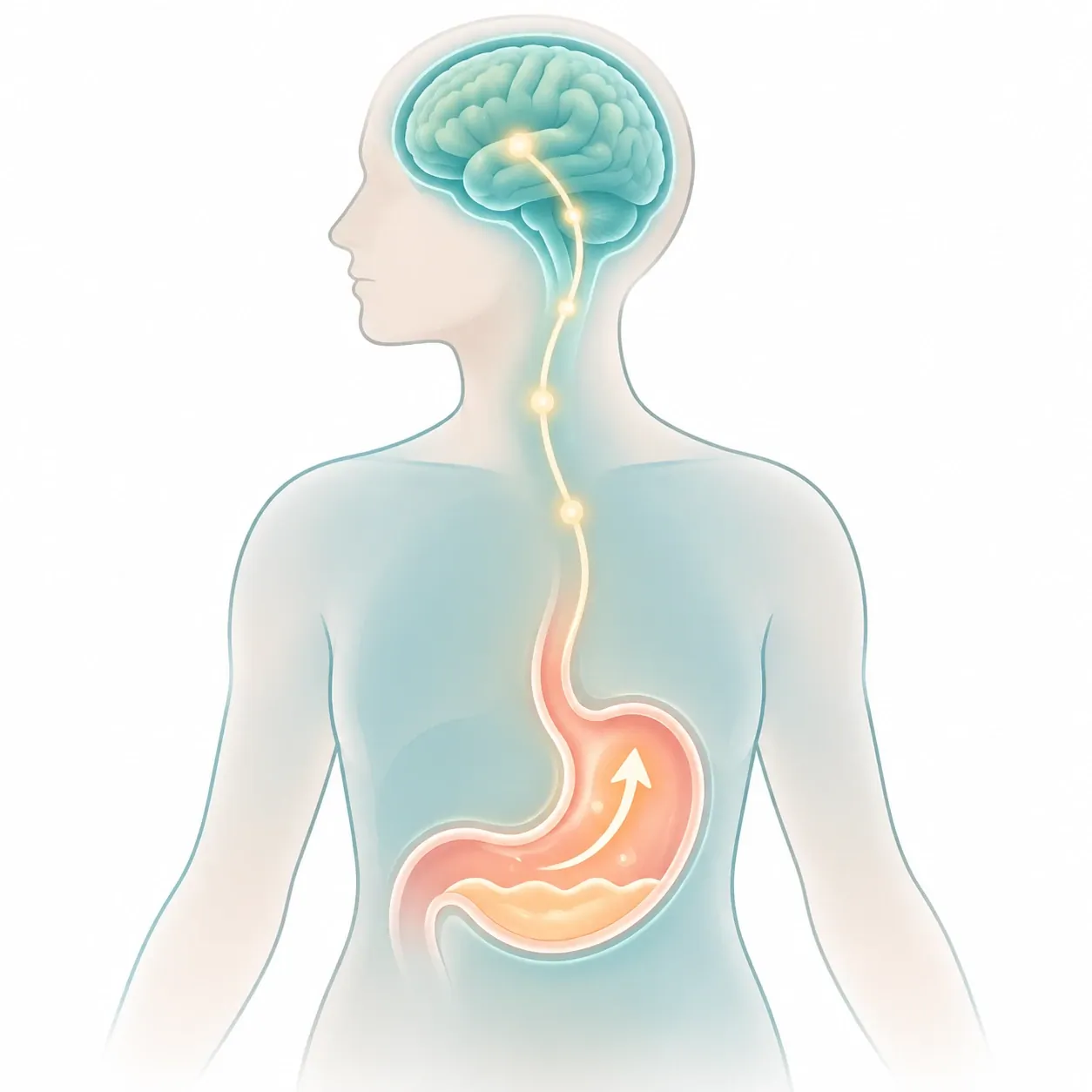
- 구토는 뇌와 자율신경이 조절해 스트레스와 불안, 수면에 흔들리므로 위와 몸의 긴장을 함께 살펴야 합니다.
- 치료후기 10건
- 의료진 칼럼 2편
- 건강정보 2편
이런 증상이 있나요?

- 속이 울렁거리고 헛구역질이 난다
- 아침이나 식후에 토한다
- 며칠간 심하게 토하다가 한동안 멀쩡하다
- 긴장하거나 스트레스를 받으면 토할 것 같다
- 토할까 봐 먹는 것이 겁난다
- 어지럼증이나 두통과 함께 토한다
- 검사는 정상인데 구토가 되풀이된다
진단은 언제, 얼마나, 무엇을 토하는지 자세히 묻는 것에서 시작합니다. 먹는 약을 확인하고, 필요하면 혈액검사와 내시경, 영상검사로 다른 질환을 가립니다. 임신 가능성이 있다면 먼저 확인해야 합니다.
구토는 왜 생기나요?
- 장염, 식중독, 위염, 위궤양
- 장폐색, 담석, 췌장염
- 위 배출이 늦어지는 위마비(당뇨 등)
- 임신, 약물 부작용, 음주
- 이석증 같은 어지럼증, 편두통, 뇌 질환
- 스트레스와 불안, 수면 부족
검사가 정상인데 며칠씩 심하게 토하고 한동안 괜찮기를 되풀이한다면 주기성 구토증후군일 수 있습니다. 이런 분들은 불안, 우울, 편두통, 자율신경 이상, 수면장애를 함께 살펴야 합니다[3]. 뇌와 위를 잇는 자율신경이 흔들리면 작은 자극에도 구토 반응이 쉽게 일어납니다.
구토의 표준 치료
표준 치료는 원인을 치료하고, 탈수를 바로잡고, 구토약을 쓰는 것입니다. 주기성 구토증후군은 삼환계 항우울제로 예방하고 발작에는 온단세트론 등을 씁니다[3]. 위마비는 음식 입자를 작게 먹는 식사가 기본입니다[4].
구토약은 증상을 누르지만, 만성 구토에는 검증된 표준 순서가 없습니다[1]. 위의 기능과 예민해진 몸이 그대로라면 구토는 되풀이됩니다. 한의학 치료는 이 바탕을 다스립니다.
연구를 보면, 손목 내관혈 자극은 수술 후 구토 위험을 가짜 자극보다 40% 낮췄고 구토약과 차이가 없었습니다[5]. 위마비에서 침은 위장운동촉진제보다 단기 호전 비율이 1.25배 높았으나, 3개월째 가짜 침과는 차이가 없어 추가적인 연구가 필요합니다[6]. 육군자탕은 항암 치료의 구토 예방 연구에서 표준 치료에 더한 효과가 뚜렷하지 않아 역시 추가적인 연구가 필요합니다[7].
해움한의원은 이렇게 치료합니다

해움한의원은 구토를 멈추는 데서 그치지 않고, 구토가 되풀이되는 위의 상태와 자율신경의 균형을 함께 살핍니다.
1단계. 위험 신호와 원인을 가립니다
구토의 시기와 횟수, 함께 오는 증상, 복용 중인 약과 검사 결과를 자세히 살펴봅니다. 위험 신호가 있으면 응급실이나 필요한 검사를 먼저 안내해 드립니다. 심박변이도 검사로 자율신경의 긴장 상태를 확인합니다.
2단계. 위와 몸의 긴장을 풉니다
침과 약침으로 명치와 배, 등의 긴장을 풀어 위가 편하게 움직이도록 돕습니다.
3단계. 유형에 맞춰 바탕을 다스립니다
식사량과 수면, 스트레스 관리를 함께 살핍니다. 체질과 상태에 맞춰 한약을 짓습니다.
4만 건의 처방 사례가 말해주는, 한방 맞춤 치료의 힘




구토 치료후기 총 10건
환자분들이 남긴 치료후기입니다. 본문은 로그인 후 보실 수 있습니다.
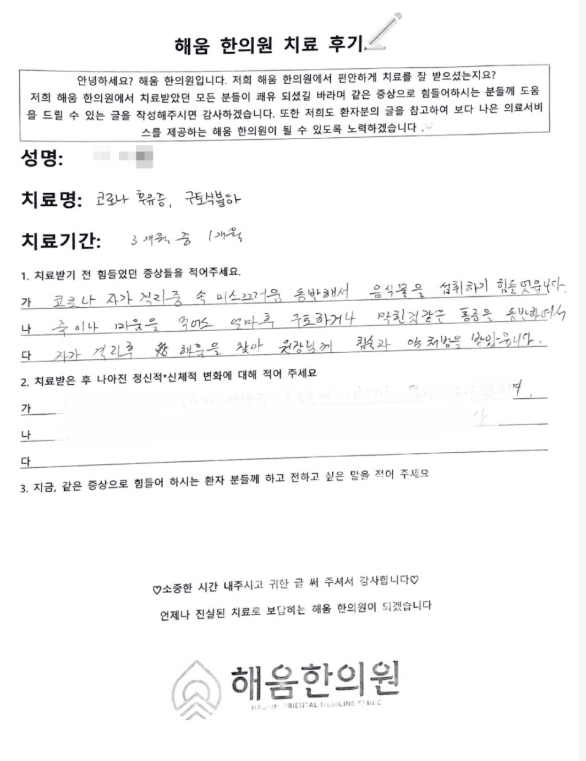
코로나 후유증으로 구토 미식거림 두통 어지러움 연하장애로 고생하신 노인 환자분
2023. 01. 03.
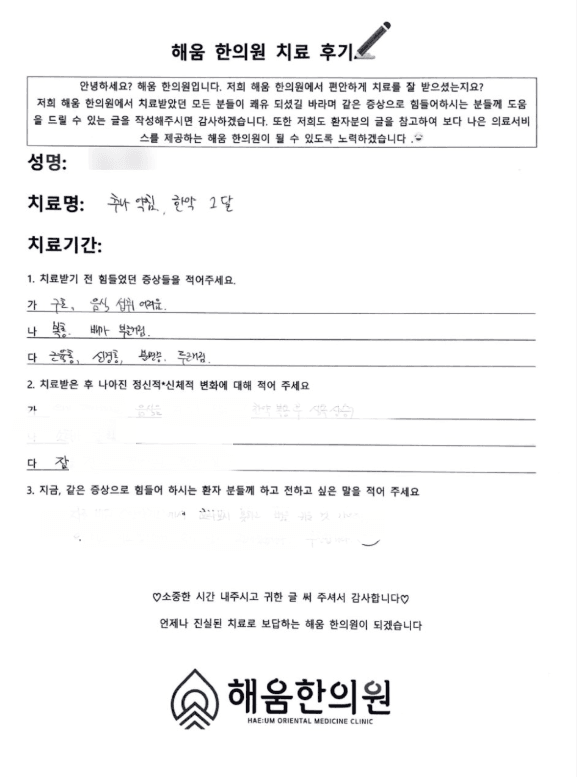
이유 모르게 토하고 배가 부글거리고 구토 증상
2022. 07. 30.
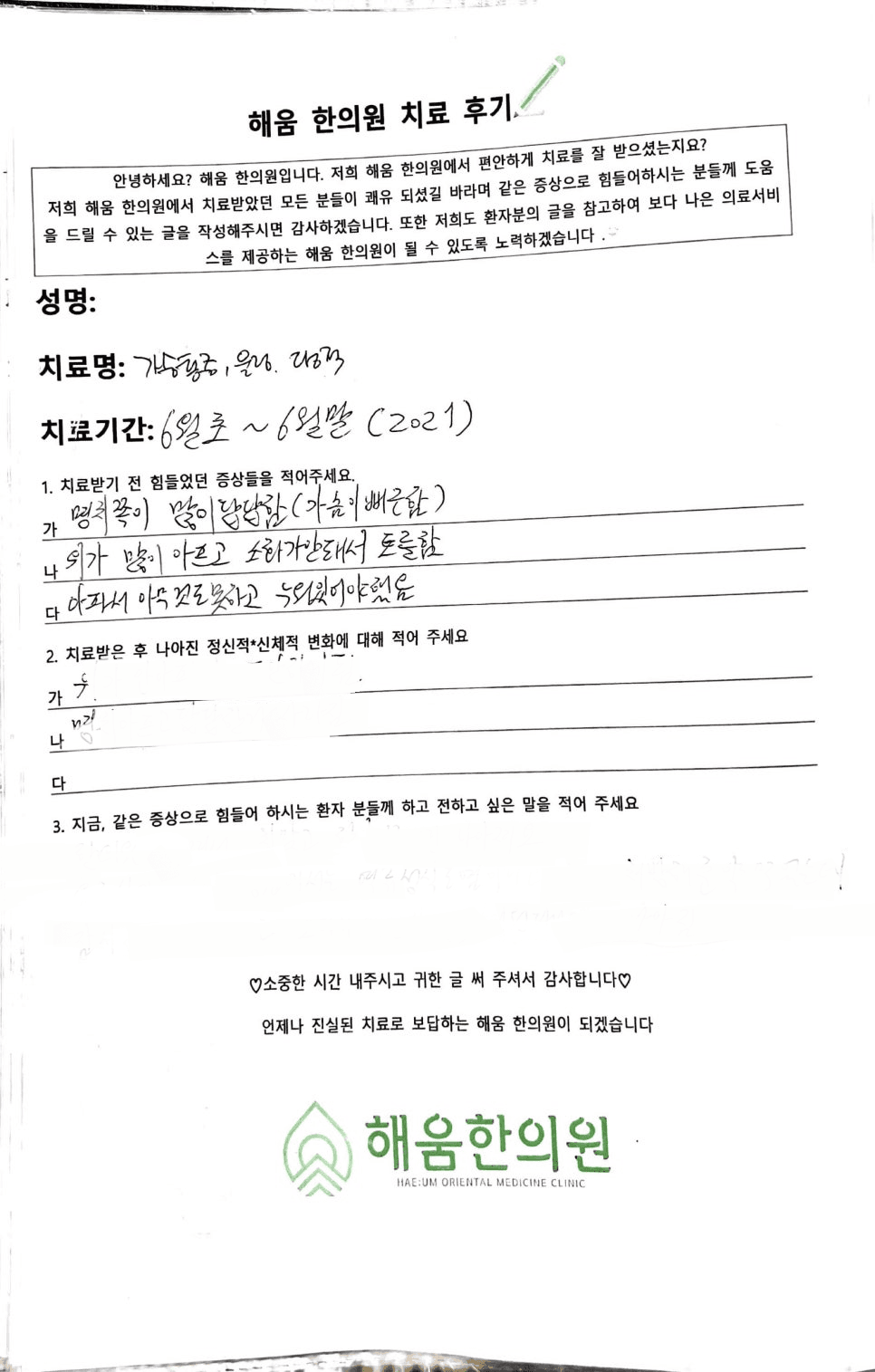
명치가 답답하고 뻐근한데 이거 가슴담적인가요?? 가슴통증,구토,소화불량 신정동한의원 치료후기
2022. 04. 15.
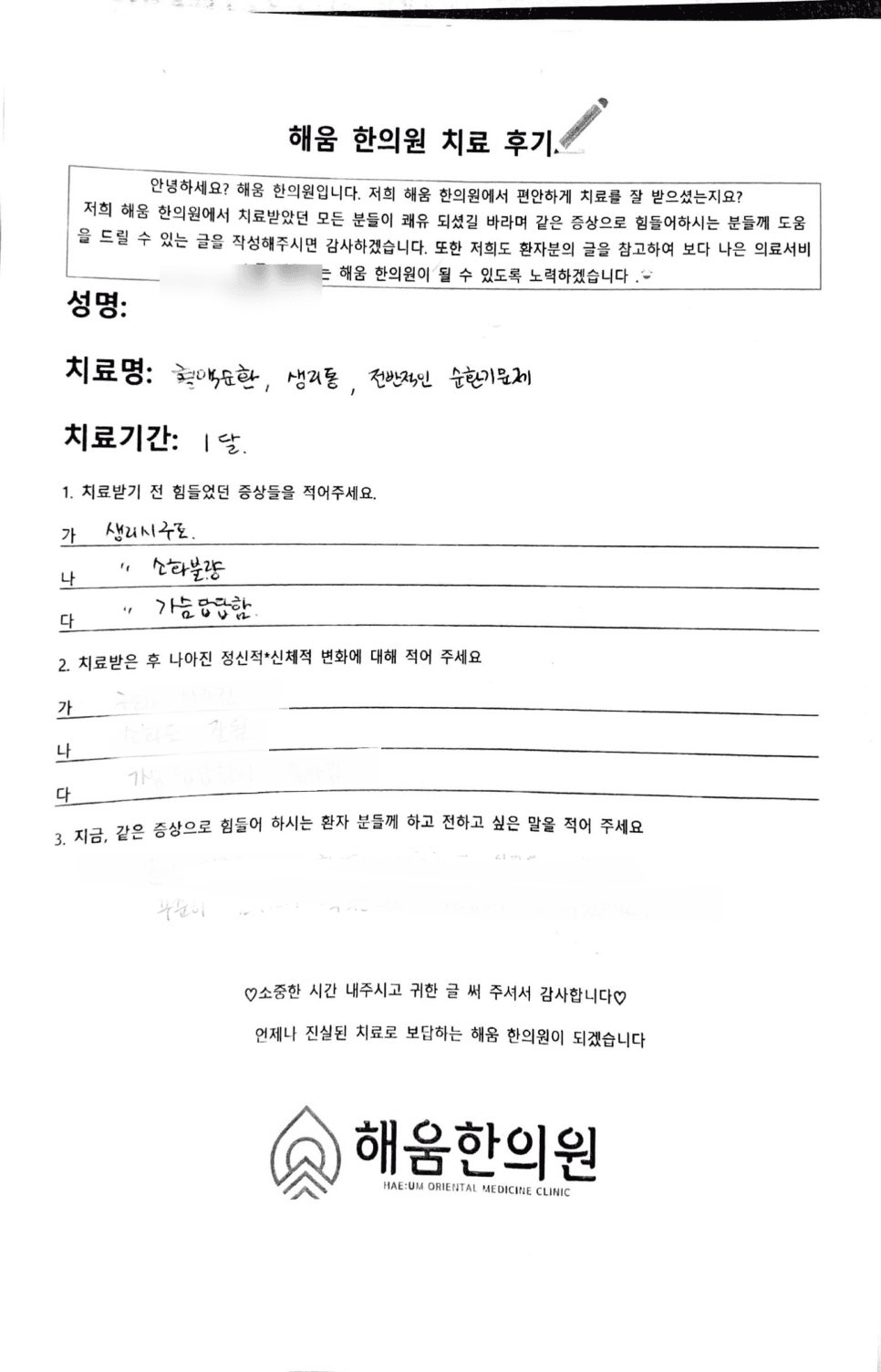
생리할때 구토, 소화불량, 가슴답답함으로 고생하셨던 환자분 1달만에 치료된 사례
2022. 03. 16.
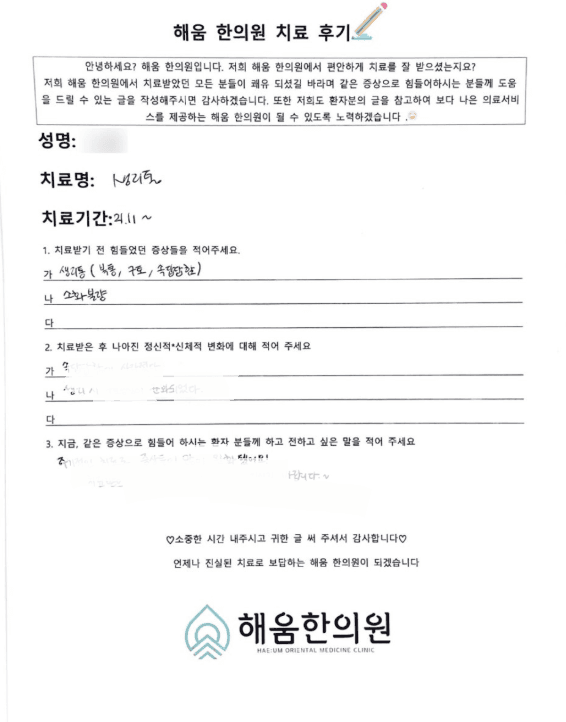
생리시 구토, 헛구역질, 소화불량 으로 고생하는 여학생 한약 한달만에 좋아진 사례
2022. 03. 04.
 관련 후기
직장 스트레스와 과로로 악화된 편두통·삼차신경통 환자
2026. 01. 06.
구토, 누가 진료하나요?
담당 의료진
대표원장 박재은

“병이 아니라 그 뒤의 사람을 봅니다”
경희대학교 한의과대학에서 석사·박사 과정을 마쳤습니다. 심리상담사 1급 자격과 4만 건 이상의 한약 처방 경험을 바탕으로 진료합니다.
의료진 소개 더보기구토, 자주 묻는 질문
토한 뒤에는 무엇을 먹어야 하나요?
검사가 정상인데도 계속 토합니다. 왜 그런가요?
구토약과 한약을 같이 먹어도 되나요?
한약을 토할까 봐 걱정됩니다.
치료 기간은 얼마나 걸리나요?
해움한의원에서 구토를 진료하나요?
구토로 내원하려면 어떻게 하나요?
구토에 관해 알아두면 좋은 정보
2건구토과 관련해 정리한 건강정보입니다.
갑자기속울렁 반복된다면? 담적병과 자율신경 문제를 살펴보세요
이유 없이 속이 울렁거릴 때, 몸은 이미 신호를 보내고 있습니다멀쩡하게 일상을 보내다가 갑자기 속이 울렁거리는 경험을 해보신 적 있으신가요?음식을 잘못 먹은 것도 아닌데 메스껍고, 속이 뒤집히는 느낌이 들며 심한 경

생리통심할때응급실 방문이 필요할까? 심한 월경통의 원인과 치료
생리통심할때응급실 가야 할 정도라면? 참지 말고 원인부터 확인하세요생리 기간이 다가올 때마다 아랫배가 아프고 허리가 뻐근해지는 분들이 많습니다.그런데 단순히 불편한 정도를 넘어 식은땀이 나고, 구토가 나거나, 몸을

이런 경우에는 바로 응급실로 가세요
아래 구토는 장폐색, 위장 출혈, 뇌 질환, 심장 질환처럼 위급한 병일 수 있습니다. 한의원보다 응급실(119)을 먼저 찾으세요.
- 피를 토하거나 커피 찌꺼기 같은 것을 토한다
- 배가 심하게 아프고 방귀와 대변이 나오지 않는다
- 심한 두통, 목 뻣뻣함, 의식 흐림과 함께 토한다
- 가슴 통증이나 식은땀과 함께 토한다
- 물도 넘기지 못하고 소변이 줄었다
- 머리를 다친 뒤 계속 토한다
참고문헌 7편
[1]Lacy BE, Parkman HP, Camilleri M. Chronic nausea and vomiting: evaluation and treatment. Am J Gastroenterol. 2018;113(5):647-659. doi:10.1038/s41395-018-0039-2. PMID: 29545633.
요약 만성 구역·구토를 4주 이상 이어지는 증상으로 정의한 종설입니다. 위 배출 지연, 주기성 구토증후군 같은 위장관 원인과 약물, 전정기관, 신경계 질환 같은 위장관 밖 원인을 구별하도록 설명합니다. 검증된 표준 치료 순서는 없습니다.원문은 출판사 저작권 자료로, 위 링크에서 확인하실 수 있습니다.
[2]Aziz I, Palsson OS, Whitehead WE, Sperber AD, Simrén M, Törnblom H. Epidemiology, Clinical Characteristics, and Associations for Rome IV Functional Nausea and Vomiting Disorders in Adults. Clin Gastroenterol Hepatol. 2019;17(5):878-886. doi:10.1016/j.cgh.2018.05.020. PMID: 29857155.
요약 미국·캐나다·영국 성인 5,931명의 인터넷 조사입니다. 2.2%가 기능성 구역·구토 질환의 증상 기준에 해당했고, 과민성대장증후군과 기능성 소화불량이 있으면 더 많았습니다.원문은 출판사 저작권 자료로, 위 링크에서 확인하실 수 있습니다.
[3]Venkatesan T, Levinthal DJ, Tarbell SE, Jaradeh SS, Hasler WL, Issenman RM, et al. Guidelines on management of cyclic vomiting syndrome in adults by the American Neurogastroenterology and Motility Society and the Cyclic Vomiting Syndrome Association. Neurogastroenterol Motil. 2019;31 Suppl 2:e13604. doi:10.1111/nmo.13604. PMID: 31241819.
요약 성인 주기성 구토증후군 진료지침입니다. 중등도 이상이면 아미트립틸린 같은 삼환계 항우울제를 예방약으로 권하고, 발작에는 온단세트론이나 수마트립탄을 씁니다. 불안, 우울, 편두통, 자율신경 이상, 수면장애 같은 동반 질환을 확인해 치료하도록 권합니다.원문은 출판사 저작권 자료로, 위 링크에서 확인하실 수 있습니다.
[4]Camilleri M, Kuo B, Nguyen L, Vaughn VM, Petrey J, Greer K, et al. ACG Clinical Guideline: Gastroparesis. Am J Gastroenterol. 2022;117(8):1197-1220. doi:10.14309/ajg.0000000000001874. PMID: 35926490.
요약 미국소화기학회의 위마비 진료지침입니다. 위마비는 기계적 폐쇄 없이 위 배출이 늦어져 음식이 위에 남는 증상이 생기는 상태이며, 식사는 음식 입자를 작게 하도록 권합니다.원문은 출판사 저작권 자료로, 위 링크에서 확인하실 수 있습니다.
[5]Lee A, Chan SK, Fan LT. Stimulation of the wrist acupuncture point PC6 for preventing postoperative nausea and vomiting. Cochrane Database Syst Rev. 2015:CD003281. doi:10.1002/14651858.cd003281.pub4. PMID: 26522652.
요약 59개 연구, 7,667명을 모은 코크란 리뷰입니다. 수술 후 환자에서 손목 내관혈 자극은 가짜 자극보다 구토 위험을 낮췄고(위험비 0.60, 근거 수준 낮음), 구토약과는 구역·구토 발생에 차이가 없었습니다. 부작용은 가볍고 일시적이었습니다.원문은 출판사 저작권 자료로, 위 링크에서 확인하실 수 있습니다.
[6]Kim KH, Lee MS, Choi TY, Kim TH. Acupuncture for symptomatic gastroparesis. Cochrane Database Syst Rev. 2018:CD009676. doi:10.1002/14651858.cd009676.pub2. PMID: 30560568.
요약 32개 연구, 2,601명의 코크란 리뷰입니다. 침은 위장운동촉진제보다 단기 호전 비율이 1.25배 높았으나 근거 수준이 매우 낮았고, 3개월째 가짜 침과는 증상 점수에 차이가 없었습니다.원문은 출판사 저작권 자료로, 위 링크에서 확인하실 수 있습니다.
[7]Harada T, Amano T, Ikari T, Takamura K, Ogi T, Fujikane T, et al. Rikkunshito for Preventing Chemotherapy-Induced Nausea and Vomiting in Lung Cancer Patients: Results from 2 Prospective, Randomized Phase 2 Trials. Front Pharmacol. 2017;8:972. doi:10.3389/fphar.2017.00972. PMID: 29387008.
초록 (Abstract)
The herbal medicine rikkunshito has the potential to improve chemotherapy-induced nausea and vomiting (CINV) by stimulating ghrelin secretion. We aimed to evaluate the efficacy and safety of rikkunshito in preventing CINV for patients with lung cancer. Two separate prospective, randomized, phase II parallel design studies were conducted in patients with lung cancer. Fifty-eight and sixty-two patients scheduled to receive highly emetogenic chemotherapy (HEC) and moderately emetogenic chemotherapy (MEC), respectively, were randomized 1:1 to receive either standard antiemetic therapy in accordance with international guidelines (S group) or standard antiemetic therapy plus oral rikkunshito (R group). The primary endpoint was overall complete response (CR)—that is, no emesis and rescue medication in the first 120 h post-chemotherapy. Secondary endpoints included CR in the acute (0–24 h) and delayed (>24–120 h) phases and safety. Fifty-seven patients (S group, 28; R group, 29) receiving HEC and sixty-two patients (S group, 30; R group, 32) receiving MEC with comparable characteristics were evaluated. The CR rates were similar across the S and R groups for the HEC study in the overall (67.9% vs. 62.1%), acute (96.4% vs. 89.6%), and delayed (67.9% vs. 62.1%) phases, respectively, and for the MEC study in the overall (83.3% vs. 84.4%), acute (100% vs. 100%), and delayed (83.3% vs. 84.4%) phases, respectively. No severe adverse events were observed. Although rikkunshito was well tolerated, it did not demonstrate an additional preventative effect against CINV in lung cancer patients receiving HEC or MEC.
Clinical Trial Registry Information: This study is registered with the University Hospital Medical Information Network (UMIN) Clinical Trial Registry1, identification numbers UMIN 000014239 and UMIN 000014240.
결과 (Results)
Patient Characteristics: Between July 2014 and January 2016, 58 patients who received HEC (29 each in the S and R groups) and 62 patients who received MEC (30 in the S group and 32 in the R group) were enrolled. One patient from the S group of the HEC study was excluded because of disease progression before the antiemetic treatment; hence, only 57 patients who received HEC were evaluable (Figures 1, 2). All patients enrolled in the two phase II studies had a good nutritional status, and had neither muscle wasting nor weight loss. The patients’ characteristics are summarized in Table 1. The baseline characteristics of the study subjects were similar between the groups in both the HEC and MEC studies. In the HEC study, the median patient age was 65 years (range 46–76 years), of whom 77.2% were men and most (96.5%) had a good ECOG PS (0–1). The most common histology was adenocarcinoma (54.4%), followed by small cell carcinoma (24.6%), and squamous cell carcinoma (14.0%). Most of the patients (87.7%) were treated with palliative chemotherapy. The combined chemotherapeutic agents with CDDP were as follows: pemetrexed (29.8%), pemetrexed plus bevacizumab (22.8%), etoposide (14.0%), vinorelbine (8.8%), irinotecan (12.3%), gemcitabine (8.8%), docetaxel (1.8%), and S-1 (1.8%). As for the MEC study, the median patient age was 70 years (range 45–89 years); 77.4% were men and most (95.2%) had a good ECOG PS of 0–1. The most common histology was adenocarcinoma (46.8%), followed by squamous cell carcinoma (30.6%) and small cell carcinoma (12.9%). Most of the patients (95.2%) were treated with palliative chemotherapy. The combined chemotherapeutic agents with carboplatin were as follows: pemetrexed (29.0%), nab-paclitaxel (27.4%), etoposide (17.7%), S-1 (9.7%), paclitaxel plus bevacizumab (6.5%), pemetrexed plus bevacizumab (3.2%), gemcitabine (3.2%), paclitaxel (1.6%), and amrubicin (1.6%).
Efficacy: In the HEC study, the CR rates in the overall phase were 67.9% (95% confidence interval [CI], 47.7–84.1) in S group and 62.1% (95% CI, 42.3–79.3) in R group (P = 0.65), which did not meet the primary endpoint. In the MEC study, the CR rates in the overall phase were 83.3% (95% CI, 65.3–94.4) in S group and 84.4% (95% CI, 67.2–94.7) in R group (P = 0.59), which met the primary endpoint (Table 2). In the HEC and MEC studies, rikkunshito did not exhibit additional improvement on CR rates in the overall phase. Furthermore, rikkunshito did not improve CR rates for the acute and delayed phases in either the HEC or MEC study. Rikkunshito administration also did not improve CP or TC rates in the acute, delayed, or overall phases in the HEC and MEC study. The median dietary intakes were also similar between the S and R groups (89 and 89 mm in the HEC study, and 90 and 91 mm in the MEC study, respectively). Subgroup analyses according to sex, age, alcohol intake, smoking status, ECOG PS, body mass index, motion sickness, dexamethasone dose, treatment line, histology, CDDP, or CBDCA dose, and combined drugs revealed no additional benefit for rikkunshito administration on CR rates in the acute, delayed, or overall phases (data not shown).
Safety: Rikkunshito was well tolerated, with frequencies of treatment-related adverse events similar to those reported in the S groups. Most adverse events were mild and were associated with the patients’ cancer and/or chemotherapy treatment. The most common treatment-related adverse events were constipation, diarrhea, and hiccups. No severe adverse events attributed to antiemetic treatments were reported in either study (Table 3).
원문 발췌 · Harada T, Amano T, Ikari T, Takamura K, Ogi T, Fujikane T, Fujita Y, Taima K, Tanaka H, Sasaki T, Okumura S, Sugawara S, Yokouchi H, Yamada N, Morikawa N, Dosaka-Akita H, Isobe H, Nishimura M, Front Pharmacol 2017 · CC BY 4.0 라이선스에 따라 수정 없이 인용했습니다(본문 속 인용 번호는 생략).