

회의 중에 갑자기 숨이 가빠지더니, 제대로 숨을 못 쉬겠어요. 손끝과 입 주변이 저리고 손이 오그라들며 이러다가 쓰러질 것 같습니다. 응급실을 갔더니, 검사 결과 이상이 없다고 해요. 또 언제 찾아올까 두려운 과호흡입니다.
과호흡 한눈에 보기
- 과호흡은 몸에 필요한 것보다 숨을 빠르고 깊게 쉬어 혈액 속 이산화탄소가 지나치게 빠져나가는 상태입니다.
- 응급실을 찾은 과호흡 환자의 약 3분의 1은 전에도 같은 발작을 겪었을 만큼 되풀이되기 쉽습니다.
- 호흡은 자율신경이 조절해, 긴장과 불안이 쌓이면 작은 자극에도 호흡이 먼저 무너집니다.
- 치료후기 1건
- 의료진 칼럼 1편
- 건강정보 6편
- 온라인 상담 1건
과호흡이란?
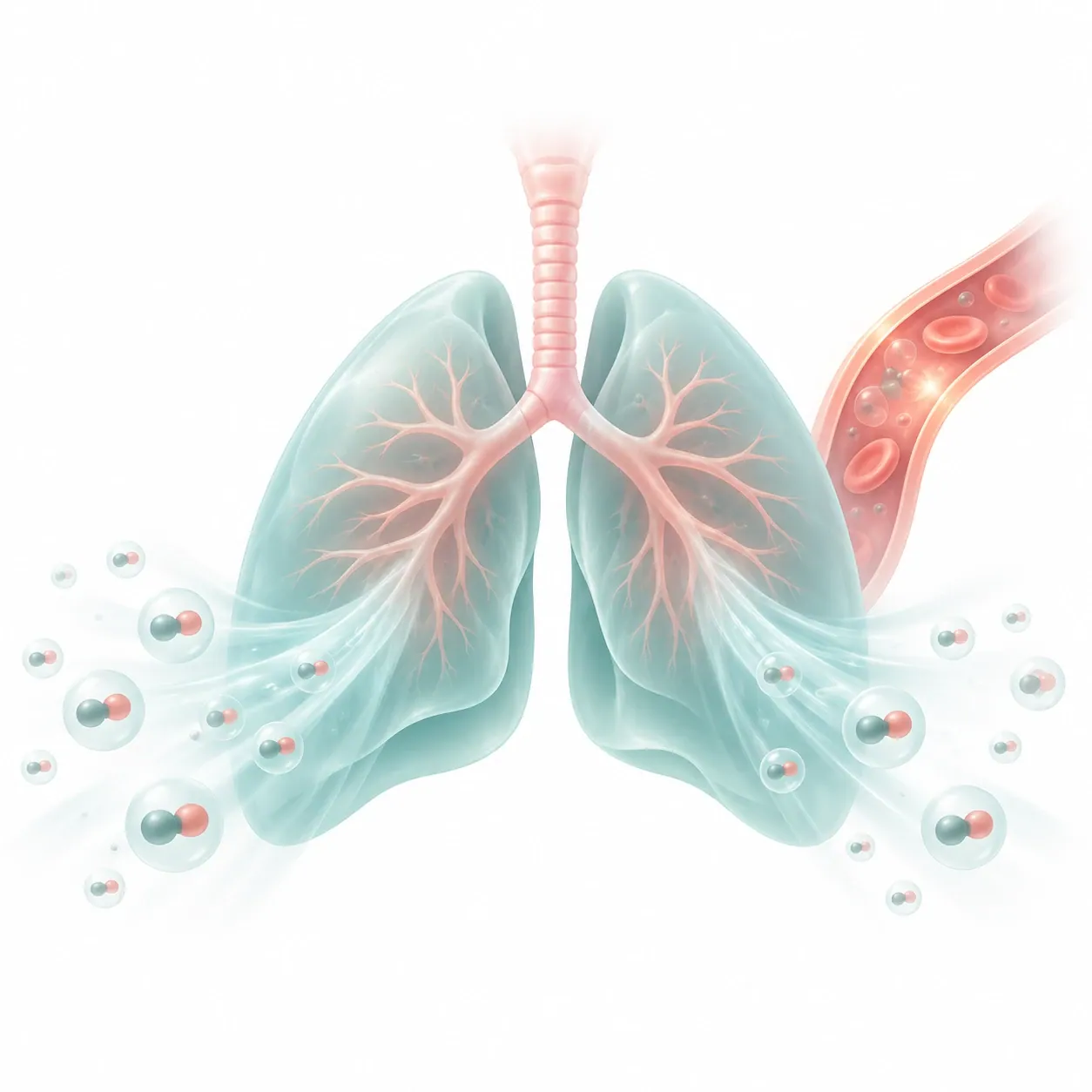
우리는 숨을 들이마셔 산소를 받고, 내쉬어 이산화탄소를 내보냅니다. 그런데 필요 이상으로 빠르고 깊게 숨을 쉬면 이산화탄소가 너무 많이 빠져나가 혈액이 알칼리 쪽으로 기웁니다. 그러면 손발과 입 주변이 저리고, 손이 오그라들고, 머리가 멍해집니다. 이것이 과호흡이고, 이런 발작이 되풀이되면 과호흡 증후군이라고 부릅니다.
스위스 한 응급실에서 7년 동안 과호흡으로 진단받은 616명을 보면 여성이 55.4%였고, 20대(29.4%)와 30대(19.6%)가 가장 많았습니다. 30.4%는 전에도 과호흡 발작을 겪었습니다[1].
이런 증상이 있나요?
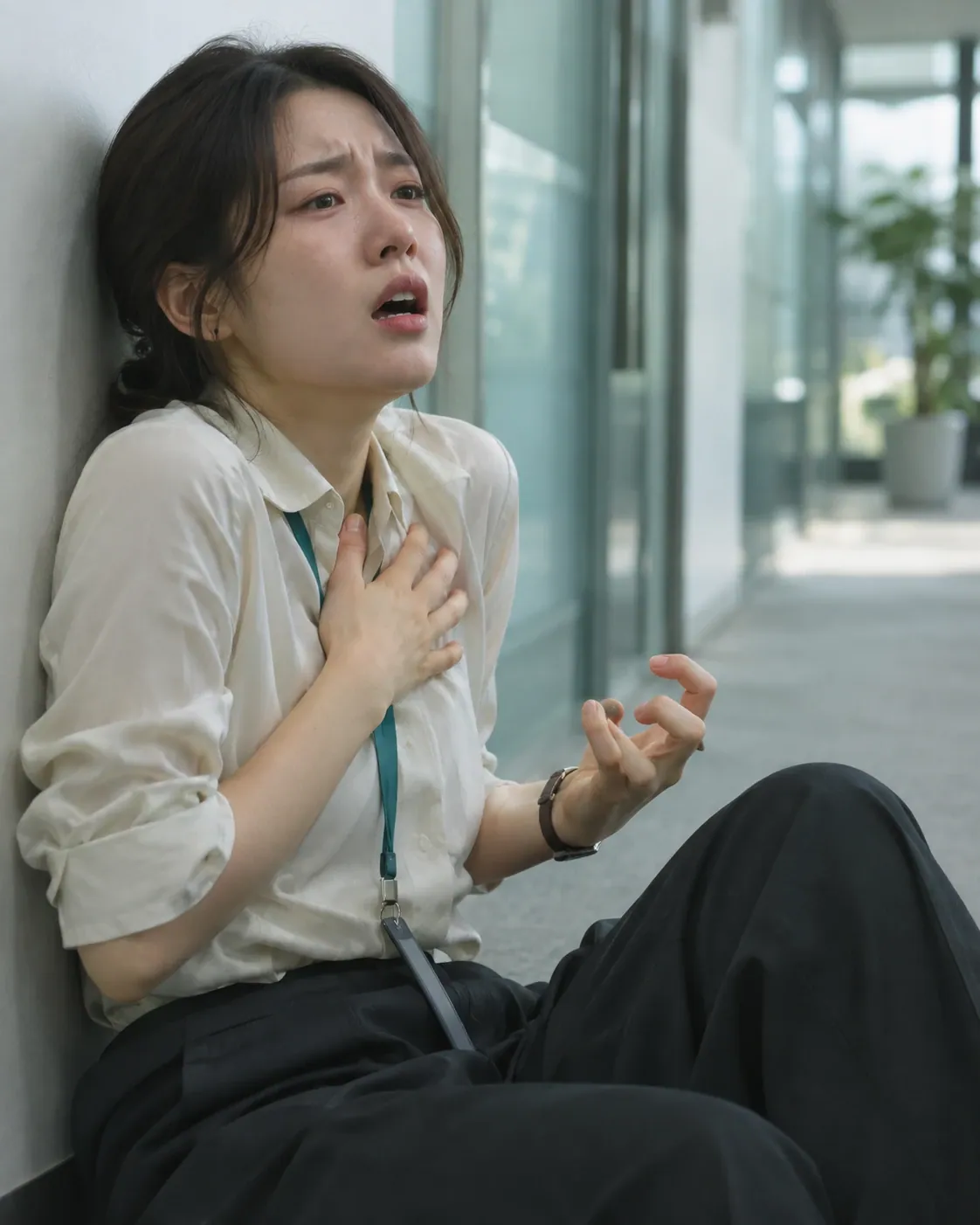
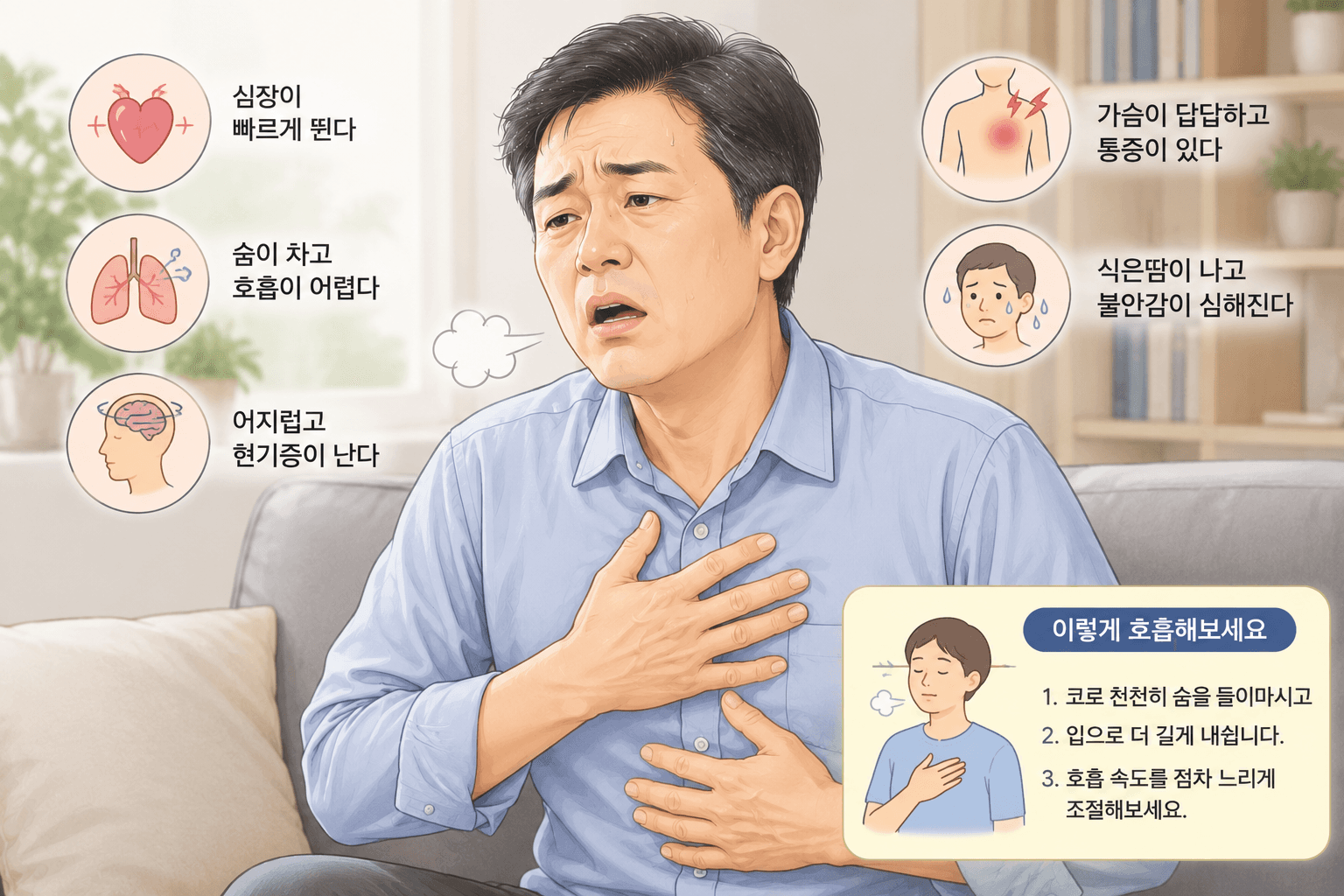
- 갑자기 숨이 가빠지고 아무리 들이마셔도 숨이 모자라다
- 손끝, 발끝, 입 주변이 저리거나 따끔거린다
- 손이 오그라들거나 몸이 굳는 느낌이 든다
- 머리가 멍하고 어지러우며 쓰러질 것 같다
- 가슴이 조이고 두근거려 심장에 문제가 생긴 것 같다
- 이러다 죽을 것 같은 공포가 함께 밀려온다
응급실 과호흡 환자의 95.1%가 두려움을, 61.5%가 저림을, 49.7%가 어지럼을 느꼈습니다[1]. 가슴 통증과 두근거림이 겹치면 대부분 심장병을 먼저 걱정합니다. 실제로 응급실을 찾은 이유의 87%가 위험한 병으로 여긴 두려움이었습니다[2].
진단은 심장, 폐, 대사 질환을 먼저 확인하는 데서 시작합니다. 심전도, 흉부 엑스레이, 피 검사로 다른 병을 살피고, 필요하면 혈액 가스 검사로 이산화탄소가 떨어졌는지 봅니다. 과호흡이 되풀이되면 나이메헨 설문지로 증상의 정도를 확인합니다[3].
과호흡은 왜 생기나요?
- 극심한 긴장, 불안, 공포
- 공황장애, 불안장애, 급성 스트레스
- 과로와 수면 부족이 쌓인 상태
- 천식 같은 호흡기 질환
- 심한 통증이나 열
- 폐색전증, 심장 질환, 당뇨병 케톤산증 같은 몸의 병
과호흡 환자의 절반(50.5%)은 불안장애나 급성 스트레스 반응 같은 마음의 어려움을 함께 갖고 있었습니다[1]. 응급실 과호흡 환자의 30%는 치료 중인 천식 환자였습니다[2]. 마음만의 문제도, 호흡만의 문제도 아닙니다.
호흡은 자율신경이 알아서 조절합니다. 긴장이 오래 이어지면 교감신경이 쉽게 켜지고, 작은 두근거림도 위험 신호로 받아들여 호흡이 빨라집니다. 발작 22번 중 이산화탄소가 떨어진 것은 7번뿐이었고 그마저 발작이 시작된 뒤였습니다[4]. 호흡을 몰아쉬는 것은 예민해진 몸이 보내는 결과일 수 있습니다.
과호흡의 표준 치료
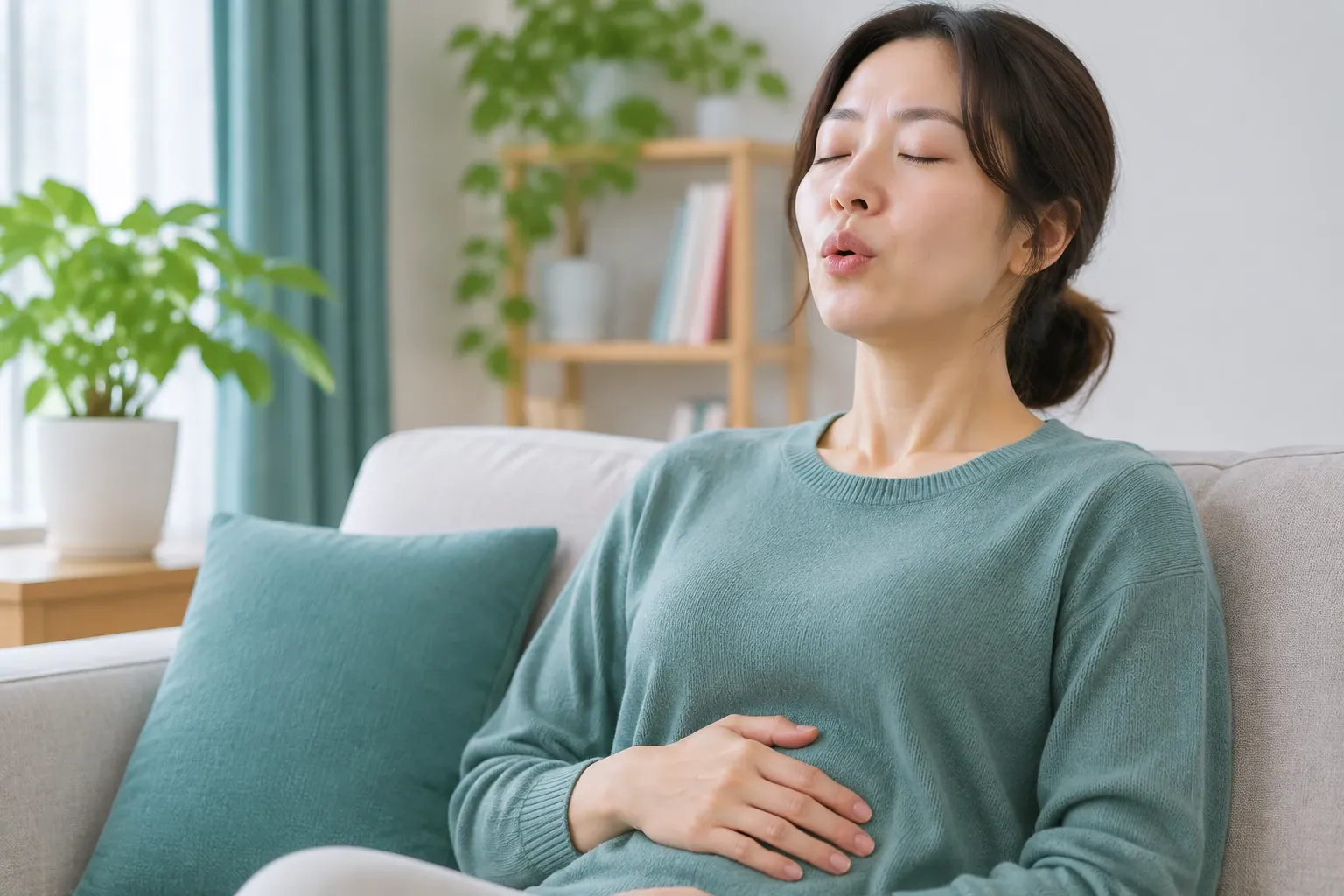
발작 때는 안전한 곳에 앉아 어깨와 턱의 힘을 빼고, 코로 조용히 들이마신 뒤 더 길게 내쉬도록 돕습니다. 되풀이되는 과호흡에는 배로 숨 쉬고 날숨을 늦추는 호흡 재훈련을 합니다. 2~3개월 훈련 뒤 증상 16개 중 10개가 좋아졌고, 그 효과는 호흡 속도가 느려진 것과 관련이 있었습니다[5]. 공황장애가 뚜렷하면 인지행동치료와 약을 함께 씁니다.
공황장애 환자에게 이산화탄소를 올리는 훈련과 낮추는 훈련을 해 보니 둘 다 효과가 비슷했습니다[6]. 날숨 이산화탄소를 보며 하는 4주 호흡 훈련에서는 83%가 좋아졌습니다(대조군 없음)[7]. 숨의 숫자보다 몸이 덜 놀라고 숨이 느긋해지는 것이 중요하다는 뜻입니다. 쉽게 긴장하는 몸이 그대로면 발작은 다시 찾아옵니다. 한의학 치료는 이 바탕을 다스립니다.
해움한의원은 이렇게 치료합니다
해움한의원은 발작을 막는 데서 그치지 않습니다. 위험한 병이 없는지 먼저 확인하고, 숨을 무너뜨리는 긴장과 불안, 예민해진 자율신경을 함께 치료해 발작이 되풀이되지 않도록 돕습니다.
1단계. 발작의 양상과 원인을 살핍니다
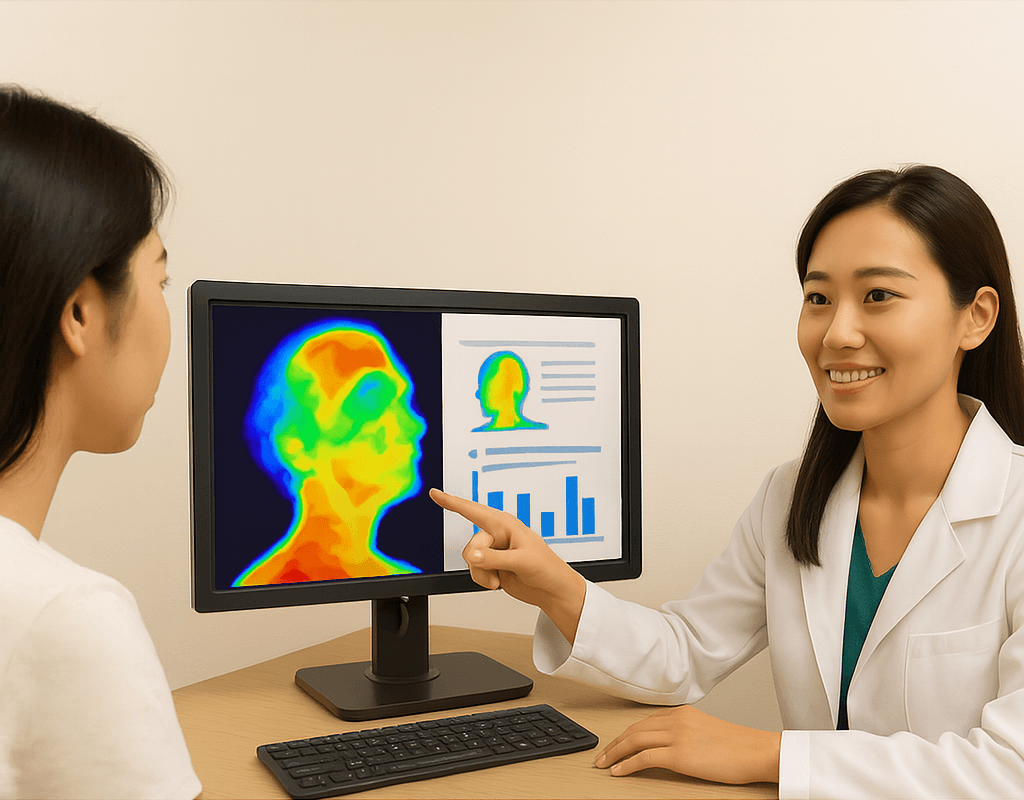
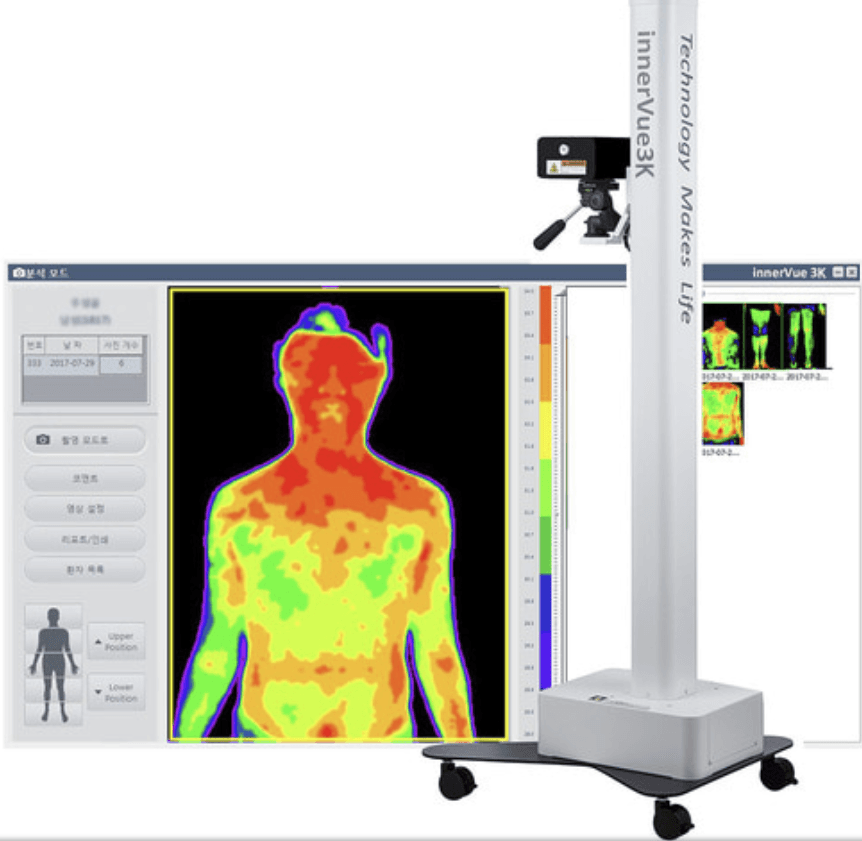
언제, 어떤 상황에서 발작이 시작되는지, 받은 검사와 드시는 약, 수면과 소화를 자세히 살펴봅니다. 심박변이도 검사로 자율신경의 균형을 확인하고, 심장이나 폐 검사가 필요하면 먼저 안내해 드립니다.
2단계. 굳은 가슴을 풀고 숨을 고릅니다
침과 약침으로 가슴, 명치, 목과 어깨의 긴장을 풀어 숨이 편히 내려가도록 돕습니다. 발작이 올 때 쓸 수 있도록 코로 들이마시고 길게 내쉬는 호흡법도 함께 연습합니다.
3단계. 유형에 맞춰 바탕을 다스립니다
쉽게 놀라는 신경, 쌓인 긴장과 피로를 함께 살핍니다. 체질과 상태에 맞춰 한약을 짓습니다.
4만 건의 처방 사례가 말해주는, 한방 맞춤 치료의 힘

과호흡, 누가 진료하나요?
담당 의료진
대표원장 박재은

“병이 아니라 그 뒤의 사람을 봅니다”
경희대학교 한의학박사이자 여한의사입니다. 심리상담사 1급 자격, 20만명 차트분석과 4만건 이상의 한약 처방 경험을 바탕으로 진료합니다.
의료진 소개 더보기과호흡, 자주 묻는 질문
과호흡이 오면 어떻게 해야 하나요?
과호흡으로 쓰러지거나 죽을 수도 있나요?
공황장애와 같은 건가요?
검사는 정상인데 왜 자꾸 되풀이되나요?
치료는 얼마나 걸리나요?
생활에서 무엇을 주의해야 하나요?
해움한의원에서 과호흡을 진료하나요?
과호흡으로 내원하려면 어떻게 하나요?
과호흡으로 내원하면 어떤 검사를 하나요?
과호흡에 관해 알아두면 좋은 정보
6건과호흡과 관련해 정리한 건강정보입니다.
두근거림·호흡곤란 반복된다면, 공황장애 해결의 답은 자율신경입니다
“이제 밖에 나가는 것도 무서워요…”갑자기 숨이 가빠지고, 어지럽고, 심장이 미친 듯이 뛰는 느낌.이런 증상이 한 번이 아니라 반복되기 시작하면단순한 스트레스라고 넘기기 어려워집니다.특히∙ 사람이 많은 곳∙ 지하철,

가슴답답호흡곤란, 검사해도 이상 없다면 진짜 원인은 따로 있을 수 있습니다
분명 힘든데 검사 결과는 정상이라고 합니다갑자기 숨이 잘 쉬어지지 않고 가슴이 꽉 막힌 것처럼 답답해지는 경험을 해보신 적 있으신가요?특히 사람이 많은 장소에 가거나 스트레스를 받는 상황에서 숨이 가빠지고 식은땀이

과호흡증후군병원, 검사 이상 없는데 숨이 차다면 놓치고 있는 원인이 있습니다
숨 쉬는 것이 갑자기 힘들어졌다면, 단순한 스트레스만의 문제는 아닐 수 있습니다갑자기 숨이 제대로 쉬어지지 않고 가슴이 답답해지면서 숨을 계속 들이마시게 되는 경험을 해보신 적 있으신가요?'숨이 부족한 것 같은데 아
갑자기 식은땀과 어지러움이 함께 나타난다면 공황장애를 의심해야 할까요?
갑자기 식은땀이 나고 어지럽다면 단순한 컨디션 문제만은 아닐 수 있습니다갑자기 식은땀이 흐르고 숨이 가빠지면서 어지러움이 몰려온 적 있으신가요?심장이 빠르게 뛰고, 금방이라도 쓰러질 것 같은 불안감까지 함께 찾아온다

공황장애과호흡 반복된다면? 숨이 막히는 진짜 원인을 찾아야 합니다
갑자기 숨이 막히고 죽을 것 같은 공포가 몰려오시나요?평소처럼 지하철을 타고 출근하던 중 갑자기 숨이 차오릅니다.심장은 빠르게 뛰고, 가슴은 조여오며 "이대로 쓰러지는 건 아닐까?" 하는 생각이 머릿속을 가득 채웁니
과호흡비닐봉지, 숨이 가쁠 때 따라 하면 오히려 위험할 수 있습니다
갑자기 숨이 막히는 순간, 봉투부터 찾고 계신가요?평소와 다름없이 생활하던 중 갑자기 호흡이 빨라집니다.숨을 크게 들이마셔도 산소가 부족한 것 같고, 가슴은 꽉 조여오며 머리까지 아득해집니다. 손끝과 입 주변이 저리
이런 경우에는 바로 응급실로 가세요
아래 증상은 심근경색, 폐색전증, 천식 발작, 뇌졸중 같은 응급 질환일 수 있습니다. 바로 119에 연락하거나 응급실로 가세요.
- 처음 겪는 심한 숨참이거나 쉬어도 가라앉지 않는다
- 가슴을 쥐어짜는 통증이 팔이나 턱으로 퍼진다
- 입술이나 손끝이 파랗게 변하거나 정신이 흐려진다
- 한쪽 팔다리에 힘이 빠지거나 말이 어눌해진다
- 당뇨병이 있는데 숨이 깊고 빨라지며 토하거나 배가 아프다
참고문헌 7편
[1]Pfortmueller CA, Pauchard-Neuwerth SE, Leichtle AB, Fiedler GM, Exadaktylos AK, Lindner G. Primary Hyperventilation in the Emergency Department: A First Overview. PLoS One. 2015;10(6):e0129562. doi:10.1371/journal.pone.0129562. PMID: 26110771.
초록 (Abstract)
Background: Primary hyperventilation is defined as a state of alveolar ventilation in excess of metabolic requirements, leading to decreased arterial partial pressure of carbon dioxide. The primary aim of this study was to characterise patients diagnosed with primary hyperventilation in the ED.
Methods: Our retrospective cohort study comprised adult (≥16 years) patients admitted to our ED between 1 January 2006 and 31 December 2012 with the primary diagnosis of primary (=psychogenic) hyperventilation.
Results: A total of 616 patients were eligible for study. Participants were predominantely female (341 [55.4%] female versus 275 [44.6%] male respectively, p <0.01). The mean age was 36.5 years (SD 15.52, range 16-85). Patients in their twenties were the most common age group (181, 29.4%), followed by patients in their thirties (121, 19.6%). Most patients presented at out-of-office hours (331 [53.7%]. The most common symptom was fear (586, 95.1%), followed by paraesthesia (379, 61.5%) and dizziness (306, 49.7%). Almost a third (187, 30.4%) of our patients had previously experienced an episode of hyperventilation and half (311, 50.5%) of patients had a psychiatric co-morbidity.
Conclusion: Hyperventilation is a diagnostic chimera with a wide spectrum of symptoms. Patients predominantly are of young age, female sex and often have psychiatric comorbidities. The severity of symptoms accompanied with primary hyperventilation most often needs further work-up to rule out other diagnosis in a mostly young population. In the future, further prospective multicentre studies are needed to evaluate and establish clear diagnostic criteria for primary hyperventilation and possible screening instruments.
결과 (Results)
A total of 616 patients were eligible for study inclusion and an overview of patient characteristics is shown in Table 1. Participants were predominantely female (341 [55.4%] female versus 275 [44.6%] male respectively, p <0.01). The mean age was 36.5 years (SD 15.52, range 16–85). Patients in their twenties were the most common age group (181, 29.4%), followed by patients in their thirties (121, 19.6%). For an overview of age distribution see Figs 1 and 2. Most patients presented at out-of-office hours (331 [53.7%] versus office hours 285 [46.3%], p <0.0001); walk-in patients were most common (422, 68.5%). The most common symptom was fear (586, 95.1%), followed by paraesthesia (379, 61.5%) and dizziness (306, 49.7%). Almost a third (30.4%, 187) of our patients had previously experienced an episode of hyperventilation and half (50.5%, 311) of patients had a psychiatric co-morbidity. The most common psychiatric diagnosis out of all patients with psychiatric co-morbidities was anxiety/panic disorder (122, 39.2%), followed by an acute stress reaction is (133, 36.6%). Almost all patients (593, 96.3%,) were treated as outpatients and no patient died. A total of 244 patients received blood gas analysis at the ED; the results are summarised in Table 2. Mean pH was 7.47, with a maximum of 7.72, while the mean carbon dioxide was 29.76 mmHg with a minimum of 12 mmHg. Three patients (0.5%) were readmitted within 7 days of discharge, all of them suffered from an anxiety disorder.
원문 발췌 · Pfortmueller CA, Pauchard-Neuwerth SE, Leichtle AB, Fiedler GM, Exadaktylos AK, Lindner G, PLoS One 2015 · CC BY 4.0 라이선스에 따라 수정 없이 인용했습니다(본문 속 인용 번호는 생략).
[2]Saisch SG, Wessely S, Gardner WN. Patients with acute hyperventilation presenting to an inner-city emergency department. Chest. 1996;110(4):952-957. doi:10.1378/chest.110.4.952. PMID: 8874251.
요약 런던 도심 응급실에 급성 과호흡으로 온 23명을 살핀 연구입니다. 숨참(61%), 가슴 통증·답답함(43%), 저림(35%)이 흔했고, 74%는 전에도 비슷한 발작을 겪었습니다. 87%가 증상을 심장병 같은 위험한 병으로 여긴 것이 응급실에 온 주된 이유였습니다. 30%는 치료 중인 천식 환자였고, 2개월 뒤에도 57%에게 과호흡이 남아 있었습니다.원문은 출판사 저작권 자료로, 위 링크에서 확인하실 수 있습니다.
[3]van Dixhoorn J, Duivenvoorden HJ. Efficacy of Nijmegen Questionnaire in recognition of the hyperventilation syndrome. J Psychosom Res. 1985;29(2):199-206. doi:10.1016/0022-3999(85)90042-x. PMID: 4009520.
요약 과호흡 증후군 환자 75명과 의료기관 직원 80명에게 나이메헨 설문지를 비교한 연구입니다. 증상은 숨참, 손발 저림·경련, 머리 쪽 증상(어지럼 등) 세 갈래로 묶였고, 설문지는 임상 진단과 비교해 민감도 91%, 특이도 95%였습니다.원문은 출판사 저작권 자료로, 위 링크에서 확인하실 수 있습니다.
[4]Hornsveld HK, Garssen B, Dop MJ, van Spiegel PI, de Haes JC. Double-blind placebo-controlled study of the hyperventilation provocation test and the validity of the hyperventilation syndrome. Lancet. 1996;348(9021):154-158. doi:10.1016/s0140-6736(96)02024-7. PMID: 8684155.
요약 과호흡 증후군이 의심되는 115명에게 일부러 숨을 몰아쉬게 하는 검사와 이산화탄소를 유지한 가짜 검사를 비교한 연구입니다. 두 검사 모두에서 증상을 느낀 사람이 많아 유발 검사는 진단에 맞지 않았습니다. 평소 증상 발작 22번 중 이산화탄소가 떨어진 것은 7번뿐이었고 그마저 발작이 시작된 뒤였습니다. 연구진은 과호흡이 증상의 원인이라기보다 결과로 보인다고 했습니다.원문은 출판사 저작권 자료로, 위 링크에서 확인하실 수 있습니다.
[5]Han JN, Stegen K, De Valck C, Clément J, Van de Woestijne KP. Influence of breathing therapy on complaints, anxiety and breathing pattern in patients with hyperventilation syndrome and anxiety disorders. J Psychosom Res. 1996;41(5):481-493. doi:10.1016/s0022-3999(96)00220-6. PMID: 9032712.
요약 과호흡 증후군 환자에게 배로 숨 쉬고 날숨을 늦추는 호흡 재훈련을 2~3개월 한 연구입니다(대조군 없음). 나이메헨 설문 점수가 크게 줄었고 16개 증상 중 10개가 좋아졌으며, 불안은 조금 줄었습니다. 증상이 좋아진 것은 날숨 끝 이산화탄소 수치보다 호흡 속도가 느려진 것과 관련이 있었습니다.원문은 출판사 저작권 자료로, 위 링크에서 확인하실 수 있습니다.
[6]Kim S, Wollburg E, Roth WT. Opposing breathing therapies for panic disorder: a randomized controlled trial of lowering vs raising end-tidal P(CO₂). J Clin Psychiatry. 2012;73(7):931-939. doi:10.4088/jcp.11m07068. PMID: 22901344.
요약 공황장애 환자 74명을 이산화탄소를 올리는 호흡 훈련, 낮추는 호흡 훈련, 대기군으로 나눈 무작위 연구입니다. 두 훈련 모두 공황 증상을 크게 줄였고 6개월 뒤에도 유지되었습니다. 연구진은 효과가 이산화탄소 수치 자체보다 천천히 규칙적으로 숨 쉬기, 몸 감각에 익숙해지기 같은 공통 요소에서 왔다고 보았습니다.원문은 출판사 저작권 자료로, 위 링크에서 확인하실 수 있습니다.
[7]Tolin DF, McGrath PB, Hale LR, Weiner DN, Gueorguieva R. A Multisite Benchmarking Trial of Capnometry Guided Respiratory Intervention for Panic Disorder in Naturalistic Treatment Settings. Appl Psychophysiol Biofeedback. 2017;42(1):51-58. doi:10.1007/s10484-017-9354-4. PMID: 28194546.
초록 (Abstract)
Panic disorder (PD) is associated with hyperventilation. The efficacy of a brief respiratory feedback program for PD has been established. The aim of the present study was to expand these results by testing a similar program with more clinically representative patients and settings. Sixty-nine adults with PD received 4 weeks of Capnometry Guided Respiratory Intervention (CGRI) using Freespira, which provides feedback of end-tidal CO2 (PETCO2) and respiration rate (RR), in four non-academic clinical settings. This intervention is delivered via home use following initial training by a clinician and provides remote monitoring of client adherence and progress by the clinician. Outcomes were assessed post-treatment and at 2- and 12-month follow-up. CGRI was associated with an intent-to-treat response rate of 83% and a remission rate of 54%, and large decreases in panic severity. Similar decreases were found in functional impairment and in global illness severity. Gains were largely sustained at follow-up. PETCO2 moved from the slightly hypocapnic range to the normocapnic range. Benchmarking analyses against a previously-published controlled trial showed very similar outcomes, despite substantial differences in sample composition and treatment settings. The present study confirms prior clinical results and lends further support to the viability of CGRI in the treatment of PD.
결과 (Results)
Sample Description: As shown in Table 1, participants had a mean age of 37 years. Just over half the sample was female, and one quarter was nonwhite. At pre-treatment, PD severity was in the moderate range. The average participant was rated as moderately ill on the CGI, and reported moderate overall functional impairment on the SDS. Mean pre-treatment PETCO2 levels were mildly hypocapnic. Compared to Meuret et al.’s sample, the present participants were more likely to be male, five times more likely to be African-American or Hispanic, over three times more likely to be taking antidepressant or benzodiazepine medications, and more likely to meet criteria for comorbid major depressive disorder. Although PD severity was identical, the present sample reported markedly higher levels of disability, as well as somewhat higher levels of agoraphobic avoidance. The present sample was also less hypocapnic.
Table 1Sample description for the present study and the Meuret et al. studyPresent sampleMeuret et al. d OR N 6937––Age M (SD)36.6 (11.0)41.0 (8.9)−0.44–Female N (%)41 (59.4%)24 (64.9%)–0.79African-American or Hispanic N (%)17 (24.6%)2 (5.4%)–5.72Duration of Panic Disorder, Years M (SD)13.5 (12.2)8.7 (9.1)0.44–Number of Panic Attacks/Week M (SD)2.7 (3.3)–––SSRI/SNRI N (%)20 (29.0%)4 (10.8%)–3.37Benzodiazepine N (%)27 (39.1%)6 (16.2%)–3.32Comorbid Diagnoses Major Depressive Disorder N (%)14 (20.3%)5 (13.5%)–1.63 Posttraumatic Stress Disorder N (%)7 (10.1%)0 (0%)–– Bipolar Disorder N (%)1 (1.4%)0 (0%)––Outcome Measures PDSS M (SD)2.1 (0.5)2.1 (0.6)0.00– SDS M (SD)5.0 (2.2)2.5 (2.4)1.09– CGI-S M (SD)4.5 (0.7)––– PETCO2 M (SD)36.3 (3.5)32.16 (4.8)0.99– RR M (SD)14.6 (4.4)11.57 (5.0)0.64–Other Measures ASI M (SD)2.2 (0.7)1.9 (0.8)0.40– BDI M (SD)12.5 (7.9)11.2 (8.4)0.16– MI-AAL M (SD)2.40 (0.7)1.9 (0.6)0.77– SSRI Selective serotonin reuptake inhibitor; SNRI Serotonin/norepinephrine reuptake inhibitor; PDSS Panic Disorder Severity Scale; SDS Sheehan Disability Scale; CGI-S Clinician’s Global Impression-Severity; PETCO2−End-tidal CO2; RR Respiration rate; ASI Anxiety Sensitivity Index; BDI Beck Depression Inventory; MI-AAL Mobility Inventory for Agoraphobia
Attrition: Among those who started CGRI, 20% dropped out during the course of treatment. The most common stated reason (n = 7) was inability or unwillingness to meet the time commitment of the study. One participant cited lack of perceived efficacy, and another cited adverse effects. The remainder were lost to contact with no explanation given. Another 20 were lost after treatment but before one of the post-treatment or follow-up assessments, with no explanation given. Participants who did and did not complete the treatment did not differ significantly in terms of age, gender, duration of illness, panic severity, agoraphobic avoidance, anxiety sensitivity, depression, functional impairment, global illness severity, or prevalence of comorbid major depressive disorder (all ps > 0.05).
Adherence: Treatment adherence was calculated by determining the proportion of CGRI sessions completed over the course of the study (target = 56), as evidenced by automatic uploads to a cloud-based server. Because some patients had completed more than the required number of respiratory sessions, we coded all patients who completed 56 or more sessions as 100% compliant; for all others, we calculated adherence as the number of completed sessions divided by 56. The average adherence using this calculation was 84.1% (SD = 18%).
Outcome of CGRI on Panic Disorder Severity: The proportion of responders at post-treatment was 85.4% (SE = 5.1%) in treatment completers, and 83.2% (SE = 5.3%) in the intent to treat (ITT) sample. The rate of remission was 56.3% (SE = 7.2%) in treatment completers, and 54.4% (SE = 6.8%) in the ITT sample. As shown in Table 2, average PDSS decrease from pre-treatment in completers was significant, with a large effect size. Panic severity decreased from the “markedly ill” range to the “slightly ill” range. Thirty-four (70.8%) of the 48 treatment completers reported experiencing no panic attacks in the past week.
Table 2Outcomes on primary and secondary measuresPrePost2-Month follow-up6-Month follow-up12-Month follow-upM (SD)M (SD)Est. mean (SE) change d’ M (SD)Est. mean (SE) change d’ M (SD)Est. mean (SE) change d’ M (SD)Est. mean (SE) change d’ Treatment completers PDSS14.8 (3.6)5.4 (4.4)9.4 (0.6)2.26.0 (5.2)8.8 (0.7)1.8–––5.0 (6.2)9.4 (1.0)1.7 CGI-S4.5 (0.7)2.7 (1.0)1.8 (0.2)1.62.4 (1.2)2.1 (0.2)1.5–––2.1 (1.1)2.3 (0.2)1.8 SDS14.4 (6.7)7.4 (6.7)7.0 (0.9)1.26.1 (5.6)8.6 (1.0)1.3–––6.1 (6.6)8.3 (1.3)1.1 PA2.4 (2.6)0.5 (1.0)2.0 (0.3)0.80.6 (1.3)1.8 (0.4)0.70.4 (1.0)2.2 (0.4)0.90.8 (2.5)1.6 (0.4)0.7 PETCO2 34.0 (4.6)38.7 (3.4)4.8 (0.7)1.037.7 (3.9)3.7 (0.7)0.8–––37.3 (4.0)3.5 (0.9)0.7 RR14.1 (5.0)11.4 (5.0)2.8 (0.9)0.58.6 (2.8)5.4 (0.7)1.1–––9.3 (3.9)3.8 (0.9)0.8Intent to treat PDSS14.9 (3.6)5.4 (4.3)9.5 (0.6)2.16.1 (5.2)8.9 (0.7)1.8–––5.4 (6.6)9.5 (0.9)1.5 CGI-S4.5 (0.7)2.7 (1.0)1.8 (0.2)1.72.5 (1.2)2.0 (0.2)1.4–––2.1 (1.3)2.4 (0.2)1.5 SDS14.8 (6.6)7.7 (6.7)7.1 (0.9)1.16.4 (5.7)8.4 (0.8)1.3–––5.7 (7.1)9.1 (1.4)1.2 PA2.7 (3.3)0.5 (1.1)2.2 (0.4)0.80.7 (1.4)2.0 (0.4)0.70.3 (1.0)2.4 (0.4)0.80.9 (2.9)1.8 (0.3)0.8 PETCO2 34.6 (4.5)39.0 (3.5)4.5 (0.6)1.037.5 (3.9)3.0 (0.8)0.6–––37.3 (4.2)2.7 (1.1)0.5 RR14.4 (5.1)11.6 (5.2)2.8 (0.8)0.58.6 (2.8)5.9 (0.7)1.2–––9.8 (5.0)4.7 (1.1)0.6 PDSS Panic Disorder Severity Scale; CGI-S Clinician’s Global Impression-Severity; SDS Sheehan Disability Scale; PA Panic attacks in past week; PETCO2—End-tidal CO2; RR Respiration rate
At 2-month follow-up, the proportion of responders was 71.1% (SE = 6.8%) in treatment completers, and 71.8% (SE = 5.6%) in the ITT sample. The rate of remission was 53.3% (SE = 7.4%) in treatment completers and 52.9% (SE = 6.4%) in the ITT sample. Average PDSS decrease from pre-treatment was significant, with a large effect size in completers and in the ITT sample. Thirty-three (71.7%) of the 46 follow-up completers reported experiencing no panic attacks in the past week.
At 12-month follow-up, the proportion of responders was 81.8% (SE = 6.7%) in treatment completers, and 76.5% (SE = 5.7%) in the ITT sample. The rate of remission was 69.7% (SE = 8%) in treatment completers, and 59.4% (SE = 7.3%) in the ITT sample. Average PDSS decrease from pre-treatment was significant, with a large effect size in treatment completers and in the ITT sample. Twenty-six (78.8%) of the 33 follow-up completers reported experiencing no panic attacks in the past week.
Outcome of CGRI on Secondary Outcome Measures: As shown in Table 2, CGI-S, SDS, and number of panic attacks showed significant and substantial decreases at post-treatment, with large effect sizes in treatment completers and in the ITT sample. CGI-S scores decreased from the moderate range to the borderline to mild range. SDS scores decreased from the moderate range to the mild range. At two-month follow-up, CGI-S and SDS continued to show significant decreases from pre-treatment, with large effect sizes for treatment completers and in the ITT sample. Interestingly, SDS scores decreased even further over the follow-up period. Number of panic attacks per week moderately decreased from pre-treatment in treatment completers and in the ITT sample. At 6-month follow-up, the number of panic attacks was substantially decreased from pre-treatment for treatment completers and the ITT sample. At 12-month follow-up, CGI-S and SDS continued to show significant decreases from pre-treatment, with large effect sizes for treatment completers and the ITT sample. SDS scores were in the mild range of impairment. Number of panic attacks per week were moderately decreased from pre-treatment.
Outcome of CGRI on Respiratory Parameters: As shown in Table 2, average increase in baseline-stage PETCO2 from first “at-home” treatment to last treatment was significant, with a large effect size in both treatment completers and the ITT sample. PETCO2 levels increased from the mildly hypocapnic range to the normocapnic range. Average decrease in baseline-stage RR from first “at-home” treatment to last treatment was significant, with a moderate effect size in treatment completers and the ITT sample. RR decreased from the middle of the normal range to the lower end of the normal range.
At two-month follow-up, average increase in in baseline-stage PETCO2 from first “at-home” treatment was significant, with a moderate effect size in treatment completers and the ITT sample. The corresponding average decrease in baseline-stage RR was significant, with a large effect size in treatment completers and the ITT sample.
At 12-month follow-up, average increase in PETCO2 from first “at-home” treatment was significant with a medium effect size in treatment completers and the ITT sample. The corresponding average baseline-stage decrease in RR was significant with a large effect size in treatment completers and a medium effect size in the ITT sample.
Moderator Analysis: The 62 patients who completed at least one breathing assignment were split between 39 hypocapnic and 23 normocapnic participants based on PETCO2 values from their first “at-home” session. In a completer analysis of PDSS reduction during treatment and follow-up, the hypocapnic and normocapnic groups did not differ significantly at post-treatment (t 46 = 1.2, p = 0.2, d = 0.4) but differed significantly at 2-month follow-up (t 43 = 2.5, p = 0.02, d = 0.8); Mean PDSS decrease for hypocapnic patients was 9.9 (SD = 8.1); for normocapnic patients it was 6.2 (SD = 3.5). At 12-month follow-up the difference was again not significant (t 43 = 0.5, p = 0.6, d = 0.2). A moderating effect of pre-treatment hypocapnia on change in PETCO2 from pre-treatment was found; this difference was significant at post-treatment and at 2-month follow-up, and marginal at 12-month follow-up (post-treatment: t 45 = 2.8, p = 0.007, d = 0.9; 2-month follow-up: t 42 = 2.6, p = 0.01, d = 0.9; 12-month follow-up: t 26 = 2.1, p = 0.05, d = 0.9) The increase in PETCO2 was greater for hypocapnic participants than for normocapnic participants. Results for the ITT sample were very similar.
Patient Satisfaction: At post-treatment, the mean response to the question “How likely would you be to recommend this treatment to a friend or family member?” (0–4) was 3.50 (SD = 0.77), with 88% responding positively (score 3 or 4). At 2-month follow-up, the mean response was 3.53 (SD = 0.73), with 87% responding positively; at 12-month follow-up the mean response was 3.33 (SD = 0.82) with 82% responding positively.
Adverse Events: There were no Serious Adverse Events (SAEs). The overall rate of moderate-to-severe dizziness (score 3–5) for all visits was 2% (6 reports from 319 patient visits). For moderate-to-severe lightheadedness the rate was also 2% (7/319). The highest rates of moderate-to-severe dizziness or lightheadedness were seen in the first treatment visit: 4% for dizziness (2 reports from 56 first visits) and 7% for lightheadedness 4/56). One patient reported significant functional impairment due to dizziness (score = 5) after visit 2. Another patient reported significant functional impairment (score = 5) due to lightheadedness after visit 1. There were no reports of moderate-to-severe dizziness or lightheadedness after visit 4. Reported “Other” AR/AEs included nausea (3), fatigue (1), tingling in hands, mouth or ears (2), shakiness (1) and dry mouth (1). Three panic attacks during sessions were reported. None of these “Other” AR/AEs resulted in significant impairment and all ceased once the session was completed.
Benchmarking Outcomes: Table 3 shows results of the present sample vs. those in Meuret et al.’s CART study. Because there was no attrition in the Meuret study, the treatment completer and ITT outcomes are the same. We used our completer analyses in order to obtain the most comparable statistics. We obtained a PDSS reduction nearly identical to that of Meuret et al. Reductions in SDS and ASI were also very similar, although it is noted that the present sample exhibited somewhat smaller reductions in MI-AAL and BDI than did the Meuret et al. sample. Interestingly, PETCO2 increase was greater in the present sample despite having higher mean PETCO2 levels at pre-treatment.
Table 3Benchmarking the present outcomes against those of the Meuret et al. studyMeuret et al. Present study*Pre M (SD)Post M (SD) d pre−post Pre M (SD)Post M (SD) d pre−post PDSS2.1 (0.6)0.7 (0.4)2.62.1 (0.5)0.8 (0.6)2.3SDS2.5 (2.4)0.7 (0.9)0.94.8 (2.2)2.6 (2.3)1.0ASI1.9 (0.8)0.9 (0.6)1.32.2 (0.6)1.5 (0.8)1.0MI-AAL1.9 (0.6)1.4 (0.5)0.82.3 (0.7)2.0 (0.7)0.4BDI11.2 (8.4)4.2 (3.5)1.111.8 (6.9)7.5 (7.3)0.6PETCO2 32.2 (4.8)34.6 (5.0)0.536.3 (0.4)38.7 (3.0)1.1RR11.6 (5.0)9.3 (4.1)0.514.2 (3.9)12.0 (4.4)0.5To facilitate comparison with the Meuret et al. study, PDSS and SDS scores in the present sample were converted to mean scores rather than sum scores as used in the primary analyses PDSS Panic Disorder Severity Scale; CGI-S Clinician’s Global Impression-Severity; SDS Sheehan Disability Scale; PA Panic attacks in past week; PETCO2—End-tidal CO2; RR Respiration rate*Means and standard deviations are shown for the completer sample
원문 발췌 · Tolin DF, McGrath PB, Hale LR, Weiner DN, Gueorguieva R, Appl Psychophysiol Biofeedback 2017 · CC BY 4.0 라이선스에 따라 수정 없이 인용했습니다(본문 속 인용 번호는 생략).