
양천구 목동 안면홍조 한의원
안면홍조
회의에서 발표를 시작하자 얼굴이 확 달아오릅니다. 얼굴이 왜 그렇게 빨갛냐는 말을 들으면 더 화끈거립니다. 찬물을 마셔도 가라앉지 않는 이 증상이 안면홍조입니다.
안면홍조 한눈에 보기
- 안면홍조는 얼굴 피부의 혈류가 갑자기 늘어 붉어지고 화끈거리는 증상입니다.
- 대부분 갱년기나 주사처럼 흔한 원인에서 오고, 갱년기 열감은 절반 이상에서 7년 넘게 이어집니다.
- 긴장과 스트레스에 예민한 몸에서 되풀이되므로, 자율신경과 상체의 열, 수면을 함께 다스려야 합니다.
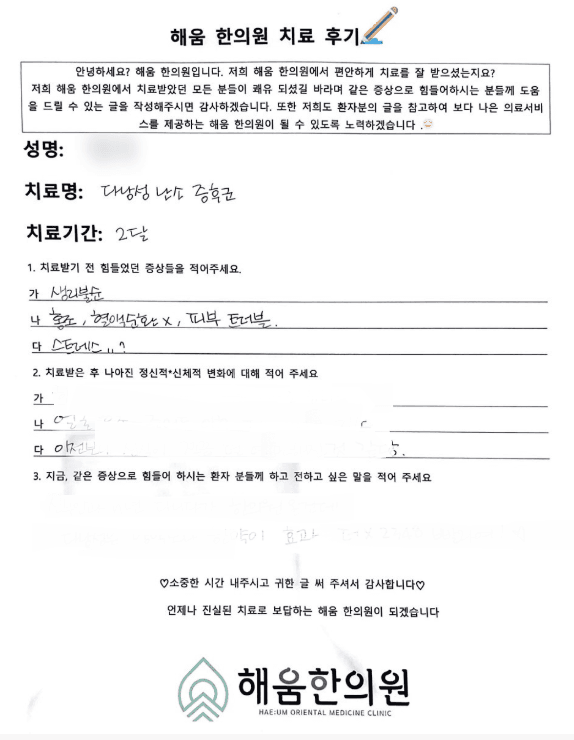
- 치료후기 3건
- 온라인 상담 2건
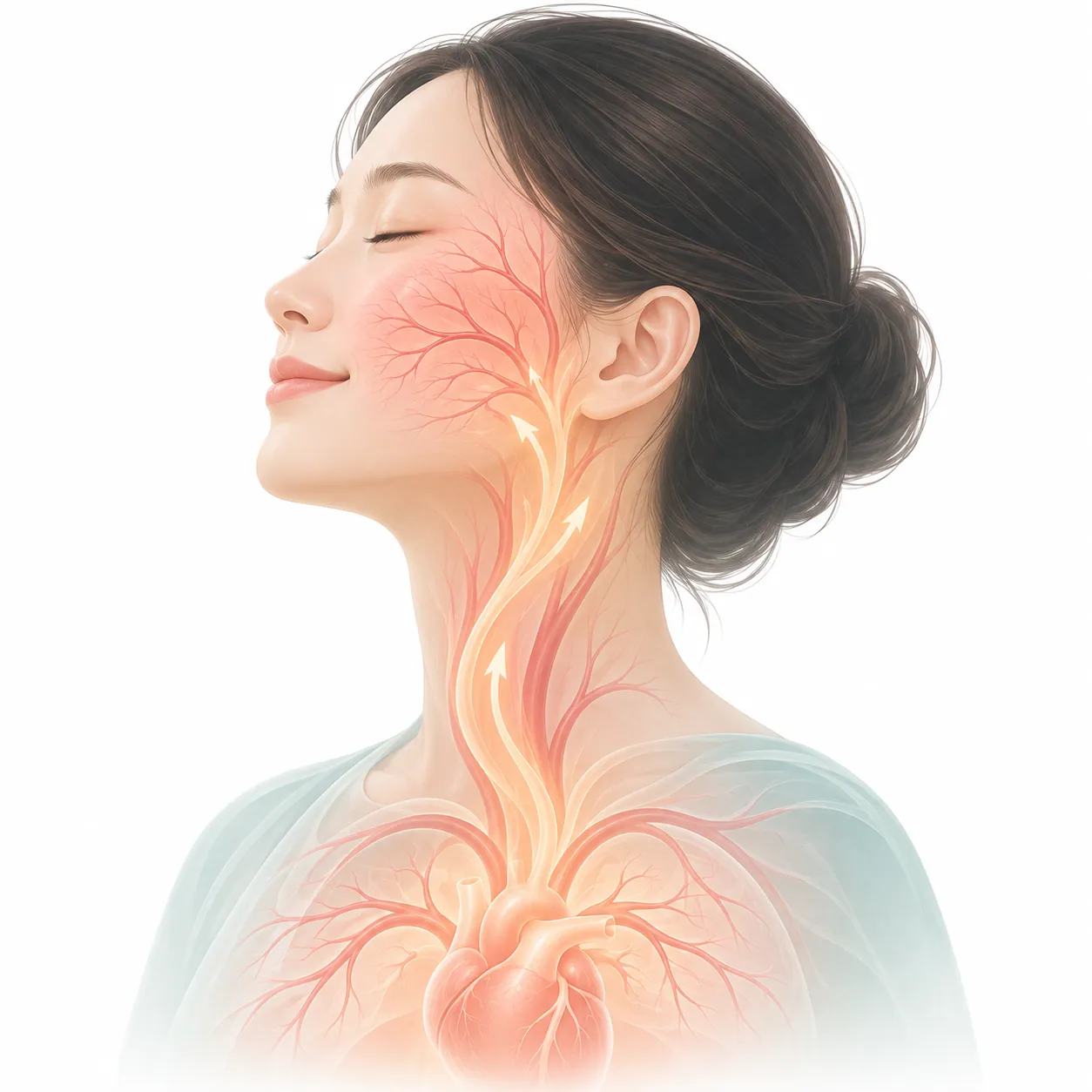
이런 증상이 있나요?
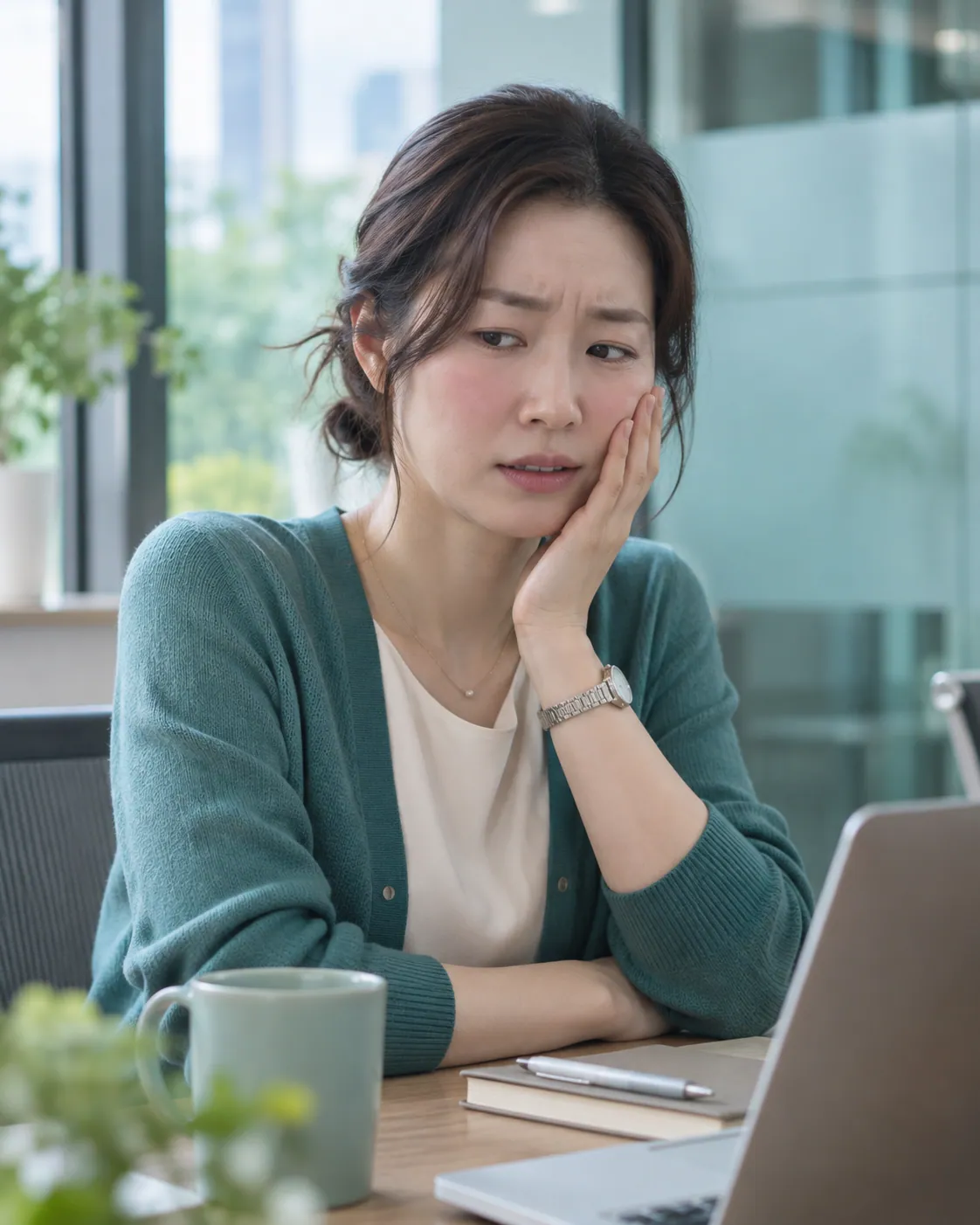
- 얼굴과 목이 갑자기 확 달아오른다
- 사람들 앞에서 말할 때 얼굴이 빨개진다
- 더운 곳에 가거나 술, 매운 음식을 먹으면 심해진다
- 밤에 열감과 식은땀으로 잠을 깬다
- 코와 뺨의 붉은 기가 가라앉지 않는다
- 붉어질까 봐 사람 만나는 자리를 피한다
- 가슴 두근거림과 불면이 함께 온다
언제, 어떤 상황에서 붉어지는지 자세히 듣고 피부를 살피면 대개 원인을 가릴 수 있습니다. 드물지만 카르시노이드 증후군이나 갈색세포종처럼 검사로 꼭 가려야 하는 병도 있습니다[1].
안면홍조는 왜 생기나요?
- 갱년기 호르몬 변화(열감, 식은땀)
- 주사(코와 뺨의 만성 피부 질환)
- 긴장과 스트레스, 사회불안
- 술, 뜨거운 음식, 매운 음식, 더운 환경
- 일부 약물
- 드물게 내분비 종양
이 중에서도 스트레스는 꼭 살펴봐야 합니다. 열감을 처음 겪을 때 스트레스와 불안, 우울이 높았던 여성은 증상이 더 오래갔습니다[3]. 긴장하면 교감신경이 흥분해 얼굴이 달아오르고, 붉어질까 걱정하면 다시 긴장하는 악순환이 됩니다.
안면홍조의 표준 치료
치료는 원인에 따라 다릅니다. 갱년기 열감에는 호르몬 치료가 가장 효과적이고, 쓸 수 없는 분에게는 인지행동치료와 항우울제 계열 약, 가바펜틴 등을 권합니다[5]. 주사는 피부과 치료를 받습니다. 사람들 앞에서 붉어지는 두려움에는 인지치료가 큰 효과를 보였습니다[6]. 교감신경을 자르는 수술도 있지만 얼굴 붉어짐의 효과는 72.8%였고, 수술을 후회하는 비율은 시간이 갈수록 늘었습니다[7].
약을 먹을 때만 괜찮고 끊으면 다시 달아오른다는 분이 많습니다. 호르몬 치료를 쓸 수 없는 분도 있습니다. 열이 위로 오르고 긴장에 쉽게 반응하는 몸이 그대로라면 홍조는 되풀이됩니다. 한의학 치료는 이 바탕을 다스립니다.
갱년기 열감에는 연구가 쌓여 있습니다. 19개 무작위 연구, 2,469명을 모은 분석에서 한약은 위약보다 열감을 줄였고, 호르몬 치료와 전체 유효율이 비슷했습니다[8]. 우리나라 다기관 연구에서 침을 더한 군은 열감 점수가 16.57점 줄어 일반 관리만 받은 군(6.93점)보다 많이 줄었습니다[9]. 북미폐경학회는 침과 한약을 아직 권고에 넣지 않았습니다[5]. 긴장성 홍조만 다룬 한약과 침 연구는 아직 많지 않습니다.
해움한의원은 이렇게 치료합니다

해움한의원은 붉어진 얼굴만 식히지 않습니다. 왜 열이 위로 몰리는지, 긴장과 수면, 호르몬 변화를 함께 살핍니다.
1단계. 원인과 위험 신호를 가립니다
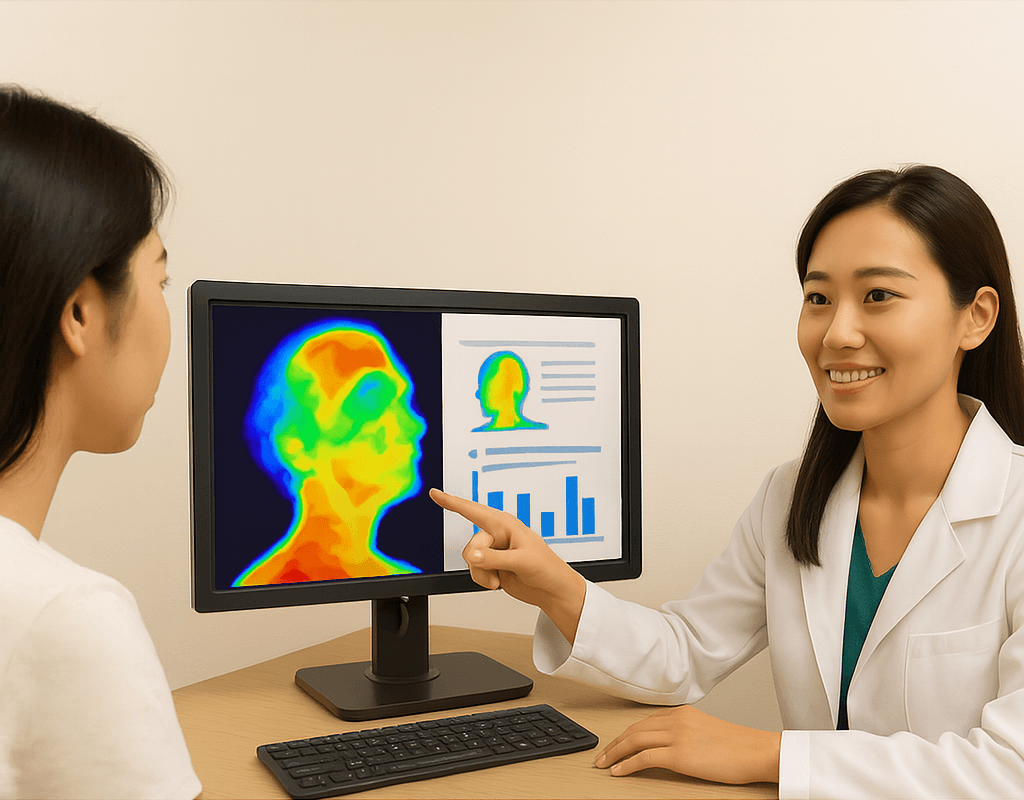
언제 붉어지는지, 술과 음식, 복용 약, 생리와 갱년기 변화, 피부 상태를 자세히 살펴봅니다. 피부 질환이나 내분비 질환이 의심되면 해당 진료과의 검사를 먼저 안내해 드립니다. 심박변이도와 체열 검사로 자율신경의 긴장과 상체의 열을 확인합니다.
2단계. 위로 몰린 긴장을 풉니다
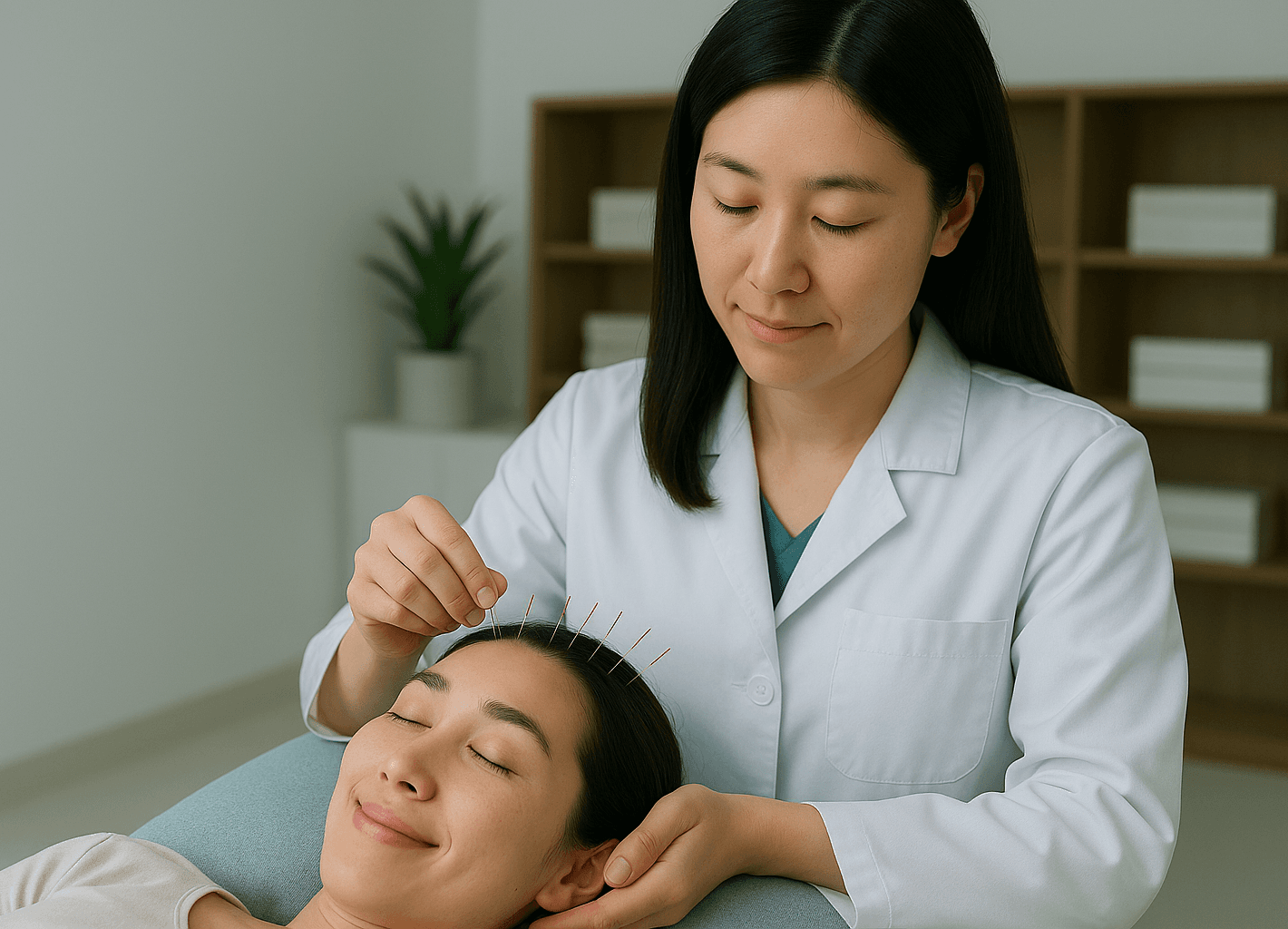
침과 약침으로 목과 어깨의 긴장을 풀고 자율신경을 안정시킵니다. 붉어질까 두려운 마음도 상담으로 함께 다룹니다.
3단계. 유형에 맞춰 바탕을 다스립니다
체질과 상태에 맞춰 한약을 짓습니다.
4만 건의 처방 사례가 말해주는, 한방 맞춤 치료의 힘
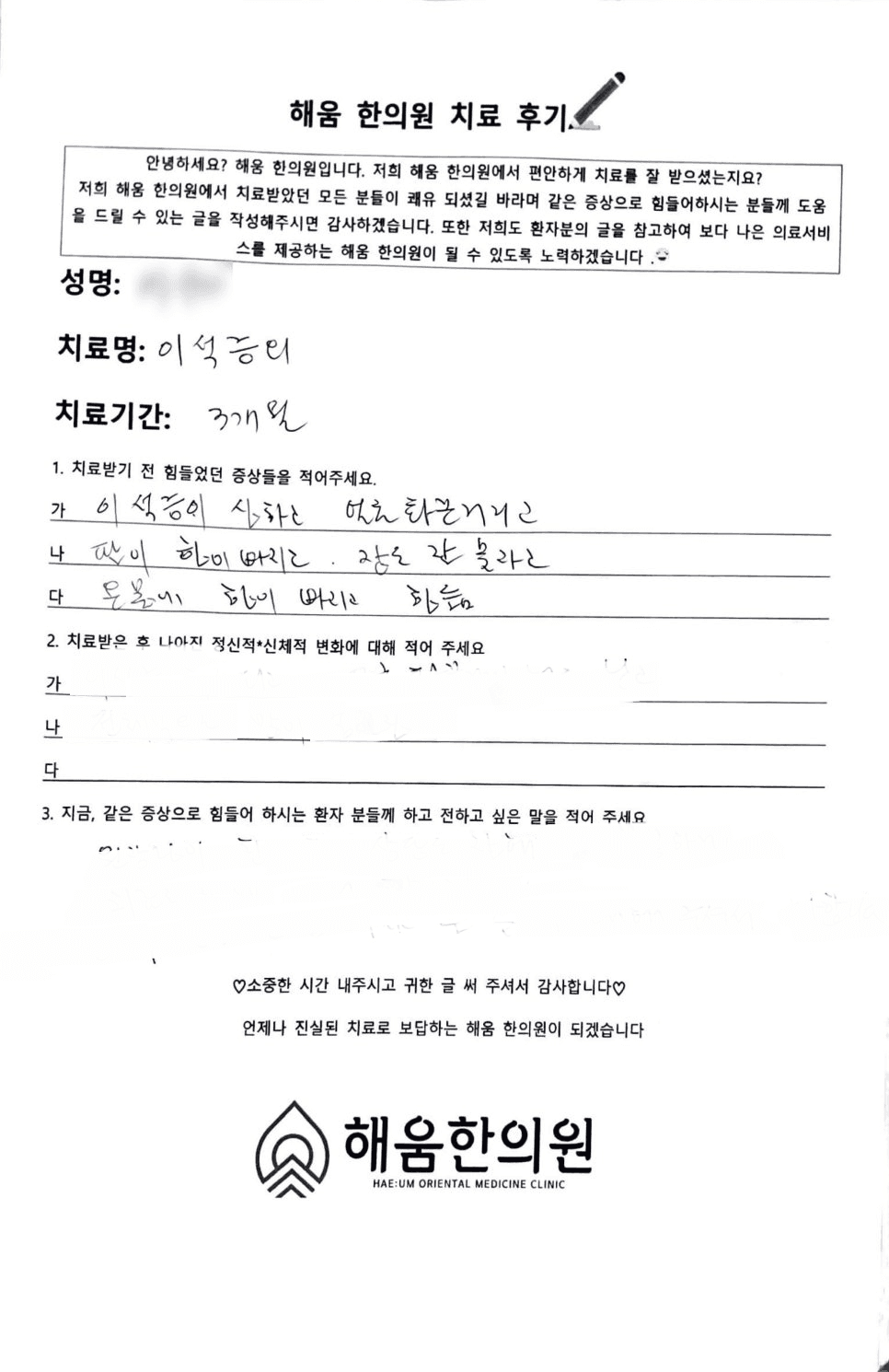
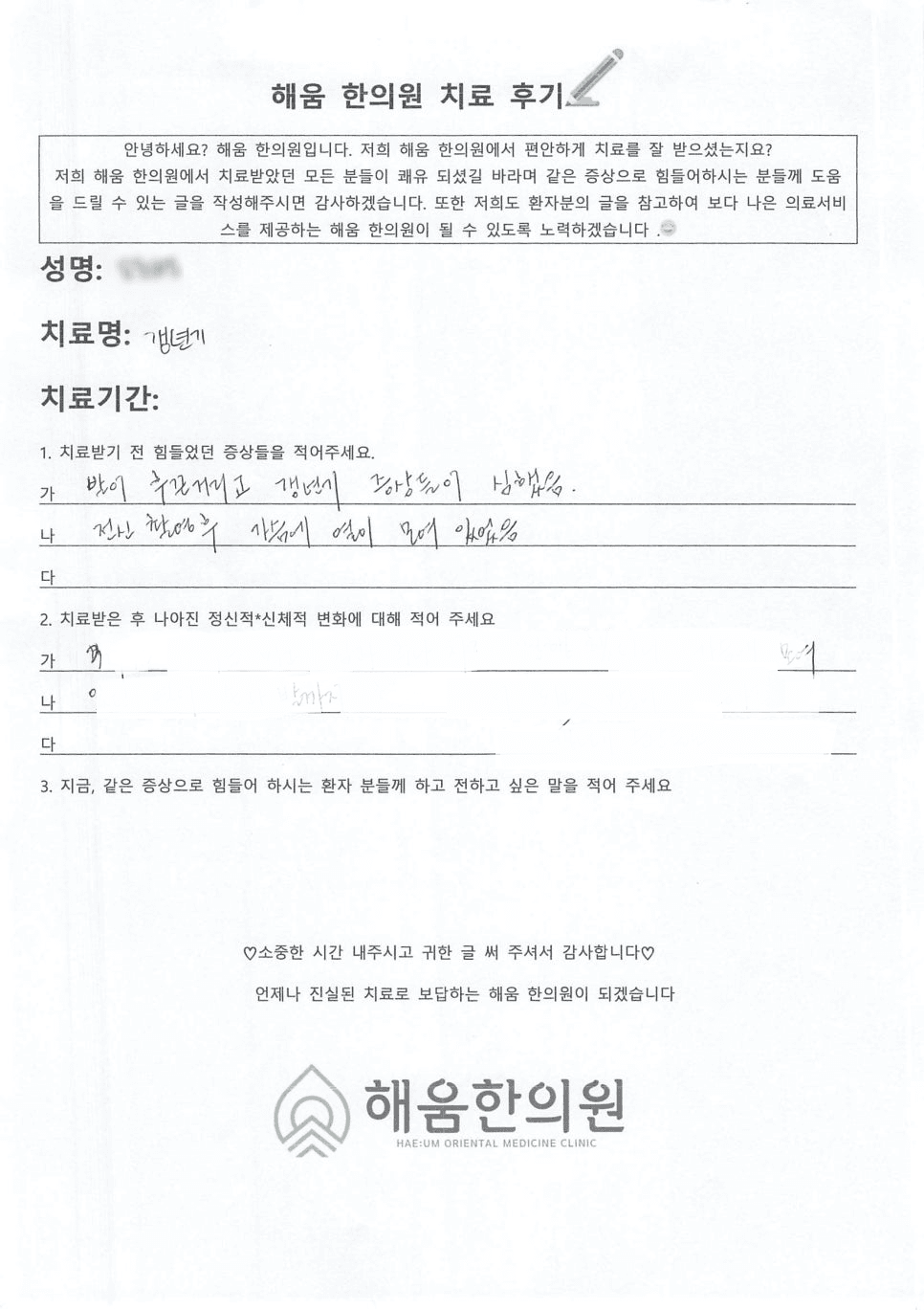
안면홍조 치료후기 총 3건
환자분들이 남긴 치료후기입니다. 본문은 로그인 후 보실 수 있습니다.
안면홍조, 누가 진료하나요?
담당 의료진
대표원장 박재은
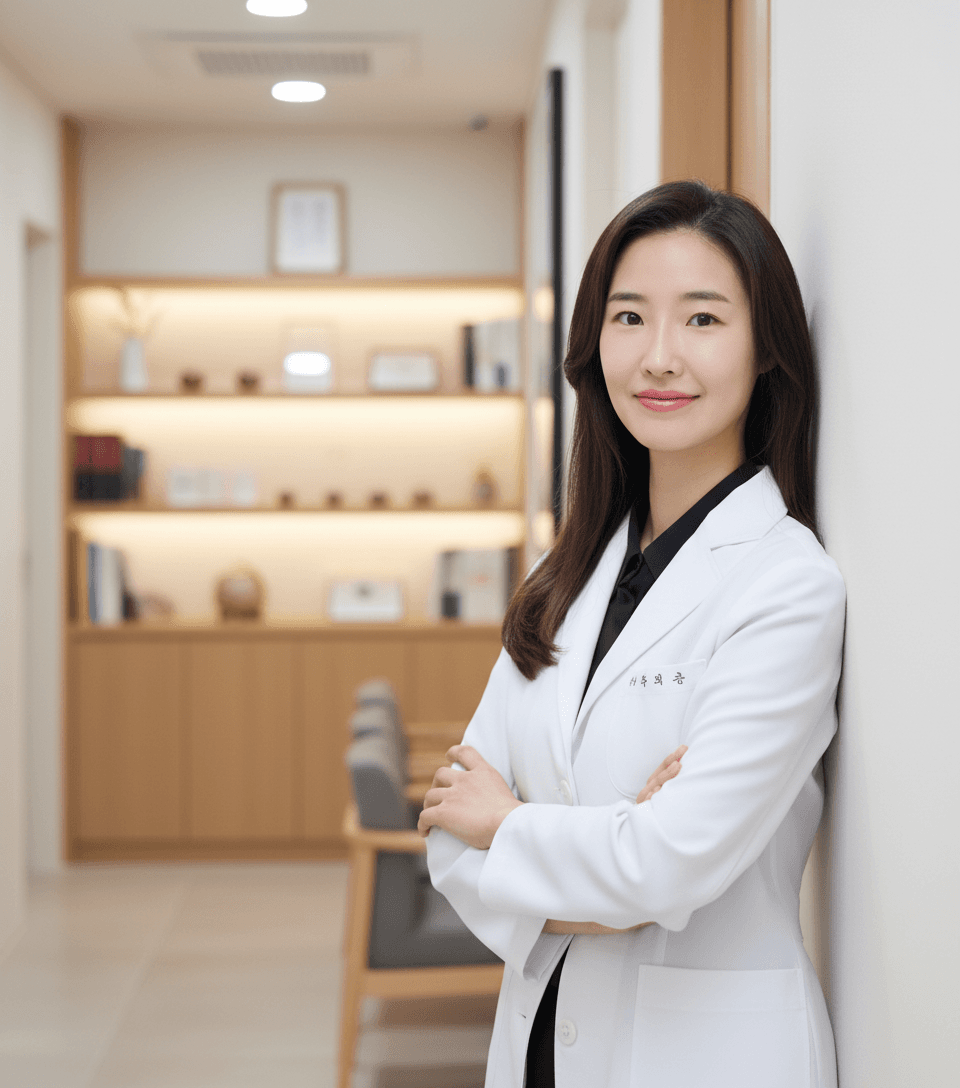
“병이 아니라 그 뒤의 사람을 봅니다”
경희대학교 한의학박사이자 여한의사입니다. 심리상담사 1급 자격, 20만명 차트분석과 4만건 이상의 한약 처방 경험을 바탕으로 진료합니다.
의료진 소개 더보기안면홍조, 자주 묻는 질문
안면홍조는 저절로 좋아지나요?
긴장할 때만 빨개지는데 치료가 되나요?
갱년기 약을 먹고 있는데 한약을 같이 먹어도 되나요?
주사와 안면홍조는 어떻게 다른가요?
치료 기간은 얼마나 걸리나요?
생활에서 어떻게 관리해야 하나요?
해움한의원에서 안면홍조를 진료하나요?
안면홍조로 내원하려면 어떻게 하나요?
이런 경우에는 바로 응급실로 가세요
얼굴이 붉어지면서 아래 증상이 함께 오면 심한 알레르기 반응이나 심장 질환일 수 있습니다. 한의원보다 응급실(119)을 먼저 찾으세요.
- 숨이 차고 목이 조이거나 쌕쌕거린다
- 입술과 눈 주위가 붓고 온몸에 두드러기가 난다
- 약이나 음식을 먹은 직후 어지럽고 쓰러질 것 같다
- 가슴이 아프고 식은땀이 난다
참고문헌 9편
[1]Izikson L, English JC, Zirwas MJ. The flushing patient: differential diagnosis, workup, and treatment. J Am Acad Dermatol. 2006;55(2):193-208. doi:10.1016/j.jaad.2005.07.057. PMID: 16844500.
요약 홍조의 감별 진단 종설입니다. 홍조는 피부 혈류의 변화로 생기고, 대부분 주사나 갱년기처럼 흔하고 양성인 원인에서 옵니다. 병력과 진찰로 대개 가릴 수 있지만, 카르시노이드 증후군, 갈색세포종, 비만세포증, 아나필락시스는 검사로 배제해야 합니다.원문은 출판사 저작권 자료로, 위 링크에서 확인하실 수 있습니다.
[2]Gether L, Overgaard LK, Egeberg A, Thyssen JP. Incidence and prevalence of rosacea: a systematic review and meta-analysis. Br J Dermatol. 2018;179(2):282-289. doi:10.1111/bjd.16481. PMID: 29478264.
요약 32개 연구, 41개 집단의 메타분석입니다. 일반 인구의 주사 유병률은 5.46%로 추정되었고, 45~60세에 많았습니다. 설문 연구에서 더 높고 진단 기록 연구에서 더 낮게 나타났습니다.원문은 출판사 저작권 자료로, 위 링크에서 확인하실 수 있습니다.
[3]Avis NE, Crawford SL, Greendale G, Bromberger JT, Everson-Rose SA, Gold EB, et al. Duration of menopausal vasomotor symptoms over the menopause transition. JAMA Intern Med. 2015;175(4):531-539. doi:10.1001/jamainternmed.2014.8063. PMID: 25686030.
요약 미국 SWAN 연구에서 잦은 열감과 식은땀을 겪은 여성 1,449명을 분석했습니다. 지속 기간의 중앙값은 7.4년이었습니다. 처음 증상을 보고할 때 스트레스, 증상 민감성, 우울, 불안이 높을수록 더 오래갔습니다.원문은 출판사 저작권 자료로, 위 링크에서 확인하실 수 있습니다.
[4]Su D, Drummond PD. Blushing propensity and psychological distress in people with rosacea. Clin Psychol Psychother. 2012;19(6):488-495. doi:10.1002/cpp.763. PMID: 21698719.
요약 주사 환자 31명과 대조군 86명의 설문 연구입니다. 얼굴에 구진과 농포가 넓게 있는 환자는 얼굴이 잘 붉어지는 경향과 스트레스, 사회공포 점수가 더 높았습니다.원문은 출판사 저작권 자료로, 위 링크에서 확인하실 수 있습니다.
[5]North American Menopause Society. The 2023 nonhormone therapy position statement of The North American Menopause Society. Menopause. 2023;30(6):573-590. doi:10.1097/gme.0000000000002200. PMID: 37252752.
요약 북미폐경학회의 비호르몬 치료 지침입니다. 호르몬 치료가 가장 효과적이라고 밝혔습니다. 인지행동치료, 임상 최면, SSRI·SNRI, 가바펜틴, 페졸리네탄트 등을 권했고, 한약 등 보충제와 침은 권고에 넣지 않았습니다.원문은 출판사 저작권 자료로, 위 링크에서 확인하실 수 있습니다.
[6]Bögels SM. Task concentration training versus applied relaxation, in combination with cognitive therapy, for social phobia patients with fear of blushing, trembling, and sweating. Behav Res Ther. 2006;44(8):1199-1210. doi:10.1016/j.brat.2005.08.010. PMID: 16225841.
요약 얼굴 붉어짐, 떨림, 땀을 두려워하는 사회공포증 환자 65명의 무작위 연구입니다. 주의 훈련과 이완 훈련에 인지치료를 더한 두 치료 모두 효과가 컸고, 1년 뒤에는 주의 훈련을 더한 쪽이 더 좋았습니다.원문은 출판사 저작권 자료로, 위 링크에서 확인하실 수 있습니다.
[7]Smidfelt K, Drott C. Late results of endoscopic thoracic sympathectomy for hyperhidrosis and facial blushing. Br J Surg. 2011;98(12):1719-1724. doi:10.1002/bjs.7682. PMID: 21928403.
요약 흉부 교감신경 절제술을 받은 환자의 평균 14.6년 추적 설문입니다(1,700명 응답). 얼굴 붉어짐의 효과는 72.8%로 손바닥 다한증(95.6%)보다 낮았고, 수술을 후회하는 비율은 시간이 갈수록 늘었습니다.원문은 출판사 저작권 자료로, 위 링크에서 확인하실 수 있습니다.
[8]Li M, Hung A, Lenon GB, Yang AWH. Chinese herbal formulae for the treatment of menopausal hot flushes: A systematic review and meta-analysis. PLoS One. 2019;14(9):e0222383. doi:10.1371/journal.pone.0222383. PMID: 31536531.
초록 (Abstract)
Objectives: This systematic review aimed to evaluate the therapeutic effects and safety of Chinese herbal medicine (CHM) formulae for managing menopausal hot flushes (MHF).
Methods: Seven English and Chinese databases were searched for studies from respective inceptions to February 2019. Randomized controlled trials investigating the clinical effects and safety of CHM formulae on MHF were considered for inclusion. The outcomes of subjective feelings (MHF and quality of life), objective changes (hormones and peripheral blood flow) and safety were analyzed. The most frequently prescribed formulae and herbs were summarized.
Results: Nineteen randomized clinical trials involving 2469 patients were included. When compared to menopausal hormone therapy, CHM had similar effects to menopausal hormone therapy on total effectiveness rate (OR 1.41, 95% CI 0.84 to 2.35) and total Kupperman index (KI) score (SMD -0.13, 95% CI -0.61 to 0.36), and could significantly reduce vasomotor symptom score (MD -0.43, 95% CI -0.55 to -0.31) and upper-body peripheral blood flow (MD -3.56, 95% CI -5.14 to -1.98 under the jaw, MD -7.10, 95% CI -11.01 to -3.19 in the fingertip). When compared to placebo, CHM could reduce MHF severity (MD -0.70, 95% CI-1.00 to -0.40) and improve total KI score (MD -12.61, 95% CI -15.21 to -10.01). However, no statistically significant changes to hormone levels were detected. Most commonly seen adverse events were mild gastrointestinal tract reactions. The most popularly studied formula was Kun Tai capsule and the most frequently prescribed herb was Bai shao (Paeoniae Radix Alba, Paeonia lactiflora Pall.). More than 50% included studies had low risks of bias in the domains of selection, performance, attrition and reporting.
Conclusions: This review indicated that CHM formulae were safe to be applied in MHF females and able to improve MHF-related symptom scores as well as the peripheral blood flow. Further studies should focus on specific formulae.
결과 (Results)
A total of 1630 papers were obtained from the database search and 22 articles were found through manual search. Nineteen articles met inclusion criteria and were included in this review and 16 were included in the meta-analysis. Three were not included in the meta analysis due to lack of data. The selection process for included studies with exclusion details is shown in Fig 1.
Description of studies: All of the 19 included studies are RCTs which recruited 2469 participants (1365 in the CHM groups, 1024 in the control groups, and one study did not specify the group allocation of 80 participants in the recruitment stage ) and analyzed 2309 participants at the end of treatment. These trials were conducted worldwide including 11 in mainland China, two in Hong Kong, two in Australia, two in America, one in Japan and one in Switzerland. Thirteen of them were published in English and six published in Chinese.
All the involved studies involved female participants only. They were diagnosed with MHF: 12 studies applied laboratory tests of hormone level to determine the menopause transition; hot flushes were all diagnosed by participants’ subjective feeling. The duration of MHF intervention varied from 4 weeks to 12 months. Regarding the types of herbal medicine, seven RCTs used CHM in granule, five in capsule, three in decoction, two in tablet and two in honey pill form. The number of ingredients of CHM formulae ranged from 2 to 31 herbs. Among the 19 studies, nine of them compared CHM with HRT and ten compared CHM with placebo. No studies comparing CHM with no treatment were identified. The characteristics of included studies are summarized in Table 1 and details of ingredients of CHM formulae are provided in S2 Table.
Methodological quality: More than 50% included studies had low risks of bias in the domains of selection (random sequence generation), performance, attrition, reporting bias and other bias (baseline and funding). Seven studies did not specify the randomization method, and the rest provided appropriate randomization methods (e.g. Random number table method). Five studies provided adequate information on how to allocate randomization numbers to participants and achieved a low risk of bias on the allocation concealment. Ten studies did not achieve blinding due to different forms of interventions used in two groups (e.g. decoction vs tablet, capsule vs tablet). Six studies blinded outcome assessors; the rest either used self-reported questionnaires or provided insufficient information on the blinding of outcome assessors. Potential attrition bias was noticed in six studies. Three articles reported protocol but failed to report findings for all the outcome measures described in the protocol. The rest 16 articles did not publish protocols. The outcomes described in the results section matched those provided in the methods section in all 15 studies except one. Five studies had imbalanced baseline data but did not address in data analyses. Four studies investigated the herbal formulae supplied by drug manufacturers. Thus, these nine studies may be associated with other biases. The assessment of methodological quality is summarized and presented in Figs 2 and 3.
Clinical effects: One study reported data from four arms: three treatment groups (Danzhiqing’e, Erzhi and combined formula) and one control group. As a significantly imbalanced baseline of E2 between two treatment groups (Danzhiqing’e and Erzhi) and placebo was identified through baseline data analysis, data of these two comparisons were invalid and were excluded in the data analysis. Thus, only data from the treatment group of combined formula and the control group in this study were analyzed in this review.
CHM versus HRT: Nine of the included articles compared CHM with HRT. Seven of them reported subjective measures and five reported objective measures including relevant hormone level and peripheral blood flow.
CHM showed no significant differences in the effectiveness rate of MHF compared to HRT (OR 0.73, 95% CI 0.16 to 3.46), but the effects on the MHF score favored HRT group (MD 1.00, 95% CI 0.45 to 1.55).
Two studies measured vasomotor symptoms. One study indicated that CHM had a similar effectiveness rate of vasomotor symptoms to HRT (OR 1.25, 95% CI 0.34 to 4.59). However, the other study demonstrated that the vasomotor domain of KI scores favored CHM (MD -0.43, 95% CI -0.55 to -0.31).
Six studies reported the menopausal symptoms in the aspect of the total effectiveness rate, KI score and QoL. The pooled data indicated CHM has no significantly different total effectiveness rate when compared to HRT (OR 1.41, 95% CI 0.84 to 2.35, I2 = 19%, Fig 4), total KI score (SMD -0.09, 95% CI -0.55 to 0.36, I2 = 84%, Fig 5) and QoL (MD -1.05, 95% CI -5.24 to 3.14). However, the results of the number of menopausal symptoms favored HRT group (MD 1.74, 95% CI 0.17 to 3.31).
Data analyses demonstrated that two studies had a significant imbalance at baseline, one study for the FSH and E2, and the other are for the E2 and LH. Therefore, the results of these outcome measures were not included in meta-analysis. After the invalid data were removed from these two studies, results indicated that CHM had similar effects to HRT on the FSH level (MD -0.91, 95% CI -5.25 to 3.42, I2 = 0%), but the results of the E2 level were higher in HRT group (MD -23.28, 95% CI -33.51 to -13.04, I2 = 0%). One study revealed a significant reduction of blood flow in the jaw and fingertips in CHM group compared to HRT (MD -3.56, 95% CI -5.17 to -1.95 under the jaw, MD -7.10, 95% CI -10.99 to -3.21 in the fingertip) which indicated CHM had a stronger inhibition of peripheral blood flow in the upper body.
CHM versus placebo: The other 10 RCTs compared CHM with placebo. However, three of them were not included in the analysis due to lack of data. All of the rest seven studies assessed subjective measures whereas only three of them evaluated objective measures including relevant hormone level.
Three different measures of MHF relief were used in the included studies, namely severity, frequency and score. Three studies reported MHF relief and two reported changes of MHF relief. One study had significantly imbalanced MHF scores at the baseline so that it was not included in the analysis. Data analysis results indicated a significant reduction of MHF severity in the CHM group compared to placebo group (MD -0.70, 95% CI-1.00 to -0.40), but not significant in MHF frequency (SMD -0.06, 95% CI -0.26 to 0.15, I2 = 15%) or score (MD -0.64, 95% CI -2.17 to 0.89). Additionally, no significant differences of the changes in MHF relief were detected between CHM and placebo: frequency (SMD 0.02, 95% CI -0.35 to 0.40, I2 = 36%), severity (MD -0.49, 95% CI -1.41 to 0.43), and score (MD 0.09, 95% CI -0.33 to 0.50).
Six studies reported the score of vasomotor domains in the QoL questionnaire. The synthesized data indicated CHM group showed no significant difference in the vasomotor score (SMD -0.91, 95% CI -1.90 to 0.07, I2 = 95%, Fig 6) or the changes of vasomotor scores (SMD 0.21, 95% CI -0.08 to 0.51) compared to that in placebo group at the end of treatment period.
Included studies also assessed QoL, changes of QoL and total KI score. The findings indicated that CHM significantly improved the total KI score (MD -12.61, 95% CI -15.21 to -10.01), but not in QoL (SMD -0.33, 95% CI -0.83 to 0.17, I2 = 77%) or changes of QoL (SMD 0.08, 95% CI -0.20 to 0.46, I2 = 0%).
Three studies measured the E2 and FSH levels at the end of treatment and two of them also measured the LH level. There were no statistically significant differences in hormone levels between CHM and placebo groups (Table 2).
Safety: Two out of the 19 included studies did not provide the safety data of interventions. Five studies indicated that no AEs were reported in the CHM group. One study reported CHM had much fewer AEs than HRT. Five trials stated that no statistically significant differences in AEs were observed between CHM and control groups. The rest studies reported AEs from each arm without a statement of comparison between both arms. The most commonly seen AEs were gastrointestinal symptoms (such as loose stools, stomach discomfort/ache, nausea) (93/1010) and breast tenderness (31/229) (S3 Table).
Sensitivity analyses and publication bias: Due to the limited number of included studies, sensitivity analysis could not be performed in this review.
Four RCTs compared CHM and HRT as well as nine studies compared CHM with placebo involved more than one study, thus their Rosenthal Failsafe-Ns were assessed for publication bias. Most outcomes presented a Failsafe-N at 0 including total effectiveness rate, total KI score, FSH level when comparing CHM with HRT; MHF frequency, changes in MHF frequency, changes of vasomotor scores, changes of QoL and FSH when comparing CHM with placebo. Other Failsafe-Ns are summarized in Table 3.
Frequency of CHM formulae and herbs: Among the included studies, 18 formulae were prescribed to the participants (S2 Table). Two formulae were investigated in more than one study, namely Kun Tai capsule and Gui Zhi Fu Ling Wan. Other formulae were six classic CHM formulae, five newly developed formulae, four modified formulae, and one combined formula. The top 10 frequently ranked individual herbs in the included studies were Bai shao (Paeoniae Radix Alba, Paeonia lactiflora Pall.) (n = 12), Shu di huang (Rehmanniae Radix Praeparata, Rehmannia glutinosa Libosch.) (n = 9), Nü zhen zi (Ligustri Lucidi Fructus, Ligustrum lucidum Ait.) (n = 9), Fu ling (Poria, Poria cocos (Schw.) Wolf) (n = 8), Dang gui (Angelicae Sinensis Radix, Angelica sinensis (Oliv.) Diels) (n = 8), Zhi mu (Anemarrhenae Rhizoma, Anemarrhena asphodeloides Bge.) (n = 7), Chai hu (Bupleuri Radix, Bupleurum chinense DC. or Bupleurum scorzonerifolium Willd.) (n = 6), Mu dan pi (Moutan Cortex, Paeonia suffruticosa Andr.) (n = 6), Huang qin (Scutellariae Radix, Scutellaria baicalensis Georgi) (n = 5), Suan zao ren (Ziziphi Spinosae Semen, Ziziphus jujuba Mill. var. spinosa (Bunge) Hu ex H. F. Chou) (n = 5), and Yin yang huo (Epimedii Folium, Epimedium brevicornum Maxim., Epimedium sagittatum (Sieb. et Zucc.) Maxim., Epimedium pubescens Maxim. or Epimedium koreanum Nakai) (n = 5). The network of herb pairs in the prescribed CHM formulae from included studies is presented in Fig 7. The top three frequently used herb pairs in the prescribed formulae were Chai hu plus Bai shao, Bai shao plus Shu di huang, and Bai shao combined with Dang gui (n = 6). The following pairs were Chai hu plus Shu di huang, Chai hu plus Dang gui, Bai shao plus Nü zhen zi, and Dang gui plus Nü zhen zi (n = 5).
원문 발췌 · Li M, Hung A, Lenon GB, Yang AWH, PLoS One 2019 · CC BY 4.0 라이선스에 따라 수정 없이 인용했습니다(본문 속 인용 번호는 생략).
[9]Kim KH, Kang KW, Kim DI, Kim HJ, Yoon HM, Lee JM, et al. Effects of acupuncture on hot flashes in perimenopausal and postmenopausal women--a multicenter randomized clinical trial. Menopause. 2010;17(2):269-280. doi:10.1097/gme.0b013e3181bfac3b. PMID: 19907348.
요약 우리나라 다기관 무작위 연구입니다. 4주간 침 12회와 일반 관리를 함께 받은 군(116명)은 24시간 열감 점수가 16.57점, 일반 관리만 받은 군(59명)은 6.93점 줄었습니다.원문은 출판사 저작권 자료로, 위 링크에서 확인하실 수 있습니다.