
양천구 목동 만성 메스꺼움 한의원
만성 메스꺼움
토하지는 않는데 하루 종일 속이 울렁거립니다. 밥 냄새만 맡아도 메슥거려 몇 숟갈 뜨다 내려놓고, 위내시경도 받아 봤지만 이상이 없다고 합니다. 몇 주, 몇 달씩 이어지는 만성 메스꺼움은 위만의 문제가 아닐 때가 많습니다.
만성 메스꺼움 한눈에 보기
- 만성 메스꺼움은 토할 것 같은 울렁거림이 4주 넘게 이어지는 상태로, 검사에서 원인이 보이지 않는 경우가 많습니다.
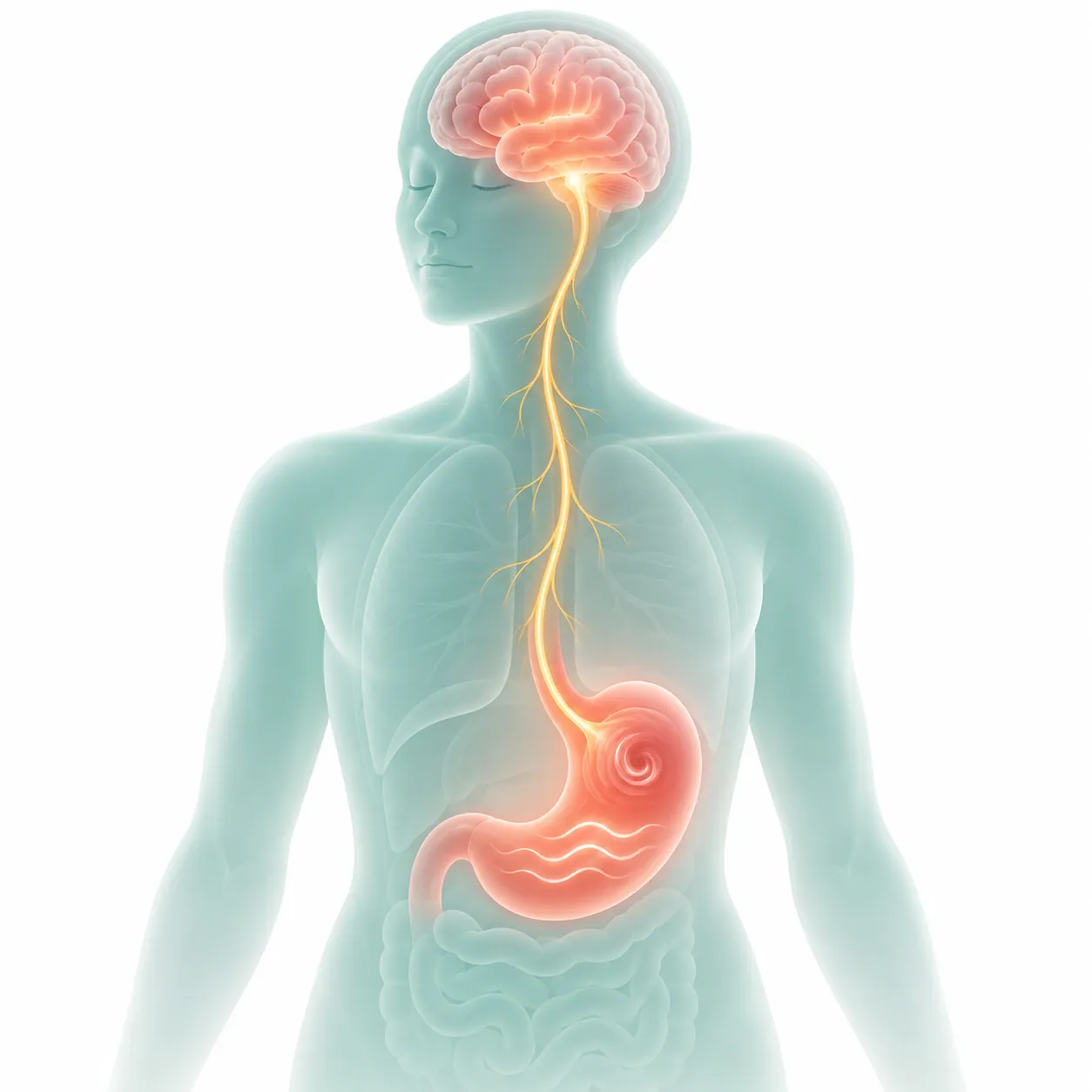
- 불안장애가 있으면 메스꺼움 위험이 3배 넘게 높아, 위와 함께 마음과 자율신경을 살펴야 합니다.
- 위의 움직임을 조절하는 부교감신경이 약해지면 메스꺼움과 소화 증상이 더 심해집니다.
- 치료후기 1건
이런 증상이 있나요?

- 토하지는 않지만 속이 울렁거리는 날이 많다
- 아침에 일어나거나 빈속일 때 더 메스껍다
- 음식 냄새만 맡아도 메슥거려 잘 먹지 못한다
- 조금만 먹어도 더부룩하고 트림이 난다
- 긴장하거나 신경 쓰면 메스꺼움이 심해진다
- 어지럽거나 머리가 무거운 날이 많다
진단은 메스꺼움이 언제 심한지, 먹는 약과 함께 오는 증상을 자세히 묻는 데서 시작합니다. 위내시경과 혈액검사로 위 질환과 다른 원인을 가리고, 임신 가능성이 있다면 먼저 확인합니다. 진통제, 피임약, 일부 항생제와 당뇨약도 메스꺼움을 일으킬 수 있습니다.
만성 메스꺼움의 표준 치료
표준 치료는 원인이 되는 질환과 약을 먼저 정리하고, 위장운동촉진제나 구토약을 쓰는 것입니다. 원인이 뚜렷하지 않으면 낮은 용량의 항우울제를 쓰기도 하며, 대조군 없는 연구에서 84%가 좋아졌습니다[6].
그래도 만성 메스꺼움에는 검증된 표준 치료 순서가 없습니다[1]. 약을 먹을 때만 잠시 가라앉고 끊으면 다시 울렁거리는 분이 많습니다. 위의 움직임과 예민해진 자율신경이 그대로이기 때문입니다. 한의학 치료는 이 바탕을 다스립니다.
관련 연구를 살펴보면, 손목 내관혈 자극은 수술 후 메스꺼움을 가짜 자극보다 32% 줄였습니다[7]. 생강은 임신 중 메스꺼움을 위약보다 줄였습니다[8]. 다만 만성 메스꺼움 환자만 본 연구는 아직 적어 추가적인 연구가 필요합니다.
해움한의원은 이렇게 치료합니다

해움한의원은 울렁거림을 누르는 데서 그치지 않고, 메스꺼움을 만드는 위의 상태와 예민해진 자율신경을 함께 치료합니다.
1단계. 메스꺼움의 원인과 위험 신호를 가립니다
메스꺼움이 심한 때와 식사, 수면, 스트레스, 복용 중인 약과 검사 결과를 자세히 살펴봅니다. 위험 신호가 있으면 필요한 검사를 먼저 안내해 드립니다. 심박변이도 검사로 자율신경의 상태를 확인합니다.
2단계. 위와 몸의 긴장을 풉니다
침과 약침으로 명치와 배, 목과 등의 긴장을 풀어 위가 편하게 움직이도록 돕습니다.
3단계. 유형에 맞춰 바탕을 다스립니다
식사량과 식사 시간, 수면을 함께 살핍니다. 체질과 상태에 맞춰 한약을 짓습니다.
4만 건의 처방 사례가 말해주는, 한방 맞춤 치료의 힘



해움한의원 원장이 쓴 만성 메스꺼움 칼럼

소화질환과 자율신경치료: 이게 혹시 담적 병증상인가요?
오늘 글은 검사도 멀쩡하고 치료도 안 되는, 이상하게 안 낫는 소화불량에 대한 내용입니다.
읽어보기만성 메스꺼움 치료후기 총 1건
환자분들이 남긴 치료후기입니다. 본문은 로그인 후 보실 수 있습니다.
만성 메스꺼움, 누가 진료하나요?
담당 의료진
대표원장 박재은

“병이 아니라 그 뒤의 사람을 봅니다”
경희대학교 한의과대학에서 석사·박사 과정을 마쳤습니다. 심리상담사 1급 자격과 4만 건 이상의 한약 처방 경험을 바탕으로 진료합니다.
의료진 소개 더보기만성 메스꺼움, 자주 묻는 질문
메스꺼움이 오래가면 큰 병일 수도 있나요?
검사는 정상인데 왜 계속 메스꺼운가요?
소화제나 위장약과 한약을 같이 먹어도 되나요?
메스꺼울 때 무엇을 먹는 것이 좋나요?
치료 기간은 얼마나 걸리나요?
해움한의원에서 만성 메스꺼움을 진료하나요?
만성 메스꺼움으로 내원하려면 어떻게 하나요?
이런 경우에는 미루지 말고 진료를 받으세요
아래 증상은 메스꺼움 너머의 다른 질환일 수 있습니다. 바로 진료를 받으세요.
- 이유 없이 체중이 줄었다
- 토할 때 피나 커피 찌꺼기 같은 것이 섞여 나온다
- 심한 두통이나 어지럼증과 함께 점점 심해진다
- 가슴 통증이나 숨참과 함께 메스껍다
- 물도 넘기지 못해 소변이 줄었다
참고문헌 8편
[1]Lacy BE, Parkman HP, Camilleri M. Chronic nausea and vomiting: evaluation and treatment. Am J Gastroenterol. 2018;113(5):647-659. doi:10.1038/s41395-018-0039-2. PMID: 29545633.
요약 만성 구역·구토를 4주 이상 이어지는 증상으로 정의한 종설입니다. 위 배출 지연, 주기성 구토증후군 같은 위장관 원인과 약물, 전정기관, 신경계 질환 같은 위장관 밖 원인을 구별하도록 설명합니다. 검증된 표준 치료 순서는 없습니다.원문은 출판사 저작권 자료로, 위 링크에서 확인하실 수 있습니다.
[2]Haug TT, Mykletun A, Dahl AA. The prevalence of nausea in the community: psychological, social and somatic factors. Gen Hosp Psychiatry. 2002;24:81-86. doi:10.1016/s0163-8343(01)00184-0. PMID: 11869741.
요약 노르웨이 성인 6만 2천여 명의 설문 연구입니다. 지난 1년간 12.5%가 메스꺼움을 겪었고, 불안장애가 있으면 메스꺼움 위험이 3.42배, 우울증이 있으면 1.47배였습니다. 나이나 생활 습관, 다른 질환은 이 관련을 크게 바꾸지 않았습니다.원문은 출판사 저작권 자료로, 위 링크에서 확인하실 수 있습니다.
[3]Aziz I, Palsson OS, Whitehead WE, Sperber AD, Simrén M, Törnblom H. Epidemiology, Clinical Characteristics, and Associations for Rome IV Functional Nausea and Vomiting Disorders in Adults. Clin Gastroenterol Hepatol. 2019;17(5):878-886. doi:10.1016/j.cgh.2018.05.020. PMID: 29857155.
요약 미국·캐나다·영국 성인 5,931명의 인터넷 조사입니다. 2.2%가 기능성 구역·구토 질환의 증상 기준에 해당했고, 과민성대장증후군과 기능성 소화불량이 있으면 더 많았습니다.원문은 출판사 저작권 자료로, 위 링크에서 확인하실 수 있습니다.
[4]Gharibans AA, Calder S, Varghese C, Waite S, Schamberg G, Daker C, et al. Gastric dysfunction in patients with chronic nausea and vomiting syndromes defined by a noninvasive gastric mapping device. Sci Transl Med. 2022;14:eabq3544. doi:10.1126/scitranslmed.abq3544. PMID: 36130019.
요약 만성 구역·구토 환자 43명과 건강한 사람 43명의 위 전기 활동을 배 위에서 4시간 넘게 잰 연구입니다. 환자의 62%는 위 활동이 정상이었고 이들은 불안 점수와 정신건강 동반 질환이 더 많았습니다. 31%는 위 활동이 뚜렷이 비정상이었고 메스꺼움 같은 증상과 관련이 있었습니다.원문은 출판사 저작권 자료로, 위 링크에서 확인하실 수 있습니다.
[5]Nguyen L, Wilson LA, Miriel L, Pasricha PJ, Kuo B, Hasler WL, et al. Autonomic function in gastroparesis and chronic unexplained nausea and vomiting: Relationship with etiology, gastric emptying, and symptom severity. Neurogastroenterol Motil. 2020;32:e13810. doi:10.1111/nmo.13810. PMID: 32061038.
요약 위마비와 원인 모를 만성 구역·구토 환자 242명의 자율신경 검사 연구입니다. 자율신경 이상이 흔했고, 부교감신경 기능이 떨어질수록 위 배출이 늦고 위장 증상이 심했습니다.원문은 출판사 저작권 자료로, 위 링크에서 확인하실 수 있습니다.
[6]Prakash C, Lustman PJ, Freedland KE, Clouse RE. Tricyclic antidepressants for functional nausea and vomiting: clinical outcome in 37 patients. Dig Dis Sci. 1998;43:1951-1956. doi:10.1023/a:1018878324327. PMID: 9753257.
요약 원인 모를 만성 구역·구토 환자 37명에게 낮은 용량의 삼환계 항우울제를 쓴 진료 기록 연구입니다. 84%가 중간 이상 좋아졌고 51%는 증상이 사라졌습니다. 대조군이 없는 연구입니다.원문은 출판사 저작권 자료로, 위 링크에서 확인하실 수 있습니다.
[7]Lee A, Chan SK, Fan LT. Stimulation of the wrist acupuncture point PC6 for preventing postoperative nausea and vomiting. Cochrane Database Syst Rev. 2015:CD003281. doi:10.1002/14651858.cd003281.pub4. PMID: 26522652.
요약 59개 연구, 7,667명을 모은 코크란 리뷰입니다. 수술 후 환자에서 손목 내관혈 자극은 가짜 자극보다 메스꺼움(위험비 0.68)과 구토(위험비 0.60)를 줄였고(근거 수준 낮음), 구토약과는 차이가 없었습니다. 부작용은 가볍고 일시적이었습니다.원문은 출판사 저작권 자료로, 위 링크에서 확인하실 수 있습니다.
[8]Viljoen E, Visser J, Koen N, Musekiwa A. A systematic review and meta-analysis of the effect and safety of ginger in the treatment of pregnancy-associated nausea and vomiting. Nutr J. 2014;13:20. doi:10.1186/1475-2891-13-20. PMID: 24642205.
초록 (Abstract)
Background and objectives: Nausea and vomiting during pregnancy (NVP) occur commonly. Possible harmful side-effects of conventional medicine to the fetus create the need for alternative options to relieve NVP. This systematic review (SR) investigated current evidence regarding orally administered ginger for the treatment of NVP. The primary objective was to assess the effectiveness of ginger in treating NVP. The secondary objective was to assess the safety of ginger during pregnancy.
Methods: A comprehensive electronic bibliographic database search was carried out. Randomized controlled trials (RCTs) of the efficacy of orally administered ginger, as treatment for NVP in pregnant women at any stage of pregnancy, published in English, were included. Two researchers independently extracted data and assessed trial quality. RevMan5 software (Cochrane Collaboration) was used for data analysis. p < 0.05 was considered statistically significant.
Results: Twelve RCTs involving 1278 pregnant women were included. Ginger significantly improved the symptoms of nausea when compared to placebo (MD 1.20, 95% CI 0.56-1.84, p = 0.0002, I2 = 0%). Ginger did not significantly reduce the number of vomiting episodes during NVP, when compared to placebo, although there was a trend towards improvement (MD 0.72, 95% CI -0.03-1.46, p = 0.06, I2 = 71%). Subgroup analyses seemed to favor the lower daily dosage of <1500 mg ginger for nausea relief. Ginger did not pose a significant risk for spontaneous abortion compared to placebo (RR 3.14, 95% CI 0.65-15.11, p = 0.15; I2 = 0%), or to vitamin B6 (RR 0.49, 95% CI 0.17-1.42, p = 0.19, I2 = 40%). Similarly, ginger did not pose a significant risk for the side-effects of heartburn or drowsiness.
Conclusions: This review suggests potential benefits of ginger in reducing nausea symptoms in pregnancy (bearing in mind the limited number of studies, variable outcome reporting and low quality of evidence). Ginger did not significantly affect vomiting episodes, nor pose a risk for side-effects or adverse events during pregnancy. Based on evidence from this SR, ginger could be considered a harmless and possibly effective alternative option for women suffering from NVP. International Prospective Register of Systematic Reviews (PROSPERO) registration number: CRD42011001237.
결과 (Results)
Study selection: The process followed in the selection of studies and the results obtained from the search are shown in Figure 1. Across all searched databases (and reference lists reviewed) 302 abstracts were identified as potentially relevant. Of these, 117 studies were identified as duplicates. In the case of duplicate publications, the original paper (or the oldest version) was used. A further 173 were excluded, in 2 phases, for various reasons (Figure 1). Finally, twelve studies met the aforementioned criteria and were included. Although foreign language studies were excluded from this review, all potentially eligible studies reported in languages other than English were documented for future assessment.
Study characteristics: Included studies were published from 1991 to 2011. Key characteristics of the included studies are presented in Table 1 and arranged alphabetically. Eleven (91.6%) of the twelve included trials were designed as parallel group studies. Only one study had a cross-over design. A total of 1278 participants were included in the respective studies, ranging from 26 in the smallest trial to 291 participants in the largest trial. Only 2 trials recruited more than 150 participants. Eleven of the twelve included studies (91.6%), included women suffering from NVP, and one study (8.3%) included women suffering from HG. The study intervention (ginger) was clearly described in each included study. Most of the studies (n = 8) (66.7%) used ginger powder capsules as intervention, ranging from 1000 mg to 1950 mg ginger per day. One study (8.3%) used ginger biscuits as intervention, with a total dose of 2500 mg ginger per day. One study (8.3%) used a total of 1000 mg ginger syrup per day, dissolved in water; one study (8.3%) used 1000 mg ginger extract per day, in capsule form; and one study used a total of 600 mg ginger essence per day. The comparator was clearly described in most of the included studies. A placebo was used as the control in 7 studies. Two studies used lactose as the placebo, one used lemon oil, one used flour, and one used soy bean oil. One study used placebo biscuits but did not specify the content of the biscuit, and one study did not specify the content of the placebo capsule. Four studies used Vitamin B6 as active comparator. Two studies used 70 mg per day, one used 40 mg per day and one used 30 mg Vitamin B6 per day. One study used 30 mg Metoclopramide as comparator, as well as placebo. The remaining study used 100 mg Dimenhydrinate per day as active comparator (Table 1).
Characteristics of outcome measures: Nausea (the feeling of being about to vomit) is a subjective feeling, and several tools have been developed to reliably measure it. In contrast to nausea, vomiting is a readily observable occurrence that can be measured or reported without information from the patient. Still, the distress caused by vomiting cannot be observed by another person, and remains a subjective feeling. The included studies used a variety of tools to measure nausea severity and vomiting incidences. Six of the studies used a visual analogue scale (VAS) of 0–10 centimeters to score nausea severity, and participants recorded the number of vomiting episodes daily. One study used a numerical scale of 1–10 for scoring nausea severity, as well as daily recording of vomiting episodes. Four studies, used the Rhodes Index of Nausea and Vomiting, or parts of this index, to measure both nausea and vomiting, and the remaining study used a 4 point system to score nausea and vomiting symptoms.
General response to treatment: The tools used in the included studies to measure the general response to treatment outcome were Likert scales, a point-system instrument and the Medical outcome survey (MOS) Short form-36 Health Survey.
Adverse events and side-effects: The judgments made on the seriousness of the reported side-effects or adverse events are the author team’s own subjective judgments, also taking into account the fact that some of these events can occur in a normal pregnancy, without any interventions. Adverse events and side effects were classified as major when it was considered a serious complication, possibly being detrimental to the mother or fetus. Major events reported across the studies were allergic reaction, arrhythmia, dehydration, and spontaneous abortion. Events were classified as minor when considered a discomfort, but manageable side-effects. Minor events reported across the studies included abdominal discomfort, belching, burning sensation after capsule ingestion, diarrhea, dry retching or vomiting after capsule ingestion, headaches, drowsiness and heartburn.
Methodological quality: All included trials were RCT’s. The Cochrane “risk of bias” assessment tool was completed for each of the included studies to assess methodological quality and to enable data entry into the RevMan 5 program. The author team’s judgments about each methodological quality assessment factor across all included studies are demonstrated in Figure 2, and indicate high risk of bias in especially the “blinding” and “other bias” categories. All included studies were concluded to be either at high or moderate risk of bias.
Only one of the twelve studies (8.3%) had no risk of other bias. Six of the studies (50%) had an unclear risk of other bias, and five studies (41.6%) had a high risk of other bias. The high risk studies all included dietary counseling as part of their treatment in both the experimental and the control groups. The authors considered this as a possible confounding factor, since change in outcome scores could be affected by the dietary adjustments made, rather than the intervention itself. No reporting was done on the dietary measures in any of these mentioned studies.
Effect of interventions: The included studies were split into four groups, according to the comparison substance used. Placebo was used in seven studies (considered a control substance). Four studies used Vitamin B6, one study used Dimenhydrinate, and one study used Metoclopramide as comparator (these three substances were considered active ingredients, and not controls). The Metoclopramide study compared ginger to both Metoclopramide and placebo.
The analyses for the different active ingredients were done separately as these were different comparisons and they could not be pooled in one meta-analysis. Subgroup analyses addressing dosage and duration aspects were performed for the primary objectives, namely the effectiveness of ginger for reduction in nausea and vomiting. No sensitivity analyses were performed as a result of an insufficient number of studies per comparison group. There were insufficient studies per comparison and outcome to permit the use of funnel plots to assess publication bias.
Comparison 1: Ginger versus Placebo: Seven studies assessed the effect of ginger versus placebo.
Improvement in nausea symptoms: All seven studies assessing the effect of ginger versus placebo reported this outcome but their results could not all be pooled in a meta-analysis. Two studies reported the reduction in the visual analogue scale of post-therapy minus baseline nausea as mean and standard deviation (SD) and results were pooled in a meta-analysis. Ginger significantly decreased nausea symptoms when compared to placebo (MD 1.20, 95% CI: 0.56 to 1.84, p = 0.0002) (Figure 3) and there was no significant heterogeneity detected between the two studies (Chi2 = 0.00, p = 1.00, I2 = 0%). There were no significant subgroup differences between the higher dose (≥1500 mg daily) and the lower dose (<1500 mg daily) with respect to the improvement in nausea symptoms (change in VAS scores) (Chi2 = 0.00, p = 1.00, I2 = 0%). No subgroup analysis with respect to duration was undertaken, as the two studies had the same duration of 4 days.
One study reported improvement in nausea severity using a Rhodes Index questionnaire during days 1–5. The observed trend showed a significant reduction in nausea severity in favor of ginger compared to the placebo group (p = 0.003) at the second to fifth day of treatment compared to the first day.
Two studies reported this outcome in terms of the number of women showing improvement in nausea symptoms (again measured by VAS scores). Meta-analysis of the results from these two studies shows that ginger failed to decrease nausea symptoms when compared to the placebo (RR 2.00, 95% CI: 0.77 to 5.19, p = 0.15) and there may be moderate heterogeneity between the two studies (Chi2 = 2.42, p = 0.12, I2 = 59%). There were no subgroup differences between the longer duration (≥7 days) and the shorter duration (<7 days) with respect to the improvement in nausea symptoms (number showing significant improvement) (Chi2 = 2.04, p = 0.15, I2 = 50.9%). No subgroup analysis with respect to dose was undertaken, as the two studies had the same dosage of 1000 mg/day.
One study reported the trend in mean nausea experience scores for both the ginger and placebo groups in the form of a figure only, from which no mean and SD values could be extracted. No treatment effect could therefore be calculated.
The remaining study was a crossover study which reported the relief scores on symptoms of a combination of nausea, vomiting, change in body weight, and patient’s opinion about the treatment. The observed values for the relief scores were reported for each patient during the two periods of the crossover study in the form of a table. These values were used in calculating the mean difference (MD) and its standard error (SE) using a paired analysis and the 95% CIs were calculated using the generic-inverse variance method in RevMan 5. A significantly greater relief of the symptoms was found after ginger treatment compared to the placebo (MD 3.52, 95% CI: 0.27 to 6.77).
Reduction in the number of vomiting episodes: All seven studies in this comparison reported a reduction in the number of vomiting episodes, but not all their results could be pooled in a meta-analysis. Two studies reported this outcome in the form of mean and SD, and their results could be pooled in a meta-analysis. According to the meta-analysis, ginger failed to significantly reduce the number of vomiting episodes compared to the placebo, although it did approach significance (MD 0.72, 95% CI: -0.03 to 1.46, p = 0.06) and statistically significant heterogeneity was detected between the two studies (Chi2 = 3.44, p = 0.06, I2 = 71%). There were no significant subgroup differences between the higher dose (≥1500 mg daily) and the lower dose (<1500 mg daily) with respect to the reduction in the number of vomiting episodes (Chi2 = 3.44, p = 0.06, I2 = 71%). No dose–response effect was found for this outcome.
One study reported improvement in vomiting severity using a Rhodes Index questionnaire during days 1–5. The observed trend showed a significant reduction in vomiting severity in favor of ginger compared to the placebo group (p = 0.046) at the second to fifth day of treatment compared to the first day.
One study reported vomiting in conjunction with nausea scores (as discussed in previous section). One study reported the number of women who stopped vomiting by day 6 of treatment. Treatment with ginger failed to reduce the number of women who stopped vomiting by day 6, when compared to the placebo treatment (RR 3.33, 95% CI: 0.91 to 12.26). One study reported that incidence of vomiting decreased by 50% in the ginger group and 9% in the placebo group, but this information is insufficient for calculation of a treatment effect. One study only reported that there was no significant difference between ginger extract and placebo groups for any of the vomiting symptoms but failed to give any values for the calculation of a treatment effect, as mentioned earlier.
General response to treatment: Only 3 of the 12 studies included in this SR reported on this outcome. One study reported that ginger did not significantly result in better responses to the treatment, when compared to the placebo.
The occurrence of adverse events and side effects: Four studies reported that none of the participants experienced any adverse events from ginger during the treatment period.
One study reported that one patient had a spontaneous abortion and one patient asked for a legal abortion. Because this trial had a crossover design and all patients received both treatments, no treatment effect could be calculated for the occurrence of spontaneous abortion after the treatment period.
For all reported adverse events and side-effects in the various studies [including allergic reaction, dehydration, spontaneous abortions, abdominal discomfort, diarrhea, drowsiness, headache, heartburn, worsening of symptoms requiring pharmaceutical treatment there were no significant differences between the ginger and placebo treated groups (Table 2).
Comparison 2: Ginger versus Vitamin B6: Four of the included studies assessed the effect of ginger versus vitamin B6.
Improvement in nausea symptoms: All four studies assessing the effect of ginger versus vitamin B6 reported this outcome, but their results could not all be pooled in a meta-analysis. Two studies reported the reduction in the VAS scores of post-therapy minus baseline nausea as mean and SD and their results were pooled in a meta-analysis. According to this meta-analysis, ginger failed to significantly decrease nausea symptoms when compared to vitamin B6 (MD 0.34, 95% CI: -1.52 to 2.20, p = 0.72) and significant heterogeneity was detected between the two studies (Chi2 = 10.64, p = 0.001, I2 = 91%). There were significant subgroup differences between the higher dose (≥1500 mg daily) and the lower dose (<1500 mg daily) with respect to the improvement in nausea symptoms (change in VAS scores) (Chi2 = 10.64, p = 0.001, I2 = 90.6%) (Figure 4). This implies a dose–response effect for this outcome in favour of the lower dosage. The different dosages between the two studies may be the source of heterogeneity detected in this meta-analysis.
No subgroup analysis with respect to duration was undertaken, as the two studies had the similar short durations of 4 days and 3 days.
One study reported the reduction in nausea symptoms from baseline using the Rhodes Index of Nausea (ranging from 0 to 12, with larger scores indicating more symptoms). The results were reported in the form of mean and standard error (SE) and these values were used in calculating the SDs. The means and SDs were used in calculating the mean difference (MD) and its 95% CIs. There was no statistically significant improvement of nausea symptoms with ginger treatment compared to vitamin B6 treatment (MD -0.3, 95% CI: -0.85 to 0.25).
The remaining study reported the reduction in nausea vomiting scales (episodes of nausea, duration of nausea, and number of vomits) using a modified Rhodes’ score. The results were reported in form of mean and SD and were used in calculating the MD which showed that ginger treatment significantly improved the nausea and vomiting symptoms compared to vitamin B6 treatment (MD 0.70, 95% CI: 0.20 to 1.20).
Reduction in the number of vomiting episodes: All four studies in this comparison group reported a reduction in the number of vomiting episodes, but not all the results could be pooled in a meta-analysis. Results from three studies were reported in the form of mean and SD which were pooled in a meta-analysis. According to this meta-analysis, ginger failed to reduce the number of vomiting episodes when compared to vitamin B6 (MD -0.07, 95% CI: -0.48 to 0.35, p = 0.76) and there may have been moderate heterogeneity between the three studies (Chi2 = 3.58, p = 0.17, I2 = 44%).
There were no significant subgroup differences between the higher dose (>1500 mg daily) and the lower dose (<1500 mg daily) with respect to the reduction in the number of vomiting episodes (Chi2 = 0.72, p = 0.40, I2 = 0%). Similarly there were no significant subgroup differences between the longer duration (≥7 days) and the shorter duration (<7 days) with respect to the reduction in the number of vomiting episodes (Chi2 = 3.51, p = 0.06, I2 = 71.5%).
The remaining one study reported vomiting in conjunction with nausea as mentioned above.
General response to treatment: A meta-analysis of two studies showed that ginger did not significantly increase the number reporting improvement when compared to vitamin B6.
The occurrence of adverse events and side-effects: Two studies reported that none of the participants experienced any adverse events from either ginger or vitamin B6 during the treatment period.
Ginger significantly increased the risk of belching compared to vitamin B6 (RR 27.18, 95% CI: 1.63 to 453.06) in one study. For all other adverse events and side-effects reported in the various studies [including arrhythmia, spontaneous abortions, burning sensation after capsule ingestion, drowsiness, dry retching, heartburn, vomiting ] there were no significant differences between the ginger and Vitamin B6 treated groups (Table 2).
Comparison 3: Ginger versus Dimenhydrinate: Only one included study assessed the effect of ginger versus dimenhydrinate. This study reported a reduction in the VAS scores of post-therapy minus baseline nausea, as well as reduction in the number of vomiting episodes in the form of a figure only, from which no mean and SD values could be extracted. No treatment effect could therefore be calculated.
No adverse events were reported. The study reported results on drowsiness (minor side effect), with dimenhydrinate significantly increasing the risk of drowsiness compared to ginger (RR 0.08, 95% CI: 0.03 to 0.18). The study also reported results on heartburn (minor side effect) and there was no statistically significant difference found between the ginger and dimenhydrinate treated groups (Table 2).
Comparison 4: Ginger versus Metoclopramide: Only one included study assessed the effect of ginger versus metoclopramide.
Improvement in nausea symptoms: One study reported improvement in nausea severity using a Rhodes Index questionnaire during days 1 to 5. There was no significant difference in the observed trend in nausea severity between the ginger and metoclopramide groups (p = 0.683) at the second to fifth day of treatment compared to the first day.
Improvement in vomiting: One study reported improvement in vomiting severity using a Rhodes Index questionnaire during days 1 to 5. There was no significant difference in the observed trend in vomiting severity between the ginger and metoclopramide groups (p = 0.718) at the second to fifth day of treatment compared to the first day. No adverse events were reported in this study.
원문 발췌 · Viljoen E, Visser J, Koen N, Musekiwa A, Nutr J 2014 · CC BY 2.0 라이선스에 따라 수정 없이 인용했습니다(본문 속 인용 번호는 생략).