
양천구 목동 역류성 후두염 한의원
역류성 후두염
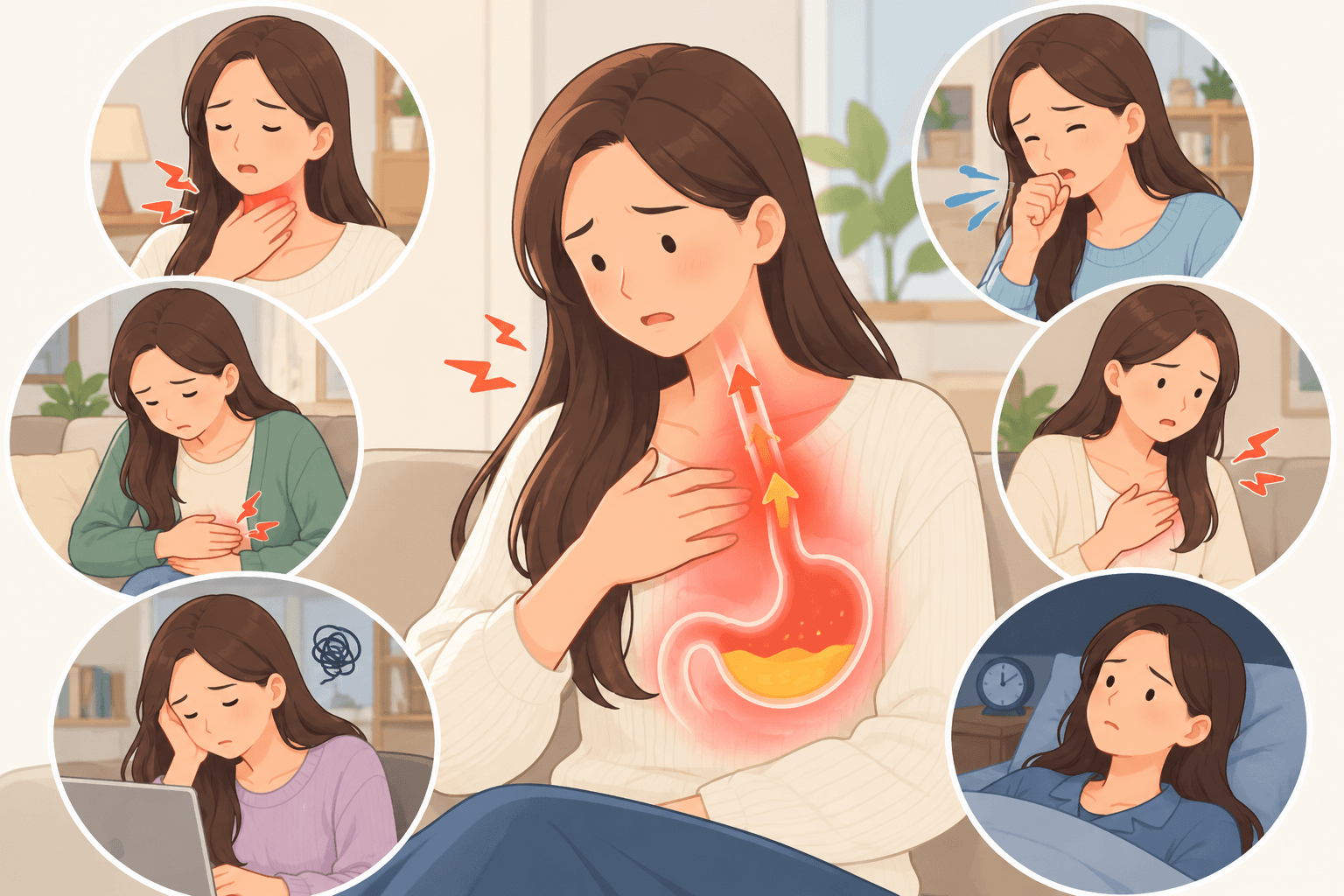
속쓰림은 없는데 목소리가 자꾸 쉬고, 아침마다 목에 가래가 낀 것처럼 헛기침을 합니다. 감기도 아닌데 몇 달째 목이 칼칼하고, 이비인후과에서는 위산이 목까지 올라온다고 합니다. 위가 아니라 목에서 먼저 나타나는 역류성 후두염입니다.
역류성 후두염 한눈에 보기
- 역류성 후두염은 위산과 소화액이 목과 후두까지 올라와 목소리 변화, 헛기침, 목이물감을 일으키는 상태입니다.
- 성인 5명 중 1명꼴로 증상이 있고, 위산억제제의 효과는 위약보다 조금 나은 정도라 식사와 생활 관리가 중요합니다.
- 목의 과민과 불안, 자율신경의 불균형이 증상을 키워 위장과 몸의 긴장을 함께 살펴야 합니다.
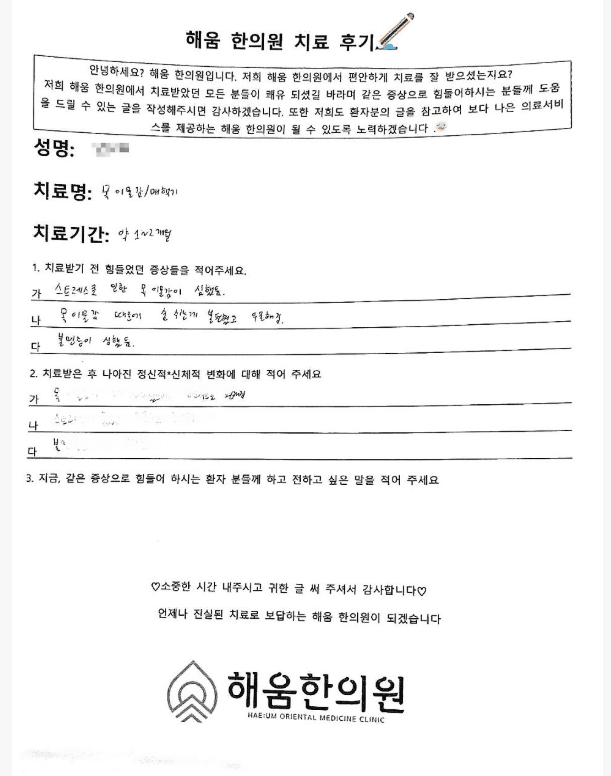
- 치료후기 1건
역류성 후두염이란?
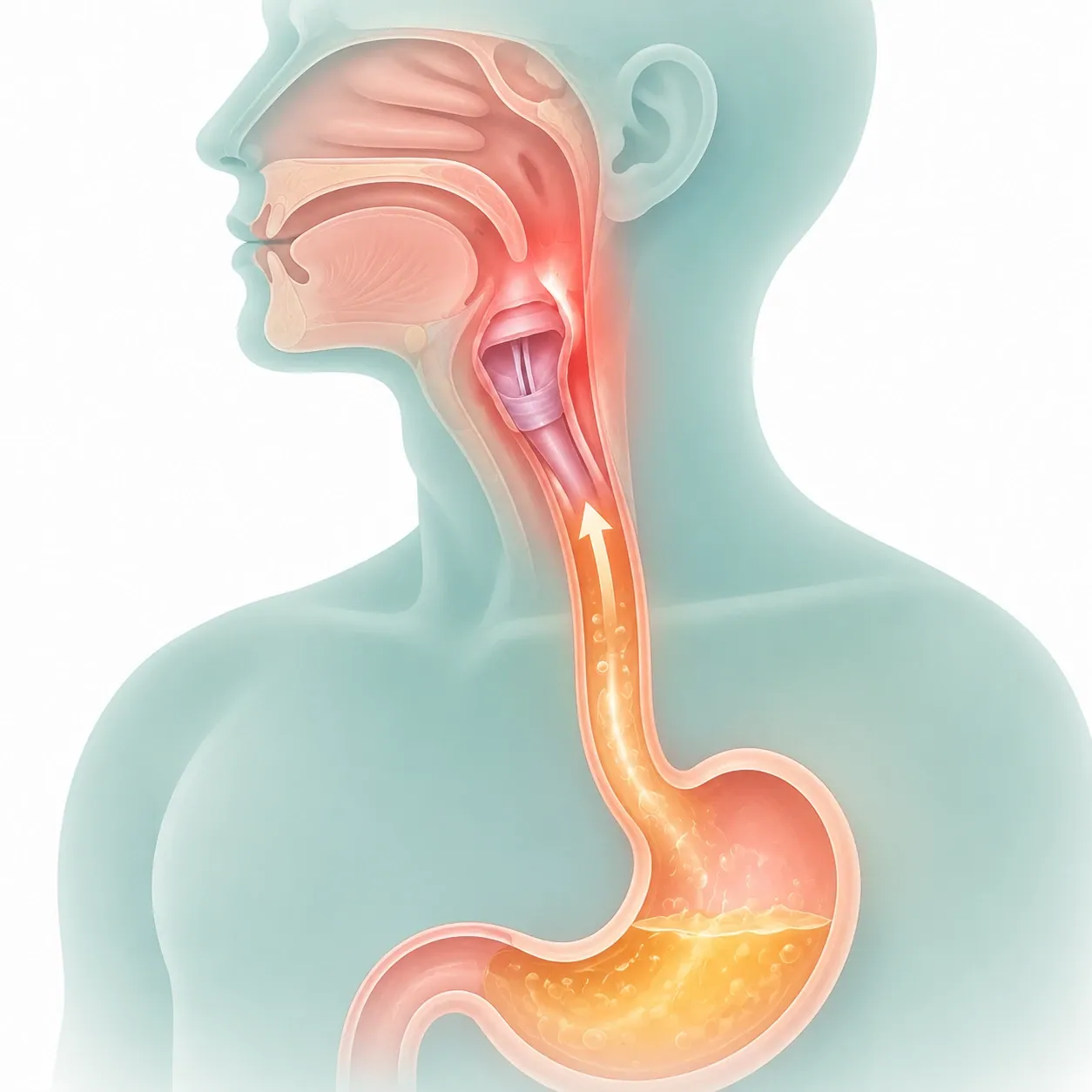
위와 식도 사이, 식도와 목 사이에는 내용물이 거꾸로 올라오지 않게 막는 문이 있습니다. 이 문이 느슨해지면 위산과 소화 효소가 목과 성대가 있는 후두까지 올라옵니다. 후두는 식도보다 훨씬 약해서 적은 양만 닿아도 붓고 예민해지는데, 이것을 인후두 역류, 흔히 역류성 후두염이라고 합니다.
역류성 식도염과 달리 속쓰림이나 신물 없이 목 증상만 나타나는 경우가 많아 감기나 비염으로 오해하기 쉽습니다. 일반 성인의 18.8%가 증상 설문에서 역류성 후두염에 해당했고, 50~64세에 가장 많았습니다[1].
이런 증상이 있나요?
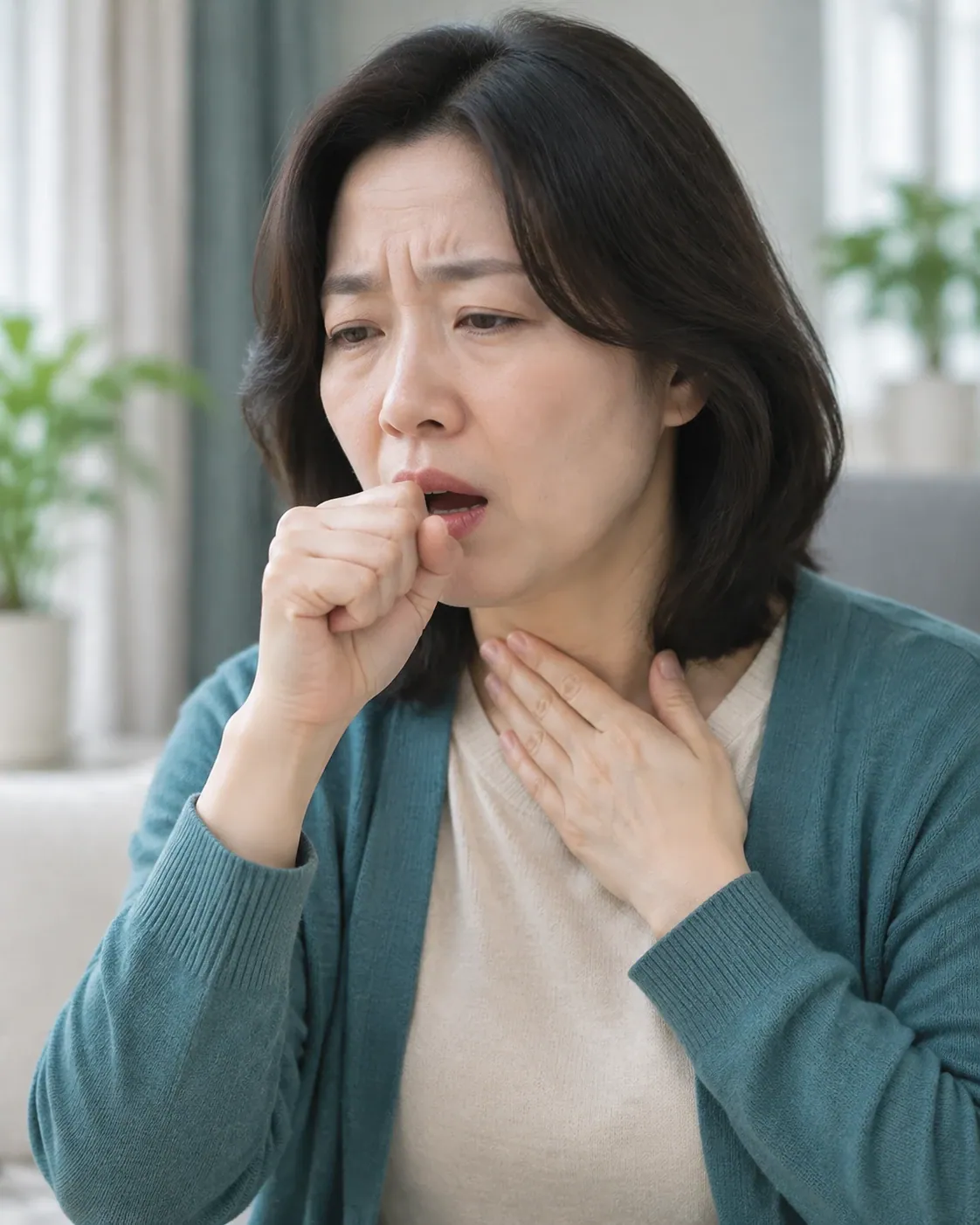
- 목소리가 자주 쉬거나 탁해진다
- 목에 가래가 낀 듯해 자꾸 헛기침을 한다
- 목에 무언가 걸린 느낌이 있다
- 감기가 아닌데 마른기침이 오래간다
- 아침에 목이 칼칼하고 입이 쓰다
- 식후나 누우면 목 증상이 심해진다
진단은 증상 설문과 후두 내시경으로 성대 주변이 붓거나 붉어졌는지 확인하는 것으로 시작합니다. 필요하면 목까지 올라오는 역류를 24시간 재는 검사를 합니다. 목소리가 3주 넘게 쉬어 있거나 담배를 오래 피운 분은 성대의 혹이나 종양을 먼저 확인해야 합니다.
역류성 후두염의 표준 치료
표준 치료는 위산억제제와 함께 식사와 생활 습관을 바꾸는 것입니다. 위산억제제는 위약보다 조금 나은 정도였고, 식이 지도가 함께할 때 그 차이는 더 작았습니다[4]. 채소 위주의 지중해식 식단과 생활 관리만으로도 위산억제제와 비슷하게 증상이 좋아졌다는 연구도 있습니다[5].
위산을 줄여도 목 증상이 남는 분이 많습니다. 역류성 후두염은 위산뿐 아니라 소화 효소도 함께 올라오고, 예민해진 목과 긴장된 자율신경이 증상을 키우기 때문입니다. 한의학 치료는 이 바탕을 다스립니다.
관련 연구를 살펴보면, 위산억제제로 낫지 않는 인후두 역류 환자에게 육군자탕을 4주 쓰자 목이물감이 줄었고, 위가 비워지는 속도가 좋아질수록 목 증상도 좋아졌습니다[6]. 위약과 비교한 연구가 아니어서 추가적인 연구가 필요합니다.
해움한의원은 이렇게 치료합니다

해움한의원은 목만 보지 않고, 역류를 만드는 위장과 예민해진 목, 긴장된 자율신경을 함께 치료합니다.
1단계. 역류의 원인과 위험 신호를 가립니다
목 증상이 시작된 시기, 식사와 야식, 흡연과 음주, 수면, 스트레스, 그동안의 검사와 약 반응을 자세히 살펴봅니다. 위험 신호가 있으면 이비인후과 검사를 먼저 안내해 드립니다. 심박변이도 검사로 자율신경의 상태를 확인합니다.
2단계. 위장과 목의 긴장을 풉니다
침과 약침으로 명치와 목 주변의 긴장을 풀고 위장의 움직임을 돕습니다.
3단계. 유형에 맞춰 바탕을 다스립니다
야식과 식사 습관, 목소리 쓰는 법도 함께 안내합니다. 체질과 상태에 맞춰 한약을 짓습니다.
4만 건의 처방 사례가 말해주는, 한방 맞춤 치료의 힘



역류성 후두염, 누가 진료하나요?
담당 의료진
대표원장 박재은

“병이 아니라 그 뒤의 사람을 봅니다”
경희대학교 한의과대학에서 석사·박사 과정을 마쳤습니다. 심리상담사 1급 자격과 4만 건 이상의 한약 처방 경험을 바탕으로 진료합니다.
의료진 소개 더보기역류성 후두염, 자주 묻는 질문
역류성 식도염과 역류성 후두염은 어떻게 다른가요?
위산억제제를 먹어도 목 증상이 그대로예요.
위산억제제와 한약을 같이 먹어도 되나요?
생활에서 어떻게 관리해야 하나요?
치료 기간은 얼마나 걸리나요?
해움한의원에서 역류성 후두염을 진료하나요?
역류성 후두염으로 내원하려면 어떻게 하나요?
이런 경우에는 미루지 말고 진료를 받으세요
아래 증상은 역류성 후두염이 아니라 성대의 혹이나 종양, 식도 질환일 수 있습니다. 이비인후과 검사를 먼저 받으세요.
- 목소리가 3주 넘게 쉬어 있다
- 음식이나 물을 삼킬 때 아프거나 걸린다
- 숨을 쉴 때 쌕쌕거리거나 숨이 차다
- 피가 섞인 가래나 기침이 나온다
- 목에 혹이 만져지거나 이유 없이 체중이 줄었다
참고문헌 6편
[1]Spantideas N, Drosou E, Bougea A, Assimakopoulos D. Laryngopharyngeal reflux disease in the Greek general population, prevalence and risk factors. BMC Ear Nose Throat Disord. 2015;15:7. doi:10.1186/s12901-015-0020-2. PMID: 26696776.
초록 (Abstract)
Background: To assess the prevalence of laryngopharyngeal reflux (LPR) in the Greek general population and its risk factors.
Methods: Questionnaire based epidemiological, adult participants’ survey. The Reflux Symptom Index (RSI) was used for the assessment of LPR prevalence. The RSI questionnaire was completed by 340 (183 male and 157 female) randomly selected subjects. Subjects with RSI score ≥13 were considered as LPR patients and those with RSI score <13 were considered as non LPR subjects.
Results: The prevalence of LPR in the general Greek population was found to be 18.8 % with no statistically significant difference between the two genders (p > 0.05). The age group of 50–64 years showed the higher prevalence rate. Tobacco smoking and alcohol consumption were found to be related with LPR. No reported concomitant disease or medication was found to be related with LPR.
Conclusions: LPR prevalence in the Greek general population was found to be 18.8 %. Tobacco smoking and alcohol consumption were found to be related with LPR.
결과 (Results)
The questionnaire was given to 450 subjects. Three hundred and fifty subjects (response rate 77.8 %) returned completed questionnaires. In 10 out of the 350 returned questionnaires, critical information like gender and age were lacking. Thus 340 (183 male and 157 female) duly completed questionnaires were appropriate for statistical analysis. Demographic data and patients’ behavioral characteristics are shown in Table 1. The mean age of the participants was 46.86 ± 14.54 years. Most participants belonged to the age group of 35–49 (131 subjects) while the age groups > 80 and < 20 were poorly represented (3 subjects > 80 year and 2 subjects < 20 year).
One hundred seventy four (51.2 %) participants were smokers with mean number of cigarettes per day 20.5 and mean duration of smoking 18.23 ± 8.6 years for male and 17.02 ± 8.0 years for female, with no statistically significant difference between the two genders (t-test >0,05).
One hundred and one subjects (29.7 %) drank alcohol regularly (68.3 % male and 31.7 % female). Mean alcohol consumption per day was 2.43 ± 1.62 units for males and 2.17 ± 1.32 units for females with no statistical significance between the two genders (t-test > 0.05). The most commonly reported alcoholic drinks were wine (30) followed by beer (21) and whisky (18).
One hundred forty two (41.8 %) participants reported one or more diseases. The reported diseases were: cardiovascular 50 (35.2 %), gastrointestinal 25 (17.6 %), musculoskeletal 15 (10.6 %), respiratory 10 (7.0 %), thyroidopathy 9 (6.3 %), anemia 3 (2.1 %) and other diseases 30 (21.1 %). Among the reported gastrointestinal diseases, 5 cases were gastroesophageal reflux disease (GERD), 13 dyspepsia, 5 gastritis and 2 duodenal ulcers.
One hundred and thirty seven (40.3 %) participants reported use of one or more medication for the concomitant diseases. The reported medications were: antihypertensive 43 (31.4 %), anticholesterol 19 (13.9 %), antiulcerants 19 (13.9 %), [15 PPIs (proton pump inhibitors) and 4 H2 antagonists], antidiabetics 11 (8.0 %), anti-asthmatics/COPD (chronic obstructive pulmonary disease) 11 (8.0 %), antihypothyroidism 9 (6.6 %), antiosteoporotics 7 (5.1 %) [5 calcium carbonate and 2 bisphosphonates], non steroidal anti-inflammatory drugs 4 (1,2 %) and other medications 18 (13.1 %).
Two hundred sixty six subjects (78.2 %) reported one or more symptoms included in the RSI. The most commonly reported symptoms were No 9 “Heartburn, chest pain, indigestion, or stomach acid coming up” (52 %) and No 2 “Clearing your throat” (48.2 %) (Table 2).
Sixty four subjects (18.8 %) out of the 340 participants of our study presented an RSI ≥13 and were considered as patients with LPR, compared to 276 subjects with an RSI < 13 who were considered to be subjects without LPR. The mean RSI score in patients with LPR was 24.8 ± 8.0 compared to the subjects without LPR the mean RSI of which was 2.3 ± 3.2 (p < 0.001) (Table 3).
Spearman’s Rho correlations analysis showed that all the pairs between the 9 items of the RSI were correlated, meaning that if a subject responded positively to one item there was a high probability to respond positively to the other item.
Based on the findings of our study the prevalence of LPR in the Greek general population was found to be 18.8 %. The LPR prevalence for males was 19.7 % and for females 17.8 % with no statistically significant difference between the two genders (t-test, p > 0.05).
Most subjects with LPR (RSI ≥13) belonged to the age groups of 50–64 year (40.6 %) and 35–49 (34.4 %). These two age groups represented 75 % of the LPR cases encountered in the general Greek population. No LPR cases reported in ages >80 and <20 but this may be due to the very small sample size of these two particular age groups.
Statistical analysis did not show any relation between LPR and any of the reported diseases nor LPR and reported medications (Chi-square test > 0.05 for both cases). The lack of such findings has to be accepted with reservations and not as conclusive due to the limited number of reported diseases and medications, and since the primary aim of this study was not to assess these two parameters.
A correlation was found between LPR and smoking and alcohol consumption. Factor analysis was used to assess a potential association between the Factor’s Score and the information available for every person. It was concluded that alcohol drinkers and nondrinkers have a statistically significant difference in their mean factor score, as well as smokers compared to nonsmokers (t-test, p-value < 0.001 and p-value = 0.006 respectively. The direction of this association is shown in the box plots (Figs. 1 and 2).
We should be aware that the smokers of this study tend to consume alcohol more often than non-smokers. For that reason we cannot be sure which of the two, tobacco or alcohol consumption has an effect on increasing the average score of the RSI.
원문 발췌 · Spantideas N, Drosou E, Bougea A, Assimakopoulos D, BMC Ear Nose Throat Disord 2015 · CC BY 4.0 라이선스에 따라 수정 없이 인용했습니다(본문 속 인용 번호는 생략).
[2]Huang WJ, Shu CH, Chou KT, Wang YF, Hsu YB, Ho CY, et al. Evaluating the autonomic nervous system in patients with laryngopharyngeal reflux. Otolaryngol Head Neck Surg. 2013;148(6):997-1002. doi:10.1177/0194599813482103. PMID: 23520070.
요약 인후두 역류 환자 17명과 건강한 사람 19명의 심박변이도 연구입니다. 환자는 부교감신경 비율이 낮고 교감신경 쪽으로 치우쳐 있었으며, 불안도 흔했습니다.원문은 출판사 저작권 자료로, 위 링크에서 확인하실 수 있습니다.
[3]Wong MW, Hsiao SH, Wang JH, Yi CH, Liu TT, Lei WY, et al. Esophageal Hypervigilance and Visceral Anxiety Contribute to Symptom Severity of Laryngopharyngeal Reflux. Am J Gastroenterol. 2023;118(5):786-793. doi:10.14309/ajg.0000000000002151. PMID: 36693025.
요약 역류 증상이 3개월 넘은 환자 269명의 연구입니다. 인후두 역류 증상이 있는 환자는 식도 감각에 대한 과민과 증상 불안이 더 높았고, 이 점수가 높을수록 인후두 역류 증상 점수도 높았습니다. 연구진은 실제 역류량보다 과민과 불안이 증상을 느끼는 데 더 중요할 수 있다고 보았습니다.원문은 출판사 저작권 자료로, 위 링크에서 확인하실 수 있습니다.
[4]Lechien JR, Saussez S, Schindler A, Karkos PD, Hamdan AL, Harmegnies B, et al. Clinical outcomes of laryngopharyngeal reflux treatment: A systematic review and meta-analysis. Laryngoscope. 2019;129(5):1174-1187. doi:10.1002/lary.27591. PMID: 30597577.
요약 인후두 역류 치료 연구 72편, 5,781명을 살피고 위약 대조 연구 10편을 모은 메타분석입니다. 위산억제제가 위약보다 조금 나았고(상대위험 1.31), 식이 지도를 받지 않은 환자에서는 차이가 조금 더 컸습니다(1.42). 진단 기준과 평가 방법이 연구마다 달라 뚜렷한 결론을 내리기 어렵다고 보았습니다.원문은 출판사 저작권 자료로, 위 링크에서 확인하실 수 있습니다.
[5]Zalvan CH, Hu S, Greenberg B, Geliebter J. A Comparison of Alkaline Water and Mediterranean Diet vs Proton Pump Inhibition for Treatment of Laryngopharyngeal Reflux. JAMA Otolaryngol Head Neck Surg. 2017;143(10):1023-1029. doi:10.1001/jamaoto.2017.1454. PMID: 28880991.
요약 인후두 역류 환자 184명의 진료 기록 연구입니다. 6주 뒤 증상 점수가 의미 있게 줄어든 비율은 위산억제제군 54.1%, 알칼리수와 채소 위주 지중해식 식단군 62.6%로 통계적 차이는 없었고, 증상 점수가 줄어든 정도는 식단군이 더 컸습니다(위산억제제군 27.2%, 식단군 39.8%).원문은 출판사 저작권 자료로, 위 링크에서 확인하실 수 있습니다.
[6]Tokashiki R, Okamoto I, Funato N, Suzuki M. Rikkunshito improves globus sensation in patients with proton-pump inhibitor-refractory laryngopharyngeal reflux. World J Gastroenterol. 2013;19(31):5118-5124. doi:10.3748/wjg.v19.i31.5118. PMID: 23964146.
요약 위산억제제로 낫지 않는 인후두 역류 환자 22명에게 육군자탕을 4주 쓴 연구입니다. 육군자탕 단독과 위산억제제 병용 모두 목이물감 점수를 줄였고, 늦어진 위 배출이 좋아질수록 목이물감도 좋아졌습니다. 위약 대조군은 없었습니다.원문은 출판사 저작권 자료로, 위 링크에서 확인하실 수 있습니다.