
양천구 목동 자율신경성 소화장애 한의원
자율신경성 소화장애
신경 쓰는 일만 생기면 명치가 꽉 막히고 배가 뒤틀립니다. 내시경도 대장내시경도 깨끗하다는데, 긴장한 날이면 어김없이 체하고 화장실을 찾습니다. 위장이 아니라 위장을 움직이는 신경이 흔들리는 자율신경성 소화장애입니다.
자율신경성 소화장애 한눈에 보기
- 자율신경성 소화장애는 검사에서 이상이 없는데 긴장과 스트레스에 따라 소화 증상이 되풀이되는 상태를 이르는 말입니다.
- 성인의 40%가 기능성 위장 질환을 겪을 만큼 흔하고, 불안과 위장 증상은 서로를 키웁니다.
- 위장을 움직이는 부교감신경이 약해지고 교감신경이 지나치게 켜져 있어, 위장과 자율신경을 함께 다스려야 합니다.
- 치료후기 2건
자율신경성 소화장애란?
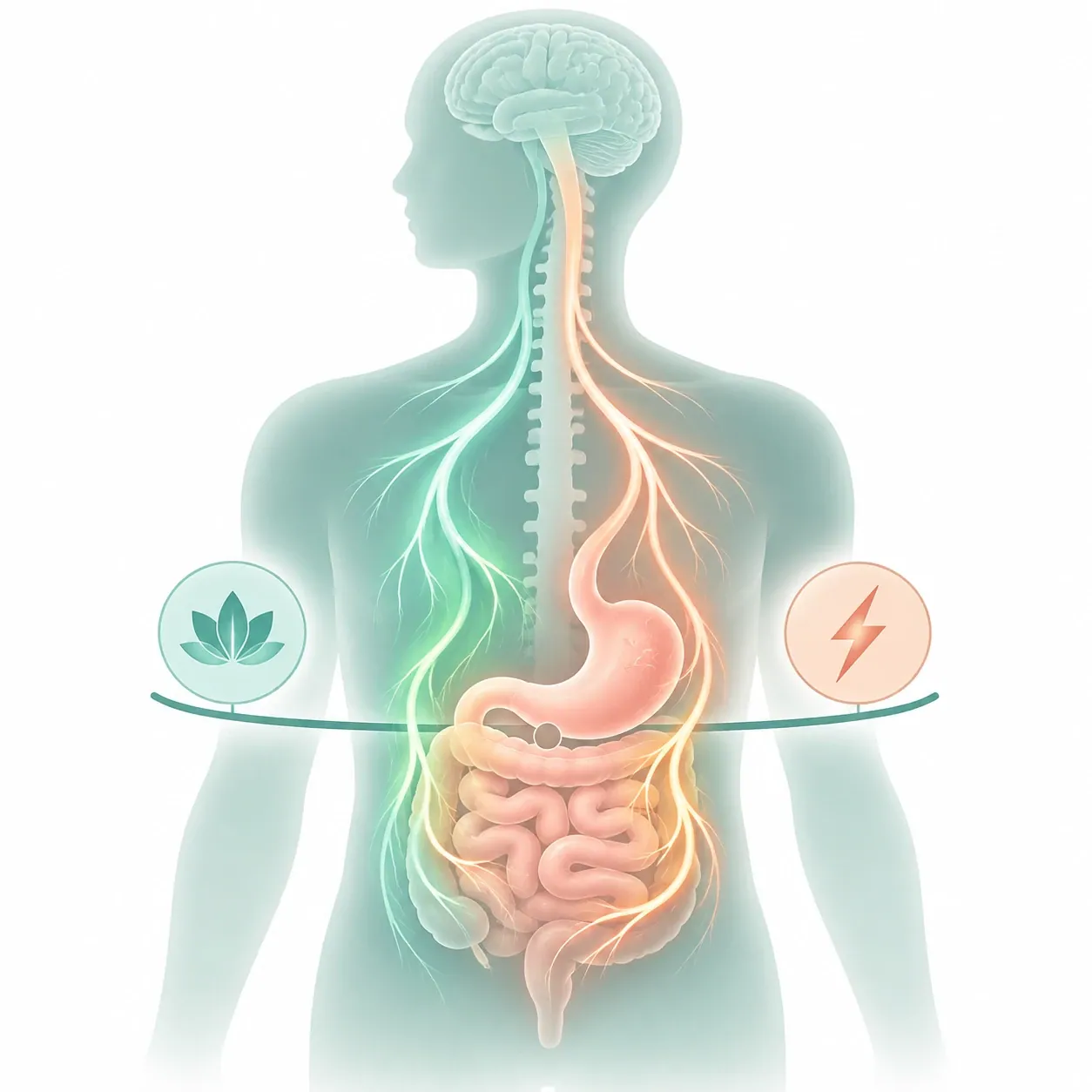
위와 장은 우리가 의식하지 않아도 자율신경이 움직입니다. 쉬고 있을 때 켜지는 부교감신경은 위를 부드럽게 움직이고 소화액을 내보내며, 긴장할 때 켜지는 교감신경은 소화를 멈춥니다. 이 균형이 깨져 검사로는 이상이 없는데 소화 증상이 되풀이되는 것을 흔히 자율신경성 소화장애라고 부릅니다.
정식 진단명은 아니고, 의학에서는 기능성 소화불량이나 과민성대장증후군 같은 기능성 위장 질환, 최근에는 뇌-장 상호작용 질환이라고 부르는 범위에 들어갑니다. 이런 질환은 아주 흔해서 성인의 40.3%가 하나 이상을 가지고 있었습니다[1].
이런 증상이 있나요?

- 긴장하거나 신경 쓰면 명치가 막히고 잘 체한다
- 조금만 먹어도 더부룩하고 트림이나 가스가 많다
- 중요한 일을 앞두면 배가 아프고 화장실을 찾는다
- 설사와 변비가 번갈아 온다
- 두근거림, 손발 저림, 불면 같은 증상이 함께 있다
- 내시경과 대장내시경은 정상이라고 들었다
진단은 증상이 어떤 상황에서 심해지는지 자세히 묻고, 내시경과 혈액검사로 위궤양이나 염증성 장질환 같은 다른 병을 먼저 가리는 것입니다. 소화 증상과 함께 두근거림, 어지럼증, 불면처럼 다른 자율신경 증상이 있는지도 살핍니다.
자율신경성 소화장애는 왜 생기나요?
자율신경성 소화장애의 표준 치료
표준 치료는 기능성 위장 질환의 치료를 따릅니다. 증상에 맞춰 위산억제제, 위장운동촉진제, 장 경련을 줄이는 약을 쓰고, 낫지 않으면 뇌와 장의 신호를 조절하는 신경조절제(항우울제 등)와 인지행동치료를 더합니다.
위장약은 증상을 줄여 주지만, 긴장할 때마다 다시 체하고 배가 아프다면 위장을 움직이는 자율신경의 균형이 그대로이기 때문입니다. 한의학 치료는 위장과 자율신경을 함께 다스립니다.
관련 연구를 살펴보면, 내관혈과 족삼리혈의 경피 전기침은 소화불량 증상 점수를 55% 줄이고 부교감신경 활동을 75% 높였습니다[5]. 귀의 미주신경 자극은 가짜 자극보다 위의 리듬과 미주신경 활동을 좋게 했습니다[6]. 두 연구 모두 기능성 소화불량 환자 30명 안팎을 2주 동안 본 연구여서 추가적인 연구가 필요합니다.
해움한의원은 이렇게 치료합니다

해움한의원은 위장만 보지 않고, 위장을 움직이는 자율신경의 균형을 함께 치료합니다.
1단계. 소화 증상과 자율신경 상태를 살핍니다
증상이 심해지는 상황과 식사, 수면, 스트레스, 그동안의 검사와 약 반응을 자세히 살펴봅니다. 심박변이도 검사로 교감신경과 부교감신경의 균형을 확인합니다.
2단계. 위장과 몸의 긴장을 풉니다
침과 약침으로 명치와 배, 목과 등의 긴장을 풀어 위장이 편하게 움직이도록 돕습니다.
3단계. 유형에 맞춰 바탕을 다스립니다
식사 습관과 수면, 긴장을 푸는 호흡법도 함께 안내합니다. 체질과 상태에 맞춰 한약을 짓습니다.
4만 건의 처방 사례가 말해주는, 한방 맞춤 치료의 힘




자율신경성 소화장애 치료후기 총 2건
환자분들이 남긴 치료후기입니다. 본문은 로그인 후 보실 수 있습니다.

자율신경성 소화장애, 누가 진료하나요?
담당 의료진
대표원장 박재은

“병이 아니라 그 뒤의 사람을 봅니다”
경희대학교 한의과대학에서 석사·박사 과정을 마쳤습니다. 심리상담사 1급 자격과 4만 건 이상의 한약 처방 경험을 바탕으로 진료합니다.
의료진 소개 더보기자율신경성 소화장애, 자주 묻는 질문
검사가 정상인데 정말 병인가요?
신경정신과 약을 먹어야 하나요?
자율신경 검사는 어떻게 하나요?
생활에서 무엇을 바꾸면 좋을까요?
치료 기간은 얼마나 걸리나요?
해움한의원에서 자율신경성 소화장애를 진료하나요?
자율신경성 소화장애로 내원하려면 어떻게 하나요?
이런 경우에는 미루지 말고 진료를 받으세요
아래 증상은 자율신경성 소화장애가 아니라 다른 질환일 수 있습니다. 내과 검사를 먼저 받으세요.
- 이유 없이 체중이 줄었다
- 변에 피가 섞이거나 검은 변을 본다
- 음식을 삼키기 어렵거나 자꾸 토한다
- 밤에 잠을 깰 만큼 배가 아프다
- 50세 이후에 처음 시작된 증상이다
참고문헌 6편
[1]Sperber AD, Bangdiwala SI, Drossman DA, Ghoshal UC, Simren M, Tack J, et al. Worldwide Prevalence and Burden of Functional Gastrointestinal Disorders, Results of Rome Foundation Global Study. Gastroenterology. 2021;160(1):99-114.e3. doi:10.1053/j.gastro.2020.04.014. PMID: 32294476.
요약 33개국 성인 7만 3천여 명의 조사입니다. 인터넷 조사에서 40.3%가 기능성 위장 질환을 하나 이상 가졌고, 삶의 질이 낮고 진료를 더 자주 받았습니다.원문은 출판사 저작권 자료로, 위 링크에서 확인하실 수 있습니다.
[2]Ali MK, Chen JDZ. Roles of Heart Rate Variability in Assessing Autonomic Nervous System in Functional Gastrointestinal Disorders: A Systematic Review. Diagnostics (Basel). 2023;13(2):293. doi:10.3390/diagnostics13020293. PMID: 36673103.
초록 (Abstract)
Functional gastrointestinal disorders (FGID) and gastroesophageal reflux (GERD) disease affect a large global population and incur substantial health care costs. Impairment in gut-brain communication is one of the main causes of these disorders. The central nervous system (CNS) provides its inputs to the enteric nervous system (ENS) by modulating the autonomic nervous system (ANS) to control the gastrointestinal functions. Therefore, GERD and FGID’s might be associated with autonomic dysfunction, which can be identified via heart rate variability (HRV). FGIDs may be treated by restoring the autonomic dysfunction via neuromodulation. This article reviews the roles of HRV in the assessment of autonomic function and dysfunction in (i) gastroesophageal reflux (GERD), and the following FGIDs: (ii) functional dyspepsia (FD) and gastroparesis, (iii) irritable bowel syndrome (IBS) and (iv) constipation. The roles of HRV in the assessment of autonomic responses to various interventions were also reviewed. We used PUBMED, Web of Science, Elsevier/Science direct and Scopus to search the eligible studies for each disorder, which also included the keyword ‘heart rate variability’. The retrieved studies were screened and filtered to identify the most suitable studies using HRV parameters to associate the autonomic function with any of the above disorders. Studies involving both human and animal models were included. Based on analyses of HRV, GERD as well as the FGIDs were found to be associated with decreased parasympathetic activity and increased sympathetic nervous system activity with the autonomic balance shifted towards the sympathetic nervous system. In addition, the HRV methods were also reported to be able to assess the autonomic responses to various interventions (mostly neuromodulation), typically the enhancement of parasympathetic activity. In summary, GERD and FGIDs are associated with impaired autonomic dysfunction, mainly due to suppressed vagal and overactive sympathetic tone, which can be assessed noninvasively using HRV.
결과 (Results)
3.1. Gastroesophageal Reflux and Autonomic Nervous System: A total of 861 individuals were included in all the 15 studies selected for the gastroesophageal reflux group. Seven out of the 15 studies compared the autonomic nervous system activity of the patients to that of healthy controls, while in the other seven studies, the comparison was carried out among different patient groups; three studies were conducted on newborn babies or kids while the rest were conducted on adults.
Four studies used short term HRV (≤5 min); seven studies used long term HRV (12–24 h); four studies did not mention the duration of the ECG recording. One study used only time domain parameters (SDNN, SDNNi, RMSSD, pNN50%) for the ANS activity assessment and one study used heart ratios (max HR/Min HR) during postural change, Valsalva, hand grip, and deep breathing to record the variability in heart rate instead of time or frequency domain parameters. Seven studies used only frequency domain parameters, HF and LF powers, and their ratios for the ANS assessment, and in the remaining six studies, both time and frequency parameters were implemented.
Based on the HRV parameter values, six studies concluded that patients had low overall heart rate variability compared to controls, as the HRV parameters (PNS and SNS parameters) were lowered in patients. Four studies reported a decreased parasympathetic activity and enhanced sympathetic tone with the autonomic balance shifted towards the SNS in patients compared to controls. One study compared two groups of patients and tried to differentiate alcoholic non cardiac chest pain patients with and without depression and alexithymia using HRV and could not find any difference. Nowak et al. concluded that the children suffering from IBS had no significant differences in their autonomic activity compared to controls.
Djeddi et al. studied the autonomic activity before, during, and after the gastroesophageal reflux event and found that the PNS activity is significantly suppressed prior to the reflux event. Jones et al. indicated that the autonomic neuropathy, which was believed to be the cause of gastroesophageal reflux, could be reversed if treated.
Three studies assessed the effect of esophageal electric stimulation on the autonomic nervous system in patients with GERD. Two of the three reported that transcutaneous electric acustimulation (stimulation delivered via acupoints) decreased the SNS and promoted the PNS activity in patients with GERD. The other showed that electrical esophageal stimulation (EOS; 200 μs, 0.2 Hz., 25 stimuli) applied 5 cm above the lower esophageal sphincter altered ANS such that the sympathetic outflow (LF peak power) was decreased and the cardiovagal activity (HF peak power) was increased in patients with GERDS, but not in healthy controls. This might be attributed to the fact that the baseline ANS activity in the healthy controls was already in a homeostatic state, hence the electric stimulations did not modulate it much, contrary to patients.
The detailed information on the population, study design, HRV parameters used, results, and conclusion in the 15 studies is summarized in Table 2.
3.2. Functional Dyspepsia, Gastroparesis and Autonomic Nervous System: Out of the total 19 studies included for the “functional dyspepsia and gastroparesis” group, six were animal studies, which included five studies on rats/rodents and one study carried out on dogs. In the 13 human studies, a total of 873 participants took part, which includes 154 healthy controls and 719 patients. Further details about the participants (gender, average age, pathophysiology of each group) are given in Table 3 below.
Thirteen studies utilized frequency domain parameters (HF power, LF power, LF/HF ratio, HFa, LFa, LFa/HFa) for autonomic assessment while five studies used both time (SDNN, SDANN, pNN50%, RMSSD, E/I, Valsalva ratio) and frequency domain parameters, and one study used only the time domain parameters for the ANS assessment.
While Kumar et al. did not find any abnormality in the autonomic nervous system function in patients with delayed gastric emptying, all other human studies have found at least one abnormal HRV parameter value in patients with functional dyspepsia or gastroparesis compared to healthy controls. Only one study reported that patients with FD had a high parasympathetic tone and a lowered LF/HF ratio and that symptoms were more severe in patients with impaired PNS activity. All other studies demonstrated that both FD and gastroparesis were associated with a decreased vagal tone and/or an increased sympathetic activity. Three human studies have shown that the suppressed vagal activity can be enhanced (increase in HF power) and SNS can be decreased by gastric electrical stimulation or gastric neuromodulation, transcutaneous auricular vagus nerve stimulation, and epalrestat (an aldose reductase inhibitor, used for treating diabetic neuropathy) administration.
Rodent studies showed that delayed gastric emptying was associated with a low HF power and high LF/HF ratio (sympathovagal balance) compared to controls, which was improved with sacral nerve stimulations, electroacupuncture at ST36 with implanted electrodes, or auricular electroacupuncture. Similar findings were reported in dogs with electroacupuncture at ST36.
Table 3 summarizes the population, study design, HRV parameters used, results, and conclusions of all 16 studies in functional dyspepsia and gastroparesis.
3.3. Irritable Bowel Syndrome and Autonomic Nervous System: All 19 studies included for the “Irritable Bowel Syndrome” group in this review were carried out on human participants. There was a total of 2163 participants included in all of the studies, combined with 1494 patients suffering from irritable bowel syndrome and 669 healthy controls. Further details about the participants (gender, average age, subgroups) are given in Table 4.
Thirteen studies implemented the frequency domain parameters (HF power, LF power, LF/HF ratio, HFnu, LFnu, VLFnu), one study used peak HF and LF powers, two studies used the natural log of HF and LF power, and one study used the percentage HF and LF powers. Two studies used both time and frequency domain parameters for the ANS assessment.
While eight studies demonstrated a high sympathetic tone (increased value of LF power and/or LF/HF ratio) and low parasympathetic tone (lower value of HF power) in patients with irritable bowel syndrome compared to adult healthy controls, Jarrett et al. reported no difference in HRV parameters in children with functional abdominal pain (FAP) related to IBS compared to healthy children. Orr et al. showed that the difference in the autonomic activity of IBS patients is only abnormal during rapid eye sleep and during walking. Kano et al. and Adeyemi et al. reported opposite results, showing a low ln(LF/HF) ratio and a higher ln(HF power) in patients compared to controls. However, an inflatable bag was placed inside the rectum during the experiment of Kano et al. which was inflated during the experiment, which might have caused the opposite autonomic response. Jarrett et al. tried to use HRV parameters to differentiate the IBS patients with diarrhea (IBS-D) and with constipation (IBS-C) while Robert et al. compared the HRV of IBS patients with and without depressive symptoms. Both of their results showed no difference in the HRV of between the compared groups. Jarrett et al. reported that the IBS patients with high sympathetic tone were less benefitted from cognitive therapies while, according to Jung et al., HRV parameters could be used to study the effect of cognitive therapies for IBS. Cai et al. reported that only the IBS patient with severe gut pain had high sympathetic tone and low parasympathetic tone. Tanaka et al. established a strong correlation between adrenaline and HRV upon corticotropin release in healthy controls, which was absent in IBS patients. Similarly, Pellissier et al. reported that healthy controls could be differentiated from the IBS patients based on the fact that, in controls, a higher HFnu value correlated with a lower evening salivary cortisol level, while this correlation was absent in the patients.
3.4. Constipation and Autonomic Nervous System: Of the 15 studies included for the “Constipation” group, three were animal studies which included two studies in rats and one study in dogs. The 12 human studies consisted of 197 healthy controls and 634 patients with constipation. Further details about the participants (gender, average age, pathophysiology of each group) are given in Table 5.
Ten studies only implemented the frequency domain parameters (HF power, LF power, LF/HF ratio, HFnu, LFnu) for the autonomic assessment, while five studies used both time (RMSSD, SDNN, pNN50%, sympathetic index) and frequency domain parameters (HF power, RSA, LF power, LF/HF ratio). It is noteworthy that three studies implemented the sympathetic index (SI) for sympathetic nervous system assessment instead of the LF power and two studies used SI/RSA or SI/RMSSD for recording autonomic balance.
The studies involving human participants can be divided into three subgroups. The first subgroup (n = 4) focused on identifying the autonomic function/dysfunction in constipated patient. Lijun et al., Miyagi et al., and J. Liu et al. have concluded that constipation is associated with high sympathetic tone (high SI) and low parasympathetic tone (decreased HF or RSA) and the autonomic balance shifted towards SNS activity (low LF/HF); they concluded that both SNS and PNS were impaired. Gondim et al. only reported a higher SNS tone in constipated patients. Enevoldsen et al. tried to corelate GI transit time with HRV parameters and found no correlation.
Ding et al. tested biofeedback a method to improve autonomic nervous system activity in constipated patients, but they could not establish biofeedback as a way to treat constipation by modulating the ANS. The remaining six human studies tested neuromodulation as a method to treat chronic constipation via modulating vagal and/or sympathetic activity. In an earlier study, neuromodulation of lumbar and sacral autonomic nerves by low level laser therapy was reported to modulate the autonomic nervous system such that PNS activity was enhanced and SNS activity was decreased in patients with GI disorders predominantly constipations. Z. Liu et al. modulated the ANS via transcutaneous electric acustimulation (TEA) and successfully increased the HF power, decreased the LF power as well as LF/HF ratio. While J. Liu et al. found that ANS was modulated with both actual and sham TEA when both combined with Macrogol 4000 Powder (MAC) and adaptive biofeedback, whereas MAC alone did not modulate the ANS. Zhang et al., Wu et al., and Chen et al. have successfully modulated the ANS activity using neuromodulation as an effort to treat the chronic constipation
Similarly in animal studies, Wang et al. demonstrated that Loperamide-induced constipation in rats could be treated by electroacupuncture (EA), which increased the HF power and decreased the LF/HF ratio. Similar findings on autonomic modulation were reported with sacral nerve stimulation in the same rodent model of constipation. Jin et al. found that impaired colonic motility induced by rectal distension in dogs was associated with a significant decrease in the HF power, which was reinstated by EA at ST36.
원문 발췌 · Ali MK, Chen JDZ, Diagnostics (Basel) 2023 · CC BY 4.0 라이선스에 따라 수정 없이 인용했습니다(본문 속 인용 번호는 생략).
[3]Hausken T, Svebak S, Wilhelmsen I, Haug TT, Olafsen K, Pettersson E, et al. Low vagal tone and antral dysmotility in patients with functional dyspepsia. Psychosom Med. 1993;55:12-22. doi:10.1097/00006842-199301000-00004. PMID: 8446737.
요약 기능성 소화불량 환자 25명과 건강한 사람 23명에게 식사 뒤 짧은 정신적 스트레스를 주고 위 움직임을 초음파로 본 연구입니다. 환자는 미주신경(부교감신경)의 긴장도가 낮았고, 스트레스에 따른 위 움직임의 정상적인 조절이 나타나지 않았습니다.원문은 출판사 저작권 자료로, 위 링크에서 확인하실 수 있습니다.
[4]Koloski NA, Jones M, Kalantar J, Weltman M, Zaguirre J, Talley NJ. The brain--gut pathway in functional gastrointestinal disorders is bidirectional: a 12-year prospective population-based study. Gut. 2012;61:1284-1290. doi:10.1136/gutjnl-2011-300474. PMID: 22234979.
요약 호주 주민 1,002명을 12년 동안 지켜본 연구입니다. 처음에 불안이 높았던 사람은 나중에 기능성 위장 질환이 새로 생길 가능성이 더 컸고, 처음에 기능성 위장 질환이 있던 사람은 나중에 불안과 우울이 더 높아졌습니다. 뇌와 장이 양방향으로 영향을 주고받는다는 결과입니다.원문은 출판사 저작권 자료로, 위 링크에서 확인하실 수 있습니다.
[5]Liu S, Peng S, Hou X, Ke M, Chen JD. Transcutaneous electroacupuncture improves dyspeptic symptoms and increases high frequency heart rate variability in patients with functional dyspepsia. Neurogastroenterol Motil. 2008;20:1204-1211. doi:10.1111/j.1365-2982.2008.01164.x. PMID: 18694444.
요약 기능성 소화불량 환자 27명에게 내관혈과 족삼리혈에 바늘 없는 경피 전기침을 2주 동안 한 연구입니다. 소화불량 증상 점수가 55% 줄었고, 부교감신경 활동을 나타내는 심박변이도 고주파 성분이 75% 늘었습니다.원문은 출판사 저작권 자료로, 위 링크에서 확인하실 수 있습니다.
[6]Zhu Y, Xu F, Lu D, Rong P, Cheng J, Li M, et al. Transcutaneous auricular vagal nerve stimulation improves functional dyspepsia by enhancing vagal efferent activity. Am J Physiol Gastrointest Liver Physiol. 2021;320:G700-G711. doi:10.1152/ajpgi.00426.2020. PMID: 33624527.
요약 기능성 소화불량 환자 36명에게 귀의 미주신경 자극과 가짜 자극을 2주 동안 나누어 한 연구입니다. 실제 자극은 위가 음식을 받아들이는 기능과 위의 리듬, 미주신경 활동을 좋게 했고, 소화불량 증상과 불안·우울 점수도 줄였습니다.원문은 출판사 저작권 자료로, 위 링크에서 확인하실 수 있습니다.