
양천구 목동 설사 한의원
설사
외출하면 화장실 위치부터 찾고, 중요한 약속이 있는 날은 아예 굶습니다. 유산균도 지사제도 먹어 봤지만 그때뿐입니다. 약을 끊으면 다시 시작되는 설사는 장만의 문제가 아닐 수 있습니다.
설사 한눈에 보기
- 설사는 묽은 변을 평소보다 자주 보는 상태로, 4주가 넘으면 만성 설사로 봅니다.
- 서구 인구의 약 4~5%가 겪으며, 검사가 정상이라면 기능성 설사나 과민성대장증후군이 흔합니다.
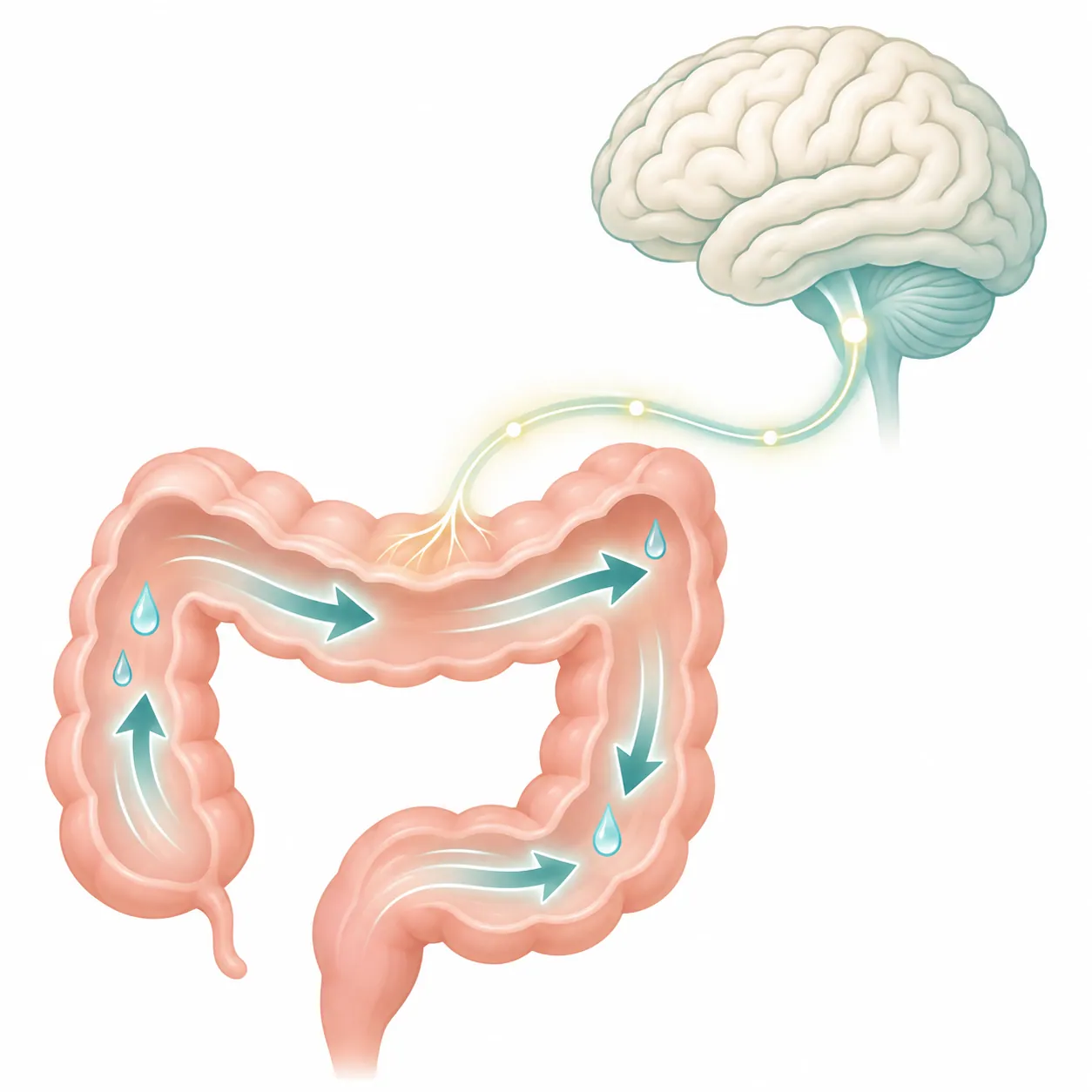
- 장은 자율신경의 영향을 많이 받아, 장의 예민함과 냉증, 스트레스를 함께 다스려야 합니다.
- 치료후기 7건
- 의료진 칼럼 1편
- 건강정보 2편
- 온라인 상담 4건
이런 증상이 있나요?

- 하루에 여러 번 묽은 변을 본다
- 식사 뒤 바로 화장실에 가야 한다
- 긴장하면 배가 아프고 설사가 난다
- 찬 음식이나 술, 기름진 음식에 바로 설사한다
- 아침에 일어나자마자 설사를 한다
- 외출할 때 화장실 위치부터 확인한다
진단은 설사가 시작된 때와 횟수, 변의 모양, 혈변과 체중 변화를 듣는 것에서 시작합니다. 4주가 넘으면 혈액 검사와 대변 검사로 염증과 셀리악병 등을 확인하고, 필요하면 대장내시경을 합니다[2].
설사는 왜 생기나요?
- 세균, 바이러스 감염, 상한 음식
- 과민성대장증후군, 기능성 설사
- 담즙산 흡수 장애
- 궤양성 대장염, 크론병 등 염증성 장질환
- 유당불내증, 셀리악병
- 갑상선 기능 항진증, 당뇨병
- 항생제, 당뇨약 등 약물
- 술, 카페인, 스트레스
오래 이어지는 설사의 흔한 원인은 과민성대장증후군과 기능성 설사입니다[1]. 기능성 설사나 설사형 과민성대장증후군 환자의 25~50%는 담즙산이 관여합니다[3]. 기름진 음식을 먹은 뒤 심해지는 설사라면 함께 살펴봅니다.
장은 자율신경의 영향을 많이 받습니다. 긴장하면 장이 빨리 움직이고, 예민해진 장은 작은 자극에도 반응합니다. 설사가 걱정되어 다시 긴장하는 악순환이 생기기도 합니다.
설사의 표준 치료
급성 설사는 수분 보충이 가장 중요합니다. 유산균은 급성 감염성 설사의 경과를 거의 바꾸지 못했습니다[4]. 만성 설사는 원인을 치료합니다. 염증성 장질환은 그에 맞는 약을, 담즙산 설사는 담즙산 결합제를 씁니다[3]. 기능성 설사는 지사제와 식이 조절을 쓰며, 저포드맵 식사는 복통과 더부룩함을 줄였지만 변의 굳기는 차이가 없었습니다[5].
지사제는 그때의 설사를 멎게 할 뿐, 약을 끊으면 다시 시작되는 분이 많습니다. 예민해진 장과 차가운 배, 긴장된 몸이 그대로이기 때문입니다. 한의학 치료는 이 바탕을 다스립니다.
설사형 과민성대장증후군의 연구가 쌓여 있습니다. 통사요방을 변형한 처방은 23개 연구, 1,972명의 분석에서 일반 약물보다 치료 효과가 높았습니다(오즈비 4.04)[6]. 고정된 11가지 약재 처방은 위약과 차이가 없어(35% 대 44.1%)[7], 처방과 체질에 따른 추가적인 연구가 필요합니다. 우리나라 연구에서는 곽향정기산이나 유산균을 쓴 군의 치료 반응자 비율이 위약군보다 높았습니다[8].
뜸은 7개 연구, 568명의 분석에서 약물보다 증상과 배변 횟수를 더 줄였습니다[9]. 침과 한약을 함께 쓰면 대조군보다 호전이 1.29배 많았습니다[10]. 침 단독의 예비 연구에서는 호전 비율이 46.7%로 가짜 침(26.7%)보다 높았지만 통계적인 차이는 없어[11], 추가적인 연구가 필요합니다.
해움한의원은 이렇게 치료합니다

해움한의원은 위험한 설사를 먼저 가립니다. 검사에 이상이 없는 설사라면 설사만 멎게 하지 않고, 장이 예민해진 이유를 찾아 함께 치료합니다.
1단계. 설사의 양상과 위험 신호를 가립니다
시작 시기와 횟수, 식사와의 관계, 받은 검사와 드시는 약을 자세히 살펴봅니다. 혈변이나 체중 감소가 있으면 소화기내과 검사를 먼저 안내해 드립니다. 심박변이도 검사로 자율신경의 긴장 상태를 확인합니다.
2단계. 배를 따뜻하게 하고 장을 진정시킵니다
침과 뜸, 약침으로 배의 순환을 돕고 예민해진 장과 긴장을 가라앉힙니다.
3단계. 유형에 맞춰 바탕을 다스립니다
체질과 상태에 맞춰 한약을 짓습니다. 맞지 않는 음식을 찾고, 수면과 스트레스 관리를 함께 살펴 먹어도 되는 음식을 넓혀 갑니다.
4만 건의 처방 사례가 말해주는, 한방 맞춤 치료의 힘




설사 치료후기 총 7건
환자분들이 남긴 치료후기입니다. 본문은 로그인 후 보실 수 있습니다.
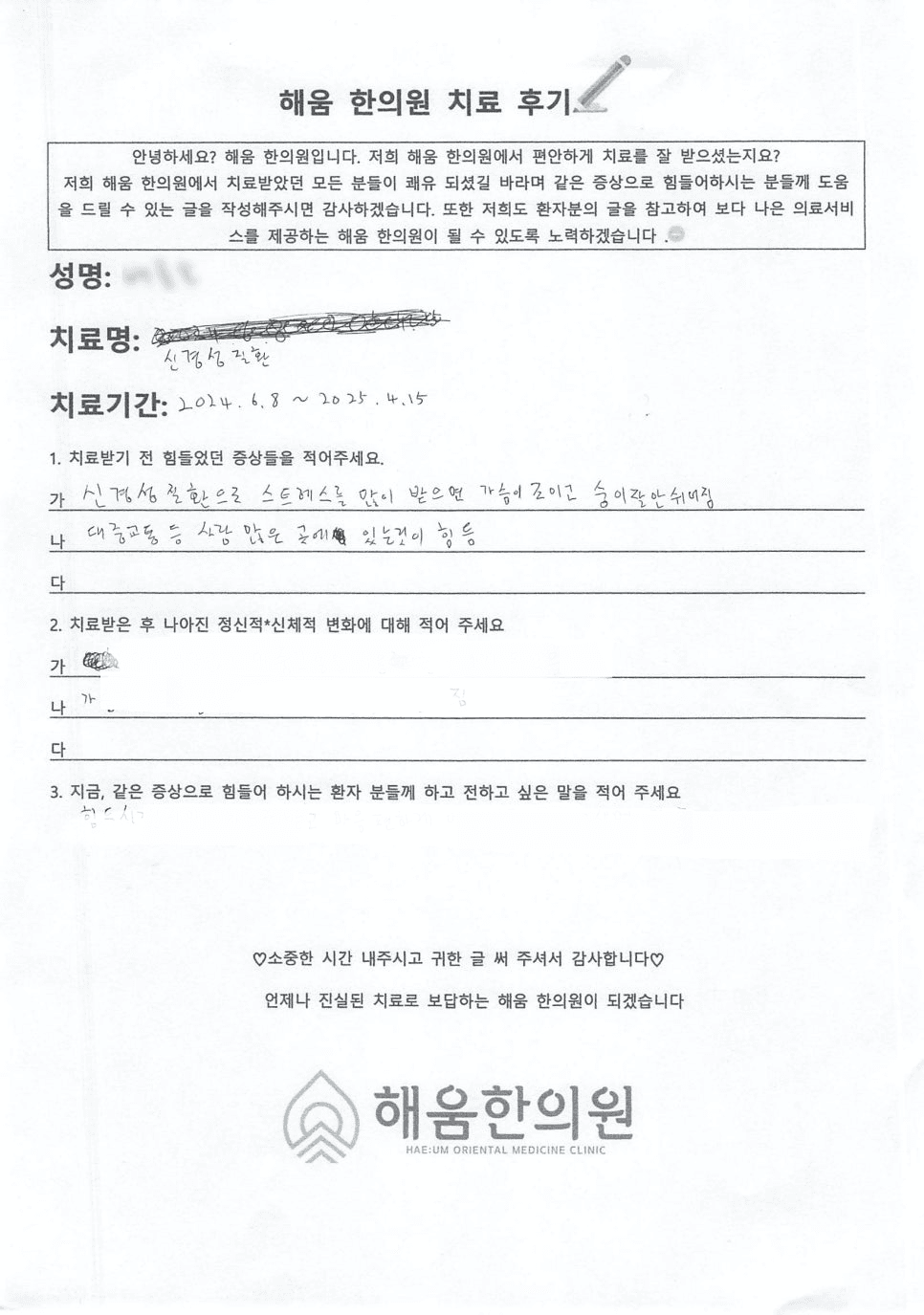
갑자기 화장실을 못참겠다면? 과민성대장증후군가스잦은설사 한약으로 치료가 될까요? 과민성대장증후군병원
2026. 05. 27.

시험만 보려고 하면 배가 아프고 설사하고 심장이 두근거려요
2026. 01. 19.
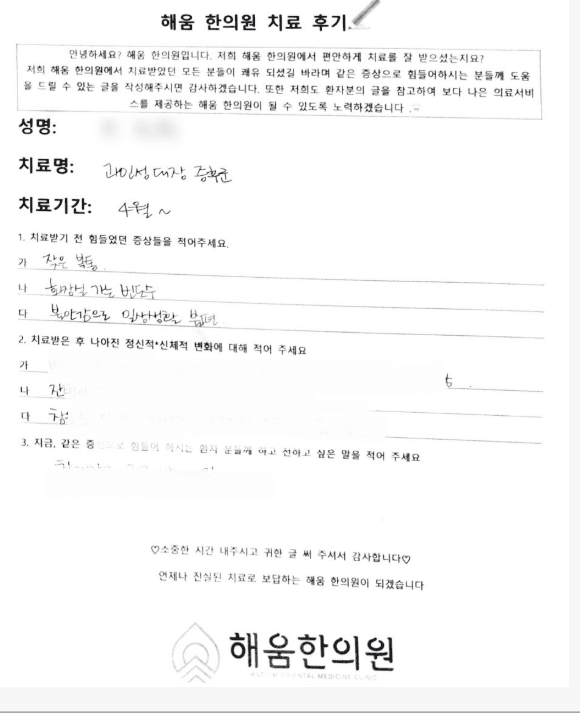
복통 설사가 너무 심해서 출근도 못하는 과민성대장 환자
2023. 12. 10.
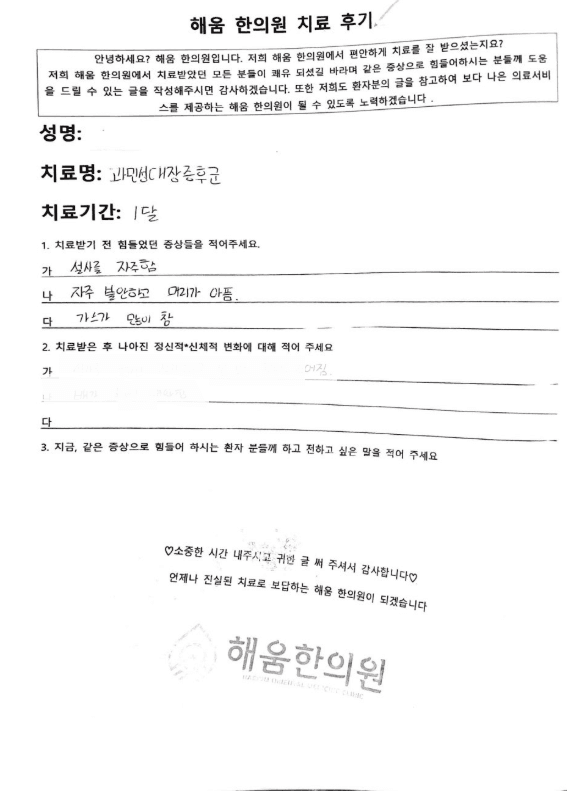
스트레스 받으면 화장실로 뛰쳐나가게 하는 복통설사
2022. 05. 11.
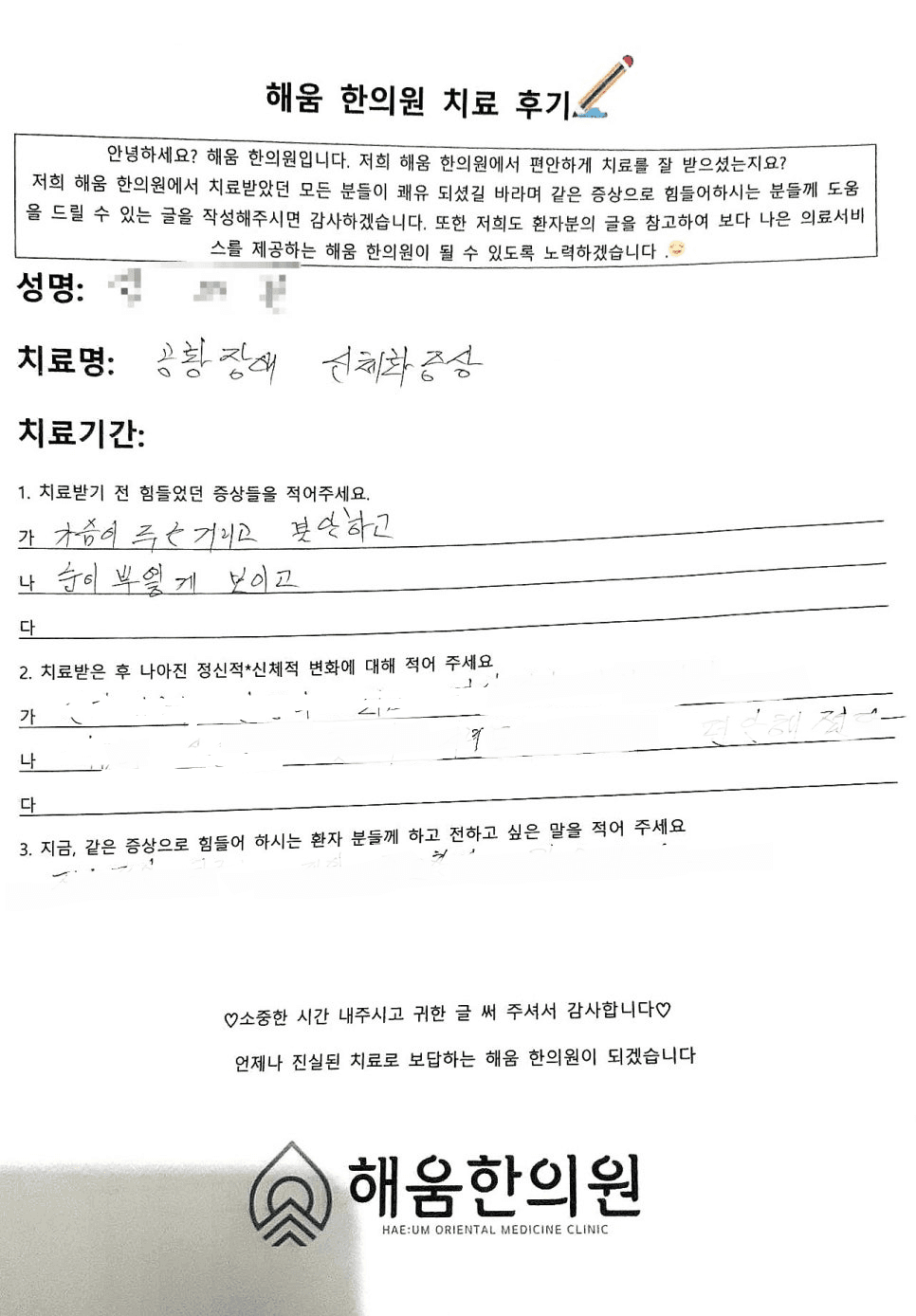 관련 후기
공황장애 유전되나요? 공황장애
2026. 02. 12.
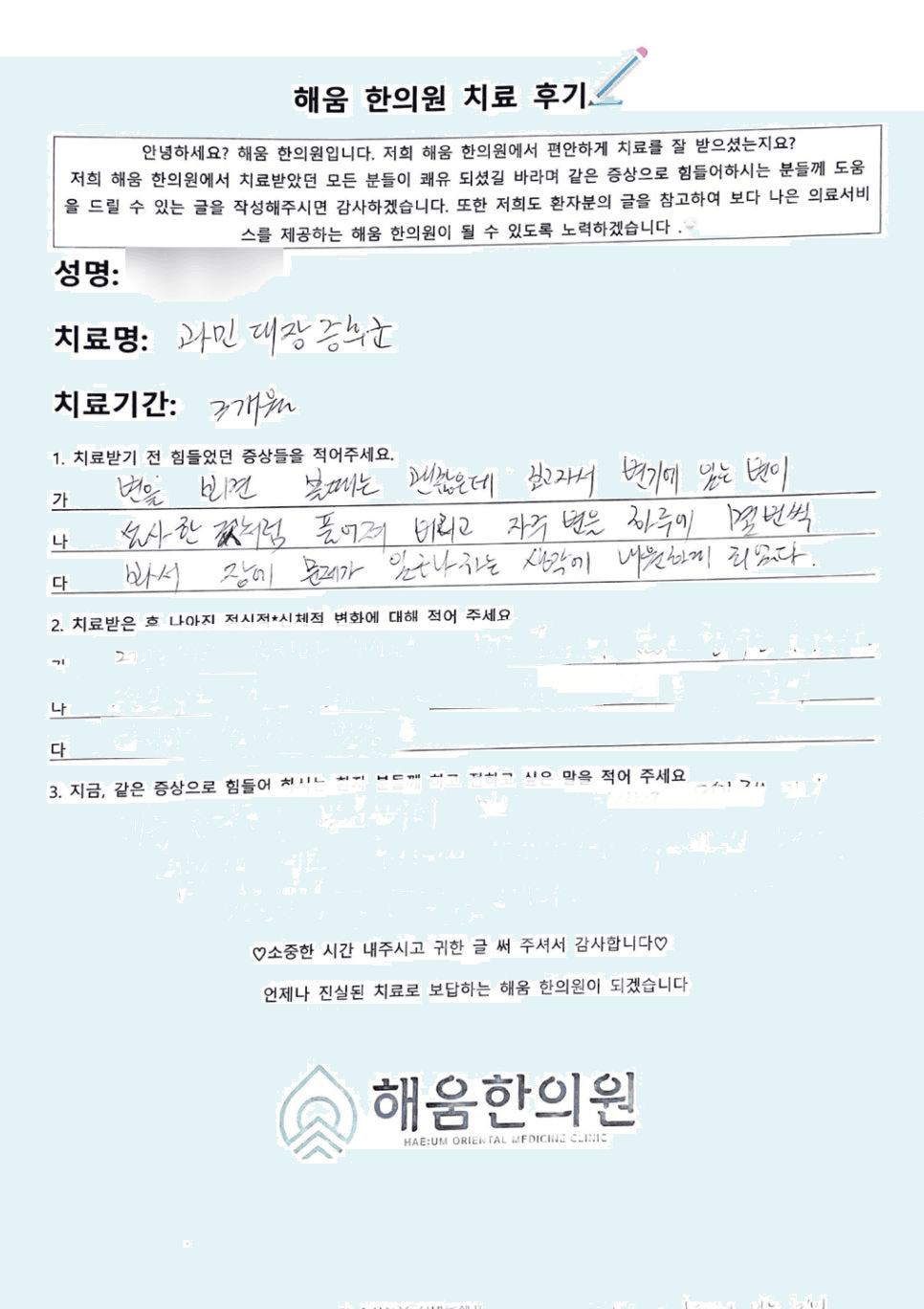 관련 후기
풀어지는 변, 과민대장증후군 안녕~ 한의원에서 한약으로
2023. 01. 11.
다른 증상으로 내원하신 분들의 후기 중 ‘설사’가 증상으로 함께 언급된 기록
설사, 누가 진료하나요?
담당 의료진
대표원장 박재은

“병이 아니라 그 뒤의 사람을 봅니다”
경희대학교 한의과대학에서 석사·박사 과정을 마쳤습니다. 심리상담사 1급 자격과 4만 건 이상의 한약 처방 경험을 바탕으로 진료합니다.
의료진 소개 더보기설사, 자주 묻는 질문
설사가 며칠 넘으면 병원에 가야 하나요?
지사제를 계속 먹어도 되나요?
유산균을 먹으면 나을까요?
설사할 때 무엇을 먹어야 하나요?
양약과 한약을 같이 먹어도 되나요?
치료 기간은 얼마나 걸리나요?
해움한의원에서 설사를 진료하나요?
설사로 내원하려면 어떻게 하나요?
설사에 관해 알아두면 좋은 정보
2건설사과 관련해 정리한 건강정보입니다.
잦은설사혈변, 단순 장 트러블일까? 반복된다면 먼저 확인해야 할 것
“설사는 자주 했는데, 어느 날 피까지 보였어요”식사를 하고 얼마 지나지 않아 화장실부터 찾게 되고, 외출할 때마다 가장 먼저 화장실 위치를 확인하게 되는 분들이 있습니다.처음에는 단순히 장이 예민한 체질이라고 생각

식사후 복통 설사 때문에 외식이 두렵다면 확인해야 할 원인
밥을 먹는 게 두려워질 정도로 배가 아프다면“밥만 먹으면 배가 아파요.”“식사를 끝내기도 전에 화장실부터 찾게 됩니다.”“중요한 약속이 있는 날에는 아예 밥을 안 먹는 게 마음이 편해요.”식사후 복통 설사가 반복되는
설사, 질문 있어요
4건환자분들이 남긴 온라인 상담 질문과 의료진 답변입니다.
이런 경우에는 바로 응급실로 가세요
아래 증상은 심한 탈수, 세균성 장염, 장 출혈, 궤양성 대장염, 대장암 같은 질환일 수 있습니다. 먼저 응급실이나 소화기내과를 찾으세요.
- 피가 섞인 변이나 검은 변을 본다
- 38.5도가 넘는 고열과 심한 복통이 있다
- 소변이 거의 없고 어지러워 일어서기 힘들다
- 물도 못 마실 만큼 구토가 계속된다
- 이유 없이 체중이 줄거나 자다가 설사로 깬다
- 50세 이후 배변 습관이 갑자기 바뀌었다
참고문헌 11편
[1]Burgers K, Lindberg B, Bevis ZJ. Chronic Diarrhea in Adults: Evaluation and Differential Diagnosis. Am Fam Physician. 2020;101(8):472-480. PMID: 32293842.
요약 만성 설사의 평가를 정리한 논문입니다. 묽은 변이 4주 넘게 이어지면 만성으로 봅니다. 과민성대장증후군과 기능성 설사가 흔한 원인이고, 담즙산 흡수 장애, 현미경적 대장염, 셀리악병, 염증성 장질환, 대장암 등을 감별합니다.원문은 출판사 저작권 자료로, 위 링크에서 확인하실 수 있습니다.
[2]Arasaradnam RP, Brown S, Brown S, Forbes A, Fox MR, Hungin P, et al. Guidelines for the investigation of chronic diarrhoea in adults: British Society of Gastroenterology, 3rd edition. Gut. 2018;67(8):1380-1399. doi:10.1136/gutjnl-2017-315909. PMID: 29653941.
요약 영국소화기학회의 만성 설사 검사 지침입니다. 서구 인구의 약 4~5%가 겪는 것으로 추정합니다. 4주 넘게 이어지면 감염이 아닌 원인을 찾아야 하고, 원인 모를 배변 변화, 지속되는 혈변, 체중 감소가 있으면 검사를 의뢰합니다.원문은 출판사 저작권 자료로, 위 링크에서 확인하실 수 있습니다.
[3]Camilleri M. Bile Acid diarrhea: prevalence, pathogenesis, and therapy. Gut Liver. 2015;9(3):332-339. doi:10.5009/gnl14397. PMID: 25918262.
요약 담즙산 설사를 정리한 종설입니다. 기능성 설사나 설사형 과민성대장증후군 환자의 25~50%에서 담즙산 설사의 근거가 보이며, 담즙산 결합제로 치료합니다.원문은 출판사 저작권 자료로, 위 링크에서 확인하실 수 있습니다.
[4]Collinson S, Deans A, Padua-Zamora A, Gregorio GV, Li C, Dans LF, et al. Probiotics for treating acute infectious diarrhoea. Cochrane Database Syst Rev. 2020;12:CD003048. doi:10.1002/14651858.cd003048.pub4. PMID: 33295643.
요약 82개 연구, 12,127명을 모은 코크란 리뷰입니다. 급성 감염성 설사에서 유산균은 48시간 넘게 이어지는 설사의 비율을 거의 바꾸지 못했고, 설사 기간을 줄이는지는 불확실했습니다. 대상자는 대부분 어린이입니다.원문은 출판사 저작권 자료로, 위 링크에서 확인하실 수 있습니다.
[5]Altobelli E, Del Negro V, Angeletti PM, Latella G. Low-FODMAP Diet Improves Irritable Bowel Syndrome Symptoms: A Meta-Analysis. Nutrients. 2017;9(9):E940. doi:10.3390/nu9090940. PMID: 28846594.
초록 (Abstract)
Irritable bowel syndrome (IBS) affects 7–15% of the general population. A recently devised dietary approach consists of restricting foods with highly fermentable oligo-, di-, and monosaccharides, and polyols (FODMAPs), which can trigger and/or exacerbate IBS symptoms. The aim of this study is to use meta-analysis to provide an update on the randomised control trials (RCTs) and cohort studies, and examine them separately in relation to diet type. Papers were selected using the Preferred Reporting Items for Systematic Reviews and Meta-Analyses (PRISMA) flowchart. Cohen’s d and odds ratios were used as a measure of effect size for RCTs. A random effects model was used to account for different sources of variation among studies. Heterogeneity was assessed using Q statistics, I2, Tau, and Tau2. Publication bias was analysed and represented by a funnel plot, and funnel plot symmetry was assessed with Egger’s test. The results showed that in the RCTs, the patients receiving a low-FODMAP diet experienced a statistically significant pain and bloating reduction compared with those receiving a traditional diet; as regards to stool consistency, there was no significant difference between treatments. A significant reduction in abdominal pain and bloating were described by patients receiving a low-FODMAP diet compared with those receiving a high-FODMAP diet. In cohort studies, pain and bloating were significantly reduced after treatment compared with the baseline diet. We conclude that there is evidence that a low-FODMAP diet could have a favourable impact on IBS symptoms, especially abdominal pain and bloating. However, it remains to be demonstrated whether a low-FODMAP diet is superior to conventional IBS diets, especially in the long term.
결과 (Results)
The search found 362 records in the databases and eight records through the manual search. After the removal of 132 duplicates there remained 238 papers; of these, 215 were excluded for different reasons (Figure 1). In the second phase of the PRISMA flow-chart, full-text articles were identified for eligibility; of these, 11 were excluded for the following reasons: three compared the FODMAP to a placebo, lactobacillus, or hypnotherapy, one considered healthy controls versus IBD patients; one involved a paediatric population; one administered the FODMAP to non-celiac gluten-sensitive patients; one included interventions that only regarded two different types of rye bread (normal versus low-FODMAP rye bread); one study reviewed two different types of educational training; one was a retrospective study; one regarded fructose restriction; and finally one did not include any outcomes of interest for our study. This left six RCTs, of which three compared the traditional IBS diet to the low-FODMAP diet and three compared the low- and high-FODMAP diets (Table 1). Six cohort studies compared patients’ conditions at baseline and after administration of the low-FODMAP diet (Table 2). In each meta-analysis, sensitivity analysis indicated that the meta-analytical findings were stable.
3.1. Low-FODMAP Diet Versus Traditional IBS Diet: The primary studies (k = 3 RCTs) by Bohn, Eswaran, and Staudacher compared groups of IBS patients receiving a low-FODMAP diet to those receiving a traditional diet. These studies examined four outcomes: reduction of abdominal pain, reduction of abdominal bloating, increase of stool consistency, and reduction of stool frequency. Their main features are reported in Table 1.
3.1.1. Abdominal Pain: The present meta-analysis demonstrates that the patients receiving a low-FODMAP diet experienced a statistically significant pain reduction compared to those receiving a traditional diet. The overall effect size was odds ratio (OR) = 0.44 (Table 3); there was no statistical heterogeneity (Table 3, Figure 2A). Publication bias analysis did not highlight any differences between observed and estimated values (zero trimmed studies) (Figure 2B). Egger’s test was not statistically significant (Table 3).
3.1.2. Bloating: Patients managed with a low-FODMAP diet experienced significant bloating reduction compared with those receiving a traditional diet, OR = 0.32 (Table 3), and there was no significant heterogeneity (Table 3, Figure 2C). Analysis of publication bias by the trim and fill method did not lead to the exclusion of any paper (Figure 2D). Egger’s test was not significant (Table 3).
3.1.3. Stool Consistency: There was no significant difference between treatments (effect size (ES) = 0.24, Table 3); statistical heterogeneity was moderate but not significant (Figure 3A). Analysis of publication bias with the trim and fill method failed to exclude any paper (Figure 3B). Egger’s test was not significant (Table 3).
3.1.4. Stool Frequency: There was a significant difference between treatments for this outcome (ES = −0.54; p < 0.001). There was no statistical heterogeneity (Table 3, Figure 3C). Analysis of publication bias with the trim and fill method failed to exclude any paper (Figure 3D). Egger’s test was not significant (Table 3).
3.2. Low-FODMAP Diet vs. Medium/High-FODMAP Diet: The primary studies (k = 3 RCTs) compared patients managed with a low-FODMAP diet and patients receiving a high/medium-FODMAP diet. Their main characteristics are listed in Table 1. This set of studies examined two outcomes: reduction of abdominal pain and of bloating.
3.2.1. Abdominal Pain: Significantly reduced abdominal pain was described by patients receiving a low-FODMAP diet compared with those receiving a high-FODMAP diet (OR = 0.17). There was no statistical heterogeneity (Table 3). Analysis of publication bias with the trim and fill method failed to exclude any paper (Figure 4B). Finally, Egger’s test was not significant (Table 3).
3.2.2. Bloating: The patients receiving a low-FODMAP diet reported a significant reduction of bloating compared with those given a high-FODMAP diet (OR = 0.13); statistical heterogeneity was moderate but not significant (Table 3, Figure 4C). Analysis of publication bias by the trim and fill method did not lead to the exclusion of any paper (Figure 4D). Egger’s test was not significant (Table 3).
3.3. Cohort Studies: The primary studies (k = 6) compared baseline versus post-treatment data in patients treated with a low-FODMAP diet (Table 2). Two outcomes were assessed in this set: reduction of abdominal pain and reduction of bloating. Meta-regressions were performed for both outcomes using gender, age, and year of publication.
3.3.1. Abdominal Pain: Pain after treatment was significantly reduced compared with baseline in these patients (ES = −0.59). There was no statistical heterogeneity (Table 3, Figure 5A). Analysis of publication bias by the trim and fill method did not result in the exclusion of any paper (Figure 5B). Egger’s test was not significant (Table 3). The meta-regression lines for age (p = 0.652), gender (p = 0.817), and year of publication (p = 0.543) were not significant (Figure 5C–E).
3.3.2. Bloating: Significantly reduced bloating was reported by patients after treatment (ES = −0.64). There was no statistical heterogeneity (Table 3, Figure 6A). Analysis of publication bias by the trim and fill method did not lead to the exclusion of any paper (Figure 6B). Finally, Egger’s test was not significant (Table 3). The meta-regression lines for age (p = 0.808), gender (p = 0.747), and year of publication (p = 0.804) were not significant (Figure 6C–E).
원문 발췌 · Altobelli E, Del Negro V, Angeletti PM, Latella G, Nutrients 2017 · CC BY 4.0 라이선스에 따라 수정 없이 인용했습니다(본문 속 인용 번호는 생략).
[6]Dai YK, Li DY, Zhang YZ, Huang MX, Zhou YL, Ye JT, et al. Efficacy and safety of Modified Tongxie Yaofang in diarrhea-predominant irritable bowel syndrome management: A meta-analysis of randomized, positive medicine-controlled trials. PLoS One. 2018;13(2):e0192319. doi:10.1371/journal.pone.0192319. PMID: 29408906.
초록 (Abstract)
Objective: To systematically evaluate the efficacy and safety of Modified Tongxie Yaofang (M-TXYF) for the treatment of diarrhea-predominant irritable bowel syndrome (IBS-D).
Method: Electronic databases including PubMed, Springer Link, EMBASE, China National Knowledge Infrastructure (CNKI), Chinese Biomedical Literature (CBM), Wanfang, and Chinese Scientific Journals Database (VIP) were conducted from their inception through May 11, 2017 without language restrictions. Primary and secondary outcomes were estimated by 95% confidence intervals (CI). RevMan 5.3 and the Cochrane Collaboration’s risk of bias tool were analyzed for this meta-analysis.
Results: Twenty-three literatures with a total of 1972 patients were included for the meta-analysis. The overall risk of bias evaluation was low. The pooled odds ratio showed that M-TXYF was significantly superior to routine pharmacotherapies (RP) in clinical therapeutic efficacy (OR 4.04, 95% CI 3.09, 5.27, P < 0.00001, therapeutic gain = 17.6%, number needed to treat (NNT) = 5.7). Moreover, compared with RP, M-TXYF showed that it can significantly reduce the scores of abdominal pain (standardized mean difference (SMD) -1.27; 95% CI -1.99, -0.56; P = 0.0005), abdominal distention (SMD -0.37; 95% CI -0.73, -0.01; P = 0.09), diarrhea (SMD -1.10; 95% CI -1.95, -0.25; P = 0.01), and frequency of defecation (SMD -1.42; 95% CI -2.19, -0.65; P = 0.0003). The differences of the adverse events between experiment and control groups had no statistical significance.
Conclusion: This meta-analysis indicated that M-TXYF could be a promising Chinese herbal formula in treating IBS-D. However, considering the lack of higher quality of randomized controlled trials (RCTs), highly believable evidences should be required.
결과 (Results)
A total of 1,506 relevant studies were identified based on computer search. Both investigators agreed on the results of inclusion criteria and showed detailed screening process for study identification and selection in Fig 1. Finally, twenty-three RCTs met the inclusion criteria for the meta-analysis. Literature characteristics are described in Table 1.
A description of the assessment for methodological quality is shown in Table 2. In this systematic review, nineteen trials described how patients were randomly assigned into the experiment groups and the control groups (fifteen used a random number table, two used a block randomization, one used a random grouping table, and one used a stratified block randomization ). However, the remaining four studies did not report the specific randomization technique. In addition, only the Peng et al. study used a single-blind. Only the Gao et al. study used a double-blind and double-dummy. As for allocation concealment, only the Peng et al. study and the Tao et al. study used lightproof envelopes. In addition, eight trials reported follow-up after treatment. Although withdrawals and dropouts were mentioned in seven studies, only the Peng et al. study conducted intention-to-treat (ITT) analysis. The Chen et al. study used full analysis sets (FAS). The Gao et al. study conducted full analysis set (FAS), per-protocol population set (PPS) and safe set (SS). However, the remaining studies did not conduct intention-to-treat (ITT) analysis for the cases of dropouts. In a word, because of lacking specific information, it cannot be determined whether implementations were adequately performed in the process of random sequence generation, blinding or allocation concealment. Therefore, the validity of this review in Fig 2 could be regarded as high risk.
Primary outcome measurement: clinical therapeutic efficacy / Comparison of clinical therapeutic efficacy: A total of 23 included studies reported the efficacy, which included 1972 patients where 1052 and 920 participants were respectively assigned to M-TXYF and RP. Based on the “Guiding Principle for Clinical Research of New Drugs of TCM”, clinical therapeutic efficacy was calculated in the comprehensive efficacy index (CEI): CEI(%) = (the numbers of patients whose clinical symptom improved after intervention divide total numbers of patients) × 100%.
Subgroup analysis: Because of variability in evaluating point of clinical therapeutic efficacy, we conducted subgroup analysis among studies using different interventions of Pinaverium bromide tablets (PBT), PBT + another RP (including Montmorillonite powder, Trimebutine maleate, Bacillus licheniformis, Loperamide, Miyarisam, Glutamine compound enteric capsule, Live combined bifidobacterium, Lactobacillus and enterococcus), and another RP. Compared with the control groups, the experiment groups were positive effects on the improvement of clinical symptoms for PBT (OR 4.14; 95% CI 2.98, 5.75; P < 0.00001) in fifteen trials, PBT + another RP (OR 4.14; 95% CI 1.67, 10.07; P = 0.002) in three trials, another RP (OR 3.73; 95% CI 2.20, 6.34; P < 0.00001) in five trials, and an overall efficacy (OR 4.04; 95% CI 3.09, 5.27; P < 0.00001) in Fig 3. In addition, the results in Table 3 showed that 90.3% of treatment group participants had a clinical effectiveness, which was superior to 72.7% of control group participants (therapeutic gain = 17.6% with NNT = 5.7). Potential publication bias (Begg’s test, P = 0.009) was identified by observing the asymmetrical plot in Fig 4.
Secondary outcome measurements / Abdominal pain score: Among the included studies, fourteen reported the improvement of abdominal pain. However, owing to the existence of substantial heterogeneity (χ2 = 352.05, P < 0.00001, I2 = 96%), a random effect model was applied to estimating pooled effect sizes. Furthermore, the forest plot in Fig 5 showed that the reduction of abdominal pain score in experiment groups was more remarkable than that in control groups (SMD -1.27; 95% CI -1.99, -0.56; P = 0.0005).
Abdominal distention score: Eight studies reported abdominal distention score. A random effect model was conducted because of significant heterogeneity (χ2 = 32.78, P < 0.0001, I2 = 79%). However, the result of meta-analysis in Fig 6 showed that M-TXYF had no statistically significant differences in alleviation for abdominal distention compared with RP (SMD -0.37; 95% CI -0.73, -0.01; P = 0.09).
Diarrhea score: Of all the included studies, eight reported the diarrhea score. A model of random effect was conducted to estimate pooled effect sizes because of significant heterogeneity (χ2 = 133.95, P < 0.00001, I2 = 95%). Treatment groups in Fig 7 showed more significant improvement of diarrhea than control groups (SMD -1.10; 95% CI -1.95, -0.25; P = 0.01).
Frequency of defecation score: In the included trials, seven described the situation of defecation’s frequency. Random-effect meta-analysis in Fig 8 indicated that M-TXYF had positive effects on frequency of defecation changes (χ2 = 100.96, P < 0.00001, I2 = 94%) (SMD -1.42; 95% CI -2.19, -0.65; P = 0.0003).
BSS score: Two included trials applied bowel symptom severity scale (BSS) to estimate the severity of IBS-D symptoms. Considering the lack of enough numbers of literatures, the overall BSS score were only qualitatively analyzed in order to avoid inaccurate and unreliable outcomes. But in improving bowel symptom severity, the experiment groups had potentially superior to the control groups.
QOL scale: Four qualified literatures reported health-related quality of life (QOL). One used the Chinese version of the short form 36 (SF-36) which was validated in Hong Kong. Another one used QOL scale whose contents contained psychological and physical dimensions, and social adaptability. The remaining two studies used IBS-QOL which was authorized by Patrick et al.. Although the four literatures elaborated different ingredients of QOL scale, they all showed that M-TXYF could significantly improve health-related QOL.
Safety evaluation: Twelve studies assessed the safety of M-TXYF in the course of treatment. One trial reported 2 cases of nausea occurred in the experiment group and 10 cases of adverse reactions (4 for nausea, 4 for local skin rash, and 2 for abdominal discomfort) occurred in the control group. In addition, although one trial reported 4 cases of side effects (2 for constipation, 1 for nausea, and 1 for dry mouth) occurred in the control group, all of these side effects spontaneously disappeared after the treatment session. Besides, the Fang study reported 1 case of nausea occurred in the experiment group and 6 cases of adverse effects (2 for constipation, 2 for nausea, and 2 for skin rash) occurred in the control group. But these side effects did not have impact on the experimental process. In addition, nine trials had no adverse reactions during M-TXYF treatment.
원문 발췌 · Dai YK, Li DY, Zhang YZ, Huang MX, Zhou YL, Ye JT, Wang Q, Hu L, PLoS One 2018 · CC BY 4.0 라이선스에 따라 수정 없이 인용했습니다(본문 속 인용 번호는 생략).
[7]Leung WK, Wu JC, Liang SM, Chan LS, Chan FK, Xie H, et al. Treatment of diarrhea-predominant irritable bowel syndrome with traditional Chinese herbal medicine: a randomized placebo-controlled trial. Am J Gastroenterol. 2006;101(7):1574-1580. doi:10.1111/j.1572-0241.2006.00576.x. PMID: 16863563.
요약 설사형 과민성대장증후군 119명에게 11가지 약재의 고정 처방을 쓴 위약 대조 연구입니다. 8주째 증상 호전은 한약 35%, 위약 44.1%로 차이가 없었습니다.원문은 출판사 저작권 자료로, 위 링크에서 확인하실 수 있습니다.
[8]Ko SJ, Han G, Kim SK, Seo JG, Chung WS, Ryu B, et al. Effect of korean herbal medicine combined with a probiotic mixture on diarrhea-dominant irritable bowel syndrome: a double-blind, randomized, placebo-controlled trial. Evid Based Complement Alternat Med. 2013;2013:824605. doi:10.1155/2013/824605. PMID: 24381638.
요약 설사형 과민성대장증후군 53명의 우리나라 위약 대조 연구입니다. 곽향정기산과 유산균을 쓴 세 치료군은 위약군보다 치료 반응자 비율이 좋았습니다. 주평가의 하나인 주간 증상 완화는 차이가 없었습니다.원문은 출판사 저작권 자료로, 위 링크에서 확인하실 수 있습니다.
[9]Tang B, Zhang J, Yang Z, Lu Y, Xu Q, Chen X, et al. Moxibustion for Diarrhea-Predominant Irritable Bowel Syndrome: A Systematic Review and Meta-Analysis of Randomized Controlled Trials. Evid Based Complement Alternat Med. 2016;2016:5105108. doi:10.1155/2016/5105108. PMID: 27293460.
요약 설사형 과민성대장증후군에서 뜸과 약물을 비교한 7개 연구, 568명의 분석입니다. 뜸 군의 전반적인 증상과 배변 횟수가 더 좋았습니다.원문은 출판사 저작권 자료로, 위 링크에서 확인하실 수 있습니다.
[10]Yan J, Miao ZW, Lu J, Ge F, Yu LH, Shang WB, et al. Acupuncture plus Chinese Herbal Medicine for Irritable Bowel Syndrome with Diarrhea: A Systematic Review and Meta-Analysis. Evid Based Complement Alternat Med. 2019;2019:7680963. doi:10.1155/2019/7680963. PMID: 31110553.
요약 설사형 과민성대장증후군에서 침과 한약을 함께 쓴 21개 연구의 분석입니다. 대조군보다 호전이 많았고(위험비 1.29) 복통과 설사 점수가 줄었습니다. 연구의 규모는 작았습니다.원문은 출판사 저작권 자료로, 위 링크에서 확인하실 수 있습니다.
[11]Qi LY, Yang JW, Yan SY, Tu JF, She YF, Li Y, et al. Acupuncture for the Treatment of Diarrhea-Predominant Irritable Bowel Syndrome: A Pilot Randomized Clinical Trial. JAMA Netw Open. 2022;5(12):e2248817. doi:10.1001/jamanetworkopen.2022.48817. PMID: 36580333.
요약 설사형 과민성대장증후군 90명의 예비 연구입니다. 4주째 복통과 묽은 변이 함께 호전된 비율은 침 46.7%, 가짜 침 26.7%였고, 통계적인 차이는 없었습니다.원문은 출판사 저작권 자료로, 위 링크에서 확인하실 수 있습니다.