
양천구 목동 시험불안 한의원
시험불안
평소에는 잘 풀던 문제인데 시험지만 받으면 머리가 하얘집니다. 시험 며칠 전부터 잠을 설치고, 당일 아침에는 배가 아파 화장실을 들락거립니다. 노력이 부족해서가 아니라 몸이 먼저 얼어붙는 시험불안입니다.
시험불안 한눈에 보기
- 시험불안은 시험을 앞두거나 치르는 동안 걱정과 긴장이 지나치게 커져 실력을 내지 못하는 상태입니다.
- 시험 불안이 높을수록 입시와 학교 성적이 낮았고, 중학생 무렵 가장 뚜렷했습니다.
- 긴장한 자율신경이 잠과 소화, 집중을 함께 흔들기 때문에 마음과 몸을 같이 살펴야 합니다.
- 치료후기 2건
시험불안이란?

시험을 앞두고 어느 정도 긴장하는 것은 자연스럽고, 오히려 집중을 돕습니다. 시험불안은 이 긴장이 지나쳐 머리가 하얘지거나 몸이 먼저 반응해 아는 것도 쓰지 못하는 상태입니다. 정식 질병 이름은 아니지만, 불안이 시험이라는 상황에 집중된 것으로 봅니다.
시험 불안은 성적과 분명하게 이어집니다. 시험 불안이 높을수록 입시와 학교 성적이 낮았고, 이 관련은 중학생 무렵에 가장 뚜렷했습니다[1]. 시험이 어렵거나 결과가 중요하다고 느낄수록 불안도 커졌습니다.
이런 증상이 있나요?

- 시험지를 받으면 머리가 하얘지고 아는 것도 떠오르지 않는다
- 시험 전후로 심장이 두근거리고 손에 땀이 나거나 떨린다
- 시험 날 아침이면 배가 아프거나 설사, 메스꺼움이 생긴다
- 시험 며칠 전부터 잠들기 어렵고 자주 깬다
- "망치면 어떡하지" 하는 생각이 멈추지 않는다
- 모의고사보다 실제 시험 점수가 늘 낮다
시험불안은 증상이 언제, 어떤 시험에서 나타나는지와 생활에 미치는 영향을 자세히 묻고 설문으로 정도를 확인합니다. 시험이 아닌 평소에도 불안이 크거나 공황 발작이 있다면 불안장애나 공황장애를 함께 살펴야 합니다.
시험불안은 왜 생기나요?
- 결과가 중요한 시험(입시, 자격시험, 승진 시험)
- 실패한 경험과 낮은 자신감
- 완벽해야 한다는 생각, 주변의 기대
- 시험 전 수면 부족
- 타고난 예민한 기질, 가족의 불안 성향
- 카페인 음료와 불규칙한 식사
이 가운데 잠은 꼭 살펴봐야 합니다. 잠의 질이 나쁘면 시험 불안이 커지고, 시험 불안이 크면 잠이 다시 나빠지는 악순환이 있었고, 시험 당일 아침의 불안이 점수를 예측했습니다[2]. 긴장이 이어지면 교감신경이 계속 켜져 있어 심장이 빨리 뛰고 장은 예민해지며, 잠과 집중이 함께 흔들립니다.
시험불안의 표준 치료
표준 치료는 인지행동치료 같은 심리치료입니다. 시험을 두고 떠오르는 생각을 바꾸고, 긴장을 푸는 연습을 합니다. 마음챙김 훈련은 시험 불안을 중간 이상으로 줄였고[3], 20분 유산소 운동을 주 2~3회, 4주 넘게 하는 것도 시험 불안을 낮췄습니다[4].
방법을 알아도 시험 당일 몸이 먼저 떨리고 배가 아프면 연습한 것을 쓰기 어렵습니다. 이미 예민해진 몸이 작은 긴장에도 크게 반응하기 때문입니다. 한의학 치료는 이 몸의 바탕을 다스립니다.
관련 연구를 살펴보면, 귀 지압은 의대생의 시험 불안 점수를 18.4점에서 13.3점으로 낮췄고, 가짜 지압은 변화가 없었습니다[5]. 한 번의 침 치료가 가짜 치료와 차이가 없었던 연구도 있어[6], 추가적인 연구가 필요합니다.
해움한의원은 이렇게 치료합니다

해움한의원은 마음가짐만 다잡게 하지 않고, 시험 앞에서 먼저 반응하는 몸의 긴장과 잠, 소화를 함께 치료합니다.
1단계. 불안이 몸에 나타나는 방식을 살핍니다
시험 전후의 증상, 수면, 식사, 공부 방식과 부담을 자세히 살펴봅니다. 심박변이도 검사로 자율신경의 긴장 정도를 확인합니다.
2단계. 긴장한 몸을 풉니다
침과 약침으로 가슴과 목, 어깨의 긴장을 풀고 자율신경의 균형을 돕습니다. 시험 당일 쓸 수 있는 호흡법도 함께 연습합니다.
3단계. 유형에 맞춰 바탕을 다스립니다
시험 일정에 맞춰 잠과 소화, 집중을 함께 돌봅니다. 체질과 상태에 맞춰 한약을 짓습니다.
4만 건의 처방 사례가 말해주는, 한방 맞춤 치료의 힘




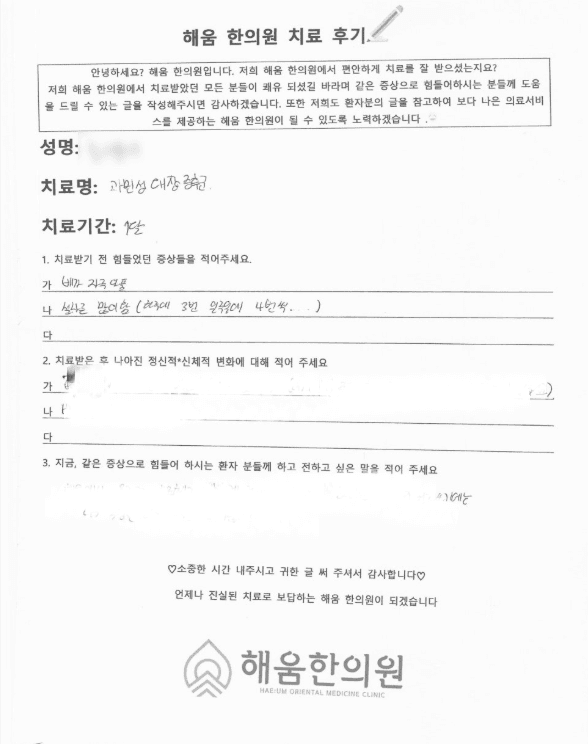
시험불안 치료후기 총 2건
환자분들이 남긴 치료후기입니다. 본문은 로그인 후 보실 수 있습니다.

시험불안, 누가 진료하나요?
담당 의료진
대표원장 박재은

“병이 아니라 그 뒤의 사람을 봅니다”
경희대학교 한의과대학에서 석사·박사 과정을 마쳤습니다. 심리상담사 1급 자격과 4만 건 이상의 한약 처방 경험을 바탕으로 진료합니다.
의료진 소개 더보기시험불안, 자주 묻는 질문
시험불안은 크면 저절로 나아지나요?
시험 직전에 한약을 처음 먹어도 되나요?
청심환을 먹으면 도움이 되나요?
심리상담과 한방치료를 같이 받아도 되나요?
시험 전 생활에서 무엇을 주의해야 하나요?
해움한의원에서 시험불안을 진료하나요?
시험불안으로 내원하려면 어떻게 하나요?
이런 경우에는 미루지 말고 진료를 받으세요
아래 경우는 시험불안을 넘어 불안장애나 우울증일 수 있습니다. 전문가와 상담하세요.
- 시험이 아닌 평소에도 불안과 걱정이 계속된다
- 갑자기 숨이 막히고 죽을 것 같은 공포가 온다
- 시험을 피하려고 학교나 시험장에 가지 못한다
- 몇 주째 잠을 거의 못 자고 식사를 거른다
- 모든 것이 의미 없게 느껴지고 우울하다
참고문헌 6편
[1]von der Embse N, Jester D, Roy D, Post J. Test anxiety effects, predictors, and correlates: A 30-year meta-analytic review. J Affect Disord. 2018;227:483-493. doi:10.1016/j.jad.2017.11.048. PMID: 29156362.
요약 1988년 이후 238개 연구를 모은 메타분석입니다. 시험 불안이 높을수록 표준화 시험, 대학 입학시험, 학교 성적이 낮았고, 이 관련은 중학생 무렵에 가장 뚜렷했습니다. 자존감이 낮을수록, 시험이 어렵거나 결과가 중요할수록 시험 불안이 컸습니다.원문은 출판사 저작권 자료로, 위 링크에서 확인하실 수 있습니다.
[2]Hamilton N, Freche R, Zhang Y, Zeller G, Carroll I. Test Anxiety and Poor Sleep: A Vicious Cycle. Int J Behav Med. 2021;28:250-258. doi:10.1007/s12529-021-09973-1. PMID: 33730347.
요약 대학생 167명을 시험 이틀 전부터 지켜본 연구입니다. 잠의 질이 나쁘면 시험 불안이 커지고, 시험 불안이 크면 잠의 질이 나빠지는 양방향 관계가 있었고, 시험 당일 아침의 불안이 시험 점수를 예측했습니다.원문은 출판사 저작권 자료로, 위 링크에서 확인하실 수 있습니다.
[3]Yılmazer E, Hamamci Z, Türk F. Effects of mindfulness on test anxiety: a meta-analysis. Front Psychol. 2024;15:1401467. doi:10.3389/fpsyg.2024.1401467. PMID: 38993347.
초록 (Abstract)
Objective: This meta-analysis evaluated the effectiveness of mindfulness-based interventions (MBIs) on test anxiety across diverse age groups and intervention modalities.
Methods: Rigorous inclusion criteria were applied to select studies focusing on MBIs as the independent variable, with test anxiety as the outcome. A comprehensive search across multiple databases yielded 18 primary studies, contributing 20 comparisons. Data were extracted on study characteristics, sample sizes, and intervention details, and were analyzed using a random-effects model.
Results: The analyses incorporated 1,275 participants, with MBIs demonstrating a moderate to large negative effect on test anxiety (effect size = −0.716; 95% CI: −1.383 to −0.049). Moderation analysis indicated that mean age, number of sessions, and intervention delivery mode did not significantly influence effect sizes. Publication bias assessment suggested the presence of bias via Egger’s regression (p = 0.025), though Begg and Mazumdar’s test and Duval and Tweedie’s trim and fill method indicated no missing studies.
Conclusion: MBIs are effective in reducing test anxiety, though results should be interpreted with caution due to potential publication bias and unexplained heterogeneity. The impact of MBIs did not vary significantly with participant age, number of sessions, or delivery mode.
결과 (Results)
A meticulous search strategy was executed across multiple databases to collate studies investigating the impact of mindfulness-based interventions (MBIs) on test anxiety. Our search encompassed articles up to year 2022, ensuring a comprehensive capture of relevant research. The initial retrieval from electronic databases yielded a substantial volume of studies, which was then meticulously refined. Duplicates were systematically removed, leaving 86 studies for closer examination. The first screening stage involved assessing abstracts against our stringent inclusion criteria, which focused on the use of MBIs as an independent variable and test anxiety as an outcome measure. This stage concluded with 27 studies earmarked for full-text review. Each potential study underwent a thorough full-text evaluation to confirm compliance with our inclusion standards. During this scrutiny, studies lacking adequate statistical information, such as pre-test and post-test means and standard deviations, were excluded. Despite efforts to retrieve missing data by contacting authors, some studies were inevitably omitted from further analysis due to incomplete datasets. Of particular note, one study presented two distinct interventions—one delivered online and the other face-to-face both compared against a control group. To account for the unique characteristics and potential differential effects of each intervention mode, we considered these as separate comparisons within our analysis. Another study explored the efficacy of MBIs over varying durations, specifically 3 weeks and 8 weeks, also in comparison to a control group. Given the differential time frames, these were likewise treated as individual studies. Our meticulous selection process culminated in the inclusion of 18 studies, which encapsulated 20 comparisons due to the distinct intervention types and durations within certain studies. This rich dataset provided a robust foundation for our meta-analytical investigation into the effectiveness of MBIs on test anxiety (see Figure 1).
Descriptive statistics: The analysis encompassed 18 primary studies, yielding 20 distinct comparisons. The studies included a cumulative total of 1,275 participants, with 595 enrolled in mindfulness-based intervention (MBI) groups (mean = 29.75, SD = 21.61) and 680 in control groups receiving no treatment (mean = 34.00, SD = 28.23). Geographically, the studies were predominantly conducted in the United States (9 studies), followed by Iran (4 studies), and one each in Canada, India, Iraq, Norway, and South Korea. The majority of the studies (15) were journal publications, while the remaining three were doctoral dissertations.
The average age of participants across studies was 18.93 years, with a standard deviation of 4.52. The duration of MBI programs averaged 4.05 weeks, with a standard deviation of 3.03, encompassing an average of 9.2 sessions (SD = 11.43). Out of the 20 comparisons, 15 were conducted face-to-face, and 5 employed online modalities. Descriptive characteristics of these studies are given in Table 1.
Overall summary effect: The meta-analysis, employing a random-effects model, assessed the efficacy of mindfulness-based interventions (MBIs) compared to no-treatment control groups across 20 comparisons. The aggregated effect size was found to be −0.716 (SE = 0.340; 95% CI -1.383 to 0.049; Z = −2.11, p = 0.035). This effect size is indicative of a moderate to large negative effect, suggesting a substantial reduction in test anxiety due to MBIs. Notably, the analysis uncovered a high degree of heterogeneity among the studies (I2 = 99.95%), with a Q statistic of 104,553.6 (df = 19, p < 0.0001), pointing to substantial variability in the effect sizes across studies. The estimated variance of the true effects (T2 = 2.1275), highlighting the diversity in intervention outcomes. The forest plot, illustrating the individual study contributions, underscores the direction and magnitude of these effects. Each study’s impact is represented proportionally, reflecting its relative weight in the overall effect size calculation. In conclusion, the meta-analysis provides an evidence for the effectiveness of MBIs in diminishing test anxiety. The majority of the included studies reported statistically significant effect sizes, affirming the practical significance of MBIs in this area. The negative sign of the effect size aligns with the anticipated outcome of reduced anxiety levels post-intervention.
Publication bias: Upon scrutiny of the funnel plot, asymmetry was observed, indicating potential publication bias. Egger’s regression revealed a significant intercept [b = 2.93, 95% CI: 2.74–3.13; t (18) = −2.44, p = 0.025], suggesting bias presence. In contrast, Begg and Mazumdar’s test did not signal publication bias (Kendall’s tau = 0.63, p < 0.0001). Duval and Tweedie’s trim and fill method detected no missing studies, implying no adjustment to the effect size was necessary. Due to these mixed findings, caution is advised in interpreting the meta-analytic results (Figure 2).
Moderation analysis: Moderation analyses were conducted to examine the influence of participant age, number of intervention sessions, and intervention delivery mode on the variability of effect sizes. The meta-regression approach was utilized, treating continuous moderators analogously to a multiple regression framework and categorical moderators through an analysis of variance equivalent. Mean participant age was not a significant moderator of effect sizes in the interventions (b = 0.04, SE = 0.08, z = 0.45, p = 0.65, 95% CI: −0.12 to 0.19), suggesting that the age of participants did not account for the observed heterogeneity in outcomes. Similarly, the number of sessions constituting the interventions did not significantly moderate the effect sizes (b = −0.05, SE = 0.03, z = −1.59, p = 0.11, 95% CI: −0.11 to 0.01), indicating that the frequency of sessions was not a determinant of intervention efficacy within the studies considered. The mode of intervention delivery, categorized as online versus face-to-face, was also not a significant moderator (b = 0.054, SE = 0.82, z = 0.066, p = 0.95, 95% CI: −1.54 to 1.65), pointing to a similar effectiveness of the interventions regardless of delivery method. No substantial reduction in residual heterogeneity was achieved through the inclusion of these moderators, as indicated by high I2 values in excess of 99% for all models. Consequently, the significant heterogeneity among studies persists unexplained by these moderator variable (Figure 3).
원문 발췌 · Yılmazer E, Hamamci Z, Türk F, Front Psychol 2024 · CC BY 4.0 라이선스에 따라 수정 없이 인용했습니다(본문 속 인용 번호는 생략).
[4]Zhang X, Li W, Wang J. Effects of Exercise Intervention on Students' Test Anxiety: A Systematic Review with a Meta-Analysis. Int J Environ Res Public Health. 2022;19(11):6709. doi:10.3390/ijerph19116709. PMID: 35682293.
초록 (Abstract)
This paper aims to evaluate the effects of exercise intervention on students’ test anxiety with a meta-analysis to serve as a reference to further relevant research. CNKI, Wanfang Data, VIP, The Cochrane Library, PubMed, Web of Science, Scopus, Embase, and EBSCOhost databases were electronically searched from inception to August 2021 in order to identify randomized and non-randomized controlled trials on exercise for treating students’ test anxiety. Two researchers independently screened the study, extracted data, and evaluated the quality of the studies. Meta-analysis was carried out using Review Manager 5.4 software. Among the 4115 articles retrieved, 16 were qualitative analyses, 15 of which were included in the meta-analysis. The meta-analysis showed that exercise intervention effectively alleviated students’ test anxiety when compared with the blank control group. Subgroup analysis showed that a single exercise intervention lasting 10~15 min did not relieve students’ test anxiety. The different scales used in the study are the source of inter-study heterogeneity. In conclusion, twenty minutes of aerobic exercise at any intensity performed two to three times a week for at least four weeks can reduce test anxiety levels. However, this is the minimum level and students should not be limited to the minimum amount of exercise when reducing test anxiety. In addition, exercise combined with psychotherapy can reduce students’ test anxiety better than exercise intervention alone. Future studies should explore the minimum intervention period and whether the shorter intervention period can quickly and effectively reduce students’ test anxiety.
결과 (Results)
3.1. Selection Outcomes: A total of 4115 articles were retrieved, of which 648 were duplicates. A total of 3349 studies were excluded following the title and abstract screening, and 102 studies following the full-text screening. Ultimately, 16 studies were included within the narrative synthesis, 15 of which were included in the meta-analysis. The formulae cannot be collected completely in all of the databases as the search formula was not precisely followed. Instead, the search was expanded to only “test anxiety”, which found four studies that could be included. The study selection process and reasons for exclusion are presented in Figure 1.
3.2. The Basic Characteristics of Included Studies: Of the 16 included studies, 12 were randomized controlled trials. Most of the studies were randomized at the individual level, while only one study was randomized at the cluster level and four were non-randomized controlled trials. Apart from one study that included two exercise intervention groups, the other studies included only one exercise intervention group. All the studies used aerobic exercise as the experimental intervention, and one study also used anaerobic exercise as an intervention. Twelve studies compared an exercise intervention group with a blank control group, and four studies compared an exercise intervention group with a non-exercise intervention group (e.g., reading, writing, etc.).
Only six studies reported the exercise intensity to the intervention group of participants, and the remaining 10 studies did not report on the exercise intensity to the intervention group of participants (based on the intervention description and mode of intervention, the researchers made inferences about the possible strength of each intervention).
The minimum total duration of intervention was 10 min in all trials and the maximum duration was 20 weeks. Four studies had only one intervention over the course of the experiment. The number of interventions ranged from 1 to 14 times per week, and most of the research intervention times for 2~3 times a week. The duration of each intervention ranged from 10 to 190 min and most of the intervention therapy was from 30 to 60 min. The details of the included studies are listed in Table 2.
3.2.1. Country: Sixteen included studies were conducted in China (n = 8), the United States (n = 5), Germany (n = 1), Australia (n = 1), and India (n = 1).
3.2.2. Study Sample: Sample sizes of the groups ranged from 11 to 275, totaling 1757 people. The mean age of the sample ranged from 10.7 to 21.4 years, the studies included all genders, and eight of the studies included college students. Six studies were conducted on middle school students and two studies were conducted on primary school students.
3.2.3. Measurement of Study Results: In all the studies, test anxiety was determined by self-reported outcome measures. Two studies used TAI (Test Anxiety Inventory). Five studies used TAS (Test Anxiety Scale). One study used the TAQ (Test Anxiety Questionnaire). The Multiple Affect Adjective Checklist (MAACL) scale was used in two studies. One study used the NA (Negative Affect) scale. One study used CTAS (Children’s Test Anxiety Scale). A 1–9 Likert scale was used in one study. Two studies used the Test Anxiety Inventory (Zheng Richang). One study used STAI (State Trait Anxiety Inventory).
3.2.4. Intervention Characteristics: The intervention and control groups in each study differed in the type, frequency, and duration of exercise interventions.
All studies used aerobic exercise interventions, except one study that included anaerobic exercise. Three studies included sports games. Two studies included yoga interventions. Two studies included tai chi. One study included aerobic dancing. Five studies included jogging or cycling interventions. Three studies included various ball games. One study included physical education. Three studies included psychotherapy combined with exercise intervention. One study involved physical training (e.g., push-ups, bobby jumps, running in place).
Four studies reported moderate intensity of intervention. Two studies reported moderate to high intensity of intervention.
Among the 12 long-term intervention studies with significant effects, the most used exercise intervention frequency was 2–3 times/week (7, 58.3%), followed by 1 time/week (3, 25%), 5 times/week (1, 8.3%), and 14 times/week (1, 8.3%).
The most used exercise intervention lasted 30 min (6, 50%), followed by 20 min (3, 25%), 50 min (1, 8.3%), 60 min (1, 8.3%), and 70 min (1, 8.3%).
The most used intervention duration was 8 weeks (4, 33.3%), followed by 7 weeks (2, 16.7%), 5 days (1, 8.3%), 2 weeks (1, 8.3%), 4 weeks (1, 8.3%), 12 weeks (1, 8.3%), and 16 weeks (1, 8.3%).
3.3. Assessment of the Risks of Study Bias: Figure 2 shows the bias risk of each item in the 11 included RCT studies in percentage form. There was no significant risk of bias in these studies, and the overall risk of bias was considered moderate. In multiple studies, some areas were rated as having an “unclear risk of bias” because of the lack of detail reported. Two of the papers were rated as high risk in the “blinding of participants and personnel” and the “blinding of outcome data”. This is because the two articles belong to a master’s degree thesis.
Table 3 shows the quality evaluation scores of the four non-RCTs in the MINORS entries. In the MINORS entries, scores of articles can be included in the specific provisions of more than 13, 0–8 are divided into low-quality, and 9–16 into the medium-quality, 17–24 are divided into high-quality documents. Three of the studies were of high quality and one was of medium quality.
3.4. Impacts of Exercise Intervention on Students’ Test Anxiety: Figure 3 is a forest plot examining the efficacy of exercise for the treatment of test anxiety. The meta-analysis of 15 studies showed that exercise interventions had a significant effect on the treatment of test anxiety (SMD = −0.75 (95% CI: −1.15, −0.34), Z = 3.58, p = 0.0003; I2 = 92%). It shows that exercise can effectively relieve students’ exam anxiety. Among them, one study could not be included in the meta-analysis due to the absence of control group data and baseline differences.
The data in Figure 3 show high heterogeneity (I2 = 92% > 50%). Therefore, sensitivity analysis is needed to determine the heterogeneity sources of exercise intervention on students’ test anxiety. Study exclusions were performed one at a time to examine the effect of each study on the overall standardized mean difference. The exclusion of any of the studies did not significantly change the combined SMD, and the estimates in each case were within the confidence range of the overall estimates, suggesting that the results of this meta-analysis were stable and reliable. Subgroup analyses were also performed to explore sources of heterogeneity.
3.5. Subgroup Analysis: In order to explore the influence of potential moderator variables on the intervention effect, this meta-analysis selected three basic contents of exercise prescription (exercise intensity, exercise frequency, exercise duration) and other factors as moderator variables for subgroup analysis: intervention method, intervention time, intervention period, and measurement scale. Table 4 summarizes the results of subgroup analyses of the effects of exercise interventions on students’ test anxiety.
3.5.1. Intervention Time: The subgroup analysis of intervention time in this study is shown in Figure 4, including three studies with only one-time intervention which showed no statistical difference (SMD = 0.59, 95% CI [−0.35, 1.52], Z =1.23, p = 0.22). One-time exercise intervention lasting 10–15 min did not relieve students’ test anxiety. The duration of the long-term intervention ranged from the minimum of 5 days to 20 weeks, and the time of the intervention ranged from 20 min to 190 min, with an average of 54 min per intervention. Long-term intervention was effective in alleviating students’ test anxiety (SMD = −1.05, 95% CI [−1.43, −0.67], Z = 5.39, p < 0.00001). Inter-study heterogeneity did not decrease, so intervention time was not the source of heterogeneity.
3.5.2. Measurement Scale: The subgroup analysis of measurement scale in this study is shown in Figure 5. The subgroup analysis showed that TAI (Z = 3.34, chi2 = 0, p = 0.95, I2 = 0%), TAS (Z = 9.64, chi2 = 7.53, p = 0.11, I2 = 47%), Test Anxiety Inventory (Zheng Richang) (Z = 3.56, chi2 = 0.48, p = 0.49, I2 = 0%), MAACL (Z = 1.07, chi2 = 11.2, p = 0.0008, I2 = 91%).
We found that the heterogeneity of three scales, TAI, TAS, and Test Anxiety Inventory (Zheng Richang), was significantly reduced, while the remaining four studies used different scales. Therefore, the difference of outcome measurement scales selected in the study was the reason for the large heterogeneity among the studies.
3.5.3. Exercise Intensity: The subgroup analysis of exercise intensity in this study is shown in Figure 6. Only three of the 15 studies reported heart rate during exercise, and the intensity was divided into low intensity, moderate intensity, and moderate to high intensity. Among them, except for the medium and high intensity, only one study could not be statistically combined, the low intensity (SMD = −2.35, 95% CI [−3.86, −0.84], p = 0.002 < 0.05) and the medium intensity (SMD = −0.45, 95% CI) [−0.86, −0.05], p = 0.03 < 0.05) There was a significant difference in exercise intervention. Among them, the low-intensity intervention with the largest effect size (−2.35) had the best effect.
3.5.4. Intervention Method: The subgroup analysis of intervention method in this study is shown in Figure 7 and the intervention methods were divided into an exercise intervention group and an exercise combined psychotherapy intervention group. There was a significant difference in the exercise intervention group (SMD = −0.66, 95% CI [−1.14, −0.19], p = 0.006 < 0.05). There are three studies on exercise combined with psychotherapy intervention. Li adopts exercise combined with emotion center therapy, Zhai used physical exercise combined with sand table games, and Gao used physical activity combined with psychological counseling (SMD = −1.13, 95% CI [−1.43, −0.83], p < 0.00001), which showed a significant difference. The effect size of the exercise combined with psychotherapy intervention group was higher than that of the exercise intervention group, which indicated that the effect of exercise combined with psychotherapy was better than the exercise intervention alone.
3.5.5. Exercise Frequency: The subgroup analysis of intervention frequency in this study is shown in Figure 8, and the intervention frequency is divided into 1 time per week, 2 to 3 times per week, and >3 times per week. Once a week (SMD = −0.25, 95% CI [−1.15, 0.64], p = 0.58 > 0.05) indicated no significant difference; 2–3 times a week (SMD = −0.96, 95% CI [−1.50, −0.41], p = 0.0006 < 0.05) and >3 times a week (SMD = −1.35, 95% CI [−2.12, −0.57]), p = 0.0006 < 0.05) were all significantly different. Among them, >3 times a week, with the largest effect size (−1.35), had the best effect.
3.5.6. Intervention Period: The subgroup analysis of intervention period in this study is shown in Figure 9, and the intervention period was divided into <4 weeks, 4~8 weeks, and >8 weeks. The category of <4 weeks (SMD = −0.20, 95% CI [−1.26, 0.85], p = 0.70 > 0.05), indicated no significant difference; 4~8 weeks (SMD = −0.70, 95% CI [−1.08, −0.32], p = 0.0003 < 0.05) and >8 weeks (SMD = −1.87, 95% CI [−3.32, −0.42], p = 0.01 < 0.05) were all significantly different. Among them, the intervention with the largest effect size (−1.87) for >8 weeks had the best effect.
3.5.7. Exercise Duration: The subgroup analysis of the duration of a single intervention in this study is shown in Figure 10, where the duration of a single intervention was divided into <20 min, 20~30 min, 31~60 min, and >60 min. The category of <20 min (SMD = 0.59, 95% CI [−0.35, 1.52], p = 0.22 > 0.05) had no significant difference; 20~30 min (SMD = −0.78, 95% CI [−1.28, −0.28], p = 0.002 < 0.05), 31~60 min (SMD = −1.53, 95% CI [−2.46, −0.60], p = 0.001 < 0.05), and >60 min (SMD = −1.17, 95% CI [−1.50, −0.85], p < 0.00001) had significant differences. Among them, 31~60 min, with the largest effect size (−1.53), had the best effect.
3.6. Publication Bias: The publication bias of the included studies is shown in Figure 11. The funnel plot showed that the graph was relatively symmetrical, and Egger’s test was also used, which indicated that there was no obvious publication bias in the included studies (intercept = 2.25 (95% CI: −5.72, 4), p = 0.709).
원문 발췌 · Zhang X, Li W, Wang J, Int J Environ Res Public Health 2022 · CC BY 4.0 라이선스에 따라 수정 없이 인용했습니다(본문 속 인용 번호는 생략).
[5]Mosavi Z, Khazaie H, Janatolmakan M, Rezaeian S, Khatony A. Effects of auricular acupressure on test anxiety in medical students: a randomized parallel-group trial. BMC Med Educ. 2023;23(1):835. doi:10.1186/s12909-023-04825-w. PMID: 37936159.
초록 (Abstract)
Background: Test anxiety is a prevalent issue among students, including those in the medical field. The present study aims to examine the impact of auricular acupressure on reducing test anxiety specifically among medical students.
Methods: In this single-blind randomized parallel-group trial, a total of 114 medical students from Kermanshah, Iran, were allocated into two groups: intervention and control. Each group consisted of 57 students. The data collection instruments included a demographic information form and the Sarason Anxiety Inventory. In the intervention group, bilateral auricular acupressure was administered on the Shen Men point for a duration of 10 min. On the other hand, the control group received bilateral auricular acupressure on the Sham point, located in the earlobe, as a placebo, also for 10 min.
Results: The mean test anxiety scores in the Shen Men acupressure group exhibited a significant reduction from 18.4 ± 5.3 before the intervention to 13.3 ± 4.8 after the intervention (P = 0.001). Conversely, in the Sham acupressure group, the mean test anxiety scores showed no significant change, with values of 16.36 ± 6.4 before the intervention and 16.4 ± 6.1 after the intervention (P = 0.963). Prior to the intervention, the majority of participants in both the intervention group (87.7%) and control group (86.0%) exhibited moderate to severe levels of test anxiety. Following acupressure, a significant improvement was observed in the intervention group, with 52.6% of participants experiencing a reduction to mild anxiety levels (P = 0.001); however, no notable change in anxiety levels was observed in the control group. Furthermore, a statistically significant difference in anxiety intensity after the intervention was found between the two groups (P = 0.001).
Conclusion: Shen Men auricular acupressure demonstrates efficacy in reducing test anxiety among medical students. However, to validate its effectiveness, further research using objective measures is warranted.
결과 (Results)
The study included a total of 114 medical students, resulting in a 100% response rate. The mean age of the participants was 21.9 ± 3.1 years. Among the participants, approximately half were male (50.1%, n = 58), and the majority were single (95.6%, n = 109) (Table 1).
In the experimental group, the mean anxiety scores before and after the intervention were 18.4 ± 5.3 and 13.3 ± 4.8, respectively. This difference was found to be statistically significant (P = 0.001), indicating a positive impact of the intervention (Table 2; Fig. 3).
Regarding the severity of test anxiety, the results revealed that 56.1% (n = 32) of the participants experienced moderate anxiety, while 31.6% (n = 18) had severe anxiety prior to the intervention. After the intervention, the number of participants experiencing mild anxiety increased to 52.6% (n = 30), and the number of individuals with severe anxiety decreased to 10.5% (n = 6). The McNemar’s test demonstrated a statistically significant difference in the intensity of test anxiety before and after the intervention (P = 0.001) (Table 3).
In the control group, the mean anxiety scores before and after the intervention were 6.4 ± 16.4 and 6.1 ± 16.4, respectively, indicating no significant change (Table 2; Fig. 3). Prior to the intervention, 59.7% (n = 34) of the participants had moderate test anxiety, while 26.3% (n = 15) experienced severe test anxiety. After the intervention, 29.8% (n = 17) still had severe test anxiety, and 52.6% (n = 30) had moderate anxiety. The McNemar’s test did not reveal a statistically significant difference in the intensity of test anxiety before and after the intervention in the control group. When comparing the intensity of test anxiety before the intervention between the study groups, the chi-square test did not show a statistically significant difference. However, after the study, a statistically significant difference was observed (P = 0.004) (Table 2).
원문 발췌 · Mosavi Z, Khazaie H, Janatolmakan M, Rezaeian S, Khatony A, BMC Med Educ 2023 · CC BY 4.0 라이선스에 따라 수정 없이 인용했습니다(본문 속 인용 번호는 생략).
[6]Fleckenstein J, Krüger P, Ittner KP. Effects of single-point acupuncture (HT7) in the prevention of test anxiety: Results of a RCT. PLoS One. 2018;13(8):e0202659. doi:10.1371/journal.pone.0202659. PMID: 30161153.
초록 (Abstract)
Background: The number of students using neuro enhancement to improve their performance and to prevent test anxiety is increasing. The acupuncture point Heart 7 (HT7) has been described as being prominent in reducing states of anxiety.
Methods: We conducted a randomized placebo-controlled, two-armed pilot trial to investigate the efficacy of a single-point acupuncture treatment at bilateral HT7 compared to sham laser acupuncture on test anxiety. Test anxiety was induced applying the standardised protocol of the Trier Social Stress Test. Outcome measures included saliva samples analysed for cortisol and amylase, anxiety questionnaires and heart rate variability.
Results: Twenty-five male subjects (age 28 ± 5 years) were allocated to either verum acupuncture (n = 12) or sham laser acupuncture (n = 13). Cortisol peaked 20 min after the stress test (2-fold, 18.11 ± 2 nmol/l) and amylase 10 min after (2-fold, 259 ± 49 U/ml) with no difference between groups. There were no differences between groups regarding either anxiety questionnaires or physiological parameters. Compared to reference data (3-fold increase in cortisol), increase in stress hormones and heart rate seemed somewhat reduced.
Conclusions: Acupuncture may be a possible approach for the treatment of anxiety. Due to the lack of a no control treatment group, we cannot determine the magnitude of possible specific needle effects at HT7 to promote specific effects in the neuroendocrine system. Finally this study only examines the efficacy of a single time treatment.
결과 (Results)
Twenty-five male volunteers (mean age 27.9 (SD 4.6) years, height 182.0 (6.5) cm, weight 79.7 (10.1) kg) participated in this study, with no drop-outs (Fig 1). Global test anxiety was reported with 7.4 (1.3) cm VAS (range 6.0–10.0) at baseline. Volunteers were randomized into two groups with 12 subjects allocated to needle acupuncture and 13 subjects to sham laser acupuncture. Groups differed in weight and in regard to their state of anxiety (STAI-T, see Table 1). As both variables are known to influence each other, they were used as covariates in the analysis of the main effects.
The perceived stressfulness of the TSST was rated as 5.3 (1.6) cm VAS (range 3.0–8.0) and the comparability to a medical state exam was valued as 4.0 (2.1) cm VAS (range 1.0–8.0) with no differences observed between groups.
Stress hormones in the sputum at baseline were cortisol = 9.4 (5.9) nmol/l and amylase = 121.6 (104.6) U/ml. The largest magnitude of cortisol was Δ8.7 (11.8) nmol/l at T4 (20 minutes after the stress test; p = 0.001) and of Δ137.4 (161.6) U/ml at T3 (10 minutes after the stress test; p < 0.001).
Time x group analysis of changes to baseline revealed no significant differences in the increase of cortisol (7x2; F(2;12) = 0.5 p = 0.811) or amylase (5x2; F(3;8) = 1.2 p = 0.325) between groups (see Fig 2A and 2B).
Time x group analysis of changes to baseline revealed no significant differences between groups with respect to other psychological outcomes as follows: MDBF (3x2; F(2;4) = 1.4 p = 0.257; Fig 2E), and STAI-S (2x2; F(2;2) = 0.08 p = 0.927; Fig 2F). Changes in PASA did not differ between groups (unpaired t-test p = 0.524 (95%-CI -2.8;5.3))
Time x group analysis of changes to baseline revealed no significant differences with respect to the perceived stress (on a VAS scale) during the experiment (4x2; F(2;6) = 0.4 p = 0.832).
The heart rate (at baseline 76.7 [15.2] min-1) significantly decreased after intervention/resting to 66.9 (12.7) min-1 (p < 0.001), and peaked during the TSST at 89.5 (18.2) min-1 (p < 0.001). The heart rate variability (at baseline was 795.7 [233.3] ms) significantly increased after intervention/resting to 936.6 (174.4) ms (p < 0.001), and was shortened during the TSST (706.6 [152.8] ms, p < 0.001).
Time x group (5x2) analysis of changes to baseline revealed no significant differences between groups with respect to heart rate (F(2;8) = 0.6 p = 0.630) or heart rate variability ((F(2;8) = 0.9 p = 0.499; Fig 2C and 2D).
We performed a credibility assessment according to Vincent, and observed no differences with respect to the four variables at baseline, or at the end of the study (Table 2).
원문 발췌 · Fleckenstein J, Krüger P, Ittner KP, PLoS One 2018 · CC BY 4.0 라이선스에 따라 수정 없이 인용했습니다(본문 속 인용 번호는 생략).