

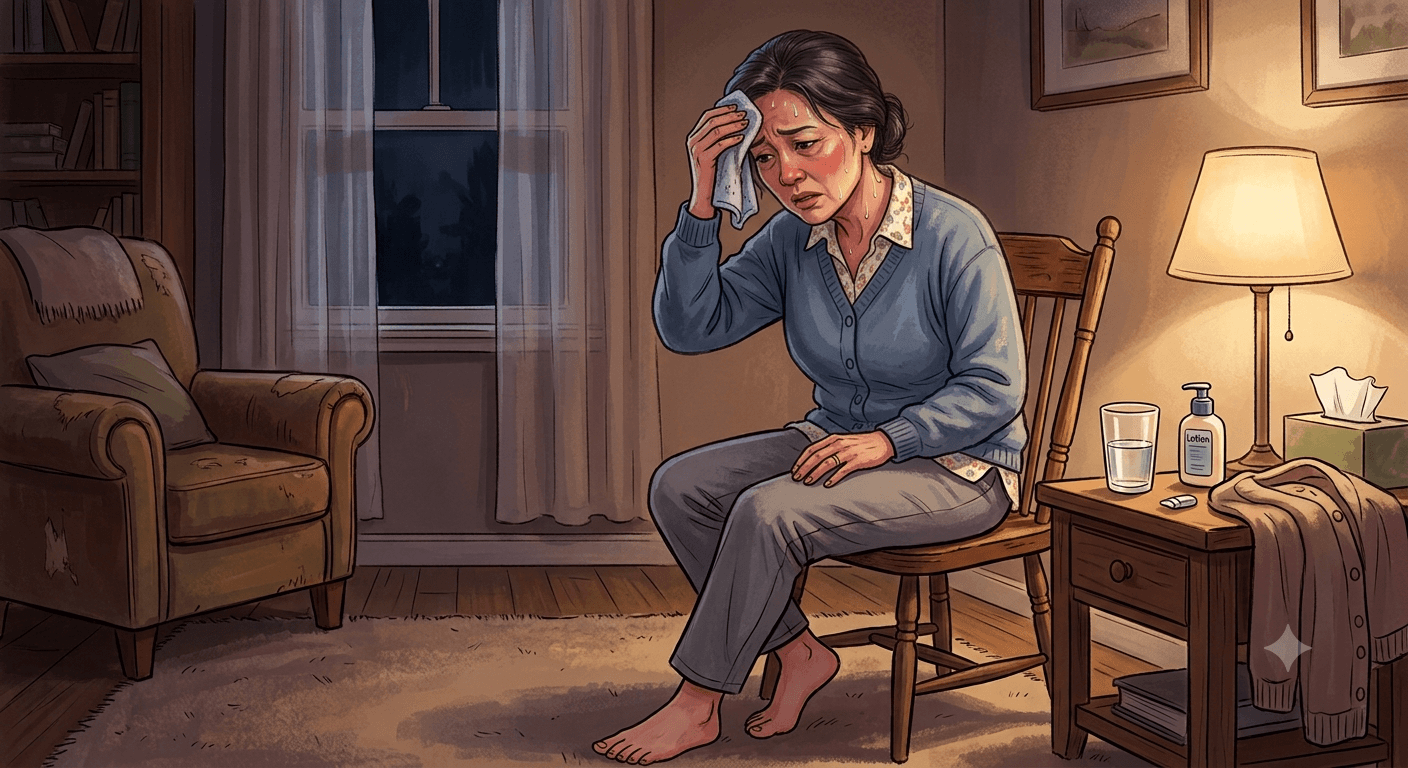
아직 30대인데 생리가 몇 달째 없고, 밤마다 얼굴로 열이 오르고 식은땀에 잠을 깹니다. 산부인과에서 "폐경 수치가 나왔다"는 말을 듣고 나니 몸보다 마음이 먼저 무너졌습니다. 마흔이 되기 전에 난소의 기능이 멈추는 조기폐경입니다.
조기폐경 한눈에 보기
- 조기폐경은 40세 이전에 난소 기능이 떨어져 생리가 끊기는 상태로, 정식 명칭은 조기 난소 부전입니다. 여성 약 100명 중 3~4명이 겪습니다.
- 여성 호르몬이 일찍 줄면 뼈와 심장 건강에 영향을 줍니다. 우리나라 여성에서 40세 이전 폐경은 심근경색 위험을 1.4배 높였습니다. 그래서 평균 폐경 나이까지 호르몬 치료를 권합니다.
- 열감과 불면, 감정의 흔들림은 자율신경과 깊이 이어져 있습니다. 해움한의원은 산부인과 치료와 병행해 지친 몸과 마음의 바탕을 함께 돌봅니다.
- 치료후기 2건
- 온라인 상담 1건
조기폐경이란?
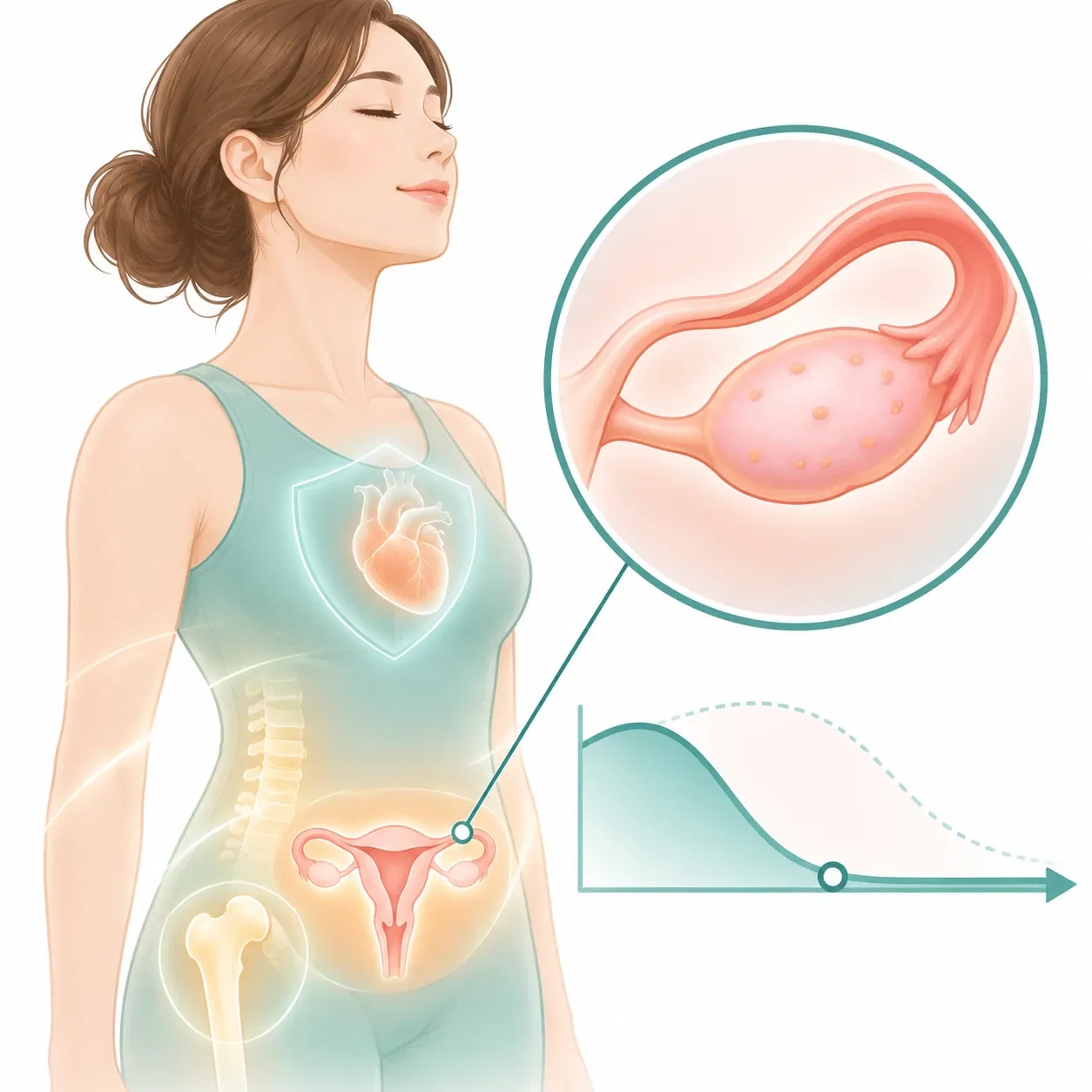
보통 폐경은 50세 안팎에 찾아옵니다. 40세가 되기 전에 난소 기능이 떨어져 생리가 끊기는 것을 조기폐경이라 하며, 의학적으로는 조기 난소 부전이라고 부릅니다. 40~45세 사이의 폐경은 이른 폐경이라고 합니다. 조기폐경은 40세 전에 생리가 4개월 넘게 없거나 드문 것을 말하며, 국제 진료지침은 난포자극호르몬(FSH) 수치가 25를 넘게 한 번만 나와도 진단할 수 있다고 봅니다[1]. 일반적인 폐경과 달리 난소 기능이 가끔 되살아나 생리가 다시 오거나 임신이 되는 경우도 있습니다.
조기 난소 부전은 생각보다 흔해 여성의 3.5%가 겪습니다[2][1]. 우리나라 국민건강영양조사에서 40세 이전 폐경은 2.8%, 45세 이전 폐경은 7.2%였습니다[3]. 아직 생리는 있지만 난소의 남은 난자가 줄어든 상태는 난소기능저하라고 하며, 조기폐경과 구별합니다.
이런 증상이 있나요?

- 40세 전에 생리가 몇 달째 없거나 드물어졌다
- 얼굴로 열이 오르고 밤에 식은땀이 난다
- 잠들기 어렵거나 자주 깬다
- 질이 건조하고 성관계가 아프다
- 이유 없이 우울하고 예민해졌다
- 기억력과 집중력이 떨어졌다
산부인과에서 FSH 와 에스트라디올, 항뮐러관호르몬(AMH) 을 확인하고, 임신과 갑상선·프로락틴 이상처럼 생리를 멈추게 하는 다른 원인을 가립니다. 원인을 찾기 위해 염색체 검사와 취약X 유전자 검사, 자가면역 검사를 하고, 뼈 건강을 위해 골밀도를 잽니다.
조기폐경은 왜 생기나요?
- 원인을 찾지 못하는 경우가 가장 많음
- 염색체·유전자 이상(터너증후군, 취약X 유전자 변이)
- 자가면역 질환(갑상선염 등)
- 항암 치료, 골반 방사선 치료, 난소 수술
- 가족 중 조기폐경
- 흡연
흡연은 다른 요인과 상관없이 자연 폐경을 앞당겼습니다[4]. 조기폐경은 생리만의 문제가 아닙니다. 여성 호르몬은 뼈와 혈관, 뇌를 지키는데, 이 호르몬이 일찍 줄면 그 보호도 일찍 사라집니다. 우리나라 여성 115만 명을 추적한 연구에서 40세 이전에 폐경한 여성은 심근경색 위험이 1.40배, 뇌졸중 위험이 1.24배 높았습니다[5].
해움한의원은 조기폐경의 원인을 스트레스로 단정하지 않습니다. 다만 호르몬이 줄어든 몸에서는 자율신경이 쉽게 흔들려, 과로와 긴장이 겹치면 열감과 불면, 감정 변화가 더 심해지는 분을 진료에서 자주 봅니다.
조기폐경의 표준 치료
조기폐경의 기본 치료는 호르몬 치료입니다. 부족한 여성 호르몬을 보충해 열감과 질 건조를 줄이고, 뼈와 심장, 뇌 건강에 미치는 영향을 일부 줄일 수 있습니다[1]. 일반 갱년기와 달리 금기가 없다면 평균 폐경 나이인 50세 무렵까지 이어 가기를 권합니다. 칼슘과 비타민 D, 근력 운동으로 뼈를 지키고, 임신을 원한다면 난임 전문의와 난자 공여 등을 상의합니다.
국제 진료지침도 조기폐경의 여러 치료 가운데 대부분은 근거가 아직 부족하다고 밝힙니다[1]. 호르몬 치료를 받아도 열감과 불면, 우울감이 남거나, 유방 질환 등으로 호르몬을 쓰기 어려운 분도 있습니다. 갑작스러운 진단으로 무너진 마음도 함께 돌봐야 합니다. 한의학 치료는 바로 이 바탕을 다스립니다.
조기 난소 부전에 한약을 쓴 23개 연구를 모은 분석에서 호르몬 치료보다 전체 유효율이 조금 높고 갱년기 증상 점수가 더 줄었습니다[6]. 침 치료 예비 연구에서는 31명 가운데 6명의 생리가 다시 시작되었다고 합니다[7].
해움한의원은 이렇게 치료합니다

해움한의원은 산부인과의 호르몬 치료와 병행합니다. 호르몬 치료로 뼈와 혈관을 지키는 동안, 남아 있는 열감과 불면, 감정의 흔들림과 체력을 함께 돌보고, 정기적인 골밀도·혈액 검사를 함께 권합니다.
1단계. 호르몬과 몸의 상태를 살핍니다
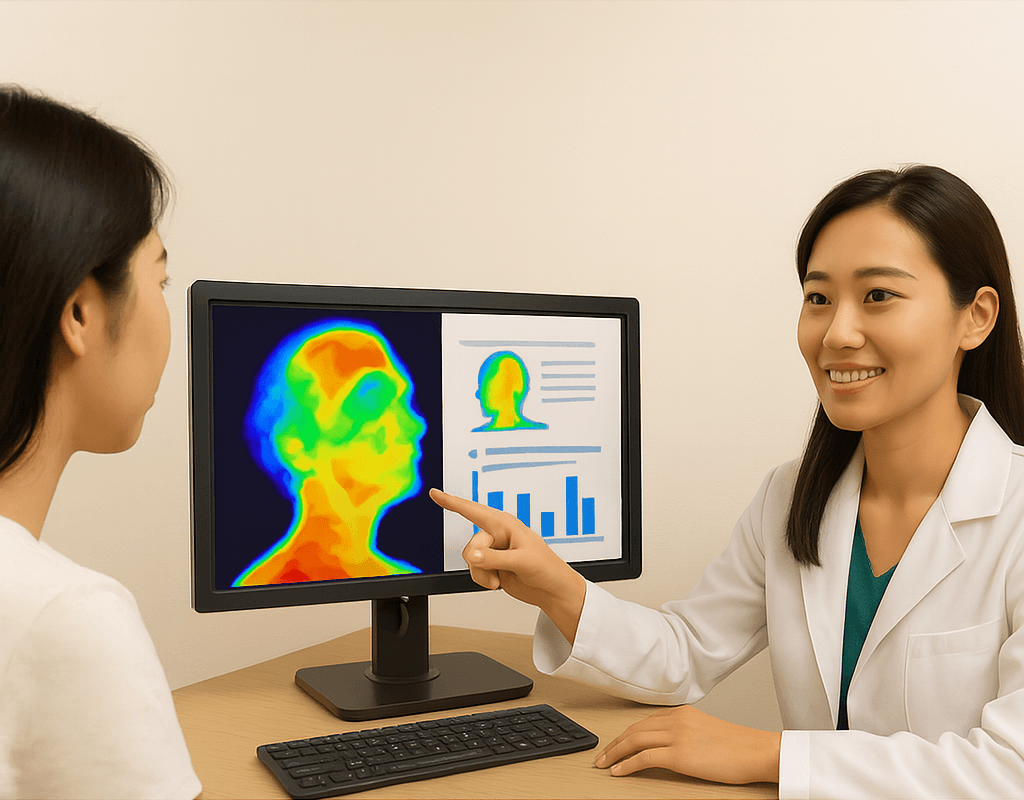
산부인과 검사 결과와 호르몬 치료 여부, 생리 변화, 열감과 수면, 감정 상태를 자세히 살펴봅니다. 심박변이도와 적외선 체열검사로 자율신경의 균형과 상체의 열, 아랫배의 냉증을 확인합니다.
2단계. 열을 내리고 긴장을 풉니다
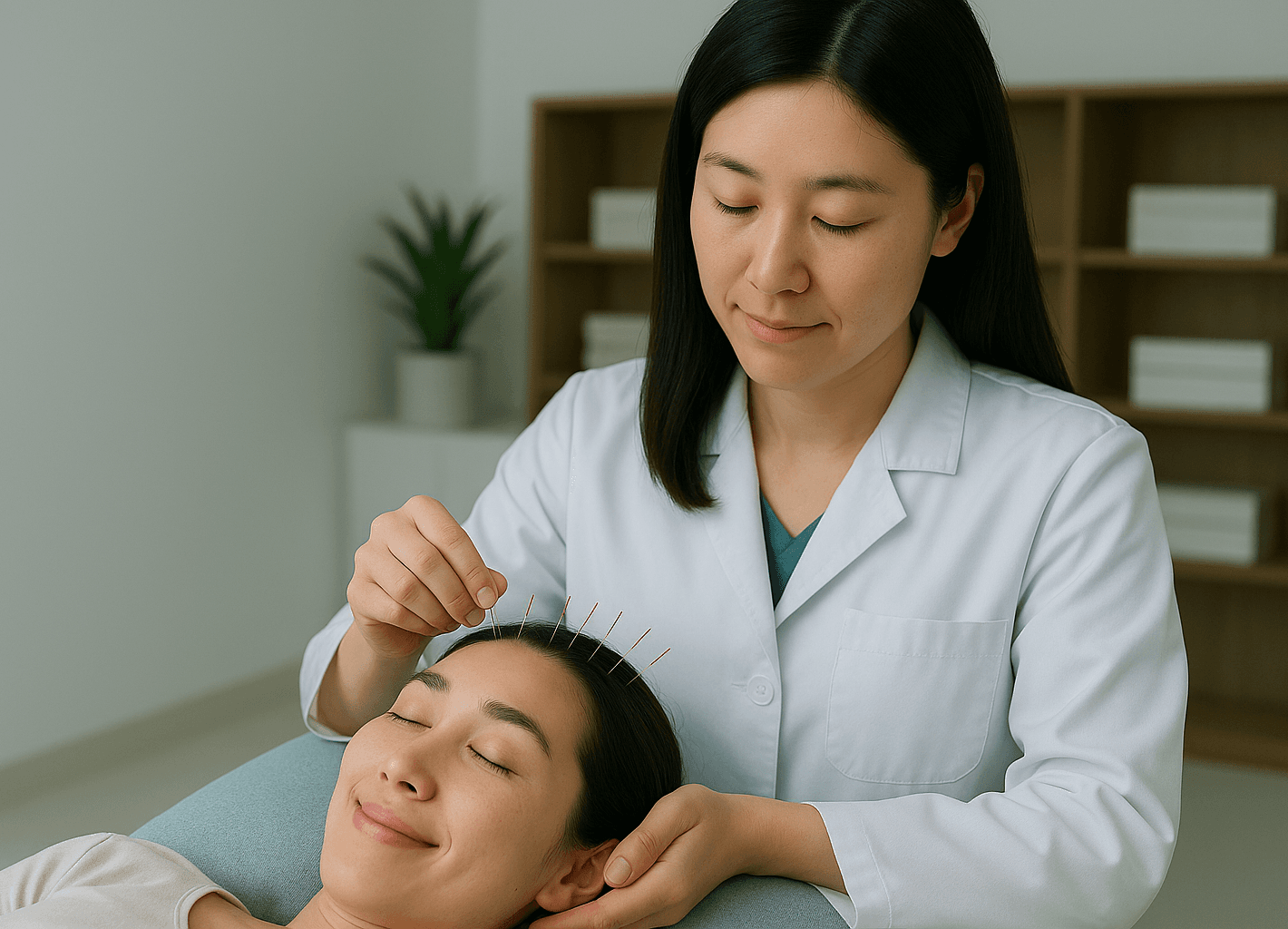
침과 뜸으로 위로 몰린 열을 내리고 예민해진 자율신경을 가라앉힙니다. 수면과 운동, 식사 습관을 함께 안내합니다.
3단계. 유형에 맞춰 바탕을 다스립니다
체질과 상태에 맞춰 한약을 짓습니다.
4만 건의 처방 사례가 말해주는, 한방 맞춤 치료의 힘
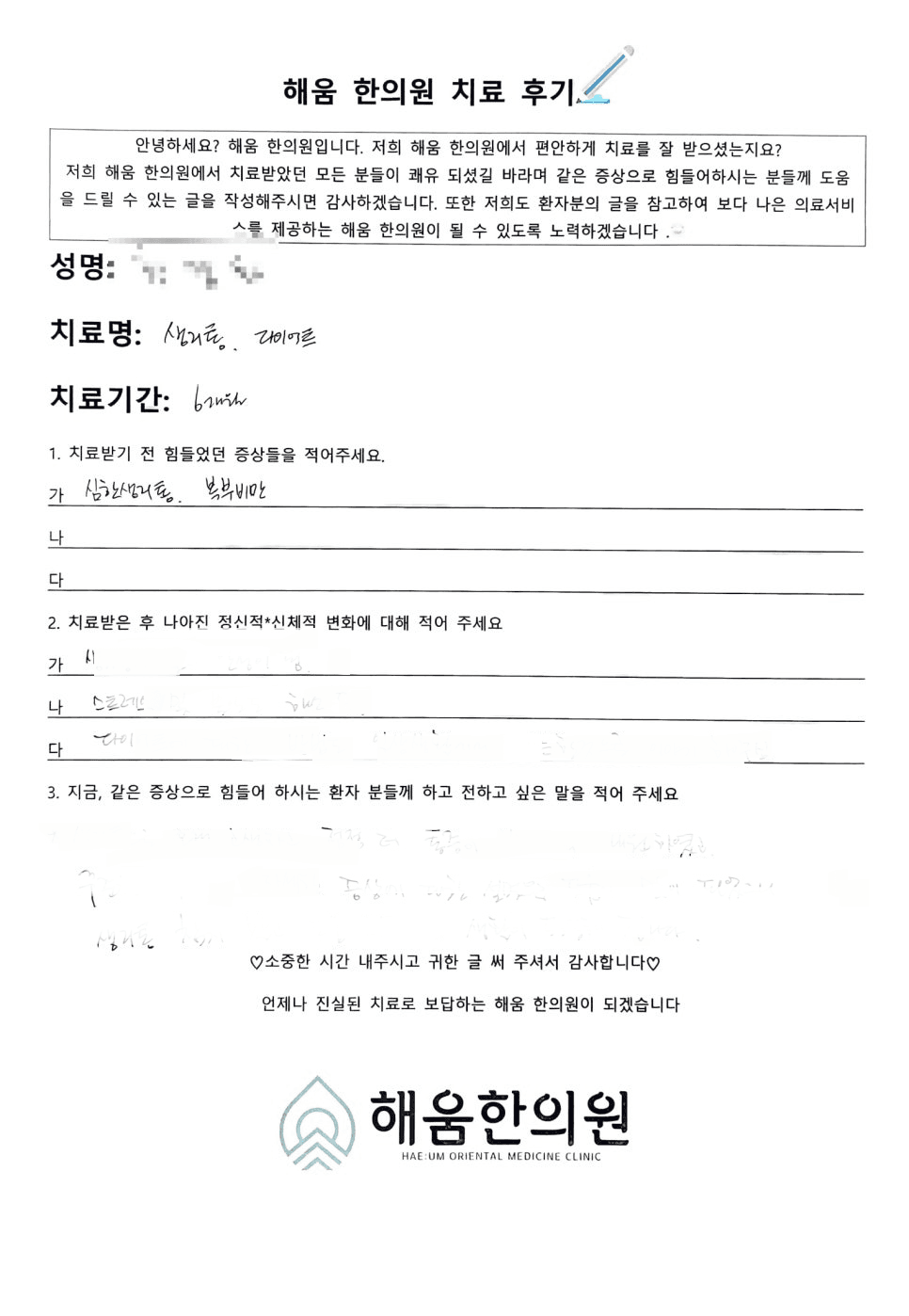
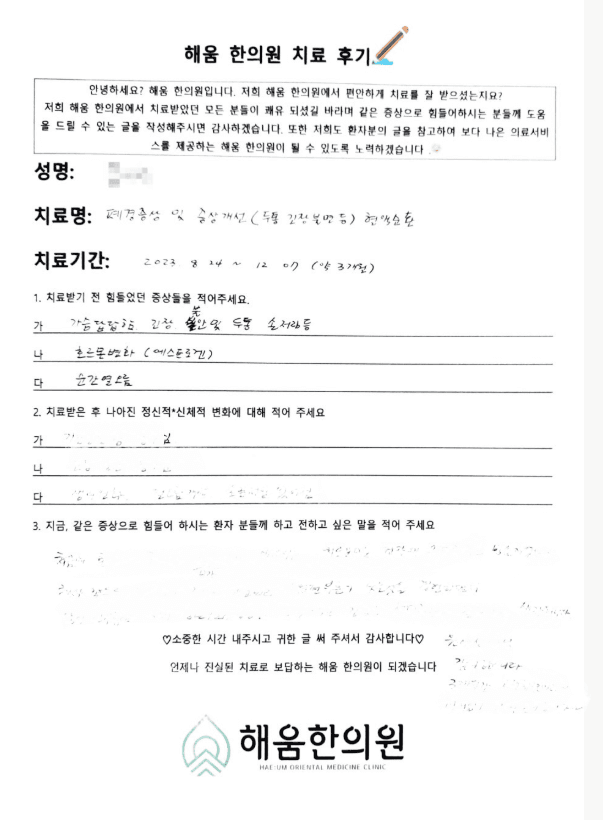
조기폐경 치료후기 총 2건
환자분들이 남긴 치료후기입니다. 본문은 로그인 후 보실 수 있습니다.
조기폐경, 누가 진료하나요?
담당 의료진
대표원장 박재은
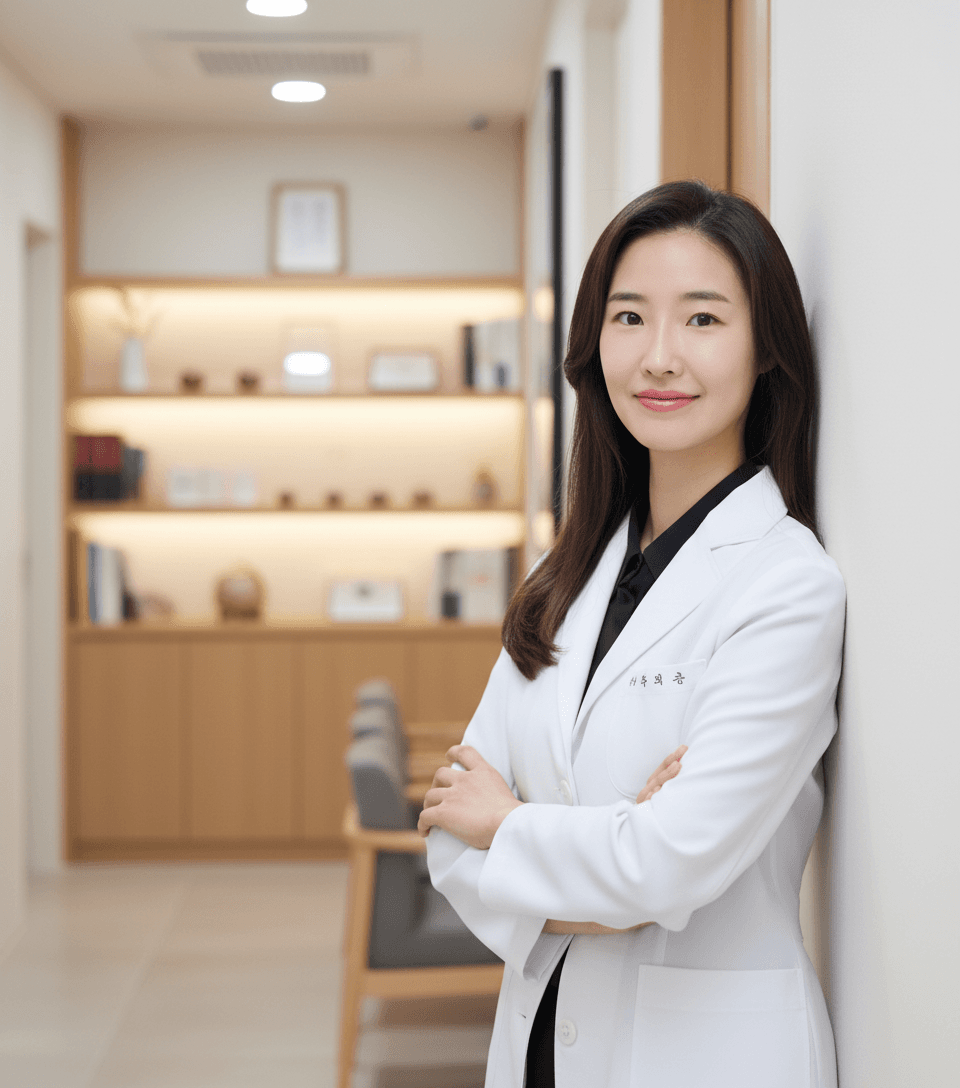
“병이 아니라 그 뒤의 사람을 봅니다”
경희대학교 한의학박사이자 여한의사입니다. 심리상담사 1급 자격, 20만명 차트분석과 4만건 이상의 한약 처방 경험을 바탕으로 진료합니다.
의료진 소개 더보기조기폐경, 자주 묻는 질문
조기폐경이면 다시 생리를 할 수 없나요?
조기폐경이어도 임신할 수 있나요?
호르몬 치료를 오래 받아도 괜찮나요?
호르몬 치료와 한방치료를 같이 받아도 되나요?
치료 기간은 얼마나 걸리나요?
생활에서 어떻게 관리해야 하나요?
해움한의원에서 조기폐경을 진료하나요?
조기폐경으로 내원하려면 어떻게 하나요?
이런 경우에는 바로 응급실로 가세요
아래 증상은 혈전이나 뇌졸중, 심장 질환일 수 있습니다. 호르몬 치료 중이라면 특히 주의하고, 지체하지 말고 응급실을 찾으세요.
- 한쪽 다리가 갑자기 붓고 아프다
- 갑자기 숨이 차고 가슴이 아프다
- 한쪽 팔다리에 힘이 빠지거나 말이 어눌해졌다
- 갑자기 생긴 심한 두통과 시야 이상
- 가슴이 조이듯 아프고 식은땀이 난다
참고문헌 7편
[1]Panay N, Anderson RA, Bennie A, Cedars M, Davies M, Ee C, et al. Evidence-based guideline: premature ovarian insufficiency. Hum Reprod Open. 2024;2024(4):hoae065. doi:10.1093/hropen/hoae065. PMID: 39660328.
초록 (Abstract)
STUDY QUESTION: How should premature/primary ovarian insufficiency (POI) be diagnosed and managed based on the best available evidence from published literature?
SUMMARY ANSWER: The current guideline provides 145 recommendations on symptoms, diagnosis, causation, sequelae, and treatment of POI.
WHAT IS KNOWN ALREADY: Premature ovarian insufficiency (POI) presents a significant challenge to women’s health, with far-reaching implications, both physically and emotionally. The potential implications include adverse effects on quality of life; fertility; and bone, cardiovascular, and cognitive health. Although hormone therapy (HT) can mitigate some of these effects, many questions still remain regarding the optimal management of POI.
STUDY DESIGN, SIZE, DURATION: The guideline was developed according to the structured methodology for development of ESHRE guidelines. Key questions were determined by a group of experts and informed by a scoping survey of women and health care professionals. Literature searches and assessments were then performed. Papers published up to 30 January 2024 and written in English were included in the guideline. An integrity review was conducted for the randomized controlled trials (RCTs) on POI included in the guideline.
PARTICIPANTS/MATERIALS, SETTING, METHODS: Based on the collected evidence, recommendations were formulated and discussed within the guideline development group until consensus was reached. Women with lived experience of POI informed the recommendations in general, and particularly on those on provision of care. A stakeholder review was organized after finalization of the draft. The final version was approved by the guideline development group and the ESHRE Executive Committee.
MAIN RESULTS AND THE ROLE OF CHANCE: New data indicate a higher prevalence of POI, 3.5%, than was previously thought. This guideline aims to help health care professionals to apply best practice care for women with POI. The recent update of the POI guideline covers 40 clinical questions on diagnosis of the condition, the different sequelae, including bone, cardiovascular, neurological and sexual function, fertility and general well-being, and treatment options, including HT. The list of clinical questions was expanded from the previous iteration of the guideline (2015) based on the scoping survey and appreciation of emerging knowledge of POI. Questions were added on the role of anti-Müllerian hormone (AMH) in the diagnosis of POI, fertility preservation, muscle health, and specific considerations for HT in iatrogenic POI. Additionally, the topic on complementary treatments was extended with specific focus on non-hormonal treatments and lifestyle management options. Significant changes from the previous 2015 guideline include the recommendations that only one elevated FSH >25 IU is required for diagnosis of POI, and guidance that AMH testing, repeat FSH measurement, and/or AMH may be required where there is diagnostic uncertainty. Recommendations were also updated regarding genetic testing, estrogen doses and regimens, use of the combined oral contraceptive and testosterone therapy. Women with lived experience of POI informed the recommendations on provision of care.
LIMITATIONS, REASONS FOR CAUTION: The guideline describes different management options, but it must be acknowledged that for most of these options, supporting evidence is limited for POI.
WIDER IMPLICATIONS OF THE FINDINGS: The guideline provides health care professionals with clear advice on best practice in POI care, based on the best evidence currently available. In addition, a list of research recommendations is provided to guide further studies in POI.
STUDY FUNDING/COMPETING INTEREST(S): The guideline was developed and funded by ESHRE, American Society for Reproductive Medicine (ASRM), Centre for Research Excellence in Women's Health in Reproduction Life (CRE-WHiRL), and International Menopause Society (IMS), covering expenses associated with the guideline meetings, literature searches, and dissemination of the guideline. The guideline group members did not receive payments. N.P. declared grants from Bayer Pharma (research and consultancy) and NIHR—research POISE; consulting fees from Abbott, Astellas, Bayer, Besins, Lawley, Mithra, Theramex, Viatris; honoraria from Astellas, Bayer, Besins, Gedeon Richter, Theramex, Viatris; support for attending meetings and/or travel from Astellas, Bayer, Theramex, Viatris; President, International Menopause Society, Medical Advisory Committee member, British Menopause Society, Patron Daisy Network. A.J.V. declared grants from Amgen Australia, Australian NHMRC, and Australian MRFF; consulting fees from IQ Fertility; honoraria from the Australasian Menopause Society; participation on a Data Safety Monitoring Board or Advisory Board of Astellas; Board Member of the International Menopause Society (2020 to current) and Past president of the Australasian Menopause Society (2017–2019); R.A.A. declared grants from Roche (Research support, to institution), and participation on a Data Safety Monitoring Board of Bayer. M.C. declared grants from NHI; payments or honoraria from Up-to-Date (as editor/reviewer); Board Member of American Society of Reproductive Medicine, and of American Gynecological and Obstetrical Society. M.D. declared (NIHR—HTA Reference Number: NIHR133461; NIHR—HTA Reference Number: NIHR128757; Action Medical Research and Borne: GN2818) consulting fees from a small personal medical practice, support for attending meetings and/or travel from ESHRE, Bayer and UCLH special Trustees; Participation on the Advisory Board of the British Menopause Society, UKSTORE project, the Progress Educational Trust, and the Turner Syndrome Support Society UK; Leadership or fiduciary roles in the British Fertility Society (Trustee), Elizabeth Garrett Anderson Hospital Charity (chair of Trustees), and the Essex Wynter charitable trust (Trustee). C.E. declared being Chair of a SIG from the Royal Australian College of General Practitioners Integrative Medicine Specific Interest Group and Program Lead for Next Practice Western Sydney Integrative Health. C.H.G. declared grants from Novo Nordisk Foundation (Nos. NNF15OC0016474 and NNF20OC0060610), sygesikringen danmark (No 2022-0189), and the Independent Research Fund Denmark (Nos. 0134-00406 and 0134-00130B); consulting fees from Novo Nordisk, Merck, and Astra Zeneca. S.K. declared grants from Roche diagnostics. A.K. declared grants from NIH R01 5R01HD101475; consulting fees as Medical Reviewer for Flo and for Healthline; honoraria as Medical Consultant for Summus; support for attending meetings from the Reproductive Scientist Development Program; Society for Reproductive Investigation Council Member and Society for Assisted Reproduction Registry/Validation Chair; R.E.N. declared consulting fees from Astellas, Bayer Pharma, Besins Healthcare, Fidia, Theramex; honoraria from Abbott, Astellas, Exeltis, Fidia, Gedeon Richter, Merck & Co, Novo Nordisk, Shionogi Limited, Theramex, Viatris; payment for expert testimony from Vichy Laboratories; Participation in Data Safety Monitoring Board of Advisory board from Astellas and Bayer Healthcare; President elect of the International Menopause Society (IMS). H.T. declared a grant from NHMRC Centre for Research Excellence for women’s health in reproductive life. A.B. declared being chair of the Daisy Network Charity. The other authors have no conflicts of interest to declare.
DISCLAIMER: This guideline represents the views of ESHRE, ASRM, CRE-WHiRL, and IMS, which were achieved after careful consideration of the scientific evidence available at the time of preparation. In the absence of scientific evidence on certain aspects, a consensus between the relevant stakeholders has been obtained. Adherence to these clinical practice guidelines does not guarantee a successful or specific outcome, nor does it establish a standard of care. Clinical practice guidelines do not replace the need for application of clinical judgement to each individual presentation, nor variations based on locality and facility type. The collaborating societies make no warranty, expressed or implied, regarding the clinical practice guidelines and specifically exclude any warranties of merchantability and fitness for a particular use or purpose. (Full disclaimer available at www.eshre.eu/guidelines.)
결과 (Results)
The scope of the guideline on POI is to provide guidance on the management of POI. In line with research on the topic, terminology, and discussion, the guideline is focused on women. The guideline group recognizes that there are individuals living with POI who are transgender or who do not identify with the terms used in the literature. Throughout, the term ‘women with POI’ is used, but this is not intended to isolate, exclude, or diminish any individual’s experience nor to discriminate against any group.
Introduction to POI: Key Question: What should this condition be called?
Key Question: How should POI be defined?
Key Question: What is the prevalence of POI in the general population?
PICO Question: What are the risk factors for POI?
Diagnosis of POI (Fig. 2)
PICO Question: What are the symptoms of POI?
PICO Question: What investigations should be performed for diagnosis of POI?
PICO Question: What is the role of anti-Müllerian hormone to predict/diagnose POI?
PICO Question: What are the known causes of non-iatrogenic POI and how should they be investigated?
PICO Question: how often should tests for autoantibodies be repeated?
Care for women with POI at diagnosis
Key Question: What are the possible implications for relatives of women with POI?
Sequelae of POI: PICO Question: What are the consequences of POI for life expectancy?
PICO Question: What are the consequences of POI for fertility?
PICO Question: What fertility interventions are effective?
PICO Question: What therapies are effective for fertility preservation and/or prevention of POI?
PICO Question: What are the obstetric risks associated with POI?
PICO Question: How should fitness for pregnancy be assessed in women with POI?
PICO Question: What are the consequences of POI for skeletal health?
PICO Question: What are the treatment options for bone protection and improvement?
PICO Question: How should skeletal health be monitored in women with POI?
PICO Question: What are the consequences of POI for muscle health?
PICO Question: What are the treatment options for muscle protection and improvement?
PICO Question: How should muscle health be monitored in women with POI?
PICO Question: What are the consequences of POI for the cardiovascular system?
PICO Question: Is estrogen therapy cardio-protective?
PICO Question: Should cardiovascular risk factors be monitored?
PICO Question: What are the consequences of POI on psychological wellbeing and quality of life?
PICO Question: What are the management options for reduced quality of life associated with POI?
PICO Question: What are the consequences of POI for sexuality?
PICO Question: What are the management options for the effects of POI on sexuality?
PICO Question: What treatments are available for genitourinary symptoms in POI?
PICO Question: What are the consequences of POI on cognition/neurological function?
PICO Question: What are the management options for the effect of POI on cognition/neurological function?
POI treatment (Fig. 3)
Hormone therapy (HT) in POI: Principles and indications
PICO Question: What are the risks of HT?
PICO Question: What are the options for HT?
Monitoring HT
PICO Question: What is the role of testosterone therapy in POI?
PICO Question: What are the specific considerations for HT in iatrogenic POI?
PICO Question: What non-hormonal therapies are available for POI?
PICO Question: What complementary treatments are effective for managing the sequelae of POI?
PICO Question: What are the lifestyle management options for POI?
PICO Question: How should puberty be induced?
원문 발췌 · Panay N, Anderson RA, Bennie A, Cedars M, Davies M, Ee C, Gravholt CH, Kalantaridou S, Kallen A, Kim KQ, Misrahi M, Mousa A, Nappi RE, Rocca WA, Ruan X, Teede H, Vermeulen N, Vogt E, Vincent AJ, ESHRE, ASRM, CREWHIRL, and IMS Guideline Group on POI , Hum Reprod Open 2024 · CC BY 4.0 라이선스에 따라 수정 없이 인용했습니다(본문 속 인용 번호는 생략).
[2]Li M, Zhu Y, Wei J, Chen L, Chen S, Lai D. The global prevalence of premature ovarian insufficiency: a systematic review and meta-analysis. Climacteric. 2023;26(2):95-102. doi:10.1080/13697137.2022.2153033. PMID: 36519275.
요약 조기 난소 부전(40세 이전 폐경)의 세계 유병률을 모은 체계적 고찰과 메타분석입니다. 전체 유병률은 3.5%였고, 지난 20년 동안 늘어나는 경향을 보였습니다(통계적으로 뚜렷하지는 않음).원문은 출판사 저작권 자료로, 위 링크에서 확인하실 수 있습니다.
[3]Choe SA, Sung J. Trends of Premature and Early Menopause: a Comparative Study of the US National Health and Nutrition Examination Survey and the Korea National Health and Nutrition Examination Survey. J Korean Med Sci. 2020;35(14):e97. doi:10.3346/jkms.2020.35.e97. PMID: 32281314.
요약 미국과 우리나라 국민건강영양조사에서 45세 이상 여성 각각 9,209명, 9,828명을 비교한 연구입니다. 40세 이전 폐경은 미국 1.7%, 우리나라 2.8%였고, 45세 이전 폐경은 미국 3.4%, 우리나라 7.2%였습니다. 우리나라는 비율이 가장 높았지만 젊은 세대로 올수록 줄고 있었습니다.원문은 출판사 저작권 자료로, 위 링크에서 확인하실 수 있습니다.
[4]Sun L, Tan L, Yang F, Luo Y, Li X, Deng HW, et al. Meta-analysis suggests that smoking is associated with an increased risk of early natural menopause. Menopause. 2012;19(2):126-132. doi:10.1097/gme.0b013e318224f9ac. PMID: 21946090.
요약 흡연과 자연 폐경 나이의 관계를 다룬 11개 연구의 메타분석입니다. 흡연은 이른 자연 폐경과 뚜렷하게 관련이 있었고, 다른 요인과 상관없이 폐경을 앞당기는 요인으로 보았습니다.원문은 출판사 저작권 자료로, 위 링크에서 확인하실 수 있습니다.
[5]Lee GB, Nam GE, Kim W, Han B, Cho KH, Kim SM, et al. Association Between Premature Menopause and Cardiovascular Diseases and All-Cause Mortality in Korean Women. J Am Heart Assoc. 2023;12(22):e030117. doi:10.1161/JAHA.123.030117. PMID: 37947103.
요약 2009년 국민건강보험 건강검진을 받은 폐경 여성 115만 9,405명을 평균 10년 추적한 연구입니다. 40세 이전에 폐경한 여성은 50세 이후 폐경한 여성보다 심근경색 위험이 1.40배, 허혈성 뇌졸중 1.24배, 사망 위험이 1.19배 높았고, 30~34세에 폐경한 경우 위험이 가장 컸습니다.원문은 출판사 저작권 자료로, 위 링크에서 확인하실 수 있습니다.
[6]Li HF, Shen QH, Chen WJ, Chen WM, Feng ZF, Yu LY. Efficacy of Traditional Chinese Medicine Tonifying Kidney (Bushen) and Activating Blood (Huoxue) Prescription for Premature Ovarian Insufficiency: A Systematic Review and Meta-Analysis. Evid Based Complement Alternat Med. 2020;2020:1789304. doi:10.1155/2020/1789304. PMID: 32382277.
요약 조기 난소 부전에 신(腎)을 보하고 혈액순환을 돕는 한약 처방을 쓴 23개 무작위 대조 연구(1,712명)의 메타분석입니다. 호르몬 치료와 비교해 전체 유효율이 조금 높았고(상대위험 1.10), 호르몬 수치와 갱년기 증상 점수가 더 좋아졌으며 부작용은 적었습니다. 다만 연구의 질이 만족스럽지 않아 엄격한 연구가 더 필요하다고 보았습니다.원문은 출판사 저작권 자료로, 위 링크에서 확인하실 수 있습니다.
[7]Chen Y, Fang Y, Yang J, Wang F, Wang Y, Yang L. Effect of acupuncture on premature ovarian failure: a pilot study. Evid Based Complement Alternat Med. 2014;2014:718675. doi:10.1155/2014/718675. PMID: 24711856.
요약 조기 난소 부전 여성 31명에게 3개월 동안 주 3회 침 치료를 한 예비 연구입니다. 치료 뒤 FSH·LH 가 줄고 에스트라디올이 늘었으며 불안과 갱년기 증상 점수가 줄었습니다. 4명은 치료 뒤, 2명은 추적 기간에 생리가 다시 시작되었습니다. 대조군이 없는 연구입니다.원문은 출판사 저작권 자료로, 위 링크에서 확인하실 수 있습니다.