
양천구 목동 난소기능저하 한의원
난소기능저하
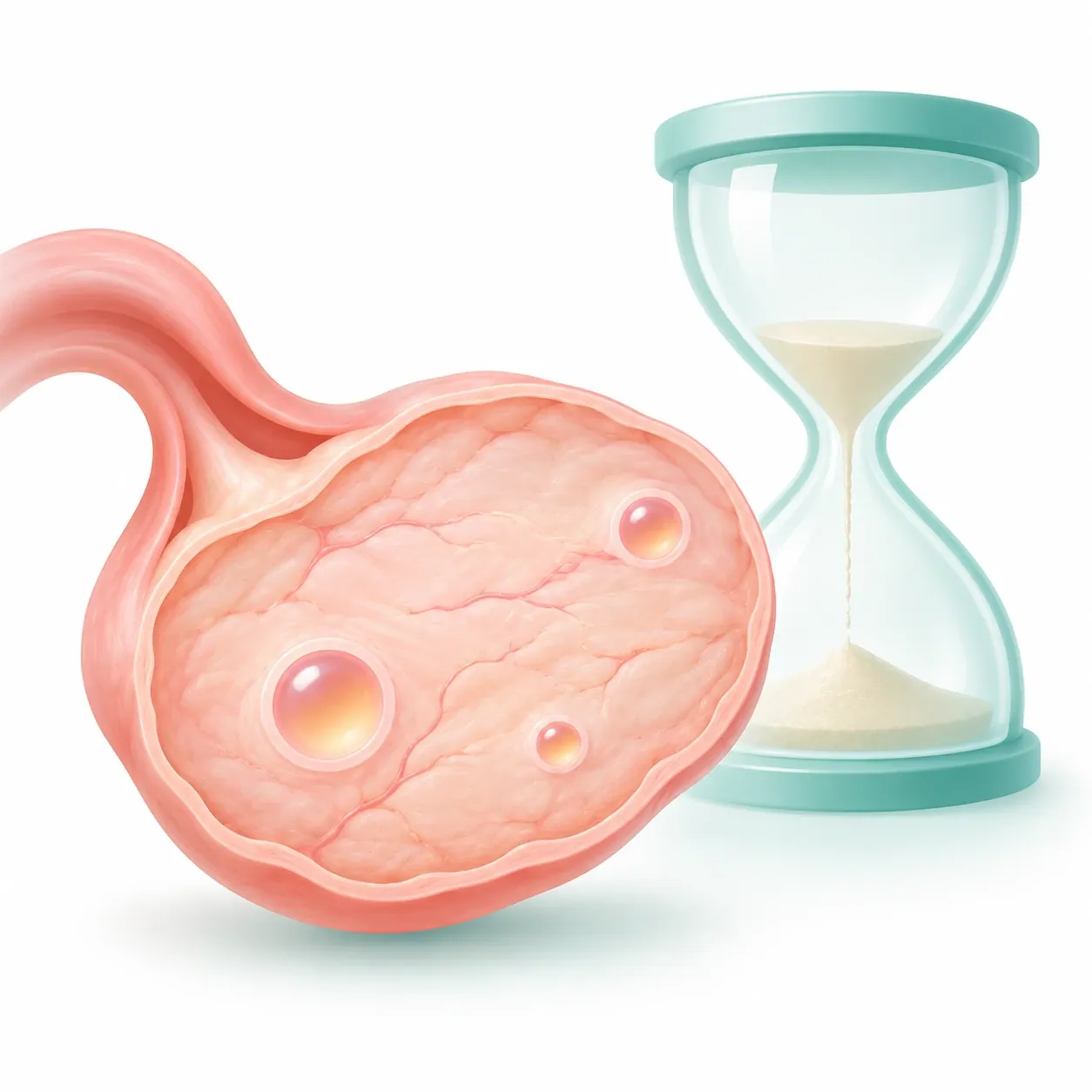
임신 준비로 받은 피 검사에서 "AMH 가 낮아 난소 나이가 많다"는 말을 들었습니다. 아직 30대인데 시간이 얼마 없다는 말에 마음이 급해지고, 생리량도 줄어든 것 같아 불안합니다. 요즘 검진에서 자주 듣는 난소기능저하입니다.
난소기능저하 한눈에 보기
- 난소기능저하는 난소에 남은 난자의 수(난소 예비력)가 나이에 비해 적은 상태입니다. 피 검사 AMH 와 초음파의 난포 수로 확인합니다.
- AMH 는 남은 난자의 양을 보여 줄 뿐 임신 가능성을 그대로 말해 주지 않습니다. AMH 가 낮아도 자연 임신 확률이 정상인 여성과 비슷했다는 연구가 있습니다.
- 남은 난자의 질과 배란의 흐름은 몸 상태에 따라 달라지기에, 과로와 스트레스로 지친 아랫배와 자율신경을 함께 돌보는 것이 중요합니다.
- 치료후기 1건
- 건강정보 9편
이런 증상이 있나요?
- 검사에서 AMH 가 나이에 비해 낮다는 말을 들었다
- 생리량이 줄고 생리 기간이 짧아졌다
- 생리 주기가 짧아지거나 들쭉날쭉해졌다
- 얼굴이 화끈거리고 밤에 땀이 난다
- 질이 건조하고 성욕이 줄었다
- 임신을 시도해도 잘 되지 않는다
난소기능저하 자체는 증상이 없어 임신 준비나 검진 때 피 검사로 알게 되는 경우가 많습니다. 산부인과에서는 AMH 와 생리 2~3일째의 난포자극호르몬(FSH), 초음파의 동난포 수를 함께 봅니다. 조기난소부전은 40세 전에 생리가 끊기거나 드물어지고 FSH 가 오른 상태로 진단합니다. 새 진료지침은 FSH 가 25 넘게 한 번만 올라도 진단할 수 있다고 바꾸었습니다[2].
난소기능저하는 왜 생기나요?
- 나이(30대 후반부터 빠르게 줄어듦)
- 난소 수술(자궁내막종 제거 등)
- 항암 치료와 방사선 치료
- 갑상선 질환 같은 자가면역 질환
- 흡연
- 가족 중 이른 폐경, 유전 요인
난소 예비력은 나이가 가장 큰 요인이지만, 같은 나이에도 사람마다 차이가 큽니다. 조기난소부전은 원인을 찾지 못하는 경우가 많고, 수술이나 항암 치료, 자가면역 질환, 유전 요인이 원인이 되기도 합니다.
해움한의원은 과로와 스트레스로 자율신경이 오래 긴장하면 뇌에서 난소로 가는 호르몬 신호가 흐트러지고 아랫배의 순환이 떨어진다고 봅니다. 남은 난자의 수는 되돌릴 수 없지만, 그 난자가 자라는 환경과 배란의 흐름은 몸 상태에 따라 달라집니다.
난소기능저하의 표준 치료
줄어든 난자의 수를 늘리는 치료는 아직 없습니다. 임신을 원한다면 나이와 남은 시간을 고려해 일찍 난임 진료를 받고, 필요하면 시험관 시술을 서두르거나 난자 동결을 고려합니다. 조기난소부전은 뼈와 심장, 인지 건강에 영향을 줄 수 있어 호르몬 치료를 권합니다. 진료지침은 호르몬 치료가 이런 영향을 줄여 주지만 여러 치료법의 근거가 아직 부족하다고 밝혔습니다[2].
AMH 숫자에 쫓겨 지치는 동안 몸은 더 긴장합니다. 시술을 준비하든 자연 임신을 기다리든, 남은 난자가 잘 자라도록 생리 주기와 아랫배의 순환을 돌보는 것이 중요합니다. 한의학 치료는 바로 이 바탕을 다스립니다.
난소기능저하에 침을 쓴 무작위 연구 13편을 모은 분석에서 침은 FSH 를 낮추고 동난포 수를 평균 1.87개 늘렸습니다. 다만 연구마다 결과 차이가 컸습니다[4].
해움한의원은 이렇게 치료합니다
해움한의원은 난임 시술과 산부인과 치료와 병행합니다. 시술 일정에 맞춰 치료 시기를 정하고, 생리 주기와 몸의 바탕을 함께 돌봅니다.
1단계. 난소와 몸의 상태를 살핍니다
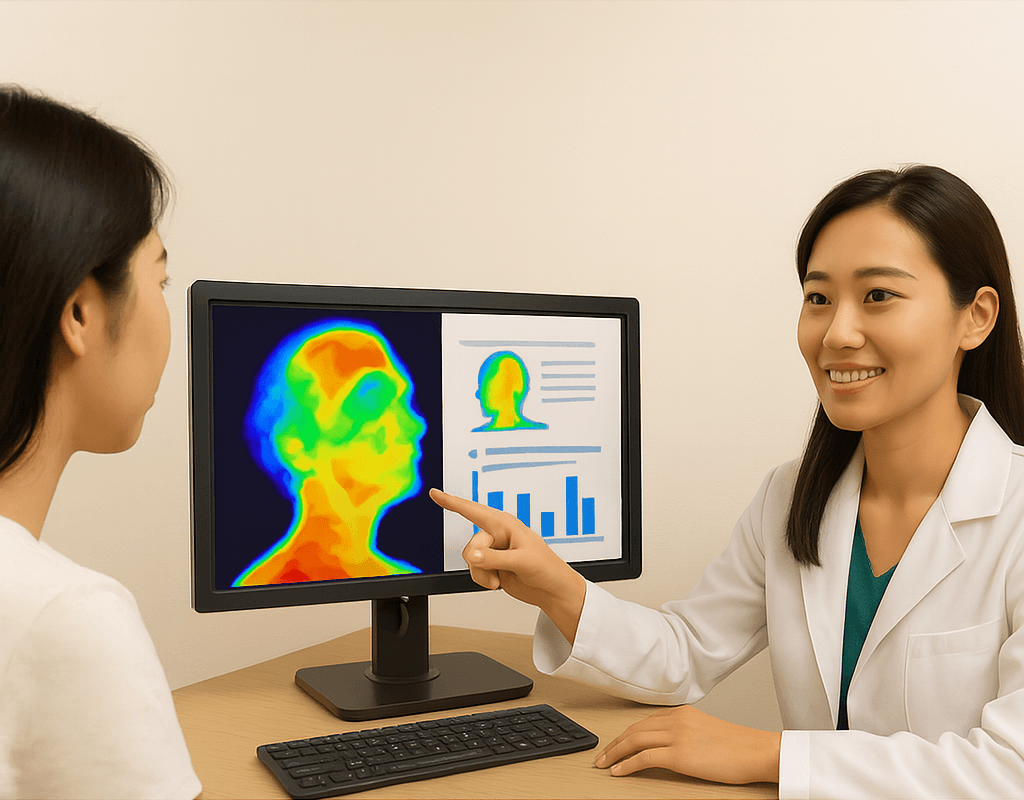
AMH 와 호르몬 검사 결과, 생리 주기와 생리량, 임신 계획과 시술 일정, 수면과 스트레스를 자세히 살펴봅니다. 심박변이도와 적외선 체열검사로 자율신경의 균형과 아랫배의 냉증을 확인합니다.
2단계. 아랫배의 순환을 돕습니다
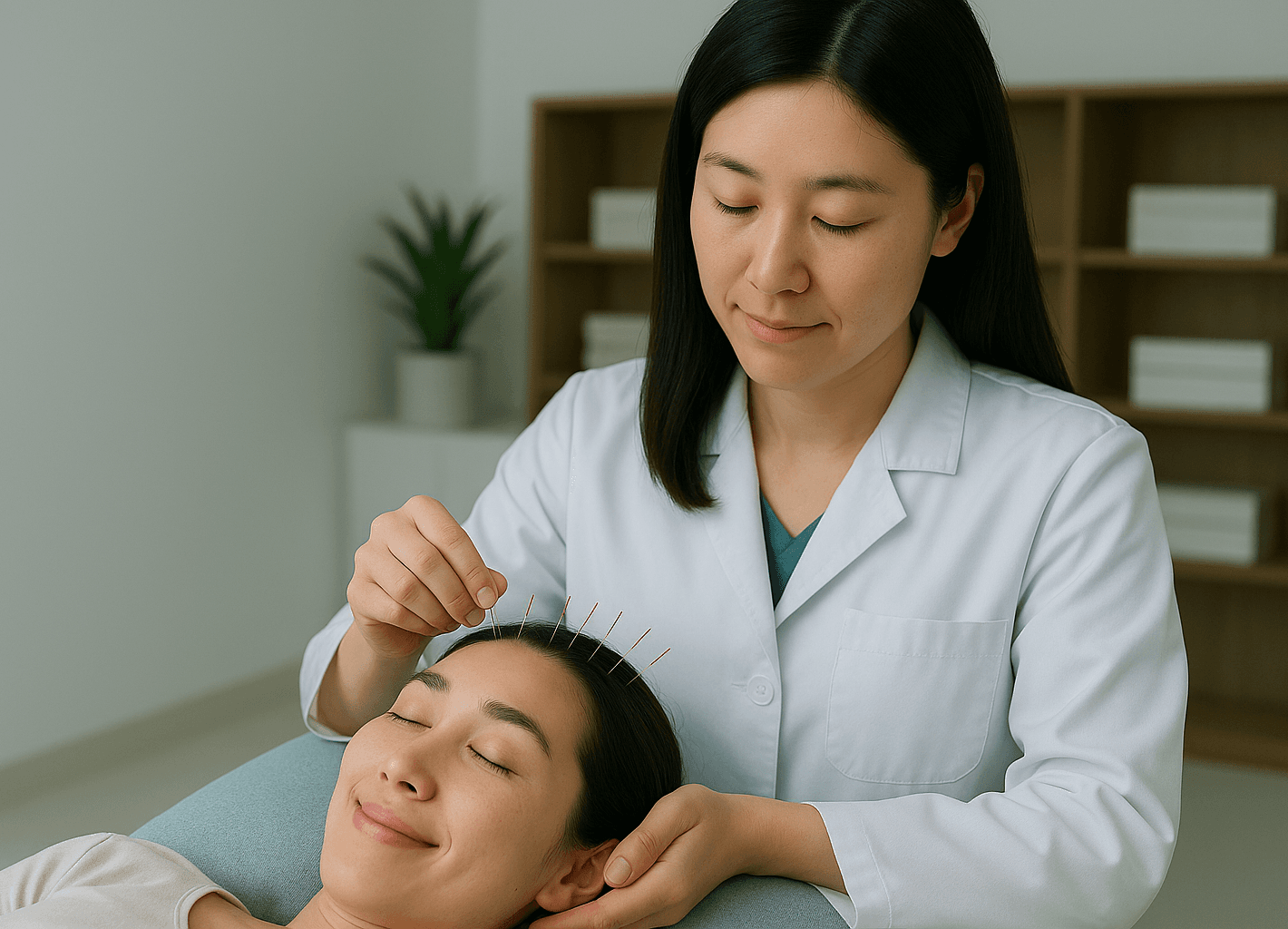
침과 뜸으로 아랫배와 골반의 순환을 돕고 긴장된 자율신경을 풉니다. 생리 주기와 시술 일정에 맞춰 치료 시기를 정합니다.
3단계. 유형에 맞춰 바탕을 다스립니다
체질과 상태에 맞춰 한약을 짓습니다.
4만 건의 처방 사례가 말해주는, 한방 맞춤 치료의 힘
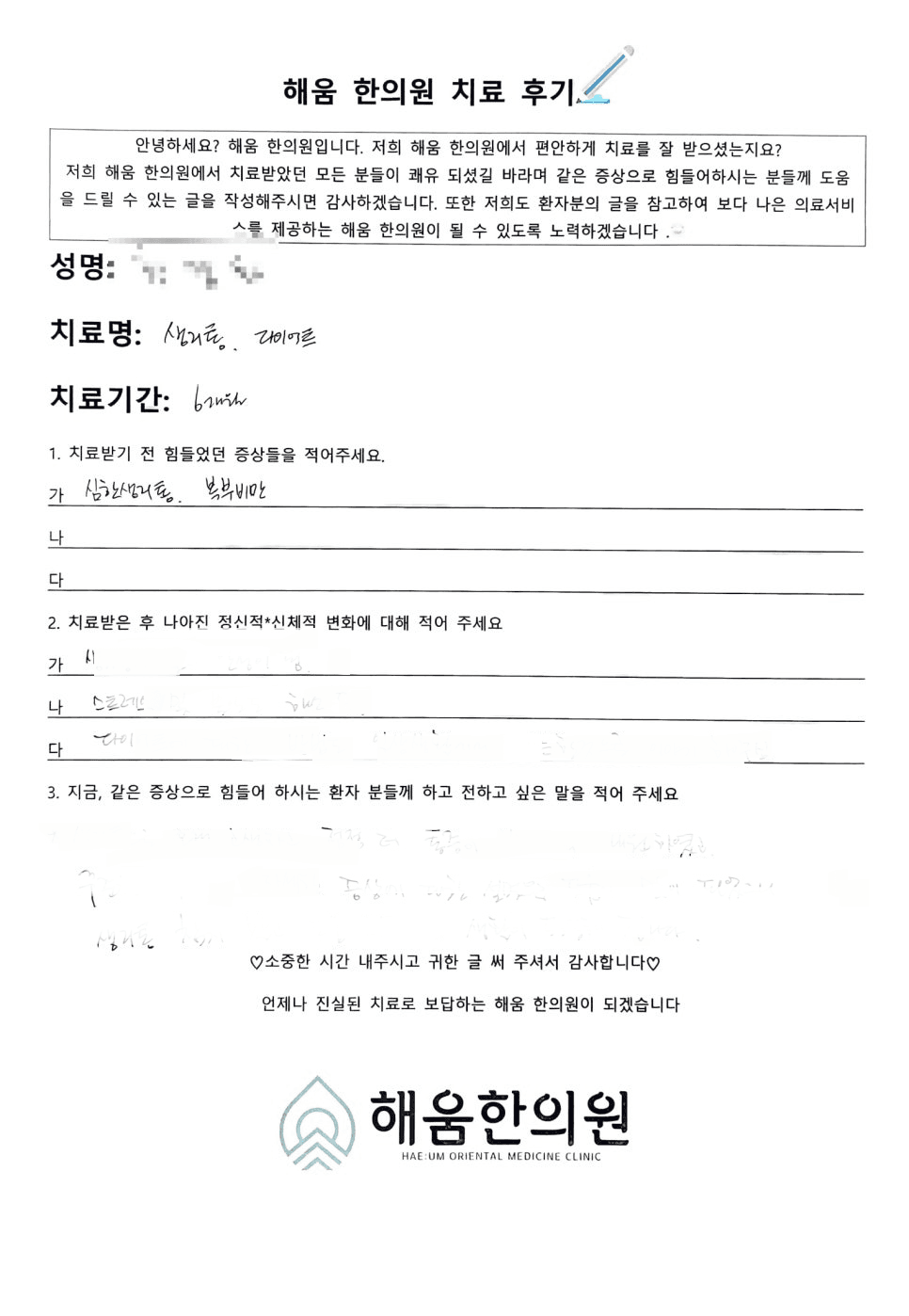
난소기능저하 치료후기 총 1건
환자분들이 남긴 치료후기입니다. 본문은 로그인 후 보실 수 있습니다.
난소기능저하, 누가 진료하나요?
담당 의료진
대표원장 박재은
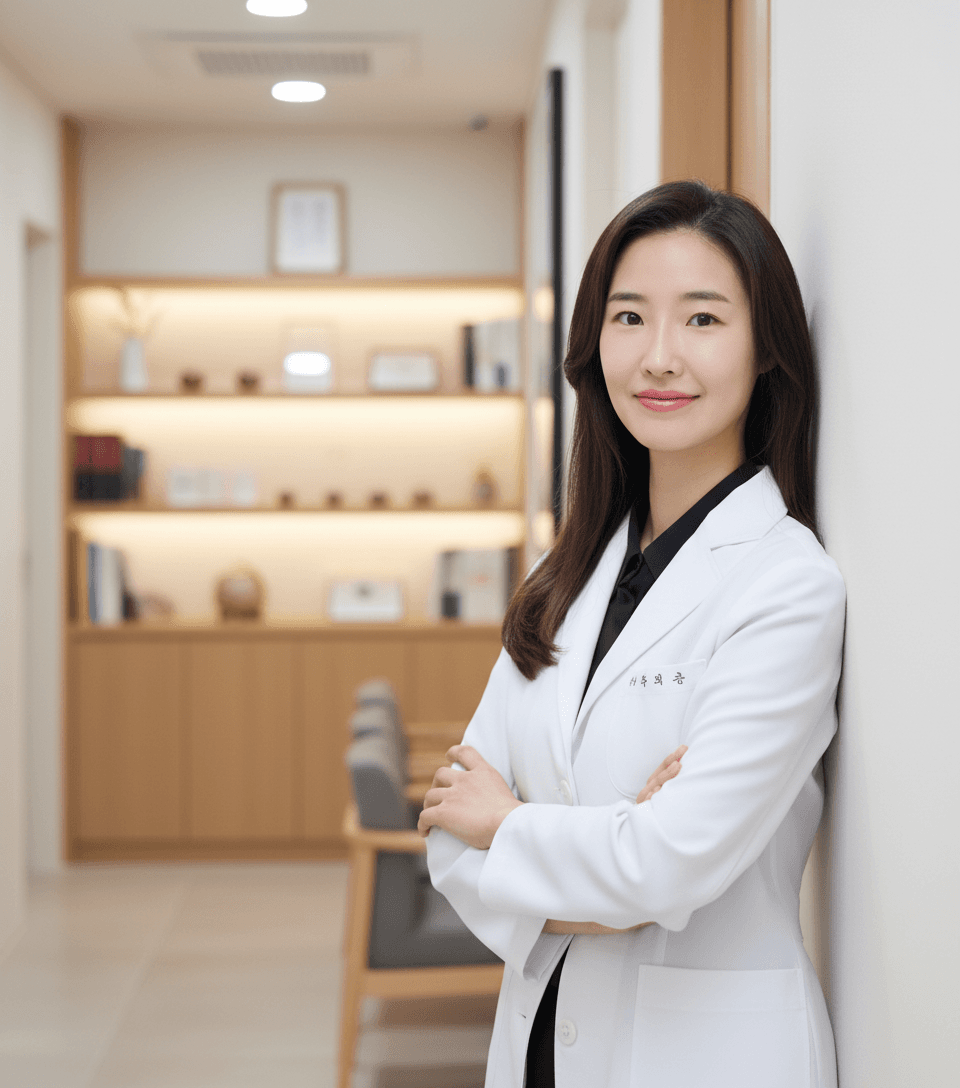
“병이 아니라 그 뒤의 사람을 봅니다”
경희대학교 한의학박사이자 여한의사입니다. 심리상담사 1급 자격, 20만명 차트분석과 4만건 이상의 한약 처방 경험을 바탕으로 진료합니다.
의료진 소개 더보기난소기능저하, 자주 묻는 질문
AMH 가 낮으면 자연 임신이 어려운가요?
낮아진 AMH 가 다시 올라가나요?
시험관 시술과 한방치료를 같이 받아도 되나요?
치료 기간은 얼마나 걸리나요?
생활에서 어떻게 관리해야 하나요?
해움한의원에서 난소기능저하를 진료하나요?
난소기능저하로 내원하려면 어떻게 하나요?
난소기능저하에 관해 알아두면 좋은 정보
9건난소기능저하과 관련해 정리한 건강정보입니다.
생리아닌데갈색냉, 단순 현상일까 질환 신호일까
“생리도 아닌데 왜 갈색피가 나오죠?”샤워하다가속옷을 갈아입다가“생리도 아닌데 갈색피가 보여요”“갈색 냉이 계속 나와요”이런 상황, 정말 당황스럽죠.특히생리기간 아닌데 갈색피생리 아닌데 피생리 아닌데 갈색냉이 반복된
자궁내막얇음임신 준비 중이라면, 착상 환경부터 살펴보세요
“자궁내막이 얇아서 착상이 어려울 수 있다고 들었어요”임신을 준비하면서 생각보다 자주 듣게 되는 말 중 하나가 바로 **“자궁내막이 얇다”**는 이야기입니다.자연임신을 오랫동안 시도했거나 인공수정·시험관 시술을 준비
생리전유두가려움, 간지럽고 갈라지는 증상이 반복되는 이유는?
생리할 때만 되면 유두가 유독 가려워요평소에는 별다른 문제가 없는데 이상하게 생리가 가까워지면 유두 주변이 간지럽거나 따갑고 예민해지는 분들이 있습니다.처음에는 속옷 때문인가 싶어 바꿔보기도 하고, 피부가 건조해서
생리통갑자기심해짐, 진통제까지 잘 듣지 않는다면 이유가 뭘까요?
“원래 생리통이 거의 없었는데 이번에는 너무 아파요”평소 생리할 때도 크게 아프지 않았는데 어느 순간부터 아랫배를 쥐어짜는 것처럼 아프거나 허리까지 통증이 이어지는 경우가 있습니다.처음에는 이번 달에 유독 피곤해서
생리늦어질때혈자리 관원혈·조해혈, 지압보다 중요한 근본 원인
“이번 달 생리가 왜 안 하지?” 불안해지는 순간이 있습니다여성이라면 한 달에 한 번 찾아오는 생리 주기에민감해질 수밖에 없습니다.평소에는 비슷한 날짜에 생리를 하다가도갑자기 며칠씩 늦어지면 걱정이 먼저 듭니다.“혹
생리전속울렁, 단순 소화불량이 아니라 PMS 증상일 수 있습니다
생리 전만 되면 속이 울렁거리고 몸이 달라지는 느낌생리 날짜가 가까워질수록속이 메스껍고 울렁거리며,음식을 먹어도 편하지 않고괜히 토하면 나아질 것 같은 느낌이 들 때가 있습니다.가임기 여성에게 월경은한 달에 한 번
생리전냉증가 정상일까? 헷갈릴 때 꼭 알아야 할 기준
“생리 전인데 왜 이렇게 분비물이 많아질까요?”아침에 속옷이 평소보다 더 축축하게 느껴지거나, 냉의 양이 갑자기 늘어나 당황했던 경험 있으신가요?특히 생리 전에 이런 변화가 반복되면“혹시 질염인가?”“내 몸에 문제가
생리전배땡김, 배아픔, 배콕콕… 왜 매달 반복될까요?
“생리 전만 되면 배가 콕콕… 정상일까요?”생리 전만 되면 배가 당기고, 콕콕 찌르는 통증이 반복되시나요?어떤 날은 괜찮다가도, 어떤 달은 일상생활이 힘들 정도로 아프기도 하죠.“그냥 원래 그런 거겠지…” 하고 넘기
배란혈 색과 양이 궁금하다면, 착상혈과 차이부터 확인해야 합니다
“생리도 아닌데 피가 비치면 누구나 놀랄 수밖에 없어요”생리 날짜도 아닌데 속옷에 아주 옅은 핑크빛이나 갈색빛이 보이면, 많은 분들이 순간적으로 당황합니다.“이거 부정출혈인가?”“혹시 몸에 문제가 생긴 건 아닐까?”
이런 경우에는 미루지 말고 진료를 받으세요
아래 경우는 조기난소부전이거나 다른 질환일 수 있어 산부인과 진료가 필요합니다.
- 40세 전인데 생리가 4개월 넘게 없다
- 40세 전인데 얼굴이 화끈거리고 밤에 땀이 나며 생리가 줄었다
- 35세가 넘었고 6개월 넘게 임신을 시도했는데 되지 않는다
- 항암 치료나 난소 수술을 앞두고 있다
- 생리가 없는데 젖이 나오거나 두통, 시야 이상이 있다
참고문헌 4편
[1]Wallace WH, Kelsey TW. Human ovarian reserve from conception to the menopause. PLoS One. 2010;5(1):e8772. doi:10.1371/journal.pone.0008772. PMID: 20111701.
요약 태아기부터 폐경까지 난소 안의 원시 난포 수를 잰 8개 연구, 325명의 자료로 난소 예비력의 변화를 계산한 연구입니다. 여성의 95%는 30세에 태어나기 전 가장 많던 난포의 12%만, 40세에는 3%만 남는다고 추정했습니다.원문은 출판사 저작권 자료로, 위 링크에서 확인하실 수 있습니다.
[2]Panay N, Anderson RA, Bennie A, Cedars M, Davies M, Ee C, et al. Evidence-based guideline: premature ovarian insufficiency. Hum Reprod Open. 2024;2024(4):hoae065. doi:10.1093/hropen/hoae065. PMID: 39660328.
초록 (Abstract)
STUDY QUESTION: How should premature/primary ovarian insufficiency (POI) be diagnosed and managed based on the best available evidence from published literature?
SUMMARY ANSWER: The current guideline provides 145 recommendations on symptoms, diagnosis, causation, sequelae, and treatment of POI.
WHAT IS KNOWN ALREADY: Premature ovarian insufficiency (POI) presents a significant challenge to women’s health, with far-reaching implications, both physically and emotionally. The potential implications include adverse effects on quality of life; fertility; and bone, cardiovascular, and cognitive health. Although hormone therapy (HT) can mitigate some of these effects, many questions still remain regarding the optimal management of POI.
STUDY DESIGN, SIZE, DURATION: The guideline was developed according to the structured methodology for development of ESHRE guidelines. Key questions were determined by a group of experts and informed by a scoping survey of women and health care professionals. Literature searches and assessments were then performed. Papers published up to 30 January 2024 and written in English were included in the guideline. An integrity review was conducted for the randomized controlled trials (RCTs) on POI included in the guideline.
PARTICIPANTS/MATERIALS, SETTING, METHODS: Based on the collected evidence, recommendations were formulated and discussed within the guideline development group until consensus was reached. Women with lived experience of POI informed the recommendations in general, and particularly on those on provision of care. A stakeholder review was organized after finalization of the draft. The final version was approved by the guideline development group and the ESHRE Executive Committee.
MAIN RESULTS AND THE ROLE OF CHANCE: New data indicate a higher prevalence of POI, 3.5%, than was previously thought. This guideline aims to help health care professionals to apply best practice care for women with POI. The recent update of the POI guideline covers 40 clinical questions on diagnosis of the condition, the different sequelae, including bone, cardiovascular, neurological and sexual function, fertility and general well-being, and treatment options, including HT. The list of clinical questions was expanded from the previous iteration of the guideline (2015) based on the scoping survey and appreciation of emerging knowledge of POI. Questions were added on the role of anti-Müllerian hormone (AMH) in the diagnosis of POI, fertility preservation, muscle health, and specific considerations for HT in iatrogenic POI. Additionally, the topic on complementary treatments was extended with specific focus on non-hormonal treatments and lifestyle management options. Significant changes from the previous 2015 guideline include the recommendations that only one elevated FSH >25 IU is required for diagnosis of POI, and guidance that AMH testing, repeat FSH measurement, and/or AMH may be required where there is diagnostic uncertainty. Recommendations were also updated regarding genetic testing, estrogen doses and regimens, use of the combined oral contraceptive and testosterone therapy. Women with lived experience of POI informed the recommendations on provision of care.
LIMITATIONS, REASONS FOR CAUTION: The guideline describes different management options, but it must be acknowledged that for most of these options, supporting evidence is limited for POI.
WIDER IMPLICATIONS OF THE FINDINGS: The guideline provides health care professionals with clear advice on best practice in POI care, based on the best evidence currently available. In addition, a list of research recommendations is provided to guide further studies in POI.
STUDY FUNDING/COMPETING INTEREST(S): The guideline was developed and funded by ESHRE, American Society for Reproductive Medicine (ASRM), Centre for Research Excellence in Women's Health in Reproduction Life (CRE-WHiRL), and International Menopause Society (IMS), covering expenses associated with the guideline meetings, literature searches, and dissemination of the guideline. The guideline group members did not receive payments. N.P. declared grants from Bayer Pharma (research and consultancy) and NIHR—research POISE; consulting fees from Abbott, Astellas, Bayer, Besins, Lawley, Mithra, Theramex, Viatris; honoraria from Astellas, Bayer, Besins, Gedeon Richter, Theramex, Viatris; support for attending meetings and/or travel from Astellas, Bayer, Theramex, Viatris; President, International Menopause Society, Medical Advisory Committee member, British Menopause Society, Patron Daisy Network. A.J.V. declared grants from Amgen Australia, Australian NHMRC, and Australian MRFF; consulting fees from IQ Fertility; honoraria from the Australasian Menopause Society; participation on a Data Safety Monitoring Board or Advisory Board of Astellas; Board Member of the International Menopause Society (2020 to current) and Past president of the Australasian Menopause Society (2017–2019); R.A.A. declared grants from Roche (Research support, to institution), and participation on a Data Safety Monitoring Board of Bayer. M.C. declared grants from NHI; payments or honoraria from Up-to-Date (as editor/reviewer); Board Member of American Society of Reproductive Medicine, and of American Gynecological and Obstetrical Society. M.D. declared (NIHR—HTA Reference Number: NIHR133461; NIHR—HTA Reference Number: NIHR128757; Action Medical Research and Borne: GN2818) consulting fees from a small personal medical practice, support for attending meetings and/or travel from ESHRE, Bayer and UCLH special Trustees; Participation on the Advisory Board of the British Menopause Society, UKSTORE project, the Progress Educational Trust, and the Turner Syndrome Support Society UK; Leadership or fiduciary roles in the British Fertility Society (Trustee), Elizabeth Garrett Anderson Hospital Charity (chair of Trustees), and the Essex Wynter charitable trust (Trustee). C.E. declared being Chair of a SIG from the Royal Australian College of General Practitioners Integrative Medicine Specific Interest Group and Program Lead for Next Practice Western Sydney Integrative Health. C.H.G. declared grants from Novo Nordisk Foundation (Nos. NNF15OC0016474 and NNF20OC0060610), sygesikringen danmark (No 2022-0189), and the Independent Research Fund Denmark (Nos. 0134-00406 and 0134-00130B); consulting fees from Novo Nordisk, Merck, and Astra Zeneca. S.K. declared grants from Roche diagnostics. A.K. declared grants from NIH R01 5R01HD101475; consulting fees as Medical Reviewer for Flo and for Healthline; honoraria as Medical Consultant for Summus; support for attending meetings from the Reproductive Scientist Development Program; Society for Reproductive Investigation Council Member and Society for Assisted Reproduction Registry/Validation Chair; R.E.N. declared consulting fees from Astellas, Bayer Pharma, Besins Healthcare, Fidia, Theramex; honoraria from Abbott, Astellas, Exeltis, Fidia, Gedeon Richter, Merck & Co, Novo Nordisk, Shionogi Limited, Theramex, Viatris; payment for expert testimony from Vichy Laboratories; Participation in Data Safety Monitoring Board of Advisory board from Astellas and Bayer Healthcare; President elect of the International Menopause Society (IMS). H.T. declared a grant from NHMRC Centre for Research Excellence for women’s health in reproductive life. A.B. declared being chair of the Daisy Network Charity. The other authors have no conflicts of interest to declare.
DISCLAIMER: This guideline represents the views of ESHRE, ASRM, CRE-WHiRL, and IMS, which were achieved after careful consideration of the scientific evidence available at the time of preparation. In the absence of scientific evidence on certain aspects, a consensus between the relevant stakeholders has been obtained. Adherence to these clinical practice guidelines does not guarantee a successful or specific outcome, nor does it establish a standard of care. Clinical practice guidelines do not replace the need for application of clinical judgement to each individual presentation, nor variations based on locality and facility type. The collaborating societies make no warranty, expressed or implied, regarding the clinical practice guidelines and specifically exclude any warranties of merchantability and fitness for a particular use or purpose. (Full disclaimer available at www.eshre.eu/guidelines.)
결과 (Results)
The scope of the guideline on POI is to provide guidance on the management of POI. In line with research on the topic, terminology, and discussion, the guideline is focused on women. The guideline group recognizes that there are individuals living with POI who are transgender or who do not identify with the terms used in the literature. Throughout, the term ‘women with POI’ is used, but this is not intended to isolate, exclude, or diminish any individual’s experience nor to discriminate against any group.
Introduction to POI: Key Question: What should this condition be called?
Key Question: How should POI be defined?
Key Question: What is the prevalence of POI in the general population?
PICO Question: What are the risk factors for POI?
Diagnosis of POI (Fig. 2)
PICO Question: What are the symptoms of POI?
PICO Question: What investigations should be performed for diagnosis of POI?
PICO Question: What is the role of anti-Müllerian hormone to predict/diagnose POI?
PICO Question: What are the known causes of non-iatrogenic POI and how should they be investigated?
PICO Question: how often should tests for autoantibodies be repeated?
Care for women with POI at diagnosis
Key Question: What are the possible implications for relatives of women with POI?
Sequelae of POI: PICO Question: What are the consequences of POI for life expectancy?
PICO Question: What are the consequences of POI for fertility?
PICO Question: What fertility interventions are effective?
PICO Question: What therapies are effective for fertility preservation and/or prevention of POI?
PICO Question: What are the obstetric risks associated with POI?
PICO Question: How should fitness for pregnancy be assessed in women with POI?
PICO Question: What are the consequences of POI for skeletal health?
PICO Question: What are the treatment options for bone protection and improvement?
PICO Question: How should skeletal health be monitored in women with POI?
PICO Question: What are the consequences of POI for muscle health?
PICO Question: What are the treatment options for muscle protection and improvement?
PICO Question: How should muscle health be monitored in women with POI?
PICO Question: What are the consequences of POI for the cardiovascular system?
PICO Question: Is estrogen therapy cardio-protective?
PICO Question: Should cardiovascular risk factors be monitored?
PICO Question: What are the consequences of POI on psychological wellbeing and quality of life?
PICO Question: What are the management options for reduced quality of life associated with POI?
PICO Question: What are the consequences of POI for sexuality?
PICO Question: What are the management options for the effects of POI on sexuality?
PICO Question: What treatments are available for genitourinary symptoms in POI?
PICO Question: What are the consequences of POI on cognition/neurological function?
PICO Question: What are the management options for the effect of POI on cognition/neurological function?
POI treatment (Fig. 3)
Hormone therapy (HT) in POI: Principles and indications
PICO Question: What are the risks of HT?
PICO Question: What are the options for HT?
Monitoring HT
PICO Question: What is the role of testosterone therapy in POI?
PICO Question: What are the specific considerations for HT in iatrogenic POI?
PICO Question: What non-hormonal therapies are available for POI?
PICO Question: What complementary treatments are effective for managing the sequelae of POI?
PICO Question: What are the lifestyle management options for POI?
PICO Question: How should puberty be induced?
원문 발췌 · Panay N, Anderson RA, Bennie A, Cedars M, Davies M, Ee C, Gravholt CH, Kalantaridou S, Kallen A, Kim KQ, Misrahi M, Mousa A, Nappi RE, Rocca WA, Ruan X, Teede H, Vermeulen N, Vogt E, Vincent AJ, ESHRE, ASRM, CREWHIRL, and IMS Guideline Group on POI , Hum Reprod Open 2024 · CC BY 4.0 라이선스에 따라 수정 없이 인용했습니다(본문 속 인용 번호는 생략).
[3]Steiner AZ, Pritchard D, Stanczyk FZ, Kesner JS, Meadows JW, Herring AH, et al. Association Between Biomarkers of Ovarian Reserve and Infertility Among Older Women of Reproductive Age. JAMA. 2017;318(14):1367-1376. doi:10.1001/jama.2017.14588. PMID: 29049585.
요약 난임 진단을 받은 적이 없고 임신을 시도한 지 3개월이 안 된 30~44세 여성 750명을 추적한 연구입니다. AMH 가 낮은 여성과 정상인 여성의 12주기 안 임신 확률은 82%와 75%로 차이가 없었고, 6주기 안 임신 확률도 63%와 62%로 비슷했습니다. 연구진은 AMH 만으로 자연 임신 가능성을 판단하는 것은 맞지 않다고 보았습니다.원문은 출판사 저작권 자료로, 위 링크에서 확인하실 수 있습니다.
[4]Lin G, Liu X, Cong C, Chen S, Xu L. Clinical efficacy of acupuncture for diminished ovarian reserve: a systematic review and meta-analysis of randomized controlled trials. Front Endocrinol (Lausanne). 2023;14:1136121. doi:10.3389/fendo.2023.1136121. PMID: 37600702.
초록 (Abstract)
Objective: To evaluate the clinical efficacy of acupuncture for the treatment of diminished ovarian reserve (DOR) based on the existing randomized controlled trials (RCTs).
Methods: Nine databases from their inception to December 6th, 2022, were comprehensively searched to retrieve RCTs related to the clinical efficacy of acupuncture for the treatment of DOR. The outcomes of interest were sex hormones level and antral follicle count (AFC). Risk of Bias (RoB) was adopted to assess the quality of the included trials.
Results: A total of 13 RCTs involving 787 patients were included in this meta-analysis. The review of available evidence revealed acupuncture produced a significant efficacy in decreasing follicle-stimulating hormone (FSH) levels (SMD = -1.07, 95%CI [-1.79, -0.36], p = 0.003), FSH/LH ratio (MD = -0.31, 95%CI [-0.54, -0.09], p = 0.006) and increasing anti-Müllerian hormone (AMH) levels (SMD = 0.25, 95%CI [-0.00, 0.49], p = 0.05), along with AFC (MD = 1.87, 95%CI [0.96, 2.79], p < 0.0001) compared to controls. Compared with electro-acupuncture treatment, manual acupuncture was superior in reducing FSH levels, FSH/LH ratio, and increasing AMH levels and AFC (p < 0.05). A notable association was also seen when acupuncture was combined with traditional Chinese medicine therapy for improving FSH levels, FSH/LH ratio, and AFC (p < 0.05). Besides, a high dose of acupuncture (≥10 acupoints) was more conducive to ameliorating FSH levels, FSH/LH ratio, and AFC (p < 0.05) than a low dose of acupuncture (<10 acupoints). Substantial heterogeneity existed among studies.
Conclusion: Acupuncture may have significant clinical potential for patients with DOR in terms of improving sex hormones level and increasing AFC, although the evidence is drawn with high heterogeneity. This finding suggests that more rigorous trials conducted in diverse regions worldwide are necessary to identify the efficacy of acupuncture for patients diagnosed with DOR.
Systematic review registration: https://www.crd.york.ac.uk, identifier CRD42023402336.
결과 (Results)
Included articles: A total of 846 articles concerning the clinical efficacy of acupuncture for DOR were identified through preliminary database searches. Among the 846 pieces of literature, 370 duplicate publications were excluded, and 438 papers were removed owing to not fulfilling the inclusion criteria. Then, we carefully removed another 25 studies because they did not have sufficient data to analyze, or did not meet the diagnostic criteria of DOR. Finally, 13 RCTs published between 2015 to 2022 were included in the meta-analysis. The selection flowchart for the included publications is depicted in Figure 1.
Study characteristics: Table 1 summarizes the study characteristics of these RCTs. Quantitative synthesis was conducted with 13 RCTs via a meta-analysis by pooling the results. These RCTs’ sample sizes ranged from 40 to 100. A total of 787 patients with DOR were divided into trial group (acupuncture group) and control group with 391 and 396 cases in each group, respectively. All these clinical trials were conducted in China. Among the 13 RCTs included, of which 12 clinical trials treatment duration was three months, except one trial was two months. In addition, electro-acupuncture was adopted in four studies and manual acupuncture was adopted in 9 studies. Seven studies compared acupuncture with traditional Chinese medicine; Four studies compared acupuncture with hormone medicine; One study compared acupuncture with the combination use of traditional Chinese medicine and hormone medicine; One study compared acupuncture with wait-list.
Risk of bias: Overall, five studies were assessed to have some concerns about the risk of bias. The methodological quality of nine documents provided a detailed procedure of how patients were randomized. Three out of 13 studies were judged to have some concerns about the risk of bias in the randomization process domain principally because they failed to report how a random sequence was generated or just described of “random” assignment. In addition, they did not take appropriate analysis or provide adequate information on the analysis strategies. Moreover, five studies were judged to have some concerns about the risk of bias in missing outcome data, as incomplete outcomes information was not reported, which implied the relation to the true values of the missing outcome data. ( Figure 2 ).
Outcome measurements / Sex hormones level: Regarding hormones level ( Figure 3 ), pooled results demonstrated a significant decrease in FSH levels (SMD = -1.07, 95%CI [-1.79, -0.36], I2 =95, p = 0.003, Figure 3A ), FSH/LH ratio (MD = -0.31, 95%CI [-0.54, -0.09], I2 =88, p = 0.006, Figure 3C ), and increase in AMH levels (SMD = 0.25, 95%CI [-0.00, 0.49], I2 =0, p = 0.05, Figure 3D ) in the trial group (acupuncture treatment) compared with the control group who received traditional Chinese medicine and/or hormone medicine or no treatment. Nevertheless, LH levels (SMD = -0.82, 95%CI [-1.76, 0.12], I2 =95, p = 0.09, Figure 3B ), and E2 levels (SMD = 0.47, 95%CI [-0.20, 1.15], I2 =94, p = 0.17, Figure 3E ) were not improved notably after acupuncture therapy. Because there was substantial heterogeneity existing in the outcome of FSH, LH, FSH/LH ratio, and E2, the random-effect model was applied. And the fixed-effect model was adopted for the outcome of AMH owing to no heterogeneity. As for the publication bias among included studies, no apparent asymmetry was observed based on Begg’s and Egger’s tests for FSH levels (p > 0.05); still, there was significant publication bias for E2 levels (p < 0.05) ( Figure 4 ).
Antral follicle count: A total of eight studies involving 518 patients were extracted into this meta-analysis for the outcome of AFC. As there was considerable heterogeneity existing among these studies(I2=92), the random-effect model was applied, and the pooled result revealed that the increase in AFC was associated with acupuncture when compared with none-acupuncture therapy (MD = 1.87, 95%CI [0.96, 2.79], I2 =92, p < 0.0001), ( Figure 5 ).
Subgroup analysis: In the subgroup analysis for different types of intervention, the pooled result favored electro-acupuncture therapy in increasing AFC (p < 0.05). Studies that used manual acupuncture showed significant efficacy in improving FSH levels, FSH/LH ratio, AMH levels, and AFC (p < 0.05). As for the intervention of acupuncture or acupuncture plus traditional Chinese medicine also significantly decreased FSH levels and FSH/LH ratio, along with increased AFC (p < 0.05). Acupuncture or acupuncture plus Western medicine was not favorable to improving hormones level and AFC (p > 0.05). In addition, a high dose of acupuncture (≥10 acupoints) was conducive to ameliorating FSH levels, FSH/LH ratio, and AFC (p < 0.05). A low dose of acupuncture (<10 acupoints) was also a significant modifier of AMH and E2 levels. Table 2 shows the results of the subgroup analysis of the correlation of different types of intervention with hormones level and AFC.
원문 발췌 · Lin G, Liu X, Cong C, Chen S, Xu L, Front Endocrinol (Lausanne) 2023 · CC BY 4.0 라이선스에 따라 수정 없이 인용했습니다(본문 속 인용 번호는 생략).