

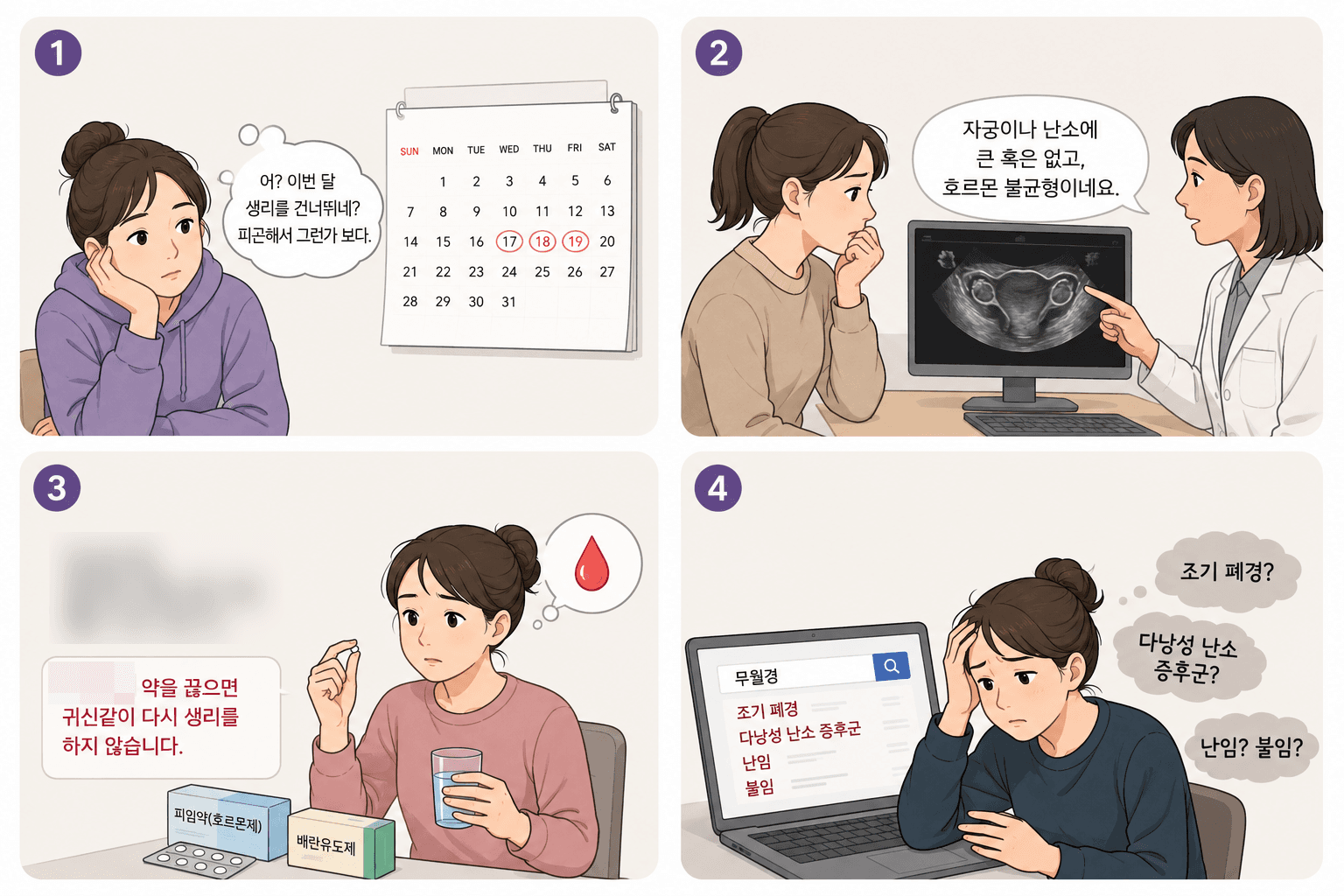
피곤해서 그런가 보다 했는데 석 달이 지나도 소식이 없습니다. 호르몬제를 먹으면 나오지만 끊으면 다시 멈춥니다. 무월경, 내 생리는 스스로 돌아올 수 있을까요?
무월경 한눈에 보기
- 무월경은 초경이 오지 않거나, 생리를 하던 여성이 몇 달 이상 생리가 멈춘 상태입니다. 임신이 아니라면 대부분 호르몬 축의 문제입니다.
- 다이어트, 극심한 스트레스, 다낭성난소증후군, 조기 난소 부전이 흔한 원인입니다. 오래 방치하면 뼈 손실과 난임으로 이어질 수 있습니다.
- 자율신경이 긴장하면 뇌와 난소의 호르몬 축도 함께 흔들리기 때문에, 몸의 비상 상태를 풀고 원인을 찾아 다스려야 합니다.
- 치료후기 2건
- 의료진 칼럼 2편
- 건강정보 1편
- 온라인 상담 1건
무월경이란?
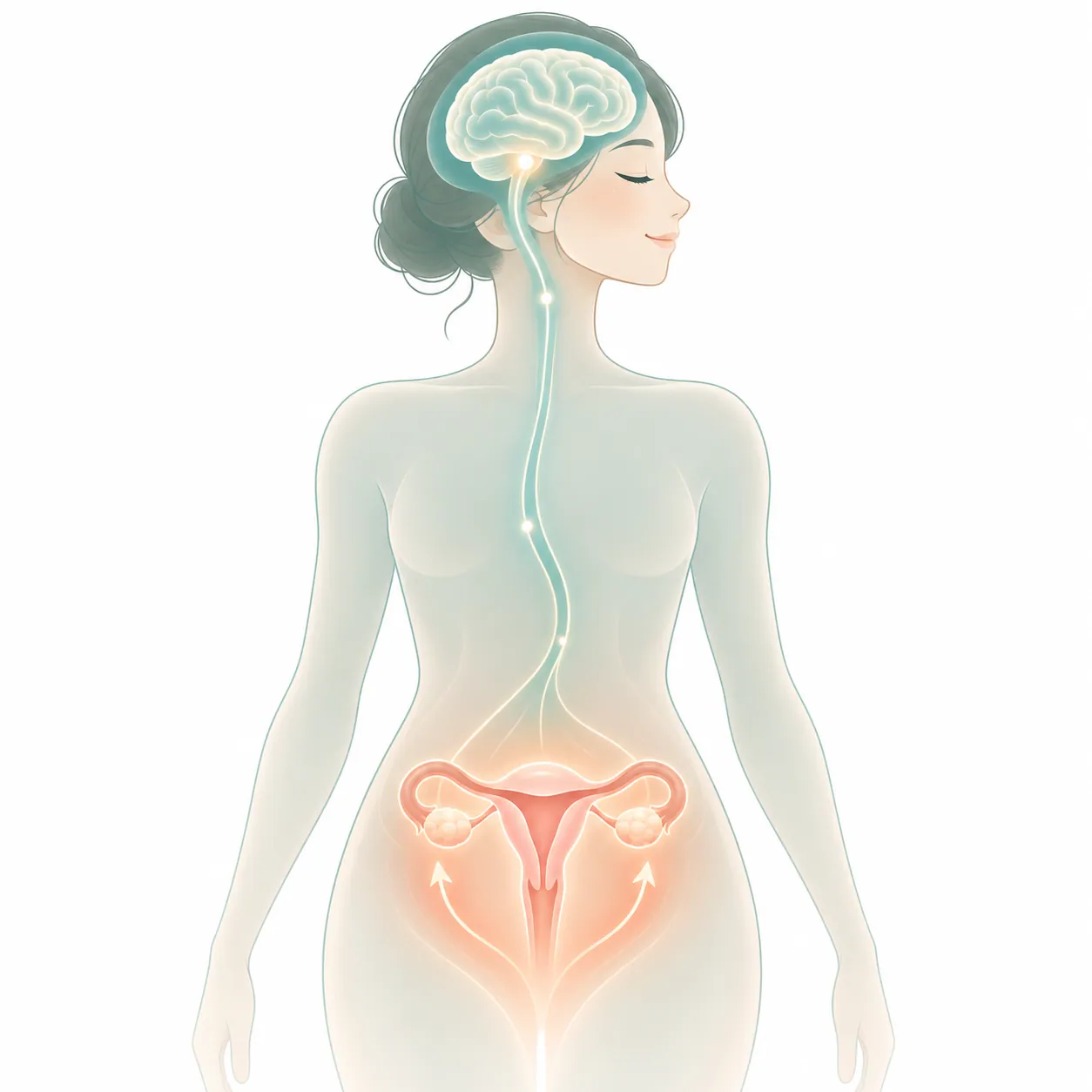
무월경은 크게 두 가지입니다. 만 15세까지 초경이 없거나, 2차 성징 없이 만 13세까지 초경이 없으면 원발성 무월경입니다. 생리를 하던 여성이 6개월 이상 생리가 멈추면 속발성 무월경입니다. 대부분은 속발성으로, 자궁보다 뇌와 난소로 이어지는 호르몬 축이 흔들린 경우입니다.
대학생을 조사했을 때 무월경은 2.6%, 생리가 드문 희발월경은 11.3%였습니다[1]. 뚜렷한 기질적 원인 없이 스트레스, 체중 감소, 과도한 운동과 함께 배란이 멈춘 경우는 시상하부성 무월경이라고 부릅니다[2]. 40세 이전에 난소 기능이 떨어지는 조기 난소 부전은 세계적으로 3.7%입니다[3].
이런 증상이 있나요?

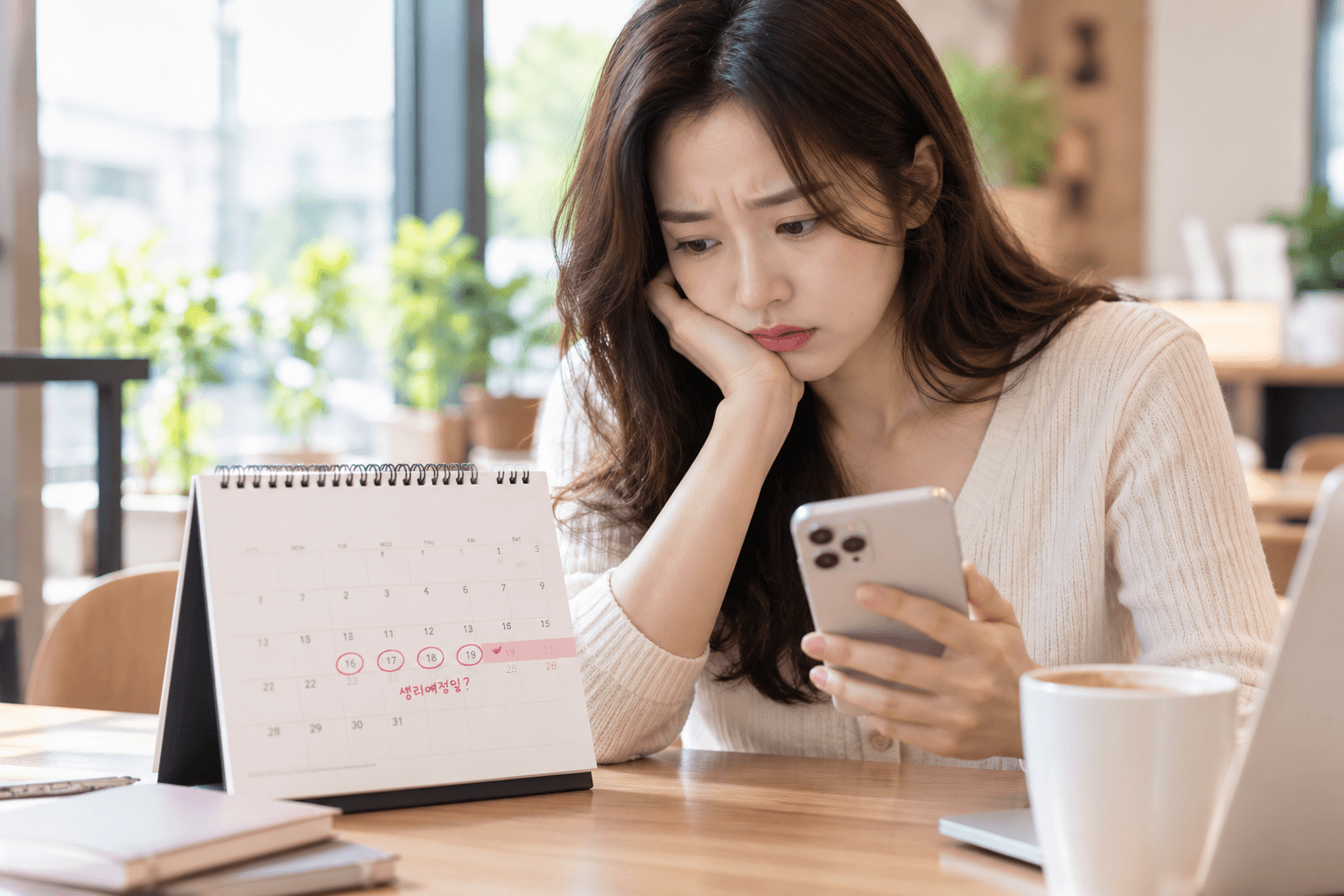
- 3개월 이상 생리가 없거나 자꾸 건너뛴다
- 호르몬제를 먹어야만 생리가 나오고 끊으면 다시 멈춘다
- 다이어트나 체중 변화 뒤로 생리가 끊겼다
- 큰 스트레스나 충격 뒤로 생리가 멈췄다
- 여드름, 털, 체중 증가가 함께 나타났다
- 얼굴이 달아오르고 잠을 설치며 질이 건조하다
- 피로, 불면, 소화장애, 손발 냉증이 함께 이어진다
진단은 임신 검사에서 시작합니다. 산부인과에서 초음파로 자궁과 난소를 보고, 혈액검사로 여성호르몬, 갑상선, 프로락틴을 확인합니다. 시상하부성 무월경은 다른 원인을 모두 배제한 뒤에 내리는 진단입니다[2].
무월경은 왜 생기나요?
- 무리한 다이어트, 급격한 체중 감소
- 극심한 스트레스, 충격적인 사건
- 수면 부족, 과로, 과도한 운동
- 다낭성난소증후군, 급격한 체중 증가
- 갑상선 질환, 고프로락틴혈증
- 조기 난소 부전
우리 몸은 수면 부족, 굶기, 극심한 스트레스를 비상 상황으로 받아들입니다. 그러면 생명 유지와 직결되지 않는 생식 기능부터 멈춥니다. 교감신경이 항진되면 난소로 가는 혈류가 줄고, 시상하부에서 시작되는 호르몬 분비도 흔들립니다.
생리가 없는 것은 불편함으로 끝나지 않습니다. 시상하부성 무월경을 오래 두면 골다공증과 불임이 뒤따를 수 있습니다[2].
무월경의 표준 치료
갑상선 질환, 고프로락틴혈증, 다낭성난소증후군처럼 원인이 있으면 그 치료가 우선입니다. 그 밖에는 호르몬제나 경구피임약으로 소퇴성 출혈을 유도하고, 임신을 원하면 배란유도제를 씁니다.
호르몬제로 나오는 출혈은 난소가 스스로 배란해서 오는 생리와 다릅니다. 호르몬 치료가 허리뼈 골밀도를 3.30% 높였지만, 다른 부위에는 뚜렷한 효과가 없었습니다[4]. 약을 끊으면 다시 멈추는 분이 많은 이유는 멈추게 한 원인이 그대로이기 때문입니다. 한의학 치료는 바로 이 바탕을 다스립니다.
스트레스를 다루는 치료로 난소 활동이 돌아온 연구도 있습니다. 시상하부성 무월경 여성 16명을 나눈 연구에서 인지행동치료를 받은 쪽은 87.5%, 지켜보기만 한 쪽은 25.0%에서 난소 활동이 돌아왔습니다[5]. 다낭성난소증후군 여성에서는 전침 치료로 월경 횟수가 한 달 0.28회에서 0.69회로 늘었습니다[6]. 약재를 다룬 연구 12편을 모은 고찰에서는 살펴본 약재 8가지 중 7가지가 생리를 돌아오게 하거나 생리 주기를 고르게 했습니다[7].
해움한의원은 이렇게 치료합니다

해움한의원은 약으로 출혈을 만드는 대신, 난소가 스스로 배란할 수 있는 몸을 만드는 것을 목표로 합니다.
1단계. 생리가 멈춘 원인을 찾습니다
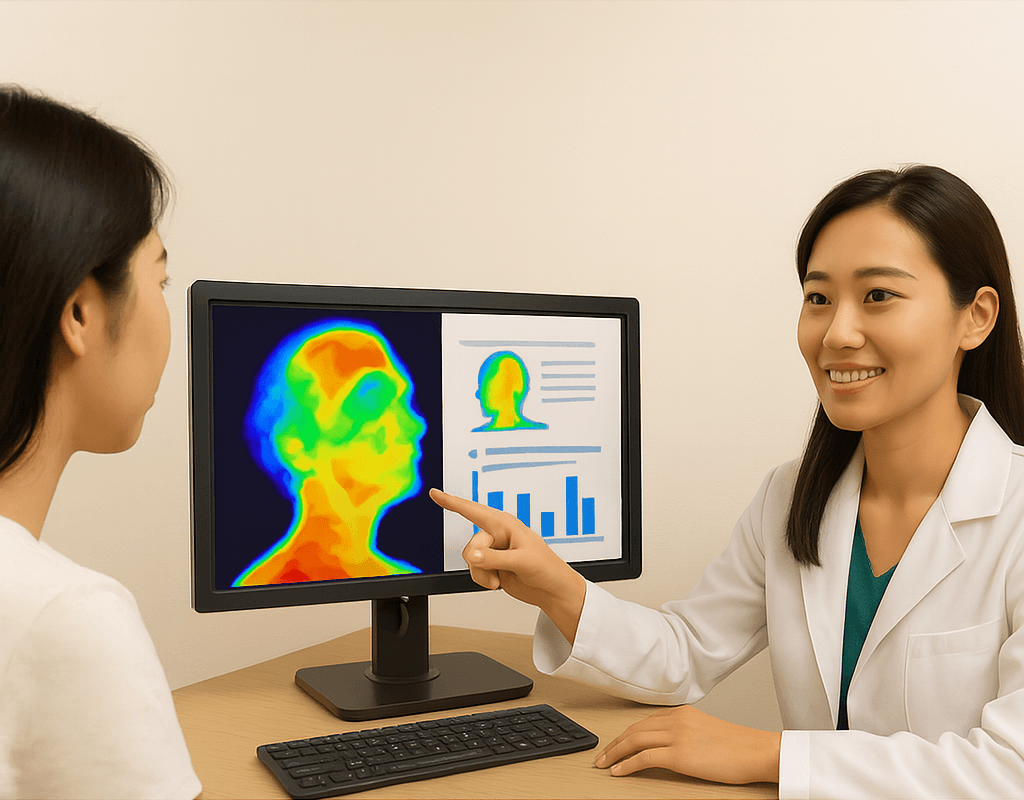
언제부터 멈췄는지, 체중과 식사, 운동, 수면, 스트레스의 변화를 자세히 살펴봅니다. 임신이나 다른 질환 확인이 필요하면 검사를 먼저 안내해 드립니다. 심박변이도로 자율신경의 균형을 확인합니다.
2단계. 몸의 비상 상태를 풉니다
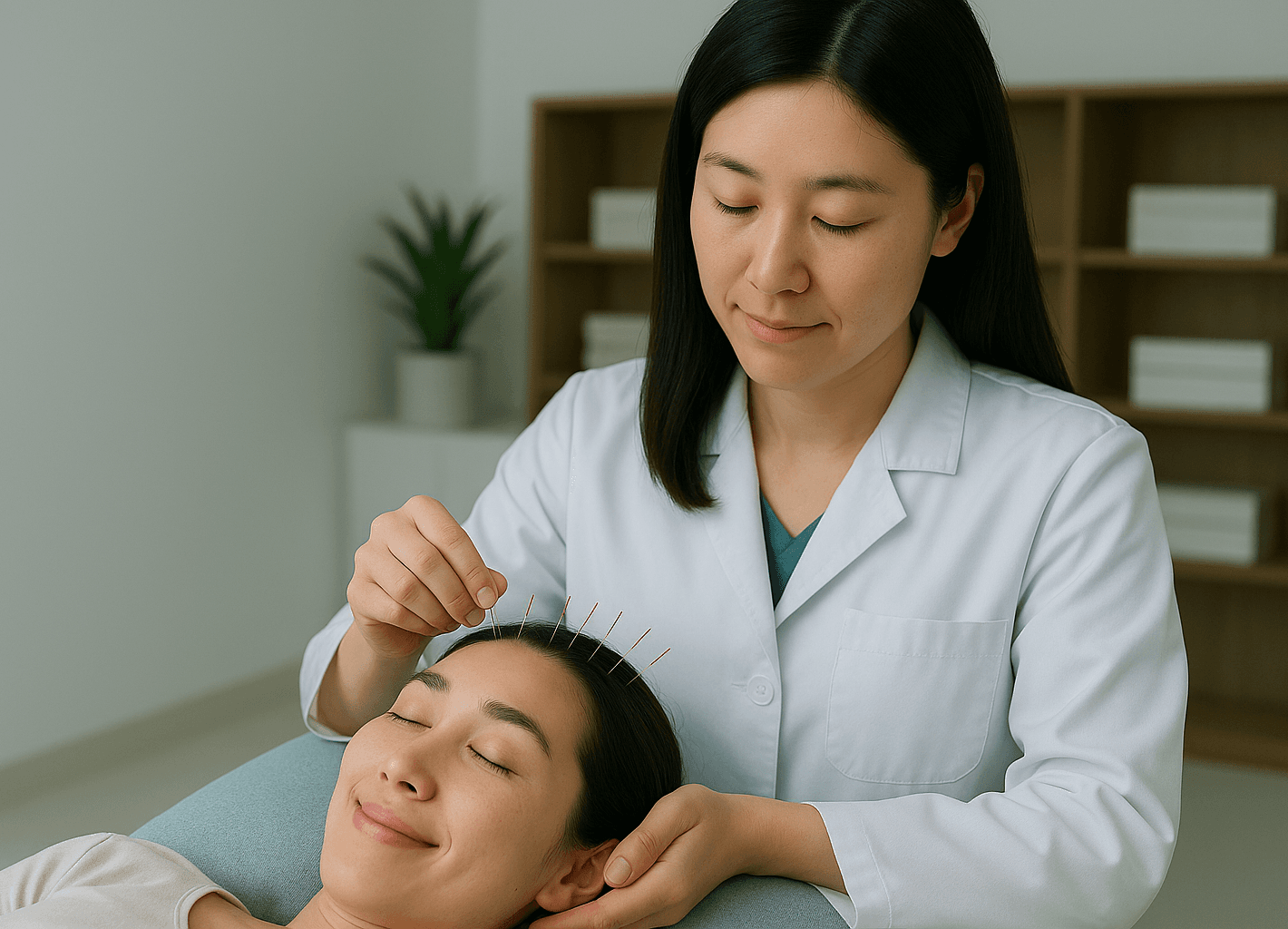
침과 뜸으로 긴장된 자율신경을 이완하고 아랫배의 순환을 돕습니다. 수면과 식사 리듬을 함께 바로잡습니다.
3단계. 유형에 맞춰 바탕을 다스립니다
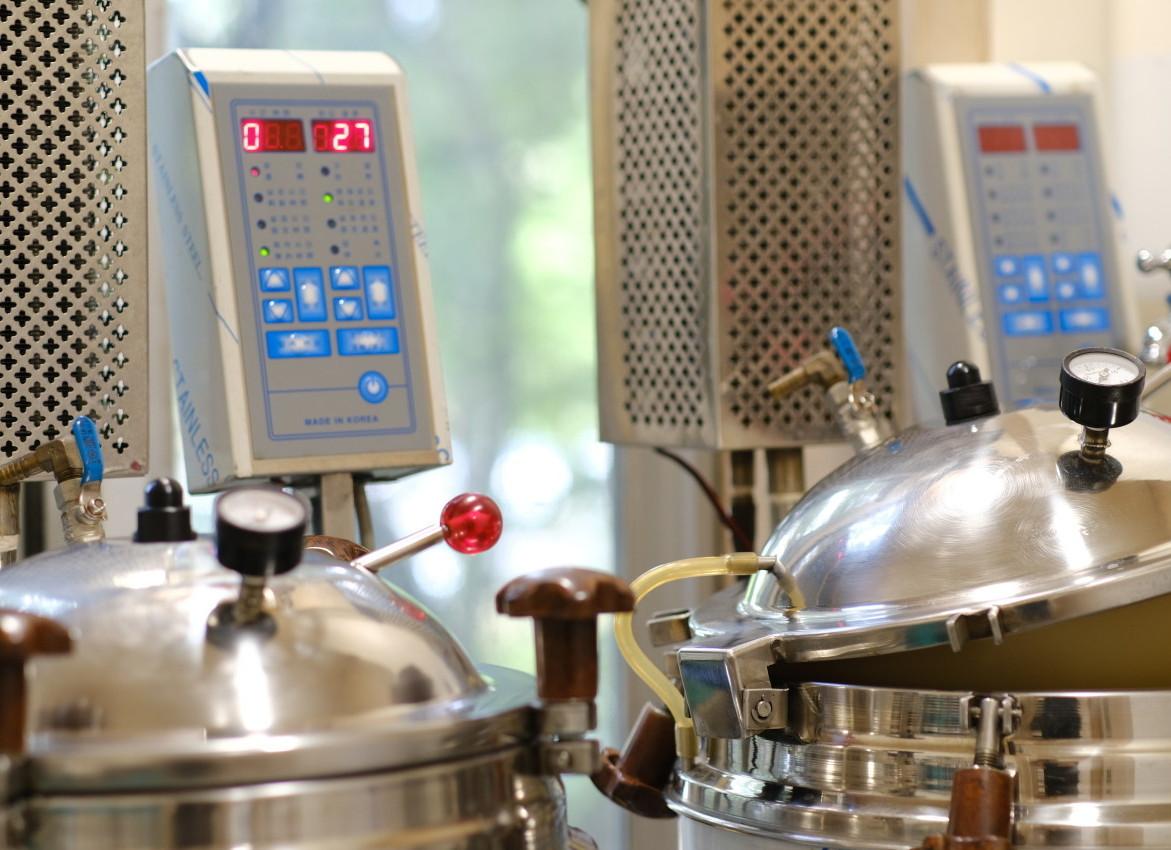
체질과 상태에 맞춰 한약을 짓습니다.
4만 건의 처방 사례가 말해주는, 한방 맞춤 치료의 힘
무월경 치료후기 총 2건
환자분들이 남긴 치료후기입니다. 본문은 로그인 후 보실 수 있습니다.
무월경, 누가 진료하나요?
담당 의료진
대표원장 박재은

“병이 아니라 그 뒤의 사람을 봅니다”
경희대학교 한의학박사이자 여한의사입니다. 심리상담사 1급 자격, 20만명 차트분석과 4만건 이상의 한약 처방 경험을 바탕으로 진료합니다.
의료진 소개 더보기무월경, 자주 묻는 질문
생리를 몇 달 안 하면 병원에 가야 하나요?
호르몬제를 계속 먹어도 되나요?
살을 찌워야 생리가 돌아오나요?
무월경이면 임신이 어려운가요?
치료 기간은 얼마나 걸리나요?
생활에서 어떻게 관리해야 하나요?
해움한의원에서 무월경을 진료하나요?
무월경으로 내원하려면 어떻게 하나요?
무월경에 관해 알아두면 좋은 정보
1건무월경과 관련해 정리한 건강정보입니다.
이런 경우에는 미루지 말고 진료를 받으세요
아래 증상은 임신 관련 문제나 뇌하수체, 난소 질환의 신호일 수 있습니다. 지체하지 말고 응급실이나 산부인과, 내과를 먼저 찾으세요.
- 임신 가능성이 있는데 심한 복통이나 출혈이 있다: 119
- 심한 두통과 함께 시야가 좁아지거나 흐려진다
- 임신이나 수유 중이 아닌데 젖이 나온다
- 40세 이전에 생리가 끊기고 안면홍조가 시작되었다
- 체중이 빠르게 줄고 식사가 두려워졌다
참고문헌 7편
[1]Bachmann GA, Kemmann E. Prevalence of oligomenorrhea and amenorrhea in a college population. Am J Obstet Gynecol. 1982;144(1):98-102. doi:10.1016/0002-9378(82)90402-1. PMID: 7114117.
요약 대학생 991명의 설문입니다. 희발월경은 11.3%, 무월경은 2.6%였습니다. 큰 폭의 체중 감소와 조깅이 관련 요인이었습니다.원문은 출판사 저작권 자료로, 위 링크에서 확인하실 수 있습니다.
[2]Gordon CM, Ackerman KE, Berga SL, Kaplan JR, Mastorakos G, Misra M, et al. Functional Hypothalamic Amenorrhea: An Endocrine Society Clinical Practice Guideline. J Clin Endocrinol Metab. 2017;102(5):1413-1439. doi:10.1210/jc.2017-00131. PMID: 28368518.
요약 미국 내분비학회의 기능성 시상하부성 무월경 진료지침입니다. 뚜렷한 기질적 원인 없이 배란이 멈춘 상태로, 스트레스, 체중 감소, 과도한 운동이 함께 있는 경우가 많습니다. 다른 원인을 배제해 진단하고, 의학·영양·정신건강을 아우르는 치료가 필요합니다. 합병증으로 뼈 손실과 불임이 있습니다.원문은 출판사 저작권 자료로, 위 링크에서 확인하실 수 있습니다.
[3]Golezar S, Ramezani Tehrani F, Khazaei S, Ebadi A, Keshavarz Z. The global prevalence of primary ovarian insufficiency and early menopause: a meta-analysis. Climacteric. 2019;22(4):403-411. doi:10.1080/13697137.2019.1574738. PMID: 30829083.
요약 31개 연구의 메타분석입니다. 조기 난소 부전의 세계 유병률은 3.7%, 이른 폐경은 12.2%였습니다.원문은 출판사 저작권 자료로, 위 링크에서 확인하실 수 있습니다.
[4]Altayar O, Al Nofal A, Carranza Leon BG, Prokop LJ, Wang Z, Murad MH. Treatments to Prevent Bone Loss in Functional Hypothalamic Amenorrhea: A Systematic Review and Meta-Analysis. J Endocr Soc. 2017;1(5):500-511. doi:10.1210/js.2017-00102. PMID: 29264505.
요약 시상하부성 무월경 환자 280명, 9개 연구의 메타분석입니다. 호르몬 치료는 허리뼈 골밀도를 3.30% 높였지만 다른 부위에는 뚜렷한 효과가 없었습니다. 뼈 건강만을 위해 호르몬 치료를 쓰는 것을 뒷받침할 근거는 없었습니다.원문은 출판사 저작권 자료로, 위 링크에서 확인하실 수 있습니다.
[5]Berga SL, Marcus MD, Loucks TL, Hlastala S, Ringham R, Krohn MA. Recovery of ovarian activity in women with functional hypothalamic amenorrhea who were treated with cognitive behavior therapy. Fertil Steril. 2003;80(4):976-981. doi:10.1016/s0015-0282(03)01124-5. PMID: 14556820.
요약 시상하부성 무월경 여성 16명의 무작위 연구입니다. 20주간 인지행동치료를 받은 8명 중 7명(87.5%)에서 난소 활동이 돌아왔고, 관찰만 한 8명에서는 2명(25.0%)이었습니다.원문은 출판사 저작권 자료로, 위 링크에서 확인하실 수 있습니다.
[6]Jedel E, Labrie F, Odén A, Holm G, Nilsson L, Janson PO, et al. Impact of electro-acupuncture and physical exercise on hyperandrogenism and oligo/amenorrhea in women with polycystic ovary syndrome: a randomized controlled trial. Am J Physiol Endocrinol Metab. 2011;300(1):E37-45. doi:10.1152/ajpendo.00495.2010. PMID: 20943753.
요약 다낭성난소증후군 여성 84명을 16주간 저주파 전침, 운동, 무치료로 나눈 무작위 연구입니다. 전침군의 월경 횟수는 한 달 0.28회에서 0.69회로 늘었고, 전침과 운동 모두 무치료보다 나았습니다.원문은 출판사 저작권 자료로, 위 링크에서 확인하실 수 있습니다.
[7]Moini Jazani A, Hamdi K, Tansaz M, Nazemiyeh H, Sadeghi Bazargani H, Fazljou SMB, et al. Herbal Medicine for Oligomenorrhea and Amenorrhea: A Systematic Review of Ancient and Conventional Medicine. Biomed Res Int. 2018;2018:3052768. doi:10.1155/2018/3052768. PMID: 29744355.
초록 (Abstract)
Introduction: Menstrual bleeding cessation is one of the most frequent gynecologic disorders among women in reproductive age. The treatment is based on hormone therapy. Due to the increasing request for alternative medicine remedies in the field of women's diseases, in present study, it was tried to overview medicinal plants used to treat oligomenorrhea and amenorrhea according to the pharmaceutical textbooks of traditional Persian medicine (TPM) and review the evidence in the conventional medicine.
Methods: This systematic review was designed and performed in 2017 in order to gather information regarding herbal medications of oligomenorrhea and amenorrhea in TPM and conventional medicine. This study had several steps as searching Iranian traditional medicine literature and extracting the emmenagogue plants, classifying the plants, searching the electronic databases, and finding evidences. To search traditional Persian medicine references, Noor digital library was used, which includes several ancient traditional medical references. The classification of plants was done based on the repetition and potency of the plants in the ancient literatures. The required data was gathered using databases such as PubMed, Scopus, Google Scholar, Cochrane Library, Science Direct, and web of knowledge.
Results: In present study of all 198 emmenagogue medicinal plants found in TPM, 87 cases were specified to be more effective in treating oligomenorrhea and amenorrhea. In second part of present study, where a search of conventional medicine was performed, 12 studies were found, which had 8 plants investigated: Vitex agnus-castus, Trigonella foenum-graecum, Foeniculum vulgare, Cinnamomum verum, Paeonia lactiflora, Sesamum indicum, Mentha longifolia, and Urtica dioica. Conclusion. Traditional Persian medicine has proposed many different medicinal plants for treatment of oligomenorrhea and amenorrhea. Although just few plants have been proven to be effective for treatment of menstrual irregularities, the results and the classification in present study can be used as an outline for future studies and treatment.
결과 (Results)
In present study of all 198 herbs found in TPM, 87 medicinal plants were found to be potent and frequent in treating oligomenorrhea and amenorrhea (Table 4); families Apiaceae (15.11%) and Lamiaceae (12.79%) were the most prevalent ones. Proportion of temperaments of these plants are shown in Figure 2. Based on the search of TPM, 70 medicinal plants were mentioned frequently to be effective in treatment of oligomenorrhea and amenorrhea and 50 medicinal plants were known as potent medicine for oligomenorrhea and amenorrhea treatment. Of all these plants, 33 were both frequently mentioned and potent (Tables 3 and 4).
In second part of present study, where a search of conventional medicine was performed, 12 studies were found (Table 5) which had 8 plants investigated: Vitex agnus-castus, Trigonella foenum-graecum, Foeniculum vulgare, Cinnamomum verum, Paeonia lactiflora, Sesamum indicum, Mentha longifolia, and Urtica dioica. Details of included studies are shown in Table 5. Nigella sativa, Thymus serpyllum, Matricaria chamomilla, Pimpinella anisum, Marrubium vulgare, Ziziphora clinopodioides, Origanum majorana, and Allium cepa are of the medicinal plants found to be effective in treatment of polycystic ovary syndrome; no therapeutic effect for oligomenorrhea and amenorrhea was mentioned. The flowchart of the systematic review is shown in Figure 3.
3.1. Vitex agnus-castus: Vitex agnus-castus or chasetree belongs to family Lamiaceae, which has been used as a common medicine for treatment of menstrual irregularities and infertility since 2000 years ago. The effects of low dose estrogen and Vitex agnus-castus on the normalization of the menstrual cycle and the means of serum prolactin and free testosterone levels in the women with polycystic ovary syndrome were similar.
3.2. Trigonella foenum-graecum: Trigonella foenum-graecum is an annual plant belonging to family Fabaceae found in Mediterranean region and Iran. It has been traditionally used for gastrointestinal, pulmonary, and gynecologic diseases. Based on the studies, this medicinal plant has been found effective in regulating menstrual cycles, improving fertility, and reversing features of polycystic ovary syndrome by decreasing LH to FSH ratio and reversing ultrasonographic features of it.
3.3. Cinnamomum verum: Cinnamon is an evergreen plant from family Lauraceae with aromatic characteristics basically used as a condiment. In TPM, this plant is known as a potent medicine to increase libido and regulate menstruation and is effective in treating brain and pulmonary diseases. Anti-inflammatory, antioxidative, antidiabetic, and lipid lowering features of cinnamon has been already proven. Cinnamon is known to increase serum progesterone level in luteal phase, so facilitating menstrual cycle regulation.
3.4. Paeonia lactiflora Pall: Paeonia lactiflora Pall is a medicinal plant used in Japan, Korea, China, and Iran since 1200 years. It has been used to cure stomachache, headache, hepatitis, dysmenorrhea, and menstrual cycle irregularities. It has been already reported that a mixture of Paeonia lactiflora and Glycyrrhiza glabra extracts was effective in normalizing menstrual cycles and hormonal balance among women with polycystic ovary syndrome.
3.5. Foeniculum vulgare: Foeniculum vulgare or Fennel is a flowering plant from family Apiaceae which has been used as a medicinal plant in TPM due to its known antioxidative, anti-inflammatory, estrogenic, diuretic, emmenagogue, antithrombotic, and antihypertensive features. This plant has been found to be effective in inducing menstruation after medroxyprogesterone acetate use in comparison to control group.
3.6. Mentha longifolia: Mentha longifolia is one of many members of family Lamiaceae which is used in pharmaceutical and industrial fields. This medicinal plant has been used to relieve gastrointestinal and gynecologic complaints for many years. It has been shown that using Mentha longifolia extracts induces menstruation and regulates menstrual cycles. Also it has been indicated that this extract decreases FSH and induces menstruation among patients with primary ovarian failure.
3.7. Sesamum indicum: Sesamum indicum is a flowering plant in the genus Sesamum and family Pedaliaceae. In TPM, this medicinal plant has been used to increase libido, induce menstrual bleeding, and treat renal and pulmonary diseases. Also, sesame has been found to have antihypertensive, antioxidant, and cholesterol lowering characteristics. Sesame is known to induce menstruation without prominent side effects among women with severe oligomenorrhea.
3.8. Urtica dioica: Urtica dioica is a herbaceous perennial flowering plant in the family Urticaceae, which has been used as a diuretic and to treat rheumatic diseases and arthritis. Ancient Iranian physicians used Urtica dioica to increase libido, induce menstruation, and treat renal and pulmonary diseases; also this plant has been found to have antioxidant, anti-inflammatory, antidiabetic, and antiandrogenic features; although based on a study Urtica dioica extract improved the clinical and paraclinical symptoms of hyperandrogenism in women, improvement of menstrual irregularities was lower in the intervention group compared to the control group.
원문 발췌 · Moini Jazani A, Hamdi K, Tansaz M, Nazemiyeh H, Sadeghi Bazargani H, Fazljou SMB, Nasimi Doost Azgomi R, Biomed Res Int 2018 · CC BY 4.0 라이선스에 따라 수정 없이 인용했습니다(본문 속 인용 번호는 생략).