
양천구 목동 전정신경염 한의원
전정신경염
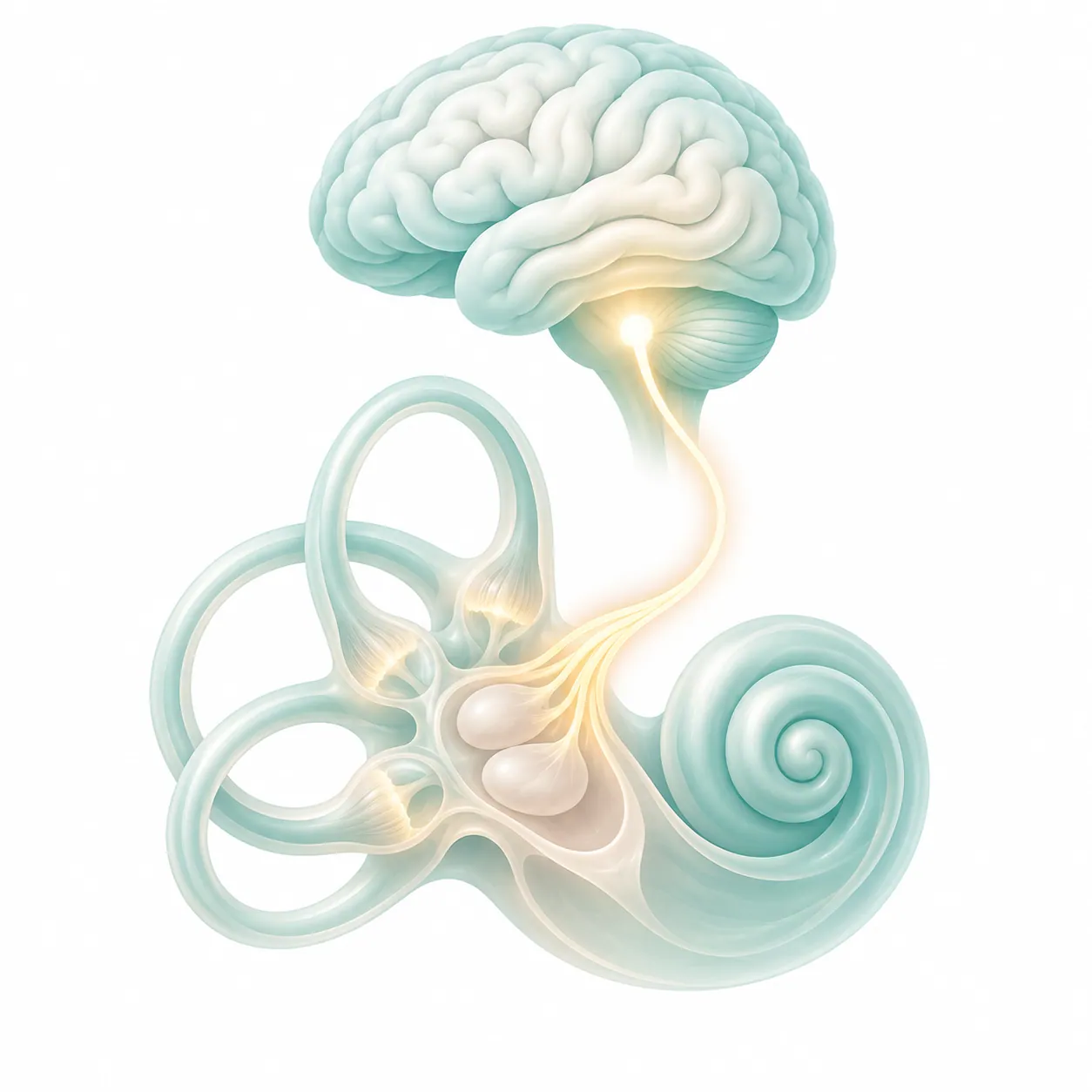
아침에 눈을 뜨니 방이 통째로 돌고 고개를 들 수 없습니다. 며칠을 토하며 누워 있었는데 귀는 멀쩡히 들립니다. 이렇게 심한 어지럼을 일으키는 병이 전정신경염입니다.
전정신경염 한눈에 보기
- 전정신경염은 균형을 맡는 전정신경에 염증이 생겨 심한 회전성 어지럼이 며칠 이어지는 병입니다.
- 재발은 드물지만(약 2%), 회복 뒤에도 잔어지럼이 남거나 약 10%는 이석증이 이어집니다.
- 오래 남는 어지럼은 신경 손상의 크기보다 불안과 자율신경의 각성과 관련이 깊습니다.
- 의료진 칼럼 1편
- 건강정보 1편
이런 증상이 있나요?

- 갑자기 빙글빙글 도는 어지럼이 시작됐다
- 어지럼이 하루 넘게 쉬지 않고 이어진다
- 토하고 메스꺼워 일어나지 못한다
- 걸으면 한쪽으로 쏠린다
- 고개를 돌리면 더 심해진다
- 눈앞의 물체가 흔들려 보인다
- 귀는 잘 들리고 이명도 없다
진단은 증상과 눈의 움직임을 보는 진찰, 전정 기능 검사로 합니다. 24시간 넘게 이어지는 어지럼, 눈이 한쪽으로 떨리는 안진, 한쪽 전정 기능의 저하가 있고 뇌나 청각의 증상이 없을 때 진단합니다. 이 병만을 확정하는 검사는 없어서 다른 병을 먼저 가려야 합니다[2].
전정신경염은 왜 생기나요?
바이러스 감염 뒤 전정신경에 염증이 생기는 것으로 봅니다[1]. 몸속에 잠복한 단순포진 바이러스가 다시 활동하는 것이 원인으로 추정됩니다[6].
- 감기 등 바이러스 감염(약 30%가 발병 전 감기)[4]
- 과로와 면역력 저하
- 수면 부족
- 심한 스트레스
오래 남는 어지럼은 다른 이야기입니다. 장기 예후는 신경 손상의 크기에 달려 있지 않았습니다[1]. 회복을 늦춘 것은 시각에 대한 의존, 자율신경의 각성, 불안과 우울, 몸의 감각에 대한 두려움이었습니다[7]. 발병 때의 불안은 대부분 어지럼과 함께 줄지만, 최악을 먼저 떠올리는 생각은 불안을 이어지게 합니다[8].
전정신경염의 표준 치료
급성기에는 구토와 어지럼을 가라앉히는 약을 며칠 씁니다. 스테로이드는 12개월 뒤 전정 기능 호전이 62.4 퍼센트포인트로 위약(39.6)보다 컸지만 항바이러스제는 효과가 없었습니다[6]. 다만 증상 회복에서는 뚜렷한 차이가 없었습니다[3]. 회복의 핵심은 전정재활입니다. 고개와 시선을 움직이는 운동으로 뇌가 적응하게 하며, 어지럼 빈도 개선의 오즈비가 2.67이었습니다[9].
검사는 좋아졌는데 어지럼이 남는 분들이 있습니다. 어지러울까 두려워 움직임을 줄이면 뇌는 적응할 기회를 잃습니다. 불안과 긴장이 높고 체력이 떨어진 몸은 재활도 버겁습니다. 한의학 치료는 이 바탕을 다스립니다.
전정신경염만 다룬 침과 한약 연구는 아직 많지 않습니다.
해움한의원은 이렇게 치료합니다

해움한의원은 급성기가 지난 뒤에도 남는 어지럼에 주목합니다. 왜 회복이 멈췄는지, 불안과 수면, 체력을 함께 살핍니다.
1단계. 진단과 위험 신호를 확인합니다
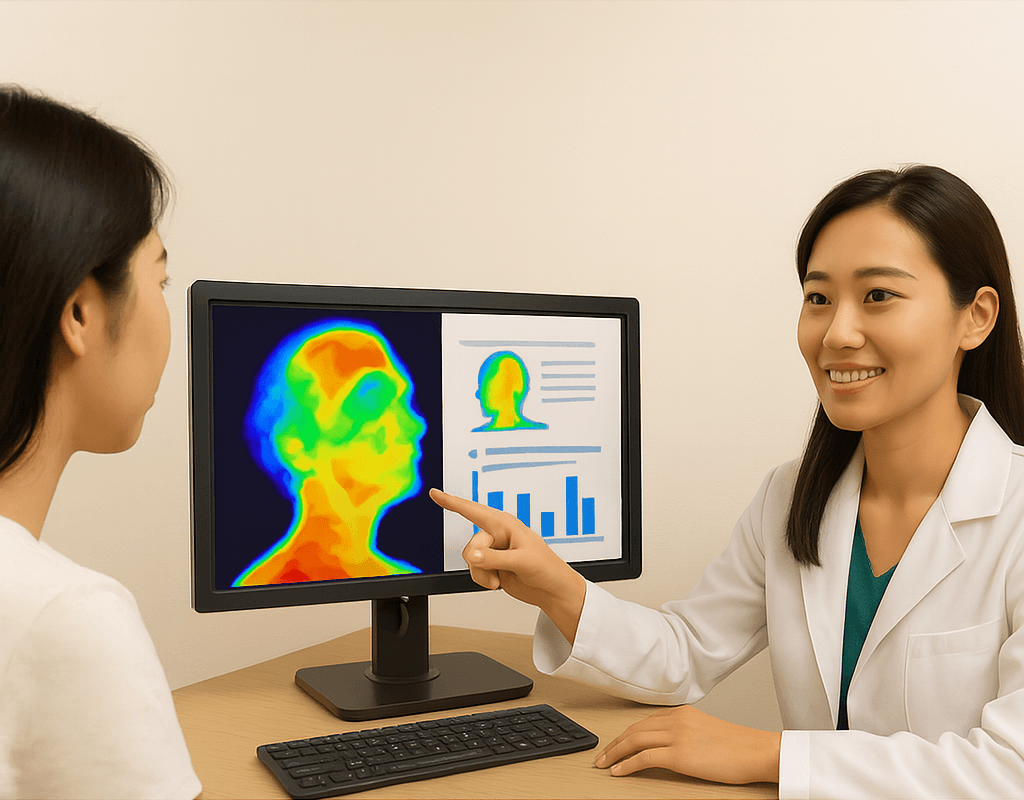
발병 시기와 받은 검사, 복용 약, 지금 남은 어지럼의 양상을 자세히 살펴봅니다. 뇌 질환이 의심되거나 진단을 받지 않았다면 신경과나 이비인후과 진료를 먼저 안내해 드립니다. 심박변이도로 자율신경의 상태를 확인합니다.
2단계. 긴장을 풀고 움직임을 되찾습니다
침과 약침으로 목과 어깨의 긴장을 풀고 자율신경을 안정시킵니다. 어지러울까 두려운 마음을 함께 다루고, 집에서 할 수 있는 시선·균형 운동을 안내해 드립니다.
3단계. 유형에 맞춰 바탕을 다스립니다
체질과 상태에 맞춰 한약을 짓습니다.
4만 건의 처방 사례가 말해주는, 한방 맞춤 치료의 힘

전정신경염, 누가 진료하나요?
담당 의료진
대표원장 박재은

“병이 아니라 그 뒤의 사람을 봅니다”
경희대학교 한의학박사이자 여한의사입니다. 심리상담사 1급 자격, 20만명 차트분석과 4만건 이상의 한약 처방 경험을 바탕으로 진료합니다.
의료진 소개 더보기전정신경염, 자주 묻는 질문
전정신경염은 얼마나 오래가나요?
다시 재발하나요?
어지러운데 움직여도 되나요?
이석증과 어떻게 다른가요?
양약과 한약을 같이 먹어도 되나요?
치료 기간은 얼마나 걸리나요?
해움한의원에서 전정신경염을 진료하나요?
전정신경염으로 내원하려면 어떻게 하나요?
전정신경염에 관해 알아두면 좋은 정보
1건전정신경염과 관련해 정리한 건강정보입니다.

이런 경우에는 바로 응급실로 가세요
아래 증상은 뇌졸중 등 전정신경염이 아닌 응급 질환일 수 있습니다. 지체하지 말고 119를 부르거나 응급실로 가세요.
- 말이 어눌하거나 얼굴, 팔다리에 힘이 빠진다
- 물체가 둘로 보이거나 혼자 서 있지 못한다
- 벼락 치듯 갑작스러운 심한 두통이 함께 온다
- 갑자기 한쪽 귀가 들리지 않는다
- 의식이 흐려지거나 가슴이 아프다
참고문헌 9편
[1]Bronstein AM, Dieterich M. Long-term clinical outcome in vestibular neuritis. Curr Opin Neurol. 2019;32(1):174-180. doi:10.1097/wco.0000000000000652. PMID: 30566414.
요약 장기 경과 종설입니다. 전정신경염은 바이러스 감염 뒤 전정신경에 생긴 염증으로 보입니다. 장기 예후는 남은 말초 손상의 크기에 달려 있지 않고, 시각 의존, 불안, 신체화 성향 등과 관련됩니다.원문은 출판사 저작권 자료로, 위 링크에서 확인하실 수 있습니다.
[2]Strupp M, Bisdorff A, Furman J, Hornibrook J, Jahn K, Maire R, et al. Acute unilateral vestibulopathy/vestibular neuritis: Diagnostic criteria. J Vestib Res. 2022;32(5):389-406. doi:10.3233/ves-220201. PMID: 35723133.
요약 바라니학회의 진단 기준입니다. 24시간 이상 이어지는 어지럼, 말초성 안진, 한쪽 전정안반사 저하가 있고 뇌와 청각의 증상이 없을 때 진단합니다. 이 병만을 확정하는 검사는 없어, 중추 병변과 다른 전정 질환을 배제해야 합니다.원문은 출판사 저작권 자료로, 위 링크에서 확인하실 수 있습니다.
[3]Fishman JM, Burgess C, Waddell A. Corticosteroids for the treatment of idiopathic acute vestibular dysfunction (vestibular neuritis). Cochrane Database Syst Rev. 2011:CD008607. doi:10.1002/14651858.cd008607.pub2. PMID: 21563170.
요약 4개 연구, 149명의 코크란 고찰입니다. 전정신경염은 이석증 다음으로 흔한 말초성 어지럼증으로, 어지럼증 전문 외래 환자의 7%입니다. 스테로이드는 1개월째 온도 검사의 완전 회복을 늘렸지만, 12개월째와 증상 회복에는 뚜렷한 차이가 없었습니다.원문은 출판사 저작권 자료로, 위 링크에서 확인하실 수 있습니다.
[4]Sekitani T, Imate Y, Noguchi T, Inokuma T. Vestibular neuronitis: epidemiological survey by questionnaire in Japan. Acta Otolaryngol Suppl. 1993;503:9-12. doi:10.3109/00016489309128061. PMID: 8470507.
요약 일본 주요 신경이과 기관의 3년 조사입니다. 성별 차이는 없었고 40~50대에 많았습니다. 약 30%가 발병 전에 감기를 앓았습니다.원문은 출판사 저작권 자료로, 위 링크에서 확인하실 수 있습니다.
[5]Mandalà M, Santoro GP, Awrey J, Nuti D. Vestibular neuritis: recurrence and incidence of secondary benign paroxysmal positional vertigo. Acta Otolaryngol. 2010;130(5):565-567. doi:10.3109/00016480903311278. PMID: 19883173.
요약 전정신경염 환자 51명을 평균 4.9년 추적했습니다. 재발은 1명(2.0%)이었고, 이석증은 5명(9.8%)에게 생겼습니다.원문은 출판사 저작권 자료로, 위 링크에서 확인하실 수 있습니다.
[6]Strupp M, Zingler VC, Arbusow V, Niklas D, Maag KP, Dieterich M, et al. Methylprednisolone, valacyclovir, or the combination for vestibular neuritis. N Engl J Med. 2004;351(4):354-361. doi:10.1056/nejmoa033280. PMID: 15269315.
요약 141명의 무작위 이중맹검 연구입니다. 12개월 뒤 전정 기능 호전은 위약 39.6, 메틸프레드니솔론 62.4, 발라시클로버 36.0, 병용 59.2 퍼센트포인트였습니다. 스테로이드는 전정 기능 회복을 도왔고 항바이러스제는 효과가 없었습니다.원문은 출판사 저작권 자료로, 위 링크에서 확인하실 수 있습니다.
[7]Cousins S, Kaski D, Cutfield N, Arshad Q, Ahmad H, Gresty MA, et al. Predictors of clinical recovery from vestibular neuritis: a prospective study. Ann Clin Transl Neurol. 2017;4(5):340-346. doi:10.1002/acn3.386. PMID: 28491901.
초록 (Abstract)
We sought to identify predictors of symptomatic recovery in vestibular neuritis. Forty VN patients were prospectively studied in the acute phase (median = 2 days) and 32 in the recovery phase (median = 10 weeks) with vestibulo‐ocular reflex, vestibular‐perceptual, and visual dependence tests and psychological questionnaires. Clinical outcome was Dizziness Handicap Inventory score at recovery phase. Acute visual dependency and autonomic arousal predicted outcome. Worse recovery was associated with a combination of increased visual dependence, autonomic arousal, anxiety/depression, and fear of bodily sensations, but not with vestibular variables. Findings highlight the importance of early identification of abnormal visual dependency and concurrent anxiety.
결과 (Results)
Symptoms improved drastically from acute to recovery stages in all patients, with considerable individual variability (Fig. 1C). Average symptom load (Normalized DHI, score 0–4) decreased from 2.13SD1.02 acutely to 0.63SD0.95 at recovery stage (10 week). Results for all measures are summarized in Table S1.
Predicting clinical recovery from the acute stage (Table 1): DHI score at recovery stage (10 week _DHI) was significantly correlated with acute autonomic arousal (r = 0.53, P = 0.002), acute visual dependency (r = 0.5, P = 0.006), and acute fear of bodily sensations (r = 0.35, P = 0.049, not significant after Larzelere and Mulaik adjusted Bonferroni correction16). Stepwise multiple linear regression to predict DHI at recovery (10 week) stage, entering all the baseline acute variables is shown in Table 1 as predictors, produced a significant model (adjusted R 2=0.562, ANOVA F = 13.8, df 2,18, P < 0.001) in which the two significant predictors were acute autonomic arousal (β = 0.47 P = 0.02) and acute visual dependency (β = 0.41 P = 0.038).
Associations between variables at the recovery stage: Table 2 shows all bivariate correlations between symptoms at the recovery stage (10 week) and psychophysical, visual dependency, and psychological variables also at 10 weeks. Clinical outcome (10 week _DHI) correlated with vestibulo‐perceptual thresholds (r = 0.52, P = 0.003), visual dependency (r = 0.56, P = 0.001) and, less significantly, with canal paresis (r = 0.38, P = 0.045, not significant after Larzelere and Mulaik adjusted Bonferroni correction16), all measured at 10 weeks. In addition, the following questionnaire data correlated with 10 Week_DHI: anxiety and depression (HADS, r = 0.71, P ≤ 0.001), autonomic arousal (VSS_A, r = 0.71, P < 0.001), and fear of bodily sensations (BSQ, r = 0.58, P = 0.001).
Factor Analysis (Fig. 2) was used to further explore the significant correlations outlined above and describe the underlying pattern of associations between variables. The first statistical component identified by Factor Analysis accounted for 59% of the variance and, critically, loaded 10 week_DHI, our outcome variable. This first component also loaded visual dependency, autonomic arousal, fear of body sensations (BSQ, acute and recovery stages), and anxiety‐depression scores (HADS, recovery stage). A second component was identified, accounting for just 12% of variance and loaded canal paresis and vestibular perceptual thresholds but, notably, did not include clinical outcome.
Long‐term prognosis: Additional correlational analysis was carried out to assess whether factors determining symptomatic recovery outlined above, continue to predict symptom load at long‐term recovery (10 month_DHI). Comparisons between recovery (10 week) and long‐term recovery (10 month) stages showed no significant change in symptom load (DHI) (Fig. 1C), confirming that most recovery takes place by week 10. Bivariate correlational analysis showed acute autonomic arousal (VSS_A; r=0.78, P ≤ 0.001), visual dependency (r = 0.67, P = 0.001), and fear of bodily sensations (r = 0.46, P = 0.02) continue to predict long‐term outcome (10 month_DHI).
There was no significant difference in the baseline measures of autonomic arousal, visual dependency, or fear of bodily sensations between participants who returned at 10 weeks or 10 months and those who did not, suggesting drop‐outs did not systematically distort results.
원문 발췌 · Cousins S, Kaski D, Cutfield N, Arshad Q, Ahmad H, Gresty MA, Seemungal BM, Golding J, Golding J, Bronstein AM, Ann Clin Transl Neurol 2017 · CC BY 4.0 라이선스에 따라 수정 없이 인용했습니다(본문 속 인용 번호는 생략).
[8]Godemann F, Linden M, Neu P, Heipp E, Dörr P. A prospective study on the course of anxiety after vestibular neuronitis. J Psychosom Res. 2004;56(3):351-354. doi:10.1016/s0022-3999(03)00079-5. PMID: 15046973.
요약 급성 전정 질환 환자 92명을 6주간 살폈습니다. 발병 때 불안이 심했고 대부분 어지럼이 줄며 함께 줄었습니다. 최악을 먼저 떠올리는 생각은 불안이 이어지는 위험 요인이었습니다.원문은 출판사 저작권 자료로, 위 링크에서 확인하실 수 있습니다.
[9]McDonnell MN, Hillier SL. Vestibular rehabilitation for unilateral peripheral vestibular dysfunction. Cochrane Database Syst Rev. 2015;1:CD005397. doi:10.1002/14651858.cd005397.pub4. PMID: 25581507.
요약 39개 연구, 2,441명의 코크란 고찰입니다. 전정재활은 대조군보다 어지럼 빈도를 개선할 오즈비가 2.67이었고, 이상반응은 보고되지 않았습니다.원문은 출판사 저작권 자료로, 위 링크에서 확인하실 수 있습니다.