
양천구 목동 이관기능장애 한의원
이관기능장애
감기는 나았는데 귀가 물속에 들어간 듯 먹먹합니다. 침을 삼키면 뽀드득 소리가 나고, 내 목소리만 크게 울립니다. 귀 검사는 괜찮다는데 답답함이 이어지는 이 증상이 이관기능장애입니다.
이관기능장애 한눈에 보기
- 이관기능장애는 귀와 코를 잇는 통로가 제때 열리고 닫히지 않아 귀가 먹먹한 상태입니다.
- 감기와 비염 뒤에 흔하며, 만성 부비동염 환자의 약 절반이 증상을 보입니다.
- 코의 염증뿐 아니라 체력과 긴장, 자율신경 상태까지 함께 살펴야 오래가는 먹먹함을 다스릴 수 있습니다.
- 건강정보 1편
- 온라인 상담 1건
이관기능장애란?
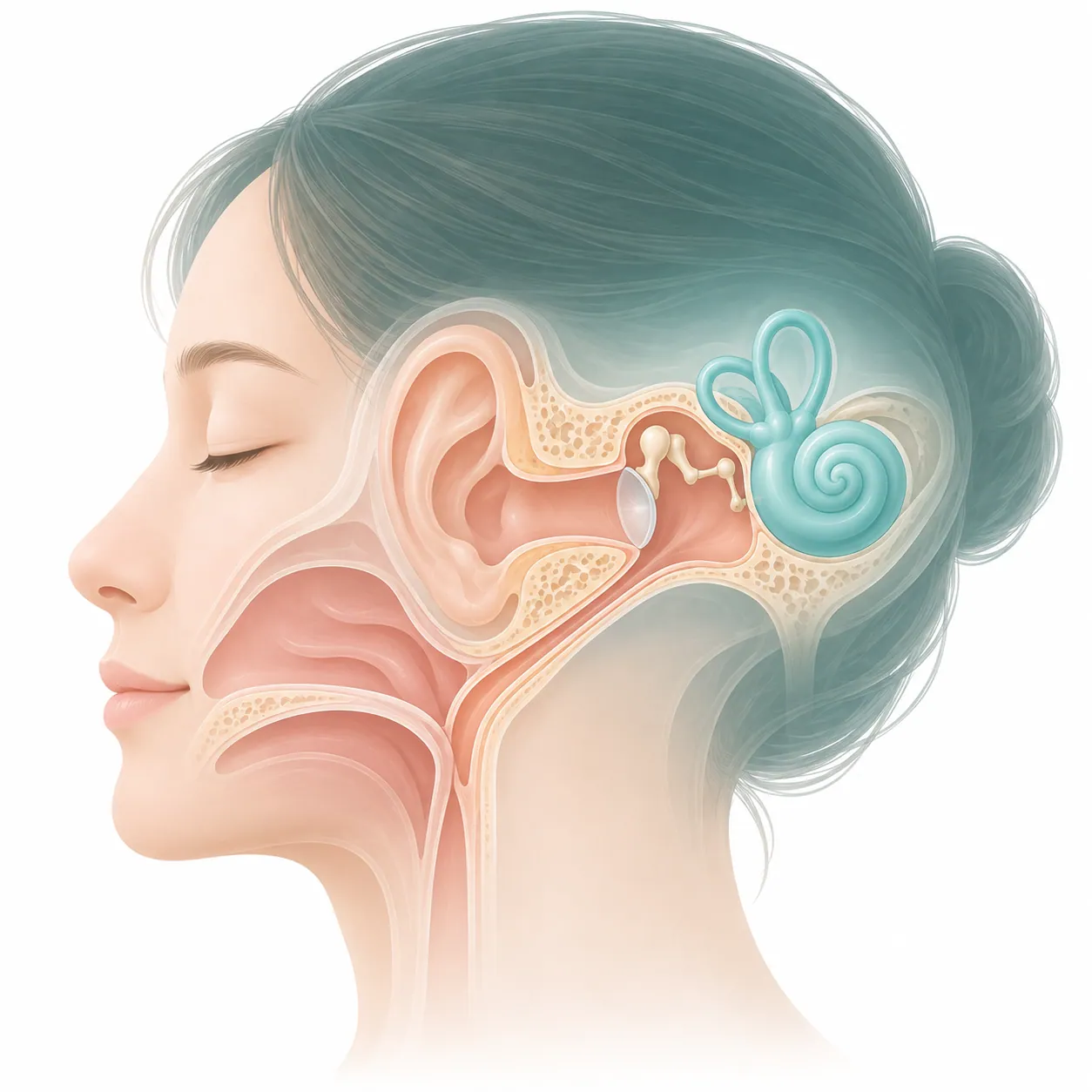
이관은 귀(중이)와 코 뒤쪽을 잇는 가느다란 통로입니다. 평소에는 닫혀 있다가 침을 삼키거나 하품할 때 잠깐 열려 귀 속 압력을 맞춥니다. 이 통로가 제때 열리지 않거나 닫히지 않으면 귀가 먹먹해지는데, 이를 이관기능장애라고 합니다.
잘 열리지 않는 유형, 비행기나 잠수처럼 압력이 변할 때만 나타나는 유형, 늘 열려 있는 유형(이관개방증)의 세 가지가 있습니다[1]. 3개월 넘게 이어지면 만성으로 봅니다.
이런 증상이 있나요?

- 귀가 꽉 막힌 듯 먹먹하다
- 물속에 들어간 것처럼 소리가 둔하다
- 침을 삼키면 뽀드득, 뻥 소리가 난다
- 내 목소리와 숨소리가 귀에 크게 울린다
- 비행기나 고층 엘리베이터에서 귀가 아프다
- 귀에서 삐 소리가 나거나 살짝 어지럽다
- 누우면 나아지고 서 있으면 심해진다
이관기능장애는 증상을 듣고 귀 내시경, 고막 운동 검사, 청력 검사로 확인합니다[1]. 귀가 먹먹한 증상은 돌발성 난청이나 메니에르병에서도 나타납니다. 갑자기 한쪽 귀가 먹먹해졌다면 청력 검사를 서둘러 받으세요.
이관기능장애의 표준 치료
표준 치료는 원인인 코의 염증을 다스리는 것입니다. 코 스테로이드 스프레이를 흔히 쓰지만 6주를 써도 위약과 차이가 없었다는 연구가 있습니다[3]. 약으로 낫지 않으면 풍선으로 이관을 넓히는 시술을 하며, 증상 점수가 약물 치료보다 더 좋아졌습니다[4]. 이관개방증은 치료 근거가 아직 작은 연구에 머물러 있습니다[5].
코는 나았는데 귀만 계속 먹먹한 분, 시술까지는 부담스러운 분이 많습니다. 통로 주변의 붓기와 체력, 긴장된 몸을 함께 봐야 합니다. 한의학 치료는 이 바탕을 다스립니다.
이관기능장애에 대한 침과 한약 연구는 아직 찾기 어렵습니다.
해움한의원은 이렇게 치료합니다

해움한의원은 먹먹한 귀만이 아니라, 코와 목의 염증, 체력, 긴장된 자율신경을 함께 치료합니다.
1단계. 먹먹함의 원인과 위험 신호를 가립니다
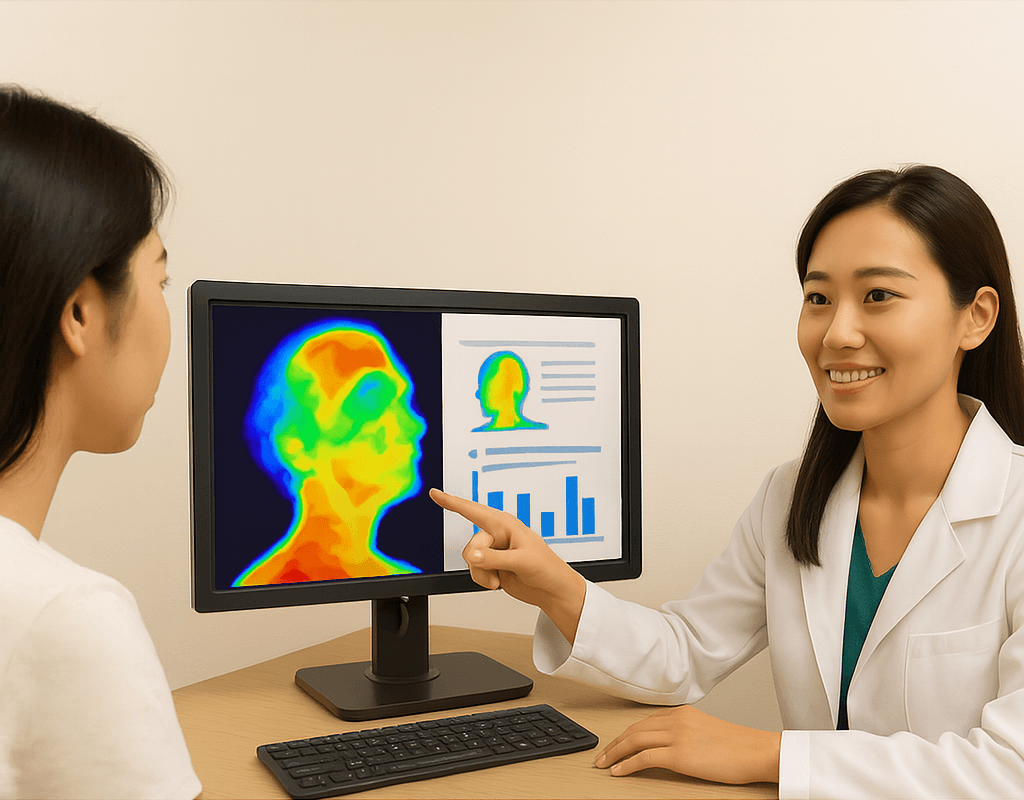
언제 시작했는지, 코 증상과 체중 변화, 수면과 스트레스를 자세히 살펴봅니다. 청력이 떨어졌거나 중이염이 의심되면 이비인후과 검사를 먼저 안내해 드립니다. 심박변이도 검사로 자율신경 상태를 확인합니다.
2단계. 귀와 코, 목 주변을 풉니다
침과 약침으로 귀 주변과 목의 긴장을 풀고, 코의 순환을 돕습니다.
3단계. 유형에 맞춰 바탕을 다스립니다
체질과 상태에 맞춰 한약을 짓습니다. 코 관리와 수면, 체중 변화, 스트레스 관리를 함께 살핍니다.
4만 건의 처방 사례가 말해주는, 한방 맞춤 치료의 힘

이관기능장애, 누가 진료하나요?
담당 의료진
대표원장 박재은

“병이 아니라 그 뒤의 사람을 봅니다”
경희대학교 한의학박사이자 여한의사입니다. 심리상담사 1급 자격, 20만명 차트분석과 4만건 이상의 한약 처방 경험을 바탕으로 진료합니다.
의료진 소개 더보기이관기능장애, 자주 묻는 질문
귀 먹먹함은 저절로 낫나요?
코를 막고 세게 불어도 되나요?
이관개방증은 무엇인가요?
비행기를 타도 되나요?
양약과 한약을 같이 먹어도 되나요?
치료 기간은 얼마나 걸리나요?
해움한의원에서 이관기능장애를 진료하나요?
이관기능장애로 내원하려면 어떻게 하나요?
이관기능장애에 관해 알아두면 좋은 정보
1건이관기능장애과 관련해 정리한 건강정보입니다.
이런 경우에는 미루지 말고 진료를 받으세요
아래 증상은 돌발성 난청이나 급성 중이염일 수 있습니다. 시간이 중요하니 이비인후과 진료를 먼저 받으세요. 말이 어눌하거나 팔다리에 힘이 빠지면 응급실(119)로 가세요.
- 갑자기 한쪽 귀가 잘 들리지 않는다
- 심한 귀 통증과 고열이 있다
- 귀에서 고름이나 피가 나온다
- 심하게 빙빙 돌며 어지럽고 토한다
- 얼굴 한쪽이 처지거나 움직이지 않는다
참고문헌 5편
[1]Schilder AG, Bhutta MF, Butler CC, Holy C, Levine LH, Kvaerner KJ, et al. Eustachian tube dysfunction: consensus statement on definition, types, clinical presentation and diagnosis. Clin Otolaryngol. 2015;40(5):407-411. doi:10.1111/coa.12475. PMID: 26347263.
요약 이관기능장애 전문가 합의문입니다. 잘 열리지 않는 유형, 비행이나 잠수 같은 압력 변화에서만 나타나는 유형, 열려 있는 유형(이관개방증)의 세 가지로 나눕니다. 3개월 미만은 일시적, 그 이상은 만성으로 봅니다. 귀 먹먹함, 뻥 뚫리는 소리, 통증, 물속에 있는 느낌, 이명, 자기 목소리 울림이 나타납니다. 감기와 알레르기 비염 악화 뒤에 흔합니다.원문은 출판사 저작권 자료로, 위 링크에서 확인하실 수 있습니다.
[2]Tangbumrungtham N, Patel VS, Thamboo A, Patel ZM, Nayak JV, Ma Y, et al. The prevalence of Eustachian tube dysfunction symptoms in patients with chronic rhinosinusitis. Int Forum Allergy Rhinol. 2018;8(5):620-623. doi:10.1002/alr.22056. PMID: 29227048.
요약 만성 부비동염 환자 101명의 조사입니다. 48.5%가 설문에서 임상적으로 의미 있는 이관기능장애 점수를 보였습니다.원문은 출판사 저작권 자료로, 위 링크에서 확인하실 수 있습니다.
[3]Gluth MB, McDonald DR, Weaver AL, Bauch CD, Beatty CW, Orvidas LJ. Management of eustachian tube dysfunction with nasal steroid spray: a prospective, randomized, placebo-controlled trial. Arch Otolaryngol Head Neck Surg. 2011;137(5):449-455. doi:10.1001/archoto.2011.56. PMID: 21576556.
요약 91명의 위약 대조 연구입니다. 6주간 코 스테로이드 스프레이를 써도 고막 운동 검사의 정상화(19% 대 32%)와 증상 점수에서 위약과 차이가 없었습니다.원문은 출판사 저작권 자료로, 위 링크에서 확인하실 수 있습니다.
[4]Meyer TA, O'Malley EM, Schlosser RJ, Soler ZM, Cai J, Hoy MJ, et al. A Randomized Controlled Trial of Balloon Dilation as a Treatment for Persistent Eustachian Tube Dysfunction With 1-Year Follow-Up. Otol Neurotol. 2018;39(7):894-902. doi:10.1097/mao.0000000000001853. PMID: 29912819.
초록 (Abstract)
Objective: Compare Eustachian tube balloon dilation versus continued medical therapy (control) for treating persistent Eustachian tube dysfunction (ETD).
Study Design: Prospective, multicenter, randomized controlled trial.
Setting: Tertiary care academic center and private practice.
Patients: Diagnosed with medically refractory persistent ETD.
Interventions: 1:1 Randomization to balloon dilation or control. After 6 weeks, control participants had the option to undergo balloon dilation if symptoms persisted.
Main Outcome Measures: Primary efficacy endpoint was the comparison between treatment arms in the mean change from baseline in the 7-item Eustachian Tube Dysfunction Questionnaire (ETDQ-7) score. Primary safety endpoint was complication rate.
Results: Sixty participants were randomized (31 balloon dilation, 29 control). Mean (SD) change in overall ETDQ-7 score at 6 weeks was −2.9 (1.4) for balloon dilation compared with −0.6 (1.0) for control: balloon dilation was superior to control (p < 0.0001). No complications were reported in either study arm. Among participants with abnormal baseline assessments, improvements in tympanogram type (p < 0.006) and tympanic membrane position (p < 0.001) were significantly better for balloon dilation than control. Technical success was 100% (91 successful dilations/91 attempts) and most procedures (72%) were completed in the office under local anesthesia. Improvements in the ETDQ-7 scores were maintained through 12 months after balloon dilation.
Conclusions: Balloon dilation is a safe and effective treatment for persistent ETD. Based on improved ETDQ-7 scores, balloon dilation is superior to continued medical management for persistent ETD. Symptom improvement is durable through a minimum of 12 months. Procedures are well tolerated in the office setting under local anesthesia.
결과 (Results)
From August 2015 to June 2016, 60 participants at five US investigational centers were randomized to balloon dilation (n = 31) or medical therapy (control, n = 29). Two participants randomized to balloon dilation and two participants randomized to control did not complete the 6-week evaluation. Additionally, one participant undergoing balloon dilation failed to complete the ETDQ-7 at the 6-week visit, resulting in 55 participants (28 balloon dilation, 27 control) evaluable for the primary efficacy endpoint analysis. There are no statistically significant differences between the participants in the randomized arms in terms of demographics or baseline characteristics (Table 1). Baseline symptoms as reported by the participants are shown in Table 2 by study arm.
Nearly all participants in both arms continued their baseline medications through the 6-week randomized period. Three participants in the balloon dilation arm discontinued nasal steroids within the 6-week period; all others continued their baseline medications. Of the 27 participants in the control arm who completed the 6-week evaluation, 26 (96.3%) were eligible for crossover to balloon dilation. One participant was ineligible for crossover to balloon dilation due to an improvement in ETD symptoms (ETDQ-7 score <3). Three of the 26 eligible participants chose not to undergo the crossover procedure, resulting in 23 participants in the crossover group. Figure 1 depicts the participant flow from randomization through the 12-month follow-up. Forty-nine of the 53 eligible participants completed the 12-month follow-up visit, and the overall follow-up visit compliance rate was 97% (284 actual/293 expected visits).
Primary Endpoint Results: The primary efficacy endpoint result for the mean change in the overall ETDQ-7 score between randomized arms at the 6-week time period is shown in Figure 2. The mean (SD) change in overall ETDQ-7 score is –2.9 (1.4) for balloon dilation compared with –0.6 (1.0) for control: the decrease in ETDQ-7 score is significantly greater for the group undergoing balloon dilation compared with the control group (p < 0.0001), demonstrating that balloon dilation is superior to the control.
The primary safety endpoint was the complication rate. No complications have been reported during the study.
Procedural Information: Balloon dilation procedural data are shown in Table 3. A total of 91 Eustachian tube dilations were attempted in 53 participants (30 randomized to balloon dilation, 23 crossover to balloon dilation). All dilation attempts were successful, resulting in a technical success rate of 100% (91/91 Eustachian tubes). The majority of participants (38/53, 71.7%) were treated in the clinic setting under local anesthesia with a mean pain score of 4.1 on a scale of 0 to 10.
The specific local anesthesia protocols used were at the discretion of the surgeon. The typical local anesthesia protocol included preprocedure oral sedatives or anti-anxiolytics (e.g., hydrocodone/acetaminophen, diazepam) and decongestant/anesthesia sprays (e.g., lidocaine with neosynephrine). At the start of the procedure, anesthesia-soaked pledgets with or without 1:1,000 epinephrine were placed and a 1:1 solution of 1% lidocaine with 1:100,000 epinephrine was injected locally. The most frequent injection locations were the sphenopalatine, inferior turbinate, and middle turbinate. Allowing several minutes for the anesthetic to take effect before starting the procedure is critical for good pain management.
Middle Ear Functional Assessments: Although the study enrollment criteria did not require participants to have abnormal results for tympanogram type, otoscopy (tympanic membrane position), and/or a negative Valsalva maneuver at baseline, these measures were collected and analyzed. The results for the randomized cohort are shown in Table 4.
For the participants with retracted tympanic membrane position at baseline, 66.7% (10/15) of those undergoing balloon dilation showed an improvement at 6 weeks (p = 0.002) versus 0% (0/12) of the participants in the control arm (p = not significant [NS]). The comparison between arms indicates that balloon dilation is significantly better than control for improvement in tympanic membrane position (p < 0.001). Of the participants in the balloon dilation arm who had a negative Valsalva maneuver at baseline, 47.1% (8/17) had significant improvement (positive Valsalva maneuvers) at 6 weeks (p = 0.005) versus 14.3% (2/14) of the participants in the control arm (p = NS). The difference between groups did not reach statistical significance (p = 0.068). Among the ears with type B or C tympanograms at baseline, 57.1% (8/14) of the ears treated with balloon dilation showed significant improvement at 6 weeks (p = 0.008) compared with 10.0% (1/10) of the ears in the control arm (p = NS). The difference between arms is statistically significant (p = 0.006) in favor of balloon dilation.
A post hoc analysis was performed to compare symptom improvement for participants with normal versus abnormal baseline middle ear functional assessments. The results demonstrate that improvement in ETDQ-7 scores was significantly better (p < 0.01 in all cases) for participants undergoing balloon dilation compared with participants in the control group, whether or not the participants had normal or abnormal tympanic membrane position, Valsalva maneuver, or tympanogram type at baseline.
Long-Term Outcomes in All Participants Undergoing Balloon Dilation: Figure 3 shows the mean overall ETDQ-7 score through 12-month follow-up among all participants who underwent balloon dilation (randomized and crossover). The mean overall ETDQ-7 score was significantly reduced from 4.6 at baseline to 2.1 (change = –2.5, p < 0.0001) at 6 weeks postprocedure and this reduction was maintained through the 12-month follow-up (p < 0.0001).
Table 5 presents the changes from baseline for the middle ear function assessments for follow-ups through 12 months postprocedure for all participants undergoing balloon dilation. The percentage of participants with normal tympanic membrane position improved from 51% to over 80% (p < 0.001 at all follow-ups). Ability to clear the ears with a Valsalva maneuver improved from 33% of participants to over 60% (p < 0.01 at all follow-ups). The percent of participants with type A tympanograms increased from 71 to 80% or more through 12-months with p < 0.05 at all but the 6-month time point (p = 0.139).
The participants with abnormal middle ear functional assessments at baseline experienced significant improvements in these assessments at 12 months. Normalization of the tympanic membrane position was experienced by 79.2% (19/24; p < 0.001), positive Valsalva maneuver by 62.5% (20/32; p < 0.0001), and improvement in tympanogram type by 55.0% (11/20; p = 0.006).
A post hoc subgroup analysis was performed on all participants who underwent balloon dilation. ETDQ-7 scores in participants with normal baseline middle ear function assessments were compared with those of participants with abnormal baseline assessments. The changes from baseline to 12-month follow-up are presented in Table 6 and demonstrate that both groups experienced clinically and statistically significant (p < 0.0001) improvements in all assessments. The differences between subgroups were not statistically significant for any of the middle ear functional assessments.
The shift in pure tone audiometry from baseline to 6 months was not statistically significant at any measured frequency. P values ranged from 0.451 to 0.995. The change in air-bone gap was not clinically significant at any frequency with all mean follow-up measurements within –2 to –0.4 dBa of the baseline for the frequencies measured.
During the study, two participants underwent additional ear surgeries for continuing or recurring symptoms. One participant (unilateral crossover) underwent a myringotomy with tube placement in the left ear due to recurring symptoms at approximately 3 months postprocedure. The procedure was performed at the same time as endoscopic sinus surgery for worsened chronic rhinosinusitis symptoms. This participant had a history of a previous tympanomastoidectomy of the left ear. The second participant reported undergoing a tympanostomy with paper patch placement for continued symptoms a few weeks before the 12-month study visit.
원문 발췌 · Meyer TA, O'Malley EM, Schlosser RJ, Soler ZM, Cai J, Hoy MJ, Slater PW, Cutler JL, Simpson RJ, Clark MJ, Rizk HG, McRackan TR, D'Esposito CF, Nguyen SA, Otol Neurotol 2018 · CC BY 4.0 라이선스에 따라 수정 없이 인용했습니다(본문 속 인용 번호는 생략).
[5]Luu K, Remillard A, Fandino M, Saxby A, Westerberg BD. Treatment Effectiveness for Symptoms of Patulous Eustachian Tube: A Systematic Review. Otol Neurotol. 2015;36(10):1593-1600. doi:10.1097/mao.0000000000000900. PMID: 26595716.
요약 이관개방증 치료 39편, 533명의 체계적 고찰입니다. 근거는 대부분 작은 증례 연구였고, 가장 흔한 약물 외 치료는 코에 식염수를 넣는 방법이었습니다.원문은 출판사 저작권 자료로, 위 링크에서 확인하실 수 있습니다.