

아침마다 재채기가 멈추지 않고, 휴지를 달고 삽니다. 밤이면 코가 막혀 입으로 숨을 쉬고, 자고 일어나도 머리가 무겁습니다. 약을 먹으면 졸리고 끊으면 다시 시작되는 비염, 계속 이렇게 지내야 할까요?
비염 한눈에 보기
- 비염은 코 점막에 염증이 생겨 재채기, 맑은 콧물, 코막힘, 코 가려움이 되풀이되는 질환입니다.
- 세계 인구의 10~20%가 알레르기 비염을 겪고, 코 스프레이와 항히스타민제가 표준 치료입니다.
- 알레르기 비염 환자는 수면의 질도 떨어지므로, 코만이 아니라 면역과 기력, 수면을 함께 살펴야 합니다.
- 치료후기 7건
- 의료진 칼럼 3편
- 온라인 상담 3건
비염이란?
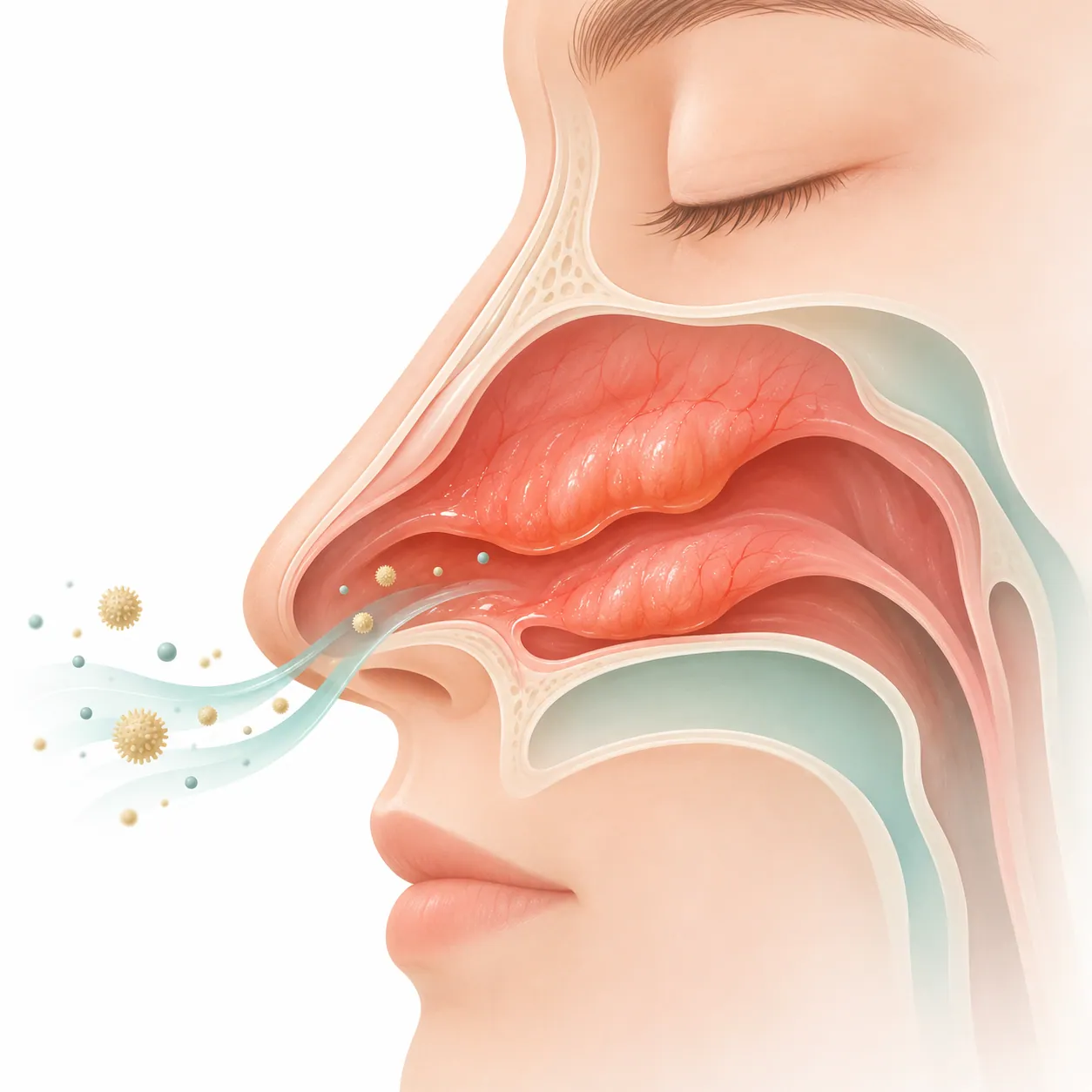
비염은 코 안쪽 점막에 염증이 생겨 예민해진 상태입니다. 꽃가루나 집먼지진드기 같은 물질에 면역이 과하게 반응하는 알레르기 비염이 대표적이고, 찬 공기나 온도 변화에 반응하는 비알레르기 비염도 있습니다.
알레르기 비염은 세계 인구의 10~20%가 겪는 흔한 질환으로, 코 증상에 그치지 않고 일상을 흔듭니다. 27개 연구를 모은 분석에서 비염 환자는 수면 시간은 비슷해도 수면의 질이 떨어지고 잠드는 데 더 오래 걸렸습니다[1].
이런 증상이 있나요?

- 아침에 일어나면 재채기가 연달아 나온다
- 맑은 콧물이 물처럼 흐른다
- 코가 막혀 입으로 숨을 쉰다
- 코와 눈이 가렵다
- 콧물이 목 뒤로 넘어가 헛기침이 난다
- 찬 바람이나 온도 변화에 증상이 심해진다
- 코가 막혀 잠을 설치고 낮에 머리가 멍하다
비염은 증상과 코 안쪽 상태로 진단하고, 알레르기가 의심되면 피부반응검사나 혈액검사로 원인 물질을 찾습니다. 누런 콧물과 얼굴 통증이 오래가면 축농증을 함께 살펴야 합니다.
비염은 왜 생기나요?
- 집먼지진드기, 꽃가루, 곰팡이, 동물 털
- 찬 공기와 급격한 온도 변화
- 미세먼지, 담배 연기, 강한 냄새
- 알레르기 체질과 가족력
- 과로와 수면 부족으로 떨어진 면역
같은 환경에서도 비염이 심해지는 때가 따로 있습니다. 면역력이 무너질 때인데요. 피곤하고 잠이 부족하면 코 증상이 심해지고, 코가 막히면 다시 잠이 나빠집니다. 또한 평소 컨디션과도 연관이 깊습니다. 비염 환자는 잠드는 데 더 오래 걸리고 수면제도 더 많이 썼습니다[1]. 코를 아무리 치료해도 그때뿐이고 비염이 금세 되풀이된다면 이 면역이라는 고리를 함께 살펴봐야 합니다.
비염의 표준 치료
표준 치료는 원인 물질을 피하면서, 코에 뿌리는 스테로이드를 중심으로 항히스타민제를 함께 쓰는 것입니다[2]. 식염수 코 세척도 증상을 줄입니다[3]. 다만 먹는 항히스타민제는 코 스테로이드보다 효과가 덜하고, 졸음이 심한 1세대 항히스타민제는 피하도록 권합니다. 약국에서 쉽게 구할 수 있는 혈관수축 코 스프레이도 오래 쓰지 않아야 합니다[2].
이런 약들은 증상을 가라앉히지만, 졸음과 코 마름이 불편하거나 약을 끊으면 콧물과 코막힘이 바로 되풀이되는 경우가 많습니다. 이런 경우 한의학 치료는 찬 기운과 자극에 예민해진 코와 약해진 면역력을 함께 다스리는 데 도움이 됩니다.
관련 연구를 살펴보면, 침 치료는 8주 뒤 가짜 침보다 삶의 질 점수를 0.5점 더 높이고 항히스타민제 사용을 줄였습니다[4]. 한약 옥병풍산은 22개 연구를 모은 분석에서 단독으로는 양약과 뚜렷한 차이가 없었지만, 양약과 함께 쓰면 코 증상이 더 줄었습니다[5].
해움한의원은 이렇게 치료합니다

해움한의원은 코만 보지 않고, 비염이 되풀이되는 몸의 상태를 찾아 함께 치료합니다.
1단계. 비염의 유형과 악화 요인을 가립니다
증상이 심해지는 계절과 상황, 콧물의 양상, 수면과 피로를 자세히 살펴봅니다. 축농증이나 구조적 문제가 의심되면 이비인후과 검사를 먼저 안내해 드립니다.
2단계. 막힌 코와 긴장을 풉니다
침과 약침, 그리고 추나로 코 주변의 순환을 돕고, 굳은 목·어깨의 긴장을 풀어 숨 쉬기 편하게 합니다.
3단계. 유형에 맞춰 바탕을 다스립니다
체질과 상태에 맞춰 개인 맞춤 한약을 복용합니다. 수면과 생활 환경도 함께 살핍니다.
4만 건의 처방 사례가 말해주는, 한방 맞춤 치료의 힘




비염 치료후기 총 7건
환자분들이 남긴 치료후기입니다. 본문은 로그인 후 보실 수 있습니다.

기침 콧물 멈추는법? 목동 한의원에서 알려주는 코비염 해결법
2025. 02. 15.
알러지 체질 고칠 수 있나요? 한랭두드러기와 비염 한약 3개월
2022. 03. 19.
 관련 후기
입대 전 갑자기 발생한 과민성대장증후군, 한의원에서 치료가 될까요?
2026. 06. 01.
 관련 후기
스트레스로 인한 자율신경 문제가 불러온 화병, 불면증
2024. 06. 28.
 관련 후기
스트레스인지 코로나후유증인지.. 왼쪽가슴통증손저림 만성피로 염증 한 방에!
2023. 01. 18.
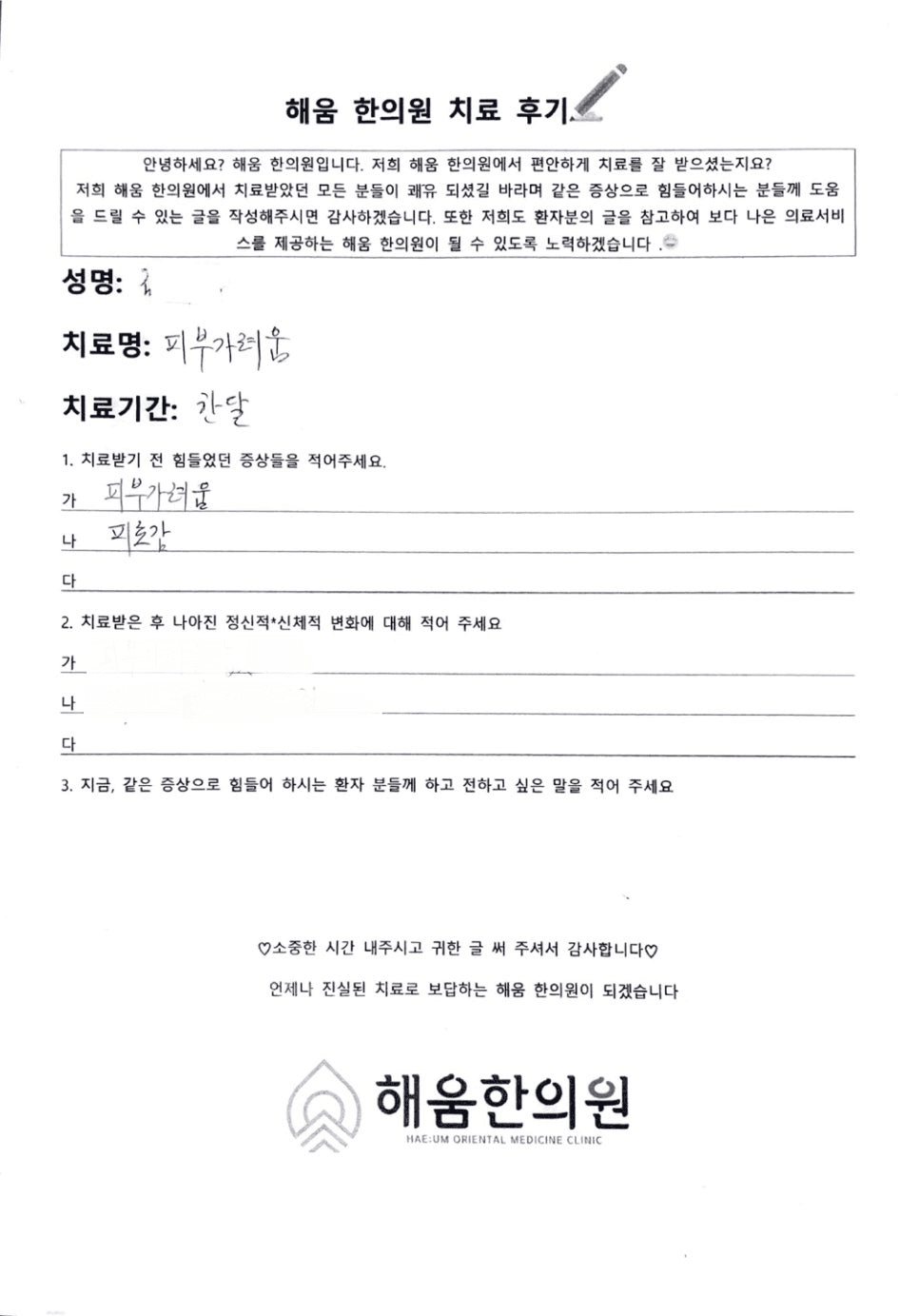 관련 후기
한랭두드러기로 인한 간지럼증 1달
2022. 05. 24.
다른 증상으로 내원하신 분들의 후기 중 ‘비염’이 증상으로 함께 언급된 기록
비염, 누가 진료하나요?
담당 의료진
대표원장 박재은

“병이 아니라 그 뒤의 사람을 봅니다”
경희대학교 한의과대학에서 석사·박사 과정을 마쳤습니다. 심리상담사 1급 자격과 4만 건 이상의 한약 처방 경험을 바탕으로 진료합니다.
의료진 소개 더보기비염, 자주 묻는 질문
비염은 완치가 되나요?
코 스프레이를 계속 써도 되나요?
양약과 한약을 같이 먹어도 되나요?
아이도 치료할 수 있나요?
치료 기간은 얼마나 걸리나요?
생활에서 어떻게 관리해야 하나요?
해움한의원에서 비염을 진료하나요?
비염으로 내원하려면 어떻게 하나요?
비염, 질문 있어요
3건환자분들이 남긴 온라인 상담 질문과 의료진 답변입니다.
이런 경우에는 미루지 말고 진료를 받으세요
아래 증상이 있다면 축농증 합병증이나 다른 질환일 수 있습니다. 지체하지 말고 이비인후과나 응급실을 먼저 찾으세요.
- 한쪽 코만 계속 막히거나 코피가 반복된다
- 고열과 함께 얼굴이나 눈 주위가 붓고 아프다
- 시야가 흐려지거나 눈이 잘 움직이지 않는다
- 숨이 차고 쌕쌕거리는 소리가 난다
- 입술이나 혀가 붓고 숨쉬기 어렵다: 119
참고문헌 5편
[1]Liu J, Zhang X, Zhao Y, Wang Y. The association between allergic rhinitis and sleep: A systematic review and meta-analysis of observational studies. PLoS One. 2020;15(2):e0228533. doi:10.1371/journal.pone.0228533. PMID: 32053609.
초록 (Abstract)
This systematic review and meta-analysis examines the associations of allergic rhinitis with sleep duration and sleep impairment. Observational studies published before August 2019 were obtained through English language literature searches in the PubMed, Embase, and CINAHL databases. Mean differences and odds ratios with 95% confidence intervals were extracted and used for meta-analysis. Heterogeneity was confirmed by the I2-heterogeneity test. Subgroup analysis was conducted to evaluate the influence of study design. The Grading of Recommendations Assessment, Development, and Evaluation approach was used to determine the level of evidence. In total, 2544 records were identified through database searches; 914 duplicate records were excluded, 1452 records were removed after screening of titles and abstracts, 151 records were excluded after full-text screening, and 27 articles were included in the final meta-analyses. A total of 240,706,026 patients (19,444,043 with allergic rhinitis) were considered. No significant difference in sleep duration between the allergic rhinitis and the control groups was found. Patients with allergic rhinitis presented with significantly higher sleep quality scores, sleep disturbances scores, and sleep latency scores; more frequent use of sleep medications; and lower sleep efficiency as measured by the Pittsburgh Sleep Quality Index and polysomnography. Meta-analyses for adjusted odds ratios showed that allergic rhinitis was also associated with higher risks of nocturnal dysfunctions, including insomnia, nocturnal enuresis, restless sleep, sleep-disordered breathing, obstructive sleep apnea, and snoring. Meta-analysis for adjusted odds ratio also showed that allergic rhinitis was associated with daytime dysfunction, including difficulty waking up, daytime sleepiness, morning headache, and the use of sleep medications. The overall quality of evidence ranged from low to very low, indicating that caution is required when interpreting these results. This study demonstrates that there is a significant association of AR with sleep characteristics.
결과 (Results)
Literature search and study characteristics: Fig 1 presents the literature search and selection process. 2544 records published before August 2019 were identified. After title, abstract, keyword, and full-text screening, 27 articles were included. The S1 Table lists studies that superficially met the eligibility criteria during full-text screenings; however, failed to meet the criteria on further inspection.
The characteristics of included studies are summarized in Table 1. A total of 240,706,026 patients (19,444,043 AR cases) were included from 13 cross-sectional studies, 10 case-control studies, and 4 cohort studies. Both adult and pediatric patients were included. Medical records, clinical examination findings, skin prick test results, self-reported questionnaires, and face-to-face interviews were reviewed to confirm AR. Sleep–related outcomes were collected and confirmed by medical records, clinical examination findings, self-reported questionnaires, polysomnography (PSG) results, actigraphy results, and face-to-face interviews.
Comparative analyses of sleep outcomes between AR patients and controls: Nine studies reported sleep durations of AR and control groups. Pooled results showed no significant difference in sleep duration between the groups [MD with 95% CI = 0.79 (-14.90, 16.48)] with high heterogeneity (I2 = 93.00%). Subgroup analysis stratified by age, presence of OSA, study design, and measurement of sleep duration were conducted, but no significant differences were observed (Fig 2).
Four studies reported comparisons of Pittsburgh Sleep Quality Index (PSQI) scores in patients with AR. Compared with the control group, the AR group presented with higher sum PSQI scores [MD with 95% CI = 0.68 (0.20, 1.15)], higher sleep disturbances scores [MD with 95% CI = 0.20 (0.13, 0.27)], and higher sleep latency scores (MD with 95% CI = 0.29 (0.13, 0.45)). The I2 was 20.90% for the summed PSQI score and 0.00% for the sleep disturbance and sleep latency scores. Three studies provided comparisons of the Epworth Sleepiness Scale (ESS) in patients with AR. The AR group presented with a higher, though not significant, sum ESS score [MD with 95% CI = 1.53 (-0.23, 3.30)]. Five articles reporting PSG outcomes showed lower scores of sleep efficiency [MD with 95% CI = -3.95 (-7.00, -0.45), I2 = 89.00%] in the AR group (Fig 3).
Adjusted associations between AR and sleep outcomes: Fig 4 shows the adjusted relationship between AR and sleep outcomes. Patients with AR were more likely to suffer from nocturnal sleep-related dysfunctions, including insomnia [OR with 95% CI = 1.84 (1.07, 3.16)], nocturnal enuresis [OR with 95% CI = 1.75 (1.44, 2.13), I2 = 28.50%], restless sleep [OR with 95% CI = 2.20 (1.26, 3.82), I2 = 51.20%], SDB [OR with 95% CI = 3.55 (1.03, 12.31), I2 = 85.80%], OSA [OR with 95% CI = 2.09 (1.41, 3.10), I2 = 53.60%], and snoring [OR with 95% CI = 2.34 (1.68, 3.28), I2 = 83.40%]. AR was also associated with a higher risk of daytime sleep-related dysfunctions, including difficulty waking up [OR with 95% CI = 2.58 (1.36, 4.89)], daytime sleepiness [OR with 95% CI = 1.85 (1.14, 3.00), I2 = 53.20%], morning headache [OR with 95% CI = 6.16 (2.48, 15.27)], and the use of sleeping pills [OR with 95% CI = 1.69 (1.20, 2.38)].
Evaluation of the effect of study design: We conducted subgroup analysis stratified by study design for sleep duration, apnea-hypopnea index (AHI), sleep efficiency measured by PSG, the percent of sleep stage REM measured by PSG, OSA, and snoring. Significant differences in results from different study designs were observed for AHI, sleep efficiency measured by PSG, and the percent of sleep stage REM measured by PSG, indicating the potential influence of study design on pooled results. Detailed information is shown in the supplemental material (S6–S11 Figs).
Assessment of study quality and sensitivity analysis: Most of the included studies were of high quality according to the NOS criteria. Detailed information is shown in S2–S4 Tables.
By omitting one study each time using a random effects model, sensitivity analysis was conducted for meta-analyses of sleep duration, ESS score, AHI assessed by PSG, sleep efficiency assessed by PSG, the percentage of sleep stage REM assessed by PSG, nocturnal enuresis, restless sleep, OSA, snoring, and daytime sleepiness. Pooled results of sleep duration and AHI assessed by PSG were significantly sensitive to the study of Zheng et al, because the direction of the synthesized MD changed after it was omitted. The results of the ESS score, sleep efficiency evaluated by PSG, nocturnal enuresis, restless sleep, and daytime sleepiness also showed instability. Detailed information is presented in S12–S21 Figs.
Assessment of cumulative evidence: The overall quality of evidence using GRADE’s Summary of Findings table was judged to be low or very low. Risk of bias, inconsistencies (methodological, clinical, and statistical), indirectness, and imprecision were found due to lack of adjusting confounding factors, incorporation of different age groups and study designs, self-reported AR, and sleep outcomes. The Summary of Findings table can be found in S5 and S6 Tables.
In the present review, no significant differences in sleep duration between the AR and control groups were observed. AR patients presented with increased sleep quality scores, sleep disturbance scores, and sleep latency scores on the PSQI scale and a decreased sleep efficiency score using PSG. AR was also found to be associated with a higher risk of nocturnal sleep-related dysfunctions, including insomnia, nocturnal enuresis, restless sleep, SDB, OSA, and snoring. Additionally, AR was found to be associated with a higher risk of daytime sleep-related dysfunctions, including difficulty waking up, daytime sleepiness, morning headache, and the use of sleeping pills.
The main underlying mechanisms for the association between AR and altered sleep patterns can be summarized as follows: (1) inflammatory cytokines related to AR produce fatigue directly; (2) AR symptoms and underlying pathophysiologic changes affect sleep indirectly; and (3) the effect of autonomic system dysfunction in patients with AR.
Inflammatory mediators, including histamine, are released in AR and have a direct influence on the central nervous system, contributing to sleep disturbances and daytime sleepiness. Histamine can also affect the regulation of the sleep-wake cycle, which may result in arousal disorder. AR also induces decreased levels of the interleukins (ILs)-1β, IL-4, IL-6 and IL-10, which may increase REM sleep (important in the restorative function of sleep), decrease sleep onset latency, improve circadian rhythm, and regulate slow wave sleep. These changes contribute to why patients with AR often have difficulties with overnight sleep and daytime tiredness.
Symptoms of AR include nasal congestion, rhinorrhea, sneezing, and pruritus. Among these symptoms, nasal obstruction is the most troublesome one for patients. Nasal congestion is considered to be a major factor interfering with sleep quality and inducing daytime somnolence. Previous studies suggest that nasal obstruction contributes to higher risks of OSA and SDB. The role of nasal congestion as a risk factor for snoring has also been confirmed by a population-based cohort study. A negative effect of nasal congestion was also found on quality of life and daytime productivity. Data on sleep-related end points from clinical trials of nasal decongestants are associated with improved sleep, reduced daytime fatigue, and improved quality of life. Other symptoms including cough and sputum production also contribute to poor sleep quality and sleep disorders.
Imbalance of the autonomic system in AR is also thought to be involved to the association between AR and sleep impairment. As one of the most powerful autonomic nerve reflexes, the trigeminocardiac reflex (TCR) is believed to directly influence the development of SDB, OSA, REM sleep apnea, and nasal congestion. The nasotrigeminal reflex, a peripheral nervous system equivalent of the TCR, is also thought to have a potential influence on sleep impairment. The extent of autonomic dysfunction in AR and sleep disturbances is still not well-established and needs further investigation.
To the best of our knowledge, this is the first systematic review and meta-analysis evaluating the association between AR and sleep based on observational investigations. A 2018 systematic review focused on the association between AR and OSA and applied a meta-analysis of population-based studies; however, this article concentrated mainly on the prevalence of AR in subjects with or without OSA/SDB. Another related review examined AR and sleep impairment, but focused mainly on the mechanism of their association and the consequences of disordered sleep.
There are some limitations to the current study. First, most of the included studies are cross-sectional or case-controlled, which do not allow for inferences of causal relationships. Second, some results from this study’s meta-analyses display sensitivity to a single study included in the analysis, potentially due to the limited number of included studies. In terms of the sensitivity analysis of sleep duration and AHI assessed by PSG, the inverse MD is caused by the study of Zheng et al., which was conducted in patients with OSA. We included a limited number of studies focusing on OSA patients and failed to detect a difference between the normal population and patients with OSA. More investigations conducted in patients with OSA are needed. Third, some outcomes of sleep impairment are confirmed by self-reported questionnaires, which are vulnerable to recall bias and potentially affected by social norms. Further longitudinal research with objective measurements are warranted.
원문 발췌 · Liu J, Zhang X, Zhao Y, Wang Y, PLoS One 2020 · CC BY 4.0 라이선스에 따라 수정 없이 인용했습니다(본문 속 인용 번호는 생략).
[2]Klimek L, Bachert C, Pfaar O, Becker S, Bieber T, Brehler R, et al. ARIA guideline 2019: treatment of allergic rhinitis in the German health system. Allergol Select. 2019;3(1):22-50. doi:10.5414/alx02120e. PMID: 32176226.
초록 (Abstract)
Background: The number of patients affected by allergies is increasing worldwide. The resulting allergic diseases are leading to significant costs for health care and social systems. Integrated care pathways are needed to enable comprehensive care within the national health systems. The ARIA (Allergic Rhinitis and its Impact on Asthma) initiative develops internationally applicable guidelines for allergic respiratory diseases. Methods: ARIA serves to improve the care of patients with allergies and chronic respiratory diseases. In collaboration with other international initiatives, national associations and patient organizations in the field of allergies and respiratory diseases, real-life integrated care pathways have been developed for a digitally assisted, integrative, individualized treatment of allergic rhinitis (AR) with comorbid asthma. In the present work, these integrated care pathways have been adapted to the German situation and health system. Results: The present ICP (integrated care pathway) guideline covers key areas of the care of AR patients with and without asthma. It includes the views of patients and other healthcare providers. Discussion: A comprehensive ICP guideline can reflect real-life care better than traditional guideline models.
원문 발췌 · Klimek L, Bachert C, Pfaar O, Becker S, Bieber T, Brehler R, Buhl R, Casper I, Chaker A, Czech W, Fischer J, Fuchs T, Gerstlauer M, Hörmann K, Jakob T, Jung K, Kopp MV, Mahler V, Merk H, Mülleneisen N, Nemat K, Rabe U, Ring J, Saloga J, Schlenter W, Schmidt-Weber C, Seyfarth H, Sperl A, Spindler T, Staubach P, Strieth S, Treudler R, Vogelberg C, Wallrafen A, Wehrmann W, Wrede H, Zuberbier T, Bedbrook A, Canonica GW, Cardona V, Casale TB, Czarlewski W, Fokkens WJ, Hamelmann E, Jutel M, Larenas-Linnemann D, Mullol J, Papadopoulos NG, Toppila-Salmi S, Werfel T, Bousquet J, Allergol Select 2019 · CC BY 2.5 라이선스에 따라 수정 없이 인용했습니다(본문 속 인용 번호는 생략).
[3]Head K, Snidvongs K, Glew S, Scadding G, Schilder AG, Philpott C, et al. Saline irrigation for allergic rhinitis. Cochrane Database Syst Rev. 2018;6:CD012597. doi:10.1002/14651858.cd012597.pub2. PMID: 29932206.
요약 14개 연구, 747명을 모은 코크란 리뷰입니다. 식염수 코 세척은 세척을 하지 않은 경우보다 환자가 느끼는 증상을 4주까지 줄일 수 있었습니다. 석 달을 넘긴 연구는 없었습니다.원문은 출판사 저작권 자료로, 위 링크에서 확인하실 수 있습니다.
[4]Brinkhaus B, Ortiz M, Witt CM, Roll S, Linde K, Pfab F, et al. Acupuncture in patients with seasonal allergic rhinitis: a randomized trial. Ann Intern Med. 2013;158(4):225-234. doi:10.7326/0003-4819-158-4-201302190-00002. PMID: 23420231.
요약 계절성 알레르기 비염 환자를 침, 가짜 침, 응급약만 쓰는 군으로 나눈 무작위 연구입니다. 8주 뒤 침 군은 가짜 침 군보다 삶의 질 점수가 0.5점 좋았고 항히스타민제 사용도 줄었습니다. 저자들은 통계적으로는 유의하지만 임상적 의미는 크지 않을 수 있다고 밝혔습니다.원문은 출판사 저작권 자료로, 위 링크에서 확인하실 수 있습니다.
[5]Luo Q, Zhang CS, Yang L, Zhang AL, Guo X, Xue CC, et al. Potential effectiveness of Chinese herbal medicine Yu ping feng san for adult allergic rhinitis: a systematic review and meta-analysis of randomized controlled trials. BMC Complement Altern Med. 2017;17(1):485. doi:10.1186/s12906-017-1988-5. PMID: 29110710.
초록 (Abstract)
Background: Chinese herbal medicine formula Yu ping feng san (YPFS) is commonly used for allergic rhinitis (AR). Previous review had summarized the effectiveness and safety of YPFS, however without any subgroup analysis performed to provide detailed evidence for guiding clinical practice. YPFS was recommended for the management of AR by Chinese medicine clinical practice guideline, but the treatment duration of YPFS was also not specified. The aim of this study is to evaluate the effectiveness and safety of YPFS in treating adult AR with the most recent evidence, and attempt to specify the duration of utilisation through subgroup meta-analyses.
Methods: Seven databases were searched from their inceptions to September 2017. Randomized controlled trials (RCTs) evaluating YPFS for adult AR were included. Methodological quality of studies was assessed using the Cochrane risk of bias tool. Meta-analysis and subgroup meta-analyses were conducted for evaluating the effectiveness of YPFS. The Grading of Recommendations Assessment, Development and Evaluation (GRADE) approach was used for rating the quality of evidence.
Results: Twenty-two RCTs involving 23 comparisons were included in this review. YPFS was compared to placebo, pharmacotherapy, and used as an add-on treatment compared to pharmacotherapy. Meta-analyses were feasible for the outcomes of four individual nasal symptom scores and “effective rate”. Four individual nasal symptom scores decreased after YPFS’ combination treatment: itchy nose (MD-0.46, 95% CI[−0.50, −0.42]), sneezing (MD-0.41, 95% CI[−0.47, −0.35]), blocked nose (MD-0.46, 95% CI[−0.54, −0.39]) and runny nose (MD-0.42, 95% CI[−0.58, −0.26]). Based on “effective rate”, meta-analysis showed that YPFS did not achieve better effect than pharmacotherapy (RR1.07, 95%CI [0.94, 1.22), but its combination with pharmacotherapy seemed more effective than pharmacotherapy alone (RR1.27, 95%CI [1.19, 1.34]) (low quality). Subgroup analysis suggested that YPFS was not superior to the second-generation antihistamine (RR1.04, 95%CI [0.90, 1.19]) (low quality). Further, YPFS’ combination treatment seemed more beneficial when it was used for more than three weeks (RR1.15, 95%CI [1.01, 1.32]). In addition, YPFS was well-tolerated for treating adult AR.
Conclusion: Chinese herbal medicine formula YPFS seems beneficial for adult AR. This potential benefit need to be further evaluated by more rigorous RCTs.
Electronic supplementary material: The online version of this article (10.1186/s12906-017-1988-5) contains supplementary material, which is available to authorized users.
결과 (Results)
In total, 1244 records were obtained through database searches, and 334 potentially relevant articles were identified after screening titles and abstracts. According to the selection criteria, 312 articles were further excluded. Twenty-two RCTs were included in the review, twenty of them were included meta-analyses. Twenty-one included trials were conducted in the mainland China and published in Chinese, and one was conducted in China Hong Kong and published in English. The search and study selection process is shown in Fig. 1, and the characteristics of included RCTs are presented in Table 1.
Participants: In total, 2309 participants with AR were involved in the 22 RCTs, 309 participants were diagnosed with perennial allergic rhinitis, and 2000 participants were AR without specified subtype. All participants aged between 18 to 70 years. Of the reported gender information, there were a total of 1153 males and 1098 females. Participants were allocated to the YPFS group (n = 552), placebo group (n = 126), pharmacotherapy group (n = 1044) and the combination of CHM and pharmacotherapy group (n = 587). Five studies did not provide information on participants’ duration of disease, the remaining 17 RCTs reported the duration of disease with a median of 4.5 years.
Interventions: Nine studies employed the original YPFS formula of only three herbs as treatment, the remaining 13 studies used modified YPFS formulas. The dosage and composition of YPFS formulas used in different studies are presented in Table 2. The preparation forms of the CHM were decoctions (10 studies), granule (eight studies), capsule (one study), pill (one study), and liquid extract (two studies). In regards to the comparator, two studies compared YPFS to placebo, seven studies compared YPFS to pharmacotherapy, 12 studies compared the combination of YPFS and pharmacotherapy to pharmacotherapy alone, and one three-arm study contained both pharmacotherapy and YPFS plus pharmacotherapy as controls. In addition, two studies had an arm of a different CHM formula which are not included in our review.
Pharmacotherapy being used as comparators were: 1) oral or intranasal second generation H1-antihistamines, 2) intranasal glucocorticosteroids, and 3) the combination of second generation H1-antihistamines and intranasal glucocorticosteroids.
Outcomes: The primary outcome measures of individual nasal symptom scores were reported in four studies. In terms of the secondary outcome measures, effective rate was reported in 20 studies, with two methods of calculating the effective rate being used as stated in Chinese clinical guidelines. Patients’ QoL using Rhinoconjunctivitis Quality of Life Questionnaire (RQLQ) score was assessed by one study. Reported laboratory tests results were serum sIgE and IL-4. In addition, the recurrence rate in follow-up phase was reported in two studies.
Treatment duration and follow-up: All included studies provided treatment of equal duration to the intervention and control groups. The treatment duration was two weeks or fifteen days in eight studies, four weeks or one month in 12 studies, three weeks and eight weeks each in one study. Six studies reported a post treatment follow-up phase, being one month, eight weeks, three month, six months and one year.
Dropouts: Three studies reported dropouts during treatment phase with reasons provided. None of the dropouts was due to serious AE. The other 19 studies were considered to have no dropouts since they reported equal numbers of participants at randomization and study completion.
Risk of bias assessment: Eight studies were assessed as “low” risk for “sequence generation” since they used random number “tables”, others were “unclear”. For “allocation concealment”, one study was “low” risk because it used a sealed envelope method, others were “unclear” due to lack of information. One study employed placebo control and made effort to blind participants, personnel and outcome assessors, thus this study was assessed as “low” risk for these items; the other 21 studies were “high” risk for “blinding of participants and personnel” and “unclear” risk for “blinding of outcome assessors”. All studies were “low” risk for the “incomplete outcome data”, since they were considered having no dropouts, or reported similar number of dropouts from both groups which was unlikely to cause bias. One study reported all outcomes pre-defined in its registered protocol therefore it received a “low” risk for the “selective outcome reporting”, others were “unclear”. Due to lacking of information, all studies were “unclear” for “other bias” focusing on the funding resources.
Effectiveness: The effectiveness of YPFS were firstly analysed according to the comparators as follow. All meta-analyses results are summarised in Table 3.
YPFS versus placebo: Two studies compared YPFS with oral placebo. Meta-analysis was not possible because they reported data on different outcomes.
One study reported data on RQLQ, it was found that the post-treatment total RQLQ score of the YPFS group was lower than that of the placebo group (n = 159, MD-8.57, 95%CI [−16.37, −0.77]). Another study reported post-treatment data on effective rate, serum sIgE and IL-4. Significant difference between the YPFS group and the placebo group was found for all these outcomes (n = 86, effective rate: RR13.33, 95%CI [4.46, 39.83]; sIgE: MD-16.18, 95%CI [−22.50, −9.86]; IL-4: MD-19.65, 95%CI [−25.32,-13.98]). However, these results are only from single study, the small sample size and wide confidence interval makes the results unconvinced.
YPFS versus pharmacotherapy: Seven studies compared YPFS to pharmacotherapy, and one three-arm study also contained this comparison. None of these studies reported nasal symptom scores.
All these studies reported post-treatment data on effective rate, the overall meta-analysis showed that YPFS did not achieve superior effect than overall pharmacotherapy (n = 833, RR1.07, 95%CI [0.94, 1.22], I2 = 70%). Subgroup analyses were conducted to further explore the effectiveness of YPFS comparing to different types of pharmacotherapy. It was found that, when comparing YPFS to the second-generation antihistamines, there was no significant difference between two groups for the outcome of effective rate (n = 613, RR1.04, 95%CI [0.90, 1.19], I2 = 64%). On the other hand, one study showed that YPFS was more effective than the combination of the second-generation antihistamine and intranasal glucocorticosteroids (n = 220, RR1.27, 95%CI [1.10, 1.48]) (Fig. 2).
Subgroup analysis based on treatment duration was also conducted. Results showed that, in terms of the effective rate, there was no significant difference between the YPFS and pharmacotherapy when it was tested for two weeks (n = 410, RR1.04, 95%CI [0.92, 1.18], I2 = 6%); or being tested for more than three weeks (n = 423, RR1.08, 95%CI [0.82, 1.42], I2 = 90%) (Fig. 3).
In addition, one study found that YPFS achieved better effect than intranasal glucocorticosteroids for IL-4 (n = 220, MD-37.94, 95%CI [−49.47, −26.41]). Another study reported the recurrence rate at the end of follow-up phase, it was found that the number of recurrence of the YPFS group was less than that of pharmacotherapy (Cetirizine) (n = 103, RR0.37, 95%CI [0.18, 0.78]).
YPFS plus pharmacotherapy versus pharmacotherapy: Twelve studies compared the combination of YPFS and pharmacotherapy to pharmacotherapy alone, and one three-arm study also contained this comparison.
For the primary outcome measure, four studies using second-generation antihistamines as control reported data on individual symptoms scores. It was found that the combined intervention was more effective than second-generation antihistamines alone for four nasal symptoms: itchy nose (n = 418, MD-0.46, 95%CI [−0.50, −0.42], I2 = 0%), sneezing (n = 418, MD-0.41, 95%CI [−0.47, −0.35], I2 = 54%), blocked nose (n = 418, MD-0.46, 95%CI [−0.54, −0.39], I2 = 60%) and runny nose (n = 318, MD-0.42, 95%CI [−0.58, −0.26], I2 = 70%).
Meta-analysis was also feasible for the outcome of effective rate. Of these 1 comparisons, meta-analysis showed that the combination was more effective than pharmacotherapy alone (n = 1077, RR1.27, 95%CI [1.19, 1.34], I2 = 22%). Subgroup analysis on effective rate was conducted according to the pharmacotherapy used in the control groups. The results showed that the combination was more effective than different types pharmacotherapy as follow: the combination versus second-generation antihistamines (n = 727, RR1.28, 95%CI [1.19, 1.37], I2 = 43%) and the combination versus the second-generation antihistamine plus intranasal glucocorticosteroids (n = 225, RR1.29, 95%CI [1.14,1.46], I2 = 0%). However, the combined intervention was not superior to intranasal glucocorticosteroids alone (n = 125, RR1.15, 95%CI [0.97, 1.36], I2 = 0%). (Fig. 4).
Subgroup analysis for effective rate was performed based on the treatment duration. Superior effects towards the combination therapy was found when it was tested for more than three weeks, (n = 725, RR1.15, 95%CI [1.01, 1.32], I2 = 74%), but it was not found in the subgroup of two weeks treatment (n = 353, RR1.13, 95%CI [0.84, 1.54], I2 = 88%) (Fig. 5).
In addition, biomarker IL-4 was reported by three studies and it showed that the YPFS and second-generation antihistamines combination treatment were superior to second-generation antihistamines alone (n = 231, MD-14.43, 95%CI [−28.58, −0.29]).
Safety: Ten studies did not report information on AEs. Eight studies reported there was no AE occurred in both groups. The remaining four studies reported AEs in treatment group, and control groups during the treatment phase. According to these studies, the AEs possibly associated with the use of YPFS were acne and abdominal distension; while the AEs possibly caused by pharmacotherapy included dryness in the nasal cavity, local mucosa irritation, sedation, skin rash, vomit and nausea. All above AEs were transient and no medical intervention was required. Serious AE was not reported by any study. It was worth noting that the number of AEs occurred in the combination group was less than that of the pharmacotherapy group. For example, one study reported five cases of AEs in the combination group and 12 cases in the pharmacotherapy group, and another study reported three cases of AEs in the combination group and four cases in the pharmacotherapy group. These studies concluded that adding YPFS to pharmacotherapy is safe and it may be beneficial for reducing the AEs caused by pharmacotherapy. All detailed information of AEs is provided in Table 1.
Publication bias: The publication bias could not be assessed for the comparison of YPFS versus pharmacotherapy since there were not enough studies included in one meta-analysis. For the comparison of YPFS plus pharmacotherapy vs. pharmacotherapy alone, there were 12 trials in the meta-analysis of effective rate. No publication bias was detected based on the funnel plot (Fig. 6) and the Egger’s test (t = 1.30, 95% CI [−1.26, 4.79], p = 0.223).
GRADE for the main comparisons of YPFS: GRADE assessment was conducted for two main comparisons. The quality of evidence was low. Table 4 summarises the results.
원문 발췌 · Luo Q, Zhang CS, Yang L, Zhang AL, Guo X, Xue CC, Lu C, BMC Complement Altern Med 2017 · CC BY 4.0 라이선스에 따라 수정 없이 인용했습니다(본문 속 인용 번호는 생략).