
양천구 목동 삼차신경통 한의원
삼차신경통
세수를 하다가 얼굴 한쪽에 전기가 번쩍 흐릅니다. 양치도, 밥 씹기도, 찬 바람도 무섭습니다. 치과를 돌아도 치아에는 이상이 없다는 이 통증이 삼차신경통입니다.
삼차신경통 한눈에 보기
- 삼차신경통은 얼굴 감각을 맡는 삼차신경을 따라 전기가 오듯 짧고 극심한 통증이 되풀이되는 병입니다.
- 1차 약은 처음에 90% 넘게 듣지만, 18~27%는 부작용으로 약을 끊거나 줄입니다.
- 통증을 키우는 긴장과 피로, 수면을 함께 다스려야 약과 일상을 이어 가기 쉽습니다.
- 치료후기 2건
- 건강정보 1편
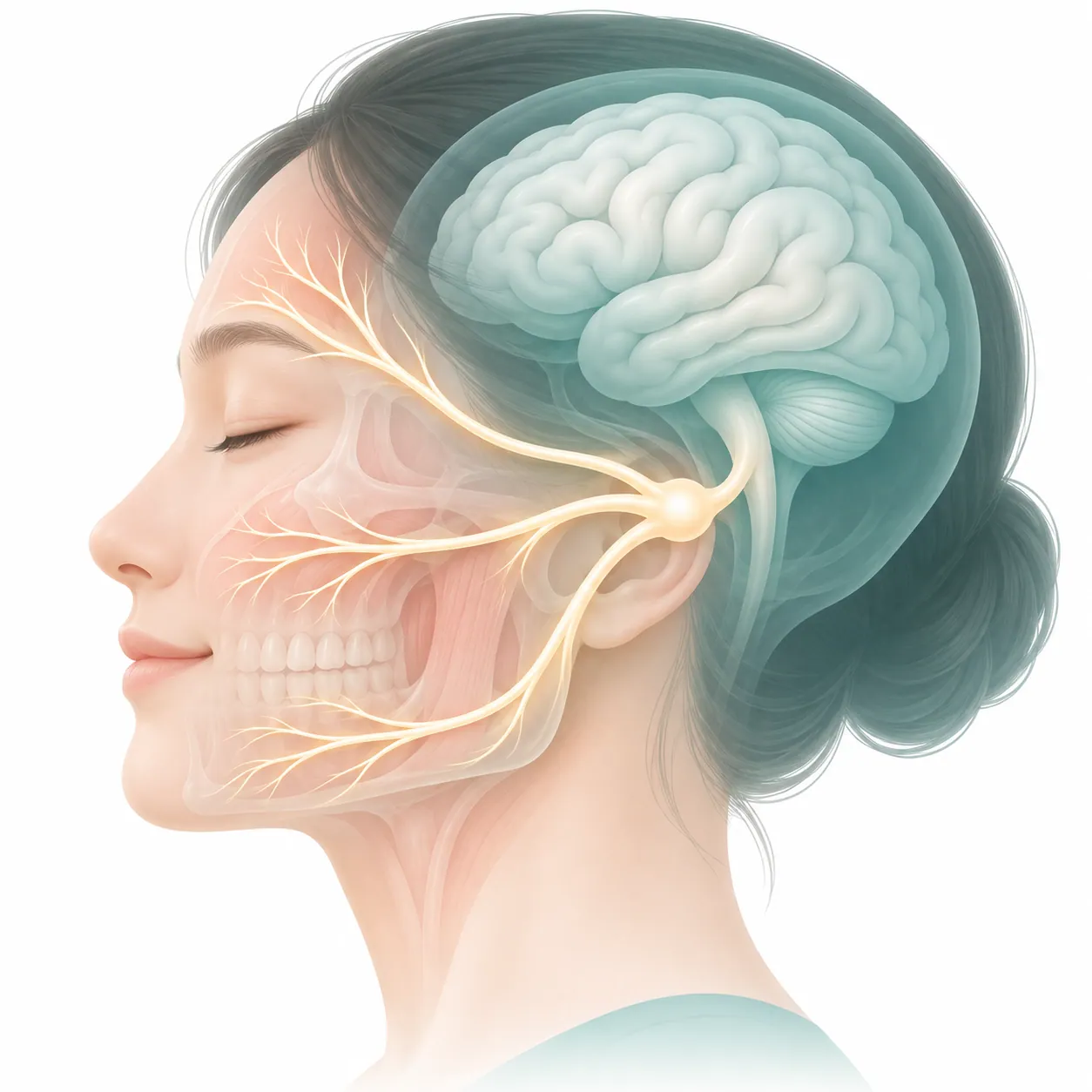

삼차신경통은 왜 생기나요?
- 혈관이 삼차신경 뿌리를 누르는 경우(고전적)
- 다발성 경화증, 뇌종양 등 다른 질환(이차성)
- 뚜렷한 원인을 찾지 못하는 경우(특발성)
혈관이 닿아 있다고 모두 삼차신경통은 아닙니다. 그래서 영상에서 혈관 접촉이 보여도 그것만으로 진단하지 않습니다[5]. 같은 조건에서 왜 통증이 시작되고 되풀이되는지는 아직 다 밝혀지지 않았습니다.
해움한의원은 진료에서 과로와 스트레스, 수면 부족 뒤에 통증이 심해지는 분을 자주 봅니다. 언제 올지 모르는 통증은 불안을 키우고, 먹고 씻는 일상까지 흔듭니다. 유럽 진료지침도 약과 수술에 더해 심리적 지원을 권합니다[5].
삼차신경통의 표준 치료
표준 치료는 카바마제핀과 옥스카바제핀이고[1], 처음 반응률은 각각 98%, 94%로 높습니다[6]. 약으로 조절되지 않거나 약을 견디기 어려우면 수술을 고려합니다[5]. 미세혈관감압술을 받은 환자의 70%는 10년 뒤 약 없이 통증이 없었습니다[7].
문제는 약의 부담입니다. 반응이 좋던 환자의 27%(카바마제핀), 18%(옥스카바제핀)가 부작용으로 약을 끊거나 충분히 쓰지 못했습니다[6]. 피로 31.3%, 기억력 저하 22.7%, 졸림 18.2%도 흔합니다[8]. 나이나 지병으로 수술이 어려운 분도 있습니다. 통증을 키우는 긴장과 피로가 그대로라면 약은 더 늘어납니다. 한의학 치료는 이 바탕을 다스립니다.
침 연구도 있습니다. 30개 연구, 2,295명의 분석에서 침은 카바마제핀보다 통증 점수를 1.40점 더 낮추었습니다[9]. 120명의 다기관 무작위 연구에서는 4주째 전침이 가짜 전침보다 통증을 1.6점 더 줄였고, 저용량 카바마제핀과 함께 쓴 군은 3.7점 더 줄었습니다. 이상반응은 전침이 10.17%, 카바마제핀이 25.42%였습니다[10]. 삼차신경통의 한약 연구는 아직 많지 않습니다.
해움한의원은 이렇게 치료합니다

해움한의원은 진단과 약을 먼저 확인하고, 통증을 키우는 몸의 조건을 찾습니다. 드시는 약은 임의로 끊지 않고 담당 의사와 함께 조절합니다.
1단계. 진단과 복용 약을 확인합니다
통증의 위치와 시간, 유발 자극, 치과와 신경과의 검사, 복용 약과 부작용을 자세히 살펴봅니다. MRI 를 찍지 않았거나 얼굴 감각이 둔해졌다면 신경과 진료를 먼저 안내해 드립니다. 심박변이도로 자율신경의 상태를 확인합니다.
2단계. 신경을 자극하지 않고 긴장을 풉니다
통증이 시작되는 자리를 피해 침과 약침으로 목과 어깨, 턱의 긴장을 풀고 자율신경을 안정시킵니다. 수면과 식사를 함께 살핍니다.
3단계. 유형에 맞춰 바탕을 다스립니다
체질과 상태에 맞춰 한약을 짓습니다.
4만 건의 처방 사례가 말해주는, 한방 맞춤 치료의 힘




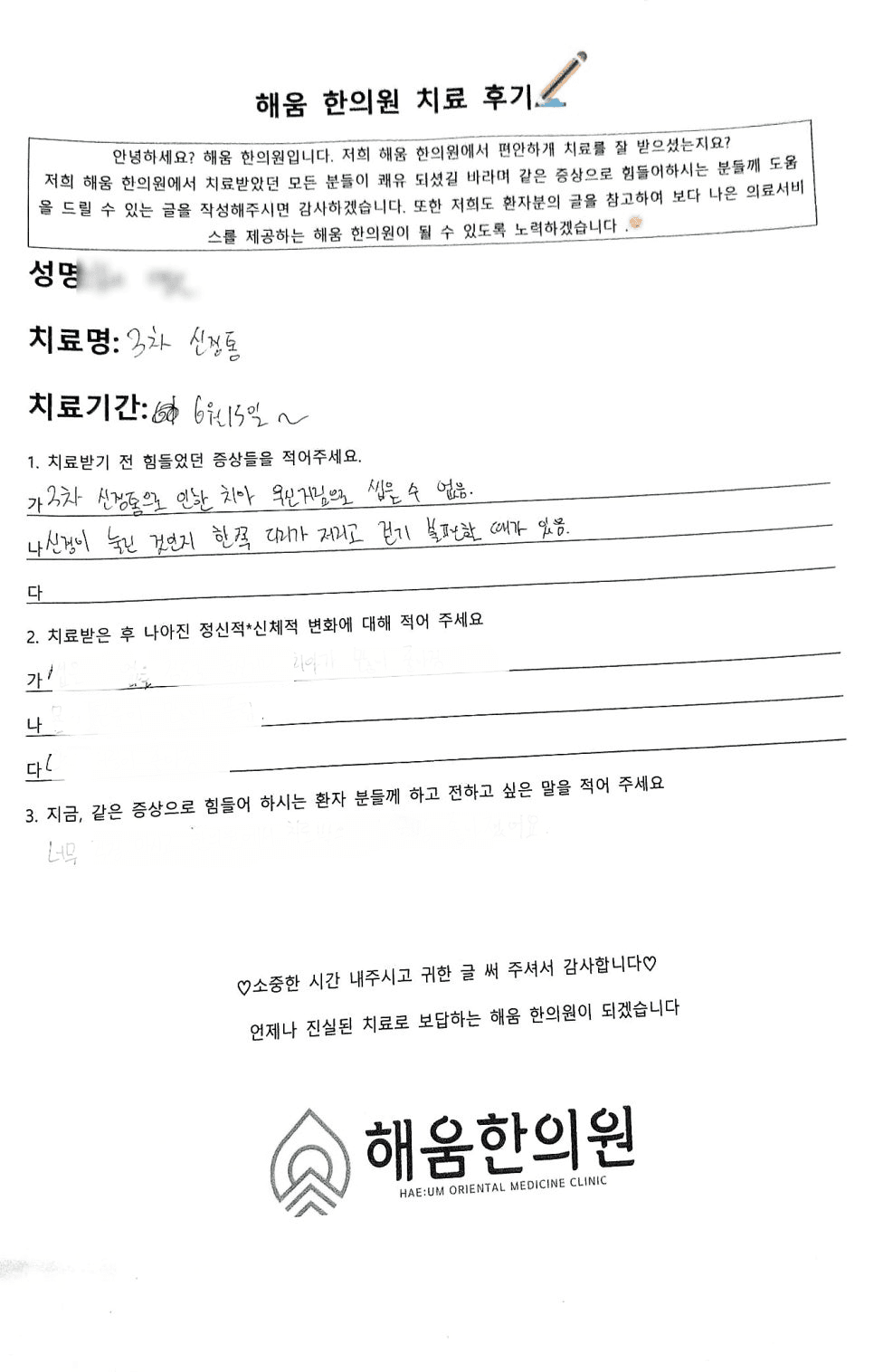
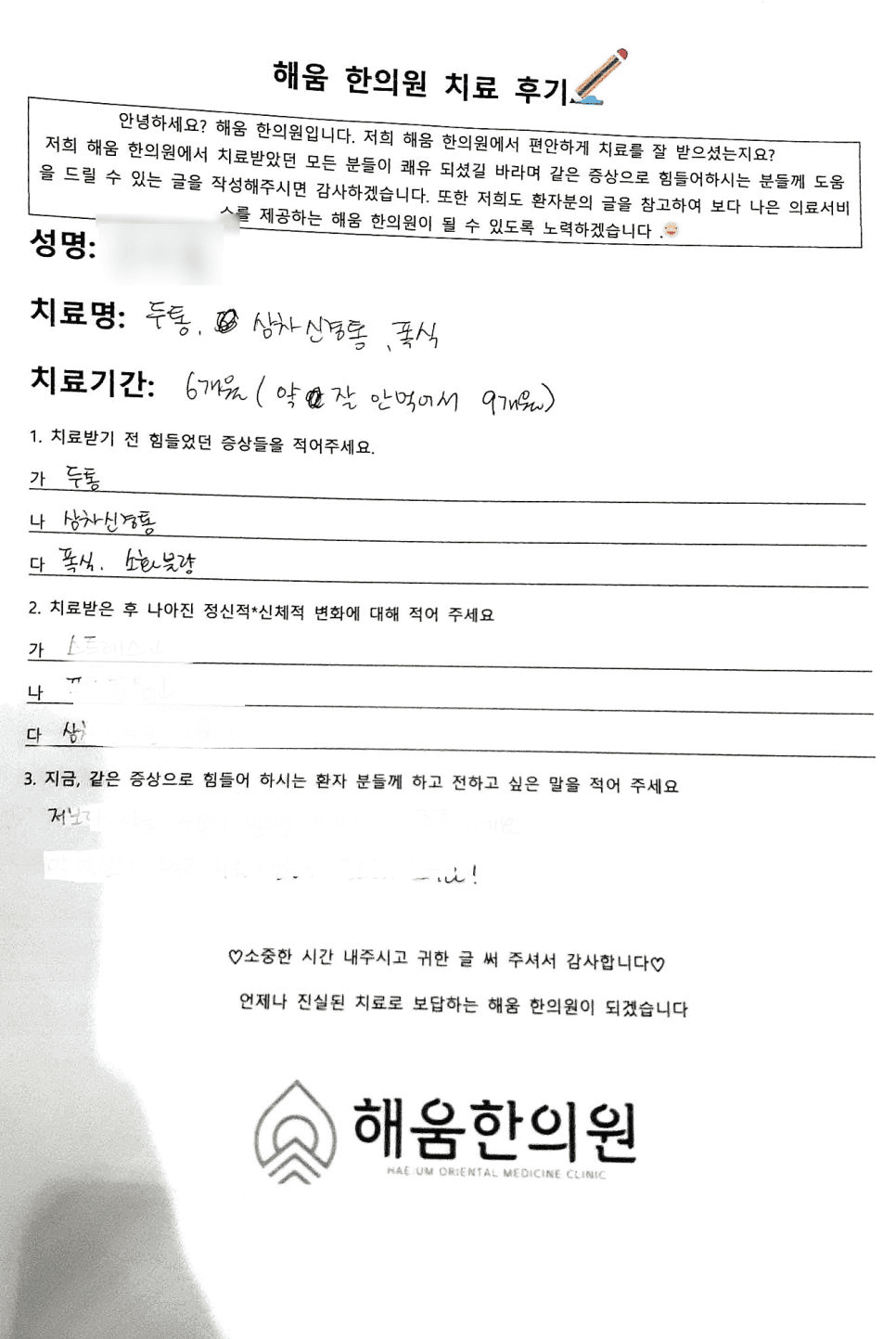
삼차신경통 치료후기 총 2건
환자분들이 남긴 치료후기입니다. 본문은 로그인 후 보실 수 있습니다.
삼차신경통, 누가 진료하나요?
담당 의료진
대표원장 박재은

“병이 아니라 그 뒤의 사람을 봅니다”
경희대학교 한의학박사이자 여한의사입니다. 심리상담사 1급 자격, 20만명 차트분석과 4만건 이상의 한약 처방 경험을 바탕으로 진료합니다.
의료진 소개 더보기삼차신경통, 자주 묻는 질문
치통과 어떻게 구별하나요?
삼차신경통은 저절로 낫나요?
수술을 받아야 하나요?
양약과 한약을 같이 먹어도 되나요?
치료 기간은 얼마나 걸리나요?
생활에서 어떻게 관리해야 하나요?
해움한의원에서 삼차신경통을 진료하나요?
삼차신경통으로 내원하려면 어떻게 하나요?
삼차신경통에 관해 알아두면 좋은 정보
1건삼차신경통과 관련해 정리한 건강정보입니다.

이런 경우에는 바로 응급실로 가세요
아래 증상은 뇌졸중이나 뇌종양, 뇌수막염 등 삼차신경통이 아닌 질환일 수 있습니다. 한의원보다 응급실(119)을 먼저 찾으세요.
- 말이 어눌하거나 얼굴, 팔다리에 힘이 빠진다
- 갑자기 얼굴 한쪽의 감각이 없어진다
- 물체가 둘로 보이거나 시력이 갑자기 떨어진다
- 벼락 치듯 갑작스러운 심한 두통이 함께 온다
- 고열과 함께 목이 뻣뻣하고 정신이 흐려진다
참고문헌 10편
[1]Bendtsen L, Zakrzewska JM, Heinskou TB, Hodaie M, Leal PRL, Nurmikko T, et al. Advances in diagnosis, classification, pathophysiology, and management of trigeminal neuralgia. Lancet Neurol. 2020;19(9):784-796. doi:10.1016/s1474-4422(20)30233-7. PMID: 32822636.
요약 삼차신경통 종설입니다. 자극으로 유발되는 짧고 찌르는 극심한 얼굴 통증이 특징입니다. 카바마제핀과 옥스카바제핀이 1차 약이고, 약으로 조절되지 않으면 미세혈관감압술이 1차 수술입니다.원문은 출판사 저작권 자료로, 위 링크에서 확인하실 수 있습니다.
[2]De Toledo IP, Conti Réus J, Fernandes M, Porporatti AL, Peres MA, Takaschima A, et al. Prevalence of trigeminal neuralgia: A systematic review. J Am Dent Assoc. 2016;147(7):570-576.e2. doi:10.1016/j.adaj.2016.02.014. PMID: 27017183.
요약 3개 연구의 체계적 고찰입니다. 유병률은 0.03~0.3%였습니다. 여성이 남성의 3배였고 37~67세에 많았으며, 위턱과 아래턱 가지가 주로 침범되었습니다.원문은 출판사 저작권 자료로, 위 링크에서 확인하실 수 있습니다.
[3]Lee CH, Jang HY, Won HS, Kim JS, Kim YD. Epidemiology of trigeminal neuralgia: an electronic population health data study in Korea. Korean J Pain. 2021;34(3):332-338. doi:10.3344/kjp.2021.34.3.332. PMID: 34193639.
요약 건강보험 자료의 분석입니다. 2018년 삼차신경통은 인구 10만 명당 100.21명이었고, 남녀 비는 1:2.14, 51~59세에 가장 많았습니다.원문은 출판사 저작권 자료로, 위 링크에서 확인하실 수 있습니다.
[4]Cruccu G, Finnerup NB, Jensen TS, Scholz J, Sindou M, Svensson P, et al. Trigeminal neuralgia: New classification and diagnostic grading for practice and research. Neurology. 2016;87(2):220-228. doi:10.1212/wnl.0000000000002840. PMID: 27306631.
요약 삼차신경통의 분류입니다. 혈관 압박에 의한 신경 뿌리의 변화가 있으면 고전적, 다른 신경 질환이 원인이면 이차성, 원인을 모르면 특발성으로 나눕니다.원문은 출판사 저작권 자료로, 위 링크에서 확인하실 수 있습니다.
[5]Bendtsen L, Zakrzewska JM, Abbott J, Braschinsky M, Di Stefano G, Donnet A, et al. European Academy of Neurology guideline on trigeminal neuralgia. Eur J Neurol. 2019;26(6):831-849. doi:10.1111/ene.13950. PMID: 30860637.
요약 유럽신경과학회 진료지침입니다. 증상만으로 이차성 삼차신경통을 배제할 수 없어 MRI 를 권합니다. 신경과 혈관의 접촉이 보여도 그것으로 진단을 확정하지 않습니다. 약으로 조절되지 않거나 약을 견디기 어려우면 수술을 제안하도록 권하고, 심리·간호 지원도 함께 권합니다.원문은 출판사 저작권 자료로, 위 링크에서 확인하실 수 있습니다.
[6]Di Stefano G, La Cesa S, Truini A, Cruccu G. Natural history and outcome of 200 outpatients with classical trigeminal neuralgia treated with carbamazepine or oxcarbazepine in a tertiary centre for neuropathic pain. J Headache Pain. 2014;15:34. doi:10.1186/1129-2377-15-34. PMID: 24912658.
초록 (Abstract)
Background: The guidelines on trigeminal neuralgia management that have been agreed and jointly published by the American Academy of Neurology and the European Federation of Neurological Societies recommend carbamazepine (CBZ) and oxcarbazepine (OXC) as the first-choice medical treatments in patients with trigeminal neuralgia (TN). The aim of this retrospective study was to analyze the natural history of classical trigeminal neuralgia in a large cohort of patients, focusing on drug responsiveness, side effects related to CBZ and OXC, and changes in pain characteristics during the course of disease.
Findings: We selected the last 100 consecutive patients with typical TN who began treatment with CBZ and the last 100 with OXC. All had MRI scans and a complete neurophysiological study of trigeminal reflexes. Among them, 22 were excluded on the basis of neuroradiological or neurophysiological investigations, to avoid the inclusion of patients with possible secondary TN. The initial number of responders was 98% with CBZ with a median dose of 600 mg (range 200–1200), and of 94% with OXC, with a median dose of 1200 mg (range 600–1800). In a mean period of 8.6 months, 27% of responders to CBZ incurred in undesired effects to a level that caused interruption of treatment or a dosage reduction to an unsatisfactory level. In a mean period of 13 months, the same occurred to 18% of responders to OXC. Among patients who had a good initial response, only 3 patients with CBZ and 2 with OXC developed late resistance. During the course of disease, paroxysms worsened in intensity in 3% of patients, and paroxysms duration increased in 2%. We did not observe the onset of a clinically manifest sensory deficit at any time in any patient.
Conclusions: Unlike common notion, in our large patient sample the worsening of pain with time and the development of late resistance only occurred in a very small minority of patients. CBZ and OXC were confirmed to be efficacious in a large majority of patients, but the side effects caused withdrawal from treatment in an important percentage of patients. These results suggest the opportunity to develop a better tolerated drug.
원문 발췌 · Di Stefano G, La Cesa S, Truini A, Cruccu G, J Headache Pain 2014 · CC BY 4.0 라이선스에 따라 수정 없이 인용했습니다(본문 속 인용 번호는 생략).
[7]Barker FG, Jannetta PJ, Bissonette DJ, Larkins MV, Jho HD. The long-term outcome of microvascular decompression for trigeminal neuralgia. N Engl J Med. 1996;334(17):1077-1083. doi:10.1056/nejm199604253341701. PMID: 8598865.
요약 약으로 조절되지 않아 미세혈관감압술을 받은 1,185명의 장기 결과입니다. 10년 뒤 70%가 약 없이 통증이 없었습니다. 30%는 재발했고, 수술 직후 사망 2명과 뇌간 경색 1명이 있었으며 1%는 같은 쪽 청력을 잃었습니다.원문은 출판사 저작권 자료로, 위 링크에서 확인하실 수 있습니다.
[8]Besi E, Boniface DR, Cregg R, Zakrzewska JM. Comparison of tolerability and adverse symptoms in oxcarbazepine and carbamazepine in the treatment of trigeminal neuralgia and neuralgiform headaches using the Liverpool Adverse Events Profile (AEP). J Headache Pain. 2015;16:563. doi:10.1186/s10194-015-0563-z. PMID: 26335440.
초록 (Abstract)
Background: Adverse effects of drugs are poorly reported in the literature. The aim of this study was to examine the frequency of the adverse events of antiepileptic drugs (AEDs), in particular carbamazepine (CBZ) and oxcarbazepine (OXC) in patients with neuralgiform pain using the psychometrically tested Liverpool Adverse Events Profile (AEP) and provide clinicians with guidance as to when to change management.
Methods: The study was conducted as a clinical prospective observational exploratory survey of 161 patients with idiopathic trigeminal neuralgia and its variants of whom 79 were on montherapy who attended a specialist clinic in a London teaching hospital over a period of 2 years. At each consultation they completed the AEP questionnaire which provides scores of 19–76 with toxic levels being considered as scores >45.
Results: The most common significant side effects were: tiredness 31.3 %, sleepiness 18.2 %, memory problems 22.7 %, disturbed sleep 14.1 %, difficulty concentrating and unsteadiness 11.6 %. Females reported significantly more side effects than males. Potential toxic dose for females is approximately 1200 mg of OXC and 800 mg of CBZ and1800mg of OXC and 1200 mg of CBZ for males.
Conclusions: CBZ and OXC are associated with cognitive impairment. Pharmacokinetic and pharmacodynamic differences are likely to be the reason for gender differences in reporting side effects. Potentially, females need to be prescribed lower dosages in view of their tendency to reach toxic levels at lower dosages. Side effects associated with AED could be a major reason for changing drugs or to consider a referral for surgical management.
결과 (Results)
Summary descriptive statistics of the seventy nine patients who were taking monotherapy consisting of either CBZ or OXC are shown in Table 1 which shows the distribution of age, weight, diagnoses, drug and sex according to the two factors of primary interest in the paper –i.e. sex and drug in the 79 patients involved in this analysis. Reassuringly, it shows remarkable uniformity in the distributions.
Results of the analyses by multilevel linear and logistic regression models are set out in Table 2. Dose appears to be strongly linked to AEP total score after allowing for gender and drug (p < 0.001). Females report higher scores than males (p < 0.001). There is no evidence for difference in scores due to drug after efficacy, dose and gender are taken into account. The SBD coefficient from the regression model indicates that a single unit increase of SBD results in an increase of 1.98 units (95 % CI: 0.97 to 3.00) in the total AEP score (p < 0.001). In males as compared to females the total AEP score was some 6.65 points lower (95 % CI: 2.64 to 10.66) (p = 0.001). See Fig. 1. Taking CBZ rather than OXC resulted in total AEP score 2.71 points lower (95 % CI: 1.08 to 6.51) (p = 0.160). Adjustment of dose for differences in body weight had minimal impact on these results.
A similar pattern was found for the odds that a patient would report a total AEP score above 45, Table 2.
According to the plotted curves for males and females in Fig 2 it is evident that in females a dose four times the standard basic dose corresponds to a 50 % probability of AEP score response greater than 45 (the toxic level).
For males it appears that the probability of exceeding the toxic level of AEP score is low even at six times the SBD. This difference between males and females is statistically significant (p < 0.001). Thus a 50 % probability of a toxic dose for females arises at around 1200 mg of OXC and at around 800 mg of CBZ. For males it is only 20 % likely at around 6.0 SBDs i.e. for a dose of 1800gm of OXC and 1200 mg of CBZ.
Patients completed the AEP questionnaire at each visit and the most common side effects were found to be: tiredness 31.3 %, sleepiness 18.2 %, memory problems 22.7 %, disturbed sleep 14.1 %, difficulty concentrating and unsteadiness 11.6 % (Fig. 3).
Statistical analysis of these six most common side effects found that a one unit SBD increase results in around 50 % increase in odds of a one-step higher symptom response such as from level 1 to level 2, or from level 2 to level 3 on one of the 19 symptoms. Being female typically doubles odds of a one-step higher response but quadruples odds for memory problems, disturbed sleep and unsteadiness. Being on OXC rather than CBZ is neutral except that it at least triples the odds of a response of a one-step higher score for disturbed sleep and difficulty concentrating (Table 3).
No allergic responses were noted in this cohort. The most significant biochemical finding was hyponatremia on high dose OXC, 23.4 % of the patients reported low sodium levels i.e. between 134–127 mmol/L in one of their visits; from which 2 out of 3 were on OXC. No low levels of folate, abnormal liver function tests or bone calcium levels were reported. A fall leading to a fracture of the humerus of one elderly Caucasian patient was reported. This was thought to be due to high dose CBZ leading to ataxia. Osteoporosis is unlikely to be due to CBZ as the patient was not on it for a long time.
When treating chronic neuralgiform conditions affecting the face, clinicians frequently have to go above recommended maximum prescription doses of both CBZ and OXC in order to reach therapeutic benefit. This comes at the cost of frequent development of side effects, leaving clinicians without any clear evidence-based guidance. Recent reviews of both general and analgesic drug trials have shown the lack of systematic reporting of adverse effects. For epileptic patients attempts have been made to develop clinically useful standardized methods of reporting adverse effects, which do not involve complex neuropsychological tests such as the Liverpool AEP, and the A–B Neuropsychological Assessment Schedule (ABNAS). A retrospective study by Di Stefano and colleagues reported significant side effects to OXC and CBZ in patients with TN but provided no indication of how these were ascertained. This is the first study that has attempted to use a psychometrically tested self-complete questionnaire to ascertain the magnitude of these side effects in this group of patients. In our study we have shown a relationship between the dose of CBZ and OXC and the total score on a questionnaire that records and rates side effects. Scores associated with toxicity were associated with a lower dose in female patients than in male patients. Differences between CBZ and OXC were clinically modest and not statistically significant.
With the increasing need to ensure equality in clinical trials there is growing awareness that there are specific pharmacological differences not just in drug efficacy but also adverse drug reactions between genders. Numerous reviews have described the genetic, hormonal and psychosocial basis for differences in both pain perception and responses to various analgesics. It is reported that in up to 40 % of drugs there are differences in pharmacokinetics in males and females. Classes of drugs in which this is particularly evident is opioids, anti arrhythmic, HIV related, and psychotropic drugs.
A variety of hypotheses have been put forward for these differences including pharmacokinetics, women being prescribed more medications, and pharmacodynamics differences. Differences in body weight, percentage body fat and increased vigilance and desire to report side effects are likely to have some effect. However when these are corrected differences remain. Some of these effects could be related to sex hormones but other mechanisms may be involved. The activity of the cytochrome P450 (CYP) and renal excretion show differences and CBZ uses the CYP system whereas OXC uses the renal system so both could have an influence. Our main finding suggests that females report significantly higher side-effects than males and also have toxic level score of > 45 at significantly lower doses than males and this is not related to body weight. In this study we excluded patients taking psychotropic drugs but not those on hypertensive therapies. Although it is often suggested that adherence to drugs is likely to be better in females in TN the pain severity is so high that adherence is not an issue.
International and national guidelines suggest that the primary drug of choice for patients with TN is CBZ and the second drug of choice is OXC with lamotrigine, baclofen to be used if there is poor tolerability to the primary drug and NICE CG173 suggests the primary drug to be CBZ. Although used extensively as first line drug for TN in the Scandinavian countries, OXC is not approved for this use by FDA in the US and British National Formulary in the UK lists CBZ as the only licensed one. The evidence available suggests that CBZ and OXC are equally effective for pain relief but tolerability is better with OXC, our data does not support this statement. A variety of other AEDs have been shown in smaller studies to be effective e.g. gabapentin and pregabalin but there is weak evidence on use of non-AEDs in this condition. There is no evidence for the use of two AEDs in TN.
Range of side-effects associated with AED: Our findings are consistent with those reported previously. Memory and concentration seem to suffer the most, Salinsky and colleagues showed that OXC also affects cognitive function. Alteration of behavior, such as changes in mood and cognition, attributed to AEDs are multifaceted and can differ considerably between patients. A recent review has also pointed out that there is a small risk of increased suicide when using AED especially if depression is caused by chronic pain and this clinic uses the Hospital Anxiety and Depression scale to monitor this. Cognitive function is also affected by pain complicating assessment further, warranting baseline measurement before any pharmacotherapy is considered.
AED therapy in general causes changes in calcium metabolism leading to decreased bone mass with the risk of osteoporotic fractures. As elderly population represents a substantial component of our cohort, osteoporosis combined with ataxia and an increased risk of falls is a significant consideration when initiating any AED therapy. Syndrome of inappropriate antidiuretic hormone (SIADH) secretion and the associated hyponatraemia has been associated with some AEDs, including CBZ and OXC. Hyponatraemia has previously been shown to be dose-dependent and was found in this study. Folate deficiencies can occur with the use of CBZ and this has also been monitored routinely. CBZ has also been linked to severe dose-independent reactions such as Stevens–Johnson syndrome or more severe toxic epidermal necrolysis. Carriers of the human leukocyte antigen (HLA) HLA-B*1502, HLA*3101 and HLA*1511 alleles, especially of Asian ancestry, demonstrate a predisposition to developing this adverse reaction. Recently, American Food and Drug Administration (FDA) recommended that before commencing CBZ, all at risk patients should be screened for the relevant genetic risk factors.
Limitations of study: Numbers especially of CBZ users were too few to find significant differences in profile of side effects between CBZ and OXC although Beydoun reporting their RCT comparing both drugs suggested there were significant differences with CBZ patients reporting a higher frequency of vertigo, fatigue and dizziness. Validity of AEP questionnaire may be affected by direct effect of pain on side effects included in the questionnaire as the tool has not previously been used in patients with chronic pain. Even though Tan and colleagues have pointed out that making patients aware of side effects increases their propensity to report them it remains important to establish how significant the side effects are as this can prove to be an important indicator that a change in management needs to be considered. With increasingly short appointment times it is impossible to go through each of the adverse effects in this questionnaire but it is relatively easy to discuss a completed questionnaire.
Prospective observational explorative studies have clearly defined limitations. On the other hand, one of the major limitations of RCTs in the context of tolerability is frequently unaccounted rate of drop-outs in the treatment arm due to side-effects and intolerance, skewing the outcome towards positive results based on the efficacy of the drug in question alone. Our cohort reflects clinicians experience and while adhering to national and international guidelines, offers additional information on management of patients on doses exceeding the recommended range, when to expect toxicity and encourages AED rotation in presence of toxicity development. The results also reflect the patient experience which showed that tiredness and cognitive impairment were the major problems.
Even though usage of standardized questionnaires such as the Liverpool AEP adds a layer of data reported by the patients, it is associated with its own limitations. Over reporting due to unclear instructions, general feeling ‘on the day’, over-generalisation, desire to go onto a different medication, and drug-drug interaction are to name a few confounders which may affect the quality of data collected. In our particular study, one of the limitations was that interpretation of some of the questions proved to be challenging and some participants would for instance circle ‘oral problem’ when in fact they would experience pain in the area. One of the suggestions with the aim of overcoming this and related limitations is a potential use of the other scale A–B Neuropsychological Assessment Schedule (ABNAS), which seems to be more explicit; however toxicity level correlate has not been established. Discussion of the results reported by any questionnaire, however, aids shared decision-making when it comes to considering drug rotation, surgical treatment options or seeking input from the pain management program.
Zakrzewska and Patsalos showed side effects were a major reason for changing from CBZ to OXC rather than efficacy which has been shown to be equal, but no formal measure was used - patients just reported them on a pain diary. In epilepsy, Gilliam and colleagues suggested that a change to an AED with a lower adverse event burden may improve quality of life in patients with epilepsy without sacrificing seizure control.
Future research: For future research it would be necessary to recruit larger numbers of patients on both CBZ and OXC and other AEDs such as lamotrigine, gabapentin and pregablin in order to compare better tolerability especially aspects of cognitive dysfunction in order to provide clinicians with the better guidance on how to troubleshoot drug intolerance. There are more objective methods using sophisticated computer programs such as Kinematic Assessment Tool (KAT) to assess these effects. The KAT is a series of touch screen computerised tasks, which have already been evidenced as providing objective measures of cognitive and motoric performance in adults and children without neurological impairment. It is also feasible to look into the experience of patients on multiple medications rather than on a single agent as combination therapy may not always result in a higher number of side effects.
원문 발췌 · Besi E, Boniface DR, Cregg R, Zakrzewska JM, J Headache Pain 2015 · CC BY 4.0 라이선스에 따라 수정 없이 인용했습니다(본문 속 인용 번호는 생략).
[9]Ang L, Kim HJ, Heo JW, Choi TY, Lee HW, Kim JI, et al. Acupuncture for the treatment of trigeminal neuralgia: A systematic review and meta-analysis. Complement Ther Clin Pract. 2023;52:101763. doi:10.1016/j.ctcp.2023.101763. PMID: 37159979.
요약 무작위 연구 30편, 2,295명의 분석입니다. 카바마제핀과 비교한 15개 연구에서 침은 통증 점수를 1.40점 더 낮추었습니다. 근거의 질은 낮아 더 엄밀한 연구가 필요합니다.원문은 출판사 저작권 자료로, 위 링크에서 확인하실 수 있습니다.
[10]Li R, Sun J, Luo K, Luo N, Sun R, Gao F, et al. Electroacupuncture and carbamazepine for patients with trigeminal neuralgia: a randomized, controlled, 2 × 2 factorial trial. J Neurol. 2024;271(8):5122-5136. doi:10.1007/s00415-024-12433-x. PMID: 38816482.
초록 (Abstract)
Background: Trigeminal neuralgia (TN) is difficult to treat due to its severe pain intensity and recurring episodes, which significantly impact quality of life.
Objectives: We aimed to assess the effectiveness of electroacupuncture (EA) in alleviating the pain intensity in TN, and to determine whether EA combined with low-dosage carbamazepine (CBZ) has a synergistic effect.
Methods: A multi-centre, randomized, 2 × 2 factorial trial was conducted. Participants who met the inclusion criteria received active EA or sham EA for 60 min, three times a week for four weeks; CBZ (300 mg per day) or placebo for four weeks. The primary outcome was the change in visual analog scale (VAS) score from baseline to weeks 2, 4, 16, and 28. Secondary outcomes included quality of life and adverse events.
Results: A total of 120 participants (75 females and 45 males; mean (SD) age, 58.5 (15.3) years) were included. The main effects of EA and CBZ were significant (P < 0.001), and there was a significant interaction was identified between the interventions (P = 0.041). Participants who received EA (mean difference [MD], −0.3 [95% CI, −0.40 to −0.20] at week 2; −1.6 [−1.70 to −1.50] at week 4; −1.1 [−1.31 to −0.89] at week 16; −0.8 [−1.01 to −0.59] at week 28), CBZ (MD, −0.6 [95% CI, −0.70 to −0.50] at week 2; −0.9 [−1.03 to −0.77] at week 4, −0.2 [−0.41 to 0.01] at week 16, 0.2 [−0.01 to 0.41] at week 28), and the combination of both (MD, −1.8 [95% CI, −1.90 to −1.70] at week 2; −3.7 [−3.83 to −3.57] at week 4, −3.4 [−3.61 to −3.19] at week 16, −2.9 [−3.11 to −2.69] at week 28) had a greater reduction in VAS score over the treatment phase than their respective control groups (sham EA, placebo, and sham EA plus placebo). EA-related adverse events (6/59, 10.17%) were lower than that of CBZ (15/59, 25.42%) during the whole phases.
Conclusions: EA or CBZ alone are effective treatments for TN, while the combination of EA and low-dosage CBZ exerts a greater benefit. These findings in this trial demonstrate that the combination of EA and low-dosage CBZ may be clinically effective under certain circumstances.
Trial registration: NCT03580317.
Supplementary Information: The online version contains supplementary material available at 10.1007/s00415-024-12433-x.
결과 (Results)
Participant flow: A total of 257 patients were screened for eligibility at two centers from July 2018 to January 2021. Among them, 120 eligible patients were randomly assigned into four groups of 30 individuals each. Treatment and follow-up visits for all patients were completed in August 2021. Three participants withdrew at baseline for the following reasons: one lost contact (3.33%), one dropped out due to the travel distance (3.33%), and another dropped out due to poor efficacy (3.33%). The remaining 117 (97.50%) patients with TN completed the intervention and follow-up assessments. The flow diagram of this study is shown in Fig. 1.
Baseline characteristics: The baseline characteristics of the participants were shown in Table 1. The incidence of pain along the maxillary and mandibular branches was higher than that along the ophthalmic branch, consistent with previous studies. Notably, the majority of participants (78 out of 120, 65%) suffered from emotional disorders such as insomnia, irritability, anxiety, and depression. Only 17.6% of the included patients were satisfied with the treatments that they received before participating in this trial, and 77 out of the 120 patients (64.2%) remained uncertain about the effectiveness of acupuncture for TN.Table 1Baseline characteristicsCharacteristicsGroupAll patients (n = 120)Statistics valueP valuea, bEA + CBZ (n = 30)SEA + CBZ (n = 30)EA + P (n = 30)SEA + P (n = 30)Sex, n (%) bχ2 = 3.5200.318 Male15 (50.0)11 (36.7)8 (26.7)11 (36.7)45 (37.5) Female15 (50.0)19 (63.3)22 (73.3)19 (63.3)75 (62.5)Age, mean (SD), yearsa58.7 (13.1)54.2 (18.8)60.0 (13.9)60.9 (14.9)58.5 (15.3)F = 1.1340.338Duration of illness, M (P25, P75), Mon a25.5 (11.3,48.0)12.0 (2.0,36.0)24.0 (2.0,61.3)33.0 (11.0,60.0)24.0 (7.0,48.0)χ2 = 4.6670.198Pattern of pain attack, n (%)bχ2 = 0.0011.000 Purely paroxysmal29282829114 With CCP12216Side of pain attack, n (%)bχ2 = 0.7330.866 Left12 (40.0)11 (36.7)9 (30.0)10 (33.3)42 (35.0) Right18 (60.0)19 (63.3)21 (70.0)20 (66.7)78 (65.0)Localization of pain attack, n (%)bχ2 = 9.1540.171 The 1st trigeminal division (Ophthalmic branch)9 (30.0)5 (16.7)12 (40.0)6 (20.0)32 (26.7) The 2nd trigeminal division (Maxillary branch)8 (26.7)15 (50.0)6 (20.0)10 (33.3)39 (32.5) The 3rd trigeminal division (Mandibular branch)13 (43.3)10 (33.3)12 (40.0)14 (46.7)49(40.8)Emotional impact, n (%)b, cχ2 = 1.9050.592 Yes19 (63.3)17 (56.7)22 (73.3)20 (66.7)78 (65.0) No11 (36.7)13 (43.3)8 (26.7)10 (33.3)42 (35.0)Previous treatment for TN, n (%)b,dχ2 = 4.9070.842 Acupuncture14 (66.7)12 (75.0)15 (65.2)18 (72.0)59 (69.4) Analgesics3 (14.3)1 (6.3)1 (4.3)2 (8.0)7 (8.2) Acupuncture plus analgesic4 (19.0)2 (12.5)6 (26.1)3 (12.0)15 (17.6) Others (including surgery, etc.)0 (0.0)1 (6.3)1 (4.3)2 (8.0)4 (4.7)Satisfaction with previous treatment, n (%)b5 (23.8)2 (12.5)3 (13.0)5 (20.0)15 (17.9)χ2 = 1.2710.736Expectations of acupuncture for diseases, n (%)bχ2 = 4.5930.597 Effective6 (20.0)7 (23.3)10 (33.3)7 (23.3)30 (25.0) Invalid0 (0.0)0 (0.0)0 (0.0)1 (3.3)1 (0.8) Uncertain24 (80.0)23 (76.7)20 (66.7)22 (73.3)89 (74.2)Expectations of acupuncture for TN, n (%)bχ2 = 8.3640.213 Effective8 (26.7)8 (26.7)11 (36.7)15 (50.0)42 (35.0) Invalid0 (0.0)0 (0.0)0 (0.0)1 (3.3)1 (0.8) Uncertain22 (73.3)22 (73.3)19 (63.3)14 (46.7)77 (64.2)The mean of VAS scoree6.3 (1.1)6.5 (1.2)6.3 (1.0)6.0 (1.1)NAF = 0.0380.846The total number of pain attacksf199.8 (133.6)230.5 (210.0)161.8 (79.5)225.0 (211.5)NAF = 2.0670.153aContinuous data are expressed as mean (SD) and examined using t testbCategorical data were examined using Chi-square or Fisher Exact testcPatients with TN accompanied by emotional disorders, such as anxiety and depressiondPrevious treatment for TN from onset to 1 month pre-enrollmenteThe mean daily of VAS score was recorded as the average of pain intensity in the past 24 hfThe total number of pain attacks was calculated by summing the number of pain attacks in the past two weeks prior to the every assessment time-pointAbbreviations: TN trigeminal neuralgia, SD standard deviation; M medium, CCP concomitant continuous pain, NA not applicable, EA + CBZ electroacupuncture plus carbarmazepine (at the dosage of 300 mg/day), SEA + CBZ sham electroacupuncture plus carbarmazepine (at the dosage of 300 mg/day), EA + P electroacupuncture plus placebo, SEA + P sham electroacupuncture plus placebo
Primary outcome: The primary outcome of this trial was to measure the change in VAS score from baseline to each observed time-point during the whole phases. The mean change in VAS score after treatment relative to baseline was −4.6 (SD, 0.2) for active EA plus CBZ, −3.0 (SD, 0.2) for sham EA plus CBZ, −3.7 (SD, 0.3) for active EA plus placebo, and −0.9 (SD, 0.3) for sham EA plus placebo (eFigure 3A). The main effects of EA and CBZ were both significant (P < 0.001), and there was a significant interaction between the two interventions (P = 0.041). Participants who received EA (mean difference [MD], −0.3 [95%CI, −0.40 to −0.20] at week 2; −1.6 [−1.70 to −1.50] at week 4; −1.1 [−1.31 to −0.89] at week 16; −0.8 [−1.01 to −0.59] at week 28), CBZ (MD, −0.6 [95% CI, −0.70 to −0.50] at week 2; −0.9 [−1.03 to −0.77] at week 4, −0.2 [−0.41 to 0.01] at week 16, 0.2 [−0.01 to 0.41] at week 28), and the combination of both (MD, −1.8 [95% CI, −1.90 to −1.70] at week 2; −3.7 [−3.83 to −3.57] at week 4, −3.4 [−3.61 to −3.19] at week 16, −2.9 [−3.11 to −2.69] at week 28) had a larger reduction in VAS score over the treatment course than their respective control groups (sham EA, placebo, and sham EA plus placebo) (Table 2). The trajectory of VAS score at all assessment visits was shown in eFigure 3B.Table 2Primary outcome analysis of pain intensity in TN patientsOutcomesEA + CBZ (n = 30)SEA + CBZ (n = 29)EA + P (n = 29)SEA + P (n = 29)The mean change in VAS score relative to baselinea Week 2−2.3 (0.2)−2.0 (0.2)−1.7 (0.2)−0.5 (0.2) Week 4−4.6 (0.2)−3.0 (0.2)−3.7 (0.3)−0.9 (0.3) Week 16−4.9 (0.4)−3.8 (0.4)−4.7 (0.4)−1.5 (0.4) Week 28−4.5 (0.4)−3.7 (0.4)−4.7 (0.4)−1.6 (0.4)Effect of active EAbMean Difference (95% CI) Week 2−0.3 [−0.40, −0.20]* Week 4−1.6 [−1.70, −1.50]* Week 16−1.1 [−1.31, −0.89]* Week 28−0.8 [−1.01, −0.59]*P value for main effect of EAc< 0.001Effect of CBZd Week 2−0.6 [−0.70, −0.50]* Week 4−0.9 [−1.03, −0.77]* Week 16−0.2 [−0.41, 0.01] Week 280.2 [−0.01, 0.41]P value for main effect of CBZe< 0.001Effect of EA plus CBZf Week 2−1.8 [−1.90, −1.70]* Week 4−3.7 [−3.83, −3.57]* Week 16−3.4 [−3.61, −3.19]* Week 28−2.9 [−3.11, −2.69]*P value for EA × CBZ interaction0.041P value for main effect of time< 0.001P value for EA × CBZ × time 3-way interaction0.017aThe mean (SD) was used to recorded the results of groups, and the change in each outcome was analyzed from baseline to week 28. VAS score range is from 0 to 10, with higher scores indicating greater painbRepeated-measures ANOVA with factorial design was applied to assess the effect of electroacupuncture, and the Sidak test was used for multiple comparisons between groupscElectroacupuncture main effect: (electroacupuncture plus carbarmazepine) + (electroacupuncture plus placebo) vs (sham electroacupuncture plus carbarmazepine) + (sham electroacupuncture plus placebo)dRepeated-measures ANOVA with factorial design was applied to assess the effect of carbarmazepine, and the Sidak test was used for multiple comparisons between groupseCarbarmazepine main effect: (electroacupuncture plus carbarmazepine) + (sham electroacupuncture plus carbarmazepine) vs (electroacupuncture plus placebo) + (sham electroacupuncture plus placebo)fRepeated-measures ANOVA with factorial design was applied to assess the efficacy of electroacupuncture combined with carbarmazepine (at the dosage of 300 mg/day), and the Sidak test was used for multiple comparisons between groups*P < 0.05Abbreviations: VAS visual analogue scale, CI confidence interval, EA + CBZ electroacupuncture plus carbarmazepine (at the dosage of 300 mg/day), SEA + CBZ sham electroacupuncture plus carbarmazepine (at the dosage of 300 mg/day), EA + P electroacupuncture plus placebo, SEA + P sham electroacupuncture plus placebo
Secondary outcomes / Other outcomes to assess pain efficacy: The main effects of EA were significant in PRI, PPI, and the total number of pain attacks (P < 0.001), However, the main effect of CBZ was only significant for PRI (P = 0.011). A significant interaction was detected between the interventions in PRI (P = 0.022), while there were no interactions in PPI and the total number of pain attacks (P > 0.05) (Table 3). Additionally, the combination of EA and CBZ was significantly more effective than EA or CBZ alone in reducing the number of pain attacks from baseline to week 2 and week 4 (P < 0.05) (eTable 2). Compared to controls, EA (MD, −3.20 [95% CI, −5.24 to −1.15] at week 4) showed a significant decrease in PRI score (MD, −0.64 [95% CI, −1.09 to −0.19] at week 4) and resulted in greater reductions in PPI score (MD, −0.57 [95% CI, −1.02 to −0.12] at week 16) (eFigure 4).Table 3The secondary outcomes of interaction effects from the full model, including 2- and 3-way interactions between treatment methods and timesOutcomesGroupP value for EA × CBZ × time 3-way interactionaP value for EA × CBZ interactiona P value for main effect of EAa P value for main effect of CBZa P value for main effect of timea Other outcomes to assess efficacy SF-MPQb PRIEA + CBZ0.041*0.022*< 0.001*0.011*< 0.001*SEA + CBZEA + PSEA + P PPIEA + CBZ0.026*0.196< 0.001*0.057< 0.001*SEA + CBZEA + PSEA + P The total number of pain attackscEA + CBZ0.3190.065< 0.001*0.208< 0.001*SEA + CBZEA + PSEA + PQuality of life assessment SF-36EA + CBZ0.002*0.2840.002*0.023*< 0.001*SEA + CBZEA + PSEA + P BPI-Faciald General interference items EA + CBZ0.2370.046*< 0.001*0.048*< 0.001*SEA + CBZEA + PSEA + P Facial interference itemsEA + CBZ0.006*0.189< 0.001*0.009*< 0.001*SEA + CBZEA + PSEA + P PGICeEA + CBZ0.0710.025*< 0.001*< 0.001*< 0.001*SEA + CBZEA + PSEA + PaMultiple comparisons between the groups were compared by using Sidak testbIncluding PRI and PPI. The PRI was comprised of sensory and affective scale, each selected word was scored from 0 (none) to 3 (severe). The total PRI score was obtained by summing the item scores. The PPI range from 0–5, with higher scores indicating greater paincThe total number of pain attacks was calculated by summing the number of pain attacks in the past two weeks prior to the every assessment time-pointdIncluding general interference items and facial interference items. The total score of general interference items was sum of the 7 questions that address pain interference with general activities of daily living (ADL), score range is from 0 to 70, with higher scores indicating greater impact. The total score of facial interference items was sum of the 7 questions that address pain interference with face-specific daily activities, score range is from 0 to 70, with higher scores indicating greater impacteThe PGIC evaluated overall health status as perceived by the patient in a seven-point single-item scale ranging from ‘very much worse’ to ‘very much improved’. For descriptive purposes, patients were classified into three categories according to the PGIC score: disease deterioration (0–3 points), stable disease (4 points) or disease improvement (5–7 points) since the initial baseline visit*P < 0.05Abbreviations: VAS visual analog scale, SF-MPQ Short-Form McGill pain questionnaire, PRI pain rating index, PPI present pain intensity, BPI-Facial brief pain inventory-facial scale, SF-36 Short-Form 36 questionnaire, PGIC patient global impression of change, EA + CBZ electroacupuncture plus carbarmazepine (at the dosage of 300 mg/day), SEA + CBZ sham electroacupuncture plus carbarmazepine (at the dosage of 300 mg/day), EA + P electroacupuncture plus placebo, SEA + P sham electroacupuncture plus placebo
Quality of life assessment: As shown in Table 3, the main effects of EA and CBZ were significant in SF-36, “general interference items”, “facial interference items”, and PGIC (P < 0.05). Notably, a significant interaction was detected between these two interventions in the scores of “general interference items” and PGIC (P < 0.001). Furthermore, compared to the controls, EA resulted in significantly greater reductions in SF-36 (MD, 10.29 [95% CI, 2.72 to 17.85] at week 4), “general interference items” (MD, −8.42 [95% CI, −14.43 to −2.42] at week 4; −7.03 [−12.77 to −1.28] at week 16), “facial interference items” (MD, −11.38 [95% CI, −17.89 to −4.88] at week 4), and PGIC (MD, 0.48 [95% CI, 0.08 to 0.89] at week 2; 1.25 [0.86 to 1.65] at week 4; 0.78 [0.31 to 1.25] at week 16, 0.79 [0.33 to 1.24] at week 28). Compared to placebo, CBZ only showed beneficial effects in “facial interference items” (MD, −8.89 [95% CI, −16.19 to −1.58] at week 2) (eFigure 4). Additionally, the results of the primary and secondary outcomes analyzed by using the last observation carried forward method were shown in Table 4.Table 4Analysis of primary and secondary outcomes by using last observation carried forward methodOutcomesGroupMean ± SDaP-value for EA × CBZ × time 3-way interactiongP-value for EA × CBZ interactiongP-value for main effect of EAgP-value for main effect of CBZgP-value for main effect of timegBaseline (n = 120)Week 2 (n = 120)Week 4 (n = 120)Week 16 (n = 120)Week 28 (n = 120)VAS scoreb EA + CBZ6.3(1.1)4.0(1.3)1.7(1.2)1.4(1.6)1.8(1.8)0.014*0.034*< 0.001*< 0.001*< 0.001*SEA + CBZ6.5(1.2)4.5(1.8)3.5(1.7)2.7(2.1)2.8(2.4)EA + P6.3(1.0)4.6(1.0)2.6(1.2)1.6(1.8)1.6(1.7)SEA + P6.0(1.1)5.5(1.4)5.1(1.5)4.6(1.9)4.5(2.0)SF-MPQc PRIEA + CBZ14.6 (4.8)6.0 (3.8)3.7 (3.7)3.6 (3.6)3.6 (4.6)0.044*0.019*< 0.001*0.009*< 0.001*SEA + CBZ12.8 (5.2)8.1 (4.9)6.8 (4.1)5.4 (4.5)5.3 (4.5)EA + P14.8 (6.2)7.9 (4.3)4.4 (3.3)2.9 (4.2)2.4 (2.9)SEA + P13.2 (4.8)10.7 (4.2)10.5 (4.4)9.6 (5.9)9.2 (5.7) PPIEA + CBZ1.8 (1.3)1.0 (1.0)0.5 (0.7)0.5 (0.7)0.5 (0.8)0.046*0.1710.001*0.038*< 0.001*SEA + CBZ1.6 (1.4)1.2 (1.2)1.1 (1.0)1.1 (1.0)0.9 (1.1)EA + P2.2 (1.2)1.3 (1.0)0.6 (0.7)0.4 (0.6)0.3 (0.5)SEA + P1.6 (1.2)1.7 (1.1)1.7 (1.0)1.6 (1.0)1.7 (1.2) The total number of pain attacksdEA + CBZ199.8 (133.6)121.3 (98.5)52.8 (52.5)33.9 (43.6)48.2 (56.5)0.3340.0670.001*0.222< 0.001*SEA + CBZ161.8 (79.5)108.1 (57.2)54.9 (38.8)33.1 (45.7)27.9 (31.9)EA + P230.5 (210.0)147.8 (164.9)108.9 (107.5)78.8 (86.0)76.8 (87.0)SEA + P225.0 (211.5)231.9 (286.0)198.3 (209.5)166.7 (211.0)168.9 (214.1)BPI-Faciale General interference itemsEA + CBZ28.3 (14.6)12.0 (11.9)6.3 (10.0)4.8 (8.6)6.8 (10.5)0.1840.0580.001*0.046*< 0.001*SEA + CBZ27.3 (16.3)16.9 (14.8)14.6 (12.3)11.6 (10.7)11.0 (11.6)EA + P25.9 (12.9)15.0 (9.7)8.6 (8.2)5.0 (7.6)4.6 (6.7)SEA + P28.2 (16.7)23.2 (14.9)22.8 (14.7)21.3 (15.6)21.5 (16.2) Facial interference itemsEA + CBZ29.8 (16.9)13.7 (9.3)6.1 (8.3)8.4 (12.0)10.1 (13.0)0.008*0.136< 0.001*0.004*< 0.001*SEA + CBZ31.4 (16.9)19.1 (14.9)17.0 (15.2)14.7 (15.6)12.5 (14.2)EA + P31.9 (14.9)22.5 (16.5)12.3 (10.2)8.0 (11.3)7.9 (10.7)SEA + P33.9 (16.3)28.5 (14.5)26.4 (14.9)25.9 (15.5)25.8 (17.7)SF-36EA + CBZ112.0 (17.5)119.3 (16.9)127.2 (14.3)127.1 (13.2)126.1 (14.0)0.001*0.3090.002*0.022*< 0.001*SEA + CBZ111.8 (15.4)114.5 (14.1)116.8 (13.8)121.0 (15.2)122.9 (15.8)EA + P102.5 (17.8)117.0 (16.8)123.5 (16.8)126.4 (17.4)127.4 (15.9)SEA + P111.1 (14.9)108.6 (12.9)110.0 (12.7)110.5 (12.4)108.8 (11.8)PGICfEA + CBZ4.1 (0.4)6.0 (0.9)6.6 (0.6)6.3 (0.9)6.2 (0.9)0.0590.023*< 0.001*< 0.001*< 0.001*SEA + CBZ4.0 (0.0)5.5 (0.7)5.4 (0.7)5.5 (0.8)5.4 (0.8)EA + P4.0 (0.2)5.7 (0.9)6.3 (0.7)6.0 (0.9)6.4 (0.9)SEA + P4.0 (0.2)4.6 (0.7)4.7 (1.0)4.7 (1.0)4.8 (0.9)aThe Mean (SD) was used to recorded the results of groups, and the change in each outcome was analyzed from baseline to week 28, including the P value for EA × CBZ × time 3-way interaction, and EA × CBZ interaction, and P value for main effect of EA, CBZ, and time respectivelybVAS score range is from 0 to 10, with higher scores indicating greater paincIncluding PRI and PPI. The PRI was comprised of sensory and affective scale, each selected word was scored from 0 (none) to 3 (severe). The total PRI score was obtained by summing the item scores. The PPI range from 0–5, with higher scores indicating greater paindThe total number of pain attacks was calculated by summing the number of pain attacks in the past two weeks prior to the every assessment time-pointeIncluding general interference items and facial interference items. The total score of general interference items was sum of the 7 questions that address pain interference with general activities of daily living (ADL), score range is from 0 to 70, with higher scores indicating greater impact. The total score of facial interference items was sum of the 7 questions that address pain interference with face-specific daily activities, score range is from 0 to 70, with higher scores indicating greater impactfThe PGIC evaluated overall health status as perceived by the patient in a seven-point single-item scale ranging from ‘very much worse’ to ‘very much improved’. For descriptive purposes, patients were classified into three categories according to the PGIC score: disease deterioration (0–3 points), stable disease (4 points) or disease improvement (5–7 points) since the initial baseline visitgMultiple comparisons between the groups were compared by using Sidak test*P < 0.05Abbreviations: VAS, visual analog scale; SF-MPQ, Short-Form McGill pain questionnaire; PRI, pain rating index; PPI, present pain intensity; BPI-Facial, brief pain inventory-facial scale; SF-36, Short-Form 36 questionnaire; PGIC, patient global impression of change; SD, standard difference. EA + CBZ, electroacupuncture plus carbarmazepine (at the dosage of 300 mg/day); SEA + CBZ, sham electroacupuncture plus carbarmazepine (at the dosage of 300 mg/day); EA + P, electroacupuncture plus placebo, SEA + P, sham electroacupuncture plus placebo
The proportion of patients using rescue medications: The proportion of patients using rescue medications was significantly lower in the EA-plus-CBZ group, sham EA-plus-CBZ group, and EA-plus-placebo group than in the sham-EA-plus-placebo group at follow-up weeks 16 and 28 (Table 5). Notably, compare to controls, the proportion of patients using rescue medications was significantly lower in the EA group at week 28 (P = 0.011). Furthermore, the mean daily dosage of rescue medications used in each group during the whole phases was shown in eTable 3.Table 5Post-hoc analysis of patients using rescue medications among the 4 groups during all phasesaProportion of participants using rescue medications, n (%)Pairwise comparisonEA + CBZ (n = 30)SEA + CBZ (n = 29)EA + P (n = 29)SEA + P (n = 29)The effect of EAThe effect of CBZZ valueP valueaZ valueP valueaBaseline15 (50.00)15 (50.00)14(46.67)17 (56.67)0.1320.8950.1320.895Week 21 (3.33)0 (0.0)1 (3.45)4 (13.79)0.9920.3210.0240.981Week 40 (0.0)0 (0.0)0 (0.0)3 (10.34)0.0001.0000.0001.000Week 169 (30.00)12 (41.37)8 (27.59)20 (68.97)0.9130.3610.2050.838Week 286 (20.00)15 (51.72)7 (24.14)21 (72.41)2.5440.011*0.3830.701aThe proportions of participants using rescue medications was compared between groups with the Fisher’s exact test*P < 0.05Abbreviations: EA + CBZ electroacupuncture plus carbarmazepine (at the dosage of 300 mg/day), SEA + CBZ sham electroacupuncture plus carbarmazepine (at the dosage of 300 mg/day), EA + P electroacupuncture plus placebo; SEA + P sham electroacupuncture plus placebo
Safety, blinding, and compliance: During the whole study phases, 10.17% of patients experienced minor EA-related AEs; while 25.42% (15 out of 59) of participants who received CBZ experienced adverse events. The most commonly reported CBZ-related AEs were “dermatitis/itchiness”, “dizziness/sleepiness”, and palpitations. CBZ-related AEs occurred in 7 (23.3%) participants in the EA-plus-CBZ group and 8 (27.6%) in the sham-EA-plus-CBZ group (Table 6). However, all AEs were minor or moderate, and no special medical intervention was needed. Patients recovered these events and did not withdraw from the trial. The results of blinding evaluation and compliance were also shown in eTable 4.Table 6AEs evaluation during all phasesGroupTotal, n (%)P valueaEA + CBZ (n = 30)SEA + CBZ (n = 29)EA + P (n = 29)SEA + P (n = 29)EA-related AEs, n (%)3 (10)NA3 (10.3)NAHematoma3 (10.0)NA2 (6.9)NATingling sensation0 (0.0)NA1 (3.4)NACBZ-related AEs, n (%)7 (23.3)8 (27.6)NANADermatitis /itchiness4 (13.3)1 (3.4)NANADizziness /sleepiness2 (6.7)4 (13.8)NANAPalpitations1 (3.3)3 (10.3)NANATotal incidence of EA-related AEs, n (%)6 (10.2)0.030*Total incidence of CBZ-related AEs, n (%)15 (25.4)aData were examined using Chi-square or Fisher Exact test*P < 0.05Abbreviations: NA not applicable, EA + CBZ electroacupuncture plus carbarmazepine (at the dosage of 300 mg/day), SEA + CBZ sham electroacupuncture plus carbarmazepine (at the dosage of 300 mg/day), EA + P electroacupuncture plus placebo, SEA + P sham electroacupuncture plus placebo
원문 발췌 · Li R, Sun J, Luo K, Luo N, Sun R, Gao F, Wang Y, Xia Y, Li X, Chen L, Ma R, Shao X, Liang Y, Fang J, J Neurol 2024 · CC BY 4.0 라이선스에 따라 수정 없이 인용했습니다(본문 속 인용 번호는 생략).