
양천구 목동 면역력저하 한의원
면역력저하
감기가 낫는가 싶으면 또 걸리고, 입술에 물집이 자주 잡힙니다. 늘 피곤하고 작은 상처도 오래갑니다. 몸이 보내는 이 신호를 흔히 면역력저하라고 부릅니다.
면역력저하 한눈에 보기
- 면역력저하는 감기와 염증을 자주 앓고 회복이 더딘 상태를 이르는 말로, 수면 부족과 만성 스트레스, 과로가 흔한 원인입니다.
- 7시간보다 적게 자면 감기에 걸릴 가능성이 약 3배 높아집니다.
- 면역은 높이기보다 안정시키는 것이 중요해, 수면과 자율신경의 균형을 함께 살핍니다.
- 치료후기 18건
- 온라인 상담 1건
면역력저하란?

면역은 바이러스와 세균을 막고, 다친 곳을 회복시키는 몸의 방어 체계입니다. 면역력저하는 정식 진단명은 아니고, 감기와 염증을 자주 앓고 잘 낫지 않는 상태를 이르는 말입니다.
면역은 강할수록 좋은 것이 아닙니다. 지나치게 예민하면 비염, 아토피 같은 알레르기와 자가면역질환이 생기고, 지치면 감기와 대상포진이 잦아집니다. 그래서 면역은 '높이는' 것보다 '안정시키는' 것이 중요합니다.
면역의 균형은 생활에 크게 좌우됩니다. 잠이 부족하면 면역이 흐트러져 염증이 오래가고 감염과 염증 질환의 위험이 높아집니다[1].
이런 증상이 있나요?
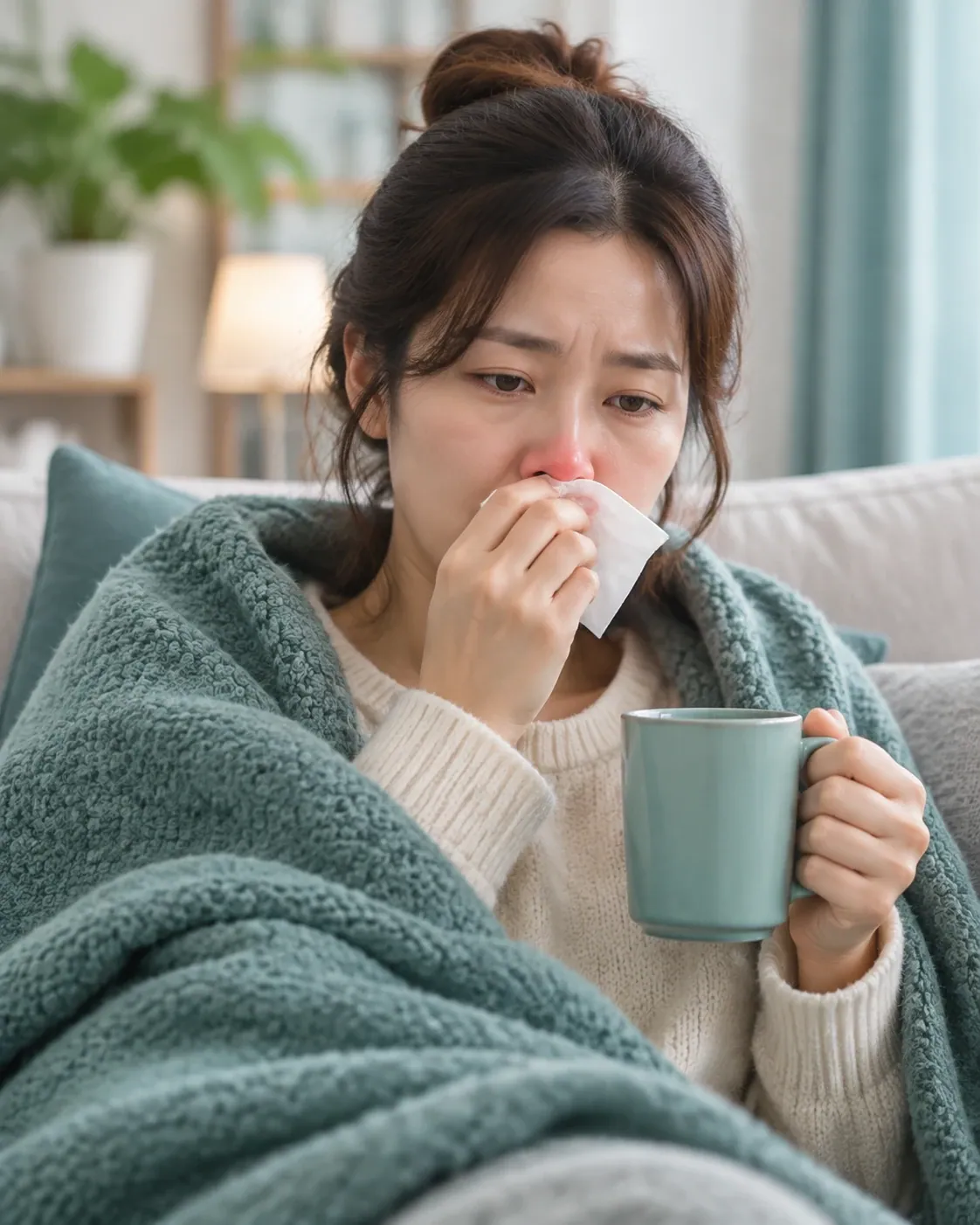
- 감기에 자주 걸리고 한 번 걸리면 오래간다
- 입술 물집이나 입안 염증이 자주 생긴다
- 작은 상처도 잘 아물지 않는다
- 늘 피곤하고 자고 나도 개운하지 않다
- 환절기마다 비염이나 피부 트러블이 심해진다
- 방광염이나 질염이 자주 재발한다
진료에서는 감염이 얼마나 자주, 어디에 생기는지와 수면, 식사, 스트레스를 자세히 살펴봅니다. 혈액검사로 빈혈, 당뇨, 갑상선 질환처럼 면역을 떨어뜨리는 원인을 확인합니다.
면역력저하는 왜 생기나요?
- 수면 부족(7시간 미만이면 감기 위험 약 3배)
- 오래 이어지는 스트레스와 과로
- 무리한 다이어트, 불규칙한 식사
- 빈혈, 당뇨, 갑상선 질환
- 출산, 수술, 큰 병을 앓은 뒤
- 스테로이드·항암제 같은 면역억제제
이 중에서도 수면과 스트레스는 꼭 살펴봐야 합니다. 7시간보다 적게 잔 사람은 8시간 이상 잔 사람보다 감기에 걸릴 가능성이 2.94배 높았습니다[2]. 짧은 스트레스는 면역을 잠시 끌어올리지만, 오래 이어지는 스트레스는 면역 기능을 전반적으로 떨어뜨립니다[3].
면역세포는 자율신경의 신호를 받고, 자율신경은 면역 반응을 조절합니다[4]. 잘 자고 마음이 편한 날에는 괜찮다가 피곤한 날 비염과 입술 물집이 올라오는 것도 이 때문입니다.
면역력저하의 표준 치료
면역력저하 자체를 치료하는 약은 없습니다. 원인 질환이 있으면 그 질환을 치료하고, 독감·폐렴구균·대상포진 같은 예방접종을 챙기며, 수면과 운동, 식사를 바로잡는 것이 기본입니다. 꾸준한 운동은 면역을 떨어뜨리지 않고 오히려 면역 기능을 좋게 합니다[5].
영양제는 기대만큼 효과가 뚜렷하지 않습니다. 비타민 D 보충은 6만여 명을 모은 분석에서 호흡기 감염을 의미 있게 줄이지 못했습니다[6]. 검사에 이상이 없는데 감기를 달고 산다면, 몸의 회복력과 균형을 살펴야 합니다. 한의학 치료는 이 바탕을 다스립니다.
감기를 자주 앓던 성인이 화기삼(북미 인삼) 추출물을 4달 먹었을 때, 감기에 두 번 이상 걸린 비율이 10.0%로 위약군(22.8%)보다 낮았습니다[7]. 우리 인삼과 한약 처방의 효과는 추가적인 연구가 필요합니다.
해움한의원은 이렇게 치료합니다

해움한의원은 무조건 보약으로 면역을 끌어올리지 않습니다. 지친 곳은 채우고 예민한 곳은 가라앉혀, 면역이 제자리를 찾도록 돕습니다.
1단계. 면역이 흔들린 이유를 찾습니다
감염이 얼마나 자주 오는지, 수면과 식사, 스트레스, 앓았던 병을 자세히 살펴봅니다. 필요하면 혈액검사를 먼저 안내해 드리고, 심박변이도 검사로 자율신경의 균형을 확인합니다.
2단계. 지친 몸과 자율신경을 회복시킵니다
침과 약침으로 긴장된 몸을 풀고 자율신경의 균형을 돕습니다. 깊이 잘 수 있도록 수면을 함께 살핍니다.
3단계. 유형에 맞춰 바탕을 다스립니다
체질과 상태에 맞춰 한약을 짓습니다. 수면 시간, 운동, 식사를 함께 점검해 다시 무너지지 않도록 돕습니다.
4만 건의 처방 사례가 말해주는, 한방 맞춤 치료의 힘



해움한의원 원장이 쓴 면역력저하 칼럼

면역질환과 자율신경치료
오늘은 검사도 이상이 없고 치료가 안 되는, 이비인후과와 내과에서 다루는 면역 질환에 대한 내용입니다.
읽어보기면역력저하 치료후기 총 18건
환자분들이 남긴 치료후기입니다. 본문은 로그인 후 보실 수 있습니다.
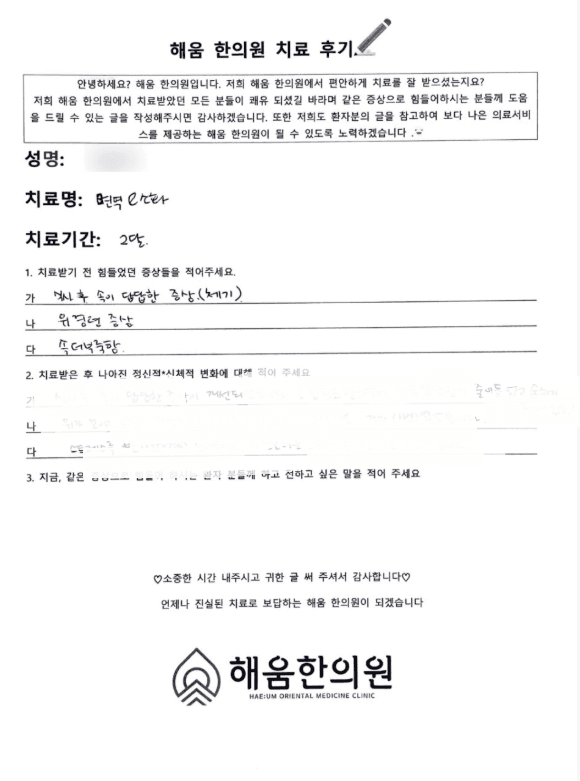
잔병치레를 달고 살던 환자분, 한약으로 소화불량 위경련 예민함 치료를 통해 좋아진 사례
2022. 03. 07.
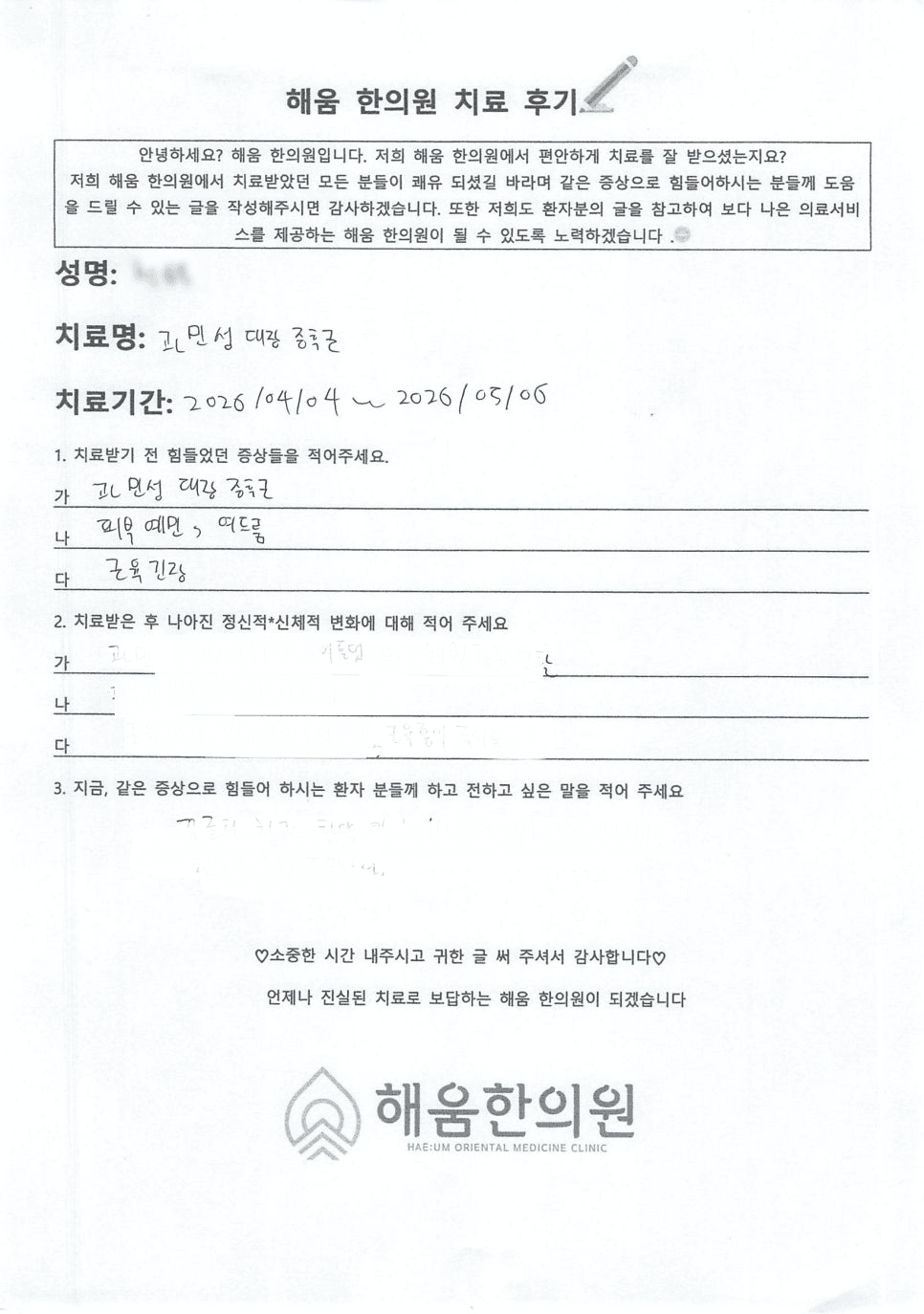 관련 후기
입대 전 갑자기 발생한 과민성대장증후군, 한의원에서 치료가 될까요?
2026. 06. 01.
 관련 후기
건선치료제로 효과 없는 피부건선, 한약 6개월
2026. 01. 28.
 관련 후기
명치끝 통증, 알고보니 자궁내막암 후유증이었다고?
2025. 07. 08.
 관련 후기
기침 콧물 멈추는법? 목동 한의원에서 알려주는 코비염 해결법
2025. 02. 15.
 관련 후기
갑상샘항진증 아급성갑상선염 치료 환자, 피로감 소화불량 고지혈증 완화 한약 2달간
2025. 01. 25.
다른 증상으로 내원하신 분들의 후기 중 ‘면역력저하’가 증상으로 함께 언급된 기록
- 코로나 후유증 가슴두근거림, 불면2024. 06. 27.
- 스트레스인지 코로나후유증인지.. 왼쪽가슴통증손저림 만성피로 염증 한 방에!2023. 01. 18.
- 건선치료제로 효과 없는 피부건선, 한약 6개월 치료 사례.. 자율신경이 면역과 건선 혈액순환에 미치는 영향2023. 01. 17.
- 성인아토피? 아기아토피? 한약 치료 후 어릴때부터 있던 아토피 흉터 깔끔하게 사라진 사례2023. 01. 15.
- 가슴두근거림,무기력,우울증,체력저하 한약 치료기2022. 06. 27.
- 심박수가 120까지.. 코로나 확진 후 두근거림 숨이차고 소화가 안 되었는데 한약치료로 좋아졌어요2022. 06. 02.
- 한랭두드러기로 인한 간지럼증 1달2022. 05. 24.
- 스트레스성 폭식으로 급찐 살 9kg 감량!! 다이어트 성공 사례2022. 04. 04.
- 알러지 체질 고칠 수 있나요? 한랭두드러기와 비염 한약 3개월2022. 03. 19.
- 다낭성난소증후군 pcos로 인한 생리불순, 다이어트와 함께2021. 10. 16.
면역력저하, 누가 진료하나요?
담당 의료진
대표원장 박재은

“병이 아니라 그 뒤의 사람을 봅니다”
경희대학교 한의과대학에서 석사·박사 과정을 마쳤습니다. 심리상담사 1급 자격과 4만 건 이상의 한약 처방 경험을 바탕으로 진료합니다.
의료진 소개 더보기면역력저하, 자주 묻는 질문
면역력을 높이려면 보약을 먹어야 하나요?
홍삼이나 영양제를 먹으면 도움이 되나요?
아이가 감기를 달고 사는데 면역이 약한 건가요?
치료 기간은 얼마나 걸리나요?
생활에서 어떻게 관리해야 하나요?
해움한의원에서 면역력저하를 진료하나요?
면역력저하로 내원하려면 어떻게 하나요?
이런 경우에는 미루지 말고 진료를 받으세요
아래 증상은 면역결핍이나 당뇨, 혈액 질환 같은 다른 원인일 수 있습니다. 내과나 감염내과를 먼저 확인하세요. 고열과 함께 숨이 차거나 의식이 흐려지면 바로 응급실(119)로 가세요.
- 폐렴을 해마다 앓거나 정맥 항생제를 맞아야 할 만큼 감염이 잦다
- 이유 없이 체중이 줄고 열과 식은땀이 이어진다
- 입안에 하얀 곰팡이가 끼거나 상처가 몇 주째 낫지 않는다
- 목이나 겨드랑이에 멍울이 만져지고 점점 커진다
- 면역억제제나 항암제를 쓰는 중에 열이 난다
참고문헌 7편
[1]Garbarino S, Lanteri P, Bragazzi NL, Magnavita N, Scoditti E. Role of sleep deprivation in immune-related disease risk and outcomes. Commun Biol. 2021;4(1):1304. doi:10.1038/s42003-021-02825-4. PMID: 34795404.
초록 (Abstract)
Modern societies are experiencing an increasing trend of reduced sleep duration, with nocturnal sleeping time below the recommended ranges for health. Epidemiological and laboratory studies have demonstrated detrimental effects of sleep deprivation on health. Sleep exerts an immune-supportive function, promoting host defense against infection and inflammatory insults. Sleep deprivation has been associated with alterations of innate and adaptive immune parameters, leading to a chronic inflammatory state and an increased risk for infectious/inflammatory pathologies, including cardiometabolic, neoplastic, autoimmune and neurodegenerative diseases. Here, we review recent advancements on the immune responses to sleep deprivation as evidenced by experimental and epidemiological studies, the pathophysiology, and the role for the sleep deprivation-induced immune changes in increasing the risk for chronic diseases. Gaps in knowledge and methodological pitfalls still remain. Further understanding of the causal relationship between sleep deprivation and immune deregulation would help to identify individuals at risk for disease and to prevent adverse health outcomes.
원문 발췌 · Garbarino S, Lanteri P, Bragazzi NL, Magnavita N, Scoditti E, Commun Biol 2021 · CC BY 4.0 라이선스에 따라 수정 없이 인용했습니다(본문 속 인용 번호는 생략).
[2]Cohen S, Doyle WJ, Alper CM, Janicki-Deverts D, Turner RB. Sleep habits and susceptibility to the common cold. Arch Intern Med. 2009;169(1):62-67. doi:10.1001/archinternmed.2008.505. PMID: 19139325.
요약 건강한 성인 153명의 2주간 수면을 기록한 뒤 감기 바이러스를 코에 넣어 본 연구입니다. 평소 7시간보다 적게 잔 사람은 8시간 이상 잔 사람보다 감기에 걸릴 가능성이 2.94배 높았고, 잠든 시간의 비율(수면 효율)이 낮을수록 더 잘 걸렸습니다.원문은 출판사 저작권 자료로, 위 링크에서 확인하실 수 있습니다.
[3]Segerstrom SC, Miller GE. Psychological stress and the human immune system: a meta-analytic study of 30 years of inquiry. Psychol Bull. 2004;130(4):601-630. doi:10.1037/0033-2909.130.4.601. PMID: 15250815.
요약 스트레스와 면역을 다룬 300편 넘는 연구를 모은 메타분석입니다. 몇 분짜리 짧은 스트레스는 일부 면역 반응을 오히려 끌어올렸지만, 오래 이어지는 만성 스트레스는 세포 면역과 항체 면역을 모두 떨어뜨렸습니다.원문은 출판사 저작권 자료로, 위 링크에서 확인하실 수 있습니다.
[4]Kenney MJ, Ganta CK. Autonomic nervous system and immune system interactions. Compr Physiol. 2014;4(3):1177-1200. doi:10.1002/cphy.c130051. PMID: 24944034.
요약 자율신경과 면역의 관계를 정리한 종설입니다. 면역세포에는 교감·부교감신경의 신호를 받는 수용체가 있고, 자율신경은 면역 반응을 조절하며, 면역 물질도 거꾸로 자율신경의 활동을 바꿉니다.원문은 출판사 저작권 자료로, 위 링크에서 확인하실 수 있습니다.
[5]Campbell JP, Turner JE. Debunking the Myth of Exercise-Induced Immune Suppression: Redefining the Impact of Exercise on Immunological Health Across the Lifespan. Front Immunol. 2018;9:648. doi:10.3389/fimmu.2018.00648. PMID: 29713319.
초록 (Abstract)
Epidemiological evidence indicates that regular physical activity and/or frequent structured exercise reduces the incidence of many chronic diseases in older age, including communicable diseases such as viral and bacterial infections, as well as non-communicable diseases such as cancer and chronic inflammatory disorders. Despite the apparent health benefits achieved by leading an active lifestyle, which imply that regular physical activity and frequent exercise enhance immune competency and regulation, the effect of a single bout of exercise on immune function remains a controversial topic. Indeed, to this day, it is perceived by many that a vigorous bout of exercise can temporarily suppress immune function. In the first part of this review, we deconstruct the key pillars which lay the foundation to this theory—referred to as the “open window” hypothesis—and highlight that: (i) limited reliable evidence exists to support the claim that vigorous exercise heightens risk of opportunistic infections; (ii) purported changes to mucosal immunity, namely salivary IgA levels, after exercise do not signpost a period of immune suppression; and (iii) the dramatic reductions to lymphocyte numbers and function 1–2 h after exercise reflects a transient and time-dependent redistribution of immune cells to peripheral tissues, resulting in a heightened state of immune surveillance and immune regulation, as opposed to immune suppression. In the second part of this review, we provide evidence that frequent exercise enhances—rather than suppresses—immune competency, and highlight key findings from human vaccination studies which show heightened responses to bacterial and viral antigens following bouts of exercise. Finally, in the third part of this review, we highlight that regular physical activity and frequent exercise might limit or delay aging of the immune system, providing further evidence that exercise is beneficial for immunological health. In summary, the over-arching aim of this review is to rebalance opinion over the perceived relationships between exercise and immune function. We emphasize that it is a misconception to label any form of acute exercise as immunosuppressive, and, instead, exercise most likely improves immune competency across the lifespan.
원문 발췌 · Campbell JP, Turner JE, Front Immunol 2018 · CC BY 4.0 라이선스에 따라 수정 없이 인용했습니다(본문 속 인용 번호는 생략).
[6]Jolliffe DA, Camargo CA, Sluyter JD, Aglipay M, Aloia JF, Bergman P, et al. Vitamin D supplementation to prevent acute respiratory infections: systematic review and meta-analysis of stratified aggregate data. Lancet Diabetes Endocrinol. 2025;13(4):307-320. doi:10.1016/s2213-8587(24)00348-6. PMID: 39993397.
초록 (Abstract)
Background: A 2021 meta-analysis of 37 randomised controlled trials (RCTs) of vitamin D supplementation for prevention of acute respiratory infections (ARIs) revealed a statistically significant protective effect of the intervention (odds ratio [OR] 0·92 [95% CI 0·86 to 0·99]). Since then, six eligible RCTs have been completed, including one large trial (n=15 804). We aimed to re-examine the link between vitamin D supplementation and prevention of ARIs.
Methods: Updated systematic review and meta-analysis of data from RCTs of vitamin D for ARI prevention using a random effects model. Subgroup analyses were done to determine whether effects of vitamin D on risk of ARI varied according to baseline 25-hydroxyvitamin D (25[OH]D) concentration, dosing regimen, or age. We searched MEDLINE, EMBASE, the Cochrane Central Register of Controlled Trials, Web of Science, and the ClinicalTrials.gov between May 1, 2020 (end-date of search of our previous meta-analysis) and April 30, 2024. No language restrictions were imposed. Double-blind RCTs supplementing vitamin D for any duration, with placebo or lower-dose vitamin D control, were eligible if approved by a Research Ethics Committee and if ARI incidence was collected prospectively and pre-specified as an efficacy outcome. Aggregate data, stratified by baseline 25(OH)D concentration and age, were obtained from study authors. The study was registered with PROSPERO (no. CRD42024527191).
Findings: We identified six new RCTs (19 337 participants). Data were obtained for 16 085 (83·2%) participants in three new RCTs and combined with data from 48 488 participants in 43 RCTs identified in our previous meta-analysis. For the primary comparison of any vitamin D versus placebo, the intervention did not statistically significantly affect overall ARI risk (OR 0·94 [95% CI 0·88–1·00], p=0·057; 40 studies; 61 589 participants; I2=26·4%). Pre-specified subgroup analysis did not reveal evidence of effect modification by age, baseline vitamin D status, dosing frequency, or dose size. Vitamin D did not influence the proportion of participants experiencing at least one serious adverse event (OR 0·96 [95% CI 0·90–1·04]; 38 studies; I2=0·0%). A funnel plot showed left-sided asymmetry (p=0·0020, Egger’s test).
Interpretation: This updated meta-analysis yielded a similar point estimate for the overall effect of vitamin D supplementation on ARI risk to that obtained previously, but the 95% CI for this effect estimate now includes 1·00, indicating no statistically significant protection.
Funding: None.
결과 (Results)
Our updated search (studies published from May 1, 2020 to April 30, 2024) identified a total of 900 studies that were assessed for eligibility, of which six studies with a total of 19 337 randomly assigned participants met the eligibility criteria. Studies for which the full text was reviewed before exclusion due to ineligibility are listed in the appendix (p 11). All six of the identified eligible studies compared effects of a single vitamin D regimen versus placebo only. Data for the primary outcome (proportion of participants with one or more ARI) were obtained for 15 598 (97·0%) of 16 085 participants in three studies and were added to our database of 43 previously identified eligible studies (described elsewhere), bringing the total number of participants contributing data to the analysis of our primary outcome to 64 086 (97·8%) of 65 504 participants from 46 studies (figure 1).
Trials were conducted in 24 different countries on five continents, and enrolled male and female participants from birth to 100 years of age (table 1). Baseline serum 25(OH)D concentrations were determined in 38 of 46 trials: mean baseline 25(OH)D concentration ranged from 18·9 nmol/L to 90·9 nmol/L (to convert to ng/mL, divide by 2·496). 45 studies administered oral vitamin D3 to participants in the intervention group, and one study administered oral 25(OH)D. Vitamin D was given as monthly to 3-monthly bolus doses in 13 studies; as weekly doses in seven studies; as daily doses in 24 studies; and as a combination of bolus and daily doses in two studies. Trial duration ranged from 7 weeks to 5 years. Incidence of ARI was a primary or co-primary outcome for 25 studies, and a secondary outcome for 21 studies.
Details of the risk of bias assessment are provided in the appendix (p 12). Five trials were assessed as being at unclear risk of bias due to high loss to follow-up. In the trial by Laaksi and colleagues, 37% of randomly assigned participants were lost to follow-up. In the trial by Dubnov-Raz and colleagues, 52% of participants did not complete all symptom questionnaires. In the unpublished trial by Reyes and colleagues, loss to follow-up ranged from 33% to 37% across the three study groups, and in the unpublished trial by Golan-Tripto and colleagues, 50% of participants were lost to follow-up. Finally, in the trial by Huang and colleagues, we detected uncertainty around blinding of outcome assessment within the study team, uncertainty around methodology for dealing with incomplete data, and selective outcome reporting, which we were unable to resolve with the authors. All other trials were assessed as being at low risk of bias for all seven aspects assessed.
For the primary comparison of any vitamin D supplement versus placebo control, supplementation did not result in a statistically significant reduction in the proportion of participants experiencing at least one ARI (OR 0·94 [95% CI 0·88–1·00], p=0·057; 61 589 participants in 40 studies; figure 2, table 2; appendix p 16). Between-trial heterogeneity was modest: I2=26·4% (p for heterogeneity 0·07).
For the secondary comparison of higher-dose versus lower-dose vitamin D, we observed no statistically significant difference in the proportion of participants with at least one ARI (OR 0·87 [95% CI 0·73–1·04]; 3047 participants in 11 studies; I2=0·0%, p for heterogeneity 0·50; appendix p 19).
To investigate reasons for the observed heterogeneity of effect for the primary comparison of any vitamin D supplement versus placebo control, we stratified this analysis by two participant-level factors (baseline vitamin D status and age) and by four trial-level factors (dose frequency, dose size, trial duration, and airway disease comorbidity). No statistically significant effect of vitamin D was seen for participants with baseline 25(OH)D less than 25 nmol/L (OR 0·98 [95% CI 0·80–1·20]; 3806 participants in 22 studies), 25–49·9 nmol/L (1·03 [0·94–1·13]; 11 618 participants in 31 studies), 50–74·9 nmol/L (0·90 [0·80–1·02]; 11 214 participants in 32 studies), or 75 nmol/L or greater (0·97 [0·87–1·07]; 11 815 participants in 28 studies; table 2, appendix p 20). A statistically significant protective effect of vitamin D was seen for participants aged 1–15 years (OR 0·74 [95% CI 0·60–0·92]; 11 944 participants in 16 studies), but not in participants aged <1 year (0·95 [0·82–1·10]; 5697 participants in five studies), 16–64 years (0·95 [0·86–1·05]; 14 498 participants in 23 studies), or 65 years or older (0·97 [0·92–1·02]; 29 583 participants in 18 studies; table 2, appendix p 24). With regard to dosing frequency, a statistically significant protective effect was seen for trials where vitamin D was given daily (OR 0·84 [95% CI 0·73–0·97]; 21 552 participants in 21 studies), but not for trials in which it was given weekly (0·97 [0·88–1·06]; 12 789 participants in seven studies), or monthly to 3-monthly (0·98 [0·93–1·03]; 27 248 participants in 12 studies; table 2, appendix p 21). Statistically significant protective effects of the intervention were also seen in trials where vitamin D was administered at daily equivalent doses of 400–1000 IU (OR 0·70 [95% CI 0·55–0·89]; 2305 participants in ten studies), but not where the daily dose equivalent was less than 400 IU (0·76 [0·41–1·41]; 2133 participants in two studies), 1001–2000 IU (0·97 [0·92–1·01]; 49 457 participants in 19 studies), or greater than 2000 IU (1·05 [0·84–1·31]; 6906 participants in seven studies; table 2, appendix p 22). Statistically significant protective effects were also seen for trials with a duration of 12 months or less (OR 0·85 [95% CI 0·76–0·95]; 24 678 participants in 32 studies) but not in those lasting more than 12 months (0·99 [0·95–1·04]; 36 911 participants in eight studies; table 2, appendix p 23).
Statistically significant protective effects of vitamin D were not seen in trials that exclusively enrolled participants with asthma, or trials that exclusively enrolled participants with COPD, or trials in which participants without airway disease were eligible (table 2, appendix p 25).
Multivariable meta-regression analysis of trial-level subgroups did not identify any statistically significant interactions (p values for interaction <0·05) between allocation to vitamin D versus placebo and dose frequency, dose size, trial duration, or participant age (appendix p 17).
Meta-analysis of secondary outcomes was performed for results of placebo-controlled trials only (ie, not for RCTs that compared higher-dose vs lower-dose vitamin D; table 3). Overall, without consideration of participant-level or trial-level factors, vitamin D supplementation did not have a statistically significant effect on the proportion of participants with one or more URI, LRI, hospitalisations or emergency department attendances for ARIs, death due to ARIs or respiratory failure, courses of antimicrobials for an ARI, work or school absences due to ARIs, serious adverse events of any cause, death due to any cause, or episodes of hypercalcaemia or renal stones.
A funnel plot for the proportion of participants experiencing at least one ARI (appendix p 26) showed left-sided asymmetry, confirmed with an Egger’s regression test (p=0·0020). This might reflect heterogeneity of effect across trials, or publication bias arising from omission of small trials showing non-protective effects of vitamin D from the meta-analysis. Given the latter possibility, the quality of the body of evidence contributing to analyses of the primary efficacy outcome and major secondary outcomes was downgraded to moderate (appendix p 15).
Results of exploratory sensitivity analyses are presented in the appendix (p 16). Meta-analysis of the proportion of participants in placebo-controlled trials experiencing at least one ARI, excluding four studies assessed as being at unclear risk of bias, did not reveal a statistically significant protective effect of any vitamin D supplementation (OR 0·95 [95% CI 0·90–1·01]; 60 958 participants in 36 studies), consistent with the main analysis. Similarly, sensitivity analyses for the same outcome, one excluding 19 placebo-controlled trials that investigated ARI as a secondary outcome, and another excluding three placebo-controlled trials designed to detect an effect of vitamin D on recurrent ARI, did not show a statistically significant protective effect (0·90 [0·79–1·02]; 9975 participants in 21 studies, and 0·96 [0·91–1·02]; 60 706 participants in 37 trials, respectively).
Due to the relatively low level of between-trial heterogeneity (I2=26·4%), we analysed the primary outcome using a fixed effects model, which yielded a very similar effect estimate (OR 0·96 [95% CI 0·93–1·00]; p=0·047).
원문 발췌 · Jolliffe DA, Camargo CA, Sluyter JD, Aglipay M, Aloia JF, Bergman P, Bischoff-Ferrari HA, Borzutzky A, Bubes VY, Damsgaard CT, Ducharme FM, Dubnov-Raz G, Esposito S, Ganmaa D, Gilham C, Ginde AA, Golan-Tripto I, Goodall EC, Grant CC, Griffiths CJ, Hibbs AM, Janssens W, Khadilkar AV, Laaksi I, Lee MT, Loeb M, Maguire JL, Majak P, Manaseki-Holland S, Manson JE, Mauger DT, Murdoch DR, Nakashima A, Neale RE, Pham H, Rake C, Rees JR, Rosendahl J, Scragg R, Shah D, Shimizu Y, Simpson-Yap S, Kumar GT, Urashima M, Martineau AR, Lancet Diabetes Endocrinol 2025 · CC BY 4.0 라이선스에 따라 수정 없이 인용했습니다(본문 속 인용 번호는 생략).
[7]Predy GN, Goel V, Lovlin R, Donner A, Stitt L, Basu TK. Efficacy of an extract of North American ginseng containing poly-furanosyl-pyranosyl-saccharides for preventing upper respiratory tract infections: a randomized controlled trial. CMAJ. 2005;173(9):1043-1048. doi:10.1503/cmaj.1041470. PMID: 16247099.
요약 지난해 감기에 두 번 이상 걸린 성인을 대상으로 한 위약 대조 연구입니다. 화기삼(북미 인삼) 추출물을 4달 먹은 군은 감기에 두 번 이상 걸린 비율이 10.0%로 위약군(22.8%)보다 낮았고, 감기 증상을 앓은 날도 적었습니다.원문은 출판사 저작권 자료로, 위 링크에서 확인하실 수 있습니다.