
양천구 목동 코로나후유증 한의원
코로나후유증
코로나는 나았다는데 몇 달째 몸이 예전 같지 않습니다. 조금만 움직여도 지치고, 머리가 멍하고, 숨이 차거나 가슴이 두근거립니다. 감염이 끝난 뒤에도 이어지는 이 증상이 코로나후유증입니다.
코로나후유증 한눈에 보기
- 코로나후유증은 코로나19가 나은 뒤에도 피로, 브레인포그, 숨참, 두근거림 같은 증상이 몇 달씩 이어지는 상태입니다.
- 우리나라 성인 환자의 약 13~25%가 겪고, 피로가 가장 흔한 증상입니다.
- 자율신경 이상이 흔해, 지친 몸의 회복과 자율신경의 균형을 함께 살핍니다.
- 치료후기 11건
- 의료진 칼럼 1편
- 건강정보 1편
코로나후유증이란?
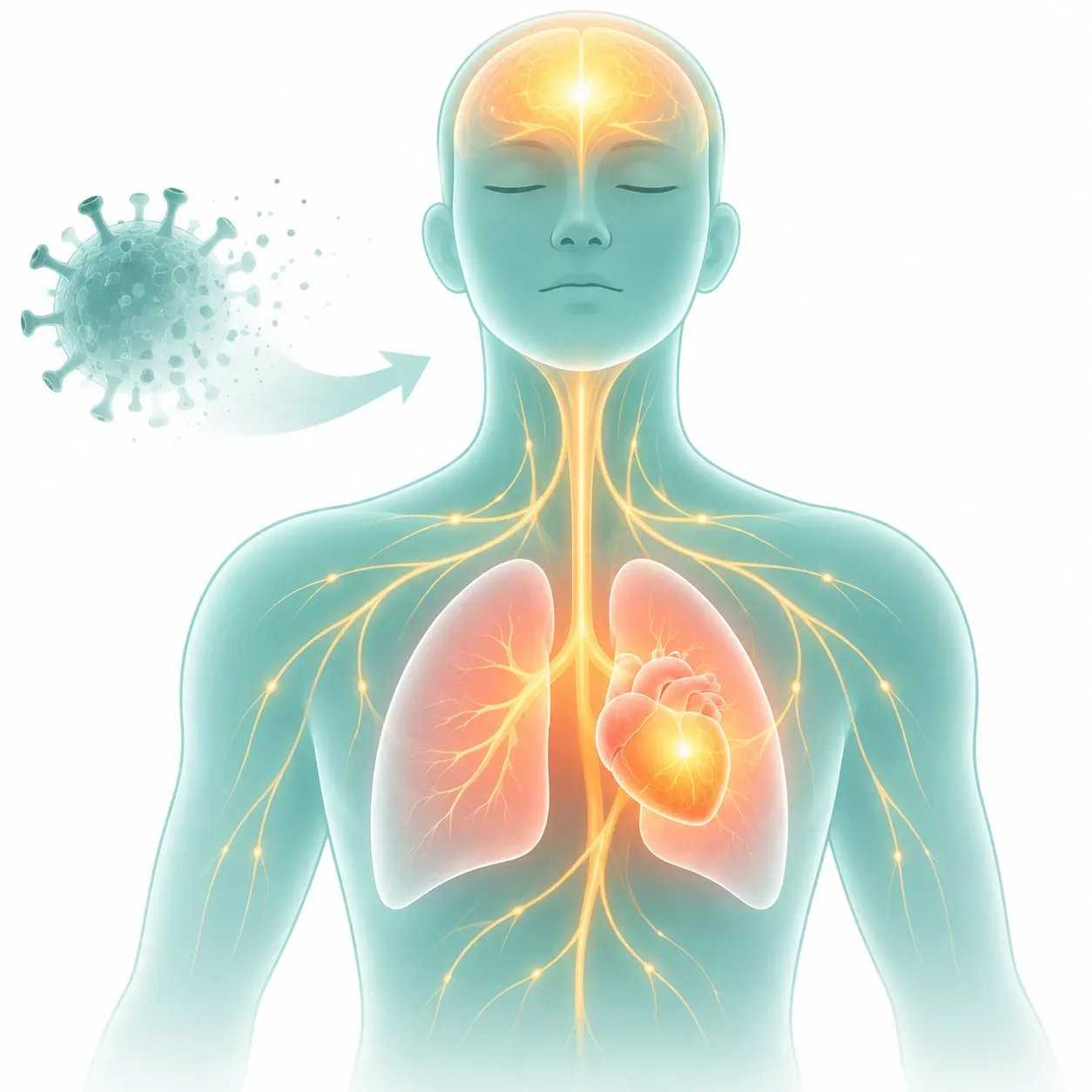
코로나후유증은 코로나19 감염 뒤 석 달 넘게 증상이 이어지거나 새로 생기는 상태입니다. 세계보건기구는 다른 원인으로 설명되지 않는 증상이 두 달 이상 이어질 때 '코로나19 이후 질환'이라고 부르고, 흔히 롱코비드라고도 합니다. 200가지가 넘는 증상이 여러 장기에 걸쳐 나타납니다[1].
감염 한 달 뒤에도 증상이 남은 비율은 전 세계 43%였고, 입원하지 않은 가벼운 환자도 34%였습니다[2]. 우리나라 지역사회 조사에서는 여성 환자의 19.7~24.9%, 남성의 12.7%가 겪었고, 그중 절반 넘게(54.2%) 일상생활에 지장이 있었습니다[3].
이런 증상이 있나요?

- 조금만 움직여도 지치고 다음 날까지 몸져눕는다
- 머리가 멍하고 집중이 안 되며 깜빡깜빡한다
- 숨이 차거나 기침이 오래 남았다
- 가슴이 두근거리고 일어서면 어지럽다
- 잠을 깊이 못 자고 불안하거나 우울하다
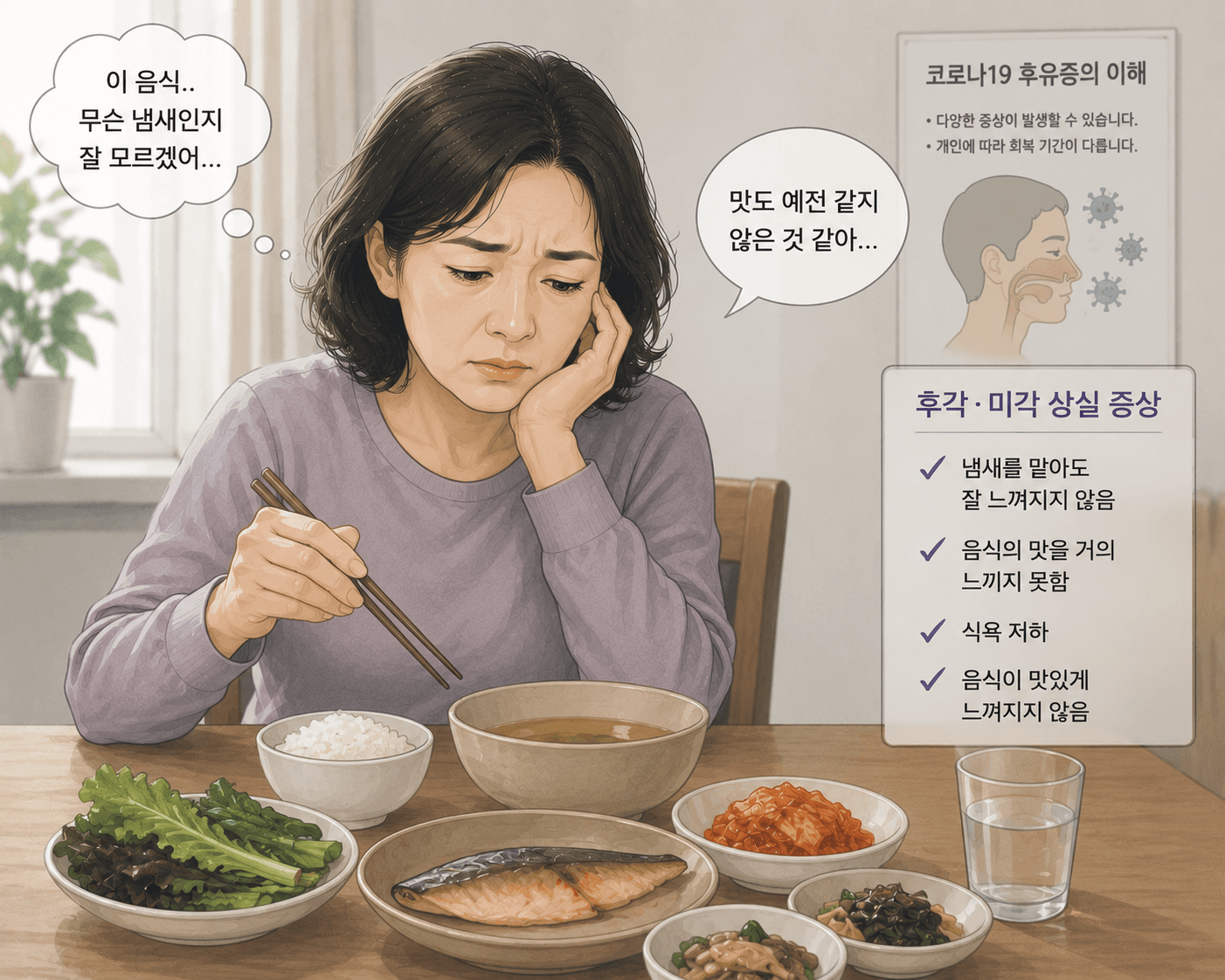
- 냄새나 맛을 잘 못 느낀다
코로나후유증을 확인하는 검사는 따로 없습니다. 감염 시기와 증상을 자세히 살펴보고, 혈액검사와 흉부 엑스레이, 심전도로 빈혈, 갑상선 질환, 폐·심장 질환처럼 다른 원인을 먼저 가립니다.
코로나후유증은 왜 생기나요?
원인은 아직 다 밝혀지지 않았습니다. 몸에 남은 바이러스 조각, 오래가는 염증과 면역 이상, 작은 혈관의 손상, 자율신경 이상이 함께 작용하는 것으로 봅니다. 다음과 같은 경우 더 잘 생깁니다.
- 여성(남성보다 약 2.4배)
- 30대 이상
- 기저질환이 있는 경우
- 감염 때 증상이 심했던 경우
- 예방접종을 하지 않은 경우
우리나라 조사에서 여성은 남성보다 2.43배, 기저질환이 있으면 1.81배 더 잘 겪었습니다[3]. 감염 전 예방접종은 코로나후유증 위험을 줄이는 것과 관련이 있었습니다[5].
특히 자율신경 이상이 흔합니다. 롱코비드 환자의 66%가 중간 이상의 자율신경 이상 증상을 보였고, 이는 감염 때 입원했는지와 관계가 없었습니다[6]. 두근거림, 일어설 때 어지러움, 소화 불량, 땀 이상이 함께 오는 이유입니다.
코로나후유증의 표준 치료
아직 확립된 치료제는 없고, 증상별 치료와 재활이 중심입니다. 운동과 심리 지원을 함께한 8주 재활 프로그램은 일반 관리보다 삶의 질과 피로, 우울을 더 좋게 했고 효과가 1년까지 이어졌습니다[7].
다만 무리한 운동은 오히려 증상을 몰아올 수 있어 조금씩 늘려야 합니다. 검사에 큰 이상이 없는데 피로와 두근거림이 이어진다면 지친 몸과 흔들린 자율신경을 함께 살펴야 합니다. 한의학 치료는 이 바탕을 다스립니다.
일본 대학병원의 코로나 후유증 클리닉에서는 피로 환자에게 보중익기탕을 가장 많이 썼습니다[8]. 우리나라 예비 연구에서는 보중익기탕을 12주 먹은 환자의 80%가 피로가 좋아졌지만 대조군이 없는 연구였습니다[9]. 한약은 숨참을 의미 있게 줄이지 못했지만 우울과 불안은 줄였습니다[10]. 침은 피로, 우울, 불면에 도움이 될 수 있지만 롱코비드 환자만 본 연구가 아니어서 추가적인 연구가 필요합니다[11].
해움한의원은 이렇게 치료합니다

해움한의원은 남은 증상 하나하나만이 아니라, 감염 뒤 지친 몸과 흔들린 자율신경, 면역의 균형을 함께 치료합니다.
1단계. 남은 증상과 위험 신호를 가립니다
감염 시기와 증상, 받은 검사, 일상에 생긴 변화를 자세히 살펴봅니다. 필요한 검사는 먼저 안내해 드리고, 심박변이도 검사로 자율신경의 상태를, 체열 검사로 몸의 열 분포를 확인합니다.
2단계. 지친 몸과 자율신경을 회복시킵니다
침과 약침, 추나로 긴장된 몸을 풀고 자율신경의 균형을 돕습니다. 잠을 깊이 잘 수 있도록 수면을 함께 살핍니다.
3단계. 유형에 맞춰 바탕을 다스립니다
체질과 상태에 맞춰 한약을 짓습니다. 무리하지 않는 활동량을 함께 정하고, 회복에 맞춰 조금씩 늘려 갑니다.
4만 건의 처방 사례가 말해주는, 한방 맞춤 치료의 힘



해움한의원 원장이 쓴 코로나후유증 칼럼

면역질환과 자율신경치료
오늘은 검사도 이상이 없고 치료가 안 되는, 이비인후과와 내과에서 다루는 면역 질환에 대한 내용입니다.
읽어보기코로나후유증 치료후기 총 11건
환자분들이 남긴 치료후기입니다. 본문은 로그인 후 보실 수 있습니다.
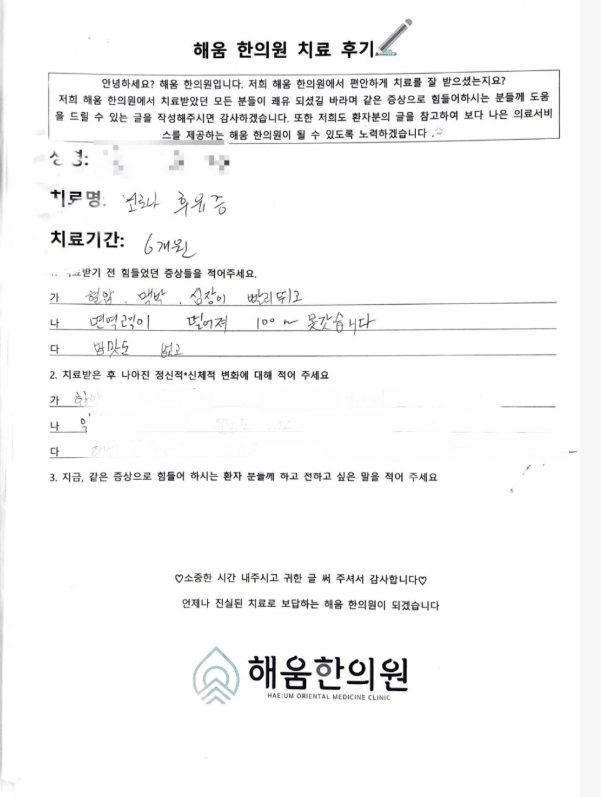
코로나 후유증 가슴두근거림, 불면
2024. 06. 27.
코로나로 악화된 이명 코로나후유증 한약 6개월
2024. 04. 21.
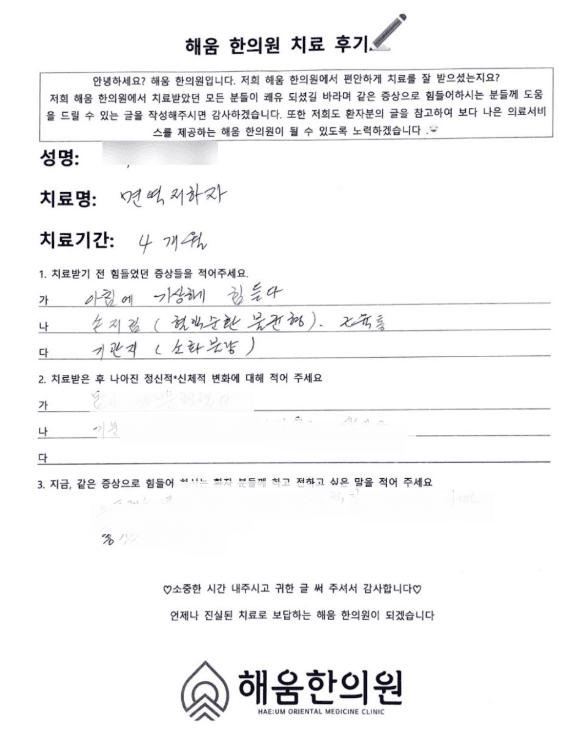
스트레스인지 코로나후유증인지.. 왼쪽가슴통증손저림 만성피로 염증 한 방에!
2023. 01. 18.
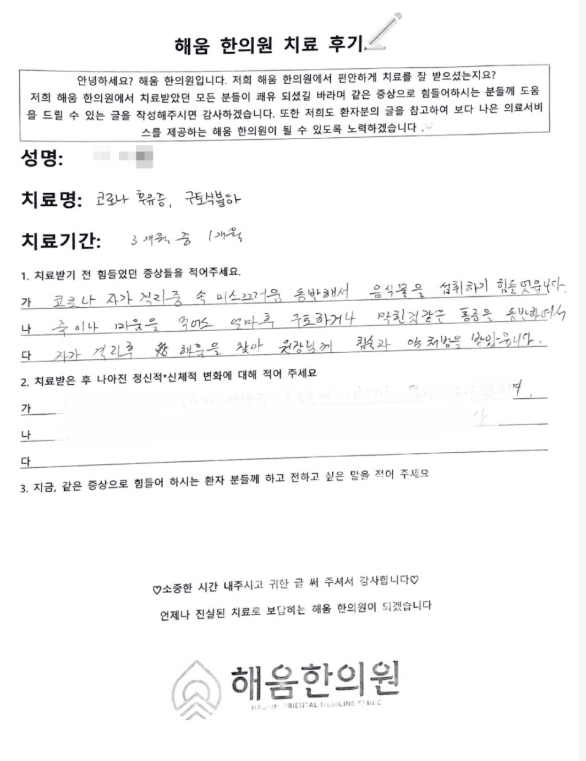
코로나 후유증으로 구토 미식거림 두통 어지러움 연하장애로 고생하신 노인 환자분
2023. 01. 03.
공부하기 힘들 정도의 기침가래
2022. 12. 28.
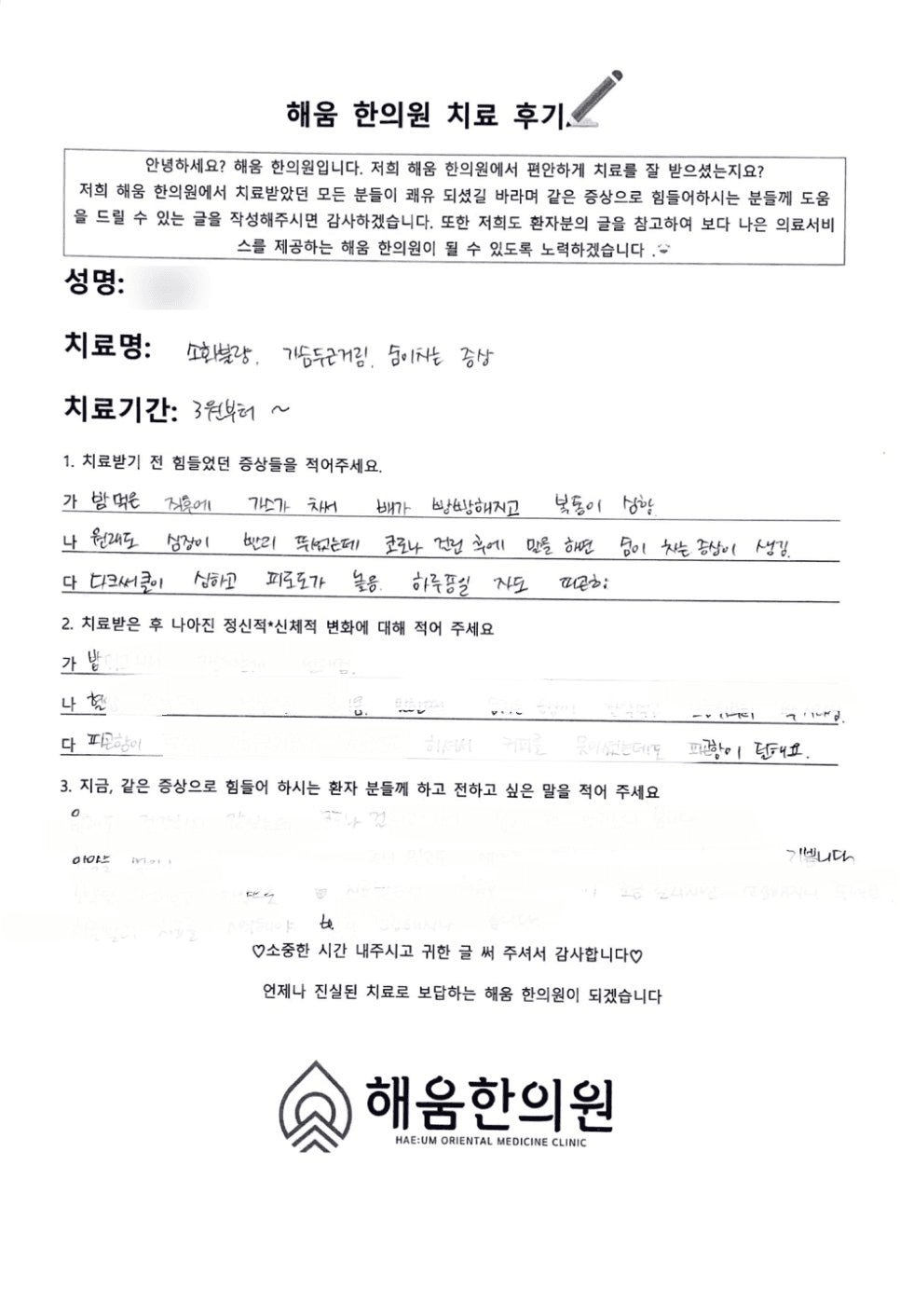
심박수가 120까지.. 코로나 확진 후 두근거림 숨이차고 소화가 안 되었는데 한약치료로 좋아졌어요
2022. 06. 02.
치료후기 2건 더 보기접기
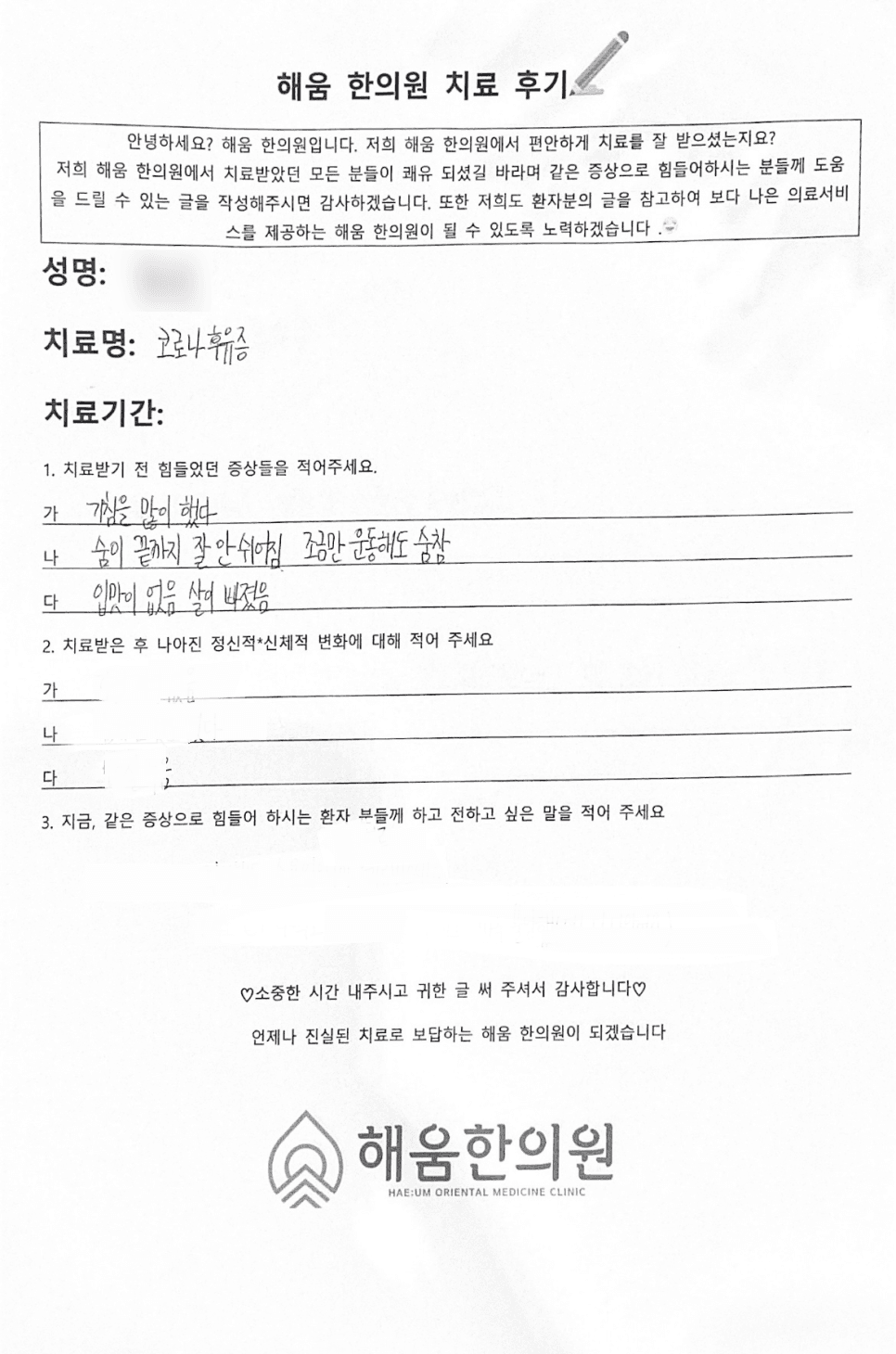
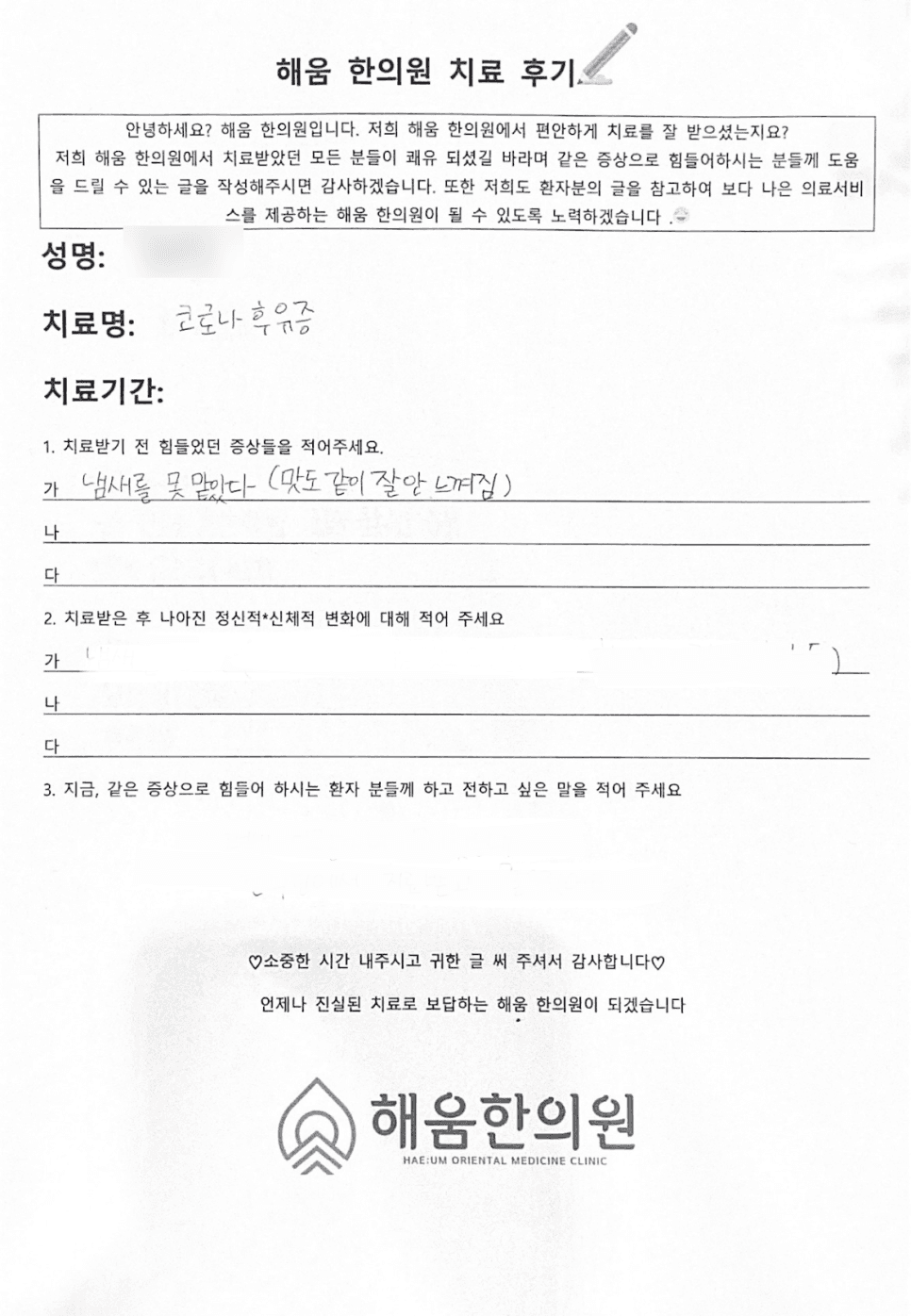
다른 증상으로 내원하신 분들의 후기 중 ‘코로나후유증’이 증상으로 함께 언급된 기록
코로나후유증, 누가 진료하나요?
담당 의료진
대표원장 박재은

“병이 아니라 그 뒤의 사람을 봅니다”
경희대학교 한의과대학에서 석사·박사 과정을 마쳤습니다. 심리상담사 1급 자격과 4만 건 이상의 한약 처방 경험을 바탕으로 진료합니다.
의료진 소개 더보기코로나후유증, 자주 묻는 질문
코로나후유증은 저절로 낫나요?
체력을 기르려고 운동을 해야 하나요?
오래전에 걸렸는데 지금 증상도 후유증일 수 있나요?
병원 약과 한약을 같이 먹어도 되나요?
치료 기간은 얼마나 걸리나요?
해움한의원에서 코로나후유증을 진료하나요?
코로나후유증으로 내원하려면 어떻게 하나요?
코로나후유증에 관해 알아두면 좋은 정보
1건코로나후유증과 관련해 정리한 건강정보입니다.
이런 경우에는 바로 응급실로 가세요
아래 증상은 심근염, 폐색전증, 뇌졸중 같은 위급한 질환일 수 있습니다. 한의원보다 응급실(119)을 먼저 찾으세요.
- 가슴을 짓누르는 통증이나 갑자기 심해진 숨참
- 한쪽 다리가 붓고 아픈 뒤 숨이 찬다
- 말이 어눌해지거나, 한쪽 팔다리에 힘이 빠진다
- 정신을 잃고 쓰러졌다
- 입술이 파래지거나 숨이 차서 말을 잇기 어렵다
참고문헌 11편
[1]Davis HE, McCorkell L, Vogel JM, Topol EJ. Long COVID: major findings, mechanisms and recommendations. Nat Rev Microbiol. 2023;21(3):133-146. doi:10.1038/s41579-022-00846-2. PMID: 36639608.
요약 롱코비드 종설입니다. 코로나19 감염의 적어도 10%에서 롱코비드가 생기고, 전 세계 환자는 6,500만 명 이상으로 추정됩니다. 200가지가 넘는 증상이 여러 장기에 걸쳐 나타나며, 만성피로증후군, 기립성 빈맥 증후군과 비슷한 점이 많습니다. 아직 확립된 진단과 치료법은 부족합니다.원문은 출판사 저작권 자료로, 위 링크에서 확인하실 수 있습니다.
[2]Chen C, Haupert SR, Zimmermann L, Shi X, Fritsche LG, Mukherjee B. Global Prevalence of Post-Coronavirus Disease 2019 (COVID-19) Condition or Long COVID: A Meta-Analysis and Systematic Review. J Infect Dis. 2022;226(9):1593-1607. doi:10.1093/infdis/jiac136. PMID: 35429399.
요약 41개 연구의 메타분석입니다. 감염 28일 뒤에도 증상이 남은 비율은 전 세계 43%였고, 입원한 환자는 54%, 입원하지 않은 환자는 34%였습니다. 가장 흔한 증상은 피로(23%)와 기억력 문제(14%)였습니다.원문은 출판사 저작권 자료로, 위 링크에서 확인하실 수 있습니다.
[3]Son HE, Hong YS, Lee S, Son H. Prevalence, Risk Factors, and Impact of Long COVID Among Adults in South Korea. Healthcare (Basel). 2024;12(20):2062. doi:10.3390/healthcare12202062. PMID: 39451477.
초록 (Abstract)
Objectives: This study aimed to identify the prevalence, risk factors, and impact of long COVID in a community-based representative sample of patients with COVID-19 aged 19–64 years. Methods: A total of 975 participants completed online or telephone surveys at 1 and 3 months post-diagnosis, covering persistent symptoms, daily activity limitations, vaccination status, and underlying diseases. Results: Long COVID, as defined by the WHO criteria, had a prevalence of 19.7–24.9% in females and 12.7% in males. Logistic regression revealed that the odds of having long COVID symptoms were higher among females compared to males (OR, 2.43; 95% CI, 1.53–3.87), and higher in those aged ≥ 30 years compared to those aged 19–29 years: 30–39 years (OR, 2.91; 95% CI, 1.59–5.33), 40–49 years (OR, 2.72; 95% CI, 1.51–4.89), and 50–64 years (OR, 1.96; 95% CI, 1.10–3.49). Additionally, patients with underlying diseases had higher odds of long COVID symptoms compared to those without underlying diseases (OR, 1.81; 95% CI, 1.24–2.64). Among those with long COVID, 54.2% experienced daily activity limitations, and 40.6% received treatment. Furthermore, lower income groups faced greater daily activity limitations but had similar treatment rates to higher income groups. Conclusions: These findings emphasize the need for interest in and the development of programs to support these low-income populations.
결과 (Results)
3.1. Demographics, Health, and COVID-19-Related Characteristics of Survey Participants: Table 1 presents the results from the analysis of differences in demographics and health/COVID-19-related characteristics according to the presence of long COVID symptoms. The results showed that 19.7% (192/975) of the participants had long COVID symptoms, 24.9% (139/559) among females and 12.7% (53/416) among males. Concerning demographics and health-related factors, significant differences between the long COVID and non-long COVID groups were found based on sex, age, underlying disease, and smoking status. Among males, only age showed a significant difference. Meanwhile, the groups had no significant differences based on COVID-19-related characteristics.
3.2. Prevalence by Symptom Cluster at 1 and 3 Months (with Duplicates): Figure 1 shows the results from the analysis of the types of persistent symptoms found at 1 and 3 months after COVID-19 diagnosis. When symptoms were classified by clusters according to the criteria by the Korean Society of Infectious Diseases, the results showed that the most prevalent symptom cluster at 3 months was cardiopulmonary symptoms (12.1%), followed in order by systemic symptoms (8.6%), psychological symptoms (5.0%), neurological symptoms (4.4%), musculoskeletal symptoms (4.1%), and ophthalmic and neurocognitive symptoms (3.8%). Gastrointestinal symptoms (3.1%) were found to be the least prevalent.
3.3. Results of Risk Factors Associated with Long COVID: Figure 2 shows the results from the logistic regression analysis of risk factors associated with long COVID. The results showed that the OR of having long COVID symptoms was higher among females as compared to males (OR, 2.43; 95% CI, 1.53–3.87) and among those aged ≥ 30 years as compared to those aged 19–29 years: 30–39 years (OR, 2.91; 95% CI, 1.59–5.33), 40–49 years (OR, 2.72; 95% CI, 1.51–4.89), and 50–64 years (OR, 1.96; 95% CI, 1.10–3.49). Moreover, the OR was higher in patients with underlying disease than in those without (OR, 1.81; 95% CI, 1.24–2.64).
3.4. Impact of Long COVID on Daily Activity and Medical Usage: Figure 3 shows the results from analyzing the limitation on daily activity and medical usage because of long COVID. Among the participants, 54.2% reported that long COVID limited their daily activity, while 45.8% reported that their symptoms did not limit their daily life. Moreover, the proportion of individuals receiving treatment for long COVID symptoms based on the degree of daily activity limitation is as follows: 28.4% in the “No limitation on activity” group, 48.5% in the “Slight limitation on activity” group, 56.0% in the “Moderate limitation on activity” group, 55.6% in the “Severe limitation on activity” group, and 50.0% in the “Very severe limitation on activity” group. Furthermore, among the 40.6% of participants who reported receiving treatment for long COVID symptoms, 64.1% reported that they visited a medical institution, whereas 35.9% reported that they only visited a pharmacy. A significant portion (43.6%) of the participants reported receiving treatment for at least 4 weeks.
Table 2 shows the trends and associations of limitation on daily activity and whether treatment was received according to sex, age, and monthly household income. The lowest income group (KRW < 1 million) showed the highest percentage of participants reporting daily activity limitation with 70.4%. The results showed a statistically significant trend with 60.0%, 52.0%, and 31.4% in the KRW 1 to <3 million, KRW 3 to <5 million, and KRW ≥ 5 million groups, respectively. However, the results showed no significant trend in treatment because of persistent symptoms based on household income.
Meanwhile, sex- and age-adjusted logistic regression analysis results showed that the OR of daily life being limited because of persistent symptoms was higher among those with a household income of 1 to <3 million KRW (OR, 3.44; 95% CI, 1.46–8.12) and <1 million KRW (OR, 5.39; 95% CI, 1.77–16.35) than those with ≥5 million KRW. However, the results showed no association between household income and the experience of receiving treatment for long COVID symptoms.
원문 발췌 · Son HE, Hong YS, Lee S, Son H, Healthcare (Basel) 2024 · CC BY 4.0 라이선스에 따라 수정 없이 인용했습니다(본문 속 인용 번호는 생략).
[4]Kim Y, Bitna-Ha, Kim SW, Chang HH, Kwon KT, Bae S, et al. Post-acute COVID-19 syndrome in patients after 12 months from COVID-19 infection in Korea. BMC Infect Dis. 2022;22(1):93. doi:10.1186/s12879-022-07062-6. PMID: 35086489.
초록 (Abstract)
Background: As the coronavirus disease 2019 (COVID-19) pandemic continues to progress, awareness about its long-term impacts has been growing. To date, studies on the long-term course of symptoms, factors associated with persistent symptoms, and quality of life after 12 months since recovery from acute COVID-19 have been limited.
Methods: A prospective online survey (First: September 8, 2020–September 10, 2020; Second: May 26, 2021–June 1, 2021) was conducted on recovered patients who were previously diagnosed with COVID-19 between February 13, 2020 and March 13, 2020 at Kyungpook National University Hospital. Responders aged between 17 and 70 years were included in the study. Overall, 900 and 241 responders were followed up at 6 and 12 months after recovery from COVID-19 in the first and second surveys, respectively. Clinical characteristics, self-reported persistent symptoms, and EuroQol-5-dimension (EQ5D) index score were investigated for evaluating quality of life.
Results: The median period from the date of the first symptom onset or COVID-19 diagnosis to the time of the survey was 454 (interquartile range [IQR] 451–458) days. The median age of the responders was 37 (IQR 26.0–51.0) years, and 164 (68.0%) responders were women. Altogether, 11 (4.6%) responders were asymptomatic, and 194 (80.5%), 30 (12.4%), and 6 (2.5%) responders had mild, moderate, and severe illness, respectively. Overall, 127 (52.7%) responders still experienced COVID-19-related persistent symptoms and 12 (5.0%) were receiving outpatient treatment for such symptoms. The main symptoms were difficulty in concentration, cognitive dysfunction, amnesia, depression, fatigue, and anxiety. Considering the EQ5D index scores, only 59.3% of the responders did not have anxiety or depression. Older age, female sex, and disease severity were identified as risk factors for persistent neuropsychiatric symptoms.
Conclusion: COVID-19-related persistent symptoms improved over time; however, neurological symptoms can last longer than other symptoms. Continuous careful observation of symptom improvement and multidisciplinary integrated research on recovered COVID-19 patients are required.
Supplementary Information: The online version contains supplementary material available at 10.1186/s12879-022-07062-6.
결과 (Results)
Demographics and characteristics: The survey response rate was 9.4% (678 out of 7201 respondents). Of the total of 678 responders, 241 responders diagnosed with COVID-19 between February 18, 2020 and March 13, 2020 participated in the first online survey. The median days taken from the diagnosis of COVID-19 to the investigation period were 454 days [IQR 451.0; 458.0]. The total number of women was 164 (68.0%). The median age was 37.0 years [IQR 26.0; 51.0]. In addition to participants aged 60–70 years (n = 20, 8.3%), most of the participants (n = 99, 41.1%) were aged 17–29 years. At the time of acute COVID-19 infection, 194 (80.5%) responders were classified as mild, 30 (12.4%) as moderate, 11 (4.6%) as asymptomatic, and 6 (2.5%) as severe; however, none were classified as critical. Hospitalization sites during isolation were 132 (54.8%), therapeutic living centers (isolation facilities for asymptomatic COVID-19 patients) were 106 (44%), and self-isolation was (1.2%). Among those whose symptoms lasted up to 12 months, 98 (77.2%) were women; however, 66 (57.9%) women responded that they did not have symptoms that lasted up to 12 months (Table 1). No differences in sex distribution were identified in subgroup analyses between the participant aged < 50 years and those aged ≥ 50 years in the group with persistent symptoms (P = 0.342) (Additional file 1: Table S1). Those who responded had symptoms that persisted for more than 12 months and a higher median age of 41 years, as compared to the asymptomatic median age of 30 (P = 0.017); however, no statistically significant difference was identified in the age groups classified according to 10-year intervals (P = 0.181). Persistent symptoms for more than 12 months were more in those classified as moderate or higher disease severity during acute COVID-19 infection (P = 0.018) (Table 1). Seventy-nine (32.8%, 79/241) responders reported that they had a newly diagnosed disease due to COVID-19 infection. Twelve (5.0%, 12/241) responders were newly diagnosed with high blood pressure, 8 (3.3%, 8/241) responders were diagnosed with diabetes, and 4 (1.7%, 4/241) responders were newly diagnosed with liver disease.Table 1Clinical characteristics of 241 respondents according to the presence of persistent symptoms or signs identified after 12 months of recovery from acute COVID-19 infectionCharacteristicsTotal(N = 241)No symptom(N = 114)Symptom(N = 127)P valueDays from COVID-19 diagnosis to survey, median [IQR]454.0[451.0–458.0]453.0[450.0–456.0]455.0[452.0–458.0]0.009Days from COVID-19-related symptom onset to diagnosis, median [IQR]1.0 [0.0–4.0]0.0 [0.0–3.0]1.0 [0.0–5.0]0.015Sex0.002 Male77 (32.0%)48 (42.1%)29 (22.8%) Female164 (68.0%)66 (57.9%)98 (77.2%)Age, median [IQR] (years)37.0[26.0–51.0]30.0[25.0–49.0]41.0[26.0–52.5]0.017Age distribution (years)0.181 17–2999 (41.1%)55 (48.2%)44 (34.6%) 30–3931 (12.9%)15 (13.2%)16 (12.6%) 40–4941 (17.0%)17 (14.9%)24 (18.9%) 50–5950 (20.7%)21 (18.4%)29 (22.8%) 60–7020 (8.3%)6 (5.3%)14 (11.0%)Age (years)0.111 < 50171 (71.0%)87 (76.3%)84 (66.1%) ≥ 5070 (29.0%)27 (23.7%)43 (33.9%)Disease severity < 0.001 Asymptomatic11 (4.6%)11 (9.6%)0 (0.0%) Mid194 (80.5%)93 (81.6%)101 (79.5%) Moderate30 (12.4%)10 (8.8%)20 (15.7%) Severe6 (2.5%)0 (0.0%)6 (4.7%) Critical0 (0.0%)0 (0.0%)0 (0.0%)Disease severity < Moderate205 (85.1%)104 (91.2%)101 (79.5%)0.018 ≥ Moderate36 (14.9%)10 (8.8%)26 (20.5%)Isolation period, median [IQR]27.0[21.0–37.0]27.0[20.0–36.0]27.0[22.0–38.0]0.444Isolation period0.633 < 3 weeks59 (24.5%)30 (26.3%)29 (22.8%) ≥ 3 weeks182 (75.5%)84 (73.7%)98 (77.2%)Isolated place* Secondary or Tertiary hospital132 (54.8%)49 (43.0%)83 (65.4%)0.002 Therapeutic living center106 (44.0%)63 (55.3%)43 (33.9%) Self-home isolation3 (1.2%)2 (1.8%)1 (0.8%)Underlying psychiatric disease1.000 No249 (99.2%)113 (99.1%)126 (99.2%) Yes2 (0.8%)1 (0.9%)a1 (0.8%)b*Isolated place: The place where patients were quarantined after being diagnosed with COVID-19 for the first timeaPanic disorderbMajor depressive disorder, panic disorder
Eighty-three (34.4%, 83/241) responders reported the worsening of underlying diseases. Seven (2.9%, 7/241) responders reported that their high blood pressure worsened and 8 (3.3%, 8/241) responders reported that their diabetes worsened. Twelve (5.0%, 12/241) responders were undergoing outpatient treatment after 12 months from symptom onset or diagnosis. Among these 12 responders, 4 (5.7%, 4/70) were aged over 50 years and 8 (4.7%, 8/171) were aged under 50 years, which implied that the proportion of responders aged ≥ 50 years who were treated in outpatient clinics for COVID-19-related persistent symptoms was higher than those aged < 50 years.
Characteristics of persistent symptoms and quality of life assessment: The most frequent symptom that lasted up to 12 months was concentration difficulty, which was seen in 54 (22.4%) responders, followed by cognitive dysfunction seen in 51 (21.2%) responders, amnesia in 48 (19.9%) responders, depression in 43 (17.8%) responders, and fatigue and anxiety in 39 (16.2%) responders (Fig. 1). Among the symptoms identified during isolation following acute COVID-19 infection, constitutional symptoms, including fever and myalgia, account for the largest number of cases, with a sharp decrease in the number of respondents complaining over time. However, psychiatric symptoms, such as anxiety, depression, insomnia, social phobia, cognitive dysfunction, and amnesia, continued to increase among the number of respondents after 1 month from the onset of COVID-19-related symptoms or diagnosis. After 1–6 months, 6–12 months, and 12 months from the onset of COVID-19-related symptoms or diagnosis, it was confirmed that the persistent symptoms continued to decrease over time. However, unlike other symptoms, psychiatric symptoms were found to be relatively slow to resolve, lasting more than 12 months (Fig. 2). The nine major symptoms of interest (fatigue, anxiety, depression, insomnia, concentration difficulties, cognitive dysfunction, amnesia, anosmia, and ageusia) improved over time. Among the psychiatric symptoms, the percentage of psychiatric improvement was low, especially up to 12 months after COVID-19 diagnosis, as compared to other psychiatric-related symptoms (Fig. 3). EQ5D test for assessment of quality of life confirmed that 19 (7.9%) responders had mobility problems. In total, 3 (1.2%) responders had problems with self-care, 37 (15.4%) with their daily activities, 53 (22.0%) responders with their pain/discomfort, and 98 (40.7%) responders with their anxiety/depression (Fig. 4). Among the COVID-19-related persistent symptoms, psychiatric problems had a greater impact on quality of life than any other symptoms (Fig. 5).Fig. 1Distribution of 45 persistent symptoms or signs over 12 months after acute COVID-19 infectionFig. 2Persistent symptoms or signs according to the most frequent symptoms identified during isolation periodFig. 3Duration of key persistent symptoms or signs after acute COVID-19 infectionFig. 4Assessment of quality of life (EQ5D)Fig. 5Distribution of EQ-5D median values after 12 months from COVID-19 infection. Each domain of EQ-5D is scored on a 5 point scale: 1, no problem; 2, slight problem, 3. moderate problem; 4, severe problem; and 5, unable to do or extreme problem
The nine major symptoms of interest (fatigue, anxiety, depression, insomnia, concentration difficulties, cognitive dysfunction, amnesia, anosmia, and ageusia) were analyzed according to age. Compared with the total number of respondents of each age group, respondents aged 50–59 years most frequent presented with signs of depression, concentration difficulties, cognitive dysfunction, and amnesia symptoms 12 months after the COVID-19-related symptom onset or diagnosis (Additional file 2: Fig. S1). The most frequent symptoms of interest by age group were concentration difficulties at 18–49 years, cognitive dysfunction at 50–59 years, and fatigue at ≥ 60 years (Additional files3: Fig. S2). The most frequent symptoms of interest according to disease severity during acute COVID-19 infection were concentration difficulties in the mild group; anxiety, concentration difficulties, and cognitive dysfunction in the moderate group; and depression, concentration difficulties, and amnesia in the severe group (Additional file 4: Fig. S3). The most frequent symptoms of interest by sex were concentration difficulties and cognitive dysfunction in both women and men, but more frequent in women than in men (Additional file 5: Fig. S4). We divided the study responders into age groups (< 50 and ≥ 50 years), which did not show any difference in the main symptom distribution that lasted up to 12 months after the symptom onset or diagnosis. We found that fatigue, cognitive dysfunction, and amnesia were statistically more frequent among responders aged ≥ 50 years than those aged < 50 years. In particular, cognitive dysfunction showed a difference in the frequency of 14.4% between the two groups (P = 0.020) (Additional file 6: Fig. S5). Based on the disease severity at the time of diagnosis, we divided the responders into < moderate and ≥ moderate group to determine the distribution of major symptoms of interest that lasted up to 12 months and found that the frequency of persistent psychiatric symptoms was higher in the ≥ moderate group than in the < moderate group. However, only anxiety symptom was significantly higher in ≥ moderate group than in < moderate group (P = 0.022). Anosmia and ageusia continued to have a higher frequency in the < moderate group than in the ≥ moderate groups, but no statistical difference was found (P = 0.580 and P = 1.000, respectively) (Additional file 7: Fig. S6). In the main sex-specific distribution of symptoms of interest, women were found to have a higher frequency of prolonged psychiatric problems than men; however, intergroup statistically significant difference was only in terms of amnesia (P = 0.018) (Additional file 8: Fig. S7).
Factors associated with the prevalence of persistent symptoms after 12 months of recovery from acute COVID-19 infection: According to the univariate and multivariate logistic regression analysis conducted to identify factors related to prevalence of persistent symptoms after 12 months of recovery from acute COVID-19 infection. For depression (OR 2.34 [1.08–5.68], P = 0.043), insomnia (OR 2.84 [1.13–8.65], P = 0.040), and amnesia (OR 2.97 [1.36–7.24], P = 0.010), the female sex was identified as a relevant factor. For cognitive dysfunction (OR 2.19 [1.11–4.29], P = 0.022) and amnesia (OR 2.20 [1.12–4.32], P = 0.021), age of ≥ 50 years was identified as a relevant factor (Table 2).Table 2Univariate and multivariate logistic regression analysis for the factors associated with persistent symptoms or signs after 12 months of recovery from COVID-19Persistent symptoms or signsFactorsUnivariate ORMultivariate OR95% CIP value95% CIP valueFatigue ≥ Moderate severity2.33 (0.98–5.24)0.0452.02 (0.82–4.72)0.114 ≥ 50 years old2.17 (1.06–4.40)0.0312.00 (0.94–4.18)0.066Female sex2.01 (0.91–4.91)0.0992.22 (0.99–5.53)0.066Anxiety ≥ Moderate severity2.78 (1.20–6.19)0.0142.89 (1.24–6.49)0.011 ≥ 50 years old1.10 (0.51–2.28)0.796––Female sex1.69 (0.79–3.97)0.1981.78 (0.82–4.24)0.163Depression ≥ Moderate severity1.13 (0.43–2.67)0.786–– ≥ 50 years old1.22 (0.59–2.45)0.576––Female sex2.34 (1.08–5.68)0.0432.34 (1.08–5.68)0.043Insomnia ≥ Moderate severity1.74 (0.65–4.21)0.242–– ≥ 50 years old1.33 (0.59–2.88)0.477––Female sex2.84 (1.13–8.65)0.0402.84 (1.13–8.65)0.040Concentration difficulty ≥ Moderate severity2.76 (1.03–4.79)0.0362.06 (0.91–4.52)0.076 ≥ 50 years old1.79 (0.94–3.38)0.0731.63 (0.83–3.17)0.150Female sex1.86 (0.94–3.93)0.0852.01 (1.00–4.31)0.058Cognitive dysfunction ≥ Moderate severity1.81 (0.80–3.92)0.1391.51 (0.64–3.41)0.328 ≥ 50 years old2.24 (1.17–4.27)0.0142.19 (1.11–4.29)0.022Female sex1.94 (0.96–4.19)0.0772.11 (1.03–4.64)0.051Amnesia ≥ Moderate severity1.42 (0.59–3.16)0.409–– ≥ 50 years old2.04 (1.05–3.94)0.0332.20 (1.12–4.32)0.021Female sex2.78 (1.29–6.71)0.0142.97 (1.36–7.24)0.010Anosmia ≥ Moderate severity0.39 (0.02–2.04)0.370–– ≥ 50 years old2.26 (0.76–6.56)0.1292.26 (0.76–6.56)0.129Female sex1.31 (0.43–4.86)0.651––Ageusia ≥ Moderate severity0.81 (0.04–4.74)0.844–– ≥ 50 years old4.31 (1.03–21.49)0.0504.31 (1.03–21.49)0.050Female sex0.46 (0.11–1.98)0.276––OR odds ratio; CI confidence interval
원문 발췌 · Kim Y, Bitna-Ha, Kim SW, Chang HH, Kwon KT, Bae S, Hwang S, BMC Infect Dis 2022 · CC BY 4.0 라이선스에 따라 수정 없이 인용했습니다(본문 속 인용 번호는 생략).
[5]Notarte KI, Catahay JA, Velasco JV, Pastrana A, Ver AT, Pangilinan FC, et al. Impact of COVID-19 vaccination on the risk of developing long-COVID and on existing long-COVID symptoms: A systematic review. EClinicalMedicine. 2022;53:101624. doi:10.1016/j.eclinm.2022.101624. PMID: 36051247.
초록 (Abstract)
Background: Although COVID-19 vaccination decreases the risk of severe illness, it is unclear whether vaccine administration may impact the prevalence of long-COVID. The aim of this systematic review is to investigate the association between COVID-19 vaccination and long-COVID symptomatology.
Methods: MEDLINE, CINAHL, PubMed, EMBASE, and Web of Science databases, as well as medRxiv and bioRxiv preprint servers were searched up to June 20, 2022. Peer-reviewed studies or preprints monitoring multiple symptoms appearing after acute SARS-CoV-2 infection either before or after COVID-19 vaccination collected by personal, telephone or electronic interviews were included. The methodological quality of the studies was assessed using the Newcastle-Ottawa Scale.
Findings: From 2584 studies identified, 11 peer-reviewed studies and six preprints were included. The methodological quality of 82% (n=14/17) studies was high. Six studies (n=17,256,654 individuals) investigated the impact of vaccines before acute SARS-CoV-2 infection (vaccine-infection-long-COVID design). Overall, vaccination was associated with reduced risks or odds of long-COVID, with preliminary evidence suggesting that two doses are more effective than one dose. Eleven studies (n=36,736 COVID-19 survivors) investigated changes in long-COVID symptoms after vaccination (infection-long-COVID-vaccine design). Seven articles showed an improvement in long-COVID symptoms at least one dose post-vaccination, while four studies reported no change or worsening in long-COVID symptoms after vaccination.
Interpretation: Low level of evidence (grade III, case-controls, cohort studies) suggests that vaccination before SARS-CoV-2 infection could reduce the risk of subsequent long-COVID. The impact of vaccination in people with existing long-COVID symptoms is still controversial, with some data showing changes in symptoms and others did not. These assumptions are limited to those vaccines used in the studies.
Funding: The LONG-COVID-EXP-CM study supported by a grant of Comunidad de Madrid.
결과 (Results)
Study selection: The electronic search identified 2584 titles for initial screening. After removing duplicates (n= 138) and papers not directly related to vaccines and long-COVID (n=2396), 50 studies remained for abstract examination. 29 were excluded after abstract examination: not available in English text (n=3), case reports and case series studies (n=5), review articles (n=7), full text not available (n=4), and not focused on vaccines and long-COVID (n=10).
A total of 13 published and 8 preprint full-text articles were assessed for eligibility (Figure 1). Two articles were excluded because they were government summary reports. One preprint was excluded because it was a study protocol. Lastly, one preprint was excluded because the same study was previously published in a peer-reviewed journal. Finally, a total of 11 peer-reviewed studies and 6 preprints were included in the systematic review.
Study characteristics: We identified two types of studies according to the relationship between vaccination and acute infection: (1) studies investigating the development of long-COVID symptoms in people who had received COVID-19 vaccine before being infected (vaccine - infection - long COVID); and (2) studies investigating changes in long-COVID symptoms in people who had previously been infected, developed long-COVID, and then received vaccine after (infection - long COVID - vaccine).
The characteristics of the ‘vaccine - infection - long COVID’ studies are shown in Table 1 (total sample n=17,256,654 participants). Five out of six articles provided data on mRNA and vector vaccines while the remaining study did not list the specific vaccine included. The countries of origin for these studies were the United States of America (USA), United Kingdom (UK), and India. Three papers investigated patients who have had at least 2 doses of vaccine while the remaining three papers only required at least one dose of vaccine.
For the ‘vaccine - infection - long COVID’ studies, the impact of vaccine on long-COVID symptoms was presented as odds ratio (OR), adjusted odds ratio (aOR), and hazards ratio (HR). Two articles used HR, two 19 used purely OR, one used aOR, and another used both aOR and OR for expressing differences in long-COVID development between vaccinated and non-vaccinate people.
Overall, all six articles agreed that vaccination before SARS-CoV-2 acute infection was associated with reduced risks or odds of long-COVID. There was high heterogeneity in the time from vaccination to infection, suggesting that people who had been vaccinated a month before being infected has lower risk of developing long-COVID symptoms. Antonelli et al. and Taquet et al. further posit that two doses could be more effective for reducing the risk of long-COVID than a single dose. Al-Aly et al. concluded that BNT162b2 (“Pfizer/BioNTech”) and mRNA-1273 (“Moderna”) vaccines were more effective for mitigating the risk of long-COVID compared to Ad26.COV2.S (“Janssen”) vaccine. Five papers listed specific symptoms, while the remaining did not specify any particular post-COVID symptom. The most common post-COVID symptoms analysed in the ‘vaccine-infection-long COVID’ papers were fatigue (n=5), muscle and joint pain (n=5), abdominal pain (n=4), diarrhoea (n=4), along with cough (n=4). Neurological symptoms and mental health problems including headache (n=4), brain fog or memory loss (n=2), anxiety (n=2), depression (n=1), altered mental state (n=2), and mood disorder (n=1) were also noted.
The characteristics of the ‘infection - long COVID - vaccine’ studies are shown in Table 2, involving 36,736 COVID-19 survivors and encompassing eleven papers. With respect to the geographical distribution, four articles were from the UK, two from the USA, one each from France, Italy, Israel, Japan, and Switzerland. Three out of 11 articles gathered data on mRNA vaccines only, seven articles on mRNA and viral vector vaccines, while one article did not mention the type of vaccine. All studies included patients with at least a single dose of vaccine.
There was heterogeneity in the presentation of results for the ‘infection-long COVID-vaccine’ studies. Six out of the 11 articles made use of percentage in reporting the outcomes, one study used OR, one aOR, one mean difference, one risk ratio (RR), and the last one all measures: mean difference, HR, and risk difference for the presentation of results. Seven articles agreed that there was improvement in long-COVID symptoms at least one dose post-vaccination, two of which reported that two doses of vaccines restored the reported symptoms back to baseline. On the contrary, four studies reported no change of long-COVID symptoms in the majority of participants. Tran et al. stated that vaccination doubled the remission rate of long-COVID. On the contrary, Tsuchida et al. noted that those participants worsening their long-COVID symptoms were reported to have increased antibody titer ratio resulting from excessive immune response to vaccination.
Seven out of the 11 articles listed changes in post-acute symptoms manifested by the patients, while 5 studies reported improvement, unchange, or worsening of the long-COVID symptoms. The most common long-COVID symptoms evaluated in the ‘infection-long COVID-vaccine’ papers were fatigue (n=6), anosmia (n=6), and dysgeusia (n=4). Neurological symptoms and mental health problems including headache (n=5), anxiety (n=4), depression (n=2), brain fog (n=2), insomnia (n=2) and memory loss (n=1) were also reported.
Finally, the definition of long-COVID was not consistent. Seven articles described long-COVID in accordance with the WHO as having COVID-19 symptoms usually 3 months from the onset of COVID-19 and that lasts for at least 2 months and cannot be explained by an alternative diagnosis. Two papers defined long-COVID in having persistent symptoms lasting for more than 4 weeks and the lack of an alternative diagnosis, and the remaining articles did not specify a particular definition of long-COVID, doing follow-up periods ranging from 1 month to 6 months after hospital discharge.
Methodological quality: Two studies (11.8%) used a case-control design and were of high (8/9 stars) and medium methodological quality (6/9 stars). The remaining fifteen (88.2%) were cohort studies, with six using a cross-sectional (n=6/17, 35.3%) and nine a longitudinal (n=9/17, 52.9%) design. Fourteen were of high methodological quality (3/3 stars or 7/9 stars, as appropriate) and one was of medium quality (6/9 stars). No disagreement between authors was observed. Table 3, Table 4 present the Newcastle-Ottawa Scale scores for each study and a summary of every item.
원문 발췌 · Notarte KI, Catahay JA, Velasco JV, Pastrana A, Ver AT, Pangilinan FC, Peligro PJ, Casimiro M, Guerrero JJ, Gellaco MML, Lippi G, Henry BM, Fernández-de-Las-Peñas C, EClinicalMedicine 2022 · CC BY 4.0 라이선스에 따라 수정 없이 인용했습니다(본문 속 인용 번호는 생략).
[6]Larsen NW, Stiles LE, Shaik R, Schneider L, Muppidi S, Tsui CT, et al. Characterization of autonomic symptom burden in long COVID: A global survey of 2,314 adults. Front Neurol. 2022;13:1012668. doi:10.3389/fneur.2022.1012668. PMID: 36353127.
초록 (Abstract)
Background: Autonomic dysfunction is a known complication of post-acute sequelae of SARS-CoV-2 (PASC)/long COVID, however prevalence and severity are unknown.
Objective: To assess the frequency, severity, and risk factors of autonomic dysfunction in PASC, and to determine whether severity of acute SARS-CoV-2 infection is associated with severity of autonomic dysfunction.
Design: Cross-sectional online survey of adults with PASC recruited through long COVID support groups between October 2020 and August 2021.
Participants: 2,413 adults ages 18–64 years with PASC including patients who had a confirmed positive test for COVID-19 (test-confirmed) and participants who were diagnosed with COVID-19 based on clinical symptoms alone.
Main measures: The main outcome measure was the Composite Autonomic Symptom 31 (COMPASS-31) total score, used to assess global autonomic dysfunction. Test-confirmed hospitalized vs. test-confirmed non-hospitalized participants were compared to determine if the severity of acute SARS-CoV-2 infection was associated with the severity autonomic dysfunction.
Key results: Sixty-six percent of PASC patients had a COMPASS-31 score >20, suggestive of moderate to severe autonomic dysfunction. COMPASS-31 scores did not differ between test-confirmed hospitalized and test-confirmed non-hospitalized participants [28.95 (15.62, 46.60) vs. 26.4 (13.75, 42.10); p = 0.06].
Conclusions: Evidence of moderate to severe autonomic dysfunction was seen in 66% of PASC patients in our study, independent of hospitalization status, suggesting that autonomic dysfunction is highly prevalent in the PASC population and independent of the severity of acute COVID-19 illness.
결과 (Results)
Demographics: In total, 4,649 participants responded to the survey (Figure 1). Ultimately, 2,314 survey responses were analyzed from 34 different countries, including 1,249 test-confirmed participants and 1,065 test-unconfirmed participants. Most participants resided in the USA (77.6%), were female (87.3%), white (89.5%), and between the ages of 31 and 65 years (86.7%) (Table 1). The test-unconfirmed group had a longer duration of symptoms, with 82.4% of participants noting symptom onset ≥6 months, compared to 37.2% in the test-confirmed group. Most participants were never hospitalized for their acute infection (88.6%), < 2% were admitted to the ICU, and < 1% were intubated.
Medical history: The most reported pre-existing conditions were anxiety, depression, prior history of smoking or vaping, vitamin D deficiency, asthma, food or environmental allergies, obesity, hypertension, and a history of autoimmune disease (Table 2). A pre-existing diagnosis of autonomic dysfunction was reported by 5.1% of test-confirmed and 8.3% of test-unconfirmed participants, with POTS being the most commonly reported autonomic disorder, followed by neurally-mediated syncope, orthostatic intolerance, orthostatic hypotension (OH), inappropriate sinus tachycardia, and autonomic neuropathy.
PASC symptom prevalence: We grouped 53 PASC symptoms into eight domains: respiratory, cardiovascular, gastrointestinal, pain, allergic, sensory, smell, and systemic (Figure 2). The most reported symptoms were fatigue, brain fog, headache, shortness of breath with exertion, body aches, palpitations, lightheadedness, tachycardia, and difficulty sleeping. Loss of taste and loss of smell were also commonly reported.
Relationship of pre-existing conditions with autonomic symptom burden: All pre-existing conditions were associated with greater autonomic symptom burden as measured by COMPASS-31 total scores, except for high blood pressure (both groups), obesity (test-confirmed group only), and former smoker/vaper (test-unconfirmed group only) (Table 3). Participants with a history of asthma, obesity (test-unconfirmed group only), vitamin D deficiency, autoimmune disease, food or environmental allergies, anxiety, depression, and smoking/vaping (test-confirmed group only) had significantly higher COMPASS-31 scores than those who did not report these conditions. These associations were true in both test-confirmed and test-unconfirmed cohorts, unless otherwise noted.
Test-confirmed vs. test-unconfirmed participants: Sixty-six percent of PASC participants had a median COMPASS-31 score of 20 or greater, suggestive of moderate to severe autonomic dysfunction. In order to prevent selection bias from influencing these results, we excluded patients self-reporting a history of autonomic dysfunction from this calculation. Test-unconfirmed participants had significantly higher COMPASS-31 scores than test-confirmed participants (26.8 ± 28.9 vs. 34.7 ± 27.8; p < 0.0018) as well as significantly higher scores in all COMPASS-31 subdomains (Table 4) except for secretomotor (4.29 ± 6.43 vs. 4.29 ± 8.57; p = 0.05). Test-confirmed participants had a higher BMI than test-unconfirmed participants (27.1 ± 10.49 vs. 24.8 ± 7.19; p < 0.0018), while test-unconfirmed participants were more likely to report longer symptom duration (137 ± 136 days vs. 217 ± 84 days; p < 0.0018). Both test-confirmed and test-unconfirmed participants had elevated OHQ scores [55 (35,73) vs. 55 (40,70)], elevated FSS scores [54 (41,61) vs. 56 (41,62)] and mildly elevated GAD-7 scores [8 vs. 7 ]. The test-unconfirmed group had higher FSS (54 ± 20 vs. 56 ± 16; p < 0.0018) and NPS (12 ± 42 vs. 22 ± 46; p < 0.0018) scores than the test-confirmed group, while the test-confirmed group had elevated GAD-7 scores (8 ± 9 vs. 7 ± 8, P < 0.0018). Neither group had ESS scores suggestive of excessive daytime sleepiness [8 vs. 8 ]. Both test-confirmed and test-unconfirmed participants had relatively low scores across all RAND subdomains (Table 4). The test-unconfirmed group had lower scores on the RAND-36 subdomains of physical functioning (38.89 ± 50 vs. 22 ± 46; P < 0.0018), role limitations due to physical health (0 ± 25 vs. 0 ± 0; P < 0.0018), social functioning (37.5 ± 37.5 vs. 25 ± 37.5; P < 0.0018), and general health (40 ± 35 vs. 35 ± 25; P < 0.0018).
Finally, to ensure that the inclusion of participants with a history of autonomic dysfunction did not influence total COMPASS-31 scores, we conducted a post-hoc analysis after excluding these participants (64 patients in the test-confirmed group and 88 patients in the test-unconfirmed group). We found no change in our results as the difference between groups remained significant [25.7 (13.6, 41.7) vs. 32.7 (18, 44.9), p < 0.0018, significance threshold p < 0.0018].
Test confirmed hospitalized vs. non-hospitalized participants: To further evaluate the association of disease severity with severity of autonomic dysfunction in PASC, we analyzed only the test-confirmed subset of participants (Table 5). Both test-confirmed hospitalized and non-hospitalized participants had median COMPASS-31 scores >20 [hospitalized 28.95 (15.62,46.60) vs. non-hospitalized 26.4 (13.75,42.10)] suggesting moderate-to-severe autonomic dysfunction, however there was no statistical difference in the COMPASS-31 total scores (p = 0.06) or COMPASS-31 subdomain scores (Table 5). Hospitalized participants were older than non-hospitalized participants (49 ± 15.75 vs. 43 ± 17; P < 0.0018) and had a higher BMI (31.15 ± 13.7 vs. 26.62 ± 9.66; P < 0.0018). Both hospitalized and non-hospitalized participants had elevated OHQ scores [60.5 (43,77) vs. 54 (33,71.5)], elevated FSS scores [57 (47,63) vs. 53 (39,61)] and mildly elevated GAD-7 scores [8 vs. 8 ]. The NPS did not differ between these two groups (p = 0.007). Neither group had ESS scores suggestive of excessive daytime sleepiness [9 vs. 8 ]. Both hospitalized and non-hospitalized participants had relatively low scores across all RAND-36 subdomains (Table 5). The hospitalized group had lower subdomain scores on physical function (27.78 ± 33.33 vs. 44.44 ± 44.45; p < 0.0018), role limitations to physical health (0 ± 0 vs. 0 ± 25; p < 0.0018), social functioning (25 ± 46.88 vs. 37.5 ± 50; p < 0.0018) and general health (35 ± 30 vs. 40 ± 30, p < 0.0018).
We also performed a post-hoc analysis after excluding those with a history of autonomic dysfunction, and again found no difference in total COMPASS-31 scores between groups as the difference between groups remained non-significant [28.7 (15.2, 45.1) vs. 25.5 (13.3, 41.4) p < 0.08, significance threshold p < 0.0018].
Correlation between COMPASS-31 and other symptom severity scales: The correlations between the total COMPASS-31 score and each of the other scales can be seen in Figure 3. Using a cut-off of 0.5 or −0.5, the only questionnaire with a meaningful correlation with total COMPASS-31 scores was the OHQ (test-confirmed r = 0.55, test-unconfirmed r = 0.56).
원문 발췌 · Larsen NW, Stiles LE, Shaik R, Schneider L, Muppidi S, Tsui CT, Geng LN, Bonilla H, Miglis MG, Front Neurol 2022 · CC BY 4.0 라이선스에 따라 수정 없이 인용했습니다(본문 속 인용 번호는 생략).
[7]McGregor G, Sandhu H, Bruce J, Sheehan B, McWilliams D, Yeung J, et al. Clinical effectiveness of an online supervised group physical and mental health rehabilitation programme for adults with post-covid-19 condition (REGAIN study): multicentre randomised controlled trial. BMJ. 2024;384:e076506. doi:10.1136/bmj-2023-076506. PMID: 38325873.
초록 (Abstract)
Objective: To evaluate whether a structured online supervised group physical and mental health rehabilitation programme can improve health related quality of life compared with usual care in adults with post-covid-19 condition (long covid).
Design: Pragmatic, multicentre, parallel group, superiority randomised controlled trial.
Setting: England and Wales, with home based interventions delivered remotely online from a single trial hub.
Participants: 585 adults (26-86 years) discharged from NHS hospitals at least three months previously after covid-19 and with ongoing physical and/or mental health sequelae (post-covid-19 condition), randomised (1:1.03) to receive the Rehabilitation Exercise and psycholoGical support After covid-19 InfectioN (REGAIN) intervention (n=298) or usual care (n=287).
Interventions: Best practice usual care was a single online session of advice and support with a trained practitioner. The REGAIN intervention was delivered online over eight weeks and consisted of weekly home based, live, supervised, group exercise and psychological support sessions.
Main outcome measures: The primary outcome was health related quality of life using the patient reported outcomes measurement information system (PROMIS) preference (PROPr) score at three months. Secondary outcomes, measured at three, six, and 12 months, included PROMIS subscores (depression, fatigue, sleep disturbance, pain interference, physical function, social roles/activities, and cognitive function), severity of post-traumatic stress disorder, general health, and adverse events.
Results: Between January 2021 and July 2022, 39 697 people were invited to take part in the study and 725 were contacted and eligible. 585 participants were randomised. Mean age was 56 (standard deviation (SD) 12) years, 52% were female participants, mean health related quality of life PROMIS-PROPr score was 0.20 (SD 0.17), and mean time from hospital discharge was 323 (SD 144) days. Compared with usual care, the REGAIN intervention led to improvements in health related quality of life (adjusted mean difference in PROPr score 0.03 (95% confidence interval 0.01 to 0.05), P=0.02) at three months, driven predominantly by greater improvements in the PROMIS subscores for depression (1.39 (0.06 to 2.71), P=0.04), fatigue (2.50 (1.19 to 3.81), P<0.001), and pain interference (1.80 (0.50 to 3.11), P=0.01). Effects were sustained at 12 months (0.03 (0.01 to 0.06), P=0.02). Of 21 serious adverse events, only one was possibly related to the REGAIN intervention. In the intervention group, 141 (47%) participants fully adhered to the programme, 117 (39%) partially adhered, and 40 (13%) did not receive the intervention.
Conclusions: In adults with post-covid-19 condition, at least three months after hospital discharge for covid-19, an online, home based, supervised, group physical and mental health rehabilitation programme was clinically effective at improving health related quality of life at three and 12 months compared with usual care.
Trial registration: ISRCTN registry ISRCTN11466448.
결과 (Results)
Between January 2021 and July 2022, 39 697 people were invited to take part in the study (about 10% (n=4000) were anticipated to meet our definition of post-covid-19 condition) and 82 self-referred (fig 1). Of 1043 people expressing an interest to participate in the study, 725 (70%) people were contacted and eligible. Overall, 140/725 (19%) people were not randomised for the following reasons: not interested (n=8), consent not received (n=66), baseline outcome questionnaire not completed (n=65), and readmission to hospital with covid-19 (n=1). We randomised 585 people: 298 (51%) to the REGAIN intervention and 287 (49%) to usual care.
Mean age of the study sample was 56 (SD 12) years, more than half were female participants (305/585; 52%), and most were of white ethnicity (517/585, 88%) (table 1). Overall, 508/585 (88%) participants had overweight or obesity, and one third (201/585; 34%) had been admitted to ICU or HDU during their hospital admission with covid-19. Mean time from hospital discharge to randomisation was 323 (SD 144) days (10.6 months). Baseline health related quality of life was low (mean PROPr score 0.20 (SD 0.17)) with a high prevalence of case level mental health disorder (n=251/585; 43%) (table 1; also see supplementary material). Physical activity levels were low (<600 MET (metabolic equivalent of task) mins/week) for less than half of the participants (235/585; 40%) (table 1). The most common pre-existing medical conditions related to chest or breathing (444/585; 76%) and musculoskeletal conditions (275/585; 47%), and more than one third of participants were unable to work owing to post-covid-19 condition (222/585; 38%) (table 1).
Primary outcome data were collected from 237/298 (80%) in the REGAIN intervention group and 248/287 (86%) participants in the usual care group (table 2). At three months, health related quality of life improved more for participants in the intervention group (mean PROPr score 0.27 (SD 0.18); n=237) than the usual care group (0.23 (SD 0.18); n=248) (also see supplementary tables S9 and S12). We observed a statistically significant difference in health related quality of life between groups at three months (adjusted mean difference in PROPr score 0.03 (95% confidence interval 0.01 to 0.05), P=0.02) (table 2 and fig 2). This was driven predominantly by between group differences in three PROMIS subscores: depression (1.39 (0.06 to 2.71), P=0.04), fatigue (2.50 (95% confidence interval 1.19 to 3.81), P<0.001), and pain interference (1.80 (0.50 to 3.11), P=0.01), favouring the REGAIN intervention (fig 3). The effect of the intervention was also evident at 12 months (adjusted mean difference in PROPr score 0.03 (95% confidence interval 0.01 to 0.06), P=0.02), but not at six months (0.02 (−0.003 to 0.05), P=0.08) (table 2 and fig 2; also see supplementary tables S9-S11). At 12 months, improvements in the subscores for depression (1.68 (0.20 to 3.15), P=0.03) and fatigue (1.83 (95% confidence interval 0.25, to 3.40), P=0.02) were sustained (see supplementary table S11).
Figure 3 and table 3 show the secondary outcomes at three months, and supplementary table S3 shows descriptions of the scale ranges. Supplementary tables S14 and S15 show results at six and 12 months. At three months, all PROMIS subscores and subscales, apart from cognitive function (PROMIS cognitive function subscore; PROMIS Neuro-QoL short-form) were positively influenced to a greater extent by the REGAIN intervention compared with usual care (fig 3). By 12 months, all PROMIS subscores and subscales were improved more in the intervention group. Greater improvements were also noted in favour of the REGAIN intervention for the EQ-5D-5L visual analogue scale at three months (3.37 (95% confidence interval 0.23 to 6.51), P=0.04) and 12 months (3.77 (0.32 to 7.22), P=0.04); and the post-traumatic stress disorder impact of events scale-revised total score at three months (2.61 (0.08 to 5.14), P=0.04) and 12 months. (4.37 (1.66 to 7.07), P=0.002).
In addition to continuous outcome data, we present categorical data for IES-6 post-traumatic stress disorder, HADS anxiety, and HADS depression as these were used to identify case level mental health disorder, defined as a score ≥11 for any of the three measures (table 3). We have not tested the statistical significance of these categorical data, as this was not specified in our statistical analysis plan. However, given a statistical difference between groups in the continuous post-traumatic stress disorder symptom severity data (IESR-R) at three months, it is perhaps noteworthy that 33% of participants in the REGAIN intervention group compared with 46% in the usual care group, exceeded the threshold for case level post-traumatic stress disorder (IES-6).
Participants in the REGAIN intervention group had higher odds (odds ratio 1.66, 95% confidence interval 1.14 to 2.41; P=0.01) of being more physically active compared with participants in the usual care group (table 3). At three months, compared with usual care, 7% more people in the REGAIN intervention group were achieving the UK Chief Medical Officers’ physical activity guidelines of >150 minutes of moderate intensity activity per week (>600 MET min/week). No effect was seen at six or 12 months. For the category of “overall health compared to three months ago,” a higher proportion of participants in the REGAIN intervention group reported feeling “much better now” (39/237; 17% v 20/250; 8%) and “much better now” or “somewhat better now” combined (120/237; 51% v 80/250; 32%). This equates to a number needed to treat of 11.9 and 5.4, respectively. The remainder of the secondary outcomes showed no statistically significant differences between groups.
In the usual care and REGAIN intervention groups, we recorded several adverse events (n=16 (6%); n=28 (9%), respectively) and serious adverse events (n=7 (2%); 14 (5%), respectively) (see supplementary material). Of the 21 serious adverse events, 19 concerned admission to hospital or prolongation of admission, and two involved persistent or major disability or incapacity. Only one serious adverse event (syncope with vomiting 24 hours after a live exercise session) was possibly related to the REGAIN intervention. Two adverse events were definitely related (unilateral knee pain during a live exercise session; severe anxiety before a live exercise session) and two were probably related (anxiety before a live exercise session; headache during a live exercise session) to the REGAIN intervention. No instances of post-exertional symptom exacerbation were identified during weekly monitoring.
Adherence to the REGAIN intervention was good. Of 298 participants, 141 (47%) fully adhered, 117 (39%) partially adhered, and 40 (13%) did not receive the intervention (see supplementary material). Median attendance was 5.0 (interquartile range 2.0-7.0) at live group exercise sessions and 5.0 (2.0-6.0) at live group support sessions. At three months, the complier average causal effect analysis for the primary outcome (PROPr) in the groups that fully and fully plus partially adhered was 0.05 (95% confidence interval 0.01 to 0.09), P=0.01) and 0.03 (0.01 to 0.05), P=0.01), respectively (table 2). The supplementary material presents a detailed breakdown of adherence.
No difference in effect was identified in prespecified subgroup analyses relating to age, level of hospital care, HADS depression or anxiety scores, severity of post-traumatic stress disorder, ethnicity, wave of pandemic, or method of recruitment (see supplementary material). In our sensitivity analyses, we observed a statistically significant difference in health related quality of life between groups at three months after adjusting for additional covariates such as sex, body mass index, and ethnicity (adjusted mean difference 0.03 (95% confidence interval 0.01 to 0.05), P=0.01) (see supplementary material), and after multiple imputation for data missingness (0.03 (0.01 to 0.05), P=0.02) (see supplementary material).
원문 발췌 · McGregor G, Sandhu H, Bruce J, Sheehan B, McWilliams D, Yeung J, Jones C, Lara B, Alleyne S, Smith J, Lall R, Ji C, Ratna M, Ennis S, Heine P, Patel S, Abraham C, Mason J, Nwankwo H, Nichols V, Seers K, Underwood M, BMJ 2024 · CC BY 4.0 라이선스에 따라 수정 없이 인용했습니다(본문 속 인용 번호는 생략).
[8]Tokumasu K, Ueda K, Honda H, Sunada N, Sakurada Y, Matsuda Y, et al. Application of Kampo Medicines for Treatment of General Fatigue Due to Long COVID. Medicina (Kaunas). 2022;58(6):730. doi:10.3390/medicina58060730. PMID: 35743993.
초록 (Abstract)
Evidence regarding treatment for the acute phase of COVID-19 has been accumulating, but specific treatment for long COVID/post-COVID-19 condition has not yet been established. Treatment with herbal medicine might be one treatment option for long COVID, but there has been little research on the effectiveness of herbal medicine for long COVID. The aim of this study was to clarify the prescription patterns of Kampo medicines, which are herbal medicines that originated in China and were developed in Japan, for the treatment of general fatigue due to long COVID. A retrospective descriptive study was performed for patients who visited a COVID-19 aftercare clinic established in Okayama University Hospital during the period from Feb 2021 to Dec 2021 with a focus on symptoms accompanying general fatigue and prescriptions of Kampo medicine. Among the clinical data obtained from medical records of 195 patients, clinical data for 102 patients with general fatigue and accompanying symptoms were analyzed. The patients had various symptoms, and the most frequent symptoms accompanying general fatigue were dysosmia, dysgeusia, headache, insomnia, dyspnea, and hair loss. Prescriptions of Kampo medicine accounted for 24.1% of the total prescriptions (n = 609). The most frequently prescribed Kampo medicine was hochuekkito (71.6%) and other prescribed Kampo medicines were tokishakuyakusan, ryokeijutsukanto, juzentaihoto, hangekobokuto, kakkonto, ninjin’yoeito, goreisan, rikkunshito, and keishibukuryogan. Since the pathophysiology of general fatigue after an infectious disease is, in general, considered a qi deficiency in Kampo medicine, treatments with such compensation agents can be the major prescription as a complement for the qi. In conclusion, Kampo medicine can be one of the main pharmacological treatments for long COVID accompanying general fatigue.
결과 (Results)
Data for all of the 195 patients visiting our CAC clinic during the study period were obtained from medical records. We focused on symptoms accompanying general fatigue and prescriptions of Kampo medicine. Data for 102 patients were used for analysis. The clinical backgrounds of the patients visiting our CAC clinic are shown in Table 1. The 102 patients included 47 males (46.1%) and 55 females (53.9%). The median BMI of the patients was 22.9 (IQR: 20.8–26.6). The number and proportion of patients for each duration after the onset of COVID-19 to the first visit to the CAC clinic were 32 and 31.4% for 1–2 months, 26 and 25.5% for 2–3 months, 19 and 18.6% for 3–4 months, 11 and 10.8% for 4–5 months, 3 and 2.9% for 5–6 months, and 11 and 10.8% for more than 6 months.
As for the severity of COVID-19 defined by the Ministry of Health, Labour and Welfare in Japan, the numbers (proportions) of patients with mild, moderate-I, moderate-II, and severe states were 75 (73.5%), 9 (8.8%), 18 (17.6%), and 0, respectively. The numbers (proportions) of patients who did not receive a COVID-19 vaccine, who received one dose of a vaccine, and who received two doses of a vaccine were 66 (64.7%), 13 (12.7%), and 22 (21.6%), respectively. All of the participants were Japanese patients.
The frequencies of symptoms accompanying general fatigue or not at the initial visit are shown in Figure 1. There were more than 10 symptoms of long COVID accompanying general fatigue, and the most frequent symptoms were dysosmia (29 patients, 28.4%), dysgeusia (29 patients, 28.4%), headache (26 patients, 25.5%), insomnia (23 patients, 22.5%), hair loss (20 patients, 19.6%) and dyspnea (19 patients, 18.6%). The most frequent symptoms without general fatigue were dysosmia (43 patients, 46.2%), dysgeusia (36 patients, 38.7%), hair loss (29 patients, 31.2%), headache (12 patients, 12.9%), dyspnea (12 patients, 12.9%), insomnia (5 patients, 5.4%), cough (5 patients, 5.4%) and numbness (5 patients, 5.4%).
The total number of prescriptions was 617 and 8 prescriptions were excluded due to duplication. Of the 609 prescriptions, 147 (24.1%) were Kampo medicine (Table 2). The number of patients receiving each Kampo medicine is shown in Figure 2. The most frequent prescriptions of Kampo medicine were hochuekkito (73 patients, 71.6%), tokishakuyakusan (10 patients, 9.8%), ryokeijutsukanto (10 patients, 9.8%), juzentaihoto (9 patients, 8.8%), hangekobokuto (7 patients, 6.8%), ninjin’yoeito (5 patients, 4.9%), kakkonto (4 patients, 3.9%), rikkunshito (4 patients, 3.9%), goreisan (3 patients, 2.9%) and keishibukuryogan (3 patients, 2.9%).
The frequencies of Kampo medicines prescribed for the six most common symptoms (dysosmia, dysgeusia, insomnia, headache, dyspnea, and hair loss) associated with fatigue are shown in Figure 3. Hochuekkito, tokishakuyakusan, ryokeijutsukanto, juzentaihoto, hangekobokuto, kakkonto, ninjin’yoeito, goreisan, rikkunshito and keishibukuryogan were prescribed for various symptoms.
원문 발췌 · Tokumasu K, Ueda K, Honda H, Sunada N, Sakurada Y, Matsuda Y, Nakano Y, Hasegawa T, Otsuka Y, Obika M, Hagiya H, Kataoka H, Otsuka F, Medicina (Kaunas) 2022 · CC BY 4.0 라이선스에 따라 수정 없이 인용했습니다(본문 속 인용 번호는 생략).
[9]Kim TH, Yoon J, Kim S, Kang BK, Kang JW, Kwon S. Herbal medicines for long COVID: A phase 2 pilot clinical study. Heliyon. 2024;10(18):e37920. doi:10.1016/j.heliyon.2024.e37920. PMID: 39328557.
요약 우리나라 롱코비드 환자 45명에게 증상과 변증에 따라 보중익기탕, 경옥고, 천왕보심단 중 하나를 12주간 쓴 예비 연구입니다. 피로가 호전된 비율은 각각 80%, 53.3%, 46.7%였고, 인지 기능은 덜 좋아졌습니다. 대조군이 없는 연구이고, 부작용은 모두 가벼웠습니다.원문은 출판사 저작권 자료로, 위 링크에서 확인하실 수 있습니다.
[10]Tsang MS, Zhou IW, Zhang AL, Xue CC. Chinese herbal medicine for dyspnea and persistent symptoms of long COVID: A systematic review and meta-analysis of randomized controlled trials. J Integr Med. 2025;23(2):126-137. doi:10.1016/j.joim.2025.01.001. PMID: 39971694.
요약 등록된 무작위 대조 연구 7편, 1,519명을 모은 메타분석입니다. 한약은 숨참 점수를 대조군과 의미 있게 다르게 줄이지 못했지만, 우울과 불안 점수는 줄였고 피로도 조금 줄였습니다.원문은 출판사 저작권 자료로, 위 링크에서 확인하실 수 있습니다.
[11]Lam WC, Wei D, Li H, Yao L, Zhang S, Lai MXY, et al. The use of acupuncture for addressing neurological and neuropsychiatric symptoms in patients with long COVID: a systematic review and meta-analysis. Front Neurol. 2024;15:1406475. doi:10.3389/fneur.2024.1406475. PMID: 39099786.
초록 (Abstract)
Importance: Acupuncture has been used to treat neurological and neuropsychiatric symptoms in China and other parts of the world. These symptoms, such as fatigue, headache, cognitive impairment, anxiety, depression, and insomnia, are common in people experiencing long COVID.
Objective: This study aims to explore the feasibility of acupuncture in the treatment of neurological and neuropsychiatric symptoms in long COVID patients.
Data Sources: A systematic search was conducted in four English and four Chinese databases from inception to 23 June 2023. Literature selection and data extraction were conducted by two pairs of independent reviewers.
Study Selection: Randomized controlled trials (RCTs) that explored the effect of acupuncture on fatigue, depression, anxiety, cognitive abnormalities, headache, and insomnia were included.
Data Extraction and Synthesis: RCTs that explored the effect of acupuncture on fatigue, depression, anxiety, cognitive abnormalities, headache, and insomnia were included. A meta-analysis was performed using R software. Heterogeneity was measured using I2. Subgroup analyses were performed focusing on the duration of treatment and acupuncture modalities. The systematic review protocol was registered on PROSPERO (registration number: CRD42022354940).
Main outcomes and measures: Widely adopted clinical outcome scales included the Fatigue Scale for assessing fatigue, the Hamilton Depression Rating Scale for evaluating depression, the Mini-Mental State Examination for assessing cognitive impairment, the Visual Analog Scale for headache severity, and the Pittsburgh Sleep Quality Index for measuring insomnia.
Results: A total of 110 RCTs were included in the systematic review and meta–analysis. Overall, acupuncture was found to improve the scores of the Fatigue Scale (vs. medication: mean differences (MD): −2.27, P < 0.01; vs. sham acupuncture: MD: −3.36, P < 0.01), the Hamilton Depression Rating Scale (vs. medication: MD: −1.62, 95%, P < 0.01; vs. sham acupuncture: MD: −9.47, P < 0.01), the Mini–Mental State Examination (vs. medication: MD: 1.15, P < 0.01; vs. sham acupuncture: MD: 1.20, P < 0.01), the Visual Analog Scale (vs. medication: MD: −1.05, P < 0.01; vs. waitlist: MD: −0.48, P=0.04), and the Pittsburgh Sleep Quality Index (vs. medication: MD: −2.33, P < 0.01; vs. sham acupuncture: MD: −4.19, P < 0.01).
Conclusion and relevance: This systematic review suggested acupuncture as a potentially beneficial approach for the treatment of neurological and neuropsychiatric symptoms, as assessed using clinical scales, and it may have applicability in long COVID patients. Further well-designed clinical studies specifically targeting long COVID patients are needed to validate the role of acupuncture in alleviating long COVID symptoms.
Systematic Review Registration: PROSPERO, identifier [CRD42022354940].
결과 (Results)
3.1 Search results: A total of 13,831 records were identified from eight databases (Figure 1). After excluding duplicate records, 10,764 records were screened. A total of 2,168 full-text records were assessed for eligibility through preliminary screening. Finally, 110 studies met the inclusion and exclusion criteria and were included in our review and quantitative synthesis.
3.2 Study characteristics: Out of 110 RCTs included in our study, the sample sizes ranged from 30 to 440. A total of 11 studies specifically concerned fatigue, 32 concerned depression or anxiety, 7 concerned mild cognitive impairment, 18 concerned headache, and 42 concerned insomnia. The overall treatment duration varied from 10 days to 4 months. Most of the trials were two-armed, with the exception of one four-armed trial and 14 three-armed trials. The detailed characteristics of each study are presented in Supplementary Table 3.
3.3 Risk of bias in included studies: Figure 2 shows the overall risk of bias, and the details of each study are shown in Supplementary Figure 1. A total of 79 out of 110 studies reported the randomization process. Approximately 84% of the 79 articles specified the generation of random sequences and 82% stated the allocation concealment. A total of 31 studies were rated as having a high risk of performance bias or unclear performance bias (blinding of participants and personnel). Out of these 79 studies, 64 performed single blinding of patients by using true and sham techniques for stimulating acupoints, and 59 studies reported using blinded assessors. No study was double-blinded as it is difficult to blind the acupuncture therapist. Other biases were caused by unreported dropouts or a large number of dropouts affecting the results, a change in protocol during the course of the trial, potential carryover effects in crossover studies, and problems associated with the statistical analysis of results and the tendency to draw optimistic conclusions. In conclusion, the assessment of the risk of bias highlights crucial methodological considerations. These revelations necessitate meticulous consideration when interpreting the outcomes of the meta-analysis.
3.4 Results of the meta-analysis: A total of 110 studies with 8,514 participants were included in the meta-analysis. The results of the meta-analysis are presented in Table 1. The forest plots of the meta-analysis are shown in Figures 3–7.
3.5 Fatigue: Outcome 1. Fatigue Scale (FS-14)
Comparison 1. Acupuncture vs. medication
One study compared acupuncture and medication for the treatment of fatigue as measured using the FS-14 (0–14 scores) and found that acupuncture could relieve the symptoms of fatigue (MD: −2.27, 95% CIs: −2.85 to −1.69, P < 0.01) (Figure 3).
Comparison 2. Acupuncture vs. sham acupuncture
Five trials that compared acupuncture with sham acupuncture were included. The result indicated that acupuncture could reduce the scores of the FS−14 and improve fatigue symptoms compared to sham acupuncture (MD: −3.36, 95% CIs: −4.91 to −1.79, P < 0.01), although heterogeneity was present (I2 = 95%).
Outcome 2. Fatigue Assessment Instrument (FAI)
Two studies compared acupuncture with moxibustion. The pooled analysis indicated that acupuncture is inferior to moxibustion in treating fatigue symptoms (MD: 27.46, 95% CIs: 20.17 to 34.75, I2 = 0%, P < 0.01).
Outcome 3. Visual Analog Scale (VAS)
Four studies compared acupuncture with sham acupuncture, and the results showed that acupuncture could decrease chronic fatigue–related pain (MD: −36.02, 95% CIs: −63.30 to −8.75, I2 = 88%, P = 0.01).
3.6 Depression and anxiety: Outcome 1. Hamilton Depression Rating Scale (HAMD)
Comparison 1. Acupuncture vs. medication
Twelve studies involving 738 participants were included in this pooled analysis. The results showed that acupuncture was better than medication in improving depressive symptoms (MD: −1.62, 95% CIs: −3.07 to −0.17, P < 0.01). However, there was substantial heterogeneity among these studies (I2 = 85%) (Figure 4).
The subgroup analysis based on treatment duration (≤ 4 weeks vs. >4 weeks) indicated that short–term efficacy of acupuncture was better (≤ 4 weeks: MD: −2.96, 95% CIs: −5.47 to −0.45; >4 weeks: MD: −0.68, 95% CIs: −2.40 to 1.03) than medication. The subgroup analysis of electro–acupuncture or manual acupuncture failed to show significant benefits for treating depression compared with medication (electro–acupuncture: MD: −0.89, 95% CIs: −1.82 to 0.05; manual acupuncture: MD: −1.80, 95% CIs: −3.84 to 0.24) (Supplementary Figure 2). However, there was heterogeneity among the subgroups of ≤ 4 weeks, >4 weeks, and manual acupuncture.
A sensitivity analysis was conducted on the remaining high–quality studies assessed by the RoB 2 Development Group to investigate the influence of study quality on the effect size. The result of the sensitivity analysis showed that acupuncture was not superior to medication (fluoxetine) in treating depression (MD: −1.32, 95% CIs: −6.23, 3.59; P <0.01). However, the heterogeneity was still significant (I2 = 93%) (Supplementary Figure 3).
Comparison 2. Acupuncture vs. sham acupuncture
In four studies, acupuncture was shown to have better effectiveness than sham acupuncture in relieving depressive symptoms (MD: −9.47, 95% CIs: −13.74 to −5.19, I2=95%, P < 0.01).
Comparison 3. Acupuncture vs. waitlist
One study reported that acupuncture was more effective in relieving depressive symptoms than the control waitlist group (MD: −3.80, 95% CIs: −6.96 to −0.64, P = 0.02).
Comparison 4. Acupuncture plus medication vs. medication
Two studies reported that acupuncture with medication was more effective in relieving depressive symptoms than medication alone (MD: −4.87, 95% CIs: −9.53 to −0.21, I2 = 35%, P < 0.01).
Comparison 5. Acupuncture plus rTMS vs. sham acupuncture plus rTMS
One study compared acupuncture plus Repetitive Transcranial Magnetic Stimulation (rTMS) with sham acupuncture plus rTMS. The acupuncture plus rTMS group demonstrated better efficacy (MD: −4.28, 95% CIs: −6.63, −1.93, P < 0.01).
Outcome 2. Hamilton Anxiety Rating Scale (HAM–A)
Nine studies compared acupuncture with medication using the HAM–A scores. These studies did not show any significant difference between the two groups (MD: −0.65, 95% CIs: −1.65, 0.35, I2 = 83%, P < 0.01).
Two studies compared acupuncture with sham acupuncture and did not show any significant difference between the two groups (MD: −7.78, 95% CIs: −17.06, 1.51, I2 = 93%, P = 0.10).
One study compared acupuncture with Cranial Electrotherapy Stimulation (CES). There was no significant difference between the two groups (MD: −0.41, 95% CIs: −1.02, 0.20, P = 0.19).
Outcome 3. Self–Rating Depression Scale (SDS)
Four studies compared acupuncture with medication using the SDS and found no significant difference between the two groups (MD: −0.45, 95% CIs: −6.30, 5.41, I2 = 86%, P = 0.88).
Four studies compared acupuncture with sham acupuncture, and it was found that acupuncture could reduce the scores of the SDS (MD: −13.57, 95% CIs: −19.24, −7.90, I2 = 90%, P < 0.01).
3.7 Mild cognitive impairment: Outcome 1. Mini-Mental State Examination (MMSE)
Comparison 1. Acupuncture vs. medication
Five studies compared acupuncture with medication using the MMSE (ranging from 0 to 30) and showed that acupuncture was slightly better than medication in improving mild cognitive impairment (MD: 1.15, 95% CIs: 0.88 to 1.41, P < 0.01), without significant heterogeneity (I2 = 0%) (Figure 5).
Comparison 2. Acupuncture vs. sham acupuncture
A pooled analysis of two studies indicated that acupuncture could slightly relieve the symptoms of mild cognitive impairment compared with sham acupuncture (MD: 1.20, 95% CIs: 0.50 to 1.90, I2=0%, P <0.01).
Comparison 3. Acupuncture vs. waitlist
One study indicated that acupuncture could relieve cognitive impairment symptoms compared with the waitlist (MD: 2.38, 95% CIs: 1.43 to 3.33, P < 0.01).
3.8 Headache: Outcome 1. Headache diary records (headache frequency per month)
Two studies compared the overall scores between acupuncture and medication, and no significant difference was reported (MD: 0.03, 95% CIs: −0.86 to 0.91, I2 = 0%, P = 0.95) (Figure 6).
Four studies compared acupuncture with sham acupuncture, and no obvious difference was found between the two groups (MD: −3.35, 95% CIs: −7.13 to 0.44, I2 = 83%, P = 0.08).
Two studies compared acupuncture with the waitlist control, and no significant difference was detected (MD: −3.77, 95% CIs: −8.67 to 1.12, I2 = 93%, P = 0.13).
One study compared acupuncture with Transcutaneous Electrical Nerve Stimulation (TENS), and it showed that TENS was better than acupuncture for relieving headache (MD: 6.61, 95% CIs: 3.66 to 9.56, P < 0.01).
Outcome 2. VAS
Comparison 1. Acupuncture vs. medication
Two studies compared acupuncture with medication using the VAS scores for headache. The results showed that acupuncture is slightly better than medication therapy in reducing headache (MD: −1.05, 95% CIs: −1.48 to −0.62, I2 = 0%, P <0.01).
Comparison 2. Acupuncture vs. sham acupuncture
Six studies compared acupuncture with sham acupuncture. The results showed that acupuncture was not superior to sham acupuncture for relieving headache (MD: −0.74, 95% CIs: −1.70 to 0.23, I2 = 84%, P = 0.13).
Comparison 3. Acupuncture vs. waitlist
One study compared acupuncture with waitlist control. It showed a slight difference between the two groups (MD: −0.48, 95% CIs: −0.93 to −0.03, P = 0.04).
Outcome 3. Migraine Disability Assessment Scale (MIDAS)
One study compared acupuncture with medication using the MIDAS and showed that acupuncture could reduce the overall scores after treatment compared with medication (MD: −10.30, 95% CIs: −16.82 to −3.78, P <0.01).
One study compared acupuncture with sham acupuncture. There was no significant difference reported between the two groups (MD: −9.00, 95% CIs: −20.86 to 2.86, P = 0.14).
One study compared acupuncture with the waitlist. It failed to show any significant difference between the two groups (MD: −9.60, 95% CIs: −24.69 to 5.49, P = 0.21).
3.9 Insomnia: Outcome 1. Pittsburgh Sleep Quality Index (PSQI)
Comparison 1. Acupuncture vs. medication
A total of 18 studies were included in the analysis of insomnia measured using the PSQI (0–21 scores). Acupuncture was reported to have better efficacy for insomnia than medication (MD: −2.33, 95% CIs: −2.99 to −1.67, I2 = 87%, P < 0.01) (Figure 7).
The subgroup analysis showed that there was a slight difference between the electro–acupuncture and manual acupuncture groups (electro–acupuncture: MD: −2.71, 95% CIs: −3.81 to −1.61; manual acupuncture: MD: −2.31, 95% CIs: −3.00 to −1.61; P =0.54) (Supplementary Figure 2). In addition, alprazolam showed better efficacy than other medications. A second subgroup analysis was not conducted in the present study because the treatment duration of all included studies was <4 weeks.
A sensitivity analysis was carried out exclusively on studies with a low risk of bias. Among six high–quality studies, it was shown that acupuncture provided a slight benefit for treating insomnia compared with medication (estazolam) (MD: −3.44, 95% CI: −4.39, −2.50, P < 0.01). This result was consistent with the findings of the total meta–analysis (Supplementary Figure 3).
Comparison 2. Acupuncture vs. sham acupuncture
A total of 21 studies compared the efficacy of acupuncture with that of sham acupuncture. The overall meta–analysis result showed that acupuncture had better efficacy for treating insomnia (MD: −4.19, 95% CIs: −5.33 to −3.05, I2=93%, P < 0.01). The results of the two subgroup analyses indicated that manual acupuncture had better efficacy than electro–acupuncture, and acupuncture was found to be more effective in the short term than in the long term (Supplementary Figure 2).
The sensitivity analyses solely included high–quality studies, which showed that acupuncture was beneficial for treating insomnia compared with sham acupuncture (MD: −4.36, 95% CI: −5.22, −3.50, P < 0.01). The finding was consistent with the result of the meta–analysis (Supplementary Figure 3).
Comparison 3. Acupuncture vs. non–invasive intervention
One study compared acupuncture with acupressure. There was no difference between the two groups (MD: 0.74, 95% CIs: −0.63 to 2.11, P = 0.29).
Comparison 4. Acupuncture plus rTMS vs. sham acupuncture plus rTMS
One study compared acupuncture plus rTMS with sham acupuncture plus rTMS. The acupuncture plus rTMS group showed better efficacy (MD: −2.38, 95% CIs: −4.40, −0.36, P = 0.02).
Outcome 2. Insomnia Severity Index (ISI)
One study compared acupuncture with medication using the ISI and showed that acupuncture could reduce the overall scores after treatment compared with medication (MD: −2.20, 95% CIs: −3.71 to −0.69, P <0.01).
Four studies compared acupuncture with sham acupuncture. The acupuncture group did not show better efficacy (MD: −5.19, 95% CIs: −10.46 to 0.09, I2 = 97%, P = 0.05).
Outcome 3. Score changes measured using the Epworth Sleepiness Scale (ESS)
Two studies compared acupuncture with medication using the ESS and showed that acupuncture could reduce the overall scores compared with medication (MD: −4.64, 95% CIs: −5.80 to −3.48, I2 = 0%, P < 0.01).
3.10 Adverse effects: A total of 45 out of 110 (40.91%) included studies reported that patients with adverse effects were observed in both acupuncture and control groups (Supplementary Table 3). Among the 2,917 patients included in the 45 studies, 227 (7.78%) experienced adverse effects during acupuncture treatment, including instances of local bleeding, hematoma, needling pain, and dizziness. These effects were generally mild in severity, and the patients recovered well after rest or simple treatment. A total of 115 patients out of 1,153 (9.97%) taking Western medication reported adverse effects. It was reported that the incidence of acupuncture-related adverse effects was not significantly higher than that of medication treatment. A total of 14 patients out of 2,917 (0.48%) receiving acupuncture treatment withdrew from the clinical trial due to intolerance to acupuncture or adverse effects. A total of 9 patients out of 2,917 (0.31%) receiving acupuncture treatment reported severe adverse effects, but all of these effects were found to not be due to the intervention.
3.11 Publication bias: The Begg's tests did not show any significant difference, and the p-values were 0.6209 (acupuncture vs. medication for insomnia), 0.3021 (acupuncture vs. sham acupuncture for insomnia), and 0.6810 (acupuncture with medication for depression). The visual inspection of the funnel plots also did not reveal any substantial asymmetry in these comparisons (Supplementary Figure 4).
원문 발췌 · Lam WC, Wei D, Li H, Yao L, Zhang S, Lai MXY, Zheng Y, Yeung JWF, Lau AYL, Lyu A, Bian Z, Cheung AM, Zhong LLD, Front Neurol 2024 · CC BY 4.0 라이선스에 따라 수정 없이 인용했습니다(본문 속 인용 번호는 생략).