
양천구 목동 소아비만 한의원
소아비만
또래보다 몸집이 커 걱정인데, 주변에서는 "살이 나중에 다 키로 간다"고 합니다. 간식을 막으면 몰래 먹고, 한창 클 나이에 굶길 수도 없습니다. 무리한 다이어트가 아니라 성장을 지키는 관리가 필요한 소아비만입니다.
소아비만 한눈에 보기
- 소아비만은 같은 나이와 성별의 아이들 가운데 BMI가 상위 5% 안에 드는 상태입니다.
- 비만한 소아의 약 55%는 청소년기까지 이어지고, 사춘기가 빨라지는 것과도 관련이 있습니다.
- 굶기는 것이 아니라 식습관과 수면, 활동, 마음을 함께 다스려 성장에 맞게 체중을 관리해야 합니다.
- 온라인 상담 1건

이런 증상이 있나요?
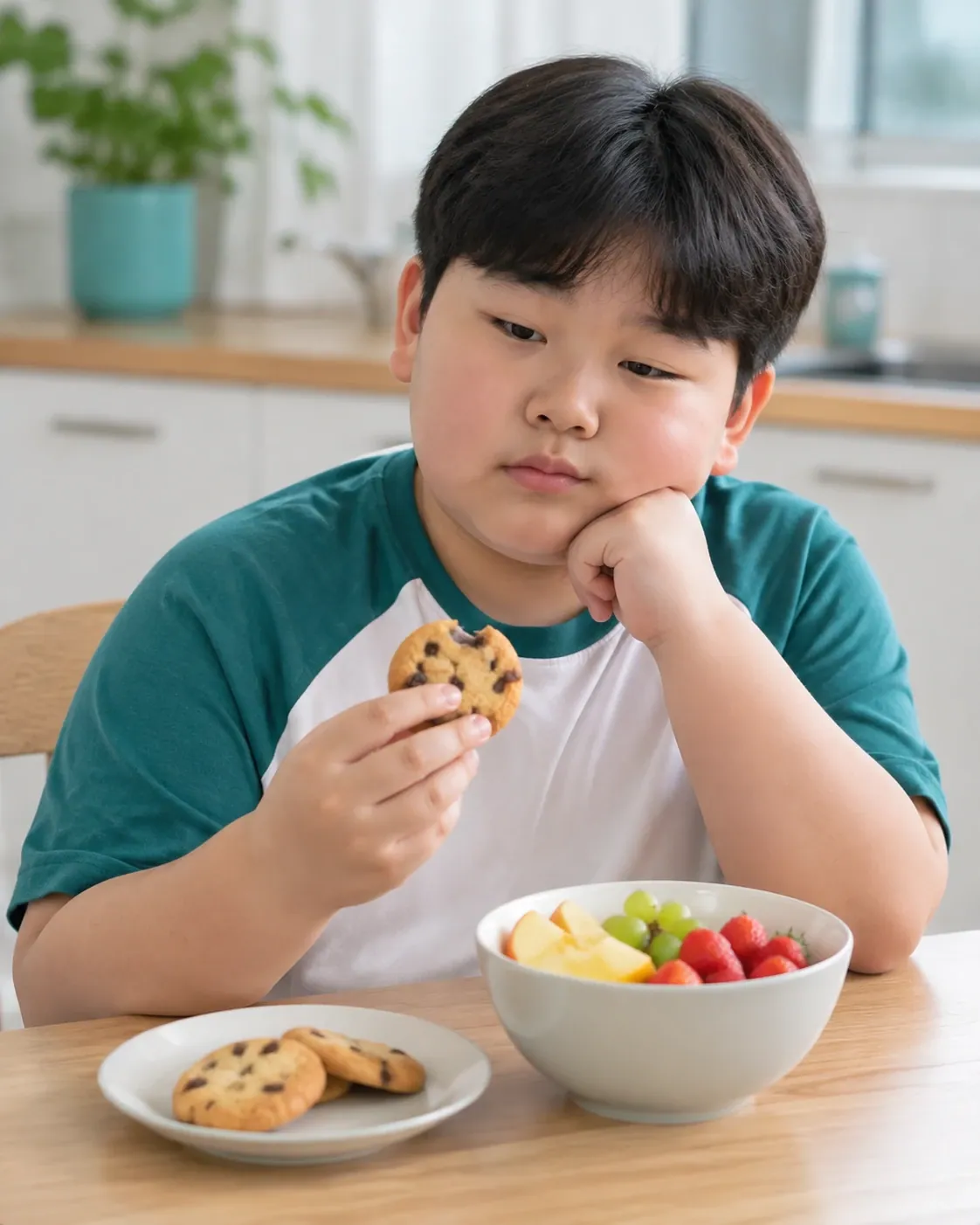
- 또래보다 체중이 빠르게 늘고 있다
- 배가 불러도 계속 먹거나 밥을 빨리 먹는다
- 간식과 단 음료를 끊기 어렵고 몰래 먹는다
- 조금만 움직여도 숨차고 땀이 많다
- 코를 골거나 자도 피곤해한다
- 목이나 겨드랑이 피부가 검게 변했다
- 몸매 때문에 놀림을 받거나 위축된다
- 가슴 발달이나 초경이 빠른 편이다
진료에서는 키와 몸무게의 변화를 성장도표로 확인하고, 식사와 활동, 수면을 살핍니다. 비만 정도에 따라 혈압과 혈당, 간 수치, 콜레스테롤 검사가 필요할 수 있습니다.
소아비만은 왜 생기나요?
- 단 음료, 간식, 배달 음식이 많은 식습관
- 밥을 빨리 먹는 습관, 늦은 저녁 식사
- 오래 앉아 있는 생활, 활동 부족
- 텔레비전과 스마트폰을 보는 시간
- 수면 부족
- 스트레스와 불안, 가족의 식습관
- 드물게 호르몬 질환이나 약물
수면은 놓치기 쉬운 원인입니다. 잠이 가장 짧은 아이는 가장 긴 아이보다 과체중·비만이 될 가능성이 1.76배 높았고, 하루 1시간 더 잘수록 위험이 21% 줄었습니다[5]. 화면을 보는 시간이 길수록 BMI도 높았습니다[6].
비만은 몸만의 문제가 아닙니다. 비만한 여아는 불안과 우울 위험이 43%, 남아는 33% 높았습니다[7]. 스트레스로 먹고, 다시 스트레스를 받는 고리가 생길 수 있습니다. 비만한 아이는 사춘기도 빨라서, 여아는 5.2개월, 남아는 3.5개월 일찍 왔습니다[8].
소아비만의 표준 치료
표준 치료의 핵심은 식사와 운동, 행동을 함께 바꾸는 생활습관 치료입니다. 6~11세 비만은 체중을 유지하거나 한 달에 약 0.5kg씩 천천히 줄이는 것을 목표로 합니다[1]. 이런 치료는 치료하지 않은 경우보다 BMI를 평균 0.53 낮췄습니다[9].
실제로는 허기와 식탐이 강하거나 스트레스로 먹는 아이가 많아, 참으라는 말만으로 이어 가기 어렵습니다. 먹는 양만 줄일 것이 아니라 잘 먹고 잘 자고 잘 움직이는 몸을 만들어야 합니다. 한의학 치료는 이 바탕을 다스립니다.
연구도 있습니다. 침 치료는 소아청소년 1,288명의 15개 연구를 모은 분석에서 대조군보다 BMI를 낮췄습니다(표준화 평균차 -0.45)[10]. 모두 중국과 한국에서 이루어진 연구입니다. 소아비만의 한약 치료는 추가적인 연구가 필요합니다.
해움한의원은 이렇게 치료합니다

해움한의원은 아이를 굶기지 않습니다. 성장에 필요한 영양을 지키면서, 아이가 스스로 조절할 수 있게 몸과 습관을 함께 다스립니다.
1단계. 성장과 건강 상태를 먼저 살핍니다
키와 몸무게의 변화, 사춘기 징후, 식사와 수면, 활동, 스트레스를 자세히 살펴봅니다. 호르몬 질환이나 대사 이상이 의심되면 소아청소년과 검사를 먼저 안내해 드립니다.
2단계. 아이에게 맞는 목표를 세웁니다
나이와 비만 정도에 맞춰 목표를 정합니다. 키가 크는 동안 체중을 유지하는 것만으로도 좋아질 수 있습니다. 부모와 함께 식탁과 간식, 화면 시간을 바꿉니다.
3단계. 유형에 맞춰 바탕을 다스립니다
체질과 상태에 맞춰 한약을 짓습니다. 필요하면 침 치료를 더해 식욕과 긴장을 조절하고, 수면과 활동량을 함께 살핍니다.
4만 건의 처방 사례가 말해주는, 한방 맞춤 치료의 힘



소아비만, 누가 진료하나요?
담당 의료진
대표원장 박재은

“병이 아니라 그 뒤의 사람을 봅니다”
경희대학교 한의과대학에서 석사·박사 과정을 마쳤습니다. 심리상담사 1급 자격과 4만 건 이상의 한약 처방 경험을 바탕으로 진료합니다.
의료진 소개 더보기소아비만, 자주 묻는 질문
어릴 때 살은 나중에 키로 가지 않나요?
성장기 아이에게 다이어트를 시켜도 되나요?
아이가 다이어트 한약을 먹어도 되나요?
간식을 끊게 하니 몰래 먹어요. 어떻게 해야 하나요?
치료 기간은 얼마나 걸리나요?
집에서 무엇부터 바꾸면 좋을까요?
해움한의원에서 소아비만을 진료하나요?
소아비만으로 내원하려면 어떻게 하나요?
이런 경우에는 미루지 말고 진료를 받으세요
아래 증상은 당뇨병, 수면무호흡, 호르몬 질환이나 식이장애일 수 있습니다. 소아청소년과 진료를 먼저 받으세요.
- 물을 많이 마시고 소변이 늘며 쉽게 지친다
- 잘 때 코를 심하게 골거나 숨을 멈춘다
- 키가 잘 크지 않는데 체중만 빠르게 는다
- 8세 이전 여아의 가슴 발달, 9세 이전 남아의 고환 발달이 있다
- 먹는 것을 거부하거나 먹고 일부러 토한다
참고문헌 10편
[1]Yi DY, Kim SC, Lee JH, Lee EH, Kim JY, Kim YJ, et al. Clinical practice guideline for the diagnosis and treatment of pediatric obesity: recommendations from the Committee on Pediatric Obesity of the Korean Society of Pediatric Gastroenterology Hepatology and Nutrition. Korean J Pediatr. 2019;62(1):3-21. doi:10.3345/kjp.2018.07360. PMID: 30589999.
요약 우리나라 소아 비만 진료지침입니다. 2세가 넘으면 BMI 85~95 백분위를 과체중, 95 백분위 이상을 비만으로 봅니다. 생활습관 치료가 핵심이며, 6~11세 비만은 체중 유지 또는 월 약 0.5kg의 완만한 감량을 목표로 합니다.원문은 출판사 저작권 자료로, 위 링크에서 확인하실 수 있습니다.
[2]Kim JH, Moon JS. Secular Trends in Pediatric Overweight and Obesity in Korea. J Obes Metab Syndr. 2020;29(1):12-17. doi:10.7570/jomes20002. PMID: 32188238.
요약 우리나라 소아청소년 비만 추세를 정리한 논문입니다. 학생건강검사(6~18세)에서 비만은 2007년 8.7%에서 2017년 15.0%로 늘었습니다.원문은 출판사 저작권 자료로, 위 링크에서 확인하실 수 있습니다.
[3]Park HK, Seo JY, Jung HW, Lim JS. Prevalence and trends in obesity and severe obesity in Korean children and adolescents, 2007-2020: A population-based study. Pediatr Int. 2023;65(1):e15472. doi:10.1111/ped.15472. PMID: 36645370.
요약 국민건강영양조사의 2~18세 23,595명 자료입니다. 2019~2020년 과체중은 23.5%, 비만은 14.2%였고 남아에서 더 많았습니다.원문은 출판사 저작권 자료로, 위 링크에서 확인하실 수 있습니다.
[4]Simmonds M, Llewellyn A, Owen CG, Woolacott N. Predicting adult obesity from childhood obesity: a systematic review and meta-analysis. Obes Rev. 2016;17(2):95-107. doi:10.1111/obr.12334. PMID: 26696565.
요약 15개 코호트, 200,777명을 모은 분석입니다. 비만한 소아의 약 55%가 청소년기에도 비만했고, 비만한 청소년의 약 80%가 성인이 되어서도 비만했습니다.원문은 출판사 저작권 자료로, 위 링크에서 확인하실 수 있습니다.
[5]Ruan H, Xun P, Cai W, He K, Tang Q. Habitual Sleep Duration and Risk of Childhood Obesity: Systematic Review and Dose-response Meta-analysis of Prospective Cohort Studies. Sci Rep. 2015;5:16160. doi:10.1038/srep16160. PMID: 26537869.
초록 (Abstract)
A meta-analysis of cross-sectional studies found that shorter-time sleep was correlated with increased risk of obesity in children. However, findings from prospective cohort studies were inconsistent. PubMed and other data resources were searched through May 2015. Twenty-five eligible studies were identified including 56,584 children and adolescents with an average 3.4-year follow-up. Compared with children having the longest sleep duration (~12.2 hours), kids with the shortest sleep duration (~10.0 hours) were 76% more likely to be overweight/obese (pooled odds ratio [OR]: 1.76; 95% confidence interval [CI]: 1.39, 2.23); and had relatively larger annual BMI gain (pooled β coefficient: 0.13; 95% CI: 0.01, 0.25 kg/m2). With every 1 hour/day increment in sleep duration, the risk of overweight/obesity was reduced by 21% (OR: 0.79; 95% CI: 0.70, 0.89); and the annual BMI gain declined by 0.05 kg/m2 (β = −0.05; 95% CI: −0.09, −0.01). The observed associations were not appreciably modified by region, baseline age or the length of follow-up. Accumulated literature indicates a modest inverse association between sleep duration and the risk of childhood overweight/obesity. Further research is needed to determine the age and gender specified optimal hours of sleep and ideal sleep pattern with respect to obesity prevention in children.
결과 (Results)
Literature search: As shown in Figure 1, 168 relevant articles were retrieved from PubMed. Of them, 145 were excluded for one of the following reasons: 1) not in English (n = 5); 2) not original studies (e.g., letter to editor) (n = 22); 3) not prospective cohort studies (n = 26); 4) not in children/adolescents (n = 26); 5) not on sleep duration or no outcome of interest (n = 72); 6) no sufficient information on measures of the association of interest (n = 1). In addition, 10 studies were identified from EMBASE, Google Scholar, or the reference lists of the relevant articles, for a total of 25 eligible studies in the meta-analysis.
Characteristics of included studies: Table 1 presents characteristics of the 25 included studies. Eleven studies were conducted in the USA, four in Australia, two in Canada, two in Denmark, and one in each of the following countries: UK, Germany, New Zealand, Portugal, Korea, and Belgium. Some studies reported results separately based on two or three different age groups, or separately by genders. We treated them as independent cohorts. In the final dataset, 56,584 children and adolescents from 25 studies (32 independent cohorts), with an average 3.4-year follow-up, were included.
Information on sleep duration and the risk of overweight/obesity were available in 11 studies (14 cohorts), including 31,185 participants and 4,473 cases with a follow-up range from 21 months to 5 years. Data on sleep duration and annual BMI gain were available in six studies (8 cohorts) including 5,341 participants with a follow-up range from 2 to 5 years.
Sleep duration and risk of overweight/obesity: Figure 2 shows the association between sleep duration and the risk of overweight/obesity. By combining data from seven studies (10 independent cohorts), the pooled OR (95% CIs) was 1.76 (95% CI: 1.39, 2.23) for participants in the shortest sleep duration group as compared with those who were in the longest sleep duration group. The heterogeneity was high among studies (I2 = 70.5%, P < 0.01). No strong evidence of publication bias was observed (Egger’s test, P = 0.10).
For the dose-response relationship, after pooling available data from 8 studies (9 independent cohorts), the risk of overweight/obesity was 21% lower with every 1 hour/day sleep duration increment (combined OR: 0.79; 95% CI: 0.70, 0.89). A high heterogeneity among studies was observed (I2 = 81.2%, P < 0.01). Because Egger’s test indicated a significant publication bias (P = 0.01), the “trim and fill” method was used to adjust for the publication bias. With this adjustment, the pooled linear association was somewhat attenuated and became statistically non-significant (pooled OR: 0.92; 95% CI: 0.81, 1.05).
Sleep duration and annual BMI gain: Figure 3 demonstrates the relation between sleep duration and annual BMI gain. Four studies (5 independent cohorts) provided data on the multivariable-adjusted β coefficient (95% CIs) comparing children with the shortest to the longest sleep duration. The pooled results indicated that participants with the shortest sleep duration had significantly more annual BMI gain (β coefficient: 0.13; 95% CI: 0.01, 0.25). High heterogeneity among studies existed (I2 = 67.5%, P = 0.02). The test for publication bias approached significance (Egger’s test, P = 0.054).
For the dose-response relationship, 4 studies (6 independent cohorts) had data available. Every 1 hour/day sleep duration increment would decrease annual BMI gain by 0.05 kg/m2 (β = −0.05; 95% CI: −0.09, −0.01). A moderate heterogeneity was observed (I2 = 42.7, P = 0.12). There was no evidence indicating publication bias (Egger’s test, P = 0.70).
Subgroup and sensitivity analysis: According to the available data, we examined potential effect modification by study region (USA vs. Non-USA), age (<3, 3 < 5, ≥5 year), or follow-up duration (above or below the median). None of these factors materially modified the observed associations (Table 2). A few studies examined gender difference between sleep duration and BMI z-score or PBF. Although the number of studies is not sufficient for us to pool the results, none of these studies found a significant gender difference.
In addition, the results were not appreciably changed when replacing random-effects models with fixed-effects models (data not shown). No single study substantially influenced the pooled results on sleep duration and the risk of overweight/obesity when omitting one study each time in the meta-analysis (Supplemental Table). However, the association between sleep duration and annual BMI gain was substantially attenuated when removing one of three independent cohorts (Silva, 2011, Lee, 2012, or O’Dea, 2012) at a time (Supplemental Table).
Sleep duration and secondary outcomes: Table 3 shows the association between sleep duration and secondary outcomes. Sleep duration was inversely associated with BMI, BMI z-score and WC, and positively related to FMI.
원문 발췌 · Ruan H, Xun P, Cai W, He K, Tang Q, Sci Rep 2015 · CC BY 4.0 라이선스에 따라 수정 없이 인용했습니다(본문 속 인용 번호는 생략).
[6]Braithwaite I, Stewart AW, Hancox RJ, Beasley R, Murphy R, Mitchell EA, et al. The worldwide association between television viewing and obesity in children and adolescents: cross sectional study. PLoS One. 2013;8(9):e74263. doi:10.1371/journal.pone.0074263. PMID: 24086327.
요약 세계 소아청소년 약 28만 명의 조사입니다. 텔레비전을 보는 시간이 길수록 BMI가 높았습니다.원문은 출판사 저작권 자료로, 위 링크에서 확인하실 수 있습니다.
[7]Lindberg L, Hagman E, Danielsson P, Marcus C, Persson M. Anxiety and depression in children and adolescents with obesity: a nationwide study in Sweden. BMC Med. 2020;18(1):30. doi:10.1186/s12916-020-1498-z. PMID: 32079538.
초록 (Abstract)
Background: Anxiety and depression are more common in children with obesity than in children of normal weight, but it is unclear whether this association is independent of other known risk factors. Interpretation of results from previous studies is hampered by methodological limitations, including self-reported assessment of anxiety, depression, and anthropometry. The aim of this study was to investigate whether obesity increases the risk of anxiety or depression independently of other risk factors in a large cohort of children and adolescents, using robust measures with regard to exposure and outcome.
Methods: Children aged 6–17 years in the Swedish Childhood Obesity Treatment Register (BORIS, 2005–2015) were included (n = 12,507) and compared with a matched group (sex, year of birth, and area of residence) from the general population (n = 60,063). The main outcome was a diagnosis of anxiety or depression identified through ICD codes or dispensed prescribed medication within 3 years after the end of obesity treatment. Hazard ratios (HRs) with 95% confidence intervals (CIs) from Cox proportional models were adjusted for several known confounders.
Results: Obesity remained a significant risk factor for anxiety and depression in children and adolescents after adjusting for Nordic background, neuropsychiatric disorders, family history of anxiety/depression, and socioeconomic status. Girls in the obesity cohort had a 43% higher risk of anxiety and depression compared to girls in the general population (adjusted HR 1.43, 95% CI 1.31–1.57; p < 0.0001). The risk in boys with obesity was similar (adjusted HR 1.33, 95% CI 1.20–1.48; p < 0.0001). In sensitivity analyses, excluding subjects with neuropsychiatric disorders and a family history of anxiety/depression, the estimated risks in individuals with obesity were even higher compared with results from the main analyses (adjusted HR [95% CI]: girls = 1.56 [1.31–1.87], boys = 2.04 [1.64–2.54]).
Conclusions: Results from this study support the hypothesis that obesity per se is associated with risk of both anxiety and depression in children and adolescents.
결과 (Results)
A total of 12,507 individuals with obesity (46.9% girls) and 60,063 individuals in the comparison group (47.1% girls) were included in the study. In children with obesity, 9.7% suffered from anxiety or depression compared with 5.0% of individuals in the comparison group (p < 0.0001). Overall, anxiety and depression were more common in girls than in boys (7.0% vs. 4.8%; p < 0.0001), although boys were roughly 8 months younger than girls at first diagnosis or dispensed prescribed medication (p < 0.0001). Of all children with anxiety and depression, 56% had at least one parent with anxiety/depression (p < 0.0001). Common risk factors for anxiety and depression, e.g. neuropsychiatric disorders and low SES, were more prevalent among children and adolescents with obesity compared to the comparison group. Characteristics of the study cohort stratified by sex are shown in Table 1.
Risk factors for anxiety and depression: Obesity was a strong risk factor for anxiety and depression in both sexes: adjusted HR [95% CI] for girls was 1.43, [1.31–1.57], p < 0.0001, and for boys 1.33, [1.20–1.48], p < 0.0001 (Additional file 2). History of maternal and paternal anxiety/depression was of equal importance for the risk of anxiety and depression in children both with and without obesity (Fig. 2).
Sensitivity and interaction analyses: In sensitivity analyses, excluding children with neuropsychiatric disorders and a family history of anxiety/depression, the risks for anxiety and depression were even higher in individuals with obesity compared with the adjusted risk estimates from the main analyses (Table 2). Interaction analyses were performed to explore whether the association between childhood obesity and the risk of anxiety and depression was modified by co-existing neuropsychiatric diagnoses. Adjusted analyses showed that the association between obesity in childhood and the risk of anxiety and depression was attenuated by neuropsychiatric disorders in both sexes (test for interaction p < 0.001, data not shown).
Risk factors for anxiety and depression in children and adolescents with obesity: Descriptive statistics for children and adolescents with obesity are shown in Additional file 3. At the last clinical visit, 37% of individuals who had undergone obesity treatment had morbid obesity, 48% obesity, 14% overweight, and 1% normal weight.
In both boys and girls, the risk of anxiety and/or depressive disorders increased with increasing age at the start of obesity treatment (Table 3). Significant risk factors for anxiety and depression in children and adolescents with obesity included poor treatment response, dropping out of obesity treatment, Nordic origin, neuropsychiatric disorders, and a family history of anxiety/depression (Table 3).
원문 발췌 · Lindberg L, Hagman E, Danielsson P, Marcus C, Persson M, BMC Med 2020 · CC BY 4.0 라이선스에 따라 수정 없이 인용했습니다(본문 속 인용 번호는 생략).
[8]Brix N, Ernst A, Lauridsen LLB, Parner ET, Arah OA, Olsen J, et al. Childhood overweight and obesity and timing of puberty in boys and girls: cohort and sibling-matched analyses. Int J Epidemiol. 2020;49(3):834-844. doi:10.1093/ije/dyaa056. PMID: 32372073.
요약 덴마크 소아 코호트 연구입니다. 7세에 비만이었던 아이는 정상 체중 아이보다 사춘기 지표에 일찍 도달했습니다(여아 5.2개월, 남아 3.5개월).원문은 출판사 저작권 자료로, 위 링크에서 확인하실 수 있습니다.
[9]Mead E, Brown T, Rees K, Azevedo LB, Whittaker V, Jones D, et al. Diet, physical activity and behavioural interventions for the treatment of overweight or obese children from the age of 6 to 11 years. Cochrane Database Syst Rev. 2017;6:CD012651. doi:10.1002/14651858.cd012651. PMID: 28639319.
요약 6~11세 대상 70개 연구, 8,461명을 모은 코크란 리뷰입니다. 식사·운동·행동을 함께 바꾸는 치료는 치료하지 않은 군보다 BMI를 평균 0.53 kg/m² 낮췄습니다. 효과는 작았고 근거 수준은 낮거나 매우 낮았습니다.원문은 출판사 저작권 자료로, 위 링크에서 확인하실 수 있습니다.
[10]Quan T, Su Q, Luo Y, Su X, Chen Q, Yang J, et al. Does acupuncture improve the metabolic outcomes of obese/overweight children and adolescents?: A systematic review and meta-analysis. Medicine (Baltimore). 2023;102(40):e34943. doi:10.1097/md.0000000000034943. PMID: 37800756.
초록 (Abstract)
Background: Although increasing evidence has revealed the efficacy of acupuncture in obesity/overweight, actual improvement in metabolism in children and adolescents is unclear. Therefore, we conducted a meta-analysis to evaluate this correlation.
Methods: A comprehensive search was conducted using multiple databases, including Medline, Cochrane, Embase, Web of Science, Chinese Biomedical Literature Database, China National Knowledge Infrastructure, Chinese Scientific Journal Database, and Wan-fang Data, to identify relevant randomized controlled trials published before February 1, 2023. General information and data for the descriptive and quantitative analyses were extracted.
Results: Fifteen randomized controlled trials of 1288 obese/overweight children and teenagers were included. All the trials were conducted in China and South Korea. Regarding quality assessment, no other significant risk of bias was found. The acupuncture groups were more likely to have improved metabolic indicators of obesity/overweight than the control groups, in terms of body mass index (standardized mean difference [SMD] = −0.45, 95% confidence interval [CI]: −0.69 to −0.21, I2 = 71.4%), body weight (SMD = −0.48, 95% CI: −0.92 to −0.05, I2 = 84.9%), and serum leptin (SMD = −0.34, 95% CI: −0.58 to −0.10, I2 = 91.8%). The subgroup analysis showed that for body mass index, the results were consistent regardless of the intervention duration, body acupuncture or auricular acupuncture combined with other interventions.
Conclusion: Our results suggest that acupuncture is effective in improving metabolic outcomes of obese/overweight children and adolescents. Owing to the limited number of trials included in this study, the results should be interpreted with caution.
결과 (Results)
3.1. Literature screening results and characteristics of included trials: A total of 8770 records were retrieved from the initial target database, of which 1689 were deleted because of duplication. The manual review identified 8 trials that met the inclusion criteria. In this case, a total of 15 unique trials were eventually included in our study (shown in Fig. 1).
All 15 trials were conducted in China and South Korea and published before February 1, 2023. Altogether, 698 and 590 participants were randomized to the EGs and CGs, respectively. The proportion of boys (N = 279) was significantly higher than that of girls (N = 211) (5 studies did not report these data). Different acupuncture approaches were used to intervene in obesity/overweight children and teenagers for 20 days to 3 months (shown in Table 1).
3.2. Quality of included trials: Random assignment was adequately described in all 15 studies; however, none mentioned allocation concealment. The blinding of operators and subjects was mentioned in only 2 studies and the remaining studies did not use blinding or mention it. All 15 trials fully reported the relevant outcomes; therefore, the risk of attrition bias was low (shown in Supplementary Figs. 1 and 2, http://links.lww.com/MD/J680, http://links.lww.com/MD/J681).
3.3. Primary outcomes / 3.3.1. BMI.: Twelve trials investigated the efficacy of EGs and CGs in improving BMI. The results showed that EGs were more effective than CGs in improving BMI, with an SMD value of −0.45 (95% CI: −0.69 to −0.21, I2 = 71.4%) (shown in Table 2A). The funnel plot suggested publication bias, but the quantitative Egger test (P =.235) showed no publication bias (shown in Supplementary Fig. 3A, http://links.lww.com/MD/J682).
3.3.2. WC.: Six trials investigated the efficacy of EGs and CGs in improving WC, but the results showed no statistical significance (shown in Table 2A). The funnel plot suggested no publication bias, and the quantitative Egger test (P =.085) showed the same indication (shown in Supplementary Fig. 3B, http://links.lww.com/MD/J682).
3.3.3. BW.: Nine trials investigated the efficacy of EGs and CGs in weight loss, and the results showed that the efficacy of EGs was better than that of CGs in weight loss, with an SMD value of −0.56 (95% CI: −1.01 to −0.10, I2 = 85.7%) (shown in Table 2A). The funnel plot suggested no publication bias, and the quantitative Egger test (P =.337) showed the same indication (shown in Supplementary Fig. 3C, http://links.lww.com/MD/J682).
3.4. Metabolic outcomes / 3.4.1. Serum leptin.: Four trials investigated the efficacy of EGs and CGs in improving serum leptin, and the results showed that EGs were better than CGs in improving serum leptin, with an SMD value of −0.34 (95% CI: −0.58 to −0.10, I2 = 91.8%) (shown in Table 2A). The funnel plot suggested no publication bias, and the quantitative Egger test (P =.095) showed the same indication (shown in Supplementary Fig. 3D, http://links.lww.com/MD/J682).
3.4.2. Other metabolic indicators.: Two trials investigated the efficacy of EGs and CGs in lowering TC, TG, and LDL, and increasing HDL. It was found that EGs were superior to CGs in lowering TC and LDL. The SMD of TC was −0.74 (95% CI: −2.17 to −0.70, I2 = 91.8%) and the SMD of LDL was −0.45 (95% CI: −0.87 to −0.03, I2 = 5.7%), however, the results of TG and HDL were not statistically different (shown in Table 2A). The corresponding funnel plots all suggested that there was no publication bias (shown in Supplementary Fig. 3E–H, http://links.lww.com/MD/J682).
3.5. Subgroup analyses: Based on the primary outcomes, the pre-specified subgroup analyses were divided into 10 categories to explore possible sources of heterogeneity, some of which revealed sources of heterogeneity. In terms of BMI, when regions were considered, the backward region (SMD = −0.68, 95% CI: −0.97, −0.39, I2 = 19.3%) had significantly lower heterogeneity than the develop region (SMD = −0.34, 95% CI: −0.62, −0.05, I2 = 73.9%). When taking publication year into account, year ≤2015 (SMD = −0.60, 95% CI: −0.84, −0.36, I2 = 0.0%) had significantly lower heterogeneity than year >2015 (SMD = −0.38, 95% CI: −0.70, −0.06, I2 = 78.3%). In terms of BW, when the types of acupuncture were considered, body acupuncture (SMD = −0.59, 95% CI: −0.89, −0.28, I2 = 0.0%) had significantly lower heterogeneity than auricular acupuncture (SMD = −0.92, 95% CI: −1.81, −0.04, I2 = 91.2%) (shown in Table 2B–E).
원문 발췌 · Quan T, Su Q, Luo Y, Su X, Chen Q, Yang J, Tang H, Medicine (Baltimore) 2023 · CC BY 4.0 라이선스에 따라 수정 없이 인용했습니다(본문 속 인용 번호는 생략).