

출산 후에 불어난 살이 신경 쓰여서 먹는 양을 줄여 봐도 체중은 그대로예요. 밤에 입이 터져 먹고 나면 후회가 됩니다. 육아하느라 너무 힘들고, 저녁이면 몸이 퉁퉁 붓습니다. 산후다이어트는 왜 이렇게 어려운 걸까요?
산후다이어트 한눈에 보기
- 산후다이어트는 출산 뒤 남은 체중과 붓기를 몸의 회복을 해치지 않으면서 줄여 가는 관리입니다.
- 산모의 약 75%가 출산 1년 뒤에도 임신 전보다 체중이 많습니다. 운동만으로는 큰 차이가 없고, 식사 조절을 함께 할 때 효과가 나타났습니다.
- 수면 부족과 긴장으로 흔들린 자율신경이 식욕과 대사에 영향을 주므로, 굶기보다 잠과 식사부터 되찾아야 합니다.
- 치료후기 1건
- 의료진 칼럼 1편
산후다이어트란?
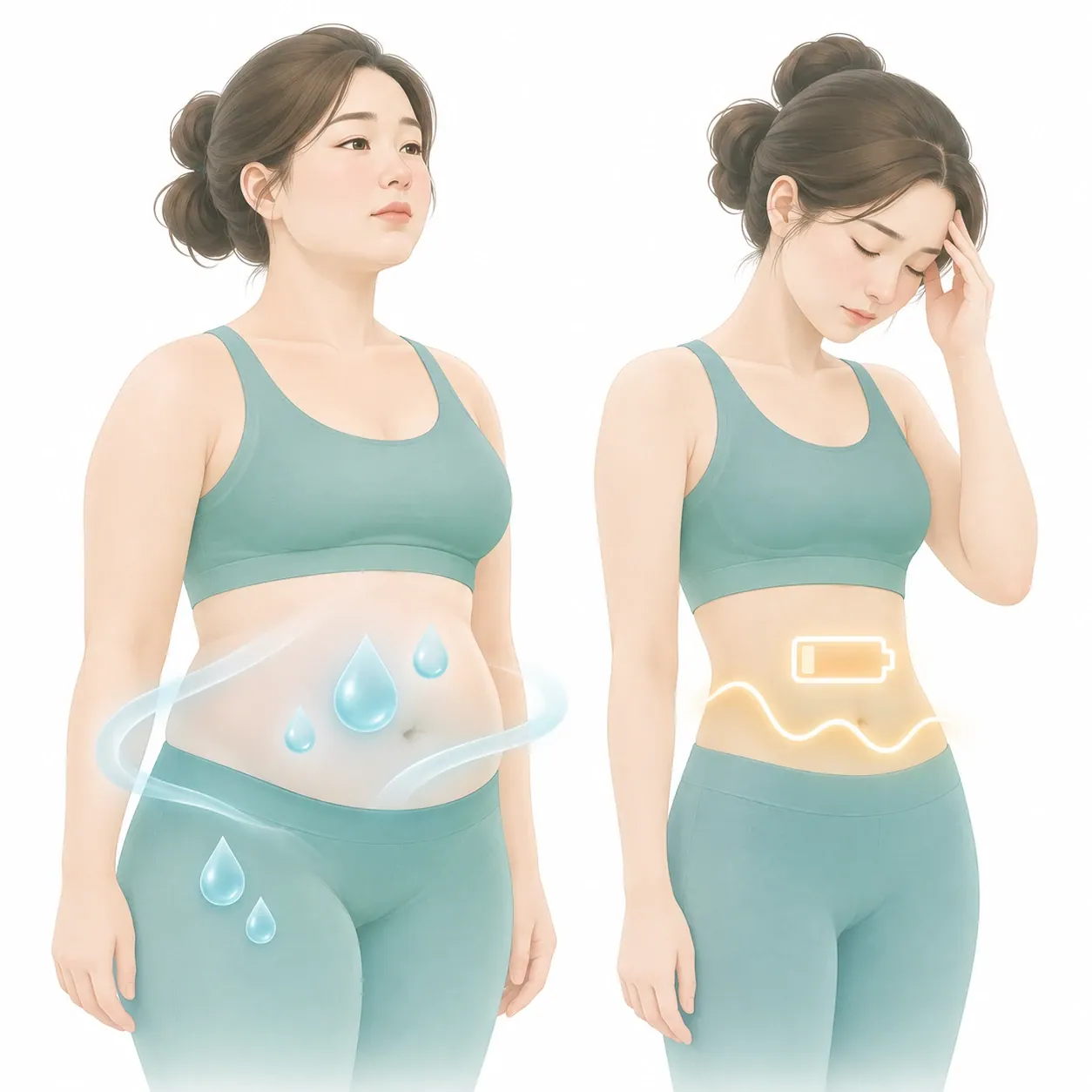
산후다이어트는 임신 때 늘어 출산 뒤에도 남은 체중과 붓기를 줄이는 관리입니다. 단순히 살을 빼는 일이 아니라, 출산으로 비어 있는 몸을 채우며 줄여 가는 과정입니다. 출산 후 30~45일은 늘어난 조직이 제자리로 돌아가는 시기로 보아, 이때는 체중보다 회복을 먼저 챙깁니다.
체중이 안 빠지는 것은 의지가 약해서가 아닙니다. 약 75%의 산모가 출산 1년 뒤에도 임신 전보다 체중이 많았고, 47.4%는 4.5kg 넘게 남아 있었습니다[1].
이런 증상이 있나요?
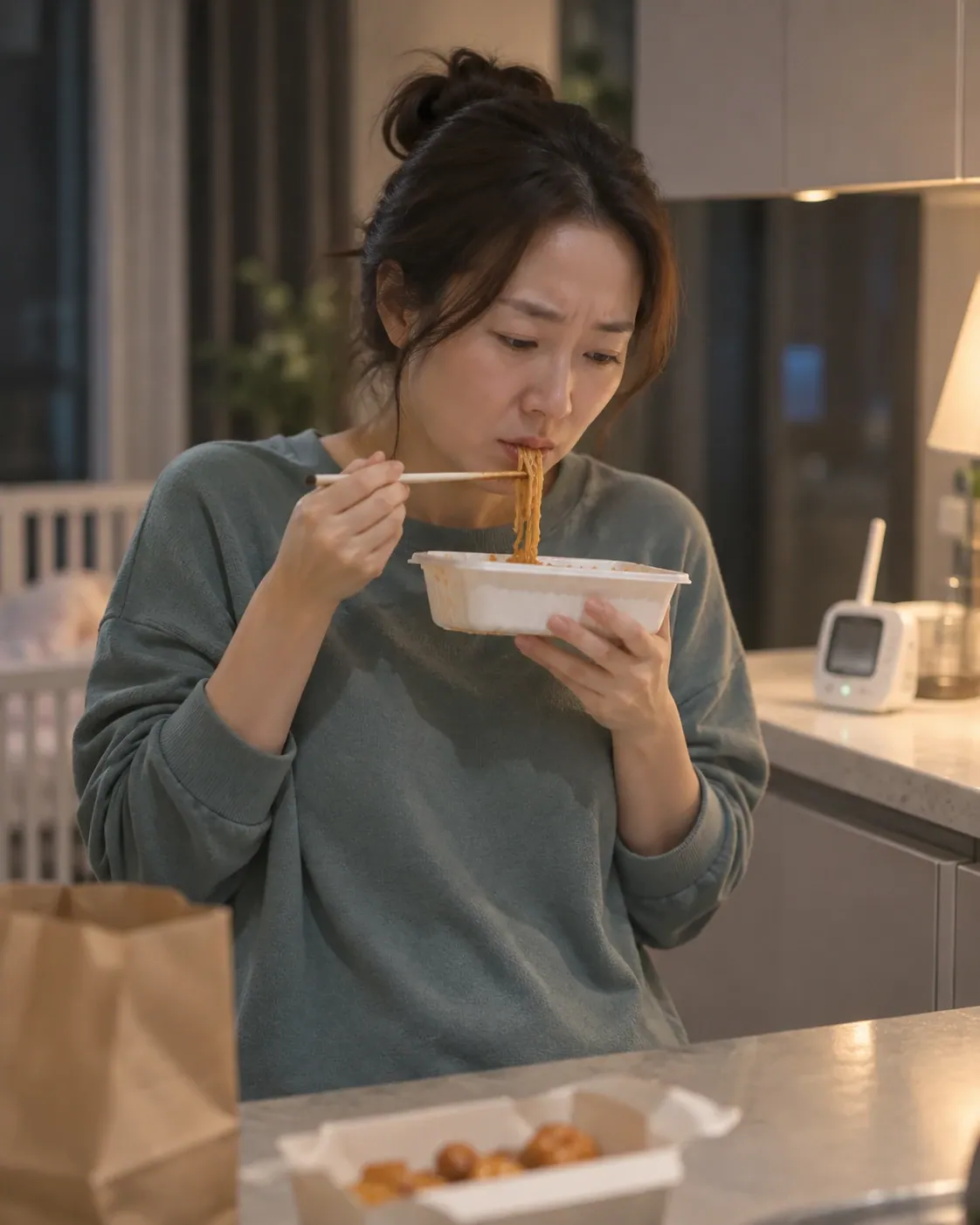
- 먹는 양이 많지 않은데 체중이 줄지 않는다
- 아침저녁으로 얼굴과 손발, 다리가 붓는다
- 아랫배와 허벅지 살만 유독 빠지지 않는다
- 낮에 굶고 밤에 폭식이나 야식을 한다
- 쉽게 지치고 조금만 움직여도 힘들다
- 다이어트를 시작하면 어지럽고 힘이 배로 든다
- 출산 뒤 체질이 바뀐 것 같다
오래 체중이 줄지 않고 몹시 피곤하거나 추위를 타면 갑상선 문제가 숨어 있을 수 있습니다. 어지럽고 숨이 차면 빈혈도 확인해 보세요. 다이어트에 앞서 산부인과나 내과 검진을 받는 것이 좋습니다.
출산 후 살은 왜 안 빠지나요?
- 줄어든 활동량과 늘어난 앉아 있는 시간
- 하루 5시간 이하의 수면(체중 잔류 3.13배)[2]
- 끼니를 거른 뒤의 야식과 폭식
- 호르몬의 변화
- 순환이 떨어져 빠지지 않는 붓기
- 우울감과 혼자 감당하는 육아 부담
잠과 체중의 관계는 연구마다 조금 다릅니다. 짧은 수면은 체중이 빠지지 않는 것과 관련이 있었으나[3], 밤잠 시간만 따진 연구에서는 관련이 없어 추가적인 연구가 필요합니다[4]. 분명한 것은 산모의 생활이 먹고 자는 기본부터 무너지기 쉽다는 점입니다.
모유 수유를 하면 저절로 빠진다는 말도 절반만 맞습니다. 연구의 63%는 수유와 체중 변화의 관련이 거의 없다고 보고했고, 질이 높은 연구 5편 중 4편은 관련이 있어 추가적인 연구가 필요합니다[5]. 수유만 믿고 기다리기보다 내 몸의 상태를 살펴야 합니다.
산후다이어트의 표준 관리
표준 관리의 기본은 식사 조절과 운동입니다. 운동만 한 산모는 평소대로 지낸 산모와 체중 차이가 없었고, 식사 조절과 운동을 함께 하면 1.93kg 더 줄었습니다[6]. 전문가의 지도를 받으면 효과가 더 컸습니다(3.22kg 감소)[7]. 식욕억제제 같은 비만 약은 대개 수유 중에는 쓰지 않습니다.
문제는 알면서도 실천하기 어렵다는 것입니다. 토막 잠을 자며 끼니를 거르는 산모에게 "덜 먹고 더 움직이라"는 말은 다른 세상의 이야기입니다. 무리하게 굶으면 밤에 폭식으로 돌아오고, 뼈마디로 갈 영양이 모자라 산후풍까지 옵니다. 먼저 몸이 먹고 쉴 수 있어야 체중도 움직입니다. 한의학 치료는 바로 이 바탕을 다스립니다.
침 연구도 있습니다. 산후 체중이 남은 여성 66명의 무작위 연구에서 레이저 침은 가짜 시술보다 허리·엉덩이 둘레 비율 차이 없이 체질량 지수와 체지방률을 줄였습니다[8].
해움한의원은 이렇게 치료합니다
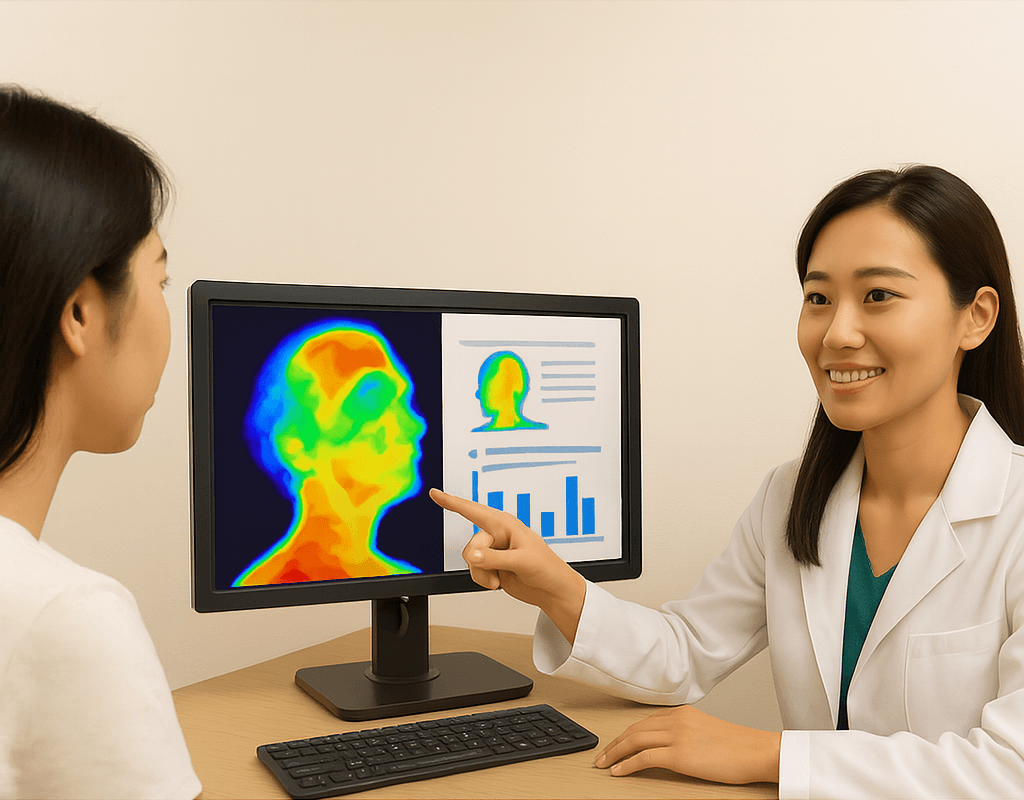
해움한의원에서는 몸무게 숫자만 보지 않습니다. 출산 후 내 몸의 대사가 정상적으로 작동하고 있는지를 먼저 살펴보고, 지금 몸이 감당할 수 있는 방법을 찾습니다.
1단계. 체중이 안 빠지는 이유를 찾습니다
출산 시기와 수유 여부, 임신 전 체중, 수면과 식사를 자세히 살펴봅니다. 빈혈이나 갑상선 문제가 의심되면 검사를 먼저 안내해 드립니다. 심박변이도로 자율신경의 상태를 확인합니다.
2단계. 먹고 자는 리듬을 되찾습니다
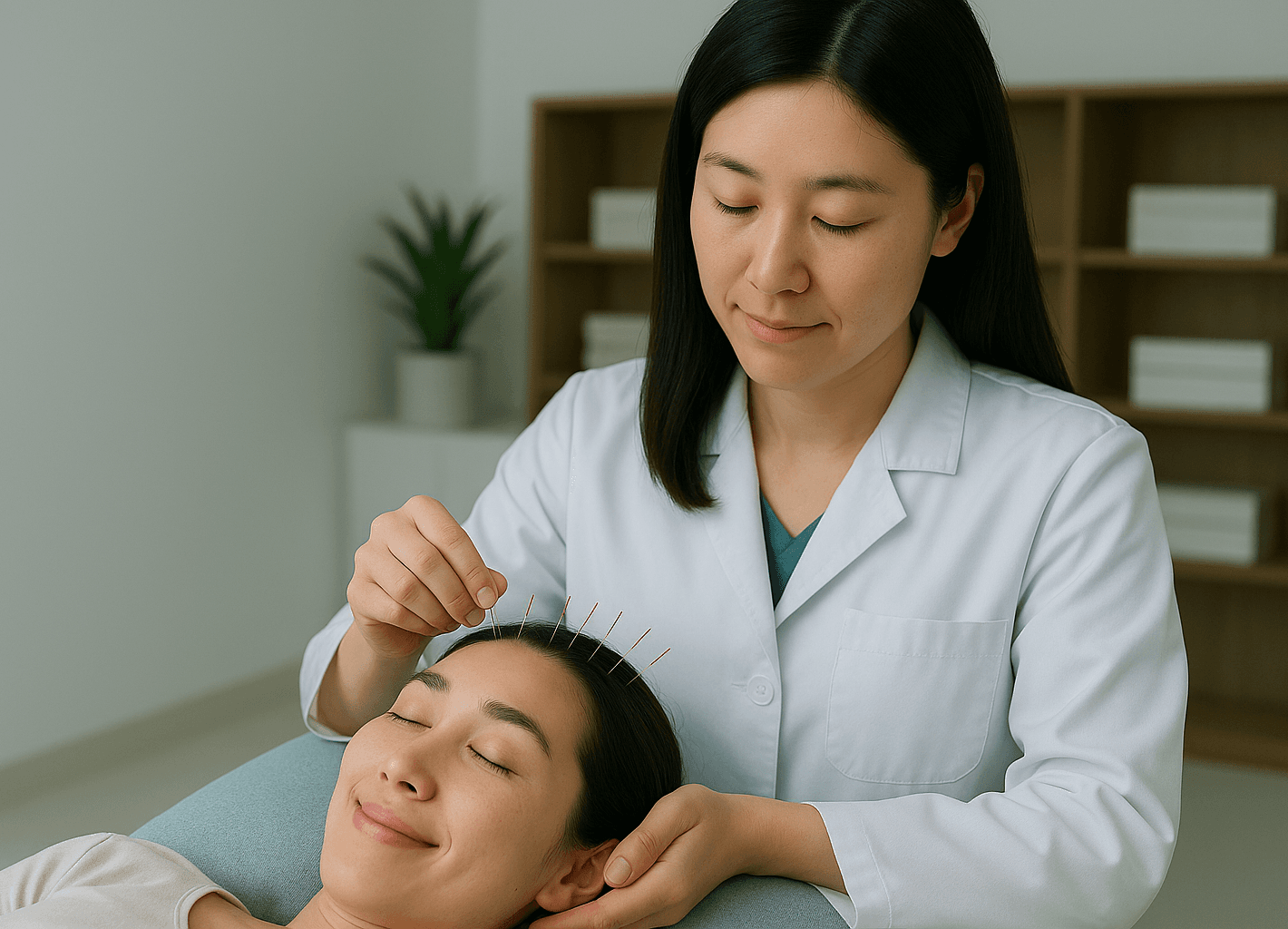
굶지 않으면서 야식과 폭식을 줄이는 식사를 함께 정합니다. 침과 약침으로 붓기와 골반, 하복부의 순환을 돕고 몸의 긴장을 풉니다.
3단계. 유형에 맞춰 바탕을 다스립니다
체질과 상태에 맞춰 한약을 짓습니다. 한약으로 붓기는 내리고 산후 허약해진 몸을 회복하고 대사 기능을 올려 건강한 다이어트를 돕습니다.
4만 건의 처방 사례가 말해주는, 한방 맞춤 치료의 힘
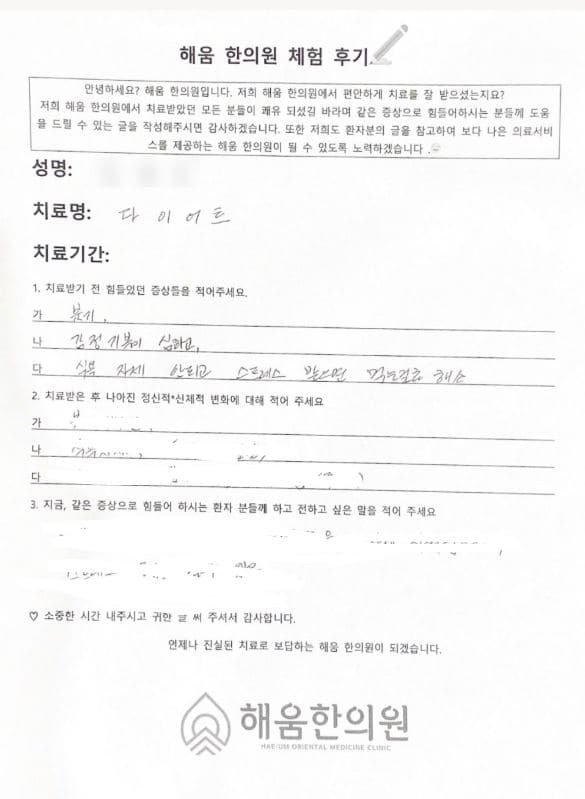
산후다이어트 치료후기 총 1건
환자분들이 남긴 치료후기입니다. 본문은 로그인 후 보실 수 있습니다.
산후다이어트, 누가 진료하나요?
담당 의료진
대표원장 박재은

“병이 아니라 그 뒤의 사람을 봅니다”
경희대학교 한의학박사이자 여한의사입니다. 심리상담사 1급 자격, 20만명 차트분석과 4만건 이상의 한약 처방 경험을 바탕으로 진료합니다.
의료진 소개 더보기산후다이어트, 자주 묻는 질문
산후다이어트는 언제 시작하면 되나요?
모유 수유 중에도 다이어트 한약을 먹을 수 있나요?
모유 수유를 하면 살이 저절로 빠지나요?
보정속옷이나 복대를 입으면 도움이 되나요?
굶으면 안 되나요?
치료 기간은 얼마나 걸리나요?
생활에서 어떻게 관리해야 하나요?
해움한의원에서 산후다이어트를 진료하나요?
산후다이어트로 내원하려면 어떻게 하나요?
이런 경우에는 미루지 말고 진료를 받으세요
아래 증상이 있으면 다이어트를 멈추고 진료를 받으세요. 빈혈이나 갑상선 문제, 섭식 문제, 혈전의 신호일 수 있습니다.
- 가슴이 아프고 숨이 차거나 한쪽 다리만 붓고 아프다: 응급실
- 어지러워 쓰러질 것 같거나 가슴이 심하게 두근거린다
- 체중이 이유 없이 빠르게 줄거나 빠르게 늘어난다
- 폭식 뒤 일부러 토하거나 음식을 먹는 것이 두렵다
- 모유 양이 갑자기 크게 줄었다
참고문헌 8편
[1]Endres LK, Straub H, McKinney C, Plunkett B, Minkovitz CS, Schetter CD, et al. Postpartum weight retention risk factors and relationship to obesity at 1 year. Obstet Gynecol. 2015;125(1):144-152. doi:10.1097/aog.0000000000000565. PMID: 25560116.
요약 주로 저소득층인 미국 산모 774명의 코호트입니다. 약 75%가 출산 1년 뒤에도 임신 전보다 체중이 많았고, 47.4%는 10파운드(약 4.5kg) 넘게 남아 있었습니다.원문은 출판사 저작권 자료로, 위 링크에서 확인하실 수 있습니다.
[2]Gunderson EP, Rifas-Shiman SL, Oken E, Rich-Edwards JW, Kleinman KP, Taveras EM, et al. Association of fewer hours of sleep at 6 months postpartum with substantial weight retention at 1 year postpartum. Am J Epidemiol. 2008;167(2):178-187. doi:10.1093/aje/kwm298. PMID: 17971337.
요약 미국 산모 940명의 코호트입니다. 출산 6개월 때 하루 5시간 이하로 잔 산모는 7시간 잔 산모보다 출산 1년 뒤 체중이 5kg 이상 남을 위험이 3.13배 높았습니다.원문은 출판사 저작권 자료로, 위 링크에서 확인하실 수 있습니다.
[3]Xiao RS, Kroll-Desrosiers AR, Goldberg RJ, Pagoto SL, Person SD, Waring ME. The impact of sleep, stress, and depression on postpartum weight retention: a systematic review. J Psychosom Res. 2014;77(5):351-358. doi:10.1016/j.jpsychores.2014.09.016. PMID: 25306538.
요약 13개 연구의 체계적 고찰입니다. 짧은 수면과 체중 잔류는 4편 모두에서 관련이 있었습니다. 우울은 7편 중 4편에서 관련이 있었고, 스트레스는 4편 모두 뚜렷한 관련이 없었습니다.원문은 출판사 저작권 자료로, 위 링크에서 확인하실 수 있습니다.
[4]Ryan JT, Day H, Egger MJ, Wu J, Depner CM, Shaw JM. Night-time sleep duration and postpartum weight retention in primiparous women. Sleep Adv. 2024;5(1):zpad056. doi:10.1093/sleepadvances/zpad056. PMID: 38314118.
초록 (Abstract)
Objectives: Approximately 75% of women weigh more at 1-year postpartum than pre-pregnancy. More than 47% retain >10 lbs at 1-year postpartum, which is associated with adverse health outcomes for mother and child. Disturbed sleep may contribute to risk of postpartum weight retention (PWR) as short sleep duration is associated with increased risk of obesity. Thus, we investigated whether night-time sleep duration is associated with risk for excessive PWR. We also explored night-time sleep duration and change in postpartum waist circumference.
Methods: This is an ancillary analysis from a prospective cohort study. Participants were healthy primiparous adults with a singleton birth. Excessive PWR at 1-year postpartum was defined as ≥7% of pre-pregnancy weight. Log-binomial and linear regression assessed associations between night-time sleep duration at 6 months postpartum and PWR at 1-year postpartum. Linear regression assessed the association between night-time sleep duration and change in postpartum waist circumference.
Results: Mean age of participants (N = 467) was 29.51 (SD ± 4.78) years. Night-time sleep duration by actigraphy or self-report was not associated with risk for excessive PWR (risk ratio 0.96, [95%CI 0.87–1.06]; risk ratio 0.95 [95%CI 0.83–1.07], respectively) or change in waist circumference.
Conclusion: Night-time sleep duration at 6 months postpartum was not associated with PWR at 1-year postpartum. Mixed findings among our results and previous research could be due to our focus on night-time sleep, and differences in sleep measurement methods and timeframes across studies. More comprehensively assessing sleep, including multiple sleep dimensions, may help advance our understanding of potential links between sleep and PWR.
Trial Registration: The parent study, Motherhood and Pelvic Health (MAP Study), is registered at https://clinicaltrials.gov/ct2/show/NCT02512016, NCT02512016.
결과 (Results)
A total of 76.4% (824/1078) of participants enrolled in the parent study were eligible after delivery (Figure 1), with 47% (507/1078) answering question 4 of the PSQI and having valid actigraphy data. After excluding 31 participants due to missing data, 43.3% (467/1078) remained eligible for the current analyses. The 357 participants who were missing pre-pregnancy or 1-year postpartum weight, withdrew, or had invalid actigraphy were more likely to be younger (26.56 ± 5.3 vs. 19.5 ± 4.8, p < 0.001), Hispanic (30.8% vs. 13.5%, p < 0.001), and have less education (p < 0.001) than those included, but were not significantly different in race or pre-pregnancy BMI. Table 1 shows baseline characteristics. The included participants were aged 29.51 ± 4.78 years with a pre-pregnancy BMI of 24.4 ± 5.03 kg/m2;more than 68% had a pre-pregnancy BMI < 25 kg/m2. More than 90% of participants were White and had at least some college education and health insurance. Power analysis showed our 467 analyzed participants provided 80% power with an alpha of 0.05 and 4 predictors to detect a minimal effect size of 0.03.
Table 2 shows participant characteristics from 5–10 weeks, 6 months, and 1-year postpartum. At 1-year postpartum, mean PWR was 1.5 kg (SD 5.8) and 23.3% (109/467) of participants had PWR ≥7%. Supplementary Figure S2 illustrates PWR for total participants, and participants with <7% and ≥7% PWR. Participants with ≥7% versus <7% PWR at 1-year postpartum were more likely to report Hispanic ethnicity (p = 0.03), have less education (p < 0.001), not be privately insured (p = 0.001), and less likely to be breastfeeding (p < 0.001) and working full-time (p = 0.01). There were no differences in age, race, caffeine, tobacco, diabetes, hypertension, or physical activity between groups. Additionally, participants with ≥7% PWR had 3.5 kg more GWG (p < 0.001) than participants with <7% PWR and more participants with ≥7% PWR had excessive GWG (p < 0.001). Participants with excessive GWG had more PWR (Figure 2, Table 1). Regarding BMI, participants with ≥7% PWR had a higher pre-pregnancy BMI and higher BMI at 1-year postpartum (p < 0.001) than those with <7% PWR (Figure 3, Table 1). Furthermore, the number of participants with a BMI in an overweight or obese category increased by 35% (38/109) at 1-year postpartum in the group with ≥7% compared to a decrease of 1% (5/358) in those with <7% PWR.
Included participants had 7.1 ± 1.5 (SD) days and 22.9 ± 2.2 hours per day of valid actigraphy wear, with no difference between participants with <7% PWR versus ≥7% PWR (22.9 ± 2.3 hours versus 22.8 ± 2.1 hours, p = 0.79). Mean proportion of imputation was 4.8 ± 9.3%. Mean night-time sleep duration for all participants by actigraphy was 6.8 ± 1.6 hours and by self-report was 6.7 ± 1.2 hours. There was no difference in night-time sleep duration by actigraphy (p = 0.54) or self-report (p = 0.40) between participants with <7% PWR versus ≥7% PWR (Figure 4). The Bland–Altman plot showed no specific pattern of underestimating or overestimating between night-time sleep duration by actigraphy and self-report (Supplementary Figure S1). The bias, or mean of the differences between night-time sleep duration by actigraphy and self-report was 0.08 (95%CI −0.08, 0.24). The limits of agreement (LoA) were −3.41 (−3.69, −3.13) to 3.57 (3.29, 3.85) hours.
After adjusting variables per the DAG and confirming model convergence and no multicollinearity, we proceeded with log-binomial regression. The DAG determined a minimal sufficient adjustment set of pre-pregnancy BMI, GWG, and breastfeeding. We adjusted for these variables in model 1. We adjusted for the minimal sufficient adjustment set plus physical activity, ethnicity, and health insurance in models 2, 3, and 4, respectively. Night-time sleep duration by actigraphy (RR 0.97, 95% CI 0.88–1.07, p = 057 and RR 0.96, 95%CI 0.87–1.06, p = 0.44) or self-report (RR 0.95, 95%CI 0.84–1.08, p = 0.42 and RR 0.95, 95%CI 0.83–1.07, p = 0.38) was not associated with risk of ≥7% PWR in the unadjusted model and the minimally adjusted model, respectively (Supplementary Table S2).
Adding the additional adjustment variables in models 2–4 did not meaningfully change this outcome (Supplementary Table S2). The RR for pre-pregnancy BMI was not statistically significant, but the RRs for excessive GWG and breastfeeding were statistically significant (Supplementary Table S4). The models in the linear regression analysis were also not significant for either measure of night-time sleep duration when PWR was treated as a continuous variable (Supplementary Table S3).
Mean waist circumference at 5–10 weeks postpartum was 81.8 ± 9.9 cm and at 1-year postpartum was 78.4 ± 11.4 cm. Mean change in waist circumference at 1-year postpartum from 5–10 weeks postpartum reflected a decrease by 3.5 cm (SD 5.2 cm). Participants with ≥7% PWR had 4.1 cm less mean change in waist circumference (p < 0.001) than participants with <7% PWR. Linear regression analyses showed change in waist circumference was not associated with night-time sleep duration by actigraphy (β −0.23, 95%CI −0.54 to 0.08, p = 0.15) or self-report (β 0.06, 95%CI −0.33 to 0.45, p = 0.77).
원문 발췌 · Ryan JT, Day H, Egger MJ, Wu J, Depner CM, Shaw JM, Sleep Adv 2024 · CC BY 4.0 라이선스에 따라 수정 없이 인용했습니다(본문 속 인용 번호는 생략).
[5]Neville CE, McKinley MC, Holmes VA, Spence D, Woodside JV. The relationship between breastfeeding and postpartum weight change--a systematic review and critical evaluation. Int J Obes (Lond). 2014;38(4):577-590. doi:10.1038/ijo.2013.132. PMID: 23892523.
요약 관찰 연구의 체계적 고찰입니다. 연구의 63%(27편)는 모유 수유와 체중 변화의 관련이 거의 없다고 보고했습니다. 다만 질이 높은 연구 5편 중 4편은 관련이 있었습니다.원문은 출판사 저작권 자료로, 위 링크에서 확인하실 수 있습니다.
[6]Amorim Adegboye AR, Linne YM. Diet or exercise, or both, for weight reduction in women after childbirth. Cochrane Database Syst Rev. 2013:CD005627. doi:10.1002/14651858.cd005627.pub3. PMID: 23881656.
요약 코크란 고찰입니다. 운동만 한 산모는 평소대로 지낸 산모와 체중 차이가 없었습니다(-0.10kg). 식사 조절과 운동을 함께 한 산모는 1.93kg 더 줄었습니다. 모유 수유에 나쁜 영향은 없어 보였지만 수유부의 근거는 더 필요합니다.원문은 출판사 저작권 자료로, 위 링크에서 확인하실 수 있습니다.
[7]Lim S, Liang X, Hill B, Teede H, Moran LJ, O'Reilly S. A systematic review and meta-analysis of intervention characteristics in postpartum weight management using the TIDieR framework: A summary of evidence to inform implementation. Obes Rev. 2019;20(7):1045-1056. doi:10.1111/obr.12846. PMID: 30942550.
요약 출산 2년 안의 산모를 다룬 생활습관 무작위 연구 33편, 4,960명의 메타분석입니다. 식사와 운동을 함께 하면 3.15kg, 운동만 하면 0.78kg 줄었고, 의료진이 지도하면 3.22kg 줄었습니다.원문은 출판사 저작권 자료로, 위 링크에서 확인하실 수 있습니다.
[8]Hung YC, Hung IL, Hu WL, Tseng YJ, Kuo CE, Liao YN, et al. Reduction in postpartum weight with laser acupuncture: A randomized control trial. Medicine (Baltimore). 2016;95(34):e4716. doi:10.1097/md.0000000000004716. PMID: 27559981.
초록 (Abstract)
Background: Gestational weight gain and weight retention at 1 year after delivery are associated with long-term obesity. We aimed to investigate the effect of laser acupuncture therapy on postpartum weight control.
Methods: We randomly assigned 66 subjects with postpartum weight retention to a laser acupuncture group and control group. The subjects were treated at acupoints including the stomach and hunger points of the ear, ST25, ST28, ST40, SP15, CV9, and SP6 by using verum or sham laser acupuncture over 5 sessions per week. After 12 treatment sessions, the differences in the body mass index (BMI), body fat percentage (BFP), and waist-to-buttocks ratio (WBR) of the patients were analyzed and compared between the laser acupuncture and control groups via analysis of variance, chi-square tests, and stepwise regression tests.
Results: The characteristics of the patients did not significantly differ between the laser acupuncture and control groups. Analysis of repeated measures data between the laser acupuncture and control groups indicated the presence of significant differences in postpartum BMI (P < 0.001) and BFP (P < 0.001); however, no significant difference was observed for WBR (P = 0.09).
Conclusion: Laser acupuncture reduces postpartum weight retention by improving BMI and BFP, but does not impact the WBR following short-term treatment.
결과 (Results)
In total, 62 married women (32 in the intervention group and 30 in the control group) completed the therapy program; 4 participants withdrew from the study, as they could not adhere to the treatment duration (Fig. 1). The characteristics of the intervention and control groups did not significantly differ at baseline (Table 1).
The prenatal body weight was positively correlated with postpartum BMI (β = 0.75, 95% confidence interval [CI] = 0.18–0.27) and BFP (β = 0.55, 95% CI = 0.13–0.29). However, twin pregnancy negatively regressed with postpartum BMI (β = −0.26, 95% CI = −3.72 to −0.95) and BFP (β = −0.25, 95% CI = −3.72 to −0.95). The WBR of women with full-term delivery was higher than that of women with preterm delivery (β = 0.31, 95% CI = 0.01–0.06) (Table 2). There was no difference in the average calorie intake between the LAT group and control group (2553.13 ± 99.95 vs 2528.33 ± 48.57, respectively; P = 0.224).
The analysis of repeated measures data between the laser acupuncture and control groups indicated significant differences in BMI (P < 0.001) and BFP (P < 0.001) (Table 3). The trends in these parameters are illustrated in Fig. 3. However, no significant difference was noted in the WBR (P = 0.09). Moreover, no adverse event was reported during the intervention and follow-up periods.
원문 발췌 · Hung YC, Hung IL, Hu WL, Tseng YJ, Kuo CE, Liao YN, Wu BY, Tsai CC, Tsai PY, Chen HP, Huang MH, Su FY, Medicine (Baltimore) 2016 · CC BY 4.0 라이선스에 따라 수정 없이 인용했습니다(본문 속 인용 번호는 생략).