
양천구 목동 소아코피 한의원
소아코피
아침에 일어나 보면 베개에 피가 묻어 있고, 놀다가도 갑자기 코피가 주르륵 흐릅니다. 이비인후과에서는 크면 괜찮아진다는데, 일주일에 몇 번씩 되풀이되니 부모 마음은 불안하기만 합니다. 아이들에게 흔하지만 자꾸 반복된다면 살펴봐야 할 소아코피입니다.
소아코피 한눈에 보기
- 소아코피는 어린이의 코 안쪽 앞부분 혈관이 터져 코피가 자주 되풀이되는 상태로, 대부분 큰 병과는 관련이 없습니다.
- 알레르기 비염이 있는 아이는 코피를 되풀이하는 비율이 크게 높아, 코의 염증을 함께 다스려야 합니다.
- 코의 건조와 열, 쉽게 지치는 체력도 관여해 아이의 몸 상태를 함께 살펴야 합니다.
- 치료후기 1건
소아코피란?
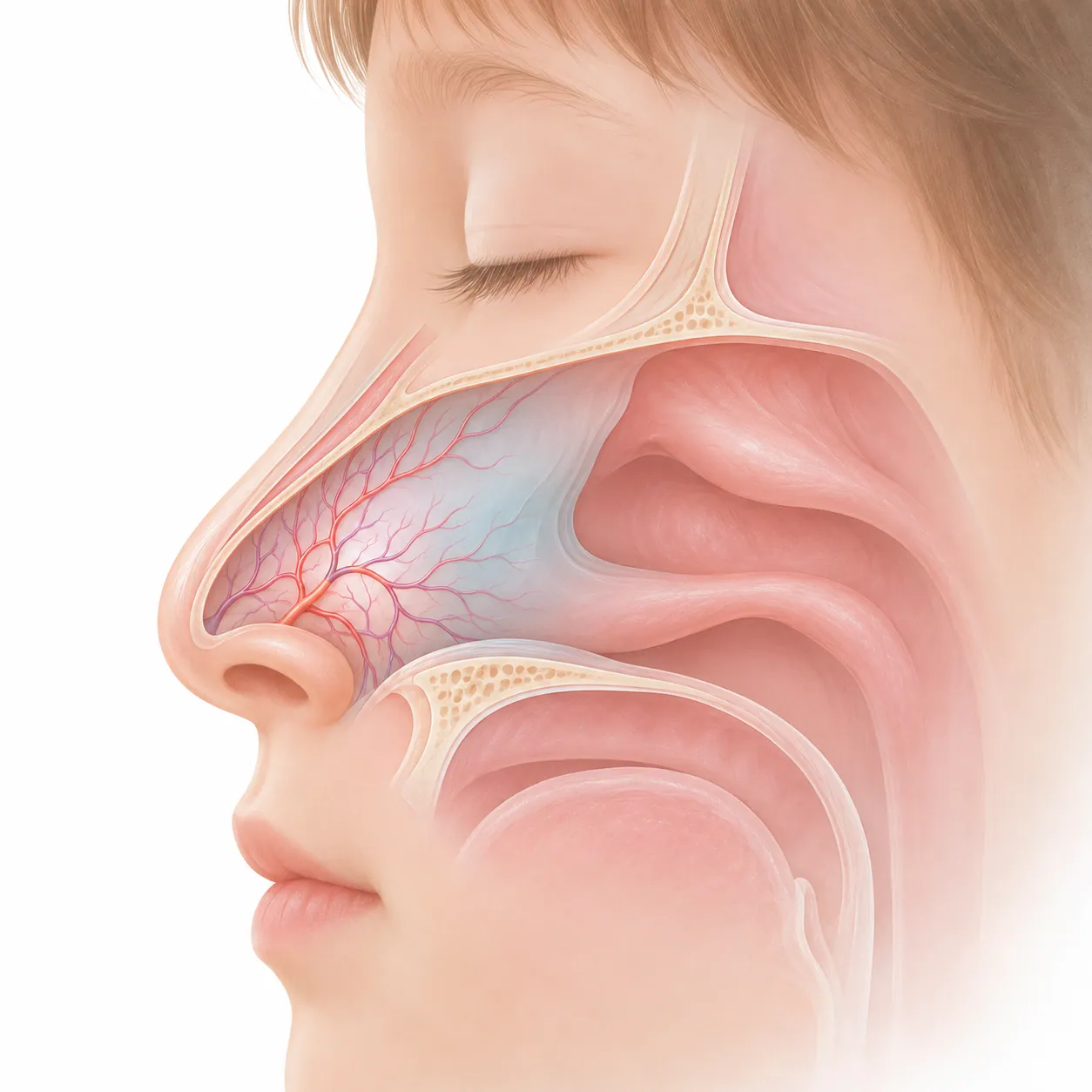
코 안쪽 앞부분, 콧구멍에서 1cm 정도 들어간 곳에는 가는 혈관이 그물처럼 모여 있습니다. 아이들은 이 부위의 점막이 얇고 약해서, 코를 후비거나 비비고 공기가 건조하기만 해도 쉽게 피가 납니다. 소아코피의 대부분이 이곳에서 나며, 고개를 숙이고 콧방울을 잡고 있으면 멈춥니다.
코피는 아주 흔합니다. 살면서 60% 넘는 사람이 코피를 겪고, 진료가 필요할 만큼 심한 경우는 그중 약 6%입니다[1]. 아이들은 자라면서 대부분 줄어들지만, 일주일에 여러 번 되풀이되거나 오래 멈추지 않으면 원인을 살펴야 합니다.
이런 증상이 있나요?
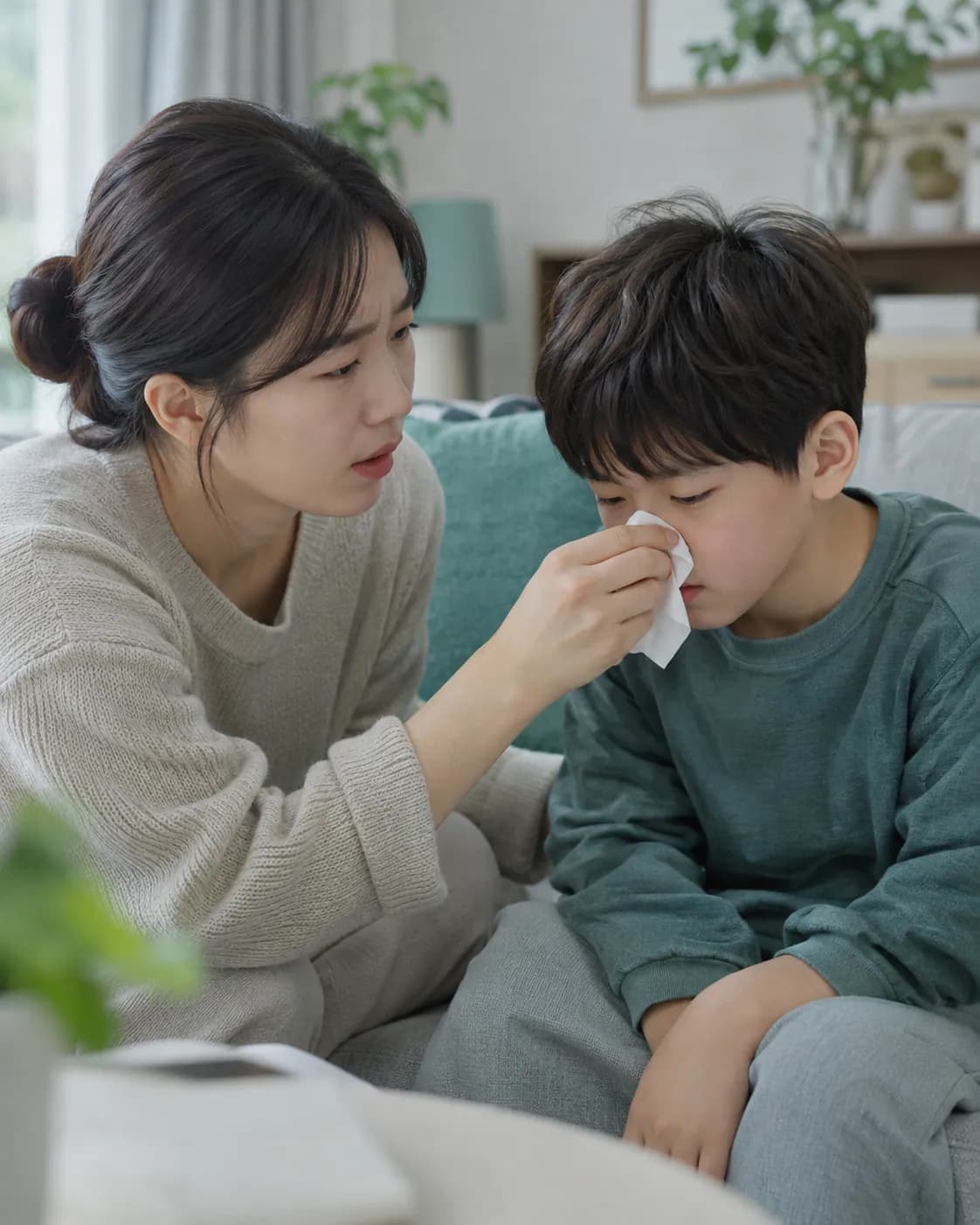
- 일주일에 몇 번씩 코피가 난다
- 자고 일어나면 베개나 콧속에 피딱지가 있다
- 코가 가렵거나 막혀 자주 후비고 비빈다
- 재채기, 맑은 콧물, 코막힘이 자주 있다
- 얼굴에 열이 잘 오르고 더위를 많이 탄다
- 쉽게 지치고 입맛이 없거나 잘 먹지 않는다
진단은 코피가 나는 횟수와 양, 한쪽인지 양쪽인지를 묻고 코 안을 살펴보는 데서 시작합니다. 몸에 멍이 잘 들거나 잇몸에서도 피가 나는 경우, 가족 중 피가 잘 멈추지 않는 사람이 있는 경우에는 혈액검사가 필요합니다. 코피가 되풀이되어 혈액 클리닉에 의뢰된 아이의 33%에서 출혈 질환이 진단되었습니다[2].
소아코피는 왜 생기나요?
- 코를 후비거나 비비는 습관
- 알레르기 비염과 잦은 코감기
- 건조한 공기(겨울철 난방, 에어컨)
- 미세먼지
- 코에 뿌리는 스테로이드 약을 잘못 쓰는 경우
- 드물게 혈액 응고 질환이나 코 안의 혹
이 가운데 알레르기 비염은 꼭 살펴봐야 합니다. 코 증상이 있고 알레르기 검사도 양성인 아이는 20.2%가 코피를 되풀이했지만, 둘 다 없는 아이는 2.1%였습니다[3]. 코가 가려우면 자꾸 후비고 비비게 되고, 염증으로 약해진 점막은 작은 자극에도 터집니다. 우리나라 자료에서는 미세먼지 농도가 높은 날 어린이와 어른 모두 코피로 병원을 찾는 일이 늘었습니다[4].
소아코피의 표준 치료
코피가 나면 고개를 살짝 숙이고 콧방울을 10분 정도 꾹 잡고 있는 것이 기본입니다. 자주 되풀이되면 코 안에 연고를 바르거나 터지는 혈관을 지지는 소작술을 하고, 비염이 있으면 비염 치료를 합니다. 비염이 있는 아이에게 항히스타민제와 코 스프레이를 함께 쓰자 60%에서 코피가 멈췄습니다[5].
다만 바셀린을 바른 아이와 그냥 지켜본 아이 사이에 코피 횟수의 차이가 없었고[6], 소아 코피의 가장 좋은 치료는 아직 정해지지 않았습니다[7]. 지지고 나서도 다시 나는 아이가 많은 것은, 점막을 약하게 만드는 코의 염증과 열, 아이의 체력이 그대로이기 때문입니다. 한의학 치료는 이 바탕을 다스립니다.
소아 코피에 대한 한약과 침 연구는 아직 찾기 어려워, 추가적인 연구가 필요합니다.
해움한의원은 이렇게 치료합니다
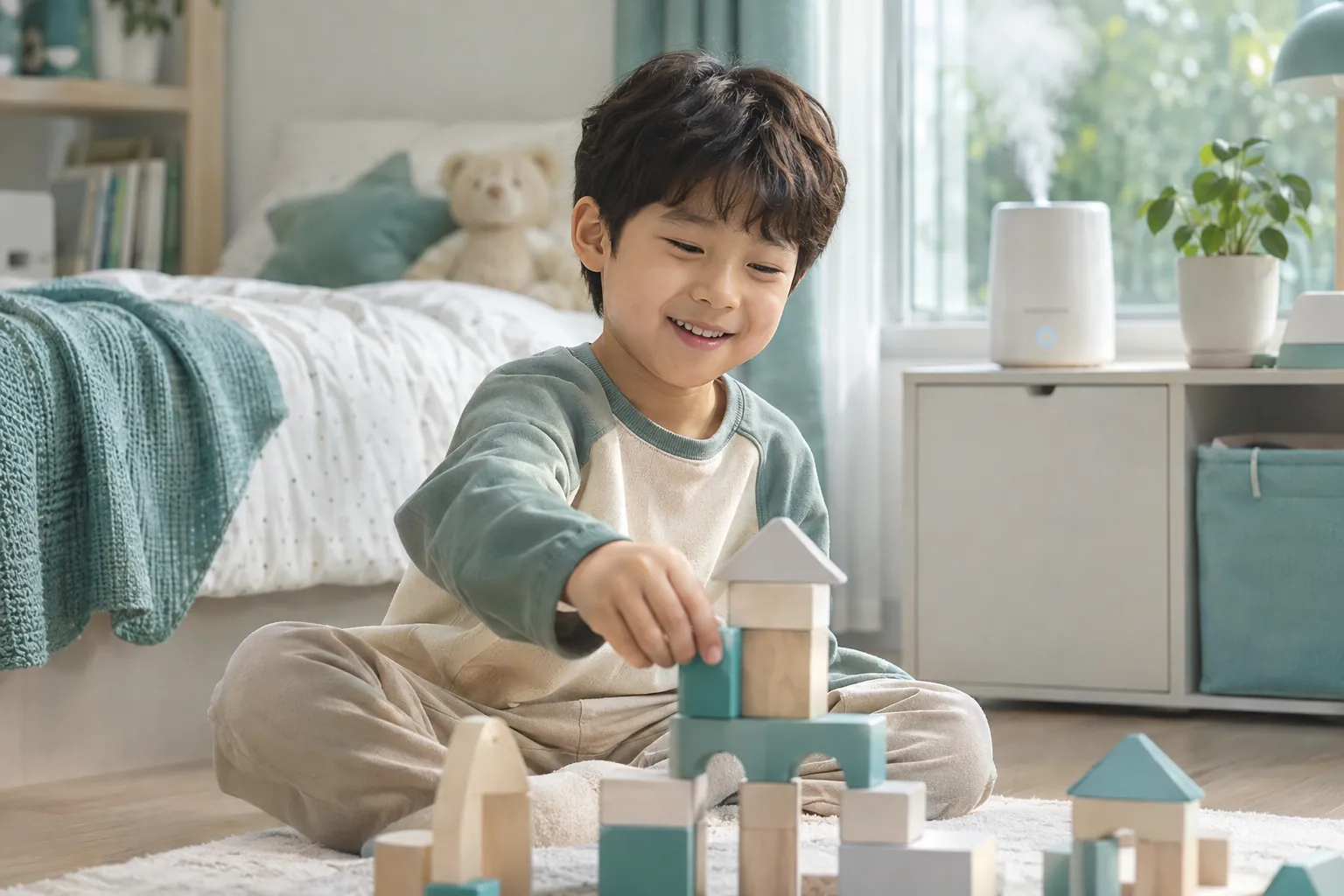
해움한의원은 코피를 멈추는 데서 그치지 않고, 코피가 자꾸 나는 코의 상태와 아이의 몸을 함께 치료합니다.
1단계. 코피의 원인과 위험 신호를 가립니다
코피의 횟수와 양, 비염 증상, 멍이나 잇몸 출혈, 가족력, 수면과 식사를 자세히 살펴봅니다. 출혈 질환이 의심되면 소아청소년과나 이비인후과 검사를 먼저 안내해 드립니다.
2단계. 코의 염증과 열을 다스립니다
비염과 코막힘을 함께 치료해 코를 후비고 비비는 일을 줄입니다. 집 안 습도와 코 관리 방법도 알려 드립니다.
3단계. 아이의 바탕을 튼튼하게 합니다
아이가 먹기 편한 형태로, 체질과 상태에 맞춰 한약을 짓습니다.
4만 건의 처방 사례가 말해주는, 한방 맞춤 치료의 힘



해움한의원 원장이 쓴 소아코피 칼럼

면역질환과 자율신경치료
오늘은 검사도 이상이 없고 치료가 안 되는, 이비인후과와 내과에서 다루는 면역 질환에 대한 내용입니다.
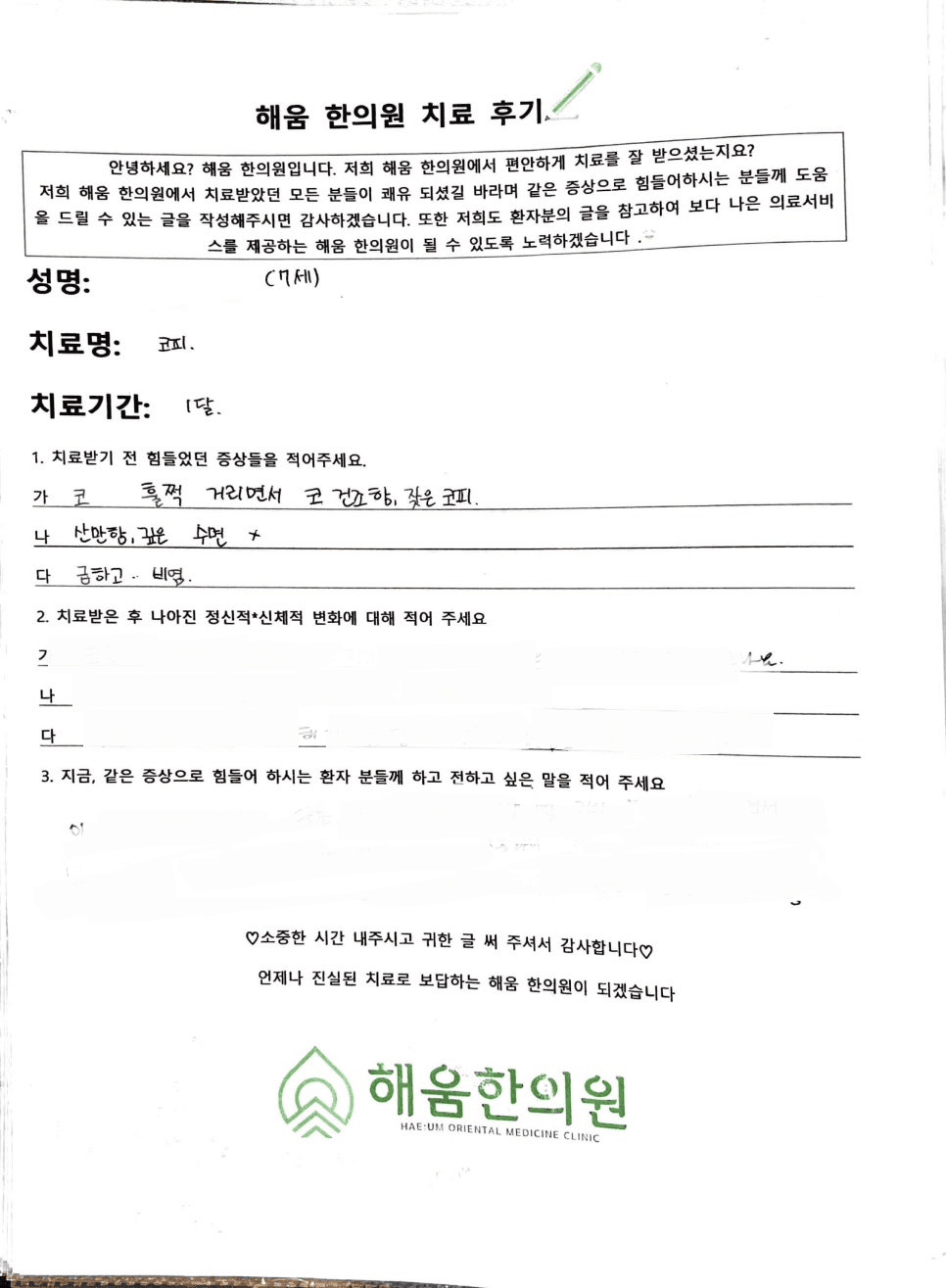
읽어보기소아코피 치료후기 총 1건
환자분들이 남긴 치료후기입니다. 본문은 로그인 후 보실 수 있습니다.
소아코피, 누가 진료하나요?
담당 의료진
대표원장 박재은

“병이 아니라 그 뒤의 사람을 봅니다”
경희대학교 한의과대학에서 석사·박사 과정을 마쳤습니다. 심리상담사 1급 자격과 4만 건 이상의 한약 처방 경험을 바탕으로 진료합니다.
의료진 소개 더보기소아코피, 자주 묻는 질문
코피가 나면 어떻게 해야 하나요?
코피가 자주 나면 크면서 저절로 낫나요?
코피를 지지는 치료를 했는데 또 나요.
아이가 한약을 잘 먹을 수 있을까요?
집에서는 무엇을 주의해야 하나요?
해움한의원에서 소아코피를 진료하나요?
소아코피로 내원하려면 어떻게 하나요?
이런 경우에는 바로 응급실로 가세요
아래 경우는 코피가 심하거나 출혈 질환일 수 있습니다. 바로 응급실이나 병원으로 가세요.
- 20분 넘게 눌러도 코피가 멈추지 않는다
- 피를 많이 흘려 얼굴이 창백하고 어지러워한다
- 머리나 얼굴을 다친 뒤 코피가 난다
- 몸에 멍이 잘 들고 잇몸에서도 피가 난다
- 한쪽 코에서만 피가 나며 코막힘과 냄새 나는 콧물이 계속된다
참고문헌 7편
[1]Tunkel DE, Anne S, Payne SC, Ishman SL, Rosenfeld RM, Abramson PJ, et al. Clinical Practice Guideline: Nosebleed (Epistaxis). Otolaryngol Head Neck Surg. 2020;162:S1-S38. doi:10.1177/0194599819890327. PMID: 31910111.
요약 미국이비인후과학회의 코피 진료지침입니다. 미국인의 60% 이상이 살면서 코피를 겪고, 그중 약 6%가 진료를 받습니다. 3세 이상에서 진료가 필요할 만큼 심하거나 되풀이되는 코피를 다룹니다.원문은 출판사 저작권 자료로, 위 링크에서 확인하실 수 있습니다.
[2]Sandoval C, Dong S, Visintainer P, Ozkaynak MF, Jayabose S. Clinical and laboratory features of 178 children with recurrent epistaxis. J Pediatr Hematol Oncol. 2002;24:47-49. doi:10.1097/00043426-200201000-00013. PMID: 11902740.
요약 코피가 되풀이되어 소아 혈액 클리닉에 의뢰된 어린이 178명의 기록 연구입니다. 33%에서 폰빌레브란트병 같은 출혈 질환이 진단되었고, 가족 중 출혈 질환이 있는 경우가 진단을 가장 잘 예측했습니다.원문은 출판사 저작권 자료로, 위 링크에서 확인하실 수 있습니다.
[3]Murray AB, Milner RA. Allergic rhinitis and recurrent epistaxis in children. Ann Allergy Asthma Immunol. 1995;74:30-33. PMID: 7719879.
요약 알레르기 클리닉을 찾은 어린이 557명의 연구입니다. 코 증상이 있고 알레르기 피부 검사도 양성인 아이는 20.2%가 코피를 되풀이했고, 둘 다 없는 아이는 2.1%였습니다.원문은 출판사 저작권 자료로, 위 링크에서 확인하실 수 있습니다.
[4]Kim K, Kwak IY, Min H. Particulate Matter 10 (PM<sub>10</sub>) Is Associated with Epistaxis in Children and Adults. Int J Environ Res Public Health. 2021;18(9):4809. doi:10.3390/ijerph18094809. PMID: 33946392.
초록 (Abstract)
The impact of atmospheric concentration of particulate matter ≤10 μm in diameter (PM10) continues to attract research attention. This study aimed to evaluate the effects of meteorological factors, including PM10 concentration, on epistaxis presentation in children and adults. We reviewed the data from 1557 days and 2273 cases of epistaxis between January 2015 and December 2019. Eligible patients were stratified by age into the children (age ≤17 years) and adult groups. The main outcome was the incidence and cumulative number of epistaxis presentations in hospital per day and month. Meteorological factors and PM10 concentration data were obtained from the Korea Meteorological Administration. Several meteorological factors were associated with epistaxis presentation in hospital; however, these associations differed between children and adults. Only PM10 concentration was consistently associated with daily epistaxis presentation in hospital among both children and adults. Additionally, PM10 concentration was associated with the daily cumulative number of epistaxis presentations in hospital in children and adults. Furthermore, the monthly mean PM10 concentration was significantly associated with the total number of epistaxis presentations in the corresponding month. PM10 concentration should be regarded as an important environmental factor that may affect epistaxis in both children and adults.
결과 (Results)
3.1. Characteristics of the Enrolled Subjects: We reviewed the medical records from 1704 days. A total of 2249 cases were approached, and 692 cases were excluded because they were thought to be secondary epistaxis cases; finally, 1557 cases of epistaxis were identified. The mean age of the patients was 44.94 (SD: 25; range: 1–94) years (Table 1). Among them, 20.7% (323/1557) were children, and 79.3% (1234/1557) were adults. The mean age of the children was 7.59 (SD: 4.41; range: 1–17) years, and that of the adults was 60.00 (SD 18.85; range: 18–94) years (Table 1). Meteorological factors such as cloud cover, humidity, temperature, air pressure, solar radiation, sunshine duration, wind speed, and PM10 concentration were evaluated as exposure variables (Supplementary Table S1).
3.2. Monthly Distribution of Meteorological Factors and PM10 Concentration: The coldest month of the year was January, with a mean daily temperature of −2.14 °C, followed by February (0.05 °C) and December (0.33 °C) (Figure 1A). The hottest month was August, with a mean daily temperature of 27.49 °C, followed by July (26.95 °C) and June (23.32 °C). The lowest monthly mean relative humidity was observed in March (50.67%), followed by February (51.13%) and January (51.50%) (Figure 1B). The monthly mean relative humidity was highest in July (69.61%) and August (66.61%). The highest mean wind speed was evident in February (2.41 m/s), followed by March (2.38 m/s) (Figure 1A). The highest mean air pressure was observed in December (10,150 hPa) (Figure 1A). The month with the highest duration of sunshine and greatest amount of solar radiation was May (9.28 h, 20.31 MJ/m2) (Figure 1A). The number of clouds was highest in July (6.46 [1/10]) and lowest in January (3.74 [1/10]) (Figure 1A). The mean concentration of PM10 was highest in March (58.66 μg/m3), followed by February (55.34 μg/m3) and January (51.38 μg/m3) (Figure 1B). When we reviewed the number of epistaxis cases, we observed that the children and adults showed different patterns. The adult group had the highest number of patients during the winter months, whereas the children group had the highest number of cases during the summer months (Figure 2 and Supplementary Figure S1). We further classified the age of the adult group into three subdivisions, “18–39 years”, “40–69 years”, and “>70 years”. All age groups among the adults showed a similar pattern of lesser number of epistaxis cases during the summer months (Supplementary Figure S2).
3.3. Factors Associated with the Incidence of Epistaxis Presentation in Hospital per Day among Children and Adults: The associations between meteorological factors, including PM10 concentration, and epistaxis presentation in hospital were evaluated using multivariate logistic regression analysis (Table 2). Among children, mean temperature, mean wind speed, sunshine duration, and PM10 concentration were positively associated with the incidence of epistaxis presentation in hospital. Among adults, the number of clouds and PM10 concentration were positively associated with the incidence of epistaxis presentation in hospital, whereas minimum temperature and mean relative humidity were negatively associated with the incidence of epistaxis presentation in hospital (Table 2).
To check the linearity assumption, we visualized the relationship between the logit value of the predicted probability and the statistically significant exposure variables (Supplementary Figure S3). We observed a particularly strong linear relationship with temperature and PM10 concentration using predicted logit probability (Supplementary Figure S3).
3.4. Factors Associated with the Number of Epistaxis Presentations in Hospital per Day among Children and Adults: We evaluated the impact of meteorological factors, including PM10 concentration, on the cumulative number of epistaxis presentations in hospital per day using ordinal regression analysis (Table 3). Increased mean temperature, mean wind speed, sunshine duration, and PM10 concentration were associated with an increase in the daily number of epistaxis cases among children. In adults, increased PM10 concentration was associated with an increase in the daily number of epistaxis cases, whereas increased maximum temperature, maximum wind speed, and mean relative humidity were associated with fewer cases.
3.5. Additive Effect of PM10 Concentration on Epistaxis Presentation in Hospital: To evaluate the additive effects of PM10 concentration, we calculated the mean PM10 concentration per month and examined those against the total number of epistaxis presentations in hospital within the same month (Figure 3). We observed that the monthly mean PM10 concentration was positively (Pearson’s coefficient = 0.884, p < 0.001) associated with the total number of epistaxis presentations in hospital within that same month.
원문 발췌 · Kim K, Kwak IY, Min H, Int J Environ Res Public Health 2021 · CC BY 4.0 라이선스에 따라 수정 없이 인용했습니다(본문 속 인용 번호는 생략).
[5]Teo WY, Wong HB, Hwarng GYH, Tan HKK. Outcome of childhood epistaxis with treatment of allergic rhinitis: a randomized controlled study. Eur J Pediatr. 2023;182:1127-1135. doi:10.1007/s00431-022-04701-7. PMID: 36595087.
요약 치료받지 않은 알레르기 비염이 있고 코피가 나는 어린이 60명을 세 가지 비염 치료로 나눈 무작위 연구입니다. 코피가 멈춘 비율은 항히스타민제 20%, 코 스프레이 스테로이드 40%, 둘을 함께 쓴 경우 60%였습니다. 90%가 코를 후비거나 비비는 습관이 있었습니다.원문은 출판사 저작권 자료로, 위 링크에서 확인하실 수 있습니다.
[6]Loughran S, Spinou E, Clement WA, Cathcart R, Kubba H, Geddes NK. A prospective, single-blind, randomized controlled trial of petroleum jelly/Vaseline for recurrent paediatric epistaxis. Clin Otolaryngol Allied Sci. 2004;29:266-269. doi:10.1111/j.1365-2273.2004.00813.x. PMID: 15142073.
요약 코피가 되풀이되는 어린이 105명의 무작위 연구입니다. 바셀린을 4주 바른 아이 중 27.5%, 그냥 지켜본 아이 중 34%가 다음 4주 동안 코피가 없어 차이가 없었습니다.원문은 출판사 저작권 자료로, 위 링크에서 확인하실 수 있습니다.
[7]Qureishi A, Burton MJ. Interventions for recurrent idiopathic epistaxis (nosebleeds) in children. Cochrane Database Syst Rev. 2012:CD004461. doi:10.1002/14651858.cd004461.pub3. PMID: 22972071.
요약 원인 없이 되풀이되는 소아 코피 치료 연구 5편, 468명을 살핀 코크란 리뷰입니다. 소독 연고, 바셀린, 질산은 소작술을 비교했으나 대부분 차이가 없어 가장 좋은 치료는 아직 알 수 없다고 결론지었습니다.원문은 출판사 저작권 자료로, 위 링크에서 확인하실 수 있습니다.